This Idaho Trail Feels Like Two Completely Different Parts Of The West In A Single Hike
The first mile is lying to you.
Everything looks sunbaked and rugged enough to suggest you have the rest of the hike figured out. Then the trail starts changing character so dramatically that checking the map suddenly feels reasonable.
Keep going and the heat softens. Shade thickens.
Tall firs begin crowding the path, and the landscape starts behaving like you crossed into a completely different corner of the West without ever leaving Idaho.
Meanwhile, a clear river keeps racing beside you like it knows exactly where the plot twist is coming.
That is the fun of this hike. It refuses to pick one personality.
By the time the scenery finishes its transformation, the trail you started on barely feels related to the one beneath your boots.
No state line crossed. No magic portal involved. Just one very sneaky Idaho trail with an identity crisis.
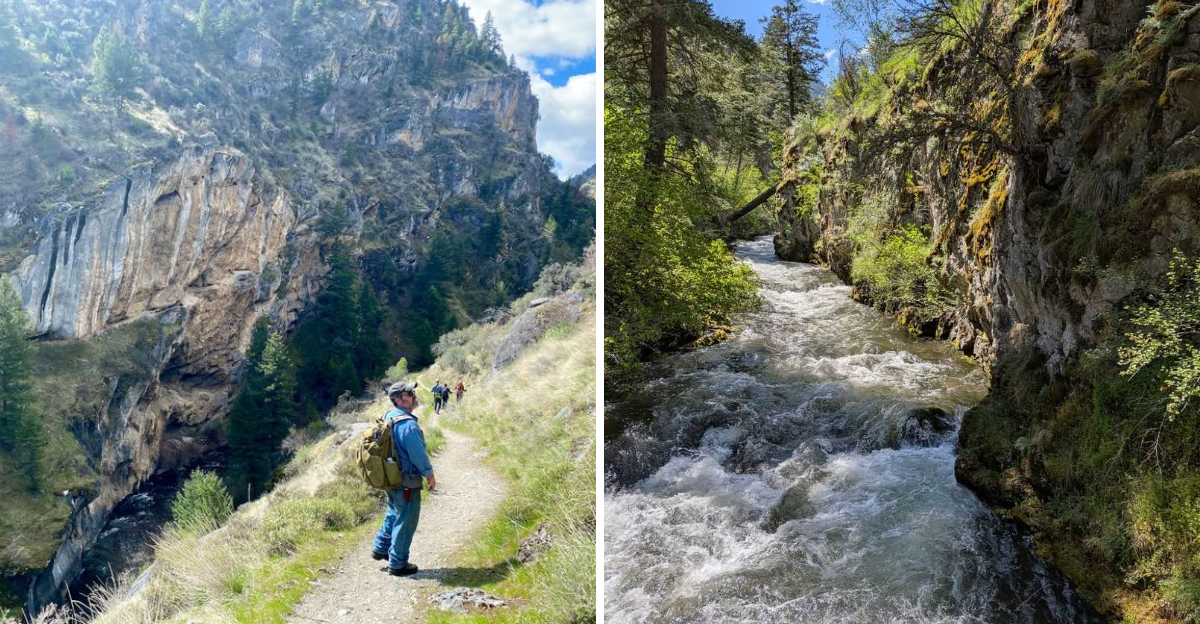
Sun-Baked Canyon Walls Make The First Miles Feel Almost Desert-Like
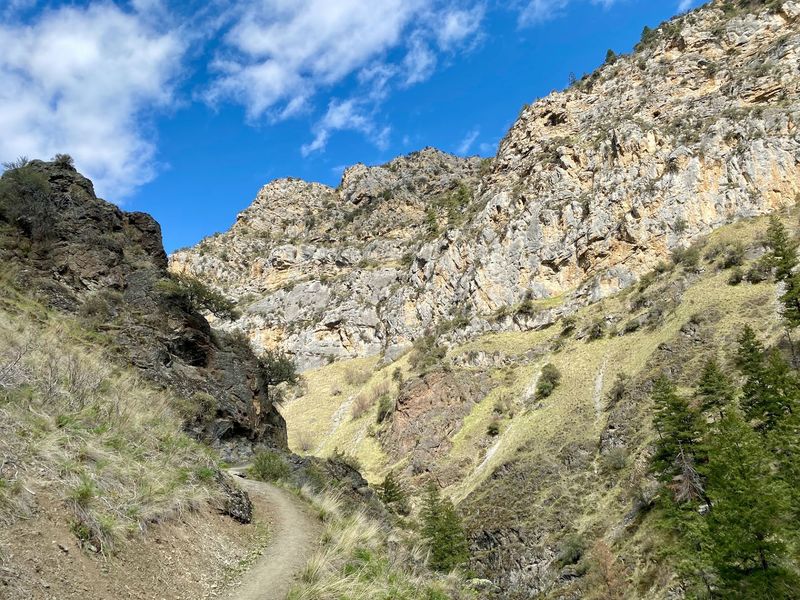
Step off the parking area and the rock does the talking. Steep walls climb on both sides of the corridor, their faces scoured and pitted by centuries of wind, water, and freeze-thaw cycles.
Eroded overhangs and shadowy pockets punctuate the cliffs, and a few of them carry char marks from fires lit long before any trail sign existed.
The look is surprisingly southwestern, closer to a slot canyon in southern Utah than anything you expect this far north.
Riggins sits in what locals call the banana belt, a pocket of mild weather that melts snow off early and turns the hillsides a startling spring green while higher country stays buried.
Shade is scarce through these opening miles, so the sun lands squarely on your shoulders and the warm rock radiates heat back at you. Bring more water than you think you need, start early on summer days, and keep glancing up.
The cliffs shift color as the light moves across them.
Cool Forest Shade Takes Over As The River Pulls You Deeper Into The Canyon
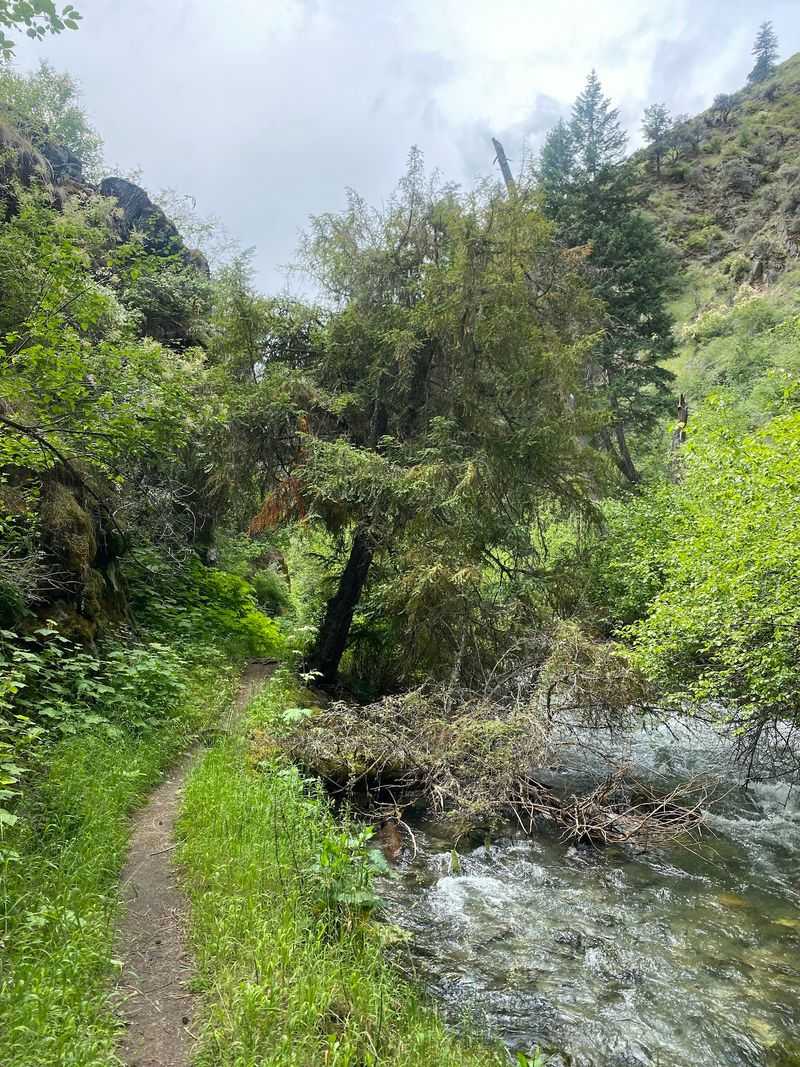
Somewhere past the open rock, the temperature drops and you notice it on your arms before you notice it in the scenery. Douglas firs lean over the path, their branches knitting together into a ceiling that filters the sunlight into soft patches.
Moss shows up next, thick and almost neon green, clinging to boulders along the water’s edge where spray keeps everything damp.
The effect is pure Pacific Northwest, which feels wonderfully out of place given the parched cliffs behind you.
Watch for Pacific yew here, an uncommon tree with peeling bark that shades from purple to rust red. Grand fir and ponderosa pine crowd in alongside, some of them thick enough that two people could not link arms around the trunk.
The forest floor holds moisture longer, so footing can be slick after rain. Slow down, breathe in the resin-and-damp-earth smell, and let the shade do its work before the trail opens up again.
The Rapid River Stays Beside You With Clear Water And Constant Motion
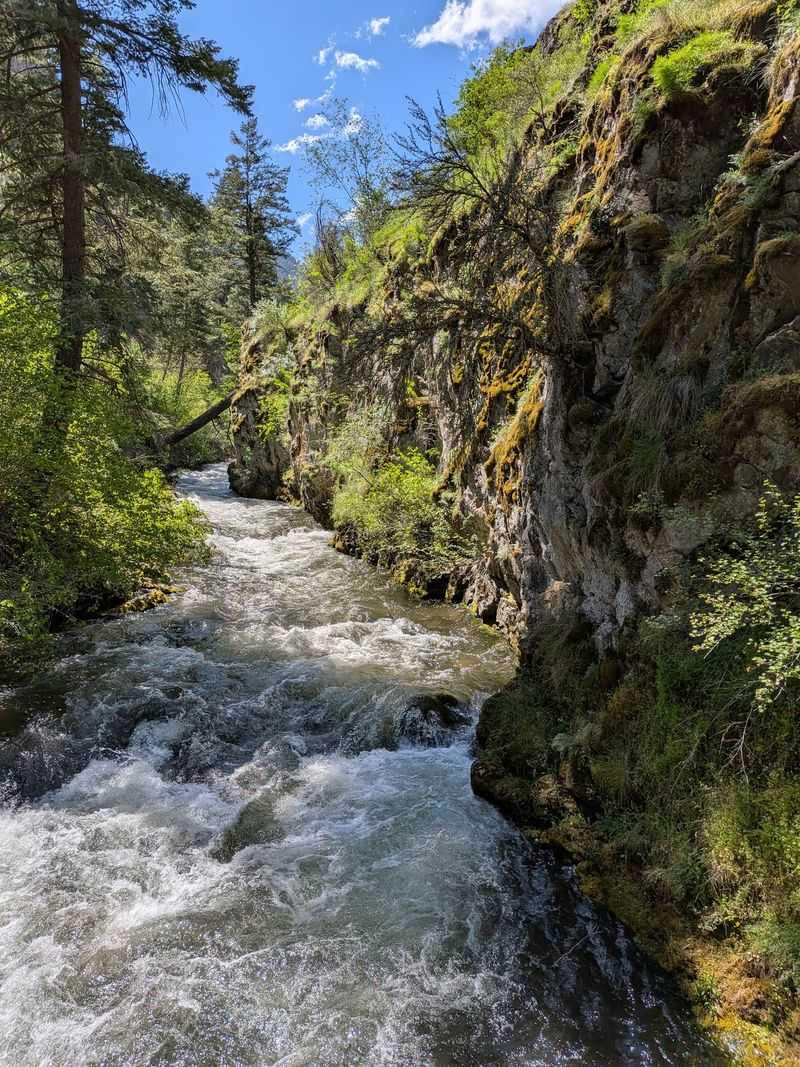
True to its name, this river never takes a break. There are no lazy stretches where the current forgets what it is doing.
Instead you get an unbroken run of white water sliding and crashing over pale boulders, loud enough in high runoff that conversation turns into shouting and gentle enough in late summer to sound like steady rain on a roof.
Clarity is the other headline. Because so little development touches this drainage, the water runs remarkably clean, and you can pick out individual stones on the bottom where the channel widens.
That purity supports healthy insect life, fish, and everything that feeds on them, which explains the game trails cutting down to the bank.
Practically speaking, the river is your handrail. Stay near it and you cannot get lost.
Just resist the urge to wade in spring, when the volume and cold water are far stronger than they appear from the path.
Wooden Bridges Add A Little Drama Where The Gorge Tightens
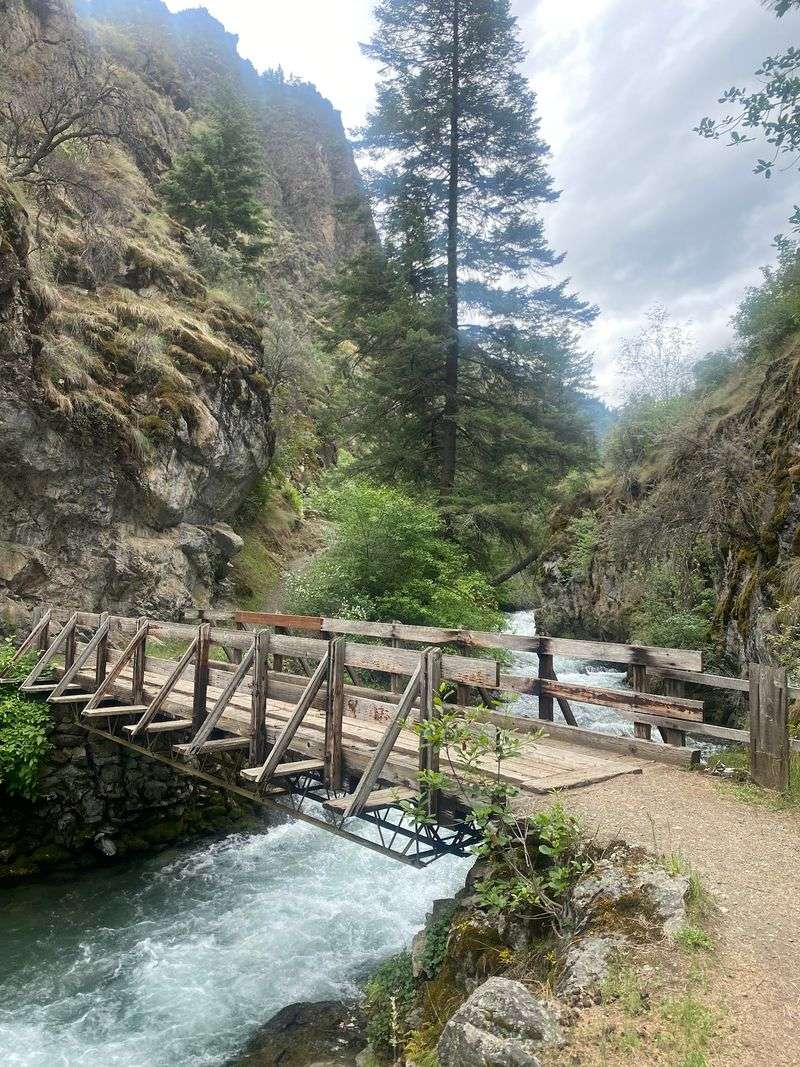
About a mile in, the canyon pinches and the trail solves the problem the old-fashioned way: a solid wooden bridge planked straight across the water.
Standing mid-span, you get the river funneling directly beneath your feet, loud and fast and close enough to feel the cool air lifting off it.
Families with small hikers often treat this first crossing as the destination. It makes a natural snack stop and a satisfying turnaround with plenty of drama for the effort.
A second sturdy bridge waits near the four-mile mark and carries you over to the west side of the river. The view changes noticeably from that bank, with different angles on the gorge and fresh stretches of forest opening ahead.
Both crossings photograph beautifully, especially in morning light when mist still hangs low. Take a minute on each one.
The bridges are the punctuation marks in an otherwise continuous sentence of canyon.
Wildflowers And Wildlife Keep The Quieter Stretches Interesting
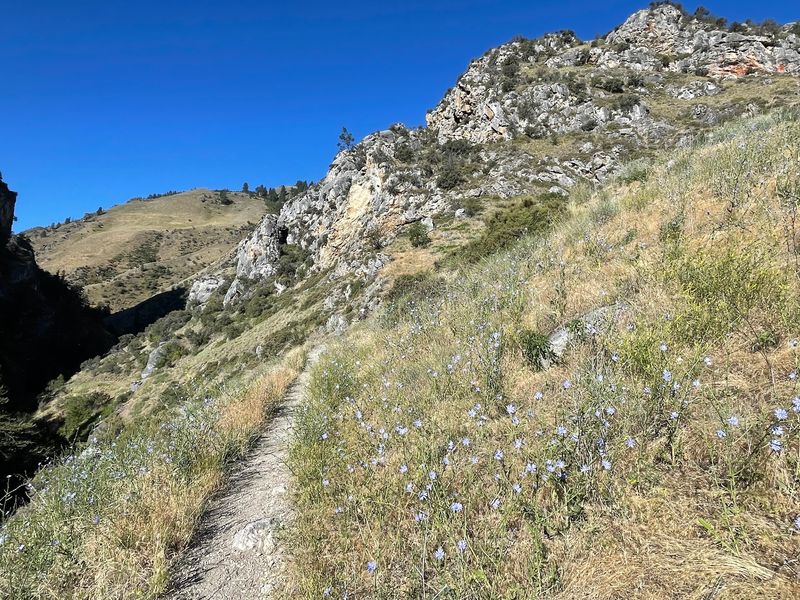
Spring turns the slopes into something close to a painting. Yellow, purple, and white blooms spill across the grassy benches, butterflies drift between them, and the whole hillside seems to hum.
Mixed pine and aspen pockets alternate with dry grassland, and those transition zones are where the animals show up. Hawks and other birds of prey ride the thermals above the canyon, and worn game trails braid down toward the water where deer and elk come to drink.
A few honest cautions belong here.
Poison ivy grows thick along parts of the corridor, grass and wildflowers can crowd the single-track by midsummer, and rattlesnakes are genuinely part of this ecosystem, especially once the heat arrives.
Long pants, boots, and a habit of watching the trail ahead solve most of that. Ticks turn up in spring too, so a quick check afterward is smart.
Spring and fall remain the sweet spots for comfort and wildlife sightings alike.
Rocky Slopes Give Way To Taller Timber Without Much Warning
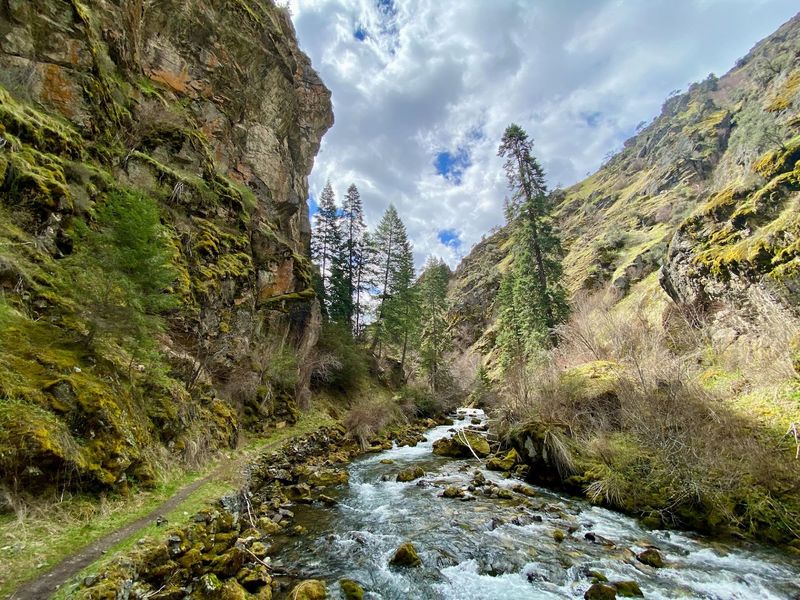
The switch happens fast. One moment you are picking your way across exposed rock with grass brushing your knees, and a few hundred yards later the canopy closes and the air goes still.
The route starts high on hillsides above bare rock formations, drops to meet the river, then begins climbing again in stretches that arrive with almost no warning. Each rise seems to deliver bigger trees.
Grand fir, Douglas fir, and ponderosa pine take over the upper reaches, and some of those ponderosas are genuinely enormous, with thick orange-plated bark that smells faintly of vanilla when the sun hits it.
They stand in ground that was once more open grassland, which makes their scale even more surprising.
Total elevation change is modest by Idaho standards, though the repeated up-and-down adds up. Pace yourself on the climbs and enjoy the reward.
Shade, silence, and trunks worth stopping to admire.
A Roadless Setting Makes The Scenery Feel Far Wilder Than The Trailhead Suggests
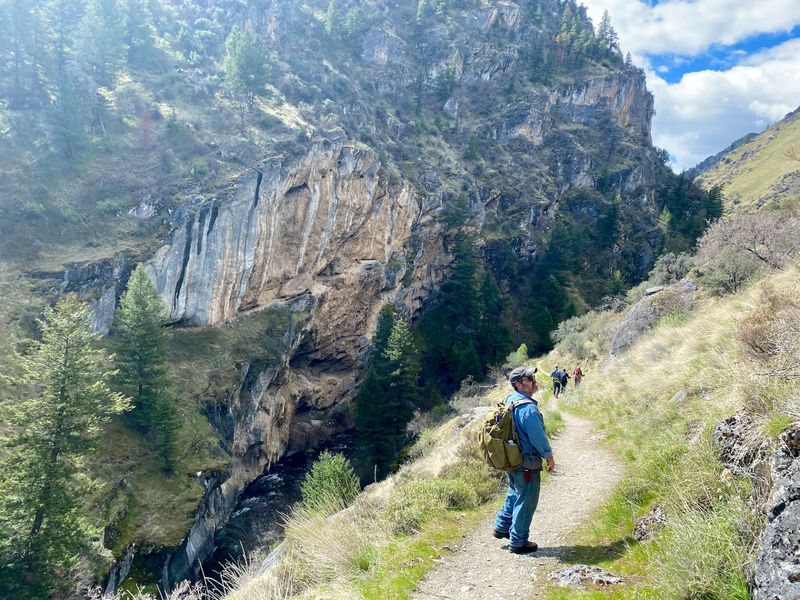
Wild and Scenic River protection covers this drainage, and the difference is immediate. No pavement, no powerlines, no cabins peeking through the trees, just water, rock, and timber arranged the way they have been for a very long time.
That roadless character is exactly why the water stays so clean and the habitat stays so productive. Nothing upstream is washing sediment or runoff into the channel.
The trailhead sits at Rapid River Rd, Riggins, reached by a steep access road with sizable potholes that deserves respect if you are driving anything long or low.
Once you are walking, though, the parking area disappears from mind within minutes.
The corridor connects toward the vast Frank Church-River of No Return country, and the sense of scale reflects that. Sounds narrow down to moving water, wind in the firs, and birdsong.
Cell service is unreliable, so tell someone your plan before you head in.
By The Turnaround, You Have Seen Two Very Different Sides Of Idaho Backcountry
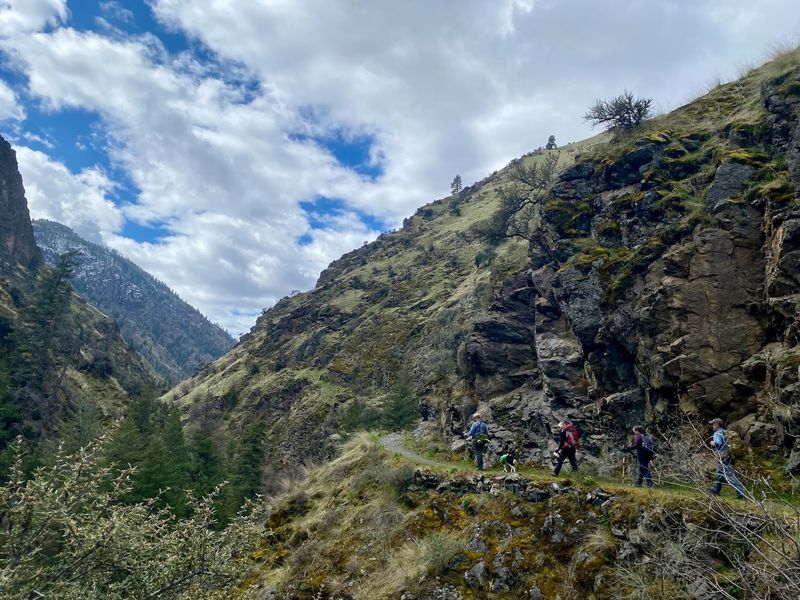
Most hikers turn around near the confluence where the Main and West Forks meet, roughly four miles in, and it is a fitting place to stop.
Two currents join in a churn of white water framed by tall conifers, and the contrast with the bare cliffs at the start could hardly be sharper.
Look back down the canyon and the day rearranges itself in your head. Sun-scorched rock at the beginning, deep green shade at the end, and one restless river stitching the halves together.
The route runs out and back, which means you set your own distance.
One mile to the first bridge suits young families, four miles satisfies most day hikers, and the return trip reveals angles you missed heading upstream.
Few trails in this corner of Idaho pack so much variety into so little mileage. Afterward, the cafes along Main Street in Riggins are close enough to make a hot meal part of the plan. And also, this place is definitely the one you can only find in fairy tale books.