This Idaho Visitor Center Holds A Heartbreaking Chapter Of American History
Some places ask you to look around. Others ask you to understand what happened there.
At this Idaho visitor center, exhibits preserve the history of Japanese Americans incarcerated during World War II and connect it directly to the surrounding landscape.
Photographs, film, personal stories, and reconstructed features give faces and daily details to a chapter often condensed into a few textbook lines.
Give this visit time.
Families were removed from their homes and forced into confinement here, and their experiences deserve careful attention.
The preserved site helps visitors connect policy, place, and human lives in a direct way.
You leave with more than facts. The deeper value comes from understanding why remembering them still matters.
Finding The Warehouse Doorway
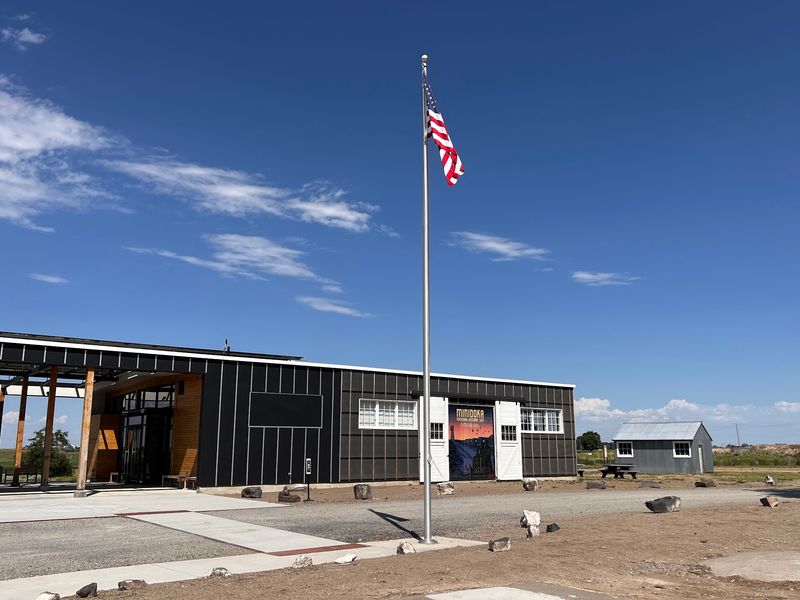
The visitor center looks modest from outside, and there is a historical reason for that appearance. It occupies the former Warehouse #5, which served as the camp’s automotive repair shop during World War II.
There is no grand entrance or towering monument out front. That plainness turns out to be part of the message here.
Inside, the Minidoka National Historic Site Visitor Center opens up into a thoughtful museum space. Rangers greet you at a front desk stocked with maps and the national park passport stamp.
The visitor center includes restrooms, maps, a bookstore, exhibits, and the National Park Service passport stamp.
For the 2026 season, the visitor center is open Friday through Sunday from 10 a.m. to 5 p.m. through September 27.
Outside visitor-center hours, the historic grounds and walking trail remain open daily from sunrise to sunset, with brochures and passport stamps available in the after-hours box.
You will find it all at 1428 Hunt Rd in Jerome, tucked into the wide-open landscape of south-central Idaho.
Executive Order 9066 Explained
Understanding what happened here starts with a single signature. In February 1942, Executive Order 9066 was signed after the attack on Pearl Harbor.
The order authorized military exclusion zones, and subsequent military orders led to the forced removal and incarceration of Japanese Americans from the West Coast. Some families had up to a month to prepare, while others had only a couple of days.
Ten relocation centers were built across the interior United States. Minidoka was one of them, operating from 1942 until 1945.
Nationally, about two-thirds of the roughly 120,000 people of Japanese ancestry incarcerated during the war were U.S. citizens.
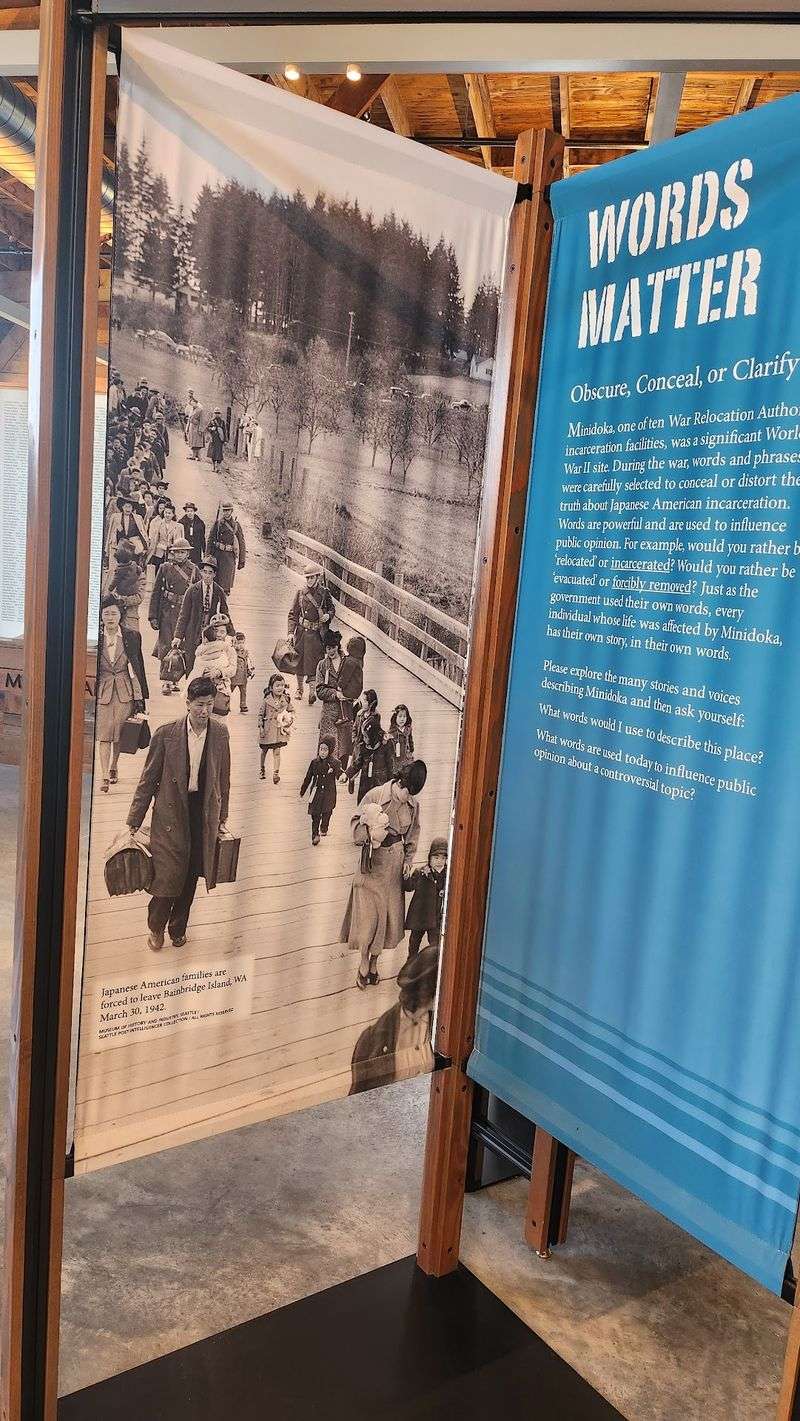
The exhibits lay out this timeline clearly, without shouting. Photographs show luggage tags, crowded train platforms, and families sitting on suitcases.
I stood in front of one panel for a long time. Reading names and ages makes the numbers stop feeling like numbers.
What struck me most was how ordinary the lives were before. Farmers, shopkeepers, students, and fishermen all lost businesses and homes.
Property and financial losses were substantial, and later government claims programs compensated only a fraction of the losses that Japanese Americans reported.
Give yourself at least forty minutes with the indoor displays. The history moves quickly, and rushing does the story no favors.
Watching The Park Film
Do not skip the movie. That is my strongest piece of advice for anyone visiting.
The 30-minute park film, Minidoka: An American Concentration Camp, is narrated by George Takei and currently screens every hour on the half-hour during visitor-center hours.
Narration is calm and measured, letting archival footage and photographs carry the weight. I watched families arrive by train, and then watched barracks rise out of bare ground.
The film covers Japanese immigration to the United States, the incarceration years, and the long road afterward. That last part matters, because the story did not end in 1945.
Sitting in the dark before walking the grounds changed how I saw the trail. Foundations stopped looking like concrete and started looking like homes.
Screenings currently begin every hour on the half-hour during regular visitor-center hours, with seating available on a first-come basis.
Free Junior Ranger booklets for both Minidoka National Historic Site and the Bainbridge Island Japanese American Exclusion Memorial are currently available at the visitor center.
Walking The Interpretive Trail
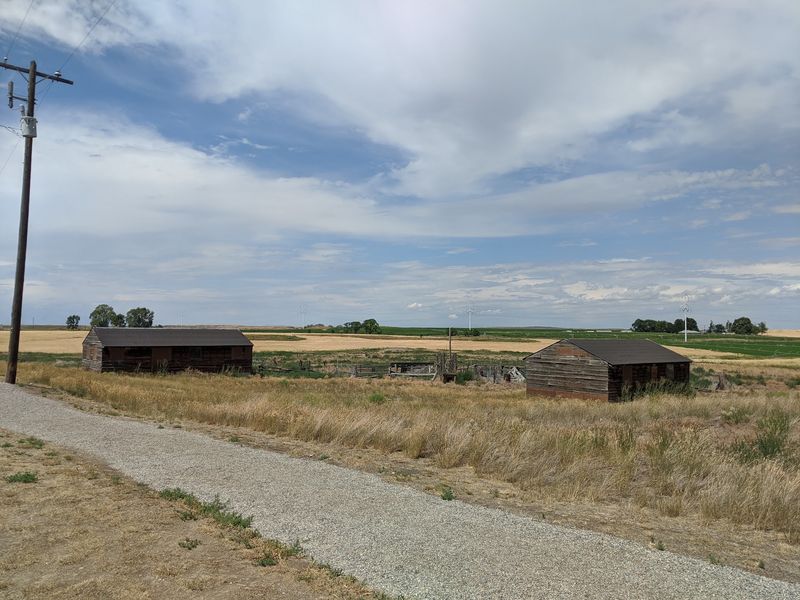
Fresh air hits differently after an hour of heavy history. A 1.6-mile interpretive trail begins just outside and loops through the historic grounds.
The 1.6-mile trail is gravel, and the National Park Service currently warns that it is not accessible because portions of the trail have been compromised. Sturdy footwear, sun protection, and water are recommended.
Interpretive panels line the route the whole way. Each one pairs historic images with quotes from people who lived here.
Some panels include audio, which I found unexpectedly moving. Hearing voices while standing on the actual ground creates a connection no book can match.
Most visitors finish the self-guided walk in about an hour. I took closer to ninety minutes because I kept stopping.
During the 2026 visitor season, free ranger-led tours are offered Saturdays and Sundays at 11 a.m., last about 90 minutes, and are available on a first-come basis.
The site has little to no shade, so visitors should prepare for exposed high-desert conditions with water, sunscreen, a hat, and sturdy footwear.
Bring water and sunscreen, stay on designated trails, and remain alert for snakes, bees, and other wildlife noted in current National Park Service safety guidance.
Guard Tower And Fence
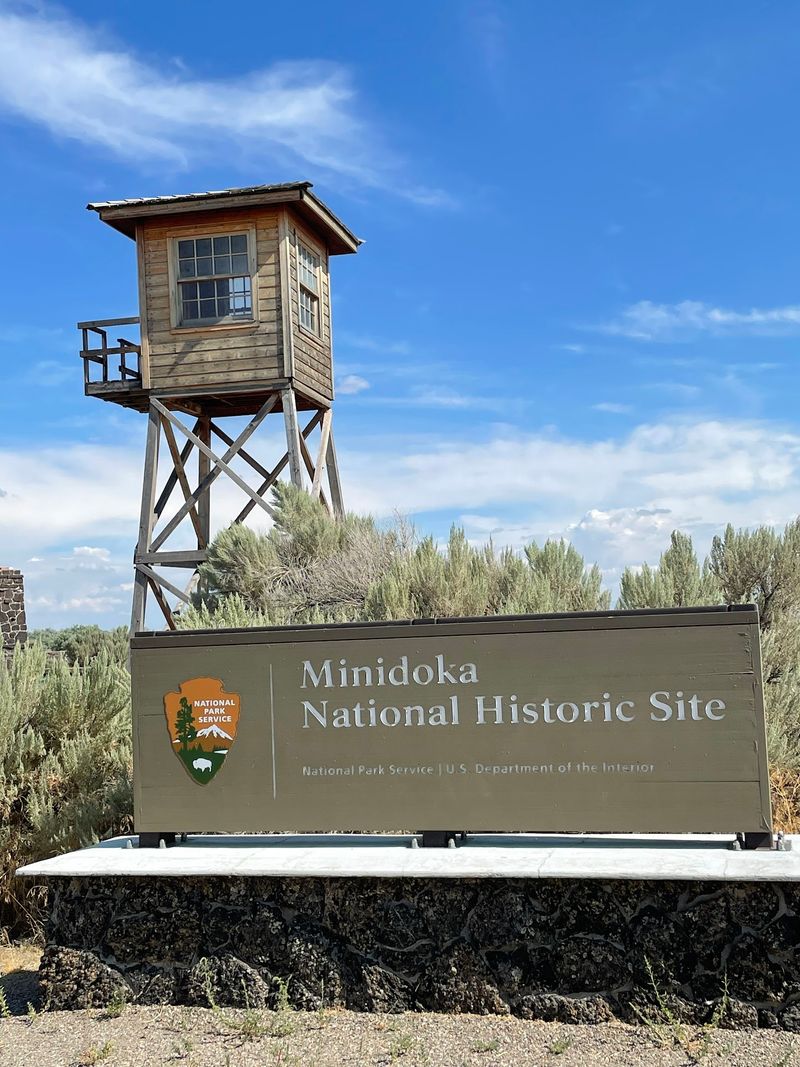
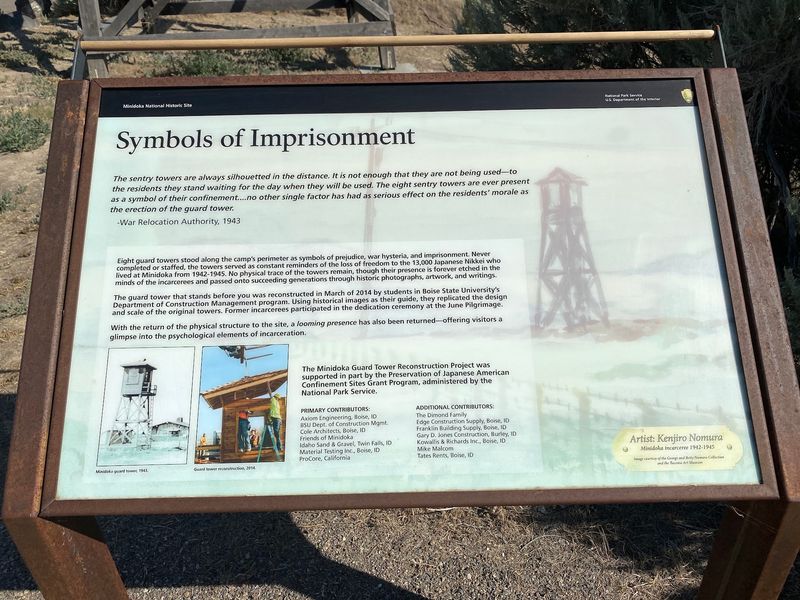
Nothing on the trail stopped me faster than the guard tower. It stands reconstructed near the original entrance area, wooden and stark against the sky.
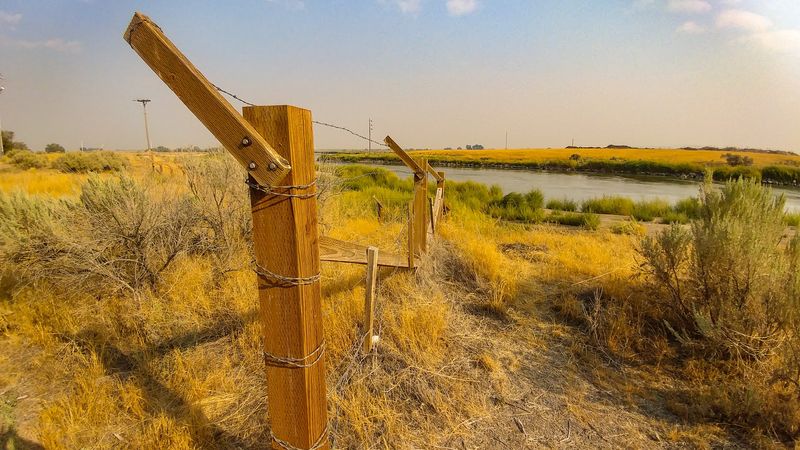
Eight watchtowers once ringed this camp. Barbed wire ran along the perimeter, and a replica section remains today.
The reconstructed tower and barbed-wire fence help show the security measures that confined Japanese Americans at Minidoka.
Nearby are remnants of the historic entrance area, including portions of the military police station and the foundation and chimney of the former waiting room.
Nearly all of the roughly 600 camp buildings were removed or relocated after Minidoka closed, leaving only scattered historic structures, foundations, landscape features, and several original buildings that were later returned to the site.
The reconstruction is clearly labeled as a rebuild, not an original. I appreciated that honesty from the National Park Service.
Photographers will find strong compositions here, especially in early morning light. The tower silhouette against open sky is unforgettable.
Stand quietly for a moment before moving on. The contrast between this fenced boundary and the endless Idaho horizon says more than any plaque.
Barracks, Mess Hall, Root Cellar
Ordinary buildings tell extraordinary stories. A rehabilitated barrack, a mess hall, and a root cellar sit along the trail, restored with careful research.
Barracks were hastily constructed from green wood and tarpaper and divided into six units, with interior walls that did not reach the ceiling and offered very little privacy.
Winter cold and summer heat both pushed through those walls. Reading about it inside the visitor center is one thing, standing beside the structure is another.
The mess hall handled meals for entire residential blocks. Families often ate separately from one another, which slowly changed how households worked.
Down the trail, the root cellar mound rises from the ground. It stored potatoes and vegetables grown by the residents themselves.
A multi-year Legacy Restoration Fund project is preserving the historic Block 22 barrack, mess hall, and root cellar, with specialized National Park Service preservation crews carrying out the work.
More than 13,000 people passed through Minidoka during its operation, while its peak population reached about 9,400, making the camp large enough to rank as Idaho’s seventh-largest city at the time.
That statistic still surprises me every time I repeat it. Take your time here, because the details reward slow looking.
The Honor Roll Tribute
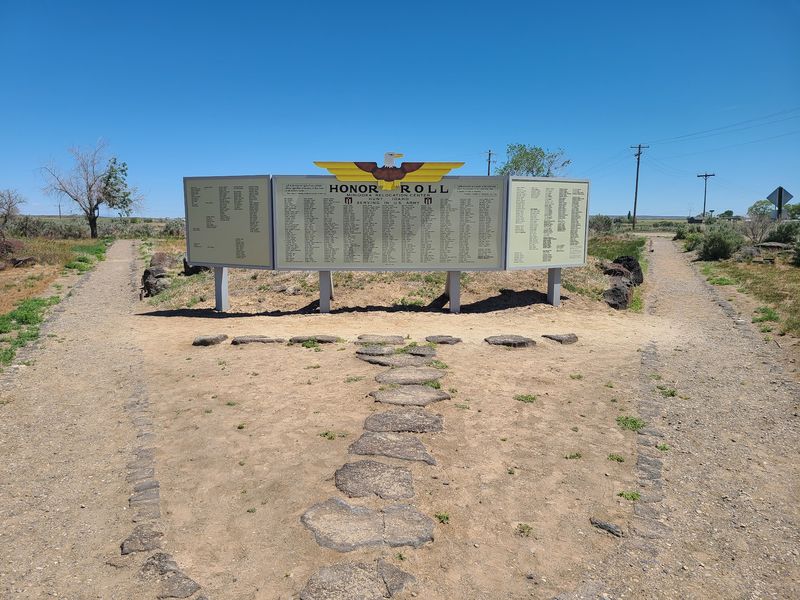
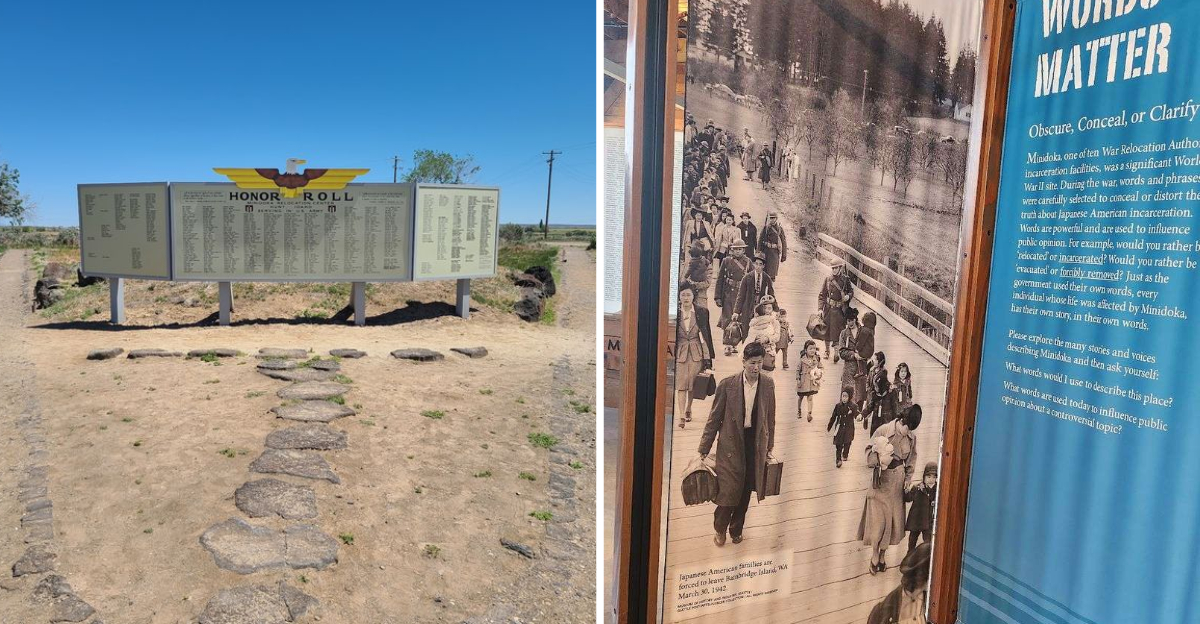
Here is the detail that stayed with me longest. A replica Honor Roll stands near the entrance, listing names of Japanese Americans from this camp who served in the United States military.
More than 950 people connected to Minidoka served in the U.S. military during World War II, even as family members remained incarcerated.
Many joined the 442nd Regimental Combat Team, made up almost entirely of Japanese American soldiers. That unit became one of the most decorated in American military history.
A loyalty questionnaire handed out in the camps caused deep hurt. People were asked to prove allegiance to a country already holding them.
Some answered yes and served. Others refused on principle, and both choices took courage.
Standing at the Honor Roll, I read name after name and thought about those families. The board is simple wood and paint, yet it carries tremendous weight.
Rangers can share more context if you ask. Their knowledge adds layers you will not get from panels alone.
Desert Turned Into Farmland
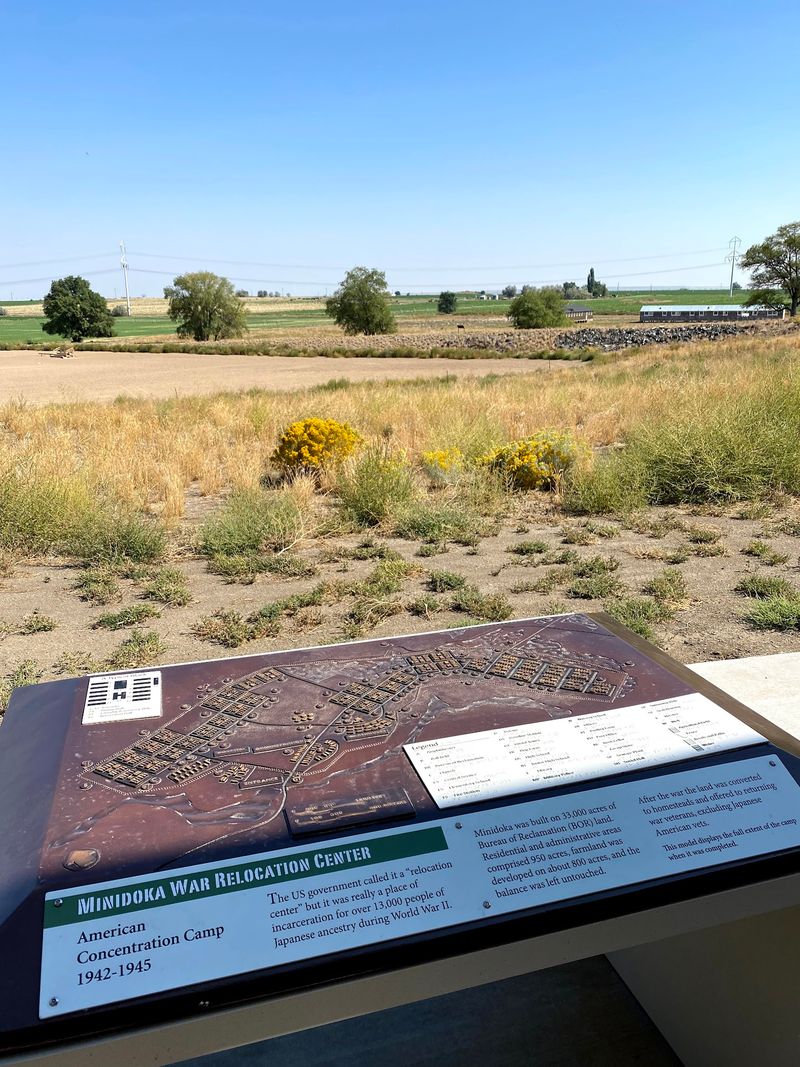
Look past the buildings and the land itself becomes a character. This corner of Idaho is high desert sagebrush steppe, rolling flats broken by basalt rock.
When families arrived in 1942, they found dust, wind, and very little shade. Within months, they began clearing sagebrush by hand.
Irrigation channels were dug and connected to existing water systems. The North Side Canal ran along the camp’s southern boundary.
Incarceree agricultural crews transformed portions of the sagebrush landscape into productive farmland that supplied food for the camp, while other Minidoka residents also worked on nearby Idaho farms during wartime labor shortages.
Victory gardens and small ornamental gardens appeared between barracks. Residents planted flowers and shaped rock borders, adding beauty where none existed.
That transformation is one of the most remarkable parts of the story. People with almost no control over their lives still reshaped an entire landscape.
Today the setting remains wide and quiet, with distant mountains framing the view. The National Park Service preserves that openness on purpose.
Standing on the trail, the isolation becomes obvious. Farm country stretches in every direction, far from any coastline these families once called home.