This Idaho Watermelon Farm Grows 600 Acres Of Sweet Summer Fruit In Volcanic Soil
Most watermelons show up at the table with no explanation and vanish before anyone asks questions.
This harvest has a much bigger story behind it.
Out near Bliss, summer turns serious once hundreds of acres of seedless watermelons start ripening under the heat.
Volcanic soil gives the crop its foundation, while clean spring water helps cool the melons after harvest.
That sounds simple until the numbers kick in.
During peak season, tens of thousands of watermelons can move out in a single day, which makes a backyard garden look like it is still stretching before work.
The funny part is how effortless the final reward feels.
After all that land, timing, labor, and heat, everything comes down to one sweet slice on a plate.
Juice runs, people reach for seconds, and Idaho summer suddenly tastes like it knew exactly what it was doing.
You Meet Idaho’s Summer Watermelon Scene In Bliss
Bliss may not be the first place many people associate with watermelon, which makes Hagerman Canyon Farms feel even more surprising.
Idaho Preferred describes southwestern Idaho watermelon as grown in sandy volcanic soils and a hot microclimate, with the region becoming known for sweet, high-quality fruit.
That combination gives the farm a natural advantage before planting even starts. Warm days help the melons develop sugar, while the Snake River Plain setting keeps the growing story tied closely to Idaho agriculture.
Hagerman Canyon Farms remains family-owned and operated, and its own history traces the operation back to David Jentzsch starting the farm in 2011 after years of growing and selling melons.
What began much smaller has become a large wholesale produce business with a recognizable sticker and a seasonal following.
For shoppers, that means a Hagermelon is not just a random watermelon in a bin. It comes from a farm with a very specific place, season, and family story behind it.
See Why Sandy Volcanic Soil Matters Here
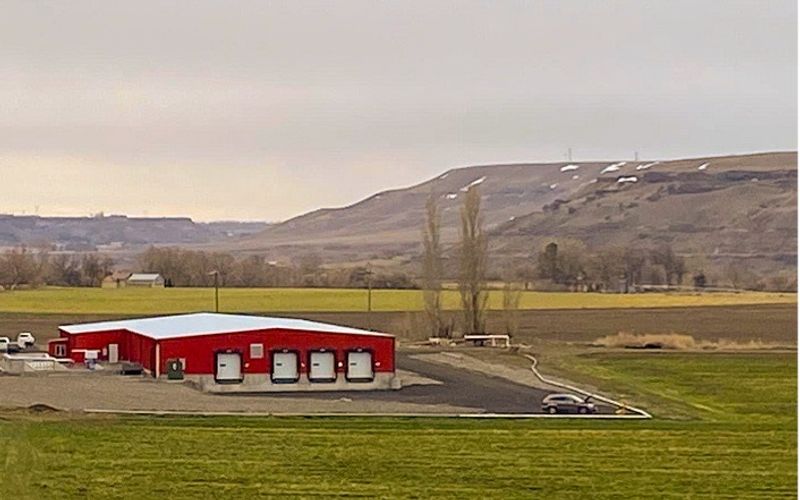
Soil does more than hold the plant upright, especially in a melon-growing region like southwestern Idaho. Idaho Preferred notes that watermelon grown in the area’s sandy volcanic soils and hot microclimate is known for quality and flavor.
That matters because watermelon needs warmth, drainage, and steady moisture to develop well. Sandy soil lets water move through more easily than heavy clay, helping roots avoid sitting in soggy ground.
Volcanic soils can also carry mineral character that supports crop growth, although sweetness still depends on many factors, including heat, variety, timing, and harvest decisions.
Instead of overselling the soil like a magic trick, it is better to see it as one important part of a larger system.
Hagerman Canyon Farms pairs that ground with hand-picking, on-farm packing, spring water cooling, and a tight seasonal harvest window. All those pieces work together.
The result is fruit that feels strongly tied to where it was grown, not just another melon shipped from somewhere far away.
Follow The Harvest When The Hagermelons Start Moving
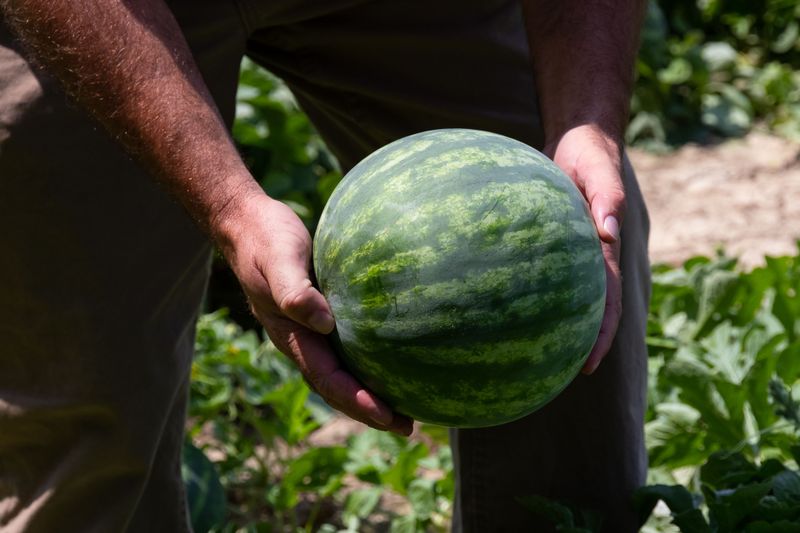
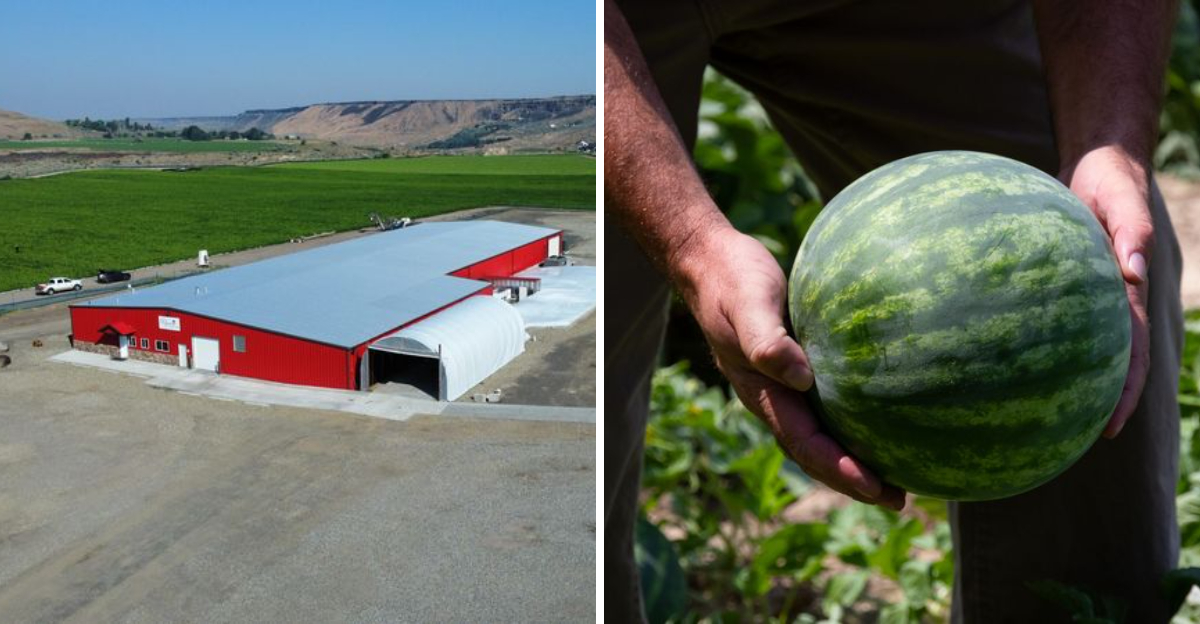
Harvest season brings the farm’s biggest work into motion. Hagerman Canyon Farms says it harvests watermelon from July 10 to September 20, with about 600 acres of seedless watermelon hand-picked and packaged right on the farm.
Hand-picking matters because ripe watermelons need careful handling before they ever reach a truck. Bruising, rough unloading, or too much heat can hurt texture and freshness fast.
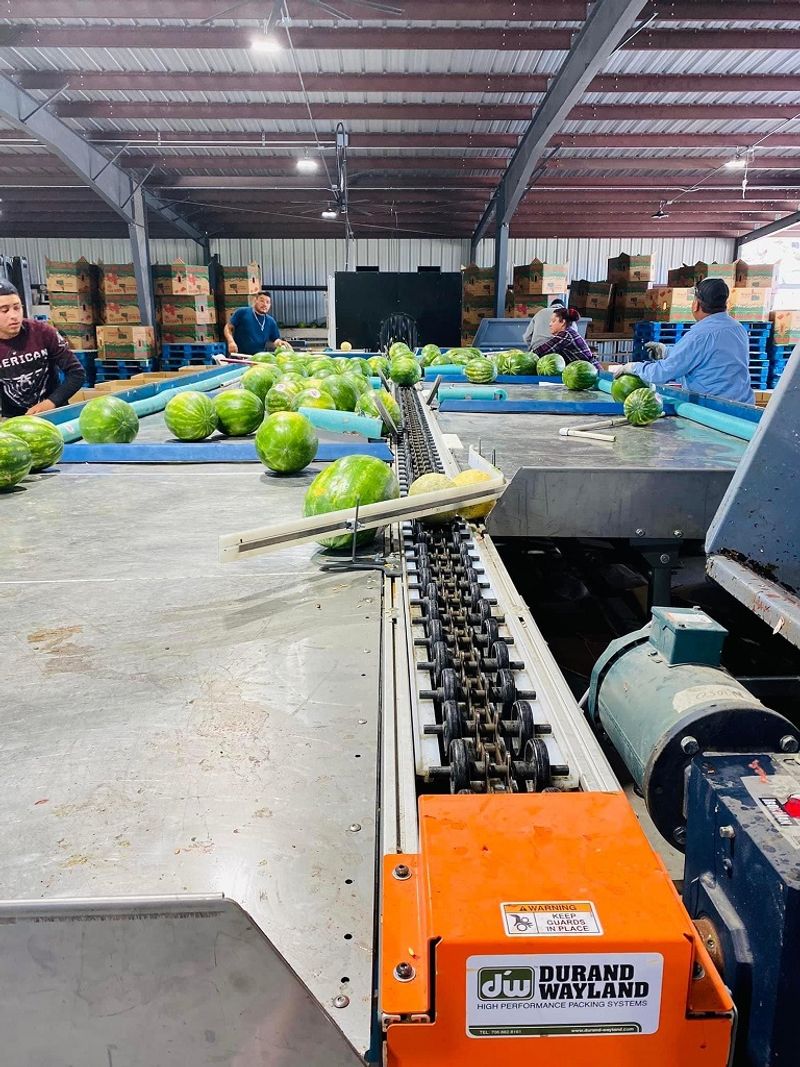
Local reporting from KMVT described crews inspecting fields, loading ripe melons, bringing them back to the facility, washing them, drying them, stickering them, sorting them by size, and moving bins toward refrigeration. Such a process is part choreography, part endurance test.
One crew reads the field. Another handles the fruit.
Another keeps the packing flow moving. By the time a Hagermelon appears in a grocery store, it has already passed through several hands and decisions.
That human side of the harvest is easy to miss from the produce aisle, but it is one of the main reasons the fruit can arrive looking clean, sorted, and ready for summer tables.
Watch 600 Acres Turn Into Peak July Fruit
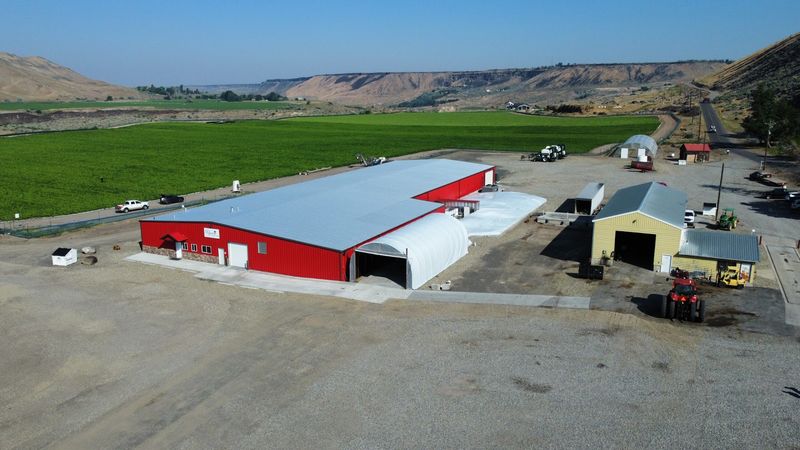
Six hundred acres of watermelon is hard to picture until the harvest numbers start explaining the scale. Hagerman Canyon Farms states that it grows about 600 acres of seedless watermelon each year, all hand-picked and packaged on the farm.
Idaho News 6 reported that during peak July and August harvest, the farm can ship 65,000 watermelons per day, with a 12,000-square-foot cooler also serving as a shipping dock. That is a huge amount of summer fruit moving through one operation.
Beyond watermelon, the farm’s own crop information also lists sweet corn, pumpkins, and winter squash, while its about page describes more than 1,000 acres of fresh produce overall. Such scale gives the farm a different identity from a small seasonal stand.
This is a serious wholesale operation built around timing, labor, cooling, packing, and distribution. Still, the appeal remains simple for shoppers.
A cold, crisp slice in July starts with fields working at full speed.
Learn How Spring Water Helps Cool The Crop
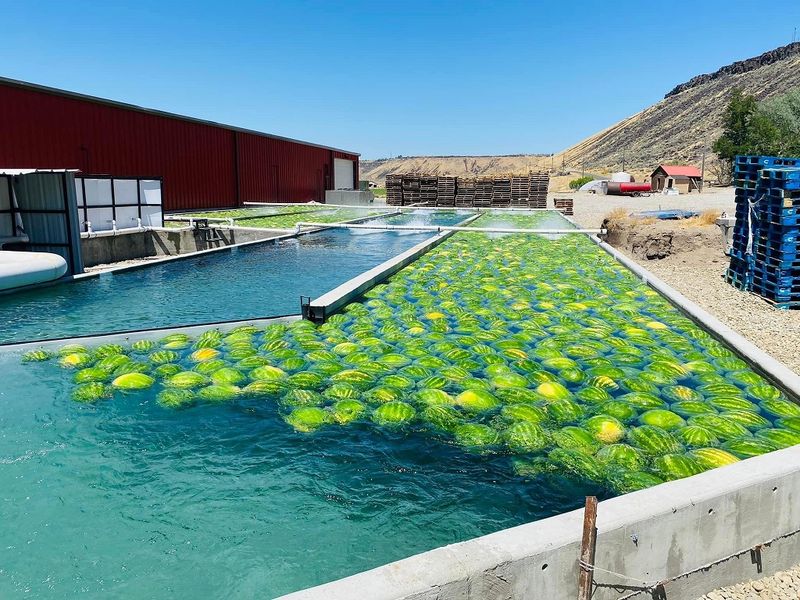
Freshness depends on what happens immediately after picking, and Hagerman Canyon Farms has built part of its identity around spring water cooling.
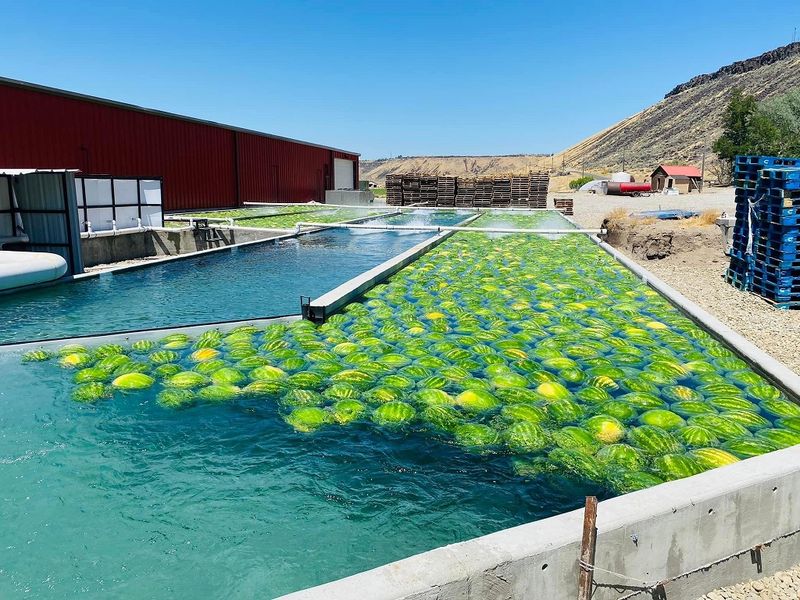
The farm says its watermelons are unloaded into cool, clean spring water on the farm, which gently unloads the fruit while immediately cooling it so the melons stay sweet and crisp.
Idaho News 6 reported that the farm introduced a spring-cooling method in 2019 and later built a new system to more than double production. That detail matters because watermelon keeps better when field heat is reduced quickly.
Instead of treating cooling as an afterthought, the farm uses it as part of the handling process from the start.
Sweet corn receives similar attention, with Hagerman Canyon Farms saying corn is picked in the cool morning, cooled in fresh spring water, sorted, graded, packed, and iced for freshness.
Spring water does not just sound charming. Here, it plays a practical role in moving delicate summer produce from field heat toward store shelves in better condition.
Trace The Melons From Field To Western Grocery Stores
A Hagermelon may start in Idaho, but it does not stay there for long. Hagerman Canyon Farms says it ships watermelons across the West, including Idaho, Utah, Montana, Wyoming, Arizona, California, Colorado, Oregon, and Washington.
Idaho Preferred lists retail availability at WinCo, Broulim’s, Smith’s, Albertsons, Stoke’s, Ridley’s, and Swensen’s, which helps explain how shoppers across the region encounter the brand.
Idaho News 6 also reported that Hagerman Canyon Farms produce can be found at major stores such as Costco, Fred Meyer, Walmart, Smith’s, and more across the western United States.
Speed matters because watermelon is at its best when it moves efficiently from field to shelf. Freight distance, cooling, packing, sorting, and timing all affect the final bite.
For the farm, that means harvest days are not just about picking fruit. They are about keeping an entire supply chain moving while the melons are still at their summer peak.
For shoppers, the sticker is the clue that the melon has a very specific Idaho origin.
Notice How Big This Family Farm Has Grown
Hagerman Canyon Farms has a growth story that starts much smaller than its current footprint. The farm’s history says Rod Jentzsch began farming in 1980, and in 2006 he had two of his sons, Darek and David, plant a half-acre truck garden as a summer project.
Watermelons became the standout, and a local grocery store eventually bought a pickup load when the brothers had more than they could sell from a fruit stand.
David continued growing melons through college, then moved to the Hagerman Valley and started Hagerman Canyon Farms in 2011 with 50 acres.
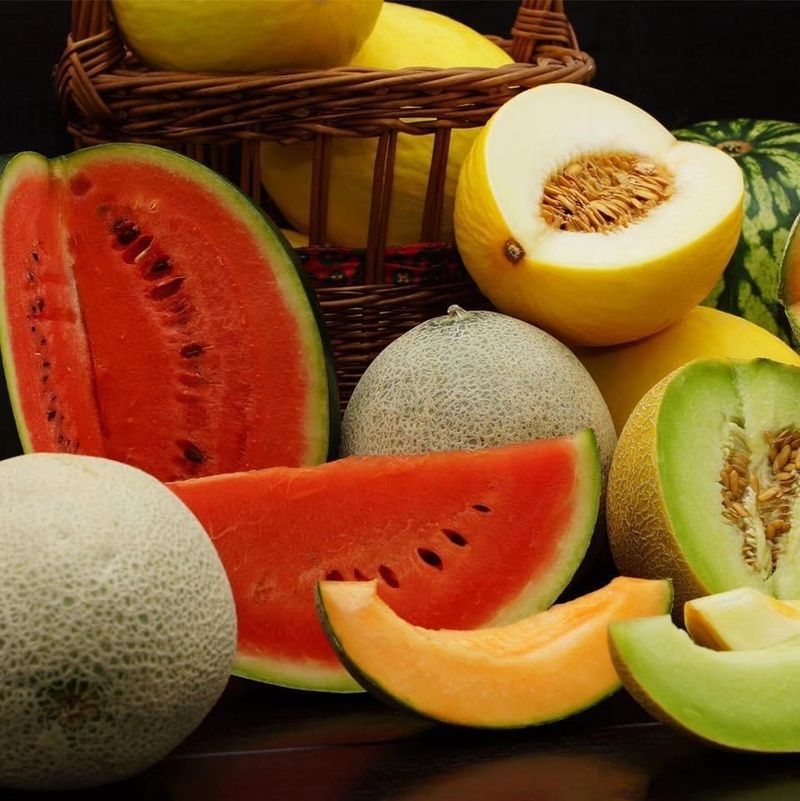
Over time, the operation expanded into mini watermelon, cantaloupe, pumpkins, sweet corn, and winter squash.
In 2021, David brought Hagerman Canyon Farms back together with the broader family farm operation, with Darek running Jentzsch Kearl Farms and David running Hagerman Canyon Farms.
That family connection keeps the farm from feeling like a faceless produce operation, even at large scale. Big growth still came from a backyard beginning.
You Look At Idaho Watermelon A Little Differently After This
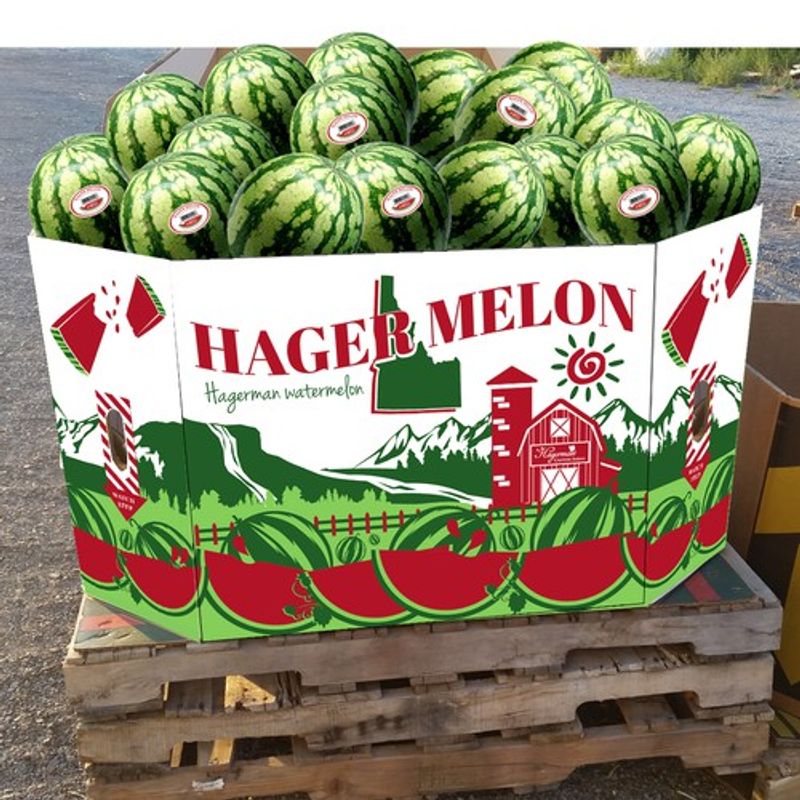
Learning the story behind Hagermelons makes the grocery-store bin feel less ordinary. A single watermelon can carry the work of sandy volcanic soil, a hot Idaho microclimate, hand-picking crews, spring water cooling, sorting lines, refrigerated storage, and fast western distribution.
Hagerman Canyon Farms says its seedless watermelons are hand-picked, cooled in clean spring water, and shipped under the Hagermelon brand during the July 10 to September 20 season.
The farm also describes itself as one of the largest wholesale suppliers of pumpkins, watermelons, mini watermelons, sweet corn, pie pumpkins, and winter squash in the Northwest.
That scale makes the fruit widely available, but the growing story still feels rooted in one place. Idaho watermelon is not just a novelty.
In this corner of the state, it is a serious summer crop with a loyal following and a clear regional identity. Find Hagerman Canyon Farms at 319 River Road, Bliss, Idaho.