This Kentucky Building Holds Forty Murals Painted By A German Prisoner Who Never Made It Home
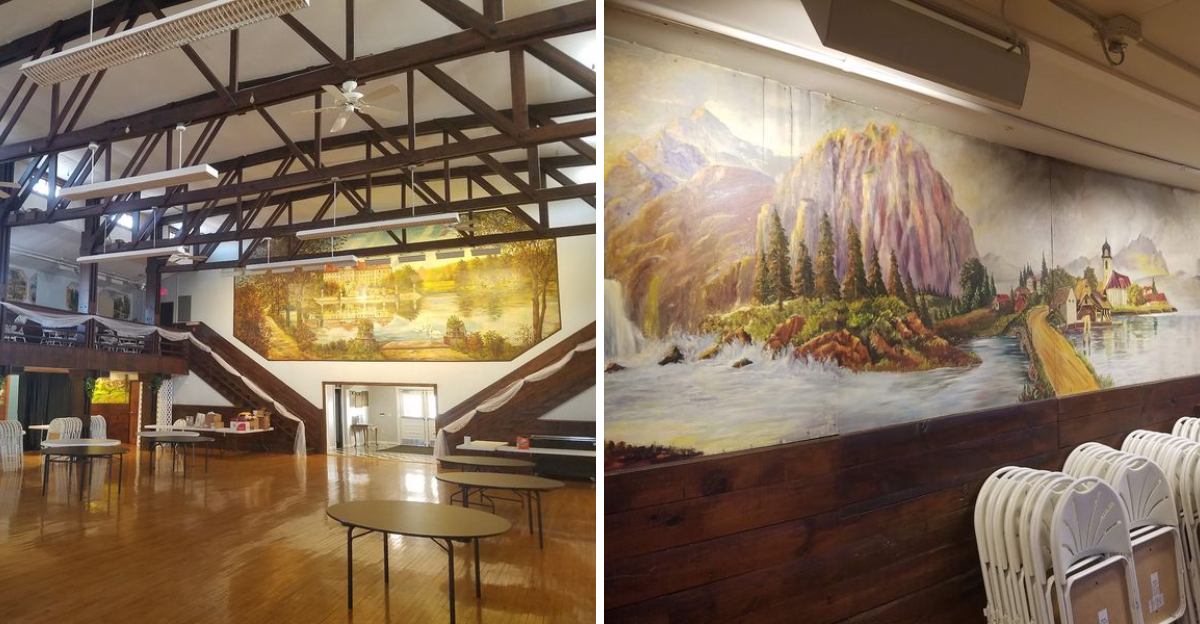
Picture the least likely art gallery in Kentucky. It is a plain wooden building in the western part of the state.
During the war it served as a club for soldiers. Then somebody handed a prisoner a brush and some plywood, and everything changed.
He was a house painter back home, self taught and homesick. He painted what he missed.
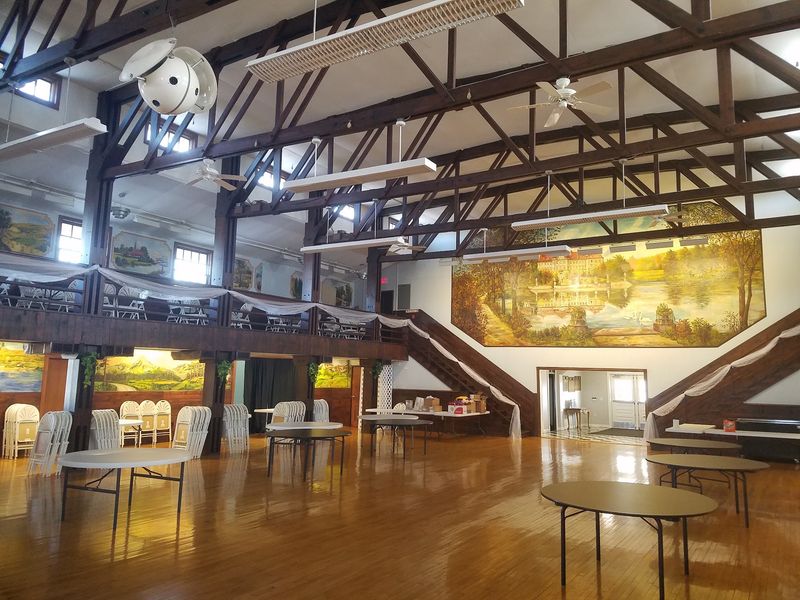
He gave them rolling hills, quiet villages, farms, streams, and one enormous castle copied from a postcard his wife sent him. That castle runs twenty by thirty feet and took him fifteen months.
He spent nearly three years on the walls. More than forty murals survive today, and you can stand in front of every one of them.
He never got back to the countryside he painted. The building did the remembering instead.
You will leave thinking about a man whose name you did not even know an hour earlier.
A Plain Brick Front With A Wild Interior
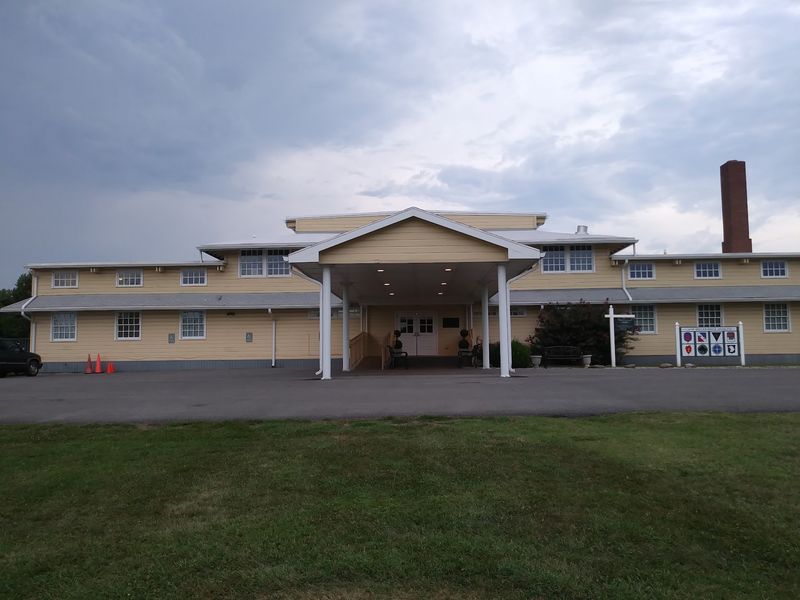
Camp Breckinridge Museum & Art looks like a modest community hall from the road.
The structure once served as the officers’ club for a sprawling 1940s Army training camp. Nearly everything else from that camp is long gone.
Wide halls, heavy doors, and old flooring still carry the club atmosphere. You can hear your own footsteps, which somehow makes the art feel louder.
I expected a small local history room with a handful of photos. What I found took over an hour of slow walking.
Volunteers in the lobby greet visitors like neighbors, not ticket takers. Ask one question and you get three stories back.
Nothing about the exterior prepares you for the scale of the murals. That gap between plain and remarkable is the whole charm here.
Traffic rolls past on the nearby highway without slowing down. Most drivers have no idea what covers those interior walls.
Parking is simple, free, and only steps from the door. There are no crowds to fight and no timed entry slots.
Bring your reading glasses for the small labels near each painting. Details matter far more here than speed.
Give yourself ninety minutes. You will use every single one of them.
The building stands at 1116 Village Square Rd, Morganfield, Kentucky, just outside town.
Forty Murals, One Steady Hand
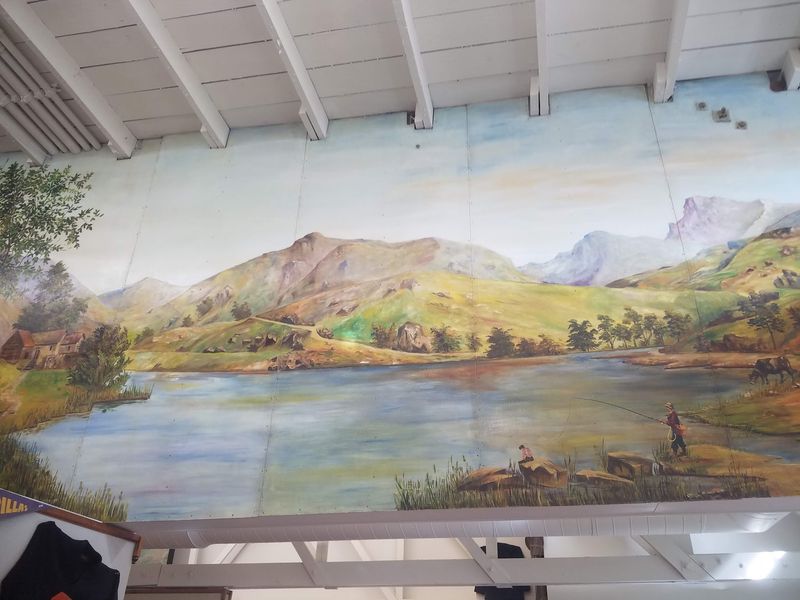
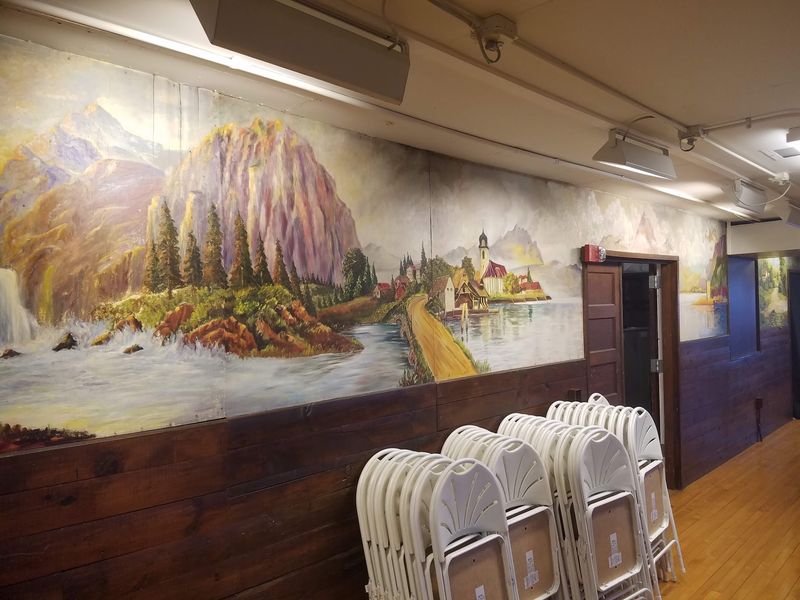
Counting them is part of the fun. Forty murals fill the rooms, and no two feel quite the same.
Some stretch wide across an entire wall. Others sit above doorways where visitors almost walk right past them.
The paint went straight onto plaster, so the walls themselves are the canvas. That makes the whole building the artwork.
Volunteers happily point out the ones people miss. Look up, look behind you, then look up again.
Colors have softened over the decades, giving the scenes a warm, faded glow. Nothing looks glossy or freshly finished.
Guides say the artist worked with limited supplies and simple tools. You would never guess it from the brushwork.
Standing close, you can see individual strokes and small corrections. Step back and the scene snaps into focus.
My favorite trick is walking each room twice, once fast and once slow. Different details surface each time.
Photographs rarely capture the scale of the larger panels. You really need the room around you.
Bring a friend who notices things. You will argue happily about which mural wins.
Nobody rushes you along, so lingering is encouraged. Take the long way through every room.
Forty is a big number for one building. It feels even bigger once you are inside.
The Man Who Held The Brush
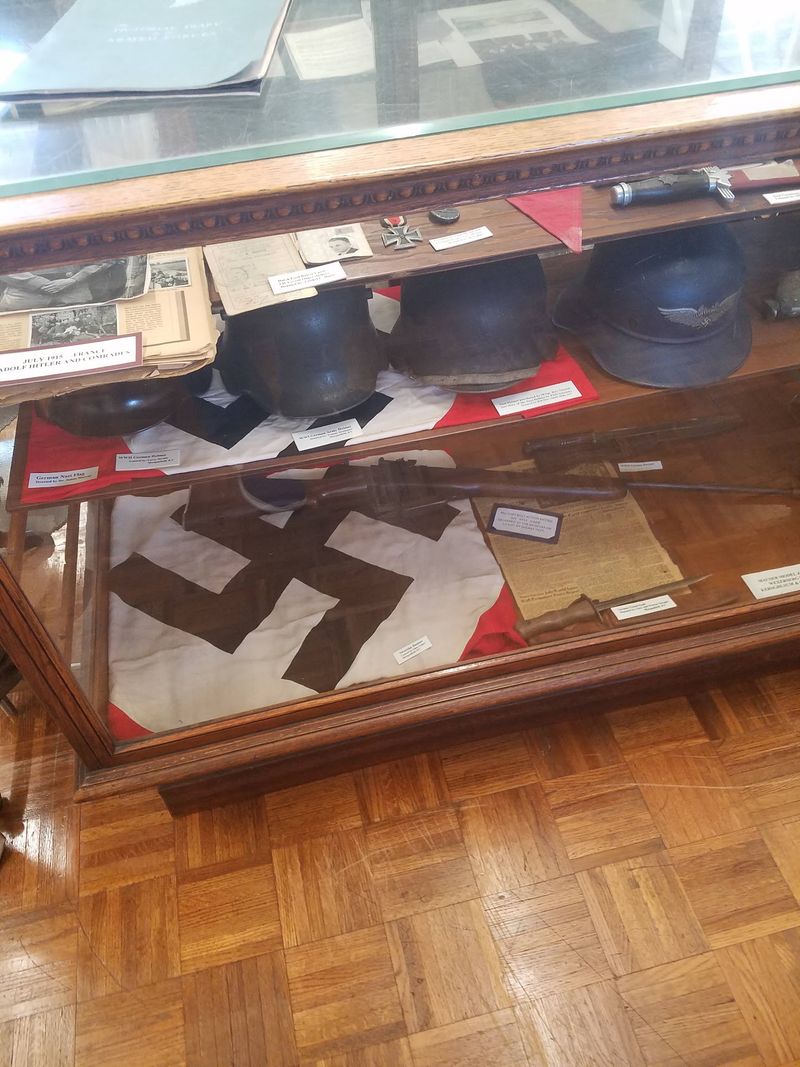
His name was Daniel Mayer. He was German, held at the camp in the 1940s, far from anything familiar.
Someone noticed his talent and handed him paint. That single decision changed the building forever.
Instead of routine work, Mayer spent long days facing blank plaster. The results still cover these rooms.
He never made it back to Germany. That fact quietly hangs over every scene he painted.
Guides tell his story plainly. It lands harder that way.
Visitors often go silent after hearing it, then look at the murals again. The second look is always slower.
I asked a volunteer what he was like as a person. She said the records are thin, and she refused to guess.
Honesty like that is rare in small museums. It made me trust everything else on the tour.
What survives is the work, room after room. For any artist, that is no small legacy.
A framed note about Mayer sits near the main hall. Read it before you walk the rooms.
Knowing the backstory changes how the colors register. Landscapes start to feel like memory.
Kids usually ask the same question adults do. Why paint so much for a place he could not stay?
Nobody has a tidy answer. Maybe painting was simply the best hour of his day.
What The Painted Scenes Show
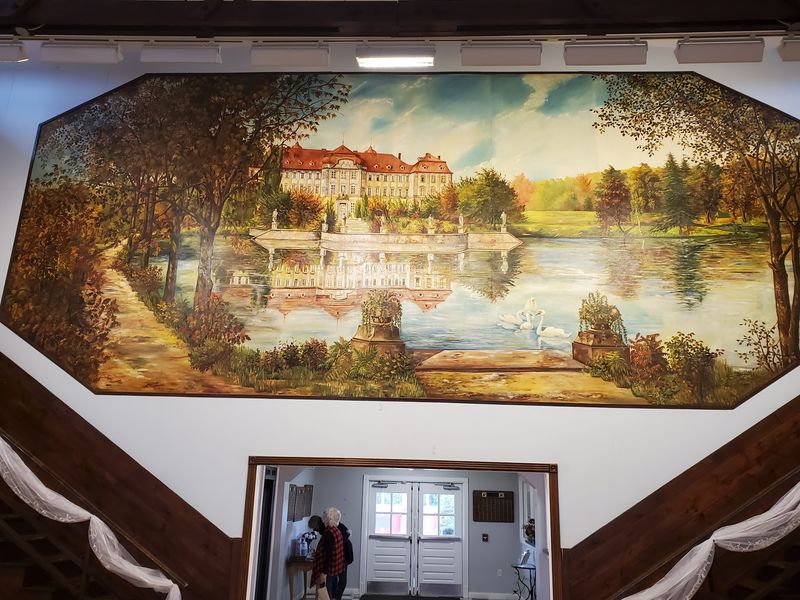
Expecting rows of stiff portraits? The murals go somewhere much friendlier.
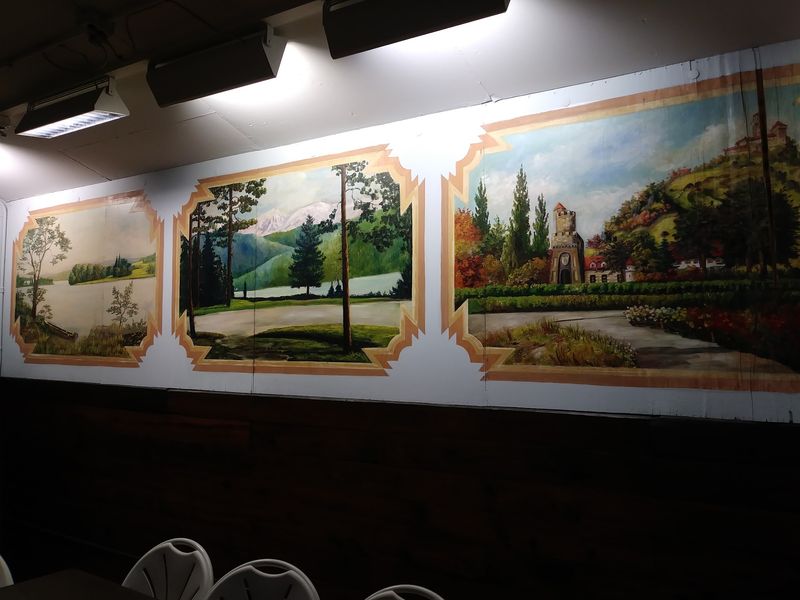
Many show sweeping outdoor scenes with mountains, water, and open sky. Trees appear again and again.
Several panels feel distinctly American, with wide western spaces and riders on horseback. Others look older and more European.
A few carry a storybook mood, like illustrations blown up to wall size. Children usually spot those first.
Color choices lean warm: rust, gold, deep green, dusty blue. The palette holds the rooms together.
Perspective tricks show up in the larger scenes. Distant hills seem to pull back from the plaster.
Some images clearly came from imagination rather than a window view. That is part of why they stick with you.
Guides admit that not every scene has a confirmed meaning. Interpretation is left to the visitor.
I liked the smaller panels best, the ones above the doors. They feel like private jokes between artist and wall.
Bring a camera, but look with your eyes first. Screens flatten these colors badly.
Take one full lap without reading a single label. Then go back and read everything.
The scenes reward patience more than knowledge. You do not need an art degree here.
Ask which mural is the staff favorite. Answers change depending on who is working.
Rescued Walls And A Second Chapter
After the camp closed in the 1960s, most of its buildings came down. The officers’ club stayed standing.
Empty buildings rarely age gracefully. This one waited years for someone to care.
A local foundation eventually took it on, raising money and rolling up sleeves. Volunteers handled much of the labor.
Plaster was stabilized, roofing repaired, and murals cleaned with careful hands. Rushing the job would have ruined them.
Conservation work on painted plaster is slow and unforgiving. One wrong solvent erases decades of brushwork.
Staff can point out places where damage was repaired. The seams are visible if you look closely.
Seeing those repairs made me appreciate the effort more. Flawless restoration would have hidden the struggle.
Fundraising continues, which is why the gift shop matters. Small purchases keep the lights on.
Donations go toward upkeep rather than flashy expansions. The building itself is the main exhibit.
Kentucky loses old structures every year without much notice. This one earned a second chapter.
That outcome was never guaranteed. It happened because people kept showing up.
Ask about the restoration timeline if a longtime volunteer is around. Those stories beat any plaque.
Progress came in slow stages, not one grand reveal. Patience built this place twice.
Rooms Packed With Union County History
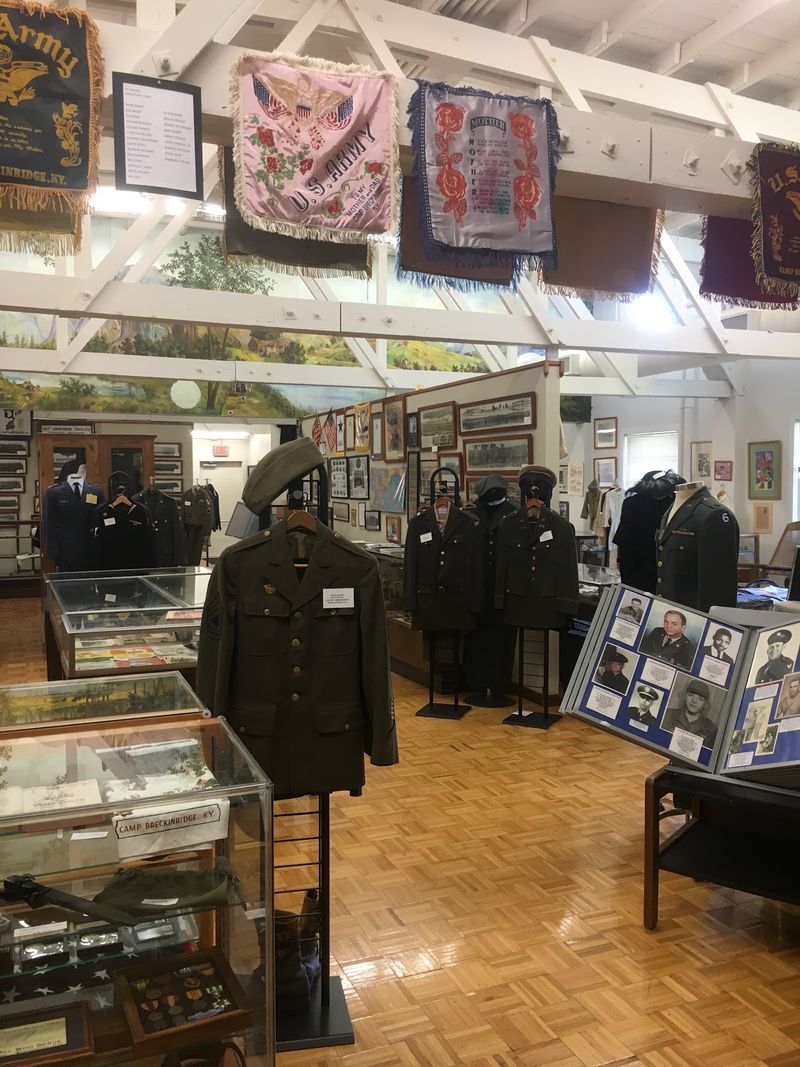
Beyond the painted walls, the museum keeps rooms of everyday local history. Cases hold objects people actually used.
Photographs show the camp era and the town that grew around it. Faces stare back with real personality.
Uniforms, letters, tools, and household items sit side by side. Nothing feels overly polished.
Displays cover Union County farming and coal country life. Both shaped this corner of Kentucky.
Older visitors sometimes recognize a name or a face. Volunteers keep notes when that happens.
I overheard a man explaining a photograph to his grandson. That beat any audio guide.
Labels are handwritten in places and typed in others. The mix feels honest rather than sloppy.
Small museums often hide their best items in corners. Check the low shelves and the back rooms.
School groups visit often, and the staff clearly enjoy them. Questions get real answers here.
History feels personal, not abstract. Local families donated most of what you see.
Give these rooms twenty minutes minimum. They add context to every mural.
Ask about donation stories if you have time. Each object arrived for a reason.
The camp once covered thousands of acres of farmland. Maps on display make that scale clear.
Seeing the maps first helps. The murals feel less random afterward.
A Working Gallery, Not Just A Time Capsule
Calling it a museum only tells half the story. The building also works as a community art gallery.
Rotating exhibits feature regional artists, and the work changes through the year. Repeat visits stay interesting.
Paintings, photography, and handmade crafts share the space. Prices are usually friendly.
Buying local art here supports both the maker and the building. That combination is hard to beat.
Classes and workshops happen periodically. Check the schedule if you want to try something yourself.
The gift shop leans toward books, prints, and small keepsakes. I left with a postcard set.
Receptions and community events fill the main hall occasionally. Music echoes nicely off those old walls.
There is something fitting about new art hanging near Mayer’s murals. Creativity kept its lease on this building.
Staff can tell you which artists live nearby in Union County. Many are within a short drive.
Weekend visits sometimes overlap with an opening. Ask ahead if that appeals to you.
Kids enjoy the hands-on corners when they are set up. Ask at the front desk.
Nothing about the gallery feels stuffy or exclusive. People chat, point, and linger.
Visiting twice in one year is not overkill. The walls stay the same; the shows do not.
Smart Ways To Plan Your Stop
Hours can shift with the season and volunteer schedules. Call before driving a long distance.
Admission stays modest, and donations are welcome at the door. Cash is a safe bet.
Morganfield sits in western Kentucky, an easy detour off US 60. Country roads make the approach pleasant.
Parking is free and close, with a level walk to the entrance. Access is manageable for most visitors.
Plan ninety minutes for the murals plus the history rooms. Make it two hours if you like talking.
Group tours can be arranged, and larger groups should call ahead. Guides prepare accordingly.
Photography rules are worth asking about at the desk. Flash and old paint rarely mix well.
Morning light through the windows flatters the larger panels. I would aim for late morning.
Pair the stop with lunch in town for a full half day. Local spots are only minutes away.
Kids do fine here if you keep the pace moving. The murals hold attention longer than expected.
Sign the guest book before you leave. Volunteers actually read those pages.
Bring cash for the gift shop too. Small purchases directly fund upkeep.
Weekday afternoons tend to be quietest. You may get the rooms to yourself.
Then drive home wondering how you never heard about it. Everyone does.