This Kentucky Cathedral Was Modeled On Notre Dame, And Its Window Is Bigger Than The Paris Original’s
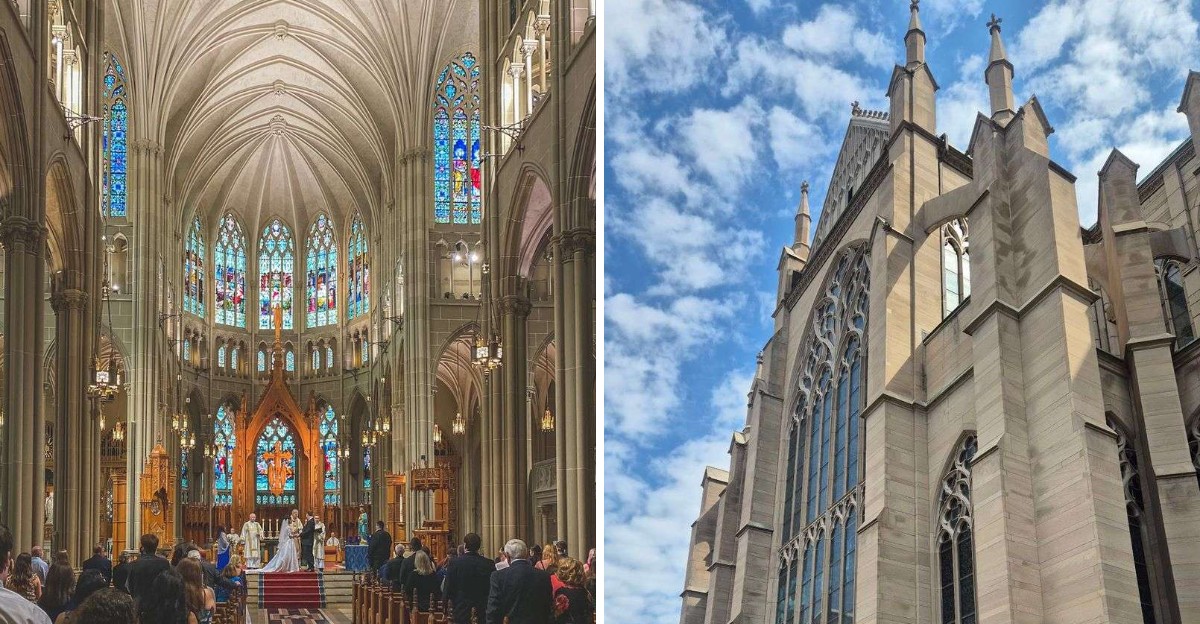
A bishop in Kentucky once looked at Notre Dame and decided he wanted that. Not something inspired by it.
That. He hired a Detroit architect, broke ground in the eighteen nineties, and got flying buttresses, gargoyles, and a tympanum over the doors.
Then the money ran out. The towers were never built and the statue alcoves along the front are still empty, which somehow makes the whole thing better.
Inside is where the ambition really shows. There is a stained glass window sixty seven feet tall, made in Munich and installed in nineteen eleven.
It takes up an entire wall and it will stop you mid sentence. The Stations of the Cross are Venetian mosaics with tens of thousands of glass pieces each.
Nobody charges you to see any of it. You will walk out and immediately start telling people that Kentucky has this, because you will not quite believe it either.
A Paris Landmark Rebuilt On Kentucky Soil
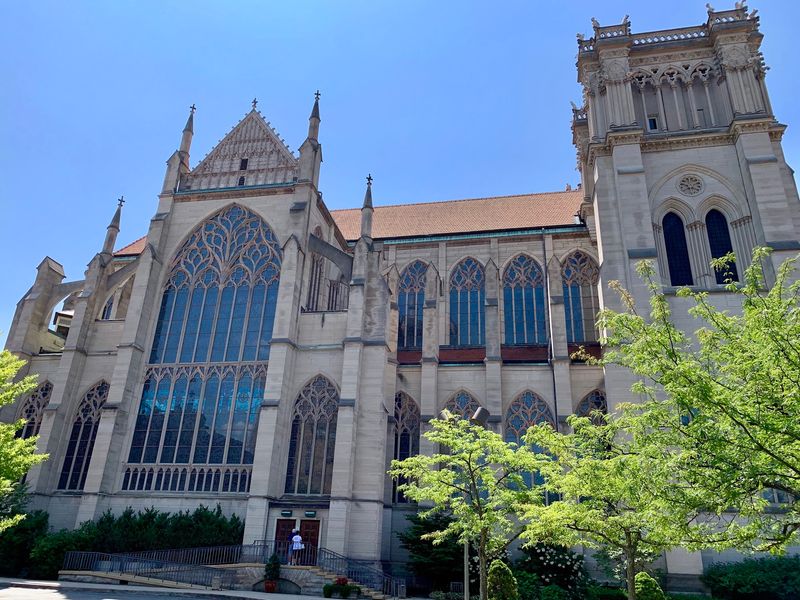
The Cathedral Basilica of the Assumption looks like a piece of France parked in northern Kentucky. Locals call it America’s Notre Dame, and the nickname fits.
Detroit architect Leon Coquard drew up the plans in 1893. He studied Notre Dame de Paris and carried its shapes across the ocean.
You get flying buttresses, pointed arches, and stone tracery. The scale is smaller, roughly forty-five percent of the Paris original.
That size still feels enormous once you stand at the base. The facade rises above Madison Avenue and stops traffic in the best way.
Construction began in 1894 under Bishop Camillus Paul Maes. He wanted a cathedral worthy of a growing river city.
Money ran short, as it often does with grand plans. The building was dedicated in 1901 with the front and glass still missing.
Crews added the facade between 1907 and 1923. David Davis designed the Madison Avenue front you see today.
Two towers were drawn on the original plans but never built. The cathedral stands unfinished by design, and nobody seems to mind.
Parking is easy and admission is free. You can find it at 1101 Madison Avenue, Covington, Kentucky.
The Window That Outsizes Notre Dame’s Rose
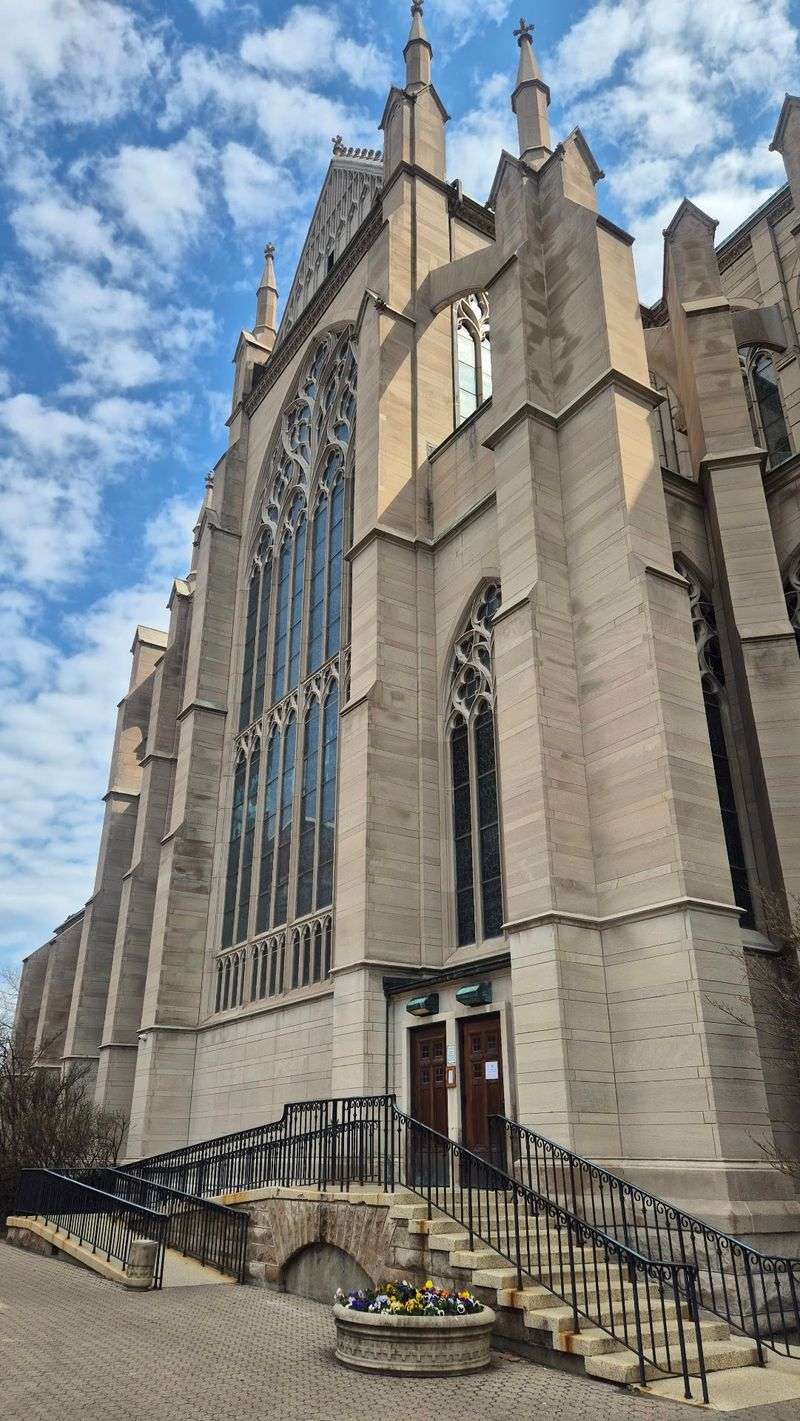
Numbers rarely feel dramatic, but this one does. The north transept window measures 67 feet tall and 24 feet wide.
Notre Dame’s largest rose windows stretch about 42 feet across. The Kentucky window simply covers more ground.
It is considered the largest stained-glass window in the Western Hemisphere and the second-largest in the world. That title belongs to a building most travelers drive right past.
Look closely and you will count faces everywhere. The window holds 117 different figures worked into the glass.
The upper section shows the Coronation of Mary after her assumption into heaven. Colors there run rich and warm.
Below that, the artists illustrated the Council of Ephesus from 431 CE. Rows of figures fill the lower panels with quiet drama.
Timing changes everything with a window this size. Visitors consistently recommend a sunny afternoon for the best light.
The glass throws color across the stone floor when the sun cooperates. Photos rarely capture how bright it gets.
Give yourself a bench and a few minutes. Rushing past a window this detailed feels like skipping the last chapter of a book.
Bring binoculars if you own a pair. The upper details reward a closer look.
Gargoyles With Absolutely Nothing To Do
Stone creatures crouch along the facade, watching Madison Avenue with permanent scowls. There are 32 gargoyles and 26 chimeras up there.
They are exact copies of the ones Eugene Viollet-le-Duc created for Notre-Dame de Paris. Same poses, same attitude, different continent.
Here comes the funny part. In Paris, gargoyles work as rainspouts and channel water off the roof.
The Covington versions do no such thing. They are purely decorative, employed full time as scenery.
Kids love spotting them from the sidewalk. Adults usually end up doing the same thing without admitting it.
Weather takes a toll on carved stone over a century. Restoration crews replaced gargoyles during work done in 2020 and 2021.
That project also reinforced buttresses and swapped out rusty iron pins. Preservation work like this rarely makes headlines, but it saves buildings.
Walk the perimeter before you head inside. The exterior tells half the story, and the stone faces are free entertainment.
Morning light sharpens the shadows on the carvings. Photographers tend to prefer that hour.
An Interior Borrowed From Saint-Denis
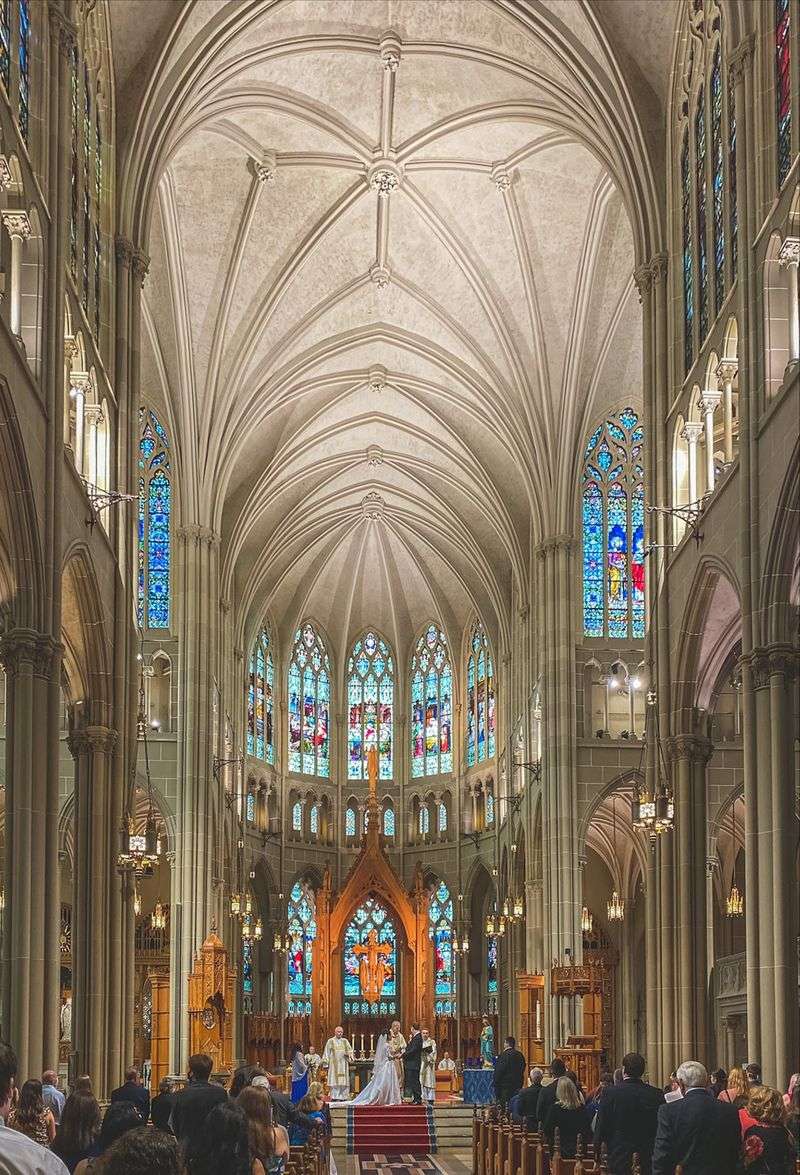
Here is the twist nobody expects. The outside copies Notre Dame, but the inside follows a different French church entirely.
Designers modeled the interior after the Basilica of Saint-Denis, a medieval abbey church near Paris. That choice changed the whole feel of the room.
Saint-Denis is famous for glass rather than heavy stone. Its builders pushed windows wider and walls thinner.
Covington’s cathedral follows that lead. The walls are noticeably more glassy than many European cathedrals of similar age.
Light pours in from every direction on a clear day. The nave never feels gloomy or cave-like.
Vaulted ceilings climb overhead and pull your eyes upward. Visitors describe the effect as breathtaking, and the word fits.
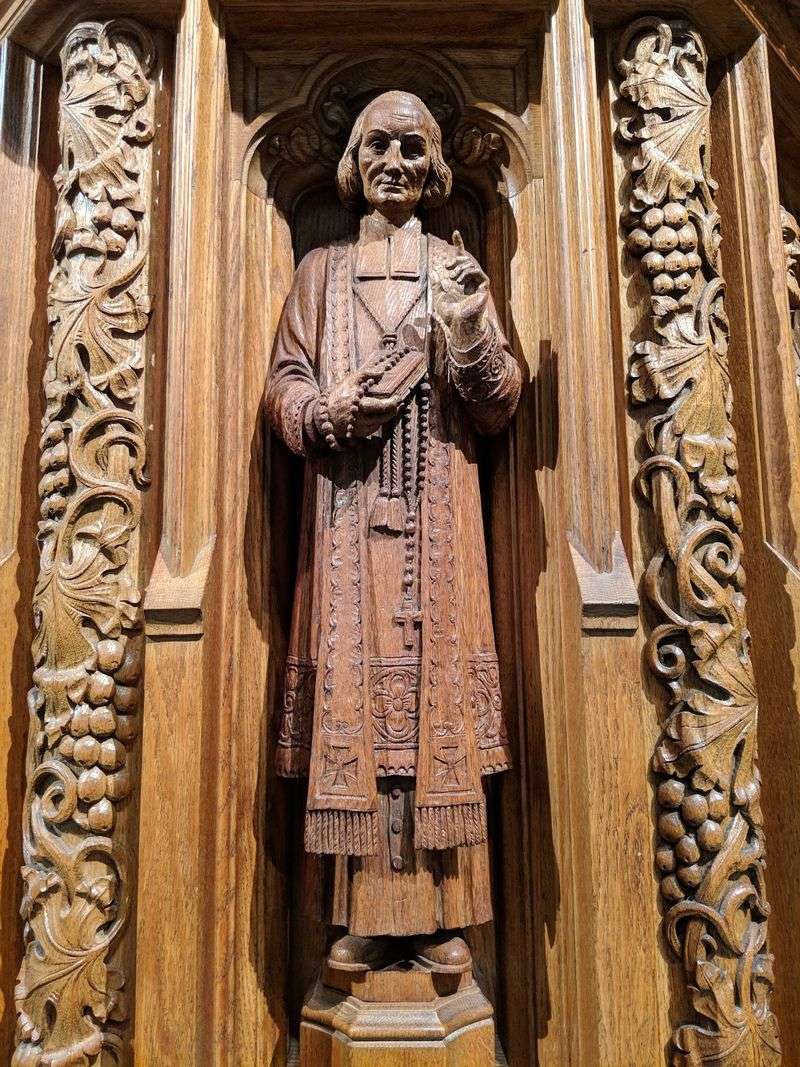
Wood carving runs through the space in careful detail. Pews, screens, and fixtures all reward a slow walk.
Seating stretches generously around the church. Roughly 700 people have filled it for a Christmas Eve service.
You can attend a service or simply tour quietly. Both options are welcome, and greeters explain where photography is allowed.
Take the side aisles rather than marching straight down the middle. The angles change and so does the light.
Eighty-Two Windows From Munich Craftsmen
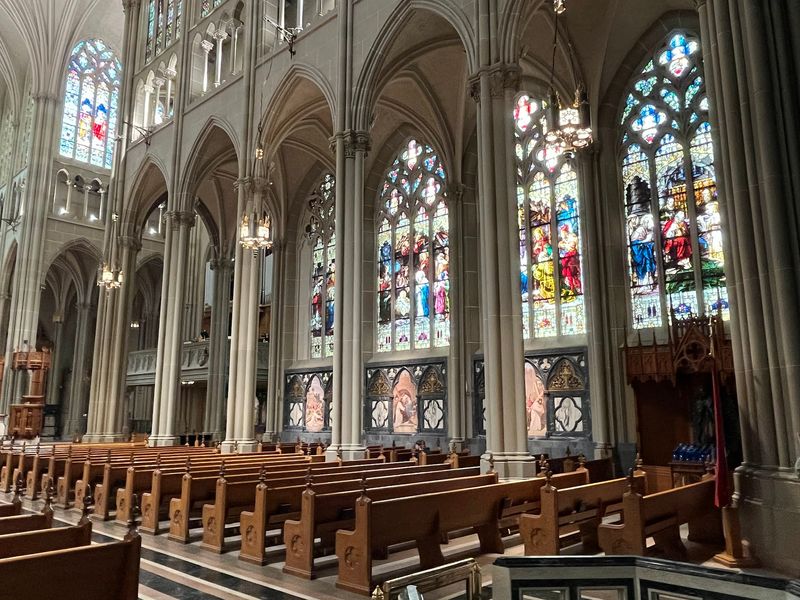
One giant window gets the headlines. The other 81 deserve some credit too.
Mayer and Company of Munich, Germany, created the entire collection. Their studio was famous across Europe and America around 1900.
The style is called Munich Pictorial. Instead of small chunks of colored glass, the artists painted scenes like canvases.
Faces show expression. Robes have folds.
Backgrounds carry depth that flat glass usually cannot manage.
Installation happened in 1910 and 1911, a decade after the building was dedicated. Patience clearly ran in the family here.
Walk the walls slowly and the windows start telling connected stories. Each one holds figures worth identifying.
A self-guided tour booklet is sold on site for around ten dollars. There is also a dedicated book covering the stained glass in depth.
The booklet works from anywhere, so you can read it later at home. That detail makes it a decent souvenir.
Sunlight moves through the building over the course of a day. Windows that look muted at noon can blaze by mid afternoon.
Circle back to a favorite before you leave. Chances are it looks completely different the second time.
Mosaics Made From Tens Of Thousands Of Tiles
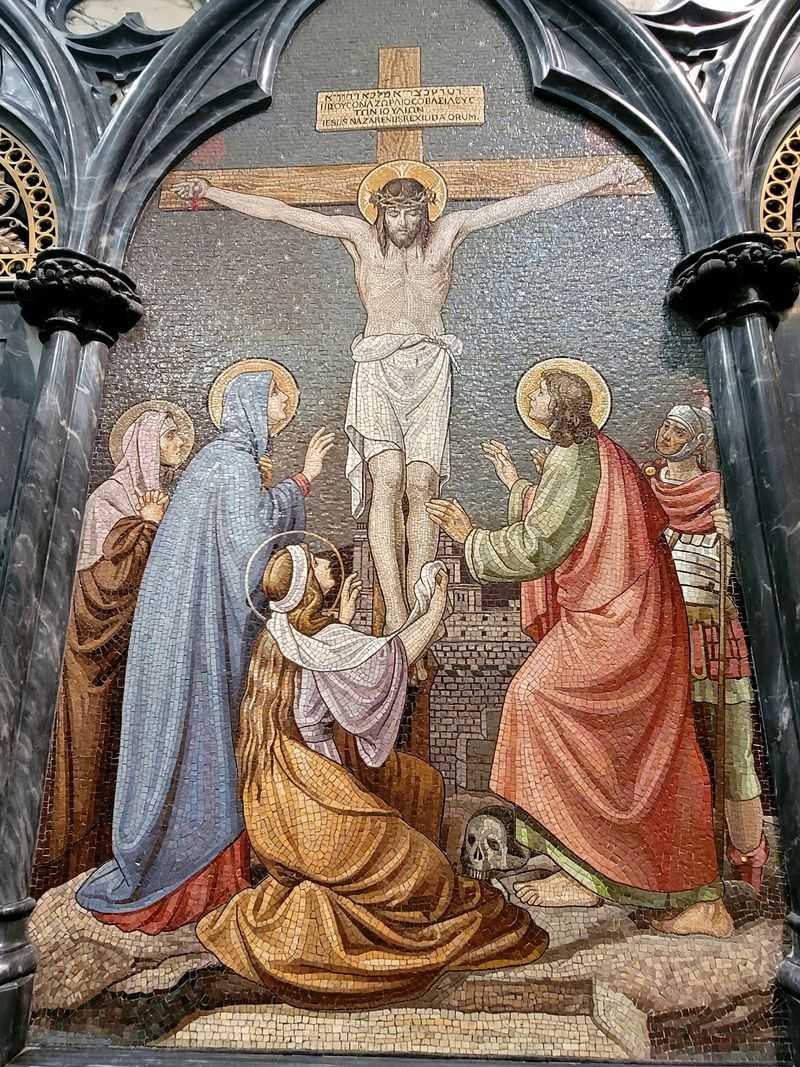
Squint at the Stations of the Cross and something odd happens. What looks like painting turns out to be tile.
Fourteen stations line the cathedral walls as mosaic art. Craftsmen in Venice, Italy, built each one by hand.
The tile count is genuinely absurd. Every single station uses between 70,000 and 80,000 porcelain ceramic pieces.
Multiply that across fourteen panels and the math gets dizzying. Somebody placed every one of those tiles individually.
Stand close and the surface breaks into a grid of tiny squares. Step back six feet and the image snaps together.
Visitors often name the mosaics as their favorite surprise. The giant window gets the attention, but the tile work earns loyalty.
Gold tones catch whatever light reaches them. The panels shift as you move down the aisle.
Murals by American artist Frank Duveneck decorate the Blessed Sacrament Chapel. Duveneck was a Covington native who built a serious reputation abroad.
Ceilings and walls elsewhere carry their own detailed work. Little in this building was left plain.
Budget extra time for the side chapels. Rushing the perimeter means missing the best small stuff.
Three Pipe Organs And A Shrine Of Relics
Sound matters as much as sight in a room like this. The cathedral holds three pipe organs.
One Schwab organ dates back to 1858, older than the building around it. Another was custom designed by Henry Willis III in 1933.
Willis came from a legendary English organ-building family. Getting one of his instruments in Kentucky was no small feat.
Lucky visitors sometimes arrive while an organist practices. The effect turns a quiet tour into a private concert.
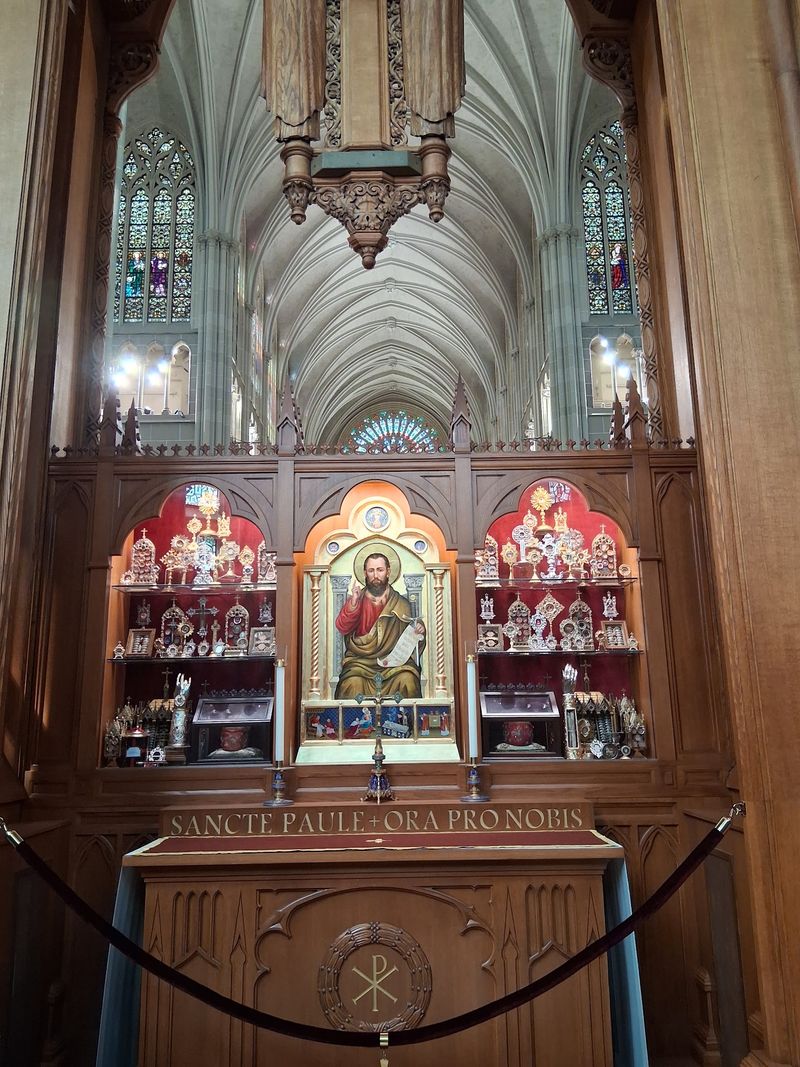
Relics form the other unusual collection here. The cathedral holds one of the largest such collections in the country.
Among them sits a bone fragment from the hand or wrist of St. Paul. It rests in the Relic Shrine of St. Paul.
Displays like this are rare in American churches. Many people travel to Europe specifically to see comparable collections.
Photography rules differ by area, so ask at the door. Greeters explain exactly where cameras are welcome.
Real prayer candles are available rather than electric ones. They run about five dollars each.
Listen before you look in the organ loft area. Acoustics in the nave carry sound in surprising ways.
Planning A Visit That Pays Off
Pope Pius XII elevated this church to minor basilica status on December 8, 1953.
That rank puts it in rare company. Most travelers never realize one sits across the river from Cincinnati.
Admission is free and parking is easy. Leaving a donation helps keep both of those things true.
Volunteers and greeters staff the doors regularly. Many will walk you through the highlights without being asked.
The self-guided booklet fills gaps if no docent is available. Guided tours run about an hour and cover far more detail.
Sunny days are worth chasing. Light is the whole point in a building designed around glass.
Plan for at least an hour if you like detail. Some visitors do it faster, but the carvings reward patience.
Combine the stop with a walk through the surrounding Covington streets. The neighborhood has plenty of old architecture nearby.
Everyone is welcome to tour quietly or attend a service. Respect for the space is the only real requirement.