This Kentucky Pioneer Cemetery Is Filled With Graves And Legends You Would Never Expect
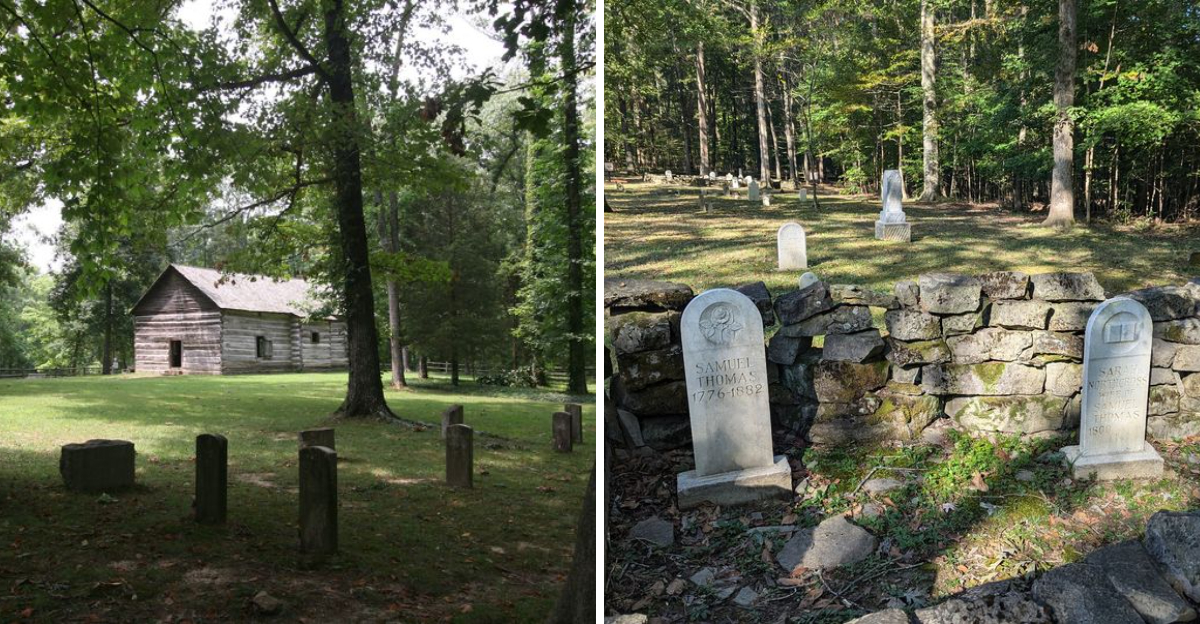
You have driven past a hundred country churchyards without once tapping the brake. This one earns a stop, and the reason is the strange little building beside it.
Somebody in 1804 looked at a square and decided it needed more corners. Twelve, to be exact, arranged in the shape of a cross.
Two centuries later, people still cannot agree on why. One camp votes for the apostles.
The other insists on the twelve tribes of Israel. The builders left no note.
They also skipped the fireplace entirely, which was bold of them in a Kentucky January. The story goes that the women heated stones and placed them under the seats.
Out in the grass rest men who fought the Revolution. One headstone belongs to the little sister of Kentucky’s most famous woodsman.
You will not be in a hurry to leave.
The Oldest Log Meetinghouse Still Standing In Kentucky
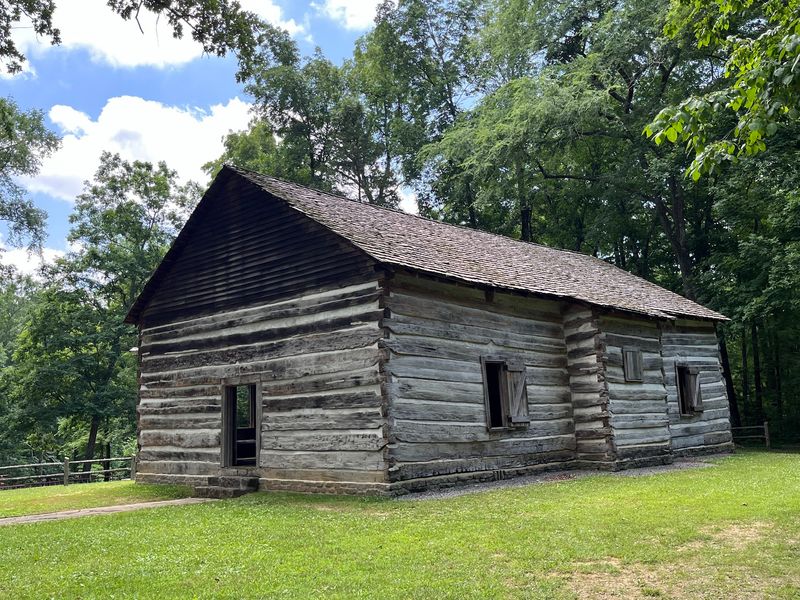
Old Mulkey Meetinghouse State Historic Site protects a log building raised in 1804, back when Kentucky was still raw frontier. It holds the title of oldest freestanding log meetinghouse in the state.
The structure sits on a gentle rise inside a 20-acre park in Monroe County.
Walk close and the craftsmanship shows itself. Hand-hewn logs, notched corners, and hand-rived shingles were shaped without power tools of any kind.
Inside, the original puncheon floor and peg-leg benches tell you plenty about frontier comfort. Nobody came here for cushions.
The site joined the Kentucky state park system in 1931, which explains why it still looks cared for. Grounds are mowed, paths are clear, and the building is protected rather than propped up for show.
Visitors regularly mention how peaceful the whole hilltop feels. Birds, breeze, and old timber make a decent soundtrack.
Give yourself twenty minutes just standing near the walls before you go anywhere else. Details start appearing once your eyes adjust to the shade.
Then step inside and let the room settle over you. Two centuries of gathering leaves a mark on a floor.
You will find it at 38 Old Mulkey Park Rd, Tompkinsville, Kentucky.
Twelve Corners And Three Doors With Hidden Meaning
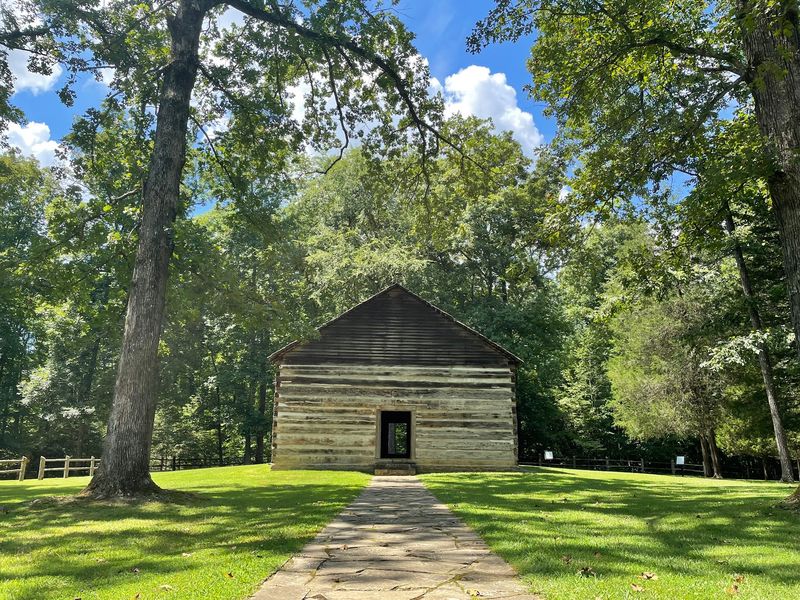
Count the corners on this building and you get twelve, not four. Builders shaped it that way on purpose.
Tradition says the twelve corners stand for the twelve apostles, or possibly the twelve tribes of Israel. Either reading turns the walls into a message.
Three doors break up those walls, and each one represents part of the Holy Trinity. Symbolism was built right into the lumber.
That design also makes the floor plan unusual to walk. You keep turning slightly, and the room never feels like a plain box.
Frontier carpenters had to work harder for this shape. Every extra corner meant more notching, more fitting, and more chances to get it wrong.
Bring kids and turn it into a counting game. Small visitors love hunting corners and doors before anyone explains why they exist.
Photographers should circle the building slowly for the best angles. Light hits the notched logs differently on each face.
Interpretive signage on the grounds fills in the meaning behind the shape. Reading it first makes the second lap far more interesting.
Few American buildings this old carry their beliefs so plainly in the framing. The walls say something before anyone speaks.
A Building With No Chimney At All
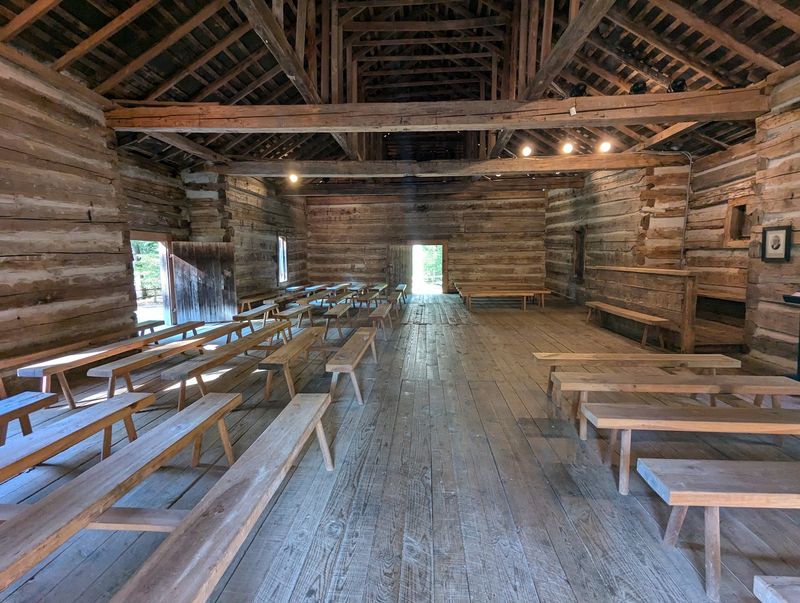
Look up in this meetinghouse and something is missing. There is no chimney, no fireplace, no heat source anywhere in the structure.
Early worshipers handled winter with soapstones instead. Stones were heated, slipped into bags, and carried inside to seats.
Those bags were made of heavy woolen cloth or animal skins. Families pulled them over their knees and settled in for the service.
Picture a full room of people balancing warm stones on their laps. Frontier problem, frontier solution.
The detail explains why the benches sit where they do and why services were often short. Comfort was never the point of this room.
Ask about the soapstone story at the gift shop or check the signage. Park staff know these details well.
Summer visits feel completely different, since thick logs keep the space cool and shadowy. The building handles heat better than cold.
An automated audio presentation plays inside and covers the history for you. Lights and narration can start suddenly, which has startled more than a few guests.
Stay through the whole recording anyway. The small practical details are what make this place stick with you afterward.
Pioneer Graves Dating Back To The Early 1800s
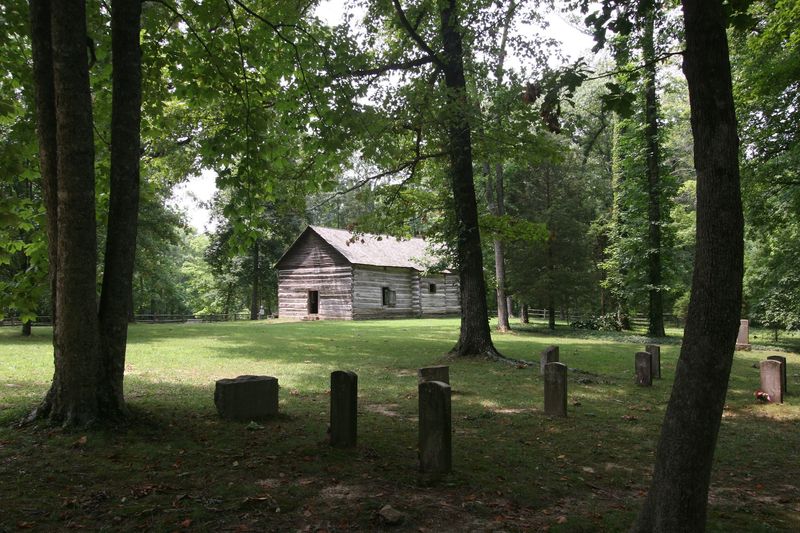
Beside the meetinghouse lies a pioneer cemetery that quietly steals the show. Markers here reach back to the early 1800s.
Many of Monroe County’s earliest settlers rest under these stones. Families who cleared this land are recorded in rows of carved names.
Some stones are thin slabs of local limestone, others cut marble. Staff have shared local marble history with curious visitors before.
Several markers were cleaned rather than replaced, which is why certain ones look startlingly new. The stone underneath is original.
Read the carvings slowly and patterns appear. Spellings shift, dates repeat across families, and hand-cut letters wander across the surface.
Shade trees cover much of the cemetery, so summer walks stay pleasant. The ground is mostly level and easy to cross.
Stick to open lanes between the stones and avoid leaning on any marker. Old stone is more fragile than it looks.
Cemetery is the single most mentioned feature by visitors here, which says plenty. People come for the meetinghouse and stay for the graves.
Plan at least half an hour among the markers. Rushing this part means missing the whole reason the site feels so memorable.
Hannah Boone, The Frontier Legend’s Youngest Sister
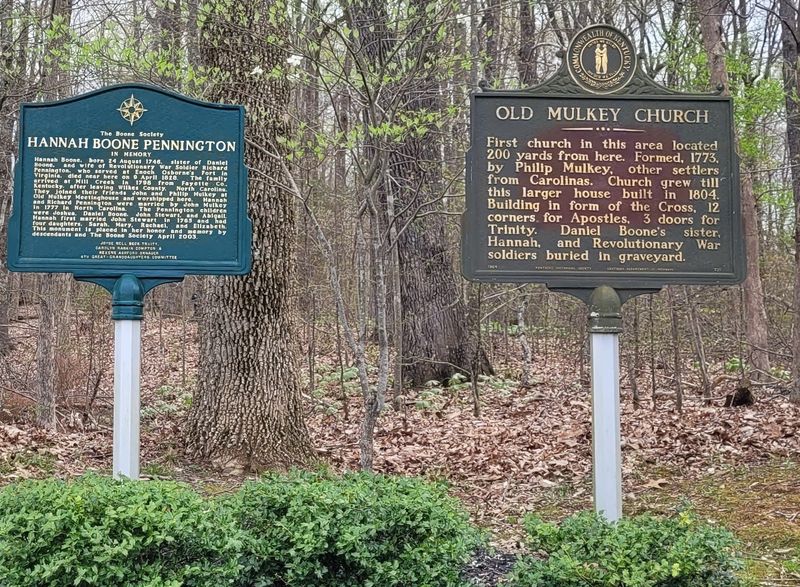
Ask which grave draws the most visitors and the answer is easy. Hannah Boone Stewart Pennington rests in this cemetery, and she was Daniel Boone’s youngest sister.
Her marker is the most popular stop among the stones. Descendants travel long distances specifically to stand beside it.
A memorial nearby honors Squire Boone, Daniel Boone’s younger brother. His actual grave is in Indiana, so the tribute stands in his place.
Between the two, the Boone family footprint here is bigger than most people expect from a small county park.
Families researching frontier ancestry often turn up connections they never knew about. Some visitors arrive claiming descent from Squire himself.
Finding Hannah’s stone takes only a few minutes. Ask at the gift shop if you want the fastest route through the rows.
Photos of the marker are welcome, though stepping carefully around neighboring stones matters. Roots and uneven ground hide in the grass.
The connection turns a name from history books into something you can actually stand beside. Textbooks rarely offer that.
Take a moment there before moving on. Frontier Kentucky suddenly feels much closer than two centuries away.
Revolutionary War Soldiers Beneath Kentucky Soil
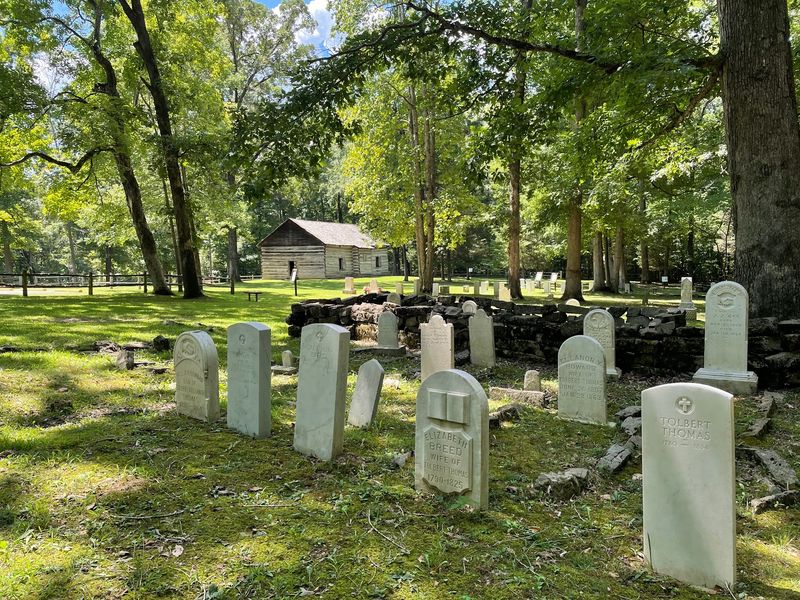
Several Revolutionary War soldiers are buried in this cemetery, which surprises nearly everyone who wanders in. Kentucky was frontier country when these men arrived.
Private Thomas White, originally from Ireland, is among those laid to rest here. His journey from Ireland to Monroe County covered an enormous distance.
Patriot markers scattered through the rows make these graves easier to spot. Visitors often photograph them first.
Descendants sometimes bring children to see an ancestor’s memorial in person. Staff have helped families locate specific patriots.
Later veterans appear here too. A family reunion once placed a headstone for a Civil War era relative on these grounds.
The mix of eras turns the cemetery into a timeline you can walk. Each section reflects a different chapter of American settlement.
If genealogy is your reason for visiting, come prepared with names and dates. The stones reward specific questions.
Interpretive signs around the property connect these burials to the bigger frontier story. Reading them makes the names land harder.
Standing among soldiers who crossed an ocean and then a mountain range puts modern road trips in perspective. Your drive was nothing by comparison.
The Day The Congregation Walked Out Two Different Doors
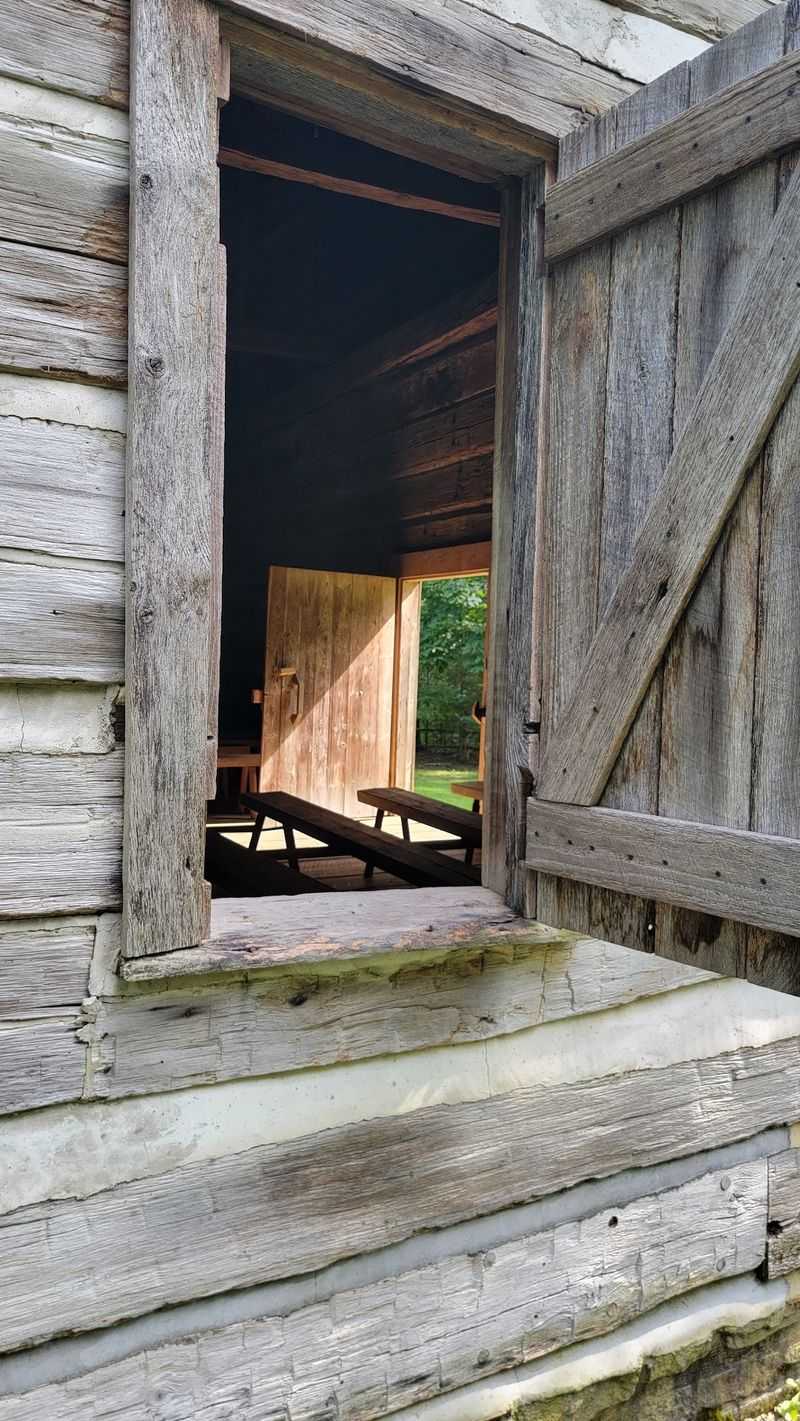
Those three doors were not just symbolic. In 1809, two of them became the setting for one of Kentucky’s most dramatic congregational splits.
The church began as Mill Creek Baptist Church, founded by pioneer Baptists. John Mulkey served as its first pastor.
Mulkey came to favor what he called New Testament Christianity, which differed from strict Calvinist teaching. Disagreement grew until a decision could not be avoided.
A majority of 150 members followed Mulkey out the west door. The remaining 50 exited through the east door.
That second group formed a new Baptist congregation nearby. One building, two doors, two futures.
Afterward the structure became known by the name it still carries today. The split literally renamed the place.
Standing between the doors makes the story easier to picture than any plaque could manage. Choosing a direction meant choosing a community.
The audio presentation inside walks through the disagreement in plain language. Kids follow it surprisingly well.
Few historic sites let you stand exactly where a decision like that happened. This one puts you right in the doorway.
Look at the worn thresholds before you leave. Plenty of feet crossed them on that particular day.
Cemetery Scavenger Hunts, A Gift Shop, And A Creekside Picnic Spot
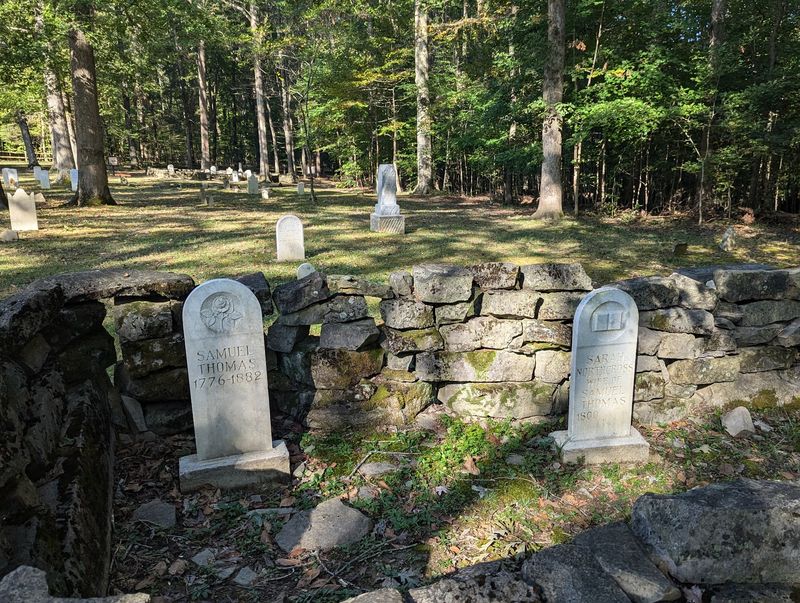
History is the headline here, but the park works just as well as an afternoon outing. A Cemetery Search and Find activity turns the graveyard into a puzzle for younger visitors.
The gift shop stocks books along with Kentucky handicrafts. If it looks closed, find staff on the grounds and they will open it up.
A park library holds genealogical and pioneer history material. Families tracing ancestors get real research value from it.
Outside, a shelter house and playground sit side by side. Reunions book the shelter regularly, and parents appreciate having swings within sight.
Follow the road to the very end and a creekside picnic area appears. Shade, water, and quiet make it a favorite among returning visitors.
Grounds are consistently described as well kept.
Restrooms here earn praise, which is rare enough to mention. Cleanliness clearly matters to the small staff.
Leashed dogs are welcome on the grounds. Bring water for them in warmer months.