This Little-Known Aviation Museum In Kentucky Will Send Your Top Gun Dreams Soaring
Admit it, you’ve hummed a certain fighter jet movie theme at least once in your life. Maybe you even pictured yourself in aviator sunglasses, waving from a runway.
Here’s your chance to get a little closer to that daydream without the years of flight training. Picture a Kentucky museum filled with aircraft that once ruled the skies.
Some planes look sleek and fast, while others look like they were built by brave tinkerers. Each one has a story about the pilots, engineers, and dreamers who made flight possible.
You’ll find yourself craning your neck and grinning like a kid. Little ones will love it, but grown-ups tend to get just as excited.
It’s the perfect outing for a lazy weekend, a family adventure, or a curious date. You might even leave planning a trip to the nearest flight school.
Your need for speed is about to get a serious boost.
Where Kentucky Takes Flight
The Aviation Museum of Kentucky comes with a bonus soundtrack: real planes roaring off the runway next door.
The museum was incorporated in 1981 and opened its doors on April 15, 1995. In 2006, it became the official aviation museum of the Commonwealth of Kentucky.
That is a big title for a place many locals still drive past. Inside, more than 20,000 square feet of exhibit space proves the title fits.
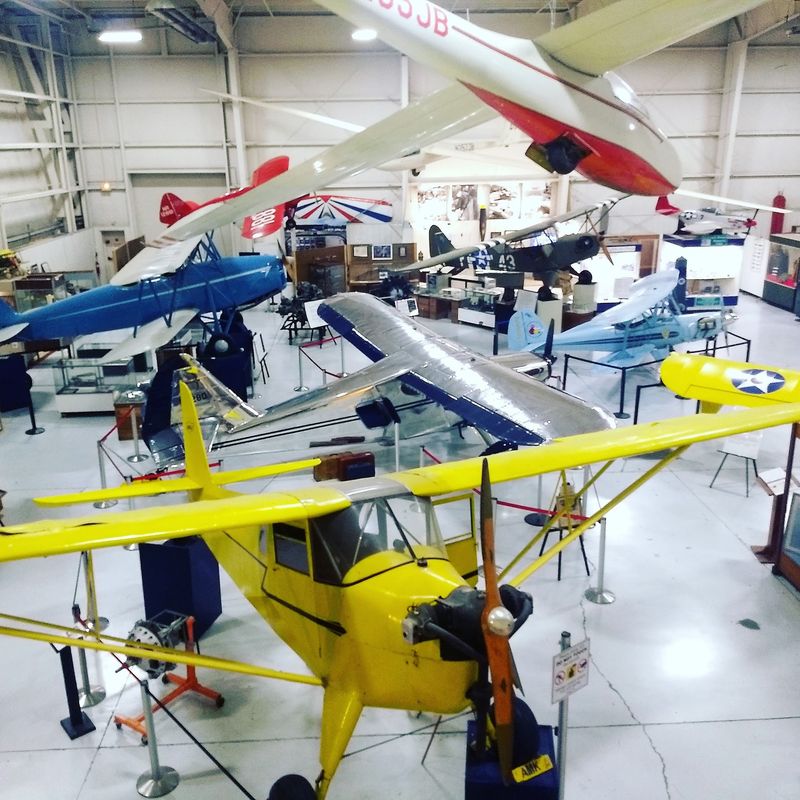
Planes sit on the floor and hang from the ceiling, so your neck gets a workout. Photos and artifacts tell the human stories behind each machine.
The building also holds a library and a restoration shop where aircraft get repaired. Much of the work comes from dedicated volunteers who clearly love these machines.
Visitors often linger near the windows to watch small aircraft take off. It is free entertainment that no ticket booth can promise.
Guests rate the museum at 4029 Airport Road, Lexington, Kentucky, highly, and the friendly crew is a big reason why. Many staff members are volunteers who could talk planes all afternoon.
Give yourself two to three hours if you like reading every sign. Rushing through feels a bit like skipping the landing on a good flight.
Feel The Need For Speed With The F-14B Tomcat
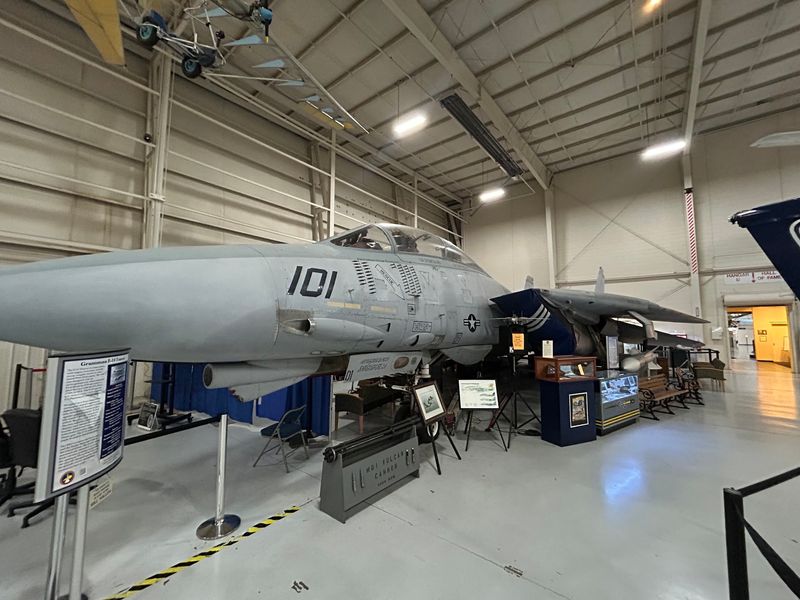
Somewhere, a movie soundtrack starts playing in your head the moment you see this jet. The US Navy Grumman F-14B Tomcat is the star many fans come to meet.
It ranks among the most powerful fighter interceptors ever built. Its wings were designed to sweep back for speed and spread out for slower flight.
Up close, the size surprises most first-time visitors. Movies shrink it down, but in person it fills the hangar with attitude.
Take a slow lap around the whole aircraft. Look at the twin tails, the long nose, and the two-seat cockpit.
Two seats meant a pilot up front and a radar officer in back. That teamwork idea makes a great talking point for kids and adults.
Bring your camera and find a low angle for the best shot. A photo from below makes the jet look ready to leave the ground.
Volunteer guides are often happy to share details you would never guess. Ask a question, and you might get a mini history lesson for free.
Your aviator sunglasses are optional. Your call sign is up to you, but choose wisely, because friends will remember it.
Fans of the big screen will feel right at home here. Nobody will judge you for humming a little.
Blue And Gold Glory From The Blue Angels
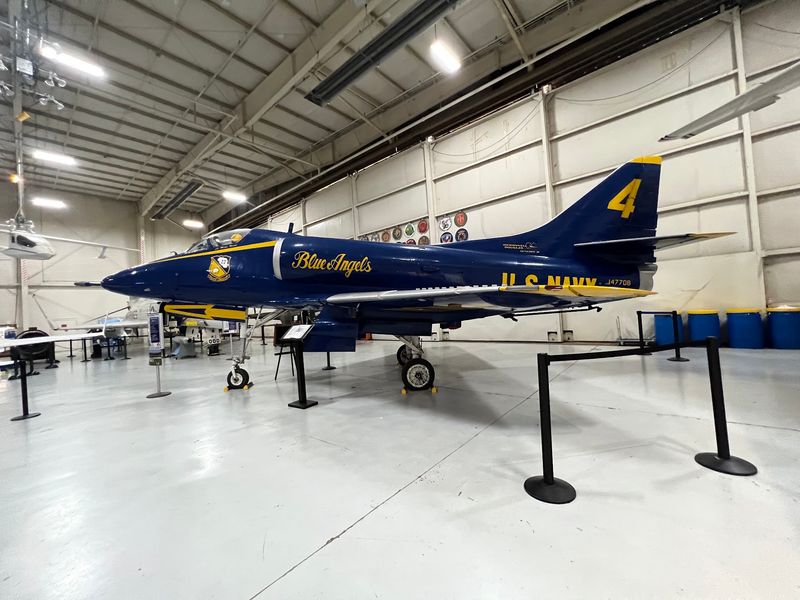
Few paint jobs can make a crowd cheer before the engine even starts. The US Navy Blue Angels A-4 Skyhawk wears the famous blue and gold colors.
The Blue Angels are the Navy flight demonstration team known for tight formations. They flew the Skyhawk in their shows from 1974 to 1986.
The Skyhawk is small for a jet, which made it quick and nimble. Pilots gave it fun nicknames like Scooter and the Heinemann Hot Rod.
Standing beside it, you can picture the diamond formation slicing across a summer sky. Kids tend to point at the bright colors first.
Then the questions start pouring in about speed and stunts. Have a few answers ready, or let a friendly docent jump in.
Compare its size with the bigger jets nearby. It is a fun lesson in how different designs serve different jobs.
Snap a family photo here, since the colors pop in every picture. That blue looks great on a holiday card or a phone screen.
Air show fans will feel a rush of excitement. Everyone else may leave planning a trip to see the team fly live.
The team still performs across the country each year. Seeing this jet first makes a live show even more meaningful.
Record Breakers And Flying Cameras
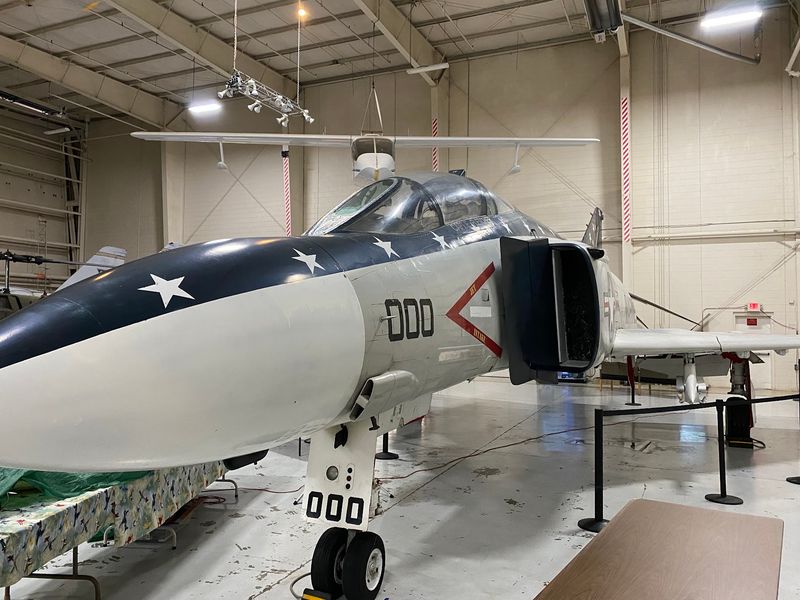
Some jets are famous for speed, and some are famous for keeping quiet. This trio covers both, with a few record books thrown in.
The McDonnell Douglas F-4 Phantom II design first flew in 1958. It went on to set several world records for speed and altitude.
Its bent wingtips and droopy tail give it a tough, bulldog look. Once you notice those angles, you will spot a Phantom anywhere.
Next comes the McDonnell RF-101 Voodoo, a reconnaissance aircraft built to gather photos. Think of it as a very fast flying camera.
Its job was to zoom in, snap pictures, and zoom back out. Guides can sometimes take visitors outside for a closer look at it.
Then meet the Northrop T-38 Talon, the world’s first supersonic advanced jet trainer. Many future pilots learned high-speed flying in this sleek white dart.
NASA astronauts have trained in T-38s too, which adds extra cool points. Its slim shape looks like a paper airplane that grew up.
Line up all three in your mind and compare their shapes. Each design tells you what job the plane was built to do.
This corner rewards slow readers. The signs are packed with surprising facts worth every minute.
Kentucky’s First Airplane Had Wheels That Tucked Away
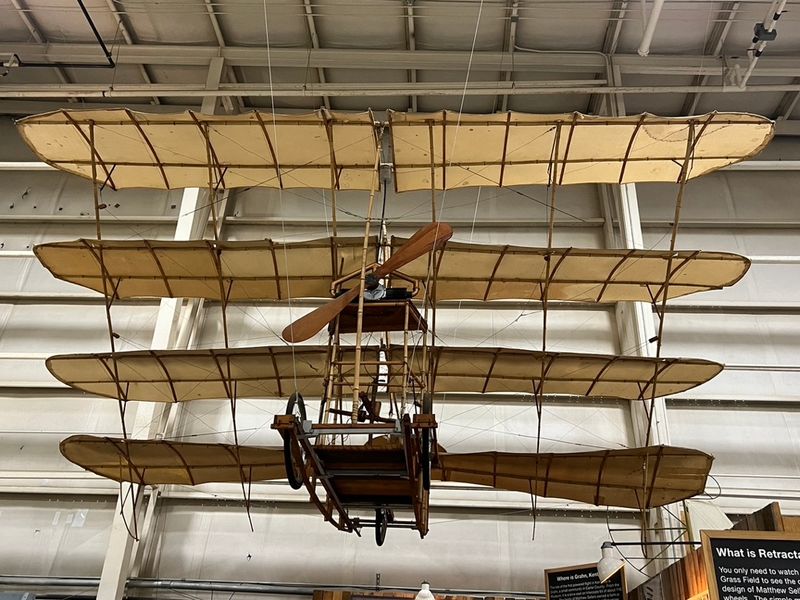
Long before jets roared over the Bluegrass, a Kentucky inventor was building something wonderfully odd. Matthew Bacon Sellers Jr. created the state’s first airplane in 1908.
The museum displays a replica of his Quadruplane. As the name hints, it had four stacked wings.
Here is the fun part. His design featured retractable wheels, a clever idea for such an early aircraft.
Picture landing gear that played hide and seek. Modern jets use the same basic idea every single day.
The replica looks fragile next to the steel and power around it. That contrast makes the room feel like a timeline you can walk through.
Kids may giggle at the stacked wings at first. Then they realize someone built this when flying was brand new.
Point out how light the frame looks compared with the big jets. It sparks great talks about how inventors test, fail, and try again.
Nearby, the Crosley Moonbeam and a WACO biplane add more early flying charm. Their fabric wings bring back a gentler era of flight.
Kentucky pride runs strong in this corner. You may leave bragging that your state had flying pioneers too.
Read the sign slowly, since the details are the best part. A few minutes here makes the whole museum make more sense.
Climb Into The Cockpit And Take The Controls
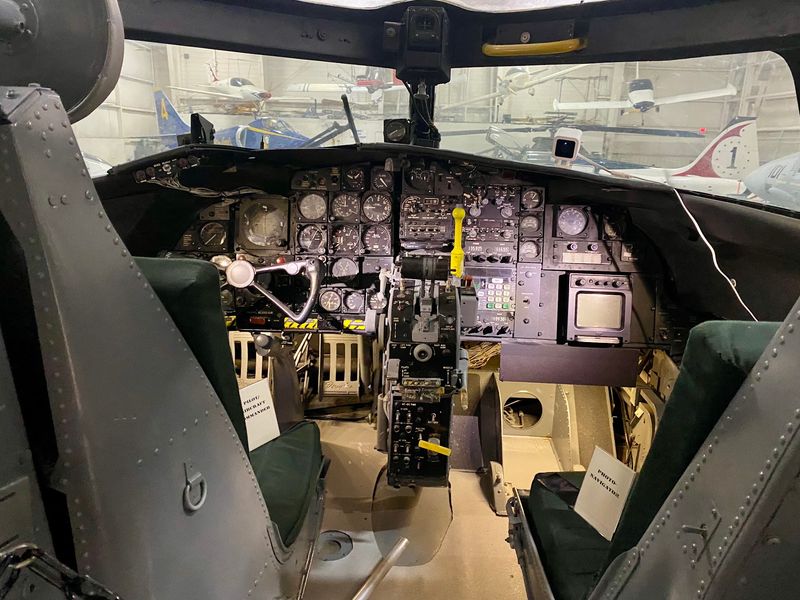
Looking is nice, but sitting in the pilot seat is better. Here, you get to climb inside a few aircraft and play captain.
Visitors can sit in a small trainer plane and a helicopter. Grab the controls, look out the windshield, and imagine the tower calling your name.
A flight simulator adds an even more immersive piloting experience. You get a feel for how pilots handle turns, climbs, and landings.
Simulator availability can vary by day, so check with the museum before you go. A quick look at the website saves a lot of disappointment.
Interactive exhibits also explain how lift, thrust, and drag work. Science feels much easier when you can push buttons and see results.
Little ones have a play space with toy planes for quick breaks. Parents can rest on nearby seats while videos play on screens.
Older kids often get hooked on reading the signs. Do not be surprised if your quiet child suddenly has twenty questions.
Bring patience for the cockpit line on busy days. Everyone wants a turn, and honestly, adults are just as excited.
Hands-on moments turn a museum trip into a lasting memory. Plenty of future pilots probably started with a seat just like these.
A Sleek Cobra And A Seriously Giant Engine
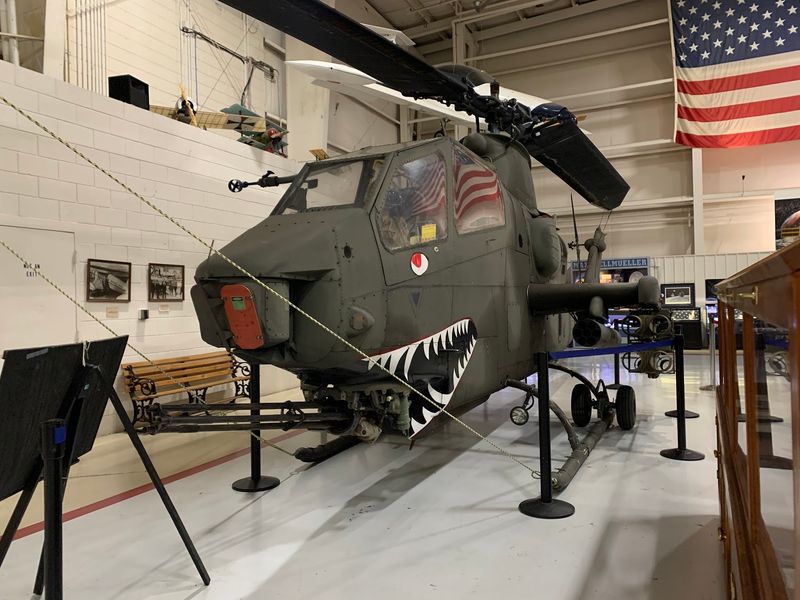
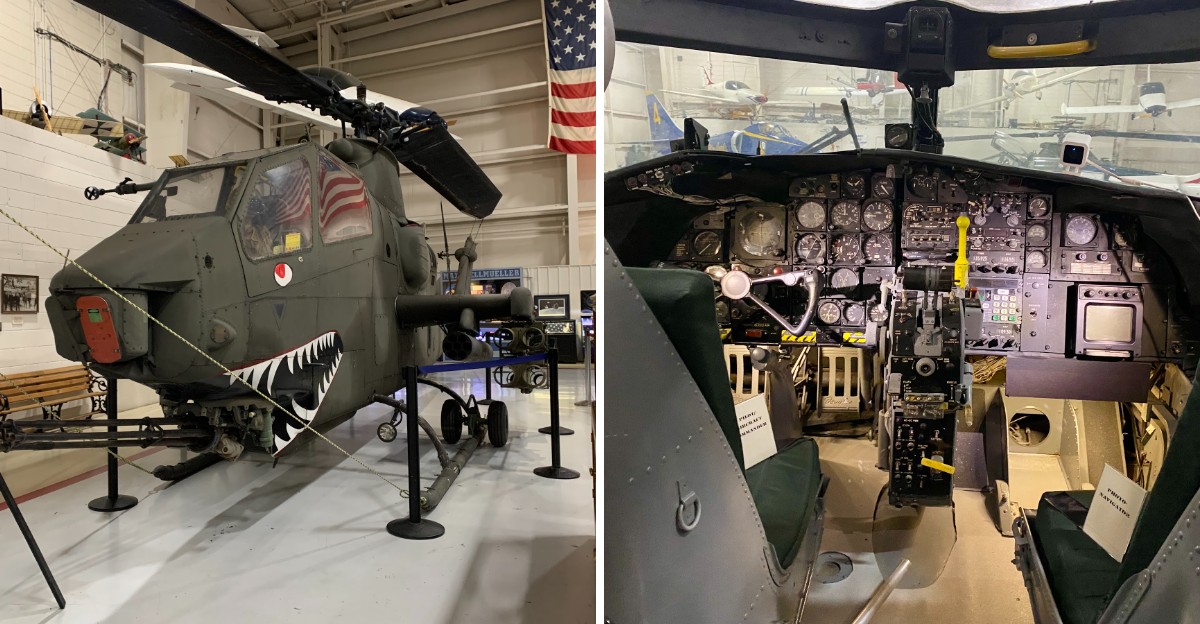
Helicopters rarely look sleek, but this one breaks the rule. The Bell AH-1F Cobra is skinny, fast-looking, and full of personality.
Its slim body seats two crew members, one behind the other. That narrow shape made it hard to spot and quick to move.
The Cobra holds a big place in helicopter history as a first of its kind. Fans of rotor blades will want plenty of photos.
Now turn your attention to the General Electric CF6 turbofan engine. This giant powers many wide-body passenger jets around the world.
Standing next to it makes you feel tiny. Suddenly your next airline seat seems a lot more impressive.
Docents love talking about this engine, so ask how it works. You will learn how air gets pulled in, squeezed, and pushed out.
Before moving on, look for the Douglas A-3 Skywarrior and North American T-28B Trojan. Each one adds another chapter to the story.
More than 50 attractions, including historic and jet engines, fill the space. That variety keeps engine fans and casual visitors equally entertained.
Little details on the engines are easy to miss. Slow down and you will spot parts most people never see.
Bring a curious mind and comfortable shoes. The hangars can feel warm on summer days, so dress light.
Meet The Heroes Behind The Wings
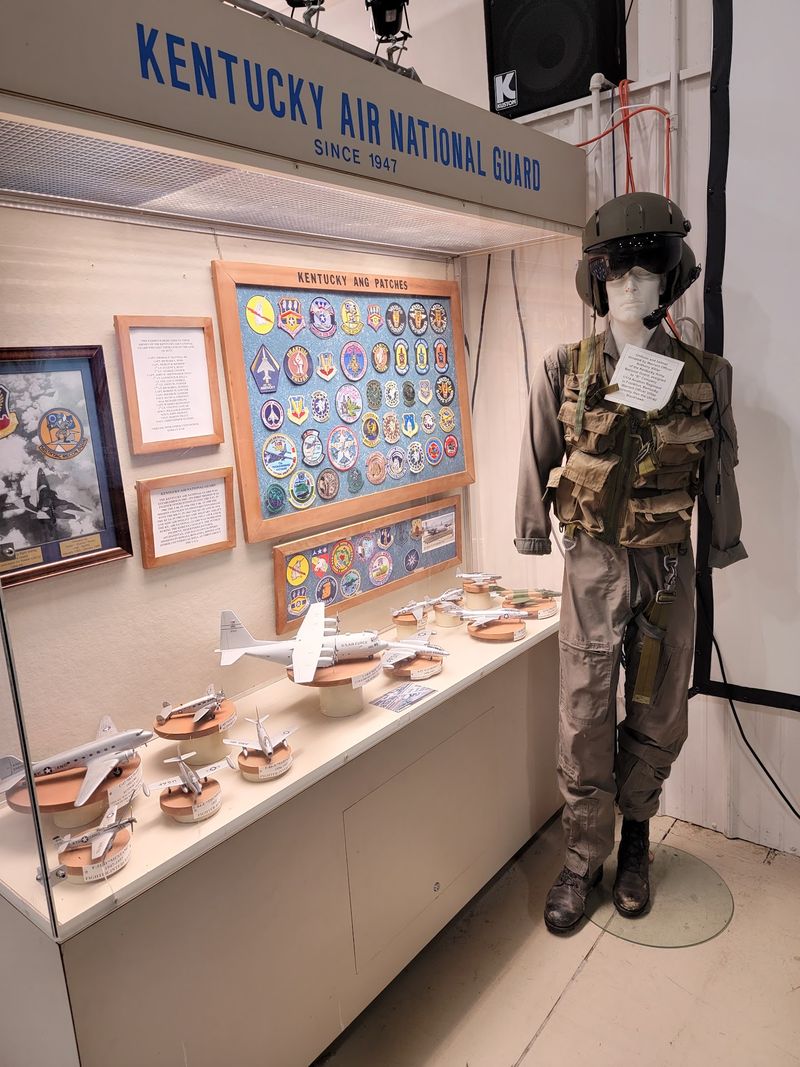
Planes are the headliners, but people wrote the script. The Kentucky Aviation Hall of Fame lives inside the museum and honors those stories.
Kentucky has produced many notable aviators and aerospace minds. Their photos, flight suits, and keepsakes help you see the faces behind the flights.
A newer exhibit, Kentucky Women in Aviation, opened in May 2026. It celebrates pioneering pilots and aerospace engineers who raised the bar.
Young visitors might spot someone who looks just like them. That moment can spark a dream bigger than any jet in the hangar.
Sparking that kind of dream is part of the museum’s mission. It aims to inspire people and show real careers in aviation.
Camps and educational programs give kids extra time to explore. Check the website for current offerings before planning your trip.
Before leaving, stop by the gift shop for a small souvenir. A toy jet or patch keeps the excitement alive on the drive home.
Your admission also helps the nonprofit care for its collection. That means every ticket keeps these machines shining for the next visitor.
Walk out slowly and watch one more plane leave the runway. Your Top Gun dreams just got a real flight plan.