This Magical California Preserve Bursts With Millions Of Golden Poppies Every Year
Golden poppies know how to make subtlety look pointless.
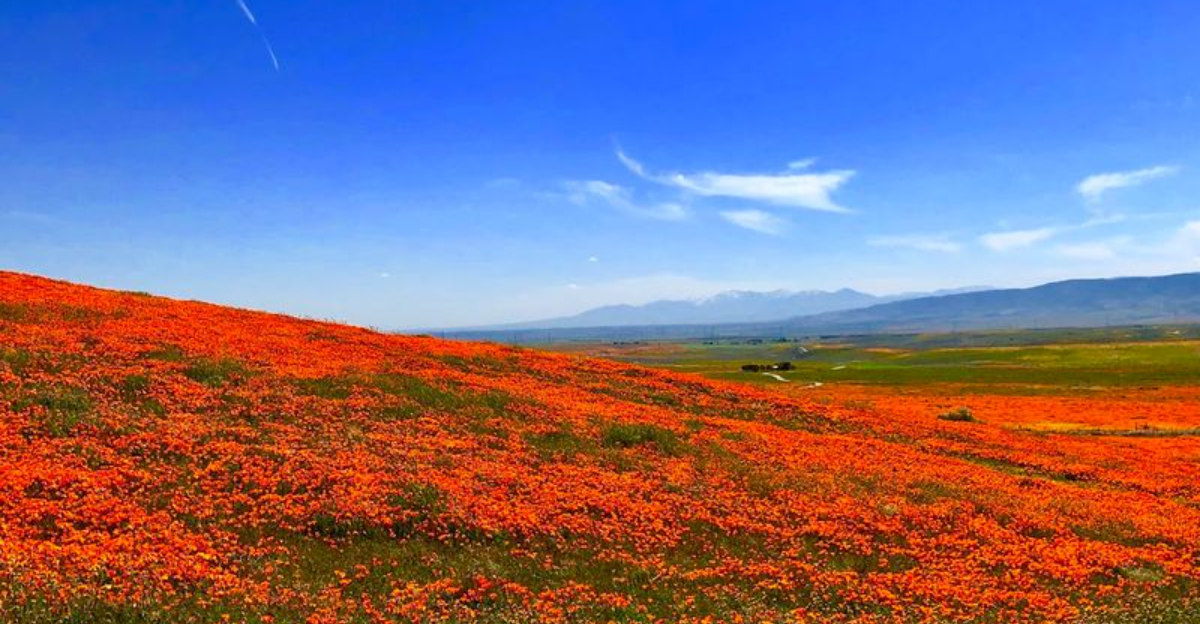
One hillside starts glowing. Then another joins in. Soon the whole landscape looks like sunlight spilled everywhere and refused to clean it up.
A preserve like this can make California feel almost unreal for a few bright weeks each year.
That kind of color does not need much explanation. People come for the flowers and end up staring longer than planned.
Trails feel brighter. Photos look fake in the best way. Even a quick visit can turn into a slow wander because the view keeps changing with the light.
Spring has plenty of pretty moments, but a bloom this bold feels different.
It is the kind of place that makes everyone understand why people track wildflower season so closely.
California’s Most Reliable Poppy Country
Few places in the country can match what happens here when winter rains cooperate and spring arrives on schedule.
The Antelope Valley California Poppy Reserve sits in the far northeast corner of Los Angeles County, tucked into the remote hills west of Lancaster at roughly 15 miles from the city center.
The western Mojave Desert setting gives the reserve a wide-open, unhurried quality that feels genuinely removed from the urban sprawl below.
California poppies were named the state flower in 1903, and the reserve was established specifically to protect one of their most consistent natural habitats.
The rolling high-desert terrain creates natural pockets and slopes where poppies tend to gather in concentrated sweeps of color.
During strong bloom years, those slopes can turn almost entirely orange from a distance.
The reserve is located at 15101 Lancaster Rd, Lancaster, CA 93536, and is open daily from 7 AM to 7 PM with a day-use fee required for entry.
Arriving on a clear, sunny morning tends to offer the most rewarding views since poppies open as temperatures warm.
Bloom Season Changes Every Year
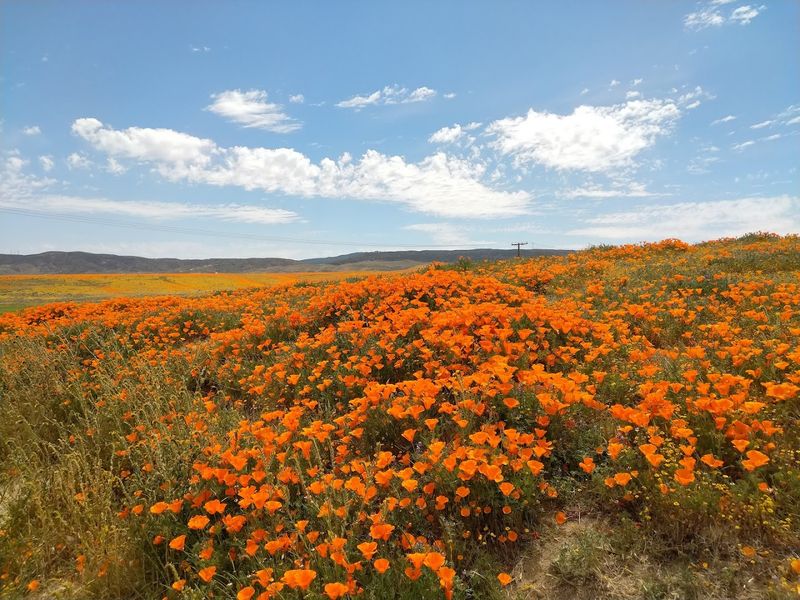
Predicting the exact timing of the bloom is genuinely impossible, and that unpredictability is part of what makes a visit feel so special when conditions align.
Wildflower season at the reserve typically runs from mid-February through May, with the peak bloom most commonly landing somewhere between mid-March and mid-April.
However, winter rainfall, temperature swings, wind patterns, and cloud cover all play significant roles in shaping how strong or quiet any given year turns out to be.
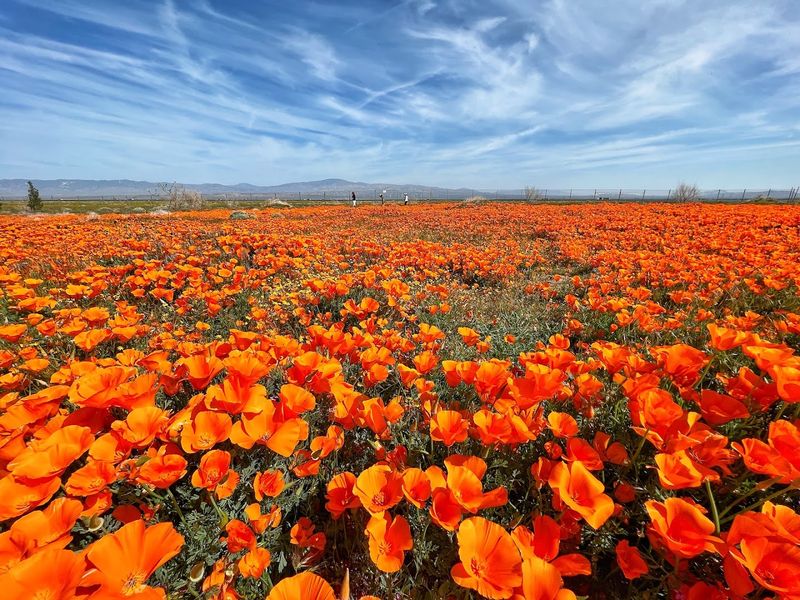
Some seasons produce vast carpets of vibrant orange that stretch across entire hillsides, while others offer only scattered patches of color.
Neither outcome is a failure of the reserve itself since the land simply responds to whatever conditions nature provides that year.
Checking the reserve’s official website or calling the Poppy Reserve Wildflower Hotline at 661-724-1180 before making the drive is always a practical step.
Poppies tend to open fully on warm, sunny mornings and may close up on cold or windy days, so timing a visit around midmorning on a clear day generally gives the best chance of seeing the flowers at their most open.
No Artificial Watering Keeps It Wild
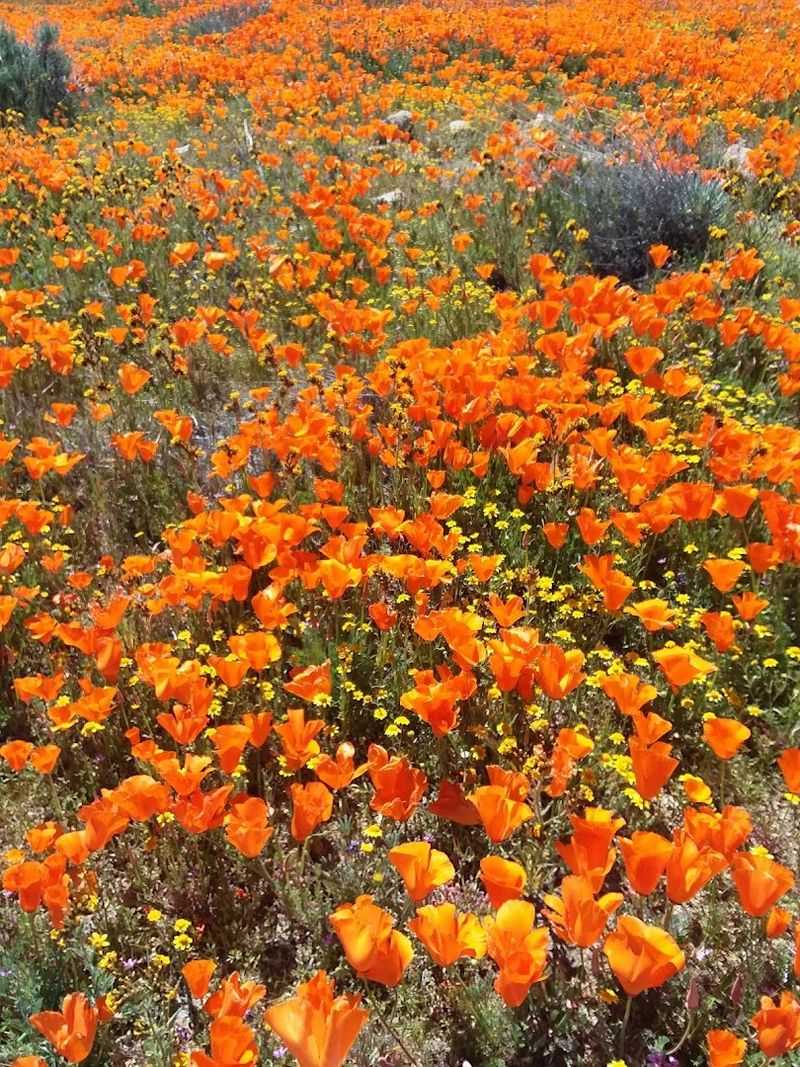
There is something quietly remarkable about knowing that none of what happens here is staged, managed, or encouraged by human hands.
California State Parks does not water the poppies, seed new areas, or otherwise interfere with the natural desert cycle that determines whether the bloom will be spectacular or subdued in any given year.
The reserve operates entirely on rainfall, sunlight, and the slow rhythms of the Mojave Desert ecosystem.
That hands-off approach means every visit offers something genuinely wild rather than a curated garden experience. The soil, the slope, the wind, and the rain do all the work, and the flowers respond accordingly.
Visitors who arrive expecting a perfectly manicured display may need to adjust their expectations, but those who come with an open mind tend to find the rawness of the landscape deeply appealing.
Picking flowers is strictly prohibited by state law, and staying on designated trails is required to protect the fragile root systems and soil crust that support the wildflower community.
Treating the reserve with care helps ensure that future seasons have the best possible conditions for the bloom to return naturally and fully.
Eight Miles Of Trails Cross The Hills
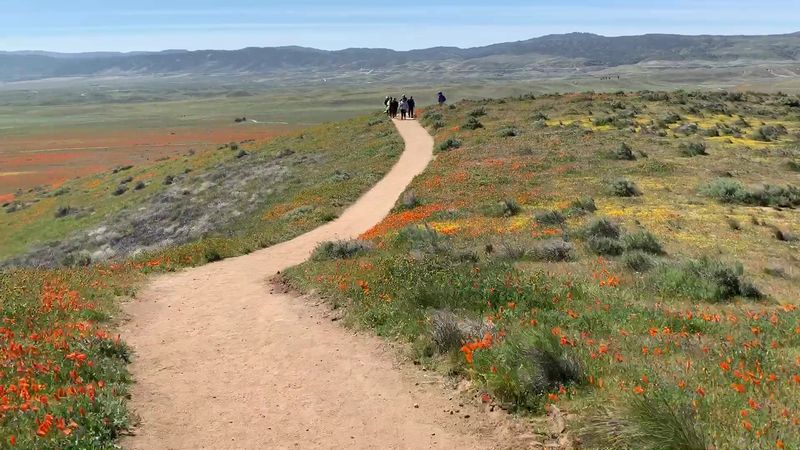
Getting out on foot is genuinely the best way to experience what the reserve has to offer, and the trail system makes that accessible to a wide range of visitors.
Roughly eight miles of trails wind through the gently rolling terrain, offering routes that range from flat and easy to moderately hilly depending on how far into the hills a visitor chooses to go.
A paved section provides wheelchair-accessible access near the entry area, which makes the reserve welcoming for visitors with mobility considerations.
Trails are clearly marked, and a map is provided upon paying the entry fee so navigation feels straightforward rather than stressful.
The open desert landscape means sightlines are long and the sense of space is immediate, which adds to the feeling of being genuinely immersed in the bloom rather than just passing through it.
Benches along the routes give natural stopping points for resting, observing wildlife, or simply taking in the view without rushing.
Wearing sunscreen and bringing water is strongly recommended since the high-desert sun can be intense and there is little shade on the trails.
A light jacket or windbreaker is also worth packing since wind is common at this elevation and temperatures can shift quickly between morning and midday. No food or drink is sold inside the reserve.
California Poppies Are Only Part Of The Show
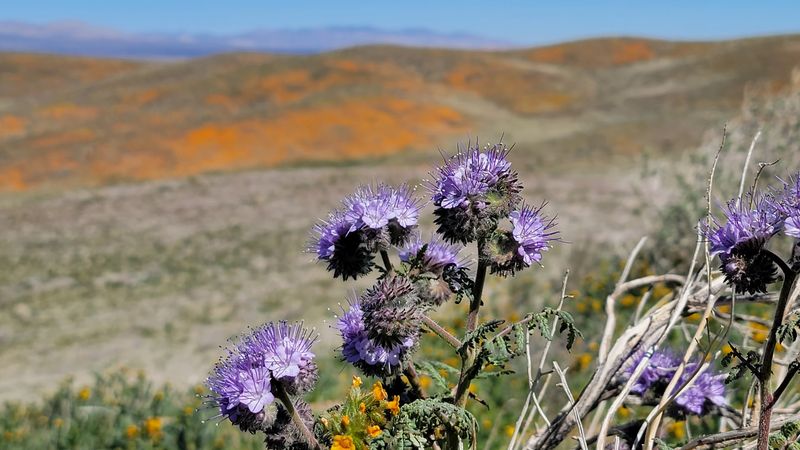
Golden poppies tend to dominate the headlines, but the reserve hosts a genuinely diverse wildflower community that shifts and changes across the season.
Owl’s clover, lupine, goldfields, cream cups, coreopsis, and red maids are among the species that can appear alongside the poppies, creating a mosaic of purple, yellow, white, and pink that adds real depth to the color palette.
The mix varies from year to year and even week to week as different species reach their peak at slightly different times.
Joshua trees are also present within and around the reserve and may produce their own bloom during spring, adding a distinctive desert silhouette to the already striking landscape.
The layering of colors across the hillsides during a strong season creates a visual effect that photographs struggle to fully capture. Standing in the middle of it feels genuinely different from any image.
For visitors who enjoy botany or nature photography, the variety of species gives plenty of reasons to slow down and look closely rather than just scanning the hills from a distance.
Even in quieter bloom years when poppies are sparse, the supporting cast of wildflowers often provides a colorful and worthwhile show that rewards the trip.
Visit The Jane S. Pinheiro Interpretive Center For Context
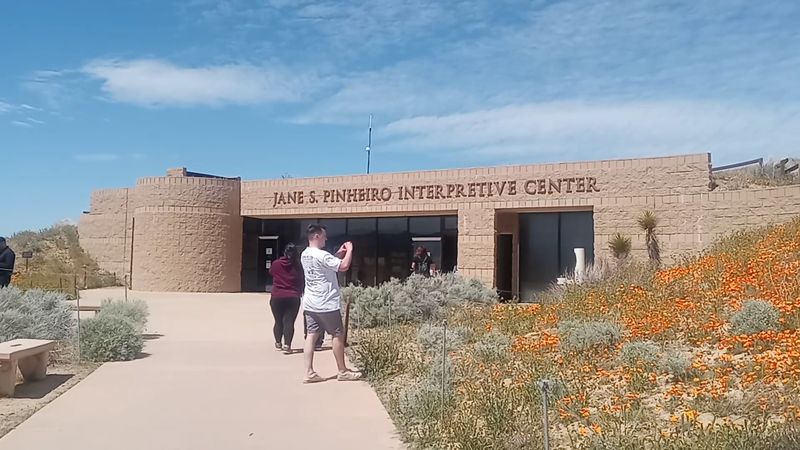
Experiencing Jane S. Pinheiro Interpretive Center before hitting the trails can genuinely shift how a visitor experiences the reserve.
The center offers wildflower and wildlife exhibits that explain the ecology of the Mojave Desert bloom, including information on what conditions drive strong poppy seasons and how the reserve’s plant community functions.
An orientation video provides helpful background for first-time visitors who want more context before heading out.
A gallery of botanical watercolor paintings adds an unexpected artistic dimension to the visit, and the gift shop carries poppy-themed items that are popular with visitors of all ages.
Rangers and volunteers are typically available inside to answer questions and share current bloom updates, which is especially useful when conditions are shifting quickly.
The center is generally open from early March through Mother’s Day, though checking ahead for current hours is always a good idea.
Bathrooms inside the interpretive center are described as clean and well-maintained, which is a practical detail worth knowing before a long trail walk.
No food or beverages are available for purchase anywhere in the reserve, so arriving with snacks and plenty of water already packed is the right move.
High-Desert Elevation Shapes The Landscape
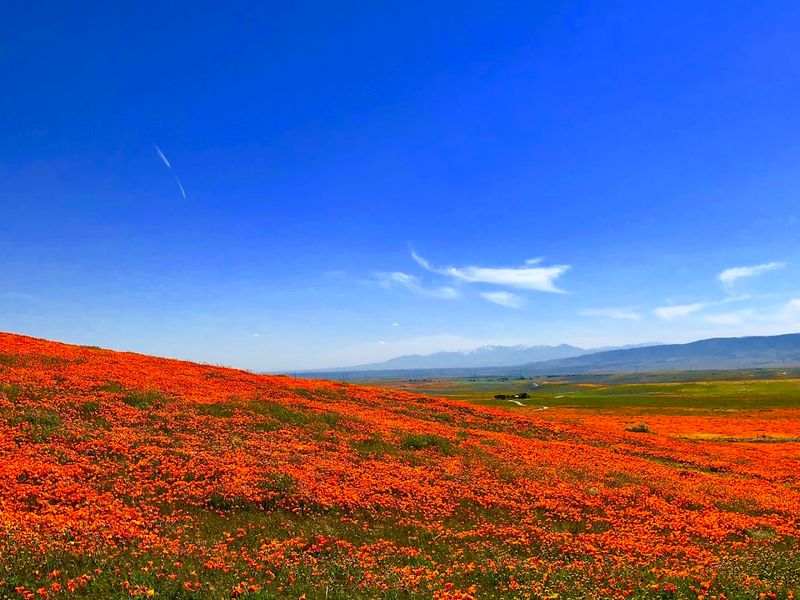
Sitting between 2,600 and 3,000 feet above sea level, the reserve occupies a zone where the climate behaves noticeably differently from the valley floor below.
Cool nights, strong prevailing winds, and wide temperature swings between morning and afternoon are all regular features of the high-desert environment here.
Those conditions directly influence how the poppies develop, when they open each day, and how long the bloom season lasts.
The open sky at this elevation creates a quality of light that feels especially vivid during the spring bloom, with distant mountain views sometimes still showing snow while the hillsides below are already orange with flowers.
That contrast between snowy peaks and colorful wildflower fields is one of the more visually striking aspects of a strong bloom season.
Wind is a consistent presence, and visitors who underestimate it sometimes find the experience less comfortable than expected.
Desert grassland conditions throughout the reserve give the landscape a spare, unhurried character that feels quite different from forested parks or coastal reserves.
The wide sightlines and open terrain make it easy to read the landscape and find areas where blooms are concentrated on a given day.
Getting slightly higher on the trail system often rewards visitors with broader views that reveal the full scale of the color across the hills.
Nearby State Parks Can Extend The Day Trip
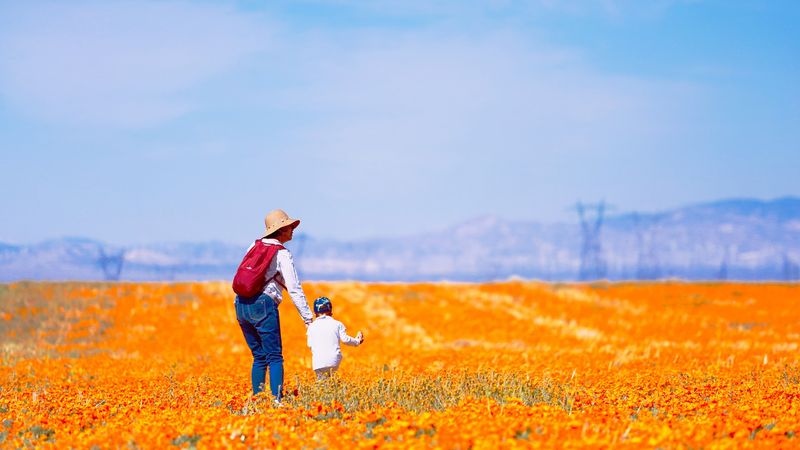
Making a full day of the trip is genuinely worthwhile given the drive required to reach the area, and the surrounding region offers a couple of compelling state park options that pair naturally with a poppy reserve visit.
Arthur B. Ripley Desert Woodland State Park sits about seven miles west of the reserve and protects a native Joshua tree and juniper woodland that offers a different but equally authentic desert experience.
The protected woodland at Ripley tends to be more sheltered from wind than the open hills of the poppy reserve, which can make it a pleasant second stop on a breezy day.
Saddleback Butte State Park and Red Rock Canyon State Park are also part of the California State Parks Great Basin District and are suggested as nearby destinations worth exploring on the same trip.
Each park has its own distinct character, and visiting more than one gives a broader sense of the varied landscapes that exist within the western Mojave Desert region.
Spring is generally considered the most rewarding season to visit any of these parks given the combination of mild temperatures and wildflower activity.
Bringing enough water, food, and sun protection for multiple stops makes the logistics of a longer day trip much more comfortable.
The area around Lancaster is fairly spread out, so having a clear plan for the order of stops before leaving home saves time and reduces the chances of backtracking.