This Massive 2,900-Acre Ohio State Park Flies Completely Under The Radar
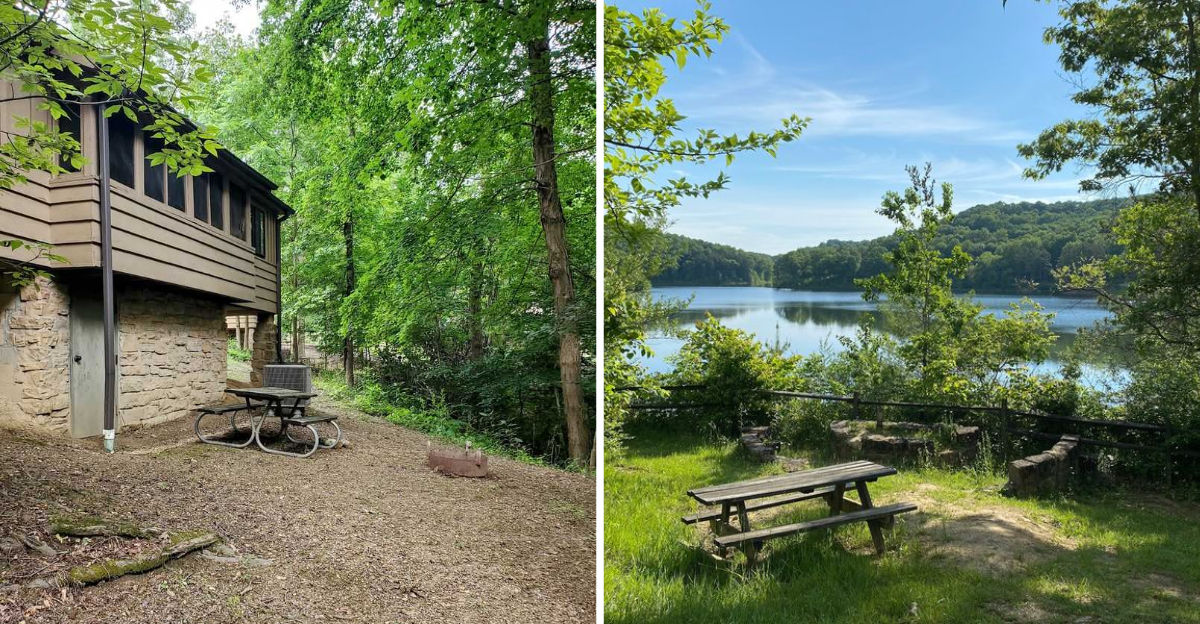
Nearly 3,000 acres is a lot of adventure to fit into one quiet corner.
In Ohio, this enormous park brings together a lake, wooded ridges, hiking trails, mountain biking, wildlife, and an unexpected piece of industrial history. That combination keeps the day moving.
Spend a few hours near the water, head into the forest, then find an old furnace chimney standing among the trees. Pretty wild, right?
There is enough variety here to build a full weekend without packing the schedule too tightly. Cabins and nearby lodging make staying longer easy to imagine.
This place rewards anyone who likes outdoor trips with choices.
The hardest part may be deciding what deserves the first few hours.
Iron Furnace Echoes In The Woods
A stone chimney rises out of the trees like a forgotten castle tower. That is Hope Furnace, and it ran hot from 1854 to 1874.
Workers here smelted iron ore dug straight from the local sandstone bedrock. Charcoal fires burned around the clock, twenty-four hours a day, week after week.
The demand for fuel stripped these hillsides nearly bare of timber. Hundreds of men cut wood, drove oxen teams, and hauled ore to the furnace mouth.
Iron from this region helped supply the Union Army during the Civil War, including cannons and ammunition. Ohio ranked among the nation’s leading iron producers back then.
By the 1870s, richer ore was found farther west, and the furnace went cold for good. Only the chimney and scattered foundations survive today.
Glassy chunks of slag can still be found around the furnace site, remnants of the old smelting process. Those dark, bubbly pieces are leftovers from the smelting process, and they are oddly beautiful.
The land became Lake Hope Forest Park in 1937 and earned state park status in 1949. Standing beside the surviving furnace stack gives visitors a tangible connection to the park’s industrial past.
Gorges, Ridges And Second-Growth Forest
Steep gorges and skinny ridges define the terrain, and the roads twist accordingly. Driving in feels like a warm-up for the hiking ahead.
The entire park at 27331 OH-278 in McArthur sits inside the much larger Zaleski State Forest. That means the wilderness does not stop at any boundary line.
Geologists trace this landscape back roughly 300 million years to the Pennsylvanian Period. Back then the area was a lowland plain with swamp forests and wandering rivers.
Shales, sandstones, coals, clays, and limestones piled up in layers. Those layers still shape every hillside you climb today.
Despite all the logging done for the iron industry, the forest bounced back beautifully. Oak and hickory now dominate the canopy across these 2,983 acres.
Look down instead of up and the real show begins. Bloodroot, wild geranium, blue-eyed mary, and rare yellow lady’s slippers appear along the woodland floor.
Spring wildflowers can turn the forest floor into one of the park’s most rewarding seasonal details. This state hides some of its best botany right here.
Paddling The 120-Acre Lake
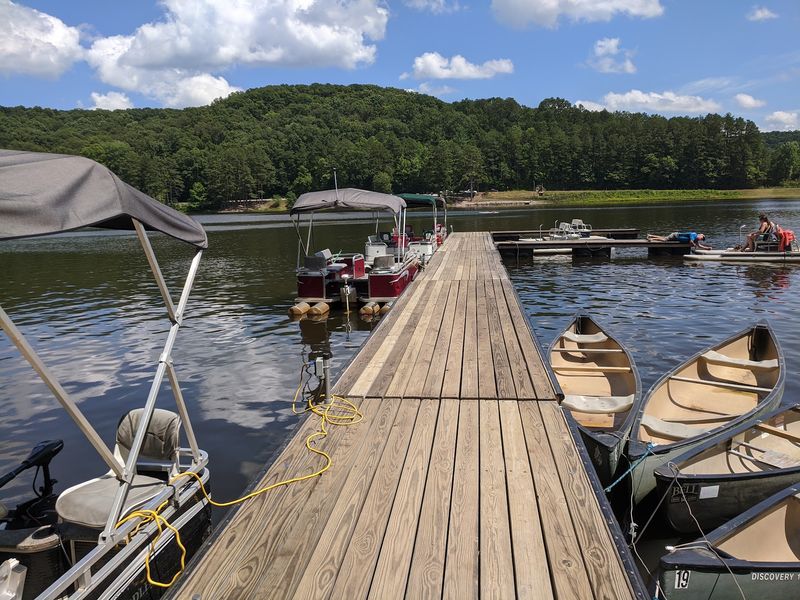
Early mornings can bring especially quiet conditions on the lake before daytime activity picks up.
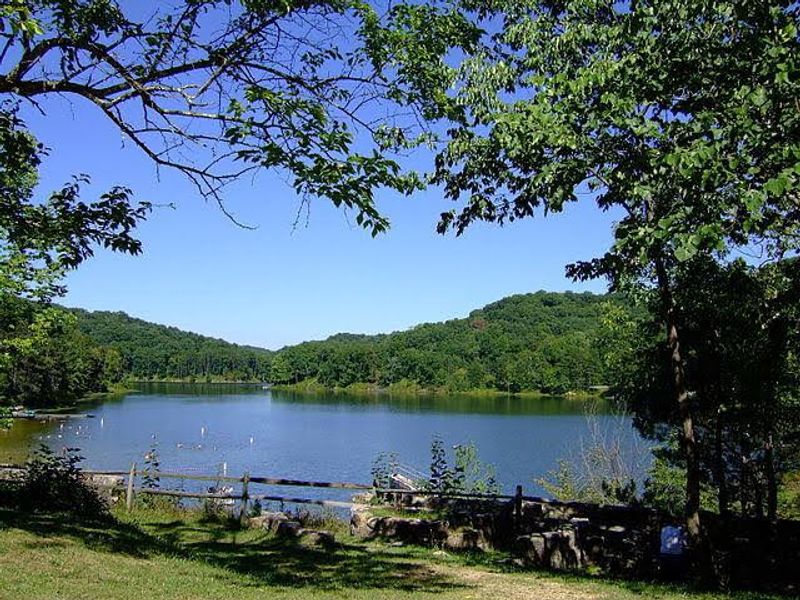
The lake covers about 120 acres and sits as an impoundment on Big Sandy Run. Only hand-powered craft and electric motors are allowed, so it stays wonderfully quiet.
The boathouse rents canoes, kayaks, paddleboards, pedal boats, and even pontoon boats. Rentals run through spring, summer, and fall.
Anglers do well here with bluegill, crappie, catfish, and largemouth bass. Anyone sixteen or older needs a valid fishing license before casting.
A swimming beach sits near the dam, backed by a bathhouse and a concession building. Families claim the sand early on hot weekends.
Heads up on access: a good number of steep steps lead down toward the boathouse and beach. Plan accordingly if stairs are difficult for anyone in your group.
Shorelines here reward slow walking with reflections, herons, and excellent photographs. The quiet shoreline and wooded reflections give photographers plenty to work with.
Trails Built For Every Ambition
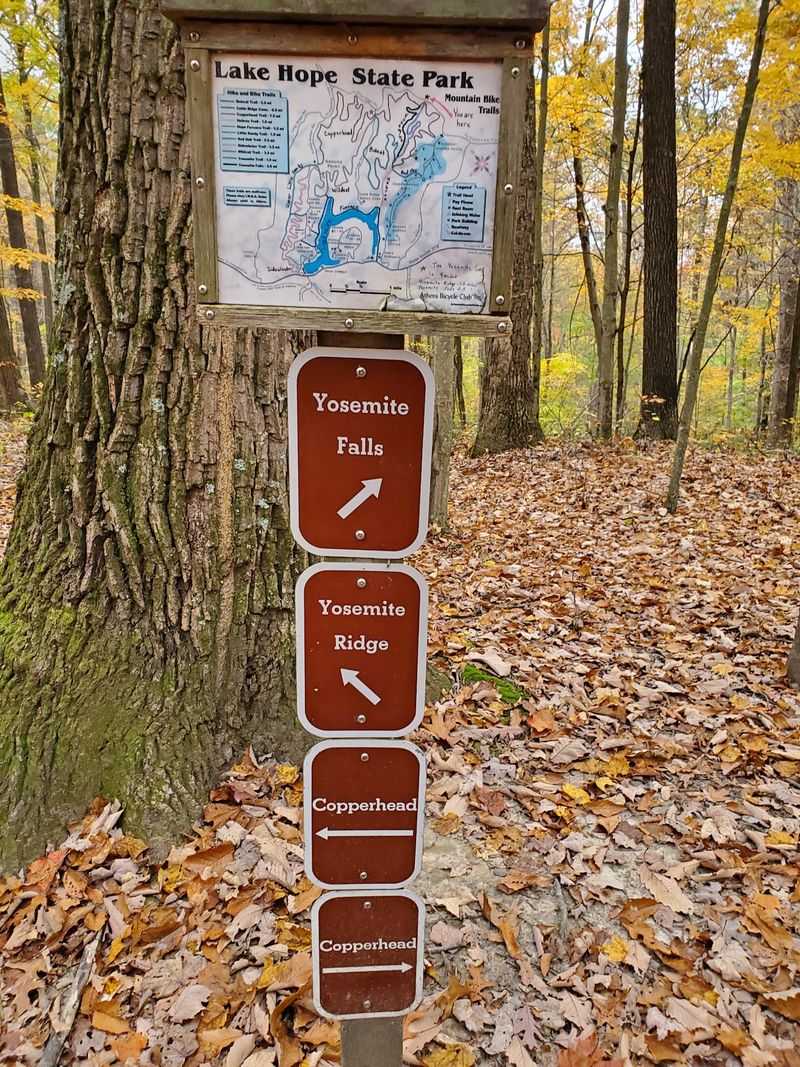
A network of hiking trails winds around the lake and through the surrounding forest, with current Lake Hope visitor information advertising more than 17 miles of hiking.
Peninsula Trail follows the lake and offers frequent water views along the route. Hope Furnace Trail delivers history plus songbirds in the same walk.
Mountain bikers, though, are the ones who really talk about this place. Over 25 miles of single-track make it one of the finest systems in Ohio.
Trail names alone set the mood: Bobcat, Wildcat, Copperhead, and Sidewinder. Steep hills and sharp ravines suit intermediate to advanced riders best.
Beginners should not attempt these runs as a first-ever ride. Steep climbs and ravines make many of the mountain-bike routes better suited to riders with some trail experience.
Backpackers can link into neighboring Zaleski State Forest for a 29-mile route with primitive backcountry campsites. That trip needs real planning and water treatment.
Horseback riders can use an extensive network of bridle trails in neighboring Zaleski State Forest, with a dedicated horse camp also available.
Stay on marked routes, wear a helmet, and tell someone your plan. Signal drops out quickly among these ridges.
Cabins Tucked Along The Ridge
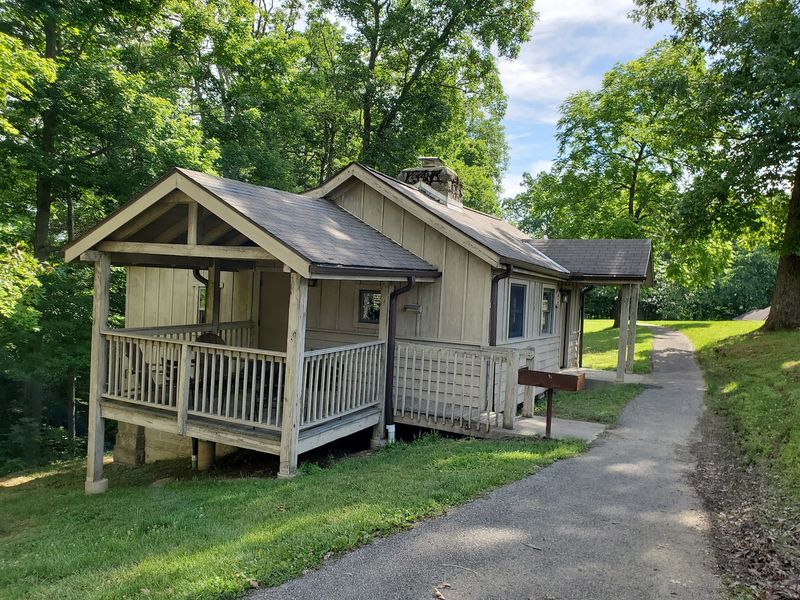
Few state parks offer this many cabin styles, and I checked. Standard Wildlife Cabins keep things simple and clean.
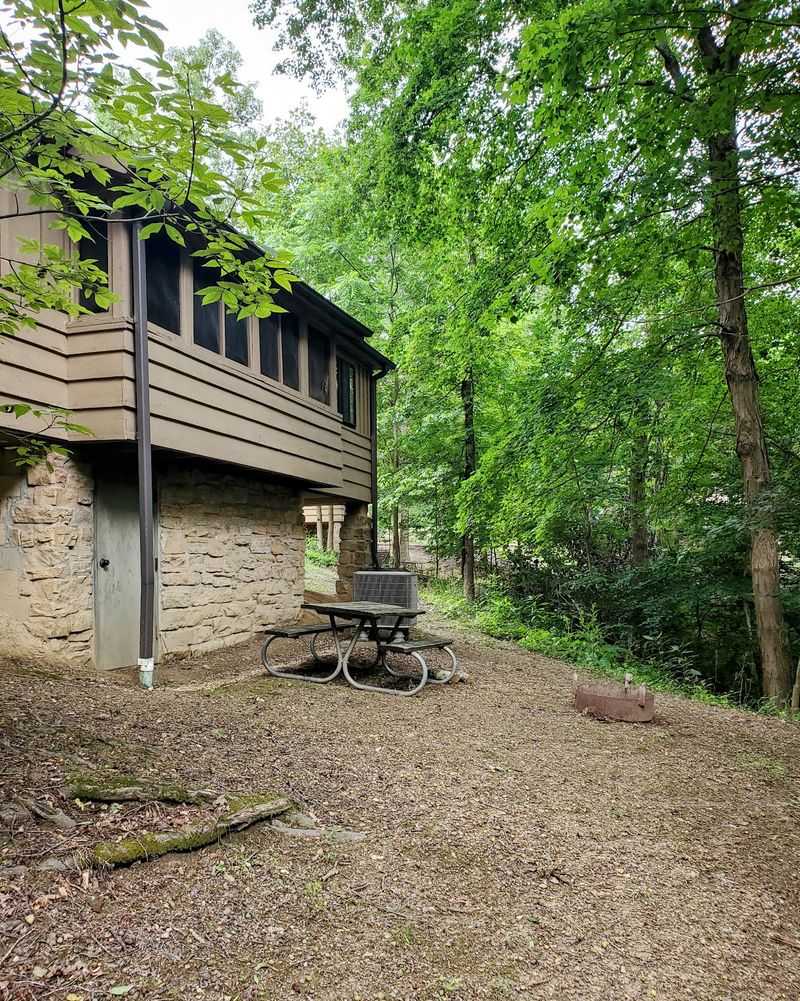
Iron Furnace Legacy Cabins add stone fireplaces, which turn a chilly night into something memorable. Forest Legacy Cabins run larger, and some include screened porches.
Every cabin comes smoke-free with a full kitchen, living room, bathroom, and linens provided. Pots, pans, and a coffee maker are already waiting.
Groups can book Laurel Lodge, a rustic building sleeping up to 24 guests. Family reunions practically plan themselves there.
The campground offers electric and non-electric sites, each with a picnic table and fire ring. Cabins provide year-round lodging, while campers should check current seasonal campground availability before booking a winter stay.
The campground mixes electric and non-electric sites in a wooded setting, with picnic tables, fire rings, showers, and restroom facilities available.
Restrooms vary from flush toilets to old-fashioned vault toilets, with showers near the entrance and the far end. Set your expectations honestly.
Lakeview Dining With A Backstory
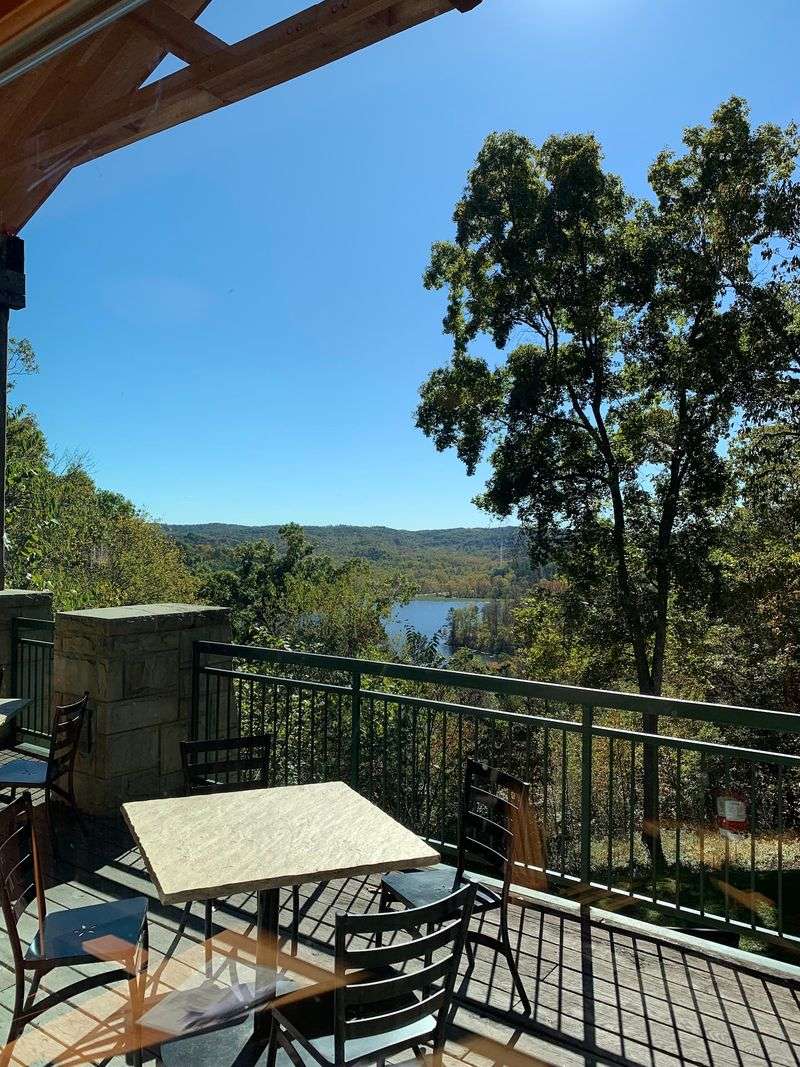
The original Lake Hope dining lodge became a longtime gathering place for park visitors during the mid-20th century. Crews built it between 1946 and 1951.
Its stone came from Pike Lake State Park and its timber from state forests including Zaleski. For decades it fed hikers and campers alike.
Fire claimed that beloved building in 2006. Many longtime visitors thought the tradition was finished.
A larger replacement was completed in 2012 and reopened later that year. Native stone and lumber give it a rustic look with modern comfort.
Inside sits The Stone Terrace Restaurant, with windows framing the lake below. I ate lunch watching sunlight move across the water.
The menu leans on wood-smoked meats and specialties, with rolls and many dishes made from scratch using local ingredients. Home-style portions suit trail-tired appetites.
The lodge also holds a general store, meeting rooms, and open WiFi. Wi-Fi is available at the lodge, while the cabins themselves do not offer Wi-Fi.
The dining lodge currently serves lunch and dinner through much of the week, plus Sunday brunch, though checking current hours before driving out is still smart.
Four Seasons, Four Personalities
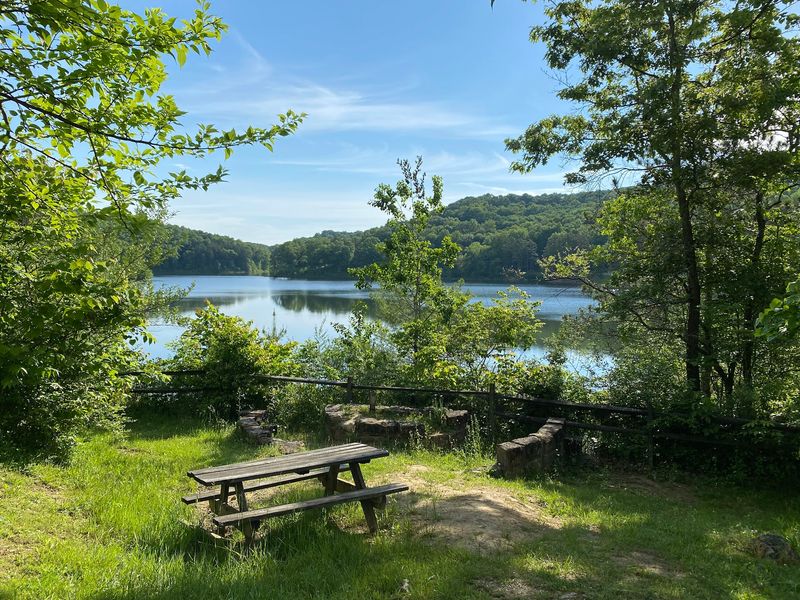
Each season rewrites the script here, and I have visited in three of them. Spring arrives with wildflowers erupting across the forest floor.
Those mild months bring the best combination of hiking, fishing, and paddling. Waterfalls along the ravines run fuller after rain.
Summer fills the beach and boathouse, and it hides a quirky highlight. During the warmer months, the Nature Center hosts its seasonal hummingbird hand-feeding program, with dates announced on the park calendar.
Watching those tiny birds hover inches away ranks among my favorite Ohio wildlife moments. Kids go completely wide-eyed.
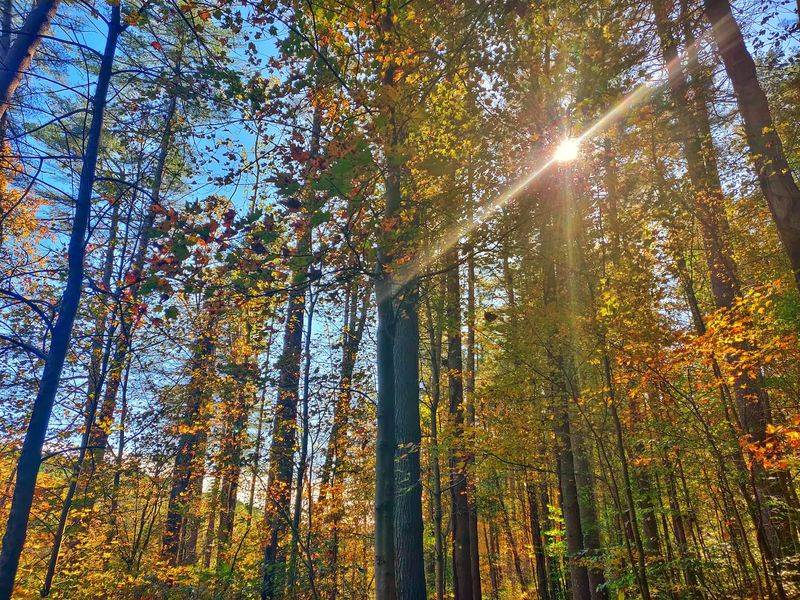
Autumn, though, is the headliner. Browns, reds, and oranges blanket the ridges and double themselves in the lake’s reflection.
Fall programming includes horse-drawn wagon rides through the park and an annual Fall Hike. October weekdays gave me near-total solitude on the water.
Winter turns the place hushed and strange in the best way. When conditions cooperate, visitors go sledding down the dam slopes, ice skate, ice fish, or cross-country ski the trails.
Beavers, Warblers And Curious Neighbors
My best sighting came at dusk when a beaver slapped its tail and vanished. Those industrious engineers work the quiet inlets regularly.
Deer and wild turkeys show up so often they barely count as sightings. Early mornings and evenings improve your odds considerably.
Birders will want extra memory cards, because over 120 species live here. Warblers, woodpeckers, owls, and waterfowl all claim different corners.
Wooded songbirds favor the Hope Furnace Trail, while the Peninsula Trail draws aquatic species across the open water. I heard more birds than I could name.
Seasonal nature programs vary throughout the year, so check the park calendar for birding and nighttime programs before visiting.
The surrounding forest supports a wide range of wildlife, though sightings vary considerably by season and time of day.
The Nature Center is small but genuinely charming, packed with hands-on displays perfect for children. It also stocks paper maps, which matter when phones lose service.
Bring binoculars, patience, and a willingness to sit still. Wildlife rarely performs on schedule.