This Massive Virginia Salvage Center Holds 40,000 Square Feet Of Remarkable Architectural Antiques
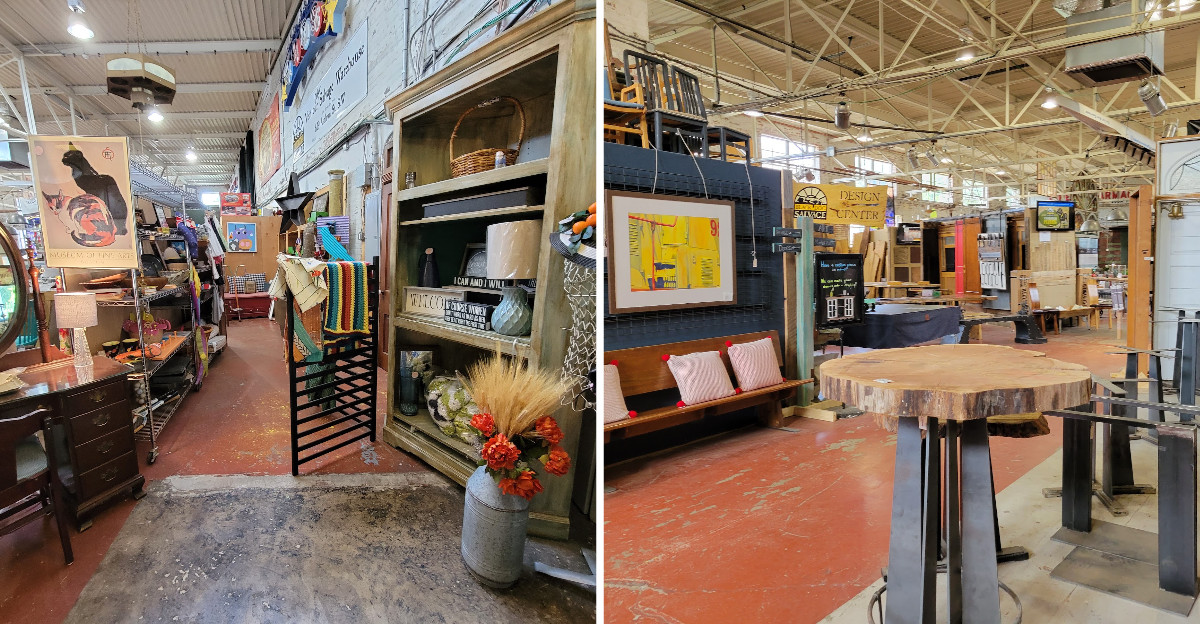
If old doors could talk, this Virginia salvage center would never shut up.
Forty thousand square feet of mantels, stained glass, hardware, lumber, and architectural oddities turn one visit into a giant game of “what could I do with that?”
The thrill is not only finding something beautiful. It is imagining the second life waiting for it.
A worn hinge can suddenly look charming. A strange panel can become the start of an entire room makeover. That is how this place gets you.
You walk in curious, then leave mentally redesigning your house around something you did not know existed an hour earlier.
A Showroom Built On Reuse
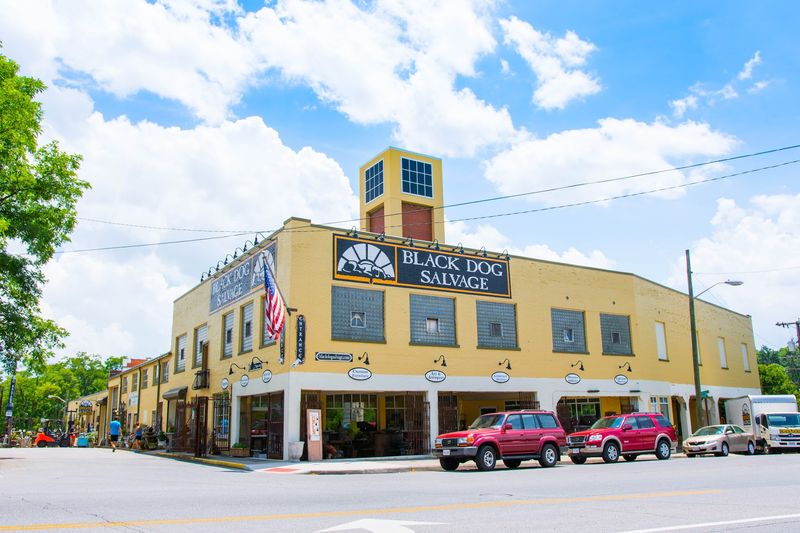
Black Dog Salvage began in 1999 after an effort to save architectural details from a Roanoke landmark at 21 Highland Avenue.
The business was not part of a long-range plan at first.
Its founders saw useful historic material facing demolition, made a salvage offer, and began removing pieces from the property one by one.
The company opened a Franklin Road location that same year and formally incorporated as Black Dog Architectural Salvage in 2000.
After outgrowing that space, it purchased a 40,000-square-foot warehouse beside Memorial Bridge in 2003 and began renovating the former Magic City Laundry building.
Marketplace vendors arrived in 2004, adding work from collectors, artists, and artisans to the growing salvage operation.
Today the main showroom combines old house parts, architectural elements, décor, custom upcycled designs, regional art, gifts, and other changing inventory.
The location remains the public-facing center of a business that has expanded well beyond its original warehouse operation. Black Dog Salvage’s main showroom is at 902 13th Street SW in Roanoke.
Room For Big Finds
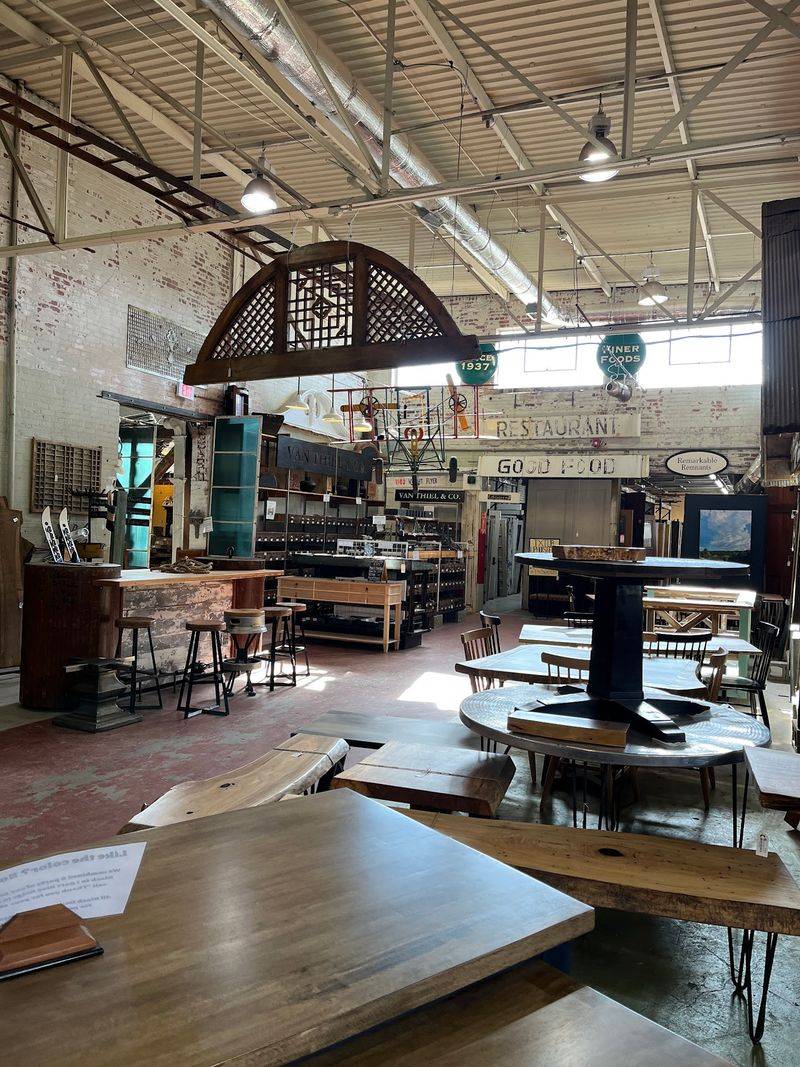
A large showroom gives substantial architectural pieces room to make sense at full scale.
Doors, mantels, ironwork, windows, fixtures, and other building elements can be viewed alongside smaller objects instead of being reduced to photographs or measurements on a screen.
The exact mix changes daily, and Black Dog Salvage also operates a nearby receiving warehouse known as BDS2.
In 2026, the company announced plans to place more of its large-scale architectural salvage there, including antique lumber, doors, trim, mantels, and other reclaimed building materials.
That makes preparation useful for anyone shopping for a project. Measurements of the intended space, doorway clearances, and vehicle capacity can matter as much as appearance when a piece is large or heavy.
An impressive entrance door or oversized mantel is far less useful if it cannot fit its intended space. Taking basic measurements before visiting keeps the practical side of the search from getting lost in the excitement.
A photo of the room at home can also make proportions easier to judge. Large architectural pieces often look different once they leave a warehouse and enter a normal residential space.
Doors With Distinct Details
Doors remain one of the clearest examples of why architectural salvage attracts attention.
Panel arrangements, glass openings, old hardware, wood grain, and layers of finish can give two similarly sized doors completely different personalities.
Black Dog Salvage maintains doors as a regular architectural category, but availability changes with incoming salvage.
Anyone shopping for one should confirm width, height, thickness, hinge placement, swing direction, and the condition of the frame or glass before assuming it will work in a newer opening.
Older buildings did not always use the standardized dimensions common in newer construction. That makes a tape measure considerably more useful than trying to judge proportions by sight.
Surface wear can add character, but it may also reveal repairs that deserve attention. Missing hardware, loose joints, old paint, or damaged glazing can change the amount of work required before installation.
Glass sections need additional care during handling and transportation. Staff assistance is the safer choice when a door is especially heavy or includes fragile panes.
The appeal comes from finding a piece whose dimensions, condition, and character all fit the project rather than choosing by appearance alone.
Color In Old Glass
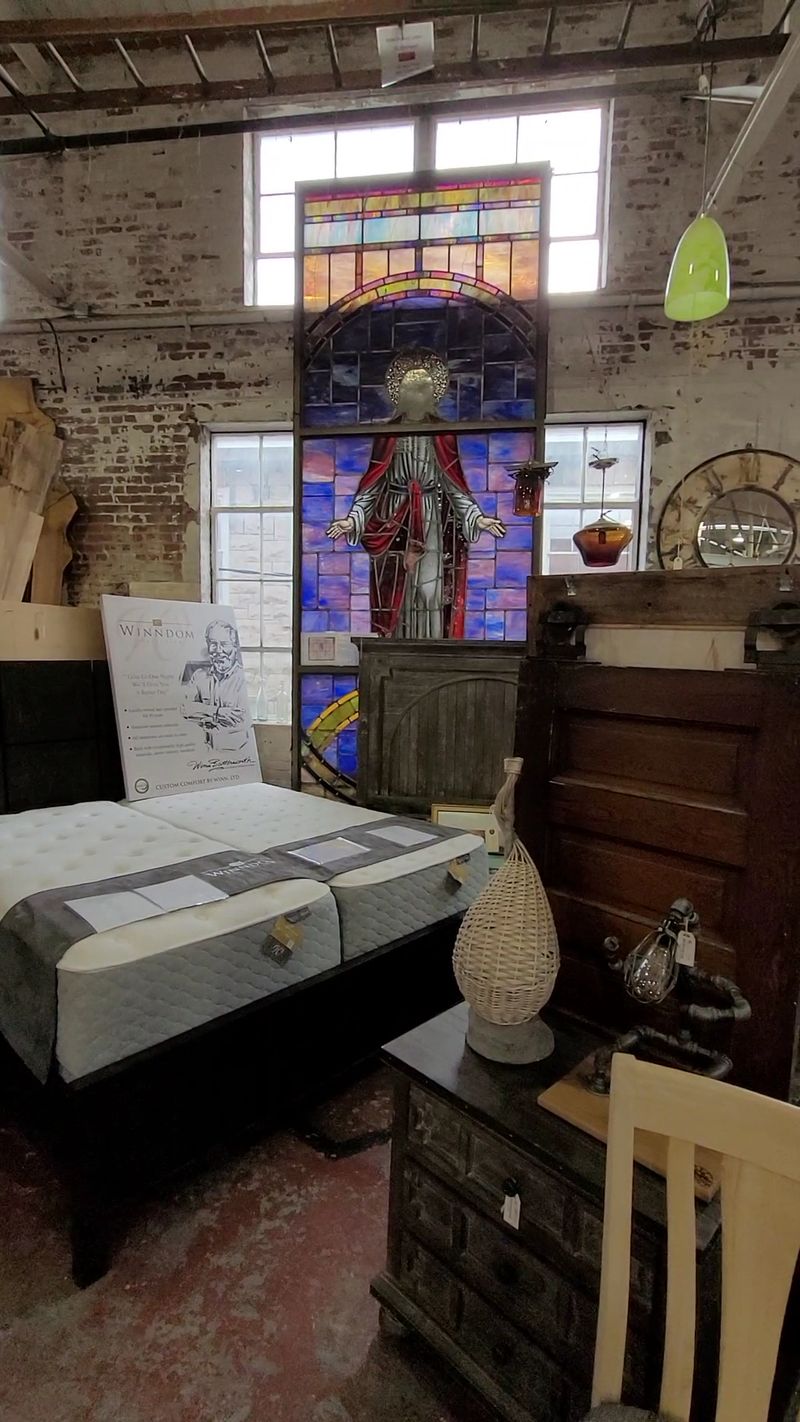
Stained glass adds a different kind of visual break from the showroom’s wood, metal, and masonry.
Black Dog Salvage lists windows, glass, and stained glass among its architectural categories, although individual pieces come and go with the inventory.
Older glass can work as a window again, but it can also be displayed indoors as a decorative panel when the dimensions or setting make exterior installation impractical.
Light behind the piece changes how the colors read. A panel that looks dark against a solid wall can reveal much brighter tones when viewed with natural or artificial light behind it.
Condition matters as much as pattern. Cracks, loose sections, frame deterioration, and weakened leadwork can turn a simple purchase into a restoration project.
Exact measurements are equally important if the glass is intended for an existing opening.
Because these pieces can be fragile and awkward to move, asking staff before lifting or shifting a panel is sensible. Careful handling matters more than getting a slightly better viewing angle.
Thinking about the future setting also helps separate a beautiful piece from one that will actually work in the intended room.
Small Hardware, Big Character
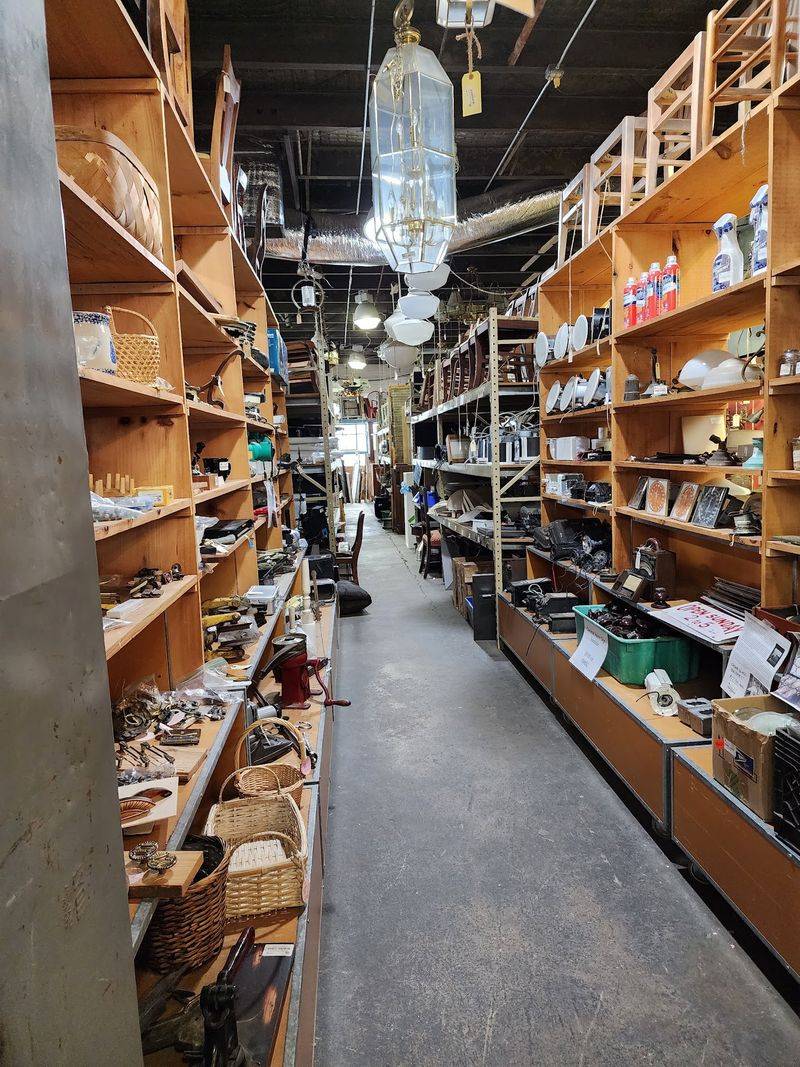
Hardware takes up far less room than a mantel or door, but it can be one of the easiest salvage categories to use at home.
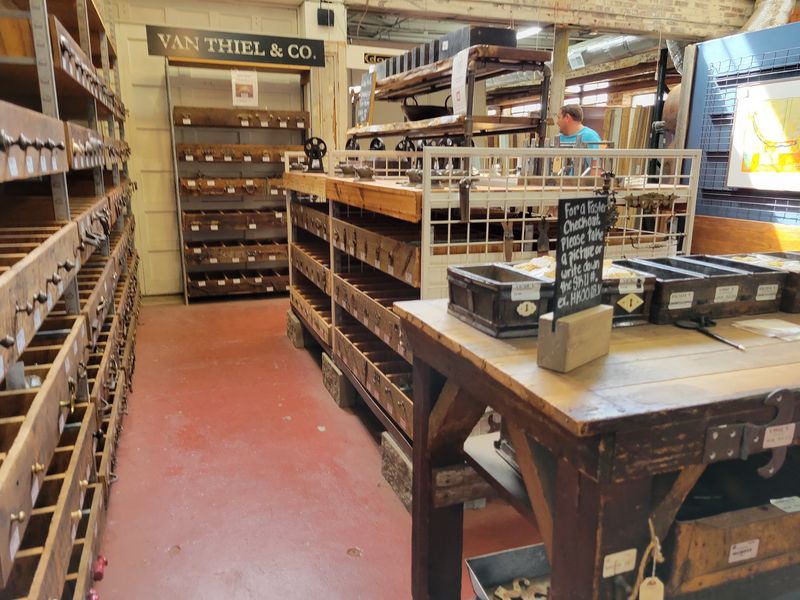
Black Dog Salvage carries architectural hardware alongside its larger building materials, with current inventory ranging from older pieces to new restoration-style components.
Drawer pulls, hinges, locks, plates, and other fittings can change the feel of a cabinet or door without requiring an entire renovation. The challenge is matching function as carefully as appearance.
Screw spacing, backset, opening size, mounting points, and the number of matching pieces all matter. A close color match does little good if the part cannot attach correctly.
Older finishes may also respond better to gentle cleaning than aggressive polishing. Preserving an aged surface can be part of what makes salvaged hardware visually distinctive in the first place.
For Virginia travelers, hardware has another advantage: it is easier to transport than most architectural salvage. Small pieces can offer the character of the larger showroom without creating a complicated trip home.
Keeping matching parts together and recording basic measurements can prevent an interesting find from becoming difficult to use later.
Regional Art Upstairs
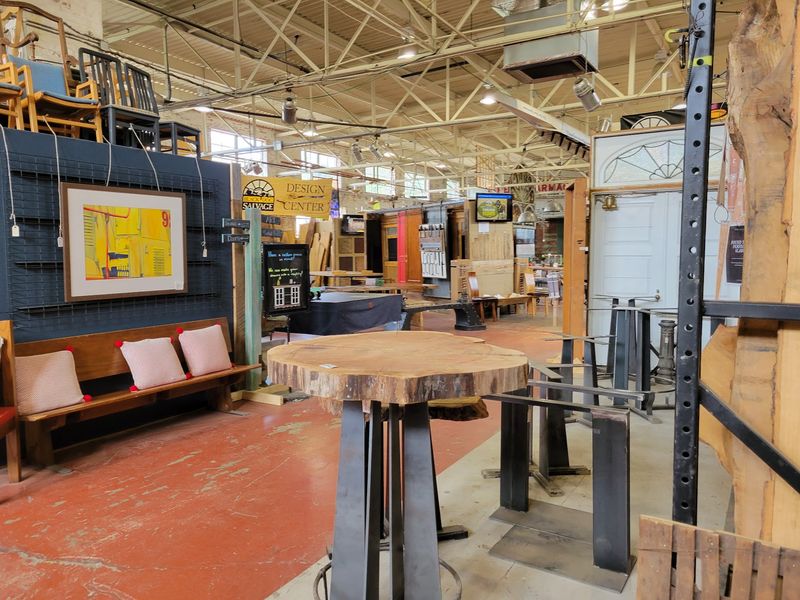
Upstairs, the focus shifts from architectural salvage to art.
The Loft Gallery opened in 2020 and features work by regional artists and artisans, including painting, pottery, sculpture, furniture, glass, jewelry, and other fine or found art.
That broader mix makes the showroom more than a warehouse of old building parts.
Contemporary work can sit comfortably beside reclaimed materials, and some artists use wood, glass, clay, metal, or found objects in ways that echo the larger reuse theme downstairs.
Artwork does not have to match an antique piece to belong beside it. Colors, scale, texture, and material can instead create contrast between older architectural elements and newer work.
The gallery lineup is curated and can change, so a specific artist or piece should not be treated as permanent inventory. That unpredictability fits a business where the salvage selection also changes regularly.
Virginia visitors interested mainly in architecture may still find the upstairs stop useful. Seeing art displayed at room scale can suggest how a reclaimed mantel, cabinet, table, or panel might share space with newer design.
It also provides a change of pace after spending time examining heavier architectural pieces below.
Furniture With Another Chapter
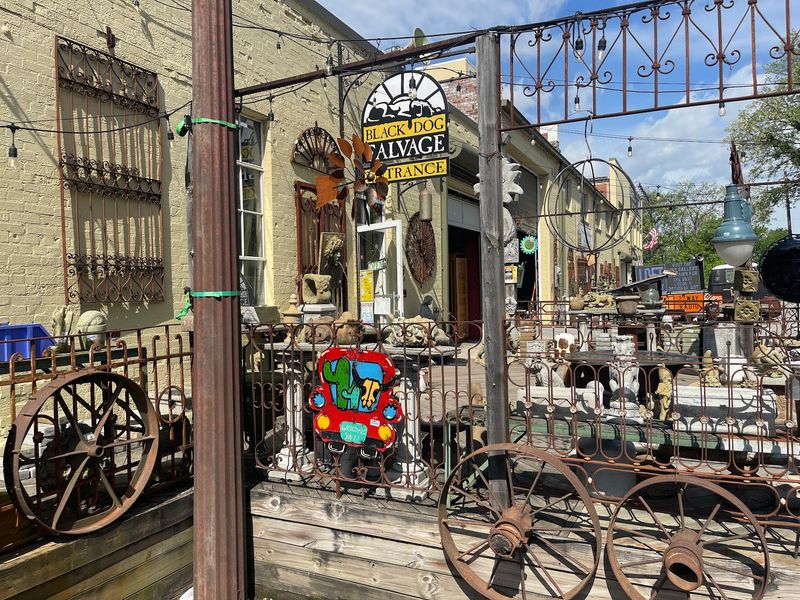
Black Dog Salvage does more than sell materials as they arrive.
Its Design Center and fabrication shop build custom furniture and accent pieces from reclaimed and salvaged elements, giving older material another route back into everyday use.
The custom program includes made-to-specification work as well as live-edge tables, limited designs tied to particular salvaged materials, and other functional pieces.
The company has also used reclaimed material in islands, tables, lighting, beds, swings, and related projects.
For custom work, measurements and intended use matter from the beginning. The design process includes discussion of the room, finish, personal preferences, and practical constraints before a piece is built.
Photos of the intended space can make scale and style easier to communicate. A dining table needs enough room for chairs and movement, while shelving or other mounted pieces require appropriate support.
Reclaimed material rarely behaves like a blank sheet of new lumber. Old marks, irregular edges, and earlier construction details may remain visible, which is often part of the appeal.
The goal is to preserve useful character while turning the material into something functional for its next setting.
Make Time To Wander
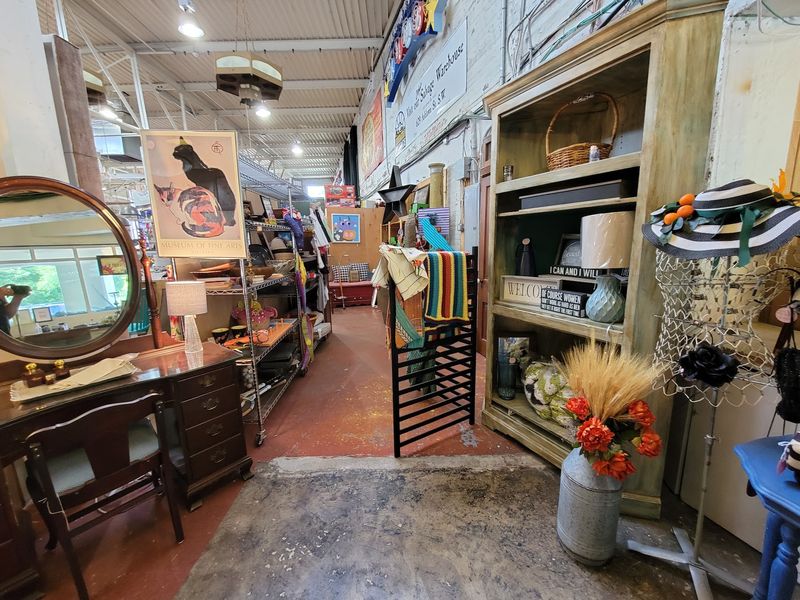
A strict shopping list can be useful, but the main showroom also rewards browsing.
Architectural salvage, home and garden décor, artwork, custom furniture, marketplace vendors, gifts, and unusual antiques share the same destination, while inventory changes daily.
Current main-showroom hours are Monday through Saturday from 9 a.m. to 5 p.m. and Sunday from 11 a.m. to 4 p.m.
The nearby BDS2 warehouse is currently listed as open by chance or appointment. Visitors specifically seeking newly arrived salvage or antique lumber should contact the business before making that part of the trip.
Friendly, leashed dogs are welcome under the business’s current policy. Black Dog Salvage also asks owners to keep retractable leads short inside because of the amount of merchandise throughout the space.
Parking is available in the main lot, alongside the building on Spottswood Avenue, and behind it on Midvale Avenue. Larger RVs, fifth wheels, and tour buses are directed toward the Midvale Avenue area.
Comfortable shoes and a few measurements are probably more useful than a complicated plan.
The real appeal is the range: one visit can move from an old building part to regional artwork or a newly fabricated table without leaving the property.
This Virginia destination works because the showroom does not treat old material as finished history. It puts useful pieces back in circulation and leaves the next chapter open to whoever finds them.