This Mesmerizing 32-Feet Art Installation In California Is Hidden In Plain Sight In The Mojave Desert
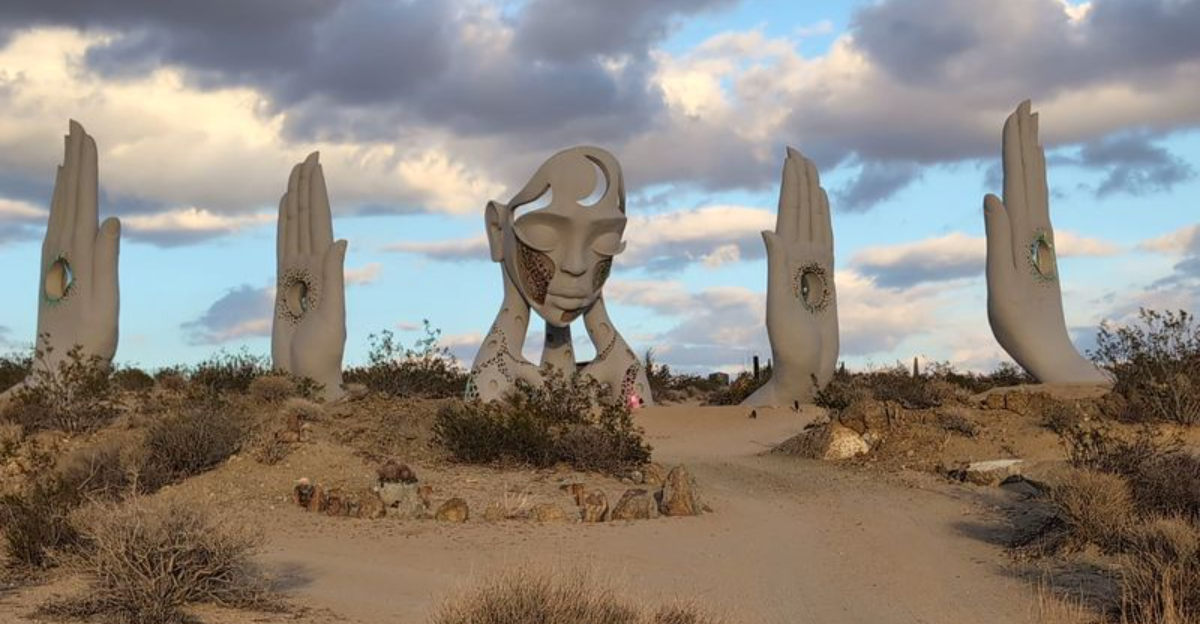
You are driving through the desert. Nothing much changes. Then suddenly, something does.
It rises out of nowhere. Tall. Still. Almost unreal against the sky.
You slow down without thinking. Then you stop.
There is no crowd. No big entrance. Just open land and a figure that feels completely out of place in the best possible way.
Moments like this in California make you pull over and just stare for a while.
The closer you get, the more details start to reveal themselves. The texture. The shape. The way light moves across it depending on the time of day.
It feels quiet. Almost intentional.
You are not just looking at it. You are trying to figure it out.
1. Standing 32 Feet Tall In The Mojave Desert
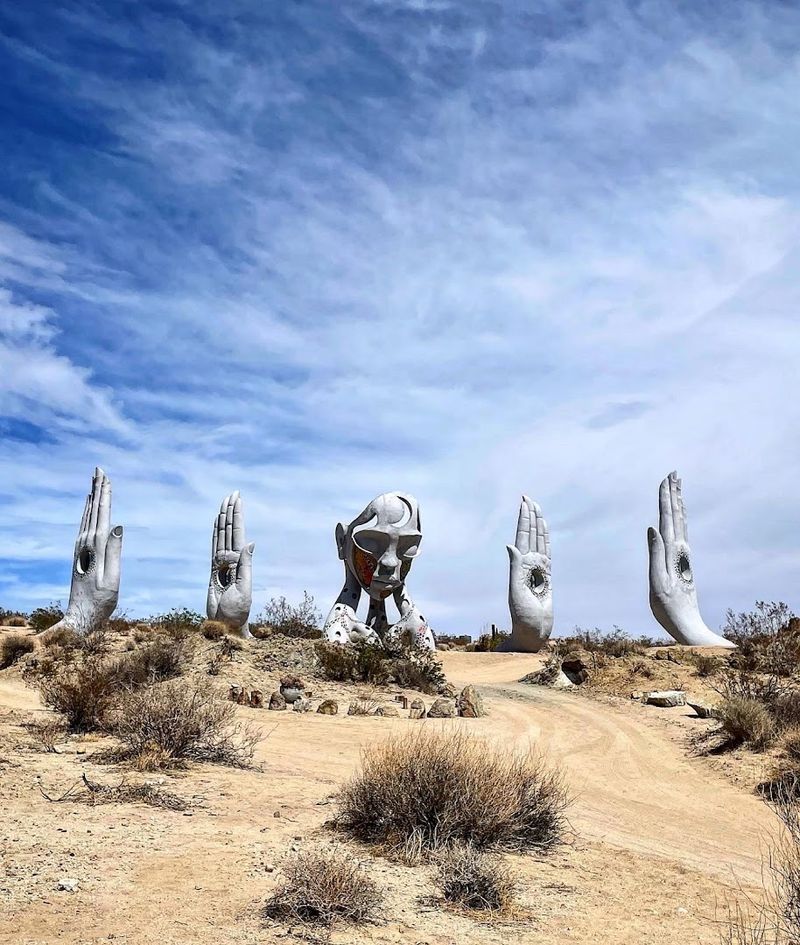
Scale is one of the first things that registers when ‘Transmission’ comes into view.
At approximately 32 feet tall, the sculpture rises above the flat desert floor with a presence that feels almost architectural.
From a distance, the figure appears serene and composed, her size becoming more striking the closer a visitor gets to the viewing area at 2015 Sunfair Rd, Joshua Tree, CA 92252.
The Mojave Desert setting amplifies the effect in a way that an urban or gallery environment simply could not.
With no competing structures nearby and the horizon stretching out in every direction, the sculpture commands the landscape without overwhelming it.
The figure seems to belong there, as if the desert itself invited her to stand watch over the valley. Height alone does not explain the impact.
The proportions of the figure are carefully considered, with the face, hands, and overall posture working together to create a sense of calm authority rather than intimidation.
Visitors who have seen large public sculptures in city squares often note that ‘Transmission’ feels different, more grounded, more intentional.
The emptiness around her is not absence but space, and that space is very much part of the artwork.
2. The Artist Behind The Vision: Who Is Daniel Popper?
Not every sculptor works at the scale of a four-story building, but Daniel Popper has made that kind of ambition his signature.
Born and based in South Africa, Popper has built a global reputation for creating monumental human figures that feel deeply personal despite their enormous size.
His work often explores themes of connection, consciousness, and the relationship between humanity and the natural world.
Popper’s sculptures have appeared at major events including Burning Man, where large-scale interactive art is a celebrated tradition.
That festival background gave him both visibility and a unique audience of people who appreciate art that demands physical presence to be fully understood. ‘Transmission’ reflects that same philosophy, placing a massive figure in a landscape where the surrounding silence becomes part of the artwork itself.
Each piece he creates involves extensive collaboration with local artisans and skilled craftspeople, meaning the final sculpture carries the fingerprints of an entire community of makers.
His approach blends fine art with architecture, engineering, and cultural storytelling in ways that push the boundaries of what outdoor sculpture can be.
For anyone unfamiliar with his portfolio, ‘Transmission’ is an ideal starting point.
3. A Commission Born From A Personal Vision
Behind every large-scale artwork is someone who believed in it enough to make it happen, and in this case that person is Morgan Brown.
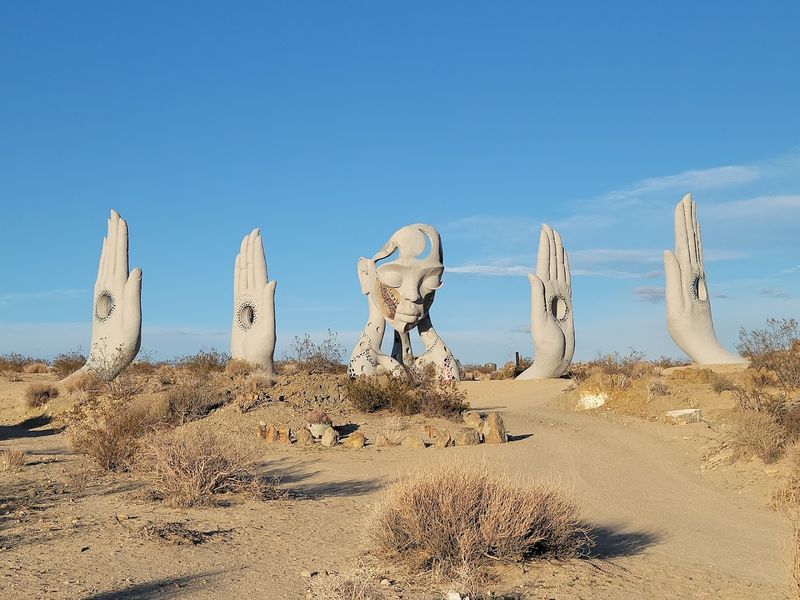
A designer and developer, Brown commissioned ‘Transmission’ as the grand entrance to the Mojave Moon Ranch, a private property near Sunfair Dry Lake outside Joshua Tree.
The intention was never purely decorative; Brown wanted the sculpture to serve as a threshold, a moment of pause before entering the land.
The concept aligns with the broader philosophy of the ranch, which treats the desert not as an empty backdrop but as a living, meaningful environment.
Brown’s decision to commission Popper specifically speaks to a shared artistic sensibility between the two, one that values scale, symbolism, and the emotional weight a sculpture can carry when placed in the right landscape.
The project was completed in 2021, and since then it has taken on a life well beyond what either Brown or Popper likely anticipated.
What began as a private artistic statement has become a widely photographed landmark that draws visitors from around the world.
The sculpture’s origin story adds an extra layer of meaning for those who learn it before making the trip out to Sunfair Road.
4. The Materials That Make It Glow
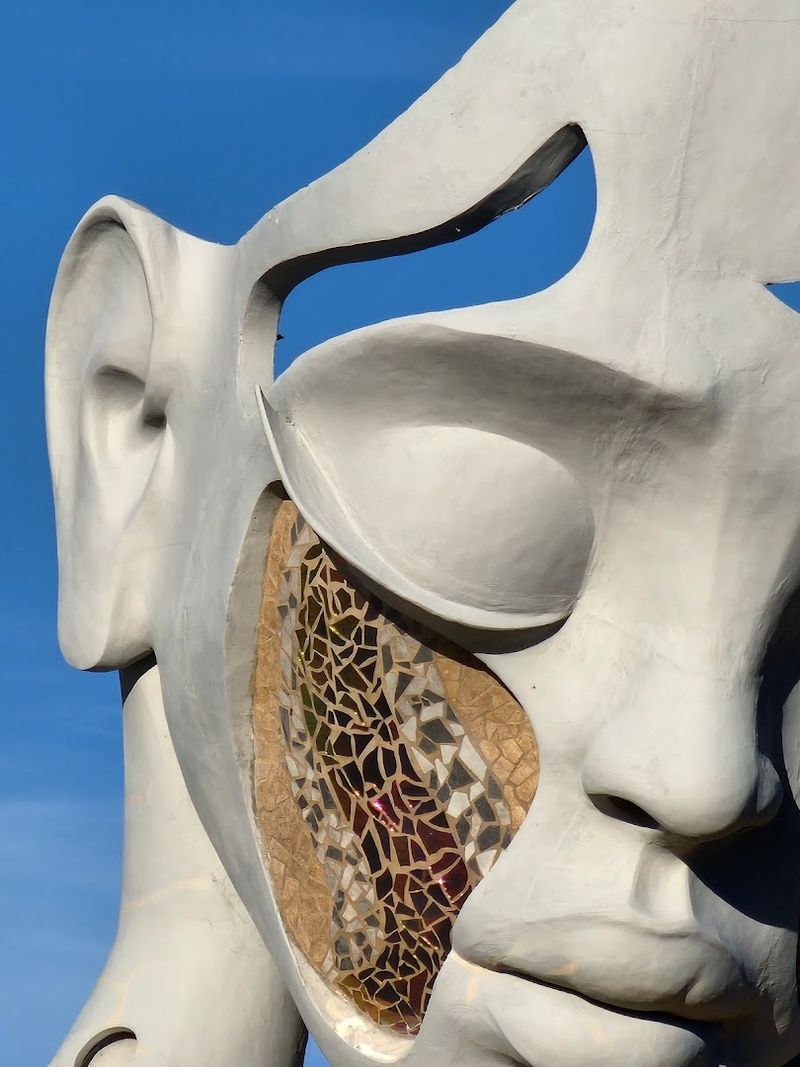
The physical construction of ‘Transmission’ is as thoughtful as its concept.
The sculpture is built from steel-reinforced concrete, a material chosen for its durability in the harsh desert climate where temperatures can swing dramatically between seasons.
That structural core is then covered with dichroic glass mosaics that transform the surface into something alive with shifting color.
Dichroic glass is a specialized material that reflects and transmits different wavelengths of light depending on the viewing angle.
As the sun moves across the sky throughout the day, the mosaic tiles catch and scatter light in ways that change the sculpture’s appearance from hour to hour.
At sunrise and sunset especially, the effect can be vivid and unexpected, with the figure appearing to radiate color outward into the surrounding sand.
The combination of rugged concrete and delicate glass creates an interesting tension that rewards close observation, even from the designated viewing distance.
Local artisans and contractors contributed significantly to the mosaic work, making the final piece a genuine community effort rooted in the region.
That collaborative craftsmanship gives ‘Transmission’ a handmade warmth that contrasts beautifully with its monumental scale and adds texture that photographs can only partially capture.
5. Symbolism Woven Into Every Detail
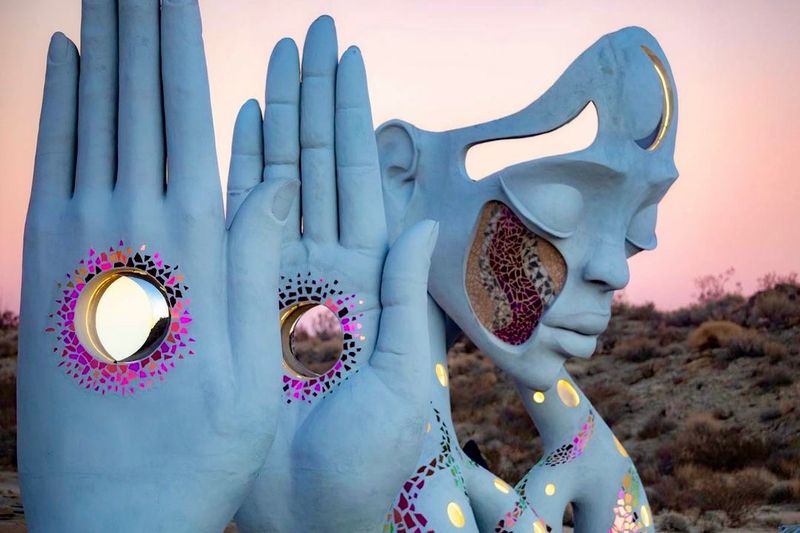
Every element of ‘Transmission’ carries meaning, and understanding the symbolism makes the viewing experience considerably richer.
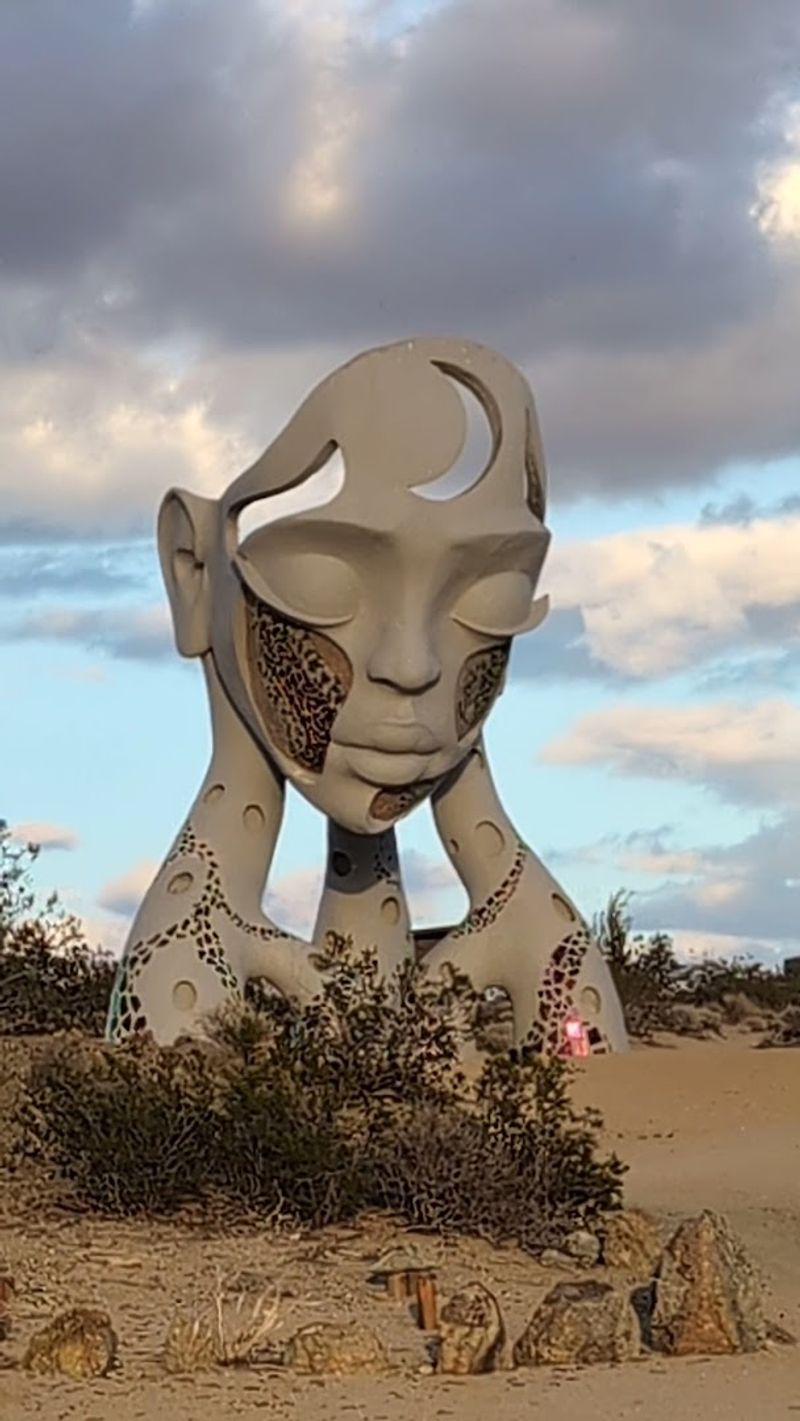
The figure is female, serene in expression, and positioned with two sets of hands rather than the standard pair.
That doubling of hands is a deliberate artistic choice, suggesting a being capable of giving and receiving simultaneously, of reaching both upward and downward at once.
The head of the figure is adorned with crescent moon motifs, a recurring symbol across many cultures that connects to cycles, intuition, and the passage of time.
In the context of the Mojave Desert, where the night sky is extraordinarily clear and the moon casts long shadows across the sand, that imagery feels especially fitting.
The title itself, ‘Transmission,’ points to the idea of signals being sent and received between the Earth and something larger.
Popper has described his broader body of work as an exploration of human consciousness and connection, and ‘Transmission’ sits comfortably within that theme.
For visitors who arrive knowing a little about the symbolism, the sculpture shifts from being a striking visual spectacle into something more meditative.
Standing at the viewing area and considering what the figure might be transmitting adds a reflective quality to what could otherwise be a quick roadside stop.
6. How To Find The Viewing Area On Sunfair Road
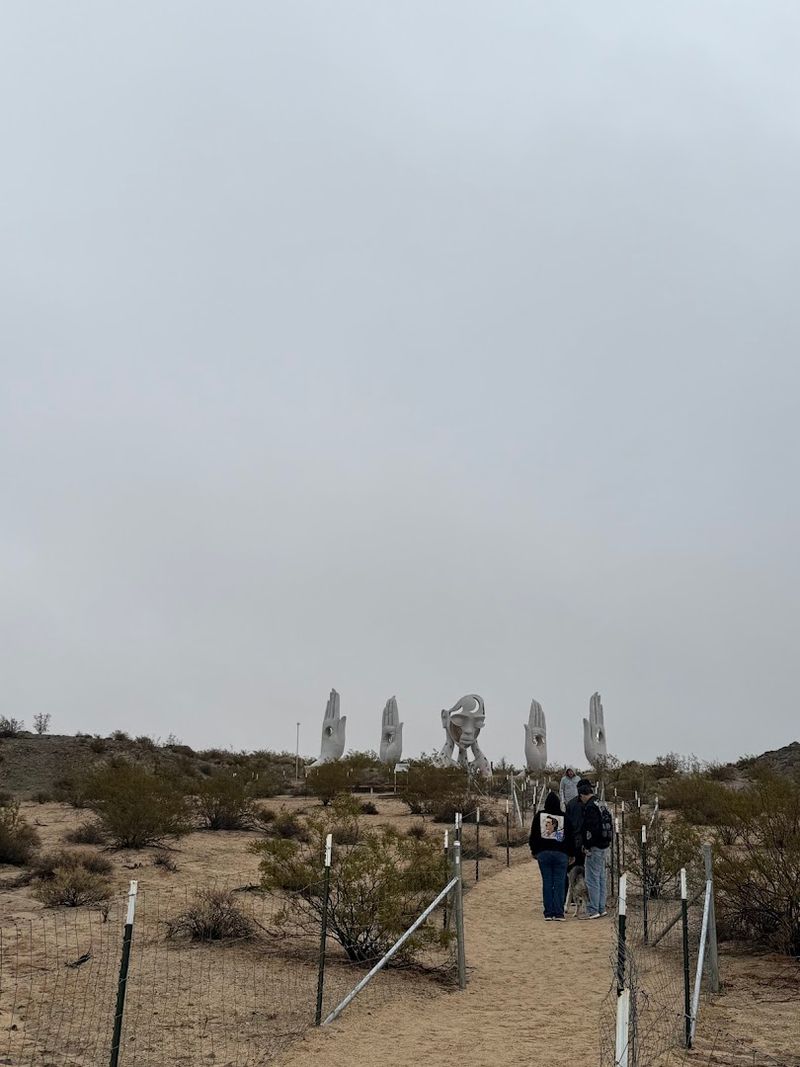
Getting to the viewing area for ‘Transmission’ requires a bit of navigation and a willingness to leave the pavement behind.
The sculpture is located near 2015 Sunfair Rd, Joshua Tree, CA 92252, and reaching it involves turning off the main highway onto a dirt road that can be bumpy depending on recent weather conditions.
Most standard passenger vehicles can handle the road, but driving slowly and carefully is strongly recommended.
The route can be tricky, and several visitors have noted that GPS directions sometimes lead to confusing or rougher paths than necessary.
Sticking to the main road toward the end of the journey tends to produce a smoother experience.
Once at the designated turnout, there is limited off-street parking, so arriving during quieter hours helps avoid congestion.
A short walking path leads from the parking area to the viewing point, giving visitors a clear sightline to the sculpture without requiring any strenuous hiking.
The area is free to visit and no tickets are needed, which makes it an accessible stop for anyone passing through the region.
Weekday mornings tend to offer a more peaceful experience, while sunset hours can attract several vehicles at once given how beautifully the light plays across the mosaic surface at that time of day.
7. Private Property Rules And Why They Matter
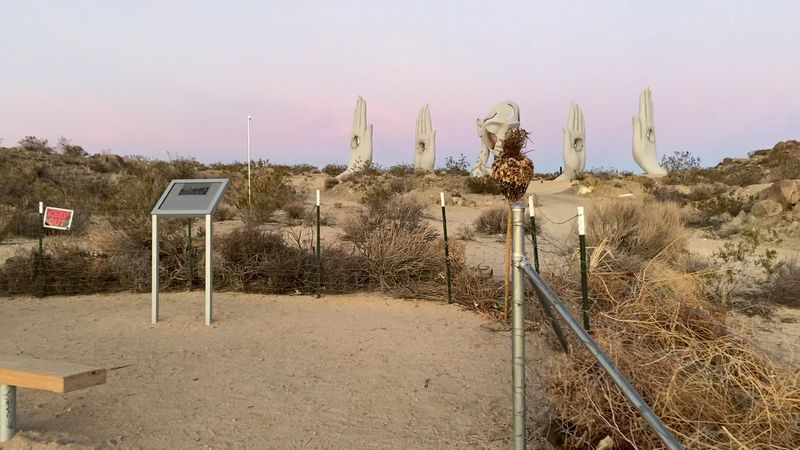
One of the most important things to know before visiting ‘Transmission’ is that the sculpture sits on private property belonging to the Mojave Moon Ranch.
A fence separates the public viewing area from the land where the sculpture stands, and that boundary is not merely symbolic.
Trespassing onto the property carries significant penalties, with fines reported to reach as high as twenty thousand dollars for those who attempt to photograph from inside the property line.
The fencing was put in place partly in response to a wave of trespassing incidents driven by social media attention.
As the sculpture gained popularity online, some visitors began crossing onto the property to get closer photographs, causing damage to the surrounding desert environment and to the site itself.
The owners of the ranch responded by establishing clearer boundaries and a proper viewing area to protect both the artwork and the land.
Respecting those boundaries is not just a legal matter but an ethical one.
The desert ecosystem around the sculpture is fragile, and foot traffic off designated paths can damage plant life and disturb wildlife that depends on undisturbed habitat.
Visitors who approach the experience with that awareness tend to leave feeling better about their trip, knowing they engaged with the artwork responsibly and helped preserve it for future visitors.
8. The Best Times To Visit For Light And Solitude
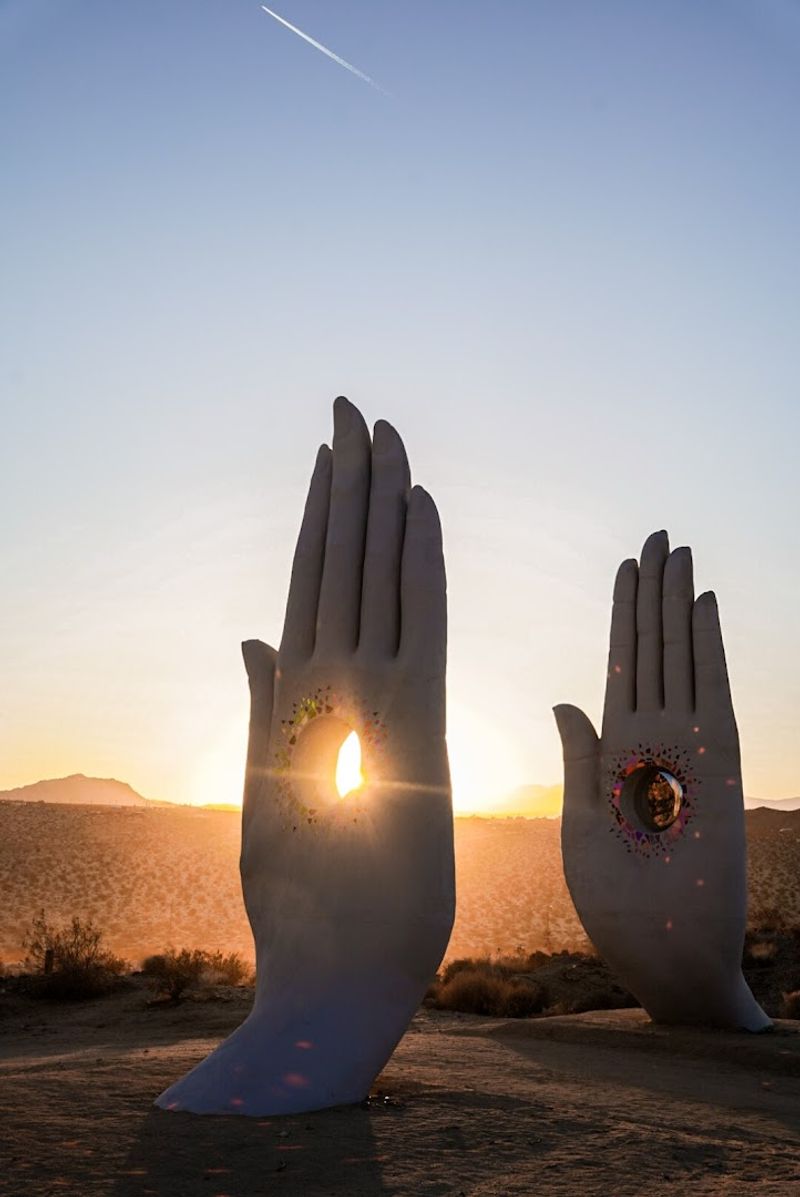
Timing a visit to ‘Transmission’ can make a noticeable difference in the overall experience.
The dichroic glass mosaics on the sculpture’s surface respond to sunlight in dramatic ways, and the quality of that light shifts considerably depending on the time of day.
Sunrise visits tend to offer the most vivid color effects, with the low-angle morning light hitting the mosaic tiles at sharp angles and scattering across the sand in unexpected directions.
Sunset is equally popular and draws more visitors, which means the viewing area can become crowded with several vehicles arriving around the same time.
For those who prefer a quieter encounter, early weekday mornings are the most reliable option for solitude.
Arriving before most travelers have started their day means the sculpture can be appreciated without distraction, and the cool desert air makes standing at the viewing point considerably more comfortable.
Midday visits during summer months can be challenging due to intense heat, and the high sun tends to flatten the visual effect of the mosaics rather than enhance them.
Overcast days produce their own soft, diffused effect that some visitors find equally appealing in a calmer way.
Whatever time is chosen, arriving with enough patience to simply stand and observe for a few minutes tends to make the experience more rewarding than a quick photograph and departure.
9. The Connection To Burning Man And The Festival Art World
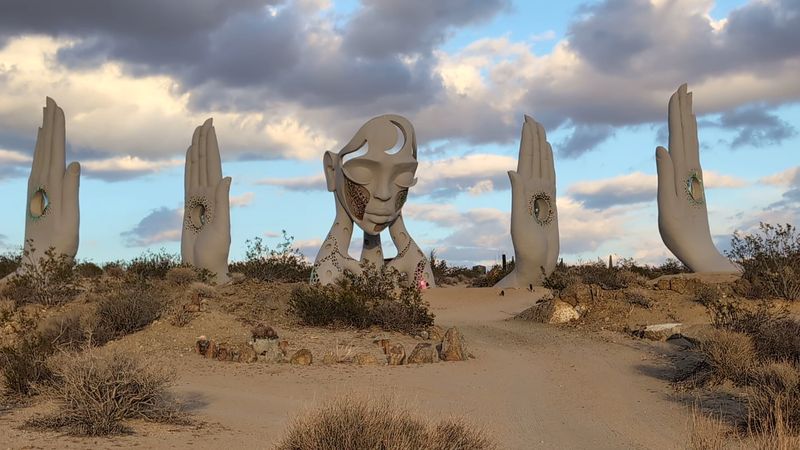
Daniel Popper’s work often gets compared to the kind of large-scale sculptures seen at outdoor art gatherings, where massive human figures rise out of open landscapes and invite people to pause and take them in from every angle.
That comparison helps explain why Transmission feels so striking in the desert, even without knowing anything about the artist beforehand.
Environments like Burning Man in Nevada’s Black Rock Desert have made this style of monumental, immersive art more familiar to a wider audience.
Visitors there are used to encountering oversized installations in remote settings, where scale and surroundings work together to create a memorable experience.
Transmission fits naturally into that broader visual language. At the same time, the experience here is different.
Unlike temporary festival pieces that are meant to be explored up close, walked around, and interacted with freely, this installation is viewed from a distance.
That shift changes the dynamic, moving the focus away from physical interaction and toward observation.
The result feels quieter and more reflective.
The sculpture stands in one place, exposed to the elements over time, gradually becoming part of the landscape rather than a temporary addition to it.
That sense of permanence gives the experience a different kind of weight, one that lingers a bit longer after you leave.
10. Why ‘Transmission’ Has Become A Social Media Phenomenon
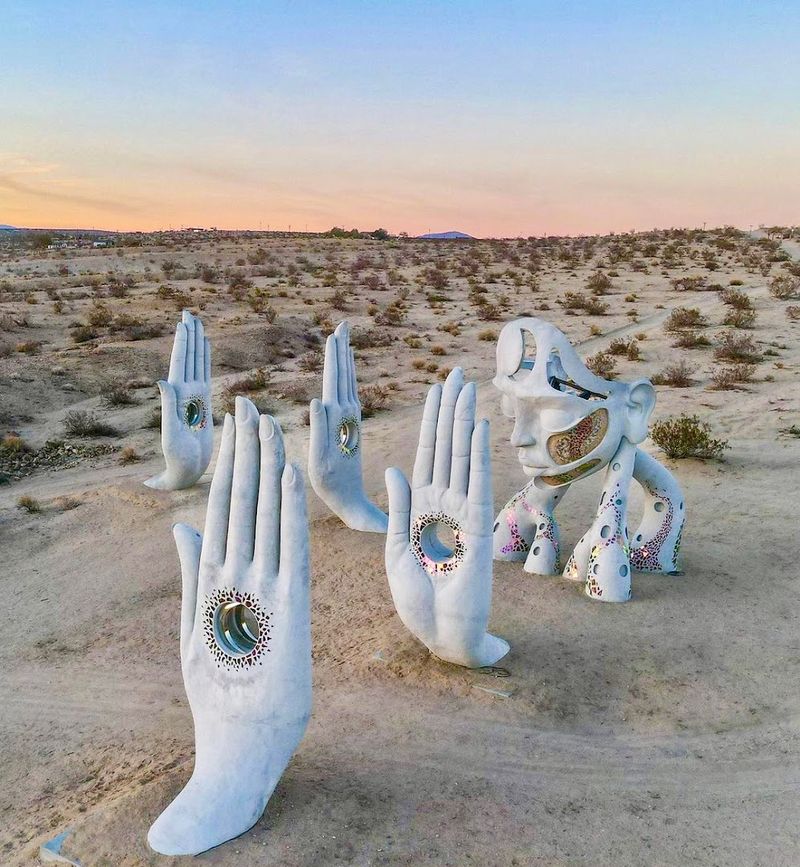
Few outdoor artworks in California have generated the kind of organic online attention that ‘Transmission’ has accumulated in a relatively short time.
Since its completion in 2021, photographs of the sculpture have spread widely across social media platforms, drawing visitors who might never have heard of Daniel Popper or sought out desert art on their own.
That visibility has been both a gift and a challenge for the site.
The surge in popularity led directly to the trespassing incidents that prompted the installation of fencing and clearer boundary markings.
Some visitors, eager to capture the sculpture at close range for social media content, crossed onto the private property and caused damage that the ranch owners then had to address.
The description plaque on the sculpture was reportedly tagged over with graffiti, removing information that helped contextualize the work for new visitors.
The experience at the viewing area today reflects those lessons.
The fence is set back far enough that the sculpture can still be appreciated visually but close enough to make the boundary unmistakable.
For visitors who approach the site with genuine curiosity and respect, the distance does not diminish the encounter.
The sculpture’s scale means it reads powerfully even from the road, and the surrounding desert silence gives the viewing experience a quality that no amount of social media content can fully replicate.