This Michigan Museum Lets You See Life-Sized Replicas Of Pompeii’s Ancient Frescoes
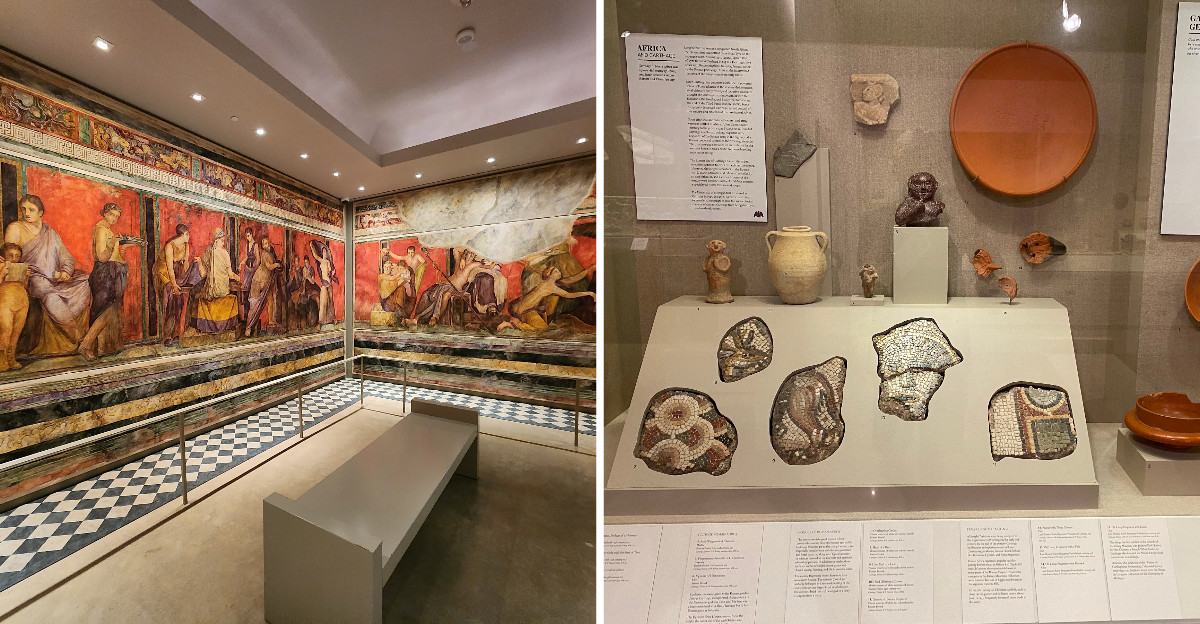
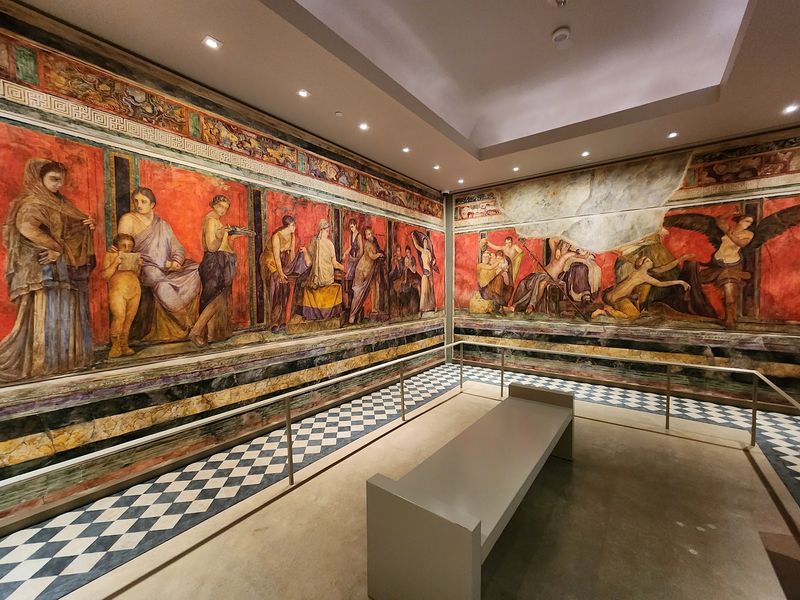
Ancient Rome feels startlingly close when an entire room glows with scenes copied from a villa buried near Mount Vesuvius.
The scale alone makes this Michigan museum seem even more ambitious.
Each image was painstakingly recreated by hand, and the detail rewards anyone who slows down for a closer look.
Nearby galleries add Roman glass, Egyptian objects, ancient toys, and pottery to the mix.
Pull-out drawers hide smaller surprises, so curiosity keeps paying off long after the first room.
Best of all, admission is free. An afternoon rarely comes with this much ancient drama, color, and mystery under one roof.
A Professor’s Big Classroom Dream
Some museums begin with royal collections. This one grew from a teacher who wanted ancient objects to make classroom lessons more tangible.
Francis W. Kelsey taught Latin at the University of Michigan from 1889 to 1927. He began acquiring archaeological material in 1893, adding lamps, pottery, building fragments, coins, and other objects students could study directly.
The idea soon expanded beyond classroom collecting. In 1924, the university began sponsoring archaeological field projects around the Mediterranean and Middle East, including work in Egypt, Turkey, and Tunisia.
Those projects helped transform a teaching collection into a major archaeological resource. The Museum of Classical Archaeology was installed in Newberry Hall in 1928 and opened to the public in 1929.
In 1953, it became the Kelsey Museum of Archaeology. Three years later, it formally became part of the College of Literature, Science, and the Arts.
The same teaching purpose still runs through the institution. Galleries support public visits, university classes, research, and educational programs throughout the year.
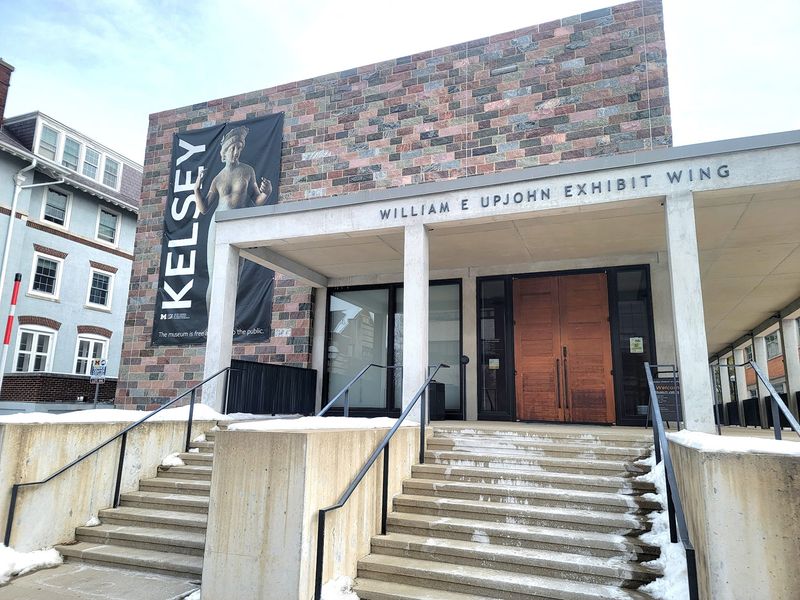
Its address is 434 S State St in Ann Arbor, although the public entrance is on Maynard Street.
Pompeii’s Villa Walls, Nearly Life-Sized
Deep red panels dominate the Villa of the Mysteries gallery, surrounding the room with figures copied from one of Pompeii’s most famous fresco cycles.
Kelsey commissioned the project in 1924 so students and scholars could study the paintings in color when published photographs were largely black and white.
Italian archaeological artist Maria Barosso completed 22 watercolor panels over a little more than 18 months. She was permitted to work at five-sixths of the original size, making the finished series nearly life-sized rather than full scale.
The original frescoes remain in the Villa of the Mysteries at Pompeii. The watercolors are displayed in a dedicated gallery arranged to evoke Room 5 of the ancient villa.
Figures appear in a continuous sequence around the room, with gestures, clothing, architectural details, and rich red backgrounds linking one section to the next.
The meaning of the imagery remains debated, adding another layer of interest to a cycle often connected with ritual activity.
A graphite sketchbook is allowed in the galleries, giving detail-focused visitors another way to study the faces, folds, and poses.
How The Paintings Stay Bright
A century-old watercolor on paper needs very different care from the ancient wall painting it copies.
The museum began a major conservation project for the Barosso watercolors in 2008. Specialists treated the 22 large panels for long-term display.
Their gallery sits in the William E. Upjohn Exhibit Wing, which opened in 2009 and added purpose-built space for permanent exhibitions.
The copies matter for more than their visual impact. They preserve a detailed record of how the Pompeii frescoes appeared in the 1920s, before later changes affected the originals.
That gives the room two timelines at once. The images interpret ancient Roman art while the watercolors document how scholars recorded it a century ago.
Flash-free photography is allowed, but touching objects, cases, or paintings is not. Food and drinks also stay outside the galleries.
These replicas are now historic objects in their own right, and conservation keeps their color and fine painted details available for future study.
Old Stone Hall, Modern Exhibit Wing
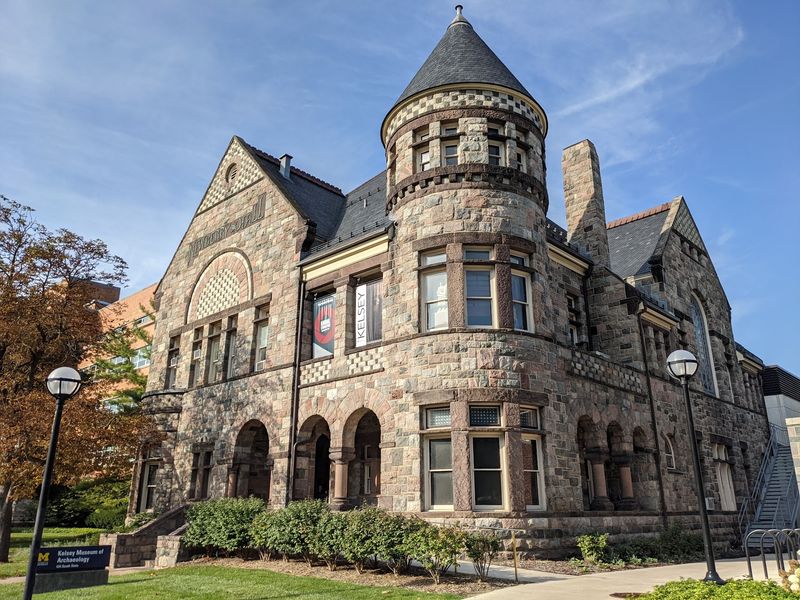
Newberry Hall gives the museum a very different architectural face from the galleries behind it.
Construction began in 1888, and the Richardsonian Romanesque building was completed in 1891 for the Students’ Christian Association. Rough stone and broad arches still define the State Street side.
The university leased the building for classrooms in 1921. Archaeological collections moved there in 1928, and the university acquired Newberry Hall in 1937.
Today, the historic building holds offices, classrooms, the museum library, lectures, and special events rather than the main permanent galleries.
Those galleries occupy the connected Upjohn Exhibit Wing on Maynard Street. Its 2009 opening created modern exhibition space while keeping Newberry Hall part of the museum complex.
The contrast works naturally. One side reflects the institution’s long campus history, while the other is organized around exhibition and collections needs.
Newberry Hall is listed on the National Register of Historic Places and remains one of the university’s older campus structures.
Treasures From Egypt To Rome
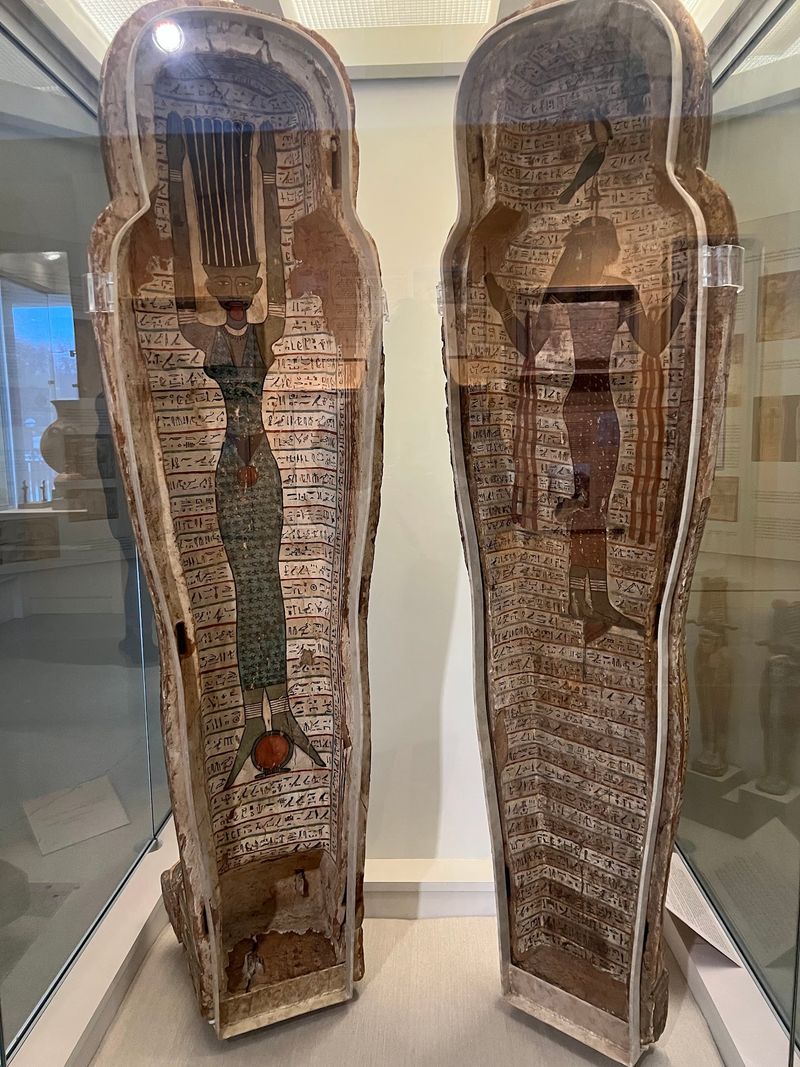
More than 150,000 artifacts belong to the collection, although only a small share can be displayed at one time.
The holdings cover North Africa, West Asia, and the broader Mediterranean, with material from ancient Egypt, Greece, Rome, and later Byzantine and Islamic cultures.
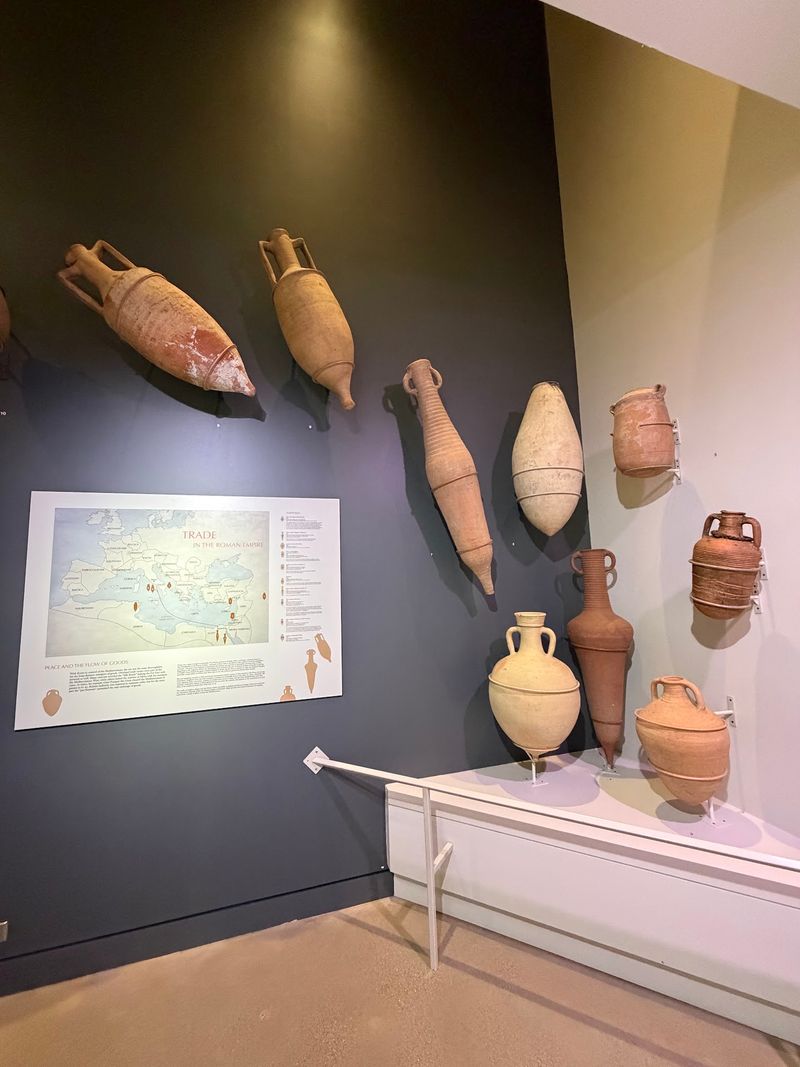
Roman glass is a standout. Some vessels show iridescent weathering, while pottery, sculpture, coins, textiles, and household objects reveal different kinds of craftsmanship.
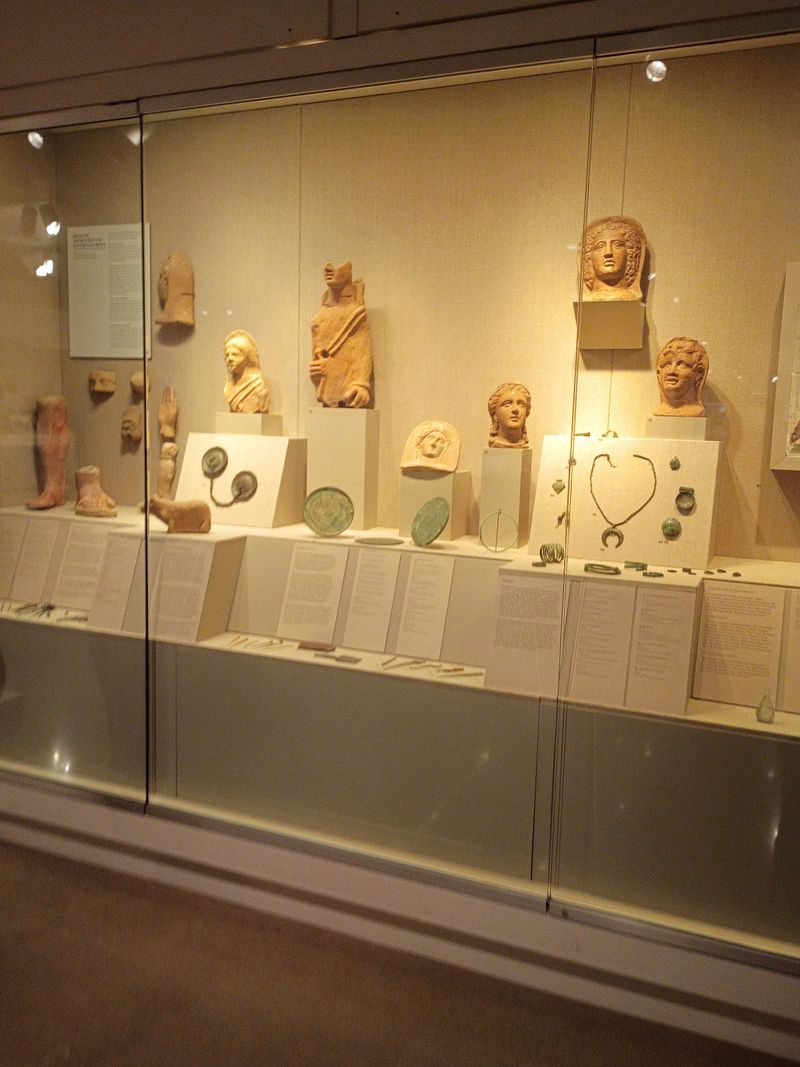
Smaller objects can be just as revealing. Amulets, jewelry, game pieces, lamps, tools, and items connected with childhood make everyday life easier to imagine.
Much of the collection grew from early University of Michigan archaeological projects, especially work in Egypt and Iraq during the 1920s and 1930s. Material from newer field projects remains in its country of origin.
Objects are not presented only as attractive things. Archaeological context can show where they were found, how they were used, and what they reveal about larger communities.
A newer permanent gallery extends the story into the Byzantine and Islamic worlds from about 400 to 1800, broadening the museum’s chronological reach.
Secret Drawers And Tiny Wonders
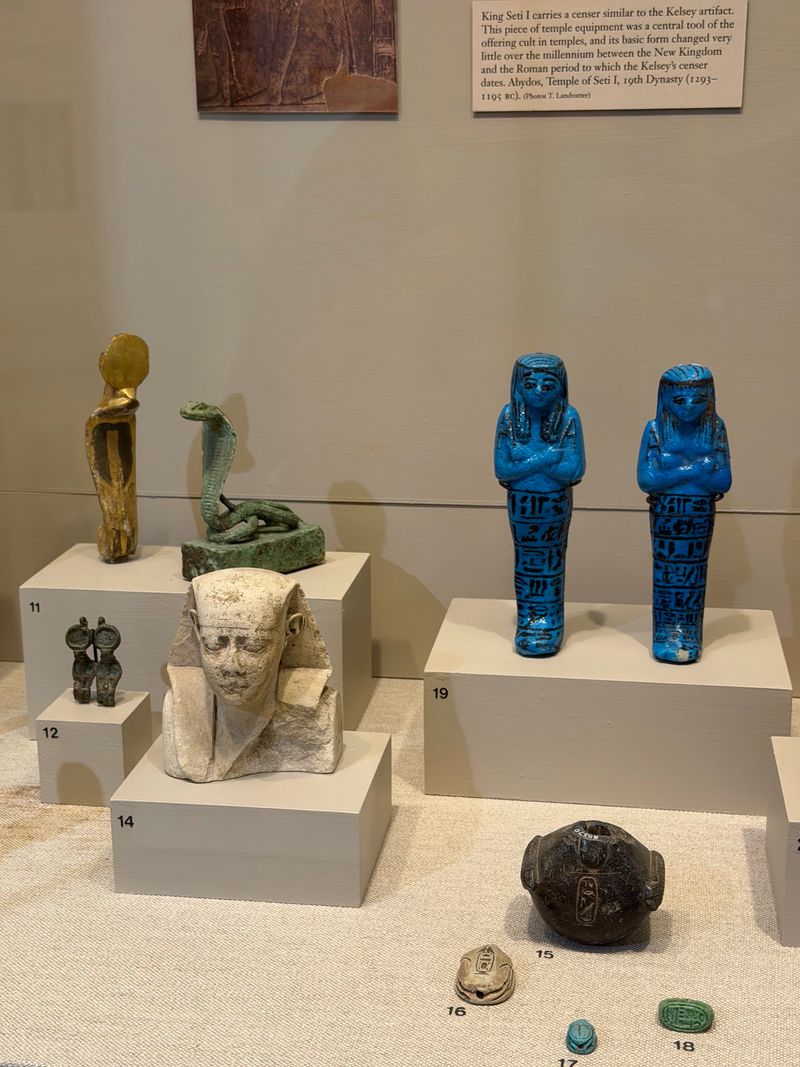
The easiest displays to miss are directly below eye level.
Many gallery cases have pull-out drawers underneath, and opening them reveals additional objects that would otherwise remain out of sight.
Egyptian jewelry, Greek pottery fragments, and material connected with early Christianity in Roman Egypt are among the examples.
The format suits small artifacts especially well. Lamps, beads, amulets, pottery pieces, and bits of everyday material can be grouped closely without crowding the cases above.
Some drawers invite comparison, placing related forms, materials, or decorative choices side by side.
The museum even uses an open-storage drawer to explain how specialists distinguish genuine ancient material from later imitations. That turns a small display into a compact lesson in collection study.
It is easy to pass the first drawer without noticing it. After that, the lower part of every case suddenly deserves inspection.
For anyone drawn to details, these displays can quietly become one of the most absorbing parts of the visit.
Tours, Lectures, And Real Research
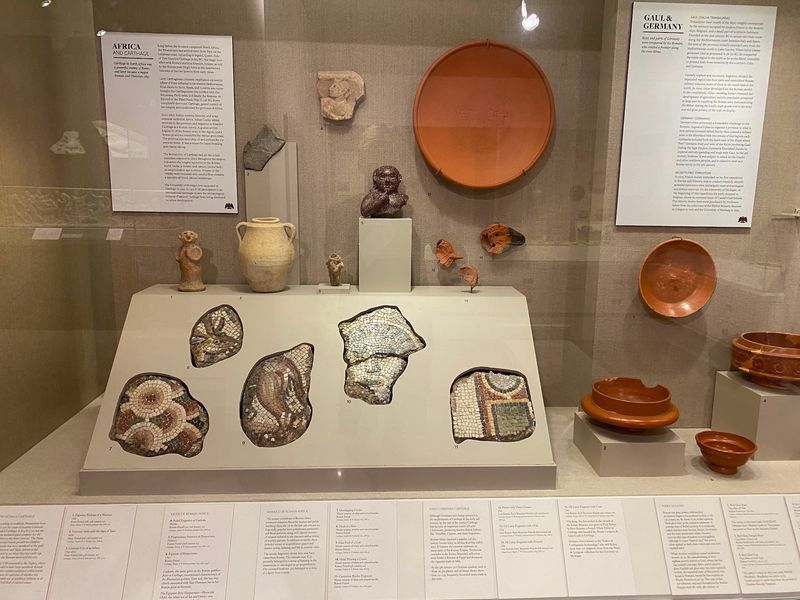
The galleries are only the public-facing part of a much larger academic operation.
Free public tours run on many weekends, covering themes from ancient Egypt and Rome to animals, music, politics, and daily life. Informal programs also use replica artifacts, ancient games, and pottery activities.
University courses can arrange deeper sessions. Advanced classes may request supervised handling of genuine collection objects with advance approval, while other programs use artifacts and replicas in guided activities.
Behind the exhibition spaces, archives preserve excavation records, correspondence, photographs, maps, and papers connected with roughly a century of field projects.
Research remains central to the museum. Staff, graduate students, undergraduates, and outside scholars work with both artifacts and archival collections.
Kelsey-sponsored field projects continue in Egypt, Sudan, Turkey, Greece, and Italy. Material from those projects stays in its home country, while the work feeds publications, teaching, conservation, and exhibitions.
The museum also serves as headquarters for the university’s graduate program in ancient Mediterranean art and archaeology.
For a Michigan museum that can be explored casually in an afternoon, there is a surprising amount of academic work behind the display cases.
Smart Tips Before You Go
The street address can cause a small moment of confusion. The museum is listed at 434 S State St, but the public entrance is on Maynard Street.
Regular gallery hours are Tuesday through Friday from 10 a.m. to 4 p.m. and Saturday and Sunday from 11 a.m. to 4 p.m. The museum is closed on Mondays and university holidays.
Only the third Thursday of each month brings extended hours, when the galleries stay open until 7:30 p.m.
Admission is always free, and no ticket is required. Metered spaces are available nearby, while the Maynard parking structure provides another option close to the entrance.
All public areas are wheelchair accessible. The Maynard entrance has a ramp and power-assist doors, an elevator reaches the second-floor galleries, and benches are available in several locations.
Flash-free personal photography is permitted. Sketching is welcome with graphite pencils and sketchbooks, while large bags, food, and drinks stay outside the galleries.
A self-guided visit works well, but weekend tours and special programs can add context when the schedule lines up.