This Mysterious Arizona Castle Looks Like A Wedding Cake And Getting Inside Takes Serious Luck
Seeing the castle is easy. Crossing the threshold is the challenge.
Arizona has one of those landmarks that becomes more intriguing because access is limited.
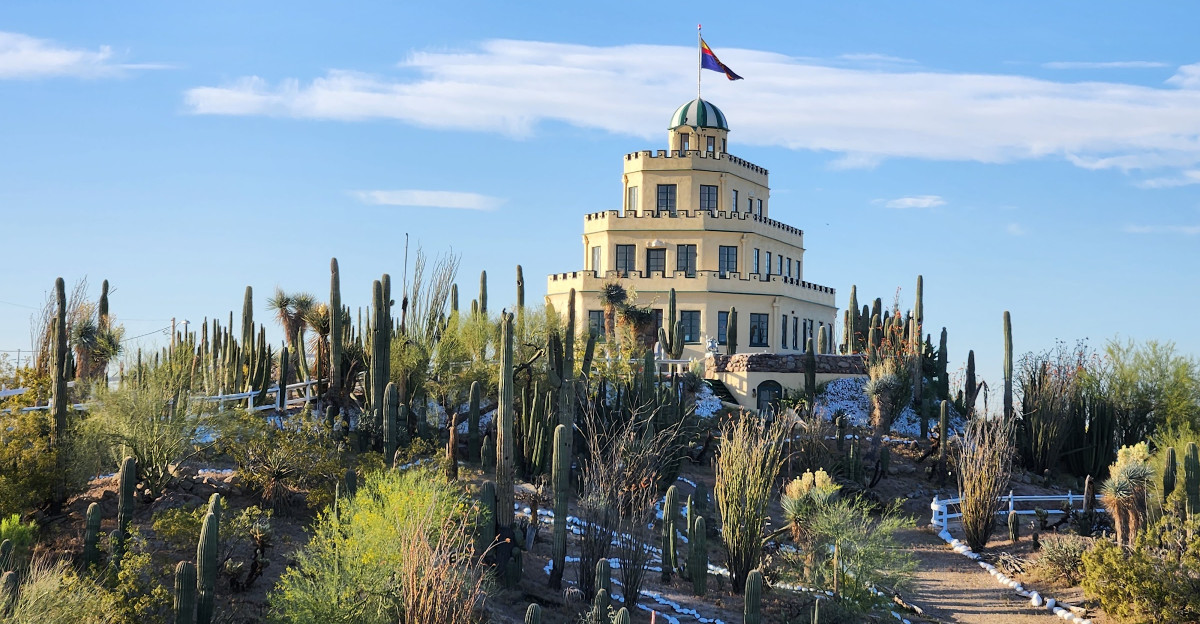
From below, the pale stucco tiers already give the structure an unusual profile. Up close, the wedding-cake comparison becomes even harder to ignore.
Then comes the challenge: regular tours are limited and distributed by a random selection process, while last-minute openings are uncommon. That barrier only feeds the mystery.
What is behind those walls? Why was it built this way? And why does such an extravagant place sit above the desert at all?
Sometimes the hardest attraction to enter becomes the one you remember longest.
A Dessert-Shaped Landmark Above Van Buren
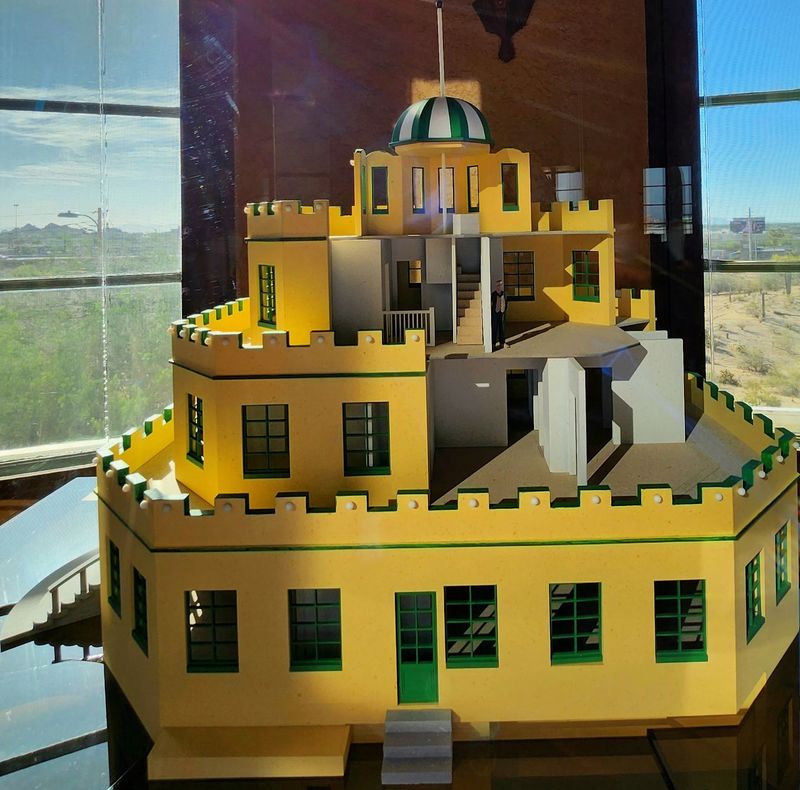
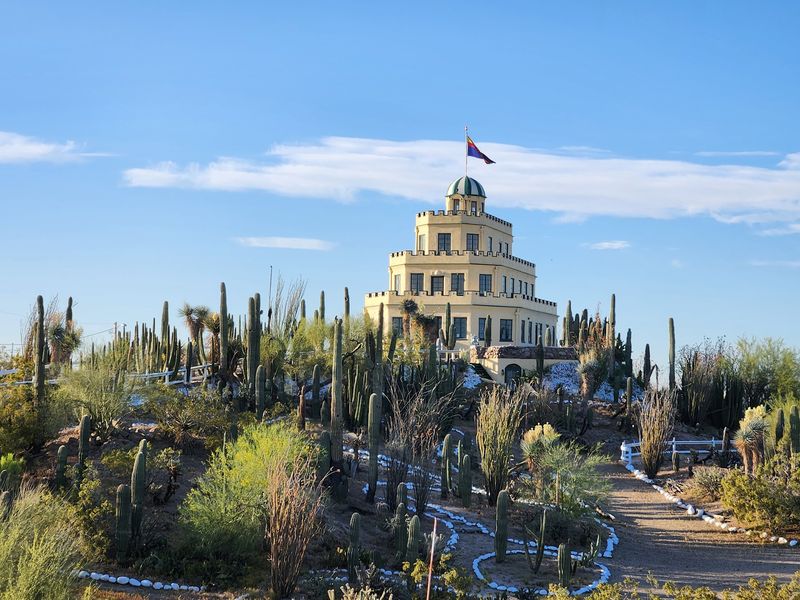
Four stacked layers, each one smaller than the last, rise from a granite knoll east of downtown.
Smooth stucco and the narrowing tiers create the cake-like silhouette. From a distance, the unusual profile looks more like a whimsical landmark than a conventional historic home.
Crenellated parapets edge the tiers, adding to the castle-like profile.
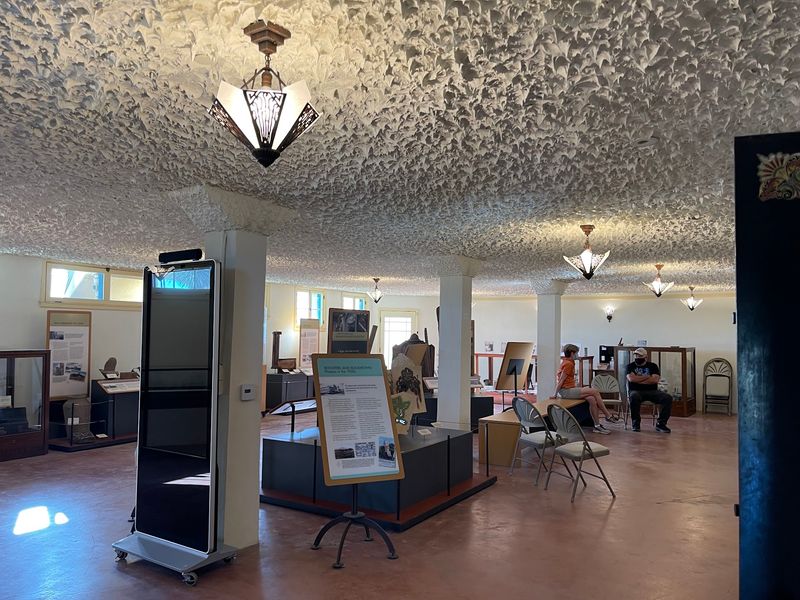
Decorative Art Deco light fixtures remain a notable feature of the first-floor interior. Those surviving interior details give tours another layer of interest beyond the building’s famous exterior.
Exterior lighting makes the tiered structure visible after dark. Its hilltop position makes the structure highly visible from nearby roads in east-central Phoenix.
The official name is Tovrea Castle at Carraro Heights, and it carries recognition as a Phoenix Point of Pride. It has also been listed on the National Register of Historic Places since 1996.
Independent access to the property is not permitted; visits require a scheduled tour or event. The Visitor Center entrance is at 5025 E Van Buren St, Phoenix.
An Italian Immigrant’s Bold Desert Plan
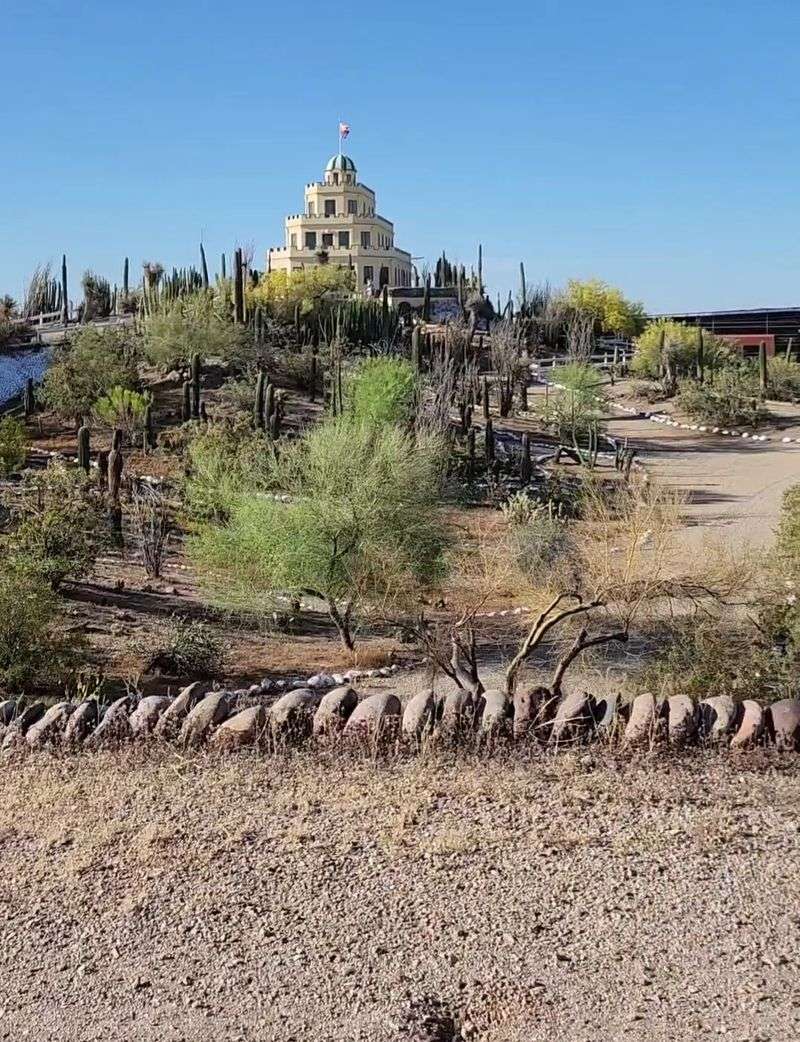
In 1928, an Italian-born developer moved from San Francisco to Arizona and purchased 277 acres east of Phoenix. He named the planned development Carraro Heights.
His plan centered on a boutique hotel crowning the highest point of the land. The plan paired a boutique hotel with nearby homesites intended for future residents.
Construction took about fourteen months and was completed in 1930, with the developer and his son overseeing the project.
The finished building became a vernacular interpretation of a medieval European castle, with a tiered form that stood apart from common revival styles of the period.
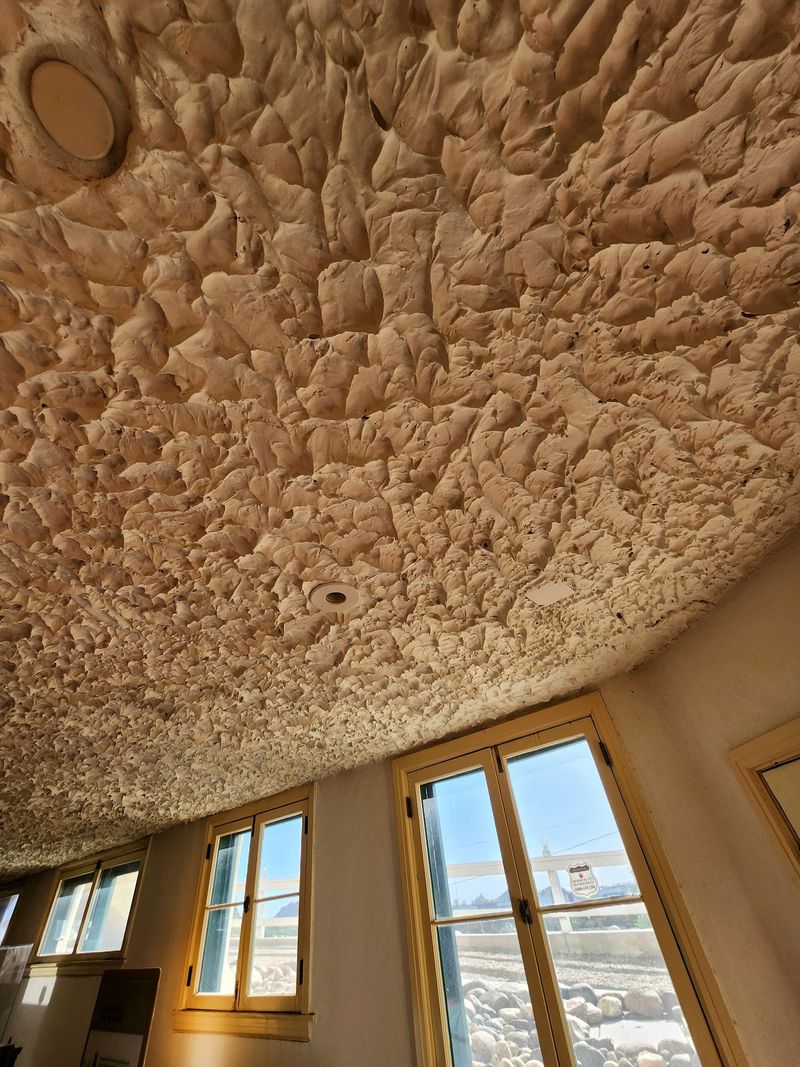
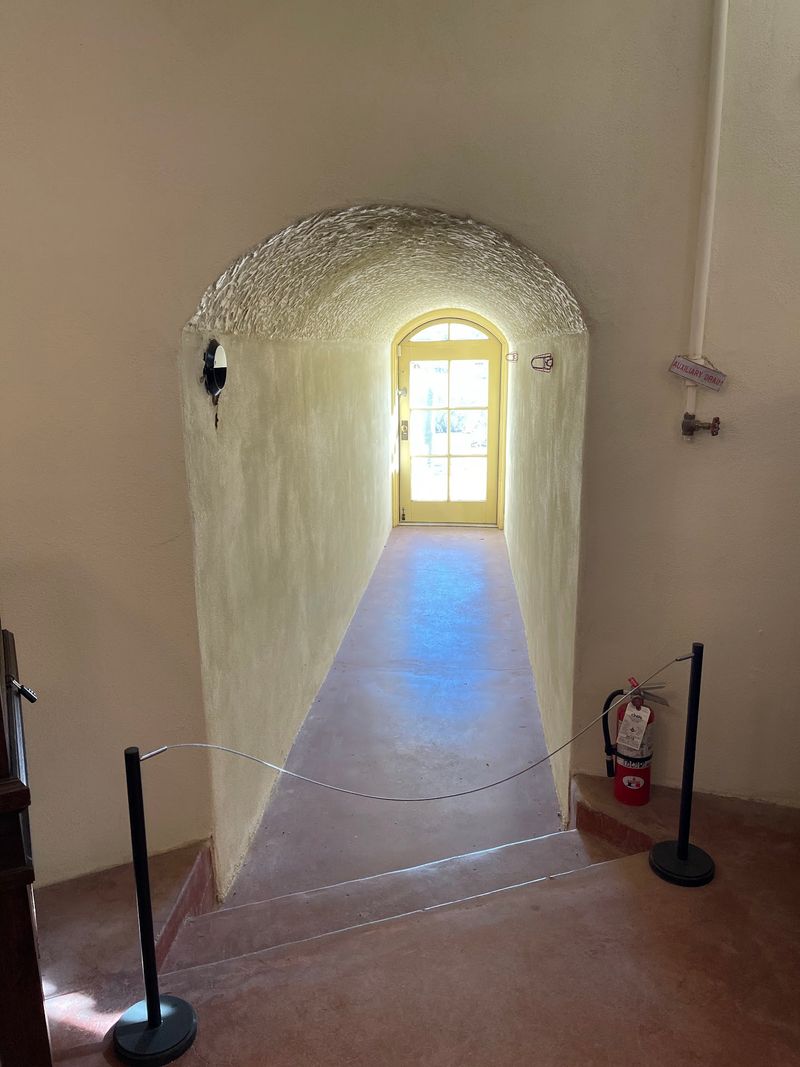
The basement remains part of the regular tour and preserves distinctive plasterwork and structural details from the original construction.
Official site history also addresses several long-running stories surrounding the property’s origins. One popular legend claims a cattleman built the place as a copy of his wedding cake.
Historic records instead show that the building was created as the centerpiece of a planned resort development.
Stockyards, Hard Times, And A Sale
Historical accounts point to the economic downturn and nearby livestock operations as two possible pressures on the resort project.
What began as an ambitious hospitality idea was already facing a very different reality by the time construction wrapped up.
Livestock pens were also developed on adjoining land to supply a nearby packing operation.
The proximity of the livestock operations complicated the original resort vision.
The property was sold in 1931, shortly after the building was completed. Imagine completing fourteen months of work, then handing over the keys.
The buyers converted the former hotel project into a private residence in 1931. That change in use reshaped the building’s story almost as quickly as its original chapter had begun.
That ownership shift explains the name everyone uses today, even though the original builder never got his resort. Both families left marks on the place, which is part of what makes the tour so layered.
Regular tours cover the property’s development history alongside the castle and cactus gardens.
Five Thousand Cacti And Counting
Forget the building for a moment, because the plants deserve equal billing.
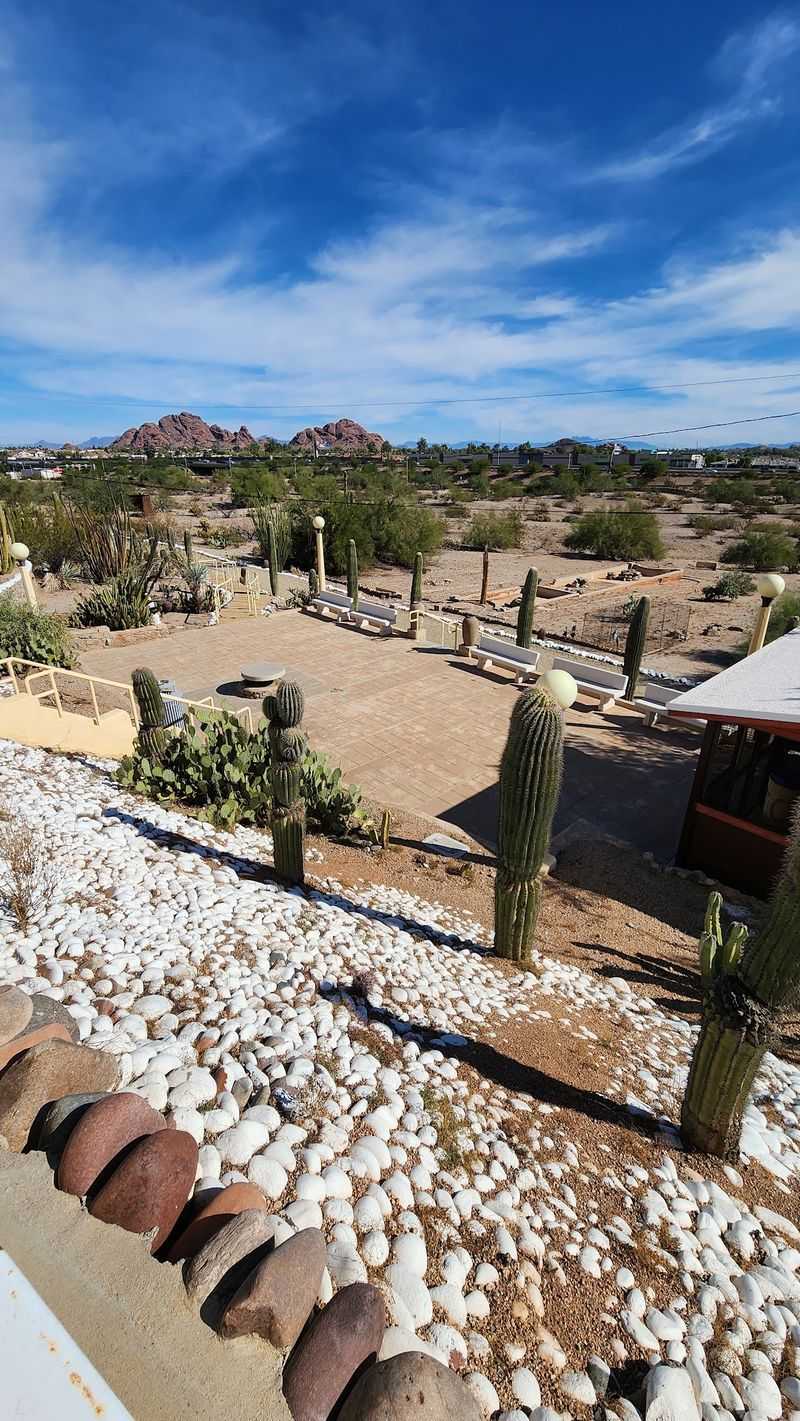
The Carraro Cactus Garden spreads across the 44-acre property with more than 5,000 individual cacti representing over 100 varieties.
A Russian landscape gardener proposed the cactus garden and worked with the developer and his son to establish the collection.
He gathered desert species from Australia, Central America, South America, and the Sahara Desert in Africa.
Additional cacti came from California, Colorado, New Mexico, and Arizona. Mokta labeled plants with common and Latin names, treating the grounds as a living collection rather than decoration.
White river rock hauled from the nearby Salt River outlines pathways and beds. Under midday sun that rock practically glows, framing every spine and bloom in bright contrast.
Tucked among the plantings sit two concrete-lined ponds, a horseshoe area, and an old game court. Small clues about the leisurely resort life once imagined for this hillside.
The tram route provides broad views of the restored cactus gardens and historic outbuildings across the property.
Spring can bring seasonal blooms, while cooler months generally offer milder conditions for the outdoor portions of the tour.
Bringing Neglected Gardens Back To Life
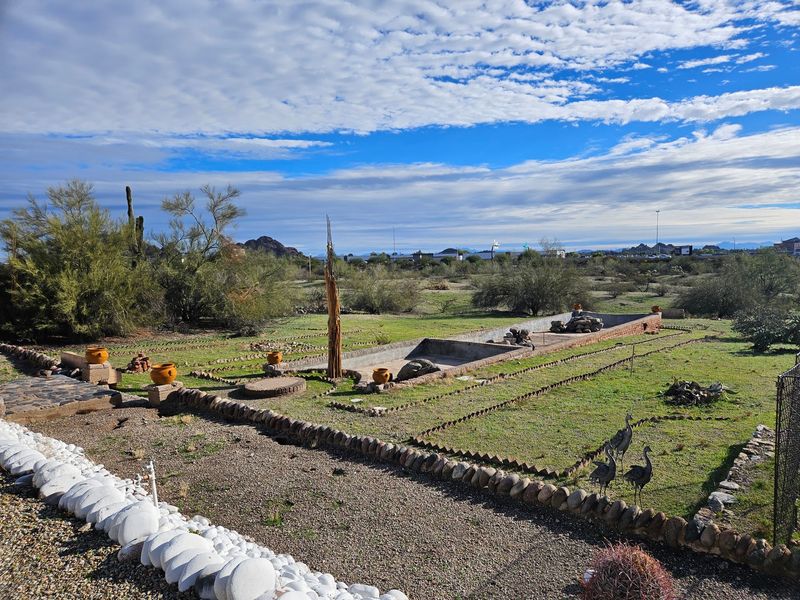
Over time, many original plants disappeared and several historic garden features deteriorated.
During their years here, the family had built a large concrete patio east of the building, plus a rose garden, an aviary, and a reflecting pool. Home touches on a former hotel.
The first phase of garden restoration began in 1998, with historic photographs used to identify earlier plantings.
Over roughly a year, crews planted 400 saguaros and 1,000 smaller cacti with careful spacing for future growth. Patience was built right into the plan.
Modern irrigation went in, along with split rail fencing and low driveway lighting that stays out of the way visually. Workers also cleaned the white river rock back toward its original bright color.
Several historic outbuildings remain part of ongoing preservation work, supported by fundraising, tours, events, and other nonprofit activities.
Volunteer garden work continues as part of the long-term effort to maintain and restore the historic landscape.
Getting A Tour Ticket Takes Patience
Here comes the part that frustrates spontaneous travelers. Public tours began in 2012, and regular dates continue to sell out months in advance.
Regular tour access uses scheduled entry periods, with the next spring window running October 1 to 15, 2026, for tours from January to May 2027.
Occupancy limits inside the building keep group sizes small, which is why spots stay so scarce.
Walk-up visits for tours simply do not happen. That limited capacity makes each available tour slot feel unusually valuable. Selection is random, so submitting an entry does not guarantee tour access.
Occasional openings are posted on the official last-minute tour page when previously reserved spaces become available.
Keeping several date options open and checking the last-minute page can provide additional opportunities for a tour.
The Visitor Center and gift shop are part of the scheduled visitor experience rather than a guaranteed independent stop. Getting inside Tovrea Castle takes planning, but the anticipation becomes part of the story.
Inside The Tram And Basement Tour
Tour day begins at the Visitor Center, where certified docents check names and hand out instructions.
Regular tours run Friday, Saturday, and Sunday mornings. The structured start keeps groups moving smoothly before everyone heads out onto the property.
A tram then carries the group along gravel paths through the cactus gardens and past weathered outbuildings. The ride sets up the property before the building takes center stage.
Inside the building, regular tours cover the main floor and basement.
Regular tours do not include the upper floors; the current itinerary is limited to the main floor and basement.
The basement preserves distinctive plasterwork, tunnels, structural columns, and other original construction details. Those less polished spaces reveal a side of the building that visitors cannot appreciate from the exterior alone.
Allow extra time around the scheduled tour for check-in and a stop at the Visitor Center.
Dress for outdoor conditions, since tours operate in heat, cold, and rain. The regular tour is ADA accessible for manual wheelchairs and walkers, while motorized mobility devices cannot be accommodated.
Bring curiosity and questions, because guides clearly enjoy answering both.
Planning Details Worth Knowing First
A few logistics separate smooth visits from frustrating ones. Regular tours run Friday, Saturday, and Sunday.
Group tours are scheduled on Thursdays, special events may occur on Wednesdays, and the site is closed on Mondays and Tuesdays for maintenance.
A large concrete parking lot sits beside the Visitor Center, with visitor facilities available at the starting point.
Regular tours run from January to May and from September to December, with special twilight tours in June and no tours in July or August.
Regular tours do not publish a general minimum age, while some special programs may carry separate age guidance.
Commercial photography requires separate arrangements, so visitors should follow the photography guidance provided for their specific visit.
The Visitor Center gift shop supports the nonprofit preservation mission and forms part of the scheduled visitor experience. Items range from books to small keepsakes celebrating Arizona heritage.
Group tours are scheduled on Thursdays and are already fully booked for the remainder of 2026, while private events are handled separately.
Limited tour capacity makes advance planning especially important, while the hilltop setting becomes clearer once the property is seen up close.