This Nebraska Canyon Trail Winds Down To A 45-Foot Waterfall And The Niobrara River
Most drives across northern Nebraska show rolling Sandhills, cattle, and a whole lot of sky. So it comes as a surprise when a short walk from a parking lot drops you into a cool, shady canyon with a waterfall roaring at the bottom.
The trail is short, the steps are many, and the payoff is a 45-foot falls plus a riverbank you can stand on. It is the kind of place that makes you wonder what else in Nebraska you have been driving right past.
A Canyon Loop Inside Fort Niobrara National Wildlife Refuge
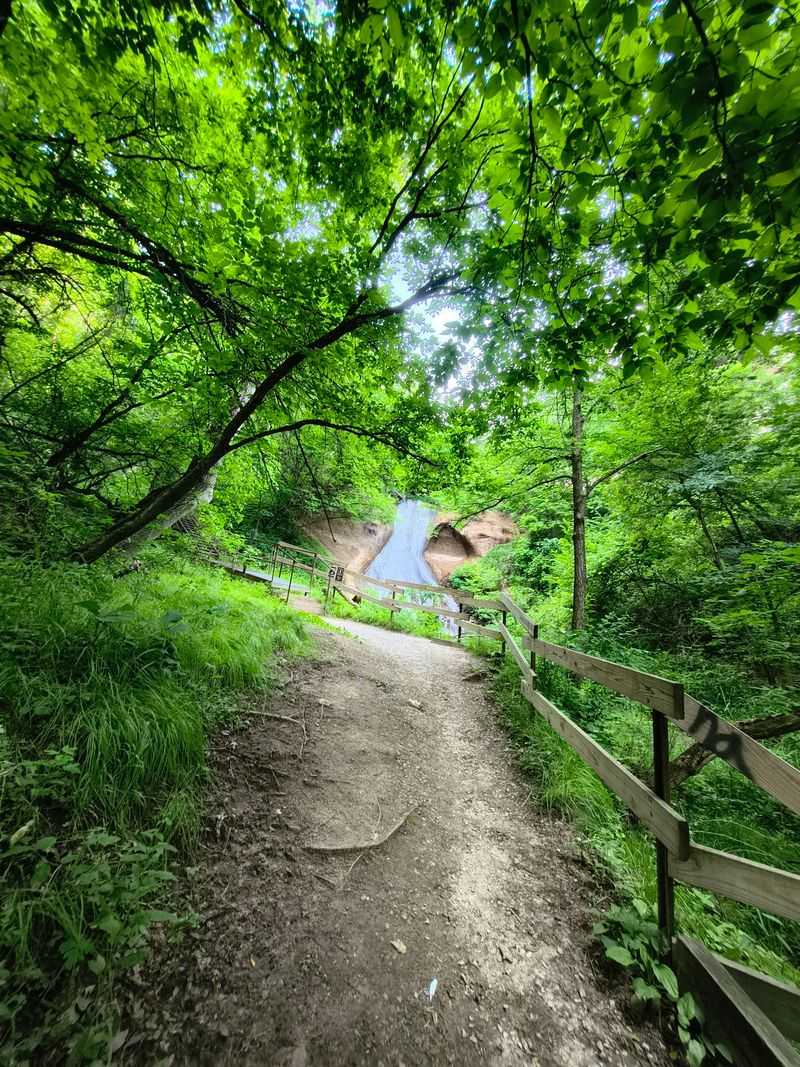
Picture miles of grassy Sandhills, then a sudden fold in the land where trees crowd together and water can be heard before it is seen. That fold holds the Fort Falls Trail, a short loop inside the Fort Niobrara National Wildlife Refuge near Valentine in north-central Nebraska.
The loop runs roughly 0.8 to 1.0 mile. It starts at the Upper Fort Falls Trailhead, drops into a canyon by way of stairs and metal walkways, passes a 45-foot waterfall, and continues down to the banks of the Niobrara River before climbing back to the lot.
Short as it is, the walk packs in a surprising amount of scenery. There is a spring-fed falls, canyon walls layered with old rock, a mix of trees that seem to come from three different parts of the country, and a National Scenic River at the end.
The mailing address lists Wood Lake, though Valentine is the closer town most people use as a base. Either way, the trail sits within a federal refuge managed by the U.S.
Fish and Wildlife Service, which also protects bison and elk on the surrounding prairie.
Where the Sandhills Give Way to a River Valley
Flat is the word many people attach to Nebraska, and the Niobrara River valley quietly argues otherwise. Over a very long stretch of time, the river carved down through soft layers of sediment, leaving steep walls, side canyons, and small streams that tumble toward the main channel.
Fort Falls sits in one of those side canyons. Up top, the ground is open grassland with wide views and plenty of wind.
A few minutes down the stairs, the air changes, the light softens, and trees close in overhead.
That contrast is part of the draw. You can stand on prairie one moment and feel tucked into a green pocket the next, all within the same short loop.
Why does it matter? The valley works like a meeting point for plants and animals that normally live far apart.
Cooler, shaded slopes let certain species hang on here long after they vanished from the surrounding plains.
The result is a strip of land that looks and feels unlike most of the state. For anyone who grew up with cornfields and pasture, the first look down into the canyon can be a real eye-opener.
Upper Fort Falls Trailhead and the Easy Start
Finding the start takes no detective work. The Upper Fort Falls Trailhead has a tidy parking area and restrooms on site, which is a welcome sight after a long drive through ranch country.
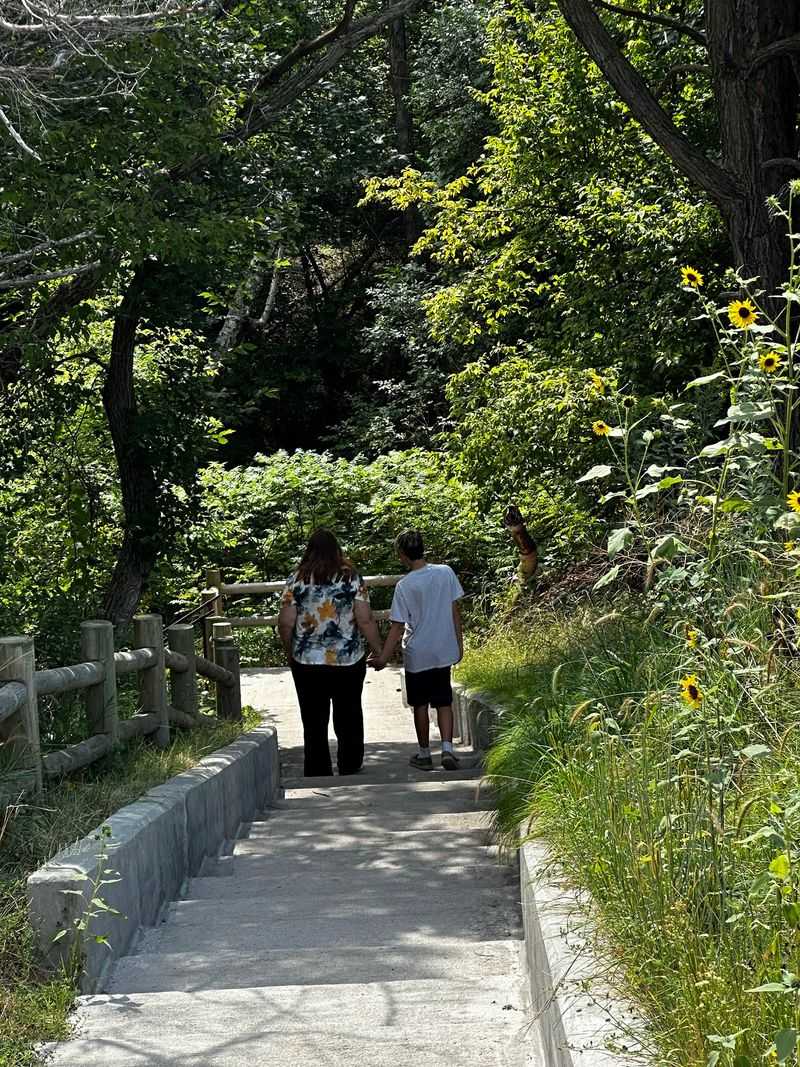
From the lot, the loop begins right away. The first stretch is paved and fairly level, giving everyone a chance to settle into a walking pace before the real descent begins.
Plan on a relaxed outing rather than a full day. The trail length stays under about a mile, so even with stops for photos and time at the falls, most groups can finish in a comfortable window and still have daylight for the rest of the refuge.
A few simple things help. Good shoes with grip make the stairs easier, and a water bottle is smart in summer, since the climb back up can feel longer than the walk down.
Leashed pets are allowed, so the family dog can come along. Keep in mind that many steps lie ahead, and a smaller pup might need a lift on the way out.
Roughly 100 Steps Into the Canyon
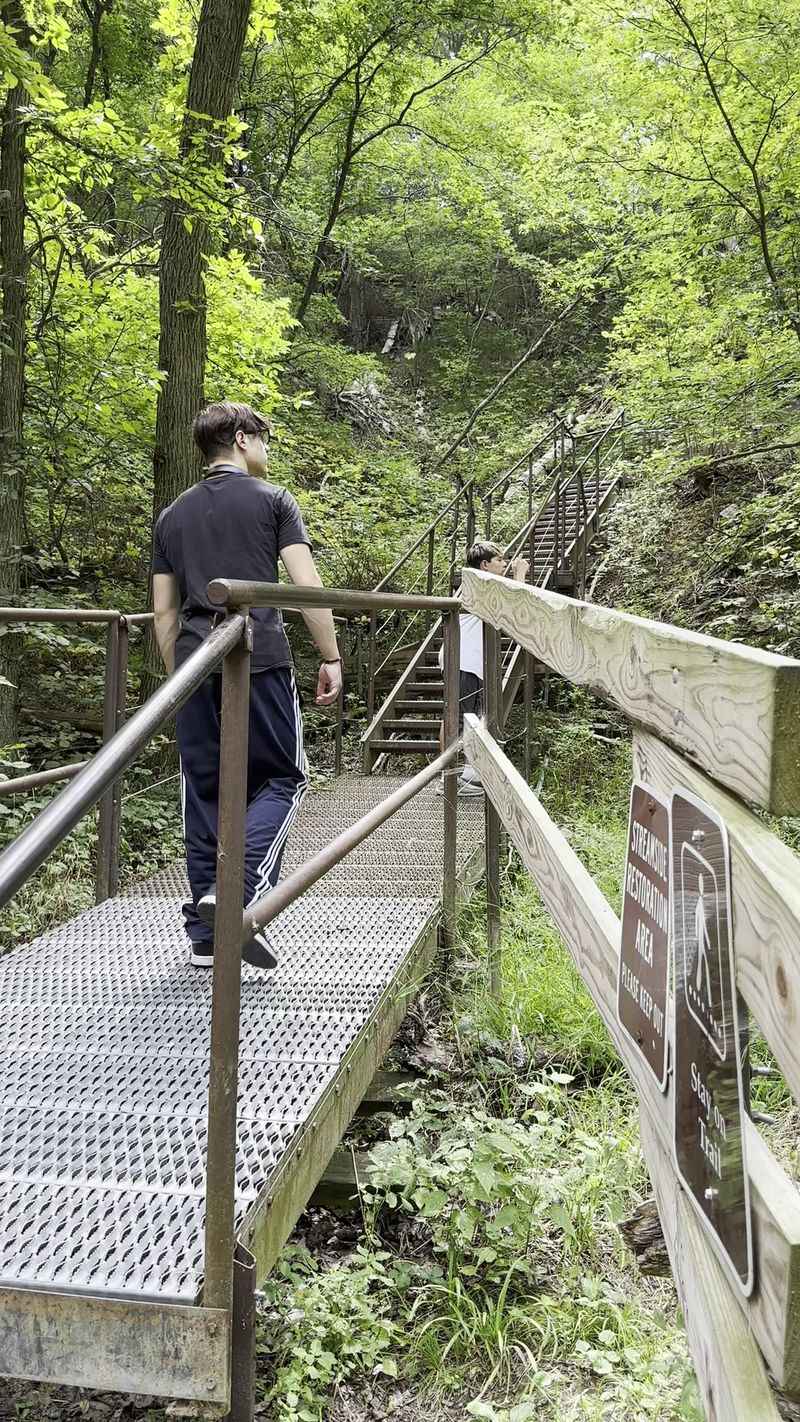
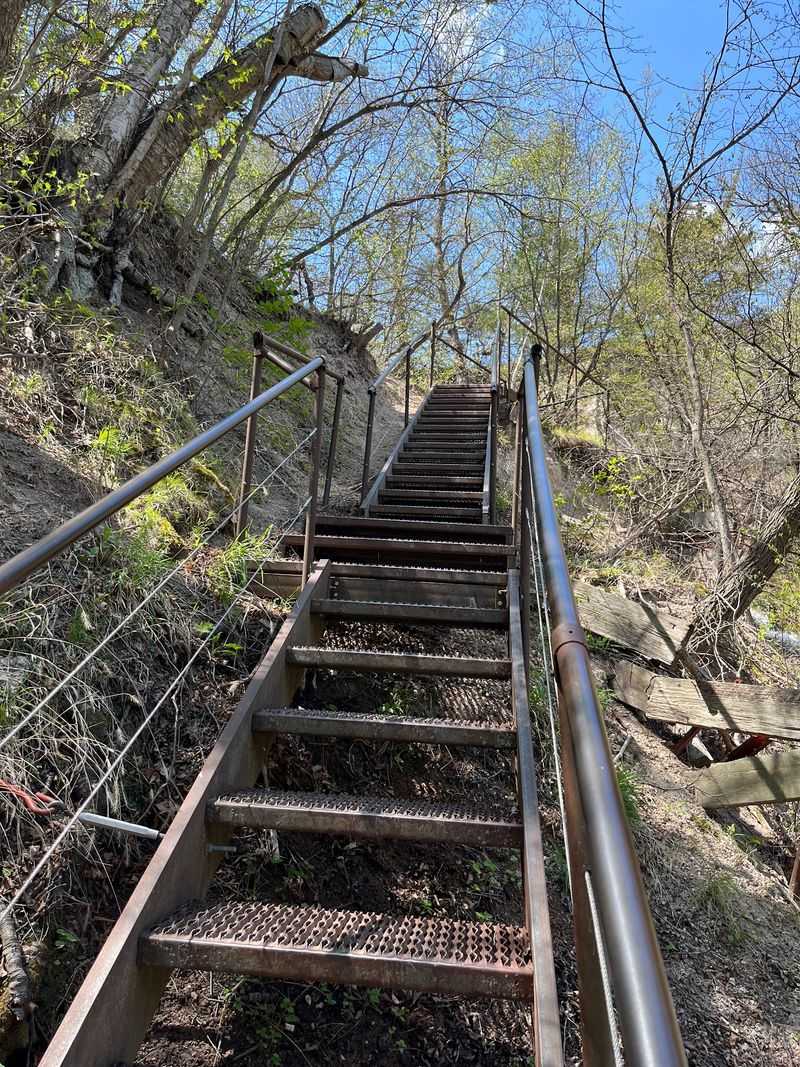
Count them if you like. Roughly 100 steps carry the trail from the rim down toward the canyon floor, mixing concrete sections with sturdy steel staircases.
Going down feels like a slow reveal. Each landing opens a new angle on the trees and rock walls, and the sound of falling water grows louder with every flight.
The stairs are what make the canyon reachable at all. Without them, the slopes would be steep, muddy, and tricky for most people.
Metal walkways link many of the staircases, keeping feet off fragile ground and out of soggy spots. Benches appear along the way too, which means anyone who needs a breather has a place to sit.
The design works well for a wide range of ages and abilities. People recovering from knee surgery have made it down to the viewing platform without trouble, thanks to the handrails and steady footing.
Coming back up is the workout portion of the day. Take it slow, use the benches, and let the kids race ahead if they insist on it.
The 45-Foot Fort Falls
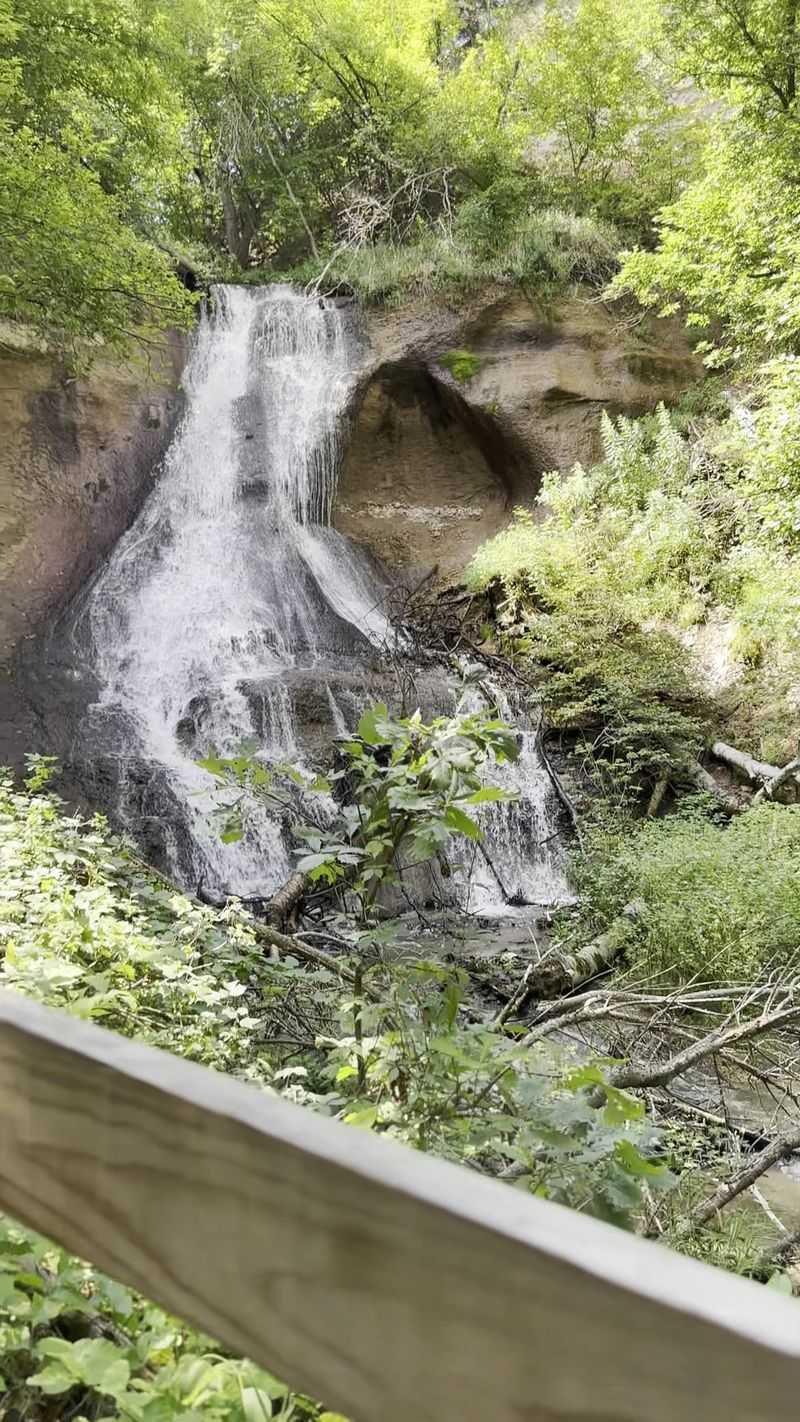
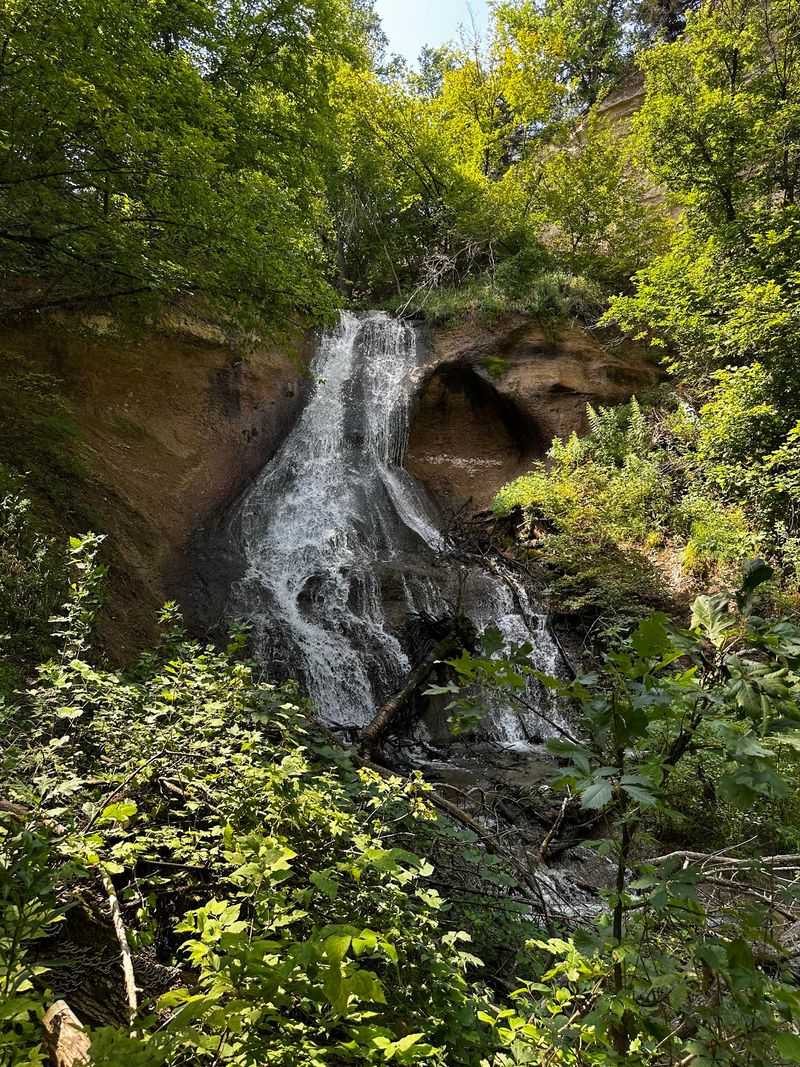
White water spills over a rock ledge and drops about 45 feet into the canyon below, throwing a fine cool mist into the air. That is Fort Falls, and it rewards every step it took to get there.
The falls is fed by springs, so it keeps flowing through all four seasons. That steady supply means there is no need to time a trip around heavy rain or snowmelt to see water moving.
A viewing platform sits right in front of the cascade. It gives a clear, close look without scrambling over wet rocks, and it is a natural spot to pause, take photos, and listen.
Height alone does not tell the whole story. The falls sits inside a snug, shaded bowl, so the sound bounces off the walls and the whole space feels bigger than the numbers suggest.
For a state not usually linked with waterfalls, 45 feet is a genuine surprise. Many Nebraskans have no idea anything like it exists in the northern part of their own state, which makes it a fun one to show off to friends.
Rock Layers That Built a Waterfall
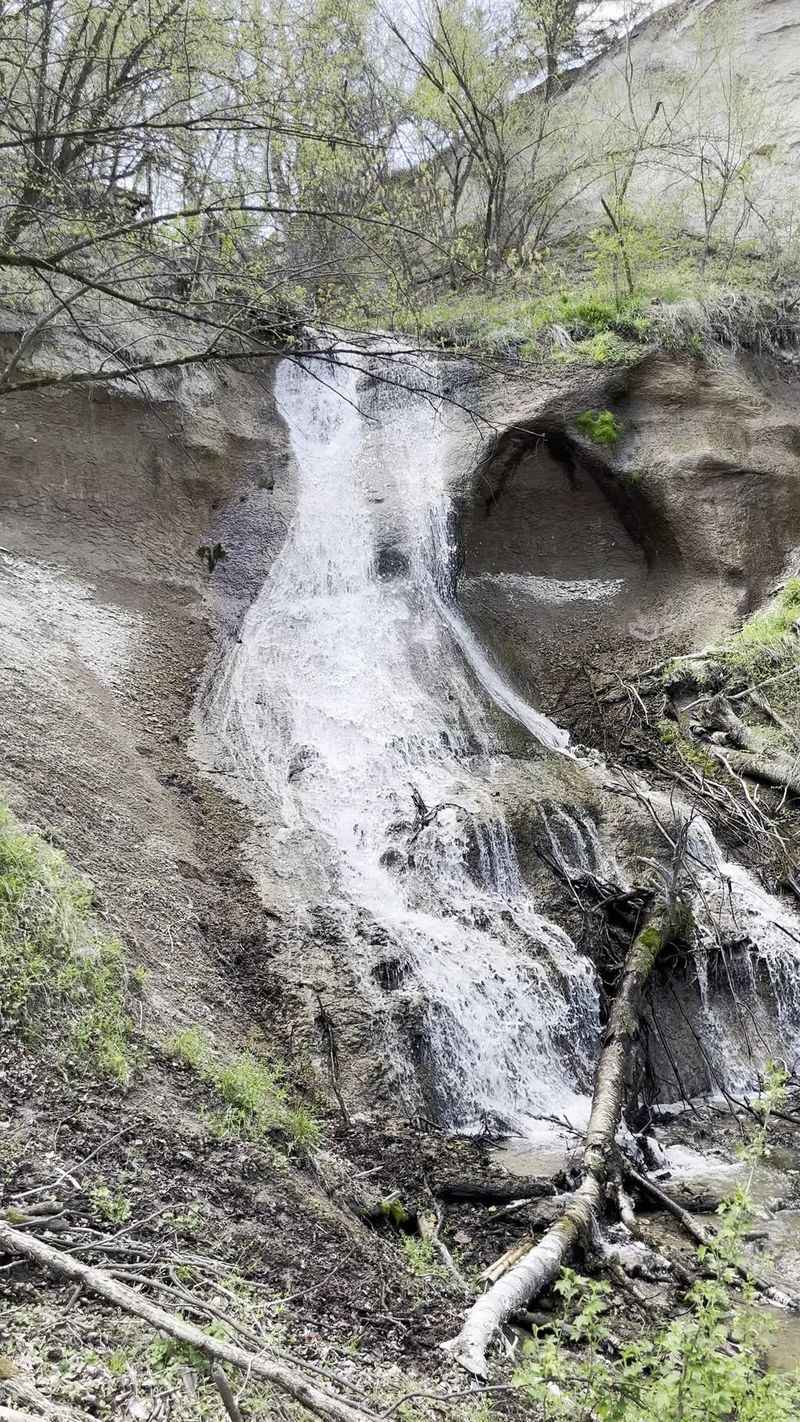
Here is a fun bit of science. Fort Falls exists because two kinds of rock sit stacked on top of each other, and they wear away at very different speeds.
The lower layer belongs to the Valentine Formation, which is softer and has a weak spot where water can cut in. On top rests siltstone from the Rosebud Formation, a tougher layer that resists erosion.
As water flows over the hard cap, it chews away the softer rock underneath. Over time that creates a ledge, and the water drops straight off it, forming the falls you see today.
Look closely at the canyon walls on the walk down. The bands of color and texture are those same formations, laid down long ago and exposed as the river and its side streams dug deeper.
The same geology shapes the whole Niobrara valley, giving it cliffs, springs, and seeps that would never form on flat prairie. Kids who enjoy rocks will find plenty to point at, and adults may pick up a new appreciation for what lies beneath the Sandhills.
Cool Canyon Air on Hot Days
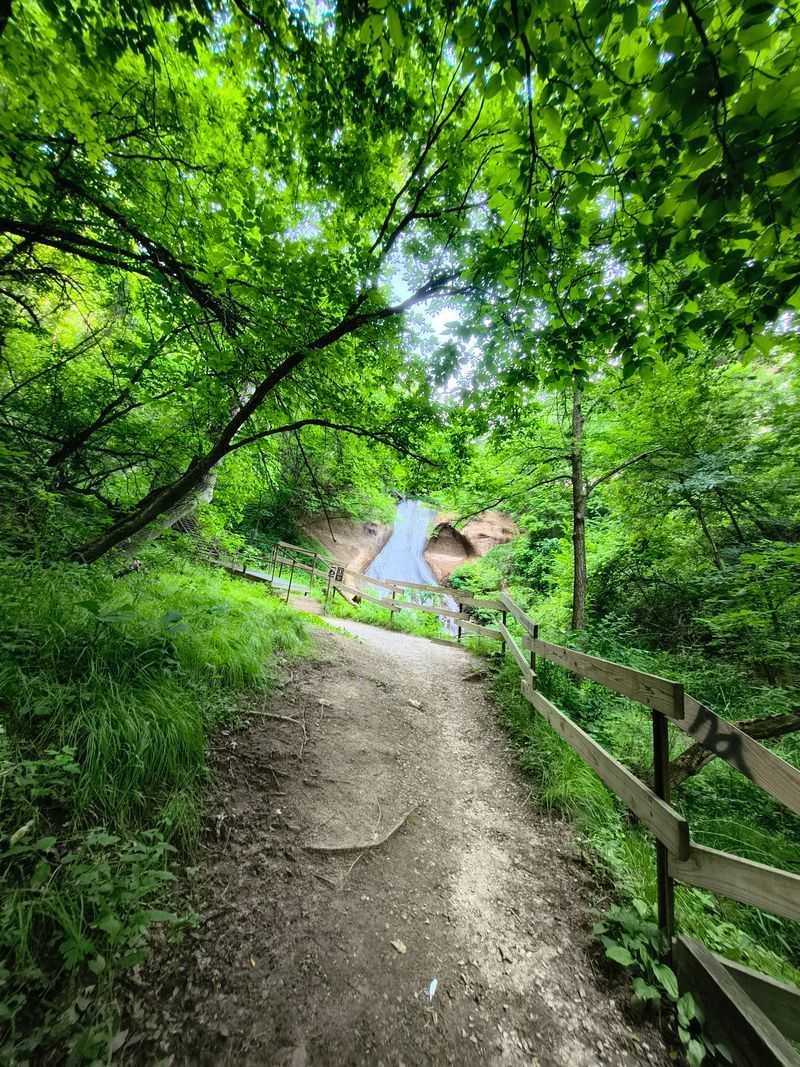
Step off the sunny rim in July and the change hits almost instantly. Shade from the trees, moisture from the springs, and the depth of the canyon combine to make the air noticeably fresher.
Even on hot afternoons, a breeze tends to drift through the trail once you get below the top. It is the kind of natural air conditioning that turns a sticky summer outing into something pleasant.
Near the falls, the mist adds another layer of relief. Standing at the viewing platform for a few minutes can feel like opening a refrigerator door on a warm day.
That comfort makes the trail a smart pick for a summer day trip. Families can explore without everyone wilting, and older hikers can take their time without baking in the sun.
The climb out is where the heat returns. Save a little energy and water for the final stairs, because the rim will feel warmer after all that shade.
Early morning and late afternoon offer the gentlest temperatures, plus softer light for photos of the falls.
Six Ecosystems Meeting in One Valley
Ponderosa pine, bur oak, and paper birch rarely share a zip code. Along this stretch of the Niobrara, they grow within sight of each other.
Six distinct ecosystems come together along the river’s banks here. Eastern deciduous forest, western pine woodland, and northern boreal forest all overlap, along with prairie types that surround the valley.
Paper birch is the real oddball. It usually belongs much farther north, yet cool, shaded canyon slopes let it survive in Nebraska as a leftover from a colder era.
Walking the Fort Falls loop, you pass through several of these communities in a short distance. Pines stand on drier spots, oaks spread across the slopes, and moisture-loving plants cluster near the springs and the falls.
Mixing zones like this attract birds and other wildlife, which means more to look and listen for along the trail. It also explains why the valley earned protection and attention from scientists and land managers.
Nothing about it feels like a textbook, though. It simply looks like a greener, wilder corner of the state than most people expect.
Down to the Banks of the Niobrara
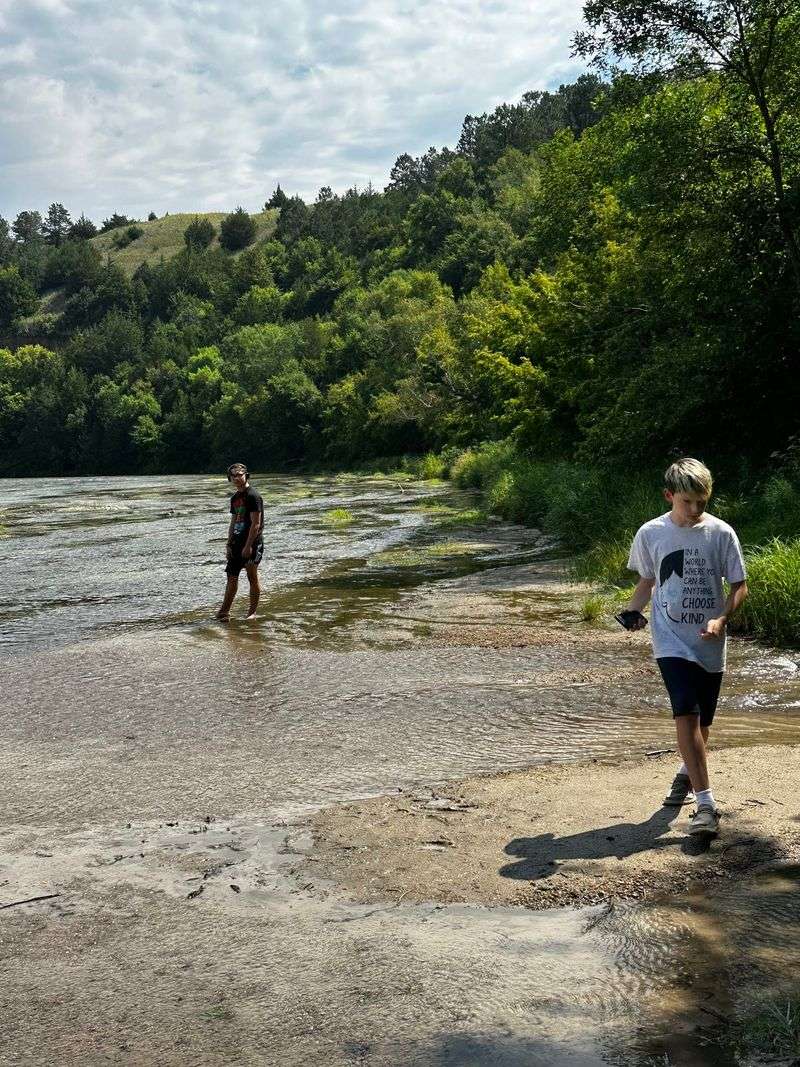
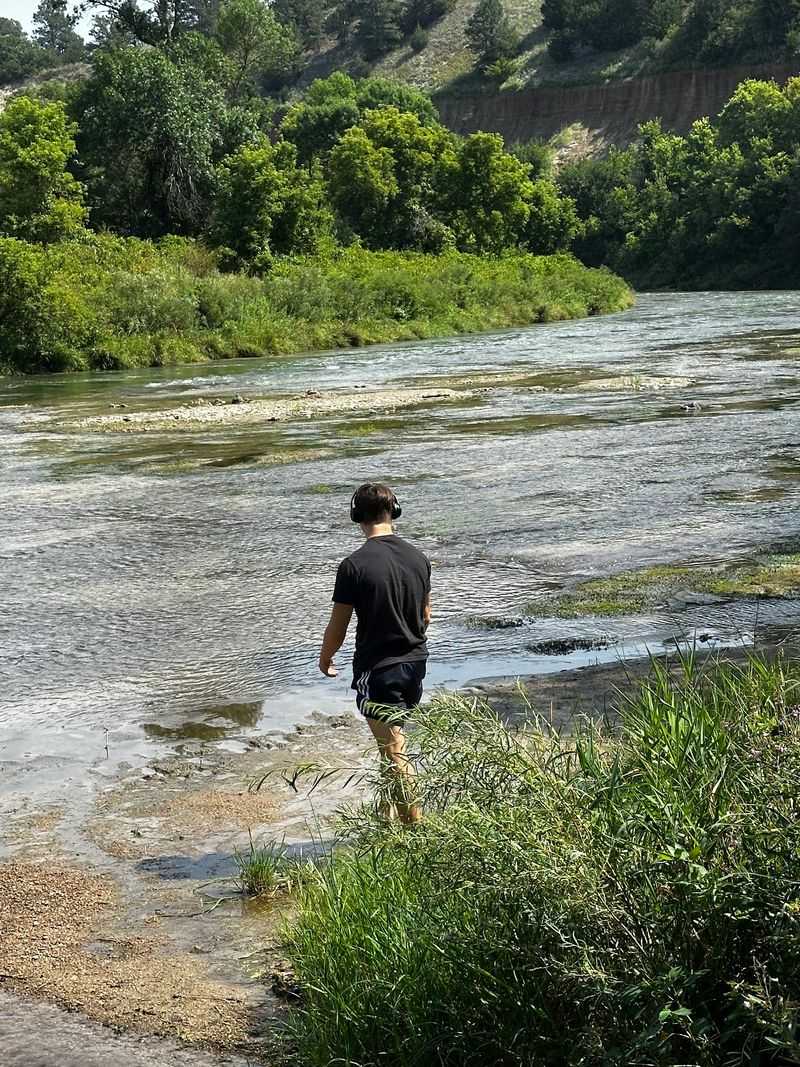
Past the falls, the path keeps sloping downhill, and the trees eventually part to show the Niobrara River sliding by. It is the second big reward of the loop, and plenty of people don’t realize it is coming.
The Niobrara holds National Scenic River status, a federal label given to rivers with outstanding natural and scenic value. Here it runs wide and shallow, with sandy edges and bluffs rising on the far side.
Standing on the bank puts the whole trip in perspective. The small stream that feeds the falls ends its short journey here, joining a river that has carved the entire valley.
Scenic overlooks along the way give views of the water and the canyon walls from above. Down at river level, the sound shifts from the rush of the falls to a quieter, steady flow.
In warm weather, some families treat the river as a spot to cool off and swim. Use care, check conditions, and keep a close eye on children near moving water.
From here, the loop turns back uphill toward the trailhead.
Bison, Elk, and Other Refuge Residents
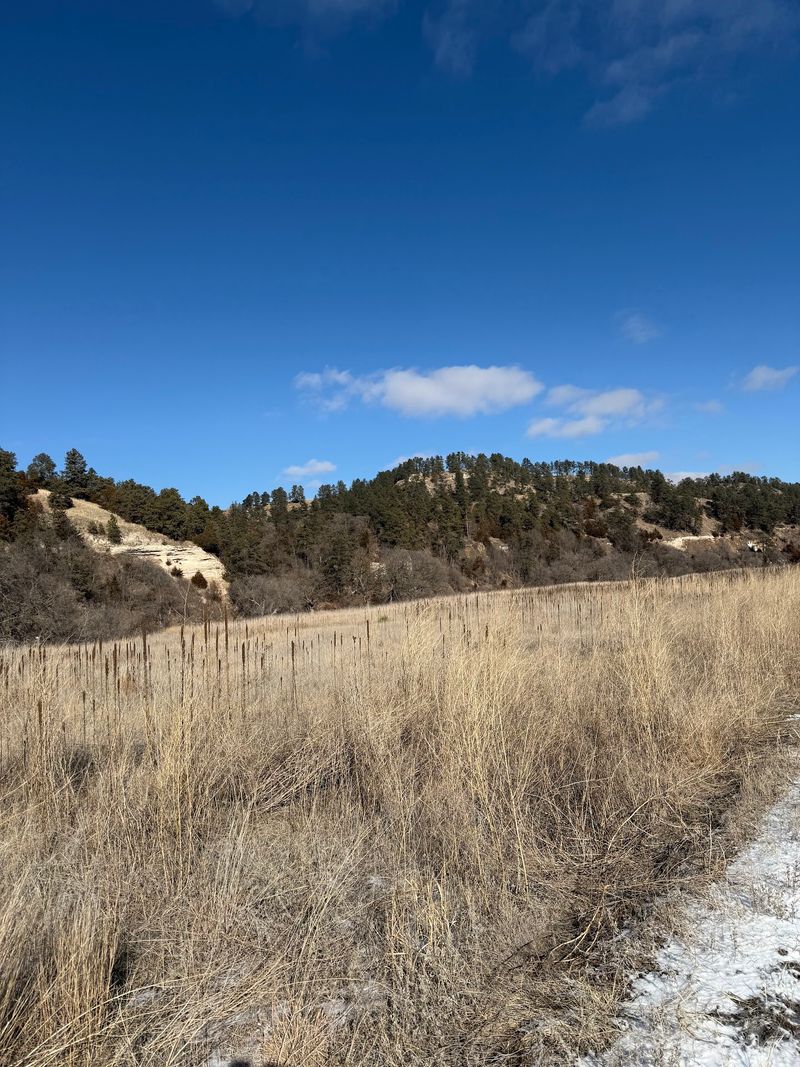
Shaggy brown shapes on a distant hillside might be the first wildlife sighting of the day. Fort Niobrara National Wildlife Refuge protects herds of bison and elk that roam the surrounding Sandhills.
Seeing bison on open prairie connects the trip to Nebraska’s past, when these animals covered the plains. Elk add another layer, often moving along edges between grass and trees.
Always keep a respectful distance. These are wild, powerful animals, so stay in your vehicle or on marked paths and let binoculars do the close-up work.
Along the canyon trail itself, smaller creatures take center stage. Deer slip through the trees, a variety of birds call from the canopy, and reptiles sometimes sun themselves on warm rocks.
Bird lovers get an extra treat thanks to the mixing forests. Species that prefer eastern woods can turn up near those that favor western pines.
Bring a camera with a zoom if you have one. A quiet walk, especially early or late in the day, tends to reveal more movement than a noisy rush down the stairs.
Quiet Mornings and Room to Breathe
A Sunday morning can mean having the whole canyon to yourself. With no crowds, the only sounds are water, wind in the leaves, and your own footsteps on the metal walkway.
That calm is one of the trail’s best qualities. Northern Nebraska is far from big cities, so even a popular refuge path rarely feels packed.
Peace and quiet also make wildlife easier to spot. Birds keep singing, deer linger longer, and the falls seem louder when nobody is talking over them.
For anyone needing a reset, the benches along the way offer natural pause points. Sitting near the viewing platform with the mist drifting past is about as restful as a short hike gets.
Busier times still happen, especially on nice summer weekends. Even then, the loop’s layout spreads people out, and the river bank offers extra space to step aside.
If solitude matters most, aim for weekdays or early starts. The light is softer then too, which helps with photos of the waterfall and the canyon walls.
Fall Color and Winter Icicles
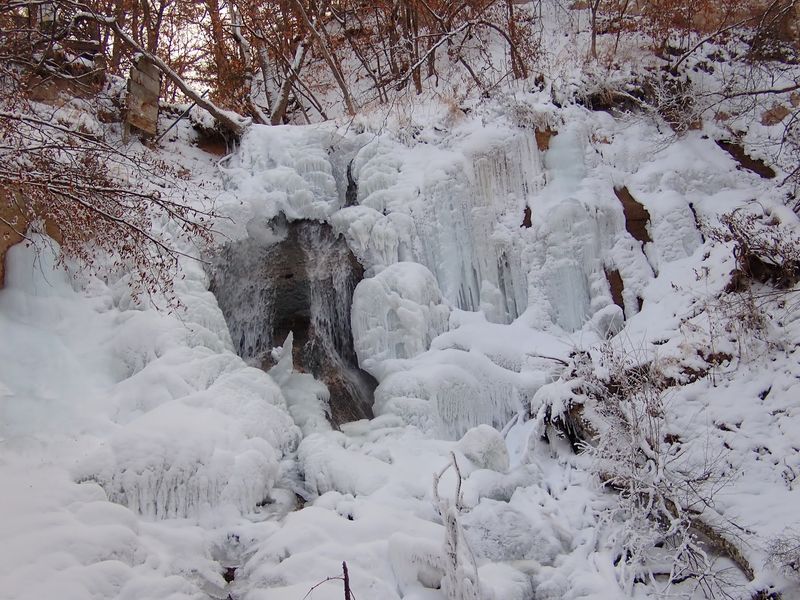
Autumn paints the canyon in shades of gold, orange, and rust. Oaks and birch turn color against dark green pines, making the walk down to the falls look almost like a different place than it does in summer.
Fall also brings cooler air for the climb back up. It is a strong choice for a weekend drive across northern Nebraska, pairing the trail with open prairie views along the way.
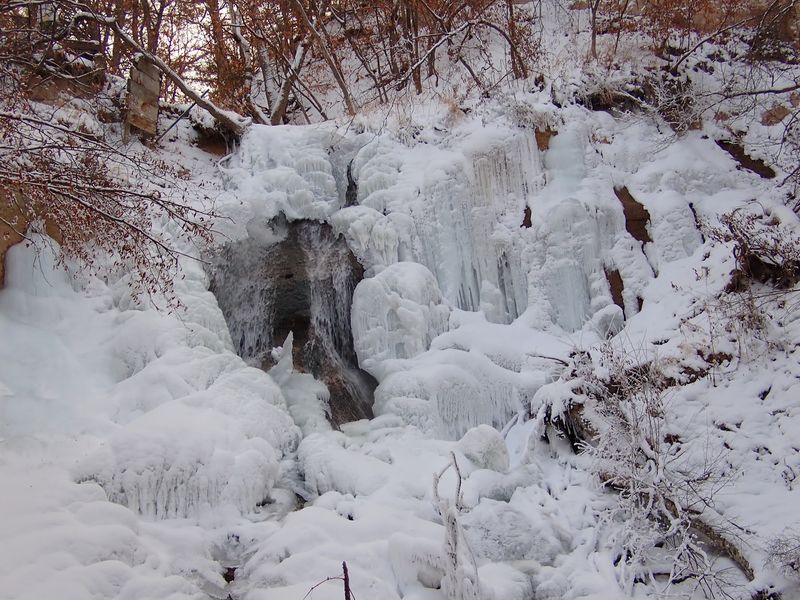
Winter tells another story entirely. Cold temperatures turn Fort Falls into a cascade of icicles, with frozen columns hanging from the ledge while spring water keeps trickling underneath.
Icy stairs and walkways call for extra care. Traction devices for boots, warm layers, and a slower pace make a winter visit safer and more enjoyable.
Spring and summer have their own appeal, with fresh leaves, flowing water, and that cool canyon breeze. Because the falls is spring-fed, there is always water to see.
No season is wrong here. Each one simply shows a different side of the same small canyon.
Hours, Access, and Getting There
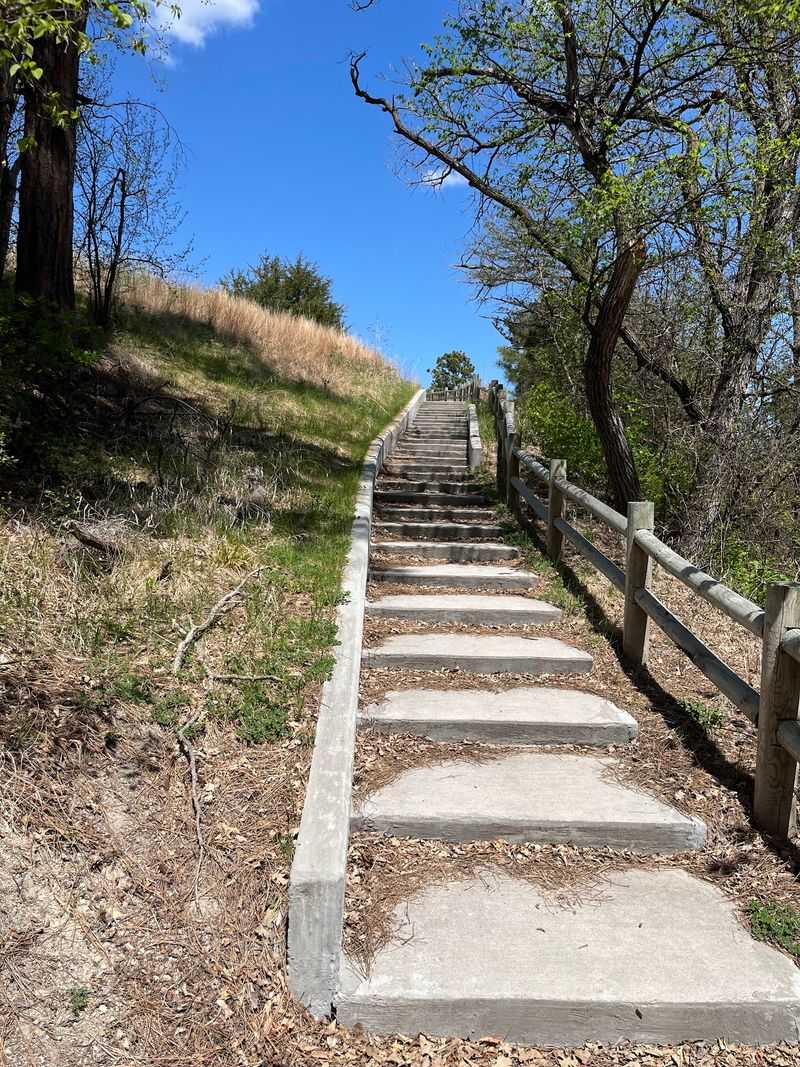
Valentine makes the most practical home base, with the refuge a short drive from town. Follow signs into Fort Niobrara National Wildlife Refuge, then continue to the Upper Fort Falls Trailhead parking area.
The refuge is open from dawn until dusk. Plan to finish the loop and leave before dark, since the stairs and canyon paths are not lit.
Restrooms sit at the trailhead, and parking is straightforward. The route to the trail is easy to find, so there is little risk of wandering down the wrong gravel road.
Leashed pets are welcome. Bring water, sturdy shoes, and bug spray in warmer months, since the shaded canyon and river can attract insects.
The trail is open year-round, though conditions shift with weather. Ice in winter and mud after rain can make steps slick, so check conditions with the refuge before heading out.
Nearby, the refuge offers wildlife viewing across the Sandhills. Combining the trail with a scenic drive through bison country turns a short hike into a full afternoon outing.
A Short Walk With a Big Nebraska Payoff
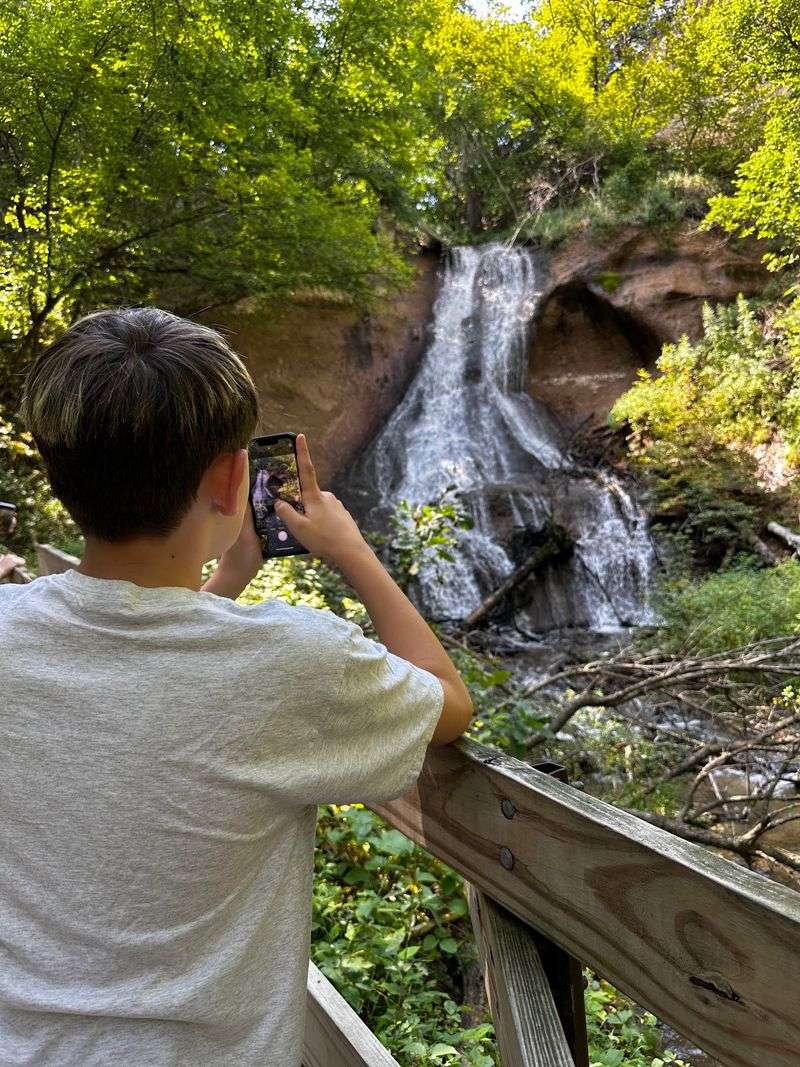
Under a mile of walking, a hundred or so steps, and two major rewards. That is a tough combination to beat for a day trip in northern Nebraska.
The Fort Falls Trail suits a wide mix of people. Families with kids, grandparents who want a manageable outing, dog owners, rock fans, and birdwatchers can all find something to enjoy on the same loop.
Its well-kept stairs, walkways, and benches lower the barrier for anyone unsure about hiking. Meanwhile, the geology, mixed forests, and wildlife give curious minds plenty to explore.
Timing is flexible. Summer offers cool shade and a river to wade near, fall brings color, and winter turns the falls into a frozen sculpture.
What sticks most is the surprise of it all. Driving through the Sandhills, few people expect a spring-fed waterfall and a National Scenic River hiding just below the grassland.
For anyone planning a trip near Valentine, this loop earns a spot on the itinerary. Pack good shoes, take your time on the stairs, and let the canyon do the rest.