This Nebraska Park Looks Like Another Planet And Hides 30-Million-Year-Old Clues
Some landscapes make you check the map twice. This one looks like Nebraska took a wrong turn into a fossil-studded moon scene.
Pale clay formations rise from the ground in strange shapes. Wind-carved ridges cut through the badlands.
The trails feel dry, quiet, and oddly cinematic, like the whole park is waiting for someone to notice the ancient clues.
Out in Nebraska, 30 million years of history can show up looking like nature built a sci-fi movie set.
The weird beauty is only half the story. This place also holds fossil evidence from animals that roamed the region long before highways or weekend hikers entered the picture.
Walking here is not just about the views. It is about seeing a landscape shaped by deep time and the remains of a very different world.
Bring water, sturdy shoes, and a little curiosity. The scenery may look otherworldly, but the clues are pure Nebraska history, written in stone, dust, and bone.
Walk The One-Mile Interpretive Loop
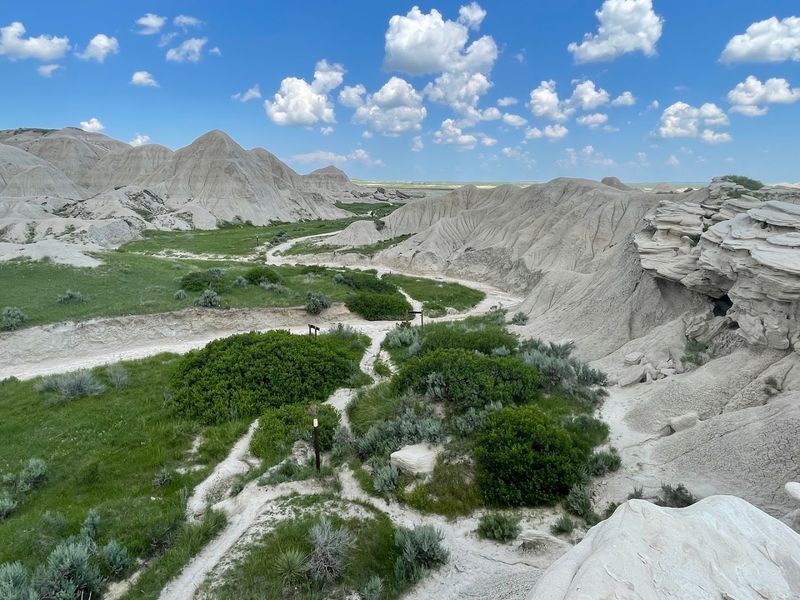
Numbered marker posts guide visitors through the most dramatic sections of the badlands terrain, and a free brochure available at the trailhead kiosk explains what each stop reveals about the ancient past.
The loop can technically be completed in under an hour, but most visitors find themselves lingering far longer than expected.
The path winds along dry streambeds and dips through narrow gullies, offering a close-up experience of how erosion has carved the land over millions of years.
Some sections require stepping over uneven rock surfaces and navigating short inclines, making sturdy footwear a practical necessity rather than just a suggestion.
The terrain is engaging without being overwhelming, which makes the trail accessible to a fairly wide range of fitness levels.
Families with older children tend to find the loop especially rewarding because the formations change dramatically from one marker to the next.
Arriving early in the morning or in the late afternoon helps avoid the harshest midday heat, particularly during summer months.
The self-guided format also means visitors can move at their own pace without feeling rushed by a schedule.
See The Mushroom-Shaped Rock Formations
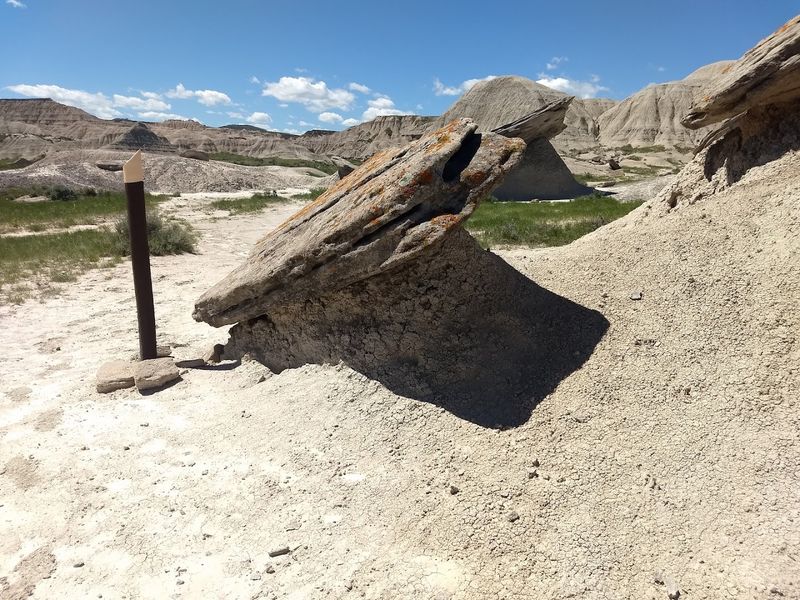
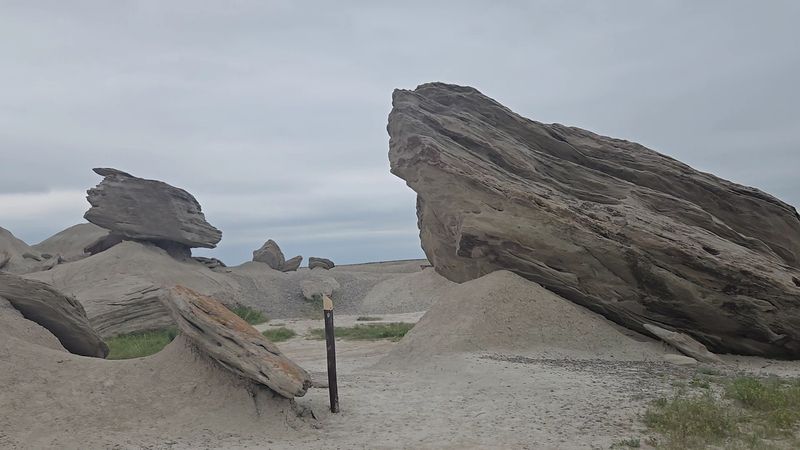
The formations that gave this park its name look almost too deliberate to be natural, as though something carefully balanced wide sandstone caps on narrow pedestals of softer clay just to see if it could be done.
The process behind them is called differential erosion, where wind and water wear away the softer claystone layers far more quickly than the resistant sandstone sitting above.
Over millions of years, that difference in hardness produces the unmistakable mushroom silhouette that visitors photograph from every angle.
Many of the larger toadstool formations that existed in earlier decades have since collapsed, a reminder that erosion never actually stops working.
New ones are always forming somewhere along the canyon walls, even if they take thousands of years to reach their recognizable shape.
The park estimates erosion occurs at roughly an inch per year on average, which sounds slow until the scale of the landscape makes it feel astonishing.
Getting close to the formations is part of the experience, but leaning on them or climbing them is strongly discouraged because the clay pedestals are genuinely fragile.
Viewing from a respectful distance actually tends to produce better photographs anyway, since the full silhouette reads more clearly with a little space between the camera and the stone.
Search For Fossil Tracks Without Removing Them
Somewhere beneath the crumbling layers of this landscape, the footsteps of animals that walked Nebraska 30 million years ago are still perfectly pressed into stone.
The park contains fossilized trackways belonging to creatures including early horses known as mesohippus, ancient camels, giant tortoises, and the formidable entelodont, sometimes called the hell pig.
One particularly striking discovery is a trackway stretching roughly three-quarters of a mile, which appears to show an entelodont pursuing a group of rhinoceroses across wet sand.
Spotting fossil tracks requires patience and a slow pace, since the impressions blend easily into the surrounding rock when the light is flat.
Morning or late afternoon light tends to cast shadows into the depressions, making tracks far easier to see with the naked eye.
Bringing a pair of polarized sunglasses can also help reduce glare on the pale stone surfaces during the middle of the day.
Federal law prohibits collecting or removing any fossil material from the park, and that rule exists for good reason since each trackway represents irreplaceable scientific data.
The honest approach is to observe carefully, take photographs, and leave everything exactly as found.
Respecting that boundary ensures future visitors and researchers get to experience the same remarkable record of prehistoric life.
Follow The Bison Trail Toward Hudson-Meng
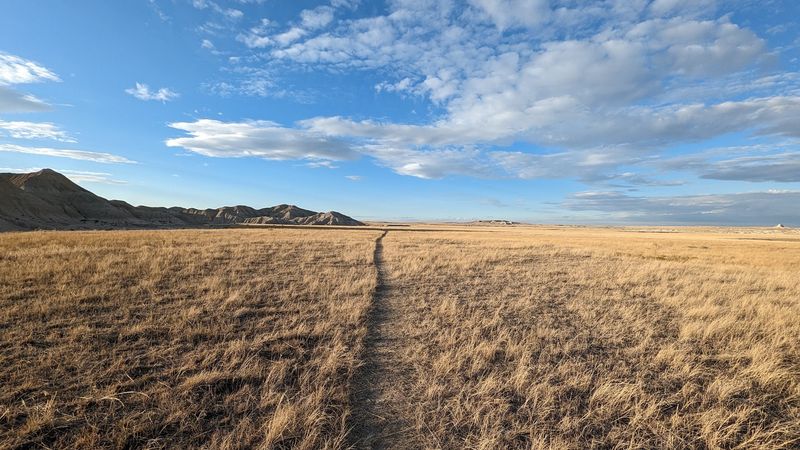
Beyond the interpretive loop, a longer and quieter path branches off toward one of the most significant paleontological sites in the region.
The Bison Trail covers roughly three miles one way from the Toadstool campground, following Big Cottonwood Creek through a canyon and out across the Oglala National Grassland toward the Hudson-Meng Education and Research Center.
Cell service disappears quickly once the trailhead is left behind, which many visitors describe as a genuine relief rather than an inconvenience.
Hudson-Meng holds the preserved remains of an ancient bison bonebed, where the bones of Bison antiquus, an extinct species larger than the modern American bison, were discovered in significant numbers.
The center offers guided tours during its operating season, which typically runs from Memorial Day through Labor Day, though hours can vary and calling ahead is recommended.
The bonebed itself is housed under a protective enclosure that allows visitors to observe the excavation area without disturbing the site.
The Bison Trail is also recognized as part of the broader Great Plains Trail network, adding a sense of connection to a much larger landscape.
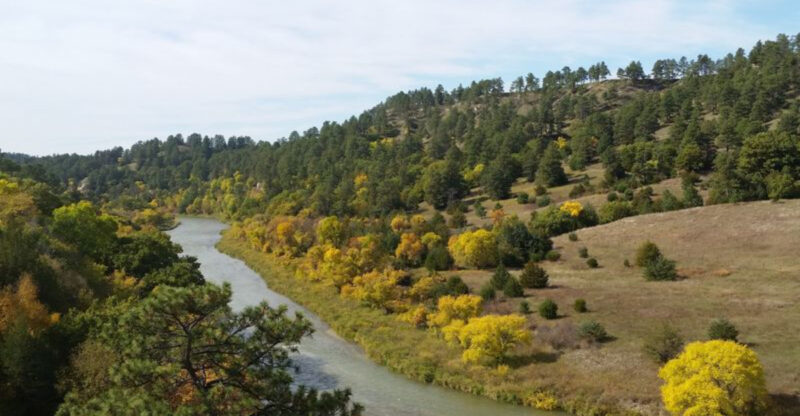
Wildlife sightings along the route can include pronghorn, mule deer, and occasionally bighorn sheep on the surrounding ridges.
Carrying a trail map and plenty of water is essential since the route moves through exposed grassland with no shade and no facilities.
Explore A Landscape Shaped Millions Of Years Ago
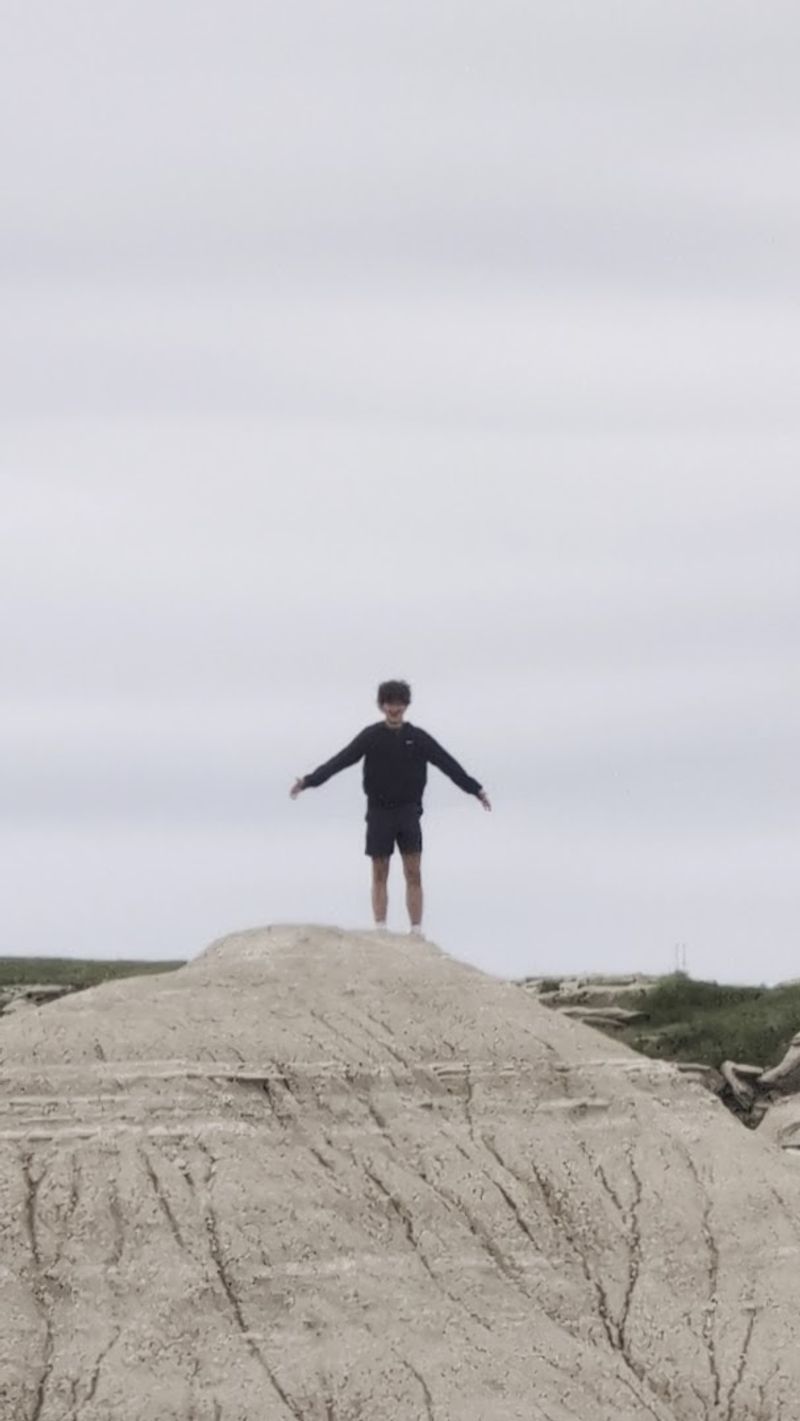
Around 45 million years ago, the terrain that now forms the Nebraska Panhandle looked nothing like the dry badlands visible today.
A wet, subtropical environment covered the region, fed by rivers and dense vegetation that supported a completely different cast of wildlife.
The shift toward an open savannah during the Oligocene epoch, roughly 30 to 50 million years ago, transformed the landscape into something closer to what present-day East Africa looks like, with broad grasslands crossed by seasonal streams.
Volcanic ash layers embedded within the rock formations serve as precise geological timestamps, allowing scientists to date specific layers with remarkable accuracy.
Those ash deposits also played a key role in preserving the animal tracks and skeletal remains found throughout the park, acting almost like a slow-motion snapshot of life at a particular moment in time.
The layering visible in the canyon walls represents millions of years of sediment accumulation compressed into what looks, from a distance, like a simple stripe of color.
Walking through this terrain with that timeline in mind changes the experience considerably. The crumbling clay underfoot was once the floor of a prehistoric savannah, and the eroded ridges were once riverbanks where ancient rhinoceroses drank.
That kind of perspective tends to make even a short afternoon visit feel unexpectedly significant.
Visit The Reconstructed Sod House
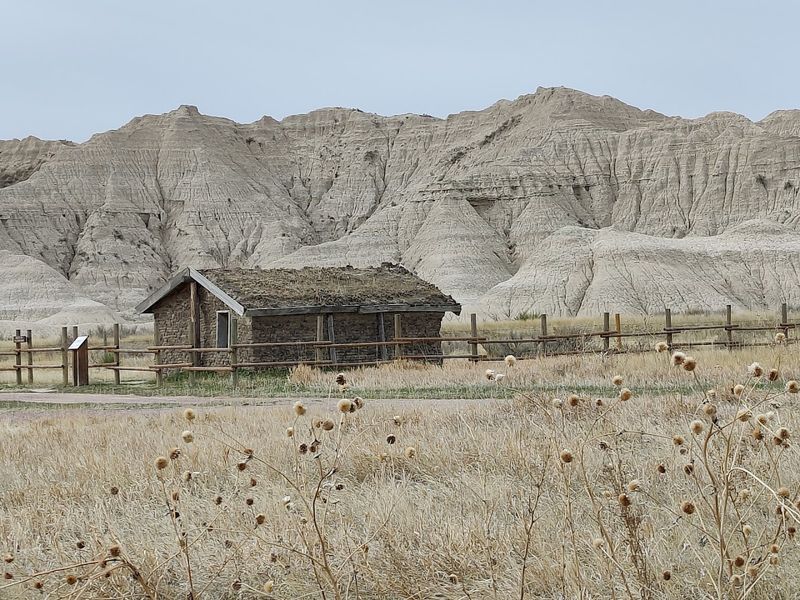
Near the trailhead, a small structure built from stacked earth offers a completely different kind of historical encounter than the geological formations nearby.
The United States Forest Service reconstructed this sod house in 1984, positioning it close to the original site of a soddie built in 1929 by early homesteaders who settled the grasslands using whatever material the land provided in abundance.
The original structure was abandoned not long after construction and eventually collapsed under the weight of years and weather.
Stepping inside the reconstructed version reveals something that consistently surprises visitors: the interior stays noticeably cooler than the outside air, even on hot summer days.
The thick sod walls act as natural insulation, a practical quality that made this type of construction appealing to settlers who had no access to lumber and needed shelter quickly.
That cooling effect is not just a curiosity but a real demonstration of why sod construction made practical sense on the treeless plains.
The structure is small and simple, but it carries a quiet weight that larger museums sometimes struggle to achieve.
Standing inside it while surrounded by badlands formations that predate human settlement by tens of millions of years creates a layered sense of time that is hard to find anywhere else.
Camp Beneath A Wide Panhandle Sky
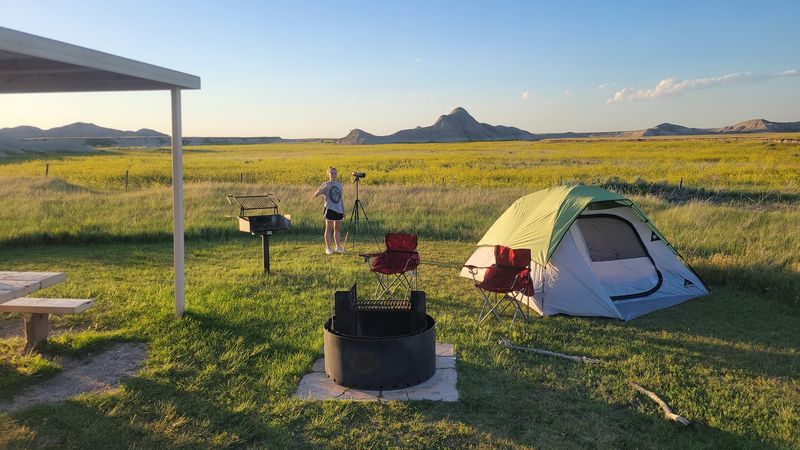
Staying overnight at the park transforms the experience in ways that a day visit simply cannot match.
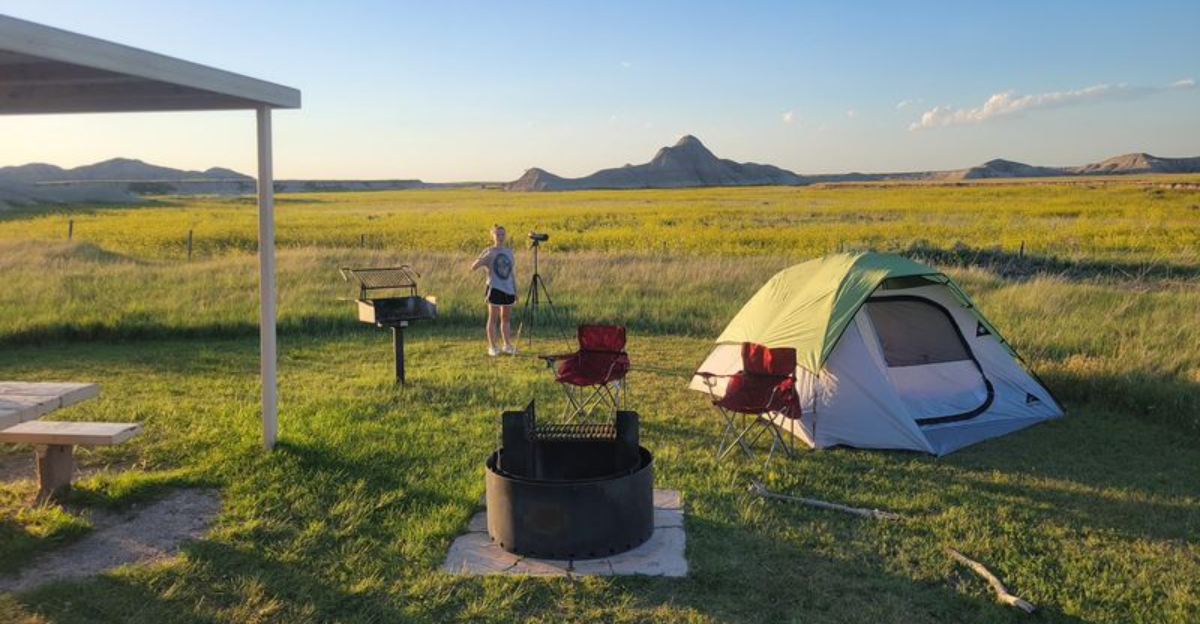
The campground offers 12 sites, each equipped with a picnic table, a fire ring, and an upright grill, with some sites featuring shade structures that provide genuine relief from afternoon heat.
Camping is first-come, first-served at a fee of $15 per night, which also covers the day-use entrance fee, making it a reasonably budget-friendly option for the experience on offer.
Waking up before sunrise inside the park means having the trail entirely to oneself during the most beautiful light of the day, with no other visitors and no noise beyond wind and birdsong.
The absence of artificial light at night allows the Milky Way to appear with a clarity that feels almost startling to anyone accustomed to suburban skies.
Satellites are visible to the naked eye on clear nights, tracking slowly across a sky dense with stars.
Strong winds can make tent camping genuinely challenging, particularly in spring and fall when weather systems move through the Panhandle with little warning.
Securing tent stakes firmly and using a rainfly even on clear nights helps manage unexpected gusts.
The vault toilets on-site are maintained reasonably well, but campers should bring hand sanitizer, a headlamp, and all the water needed for the stay since no potable water is available at any point within the campground.
Pair The Trip With Fort Robinson State Park
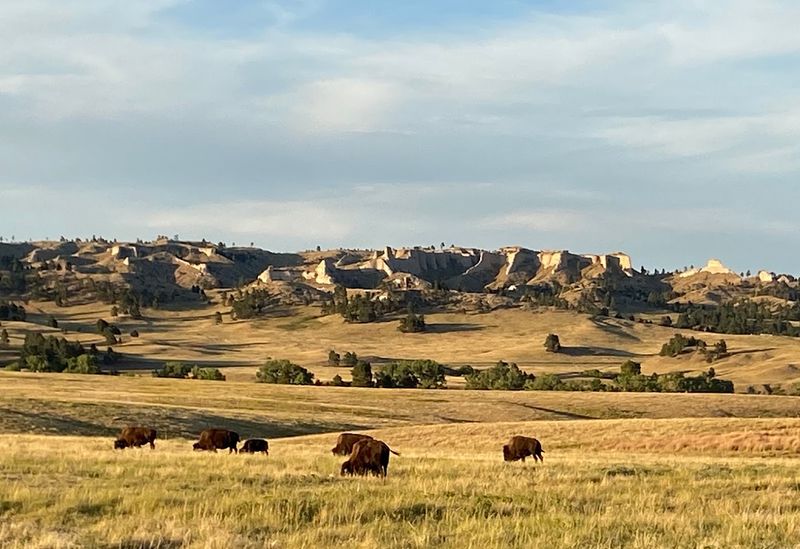
A trip to the Nebraska Panhandle becomes considerably richer when Fort Robinson State Park is added to the itinerary alongside the geological park.
Located just west of Crawford, Nebraska, Fort Robinson encompasses over 22,000 acres of Pine Ridge country and carries a historical weight that contrasts sharply with the prehistoric focus of the badlands.
The fort was established in 1874 and played a significant role in the American Indian Wars, later serving as a cavalry station, a World War II prisoner-of-war camp, and a military dog training center.
The Trailside Museum of Natural History, also located within the park, features a compelling mammoth fossil display that creates an unexpected thematic bridge back to the prehistoric themes encountered at Toadstool.
Summer programming at Fort Robinson tends to include horseback riding, Jeep tours, stagecoach rides, and trout fishing, giving visitors a wide range of activity options across a single day.
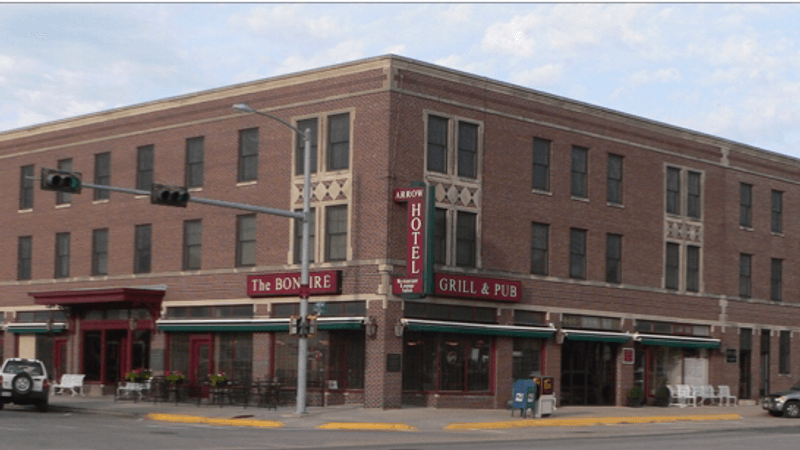
Accommodations within Fort Robinson range from tent camping and rustic cabins to rooms in the historic lodge, which makes it a practical base for exploring both parks over multiple days.
The contrast between the two destinations, one ancient and geological, the other historical and human, gives the overall trip a satisfying sense of depth and variety that a single-site visit rarely achieves.