This Nebraska River Town Keeps A Victorian Main Street That Looks Like A Movie Set
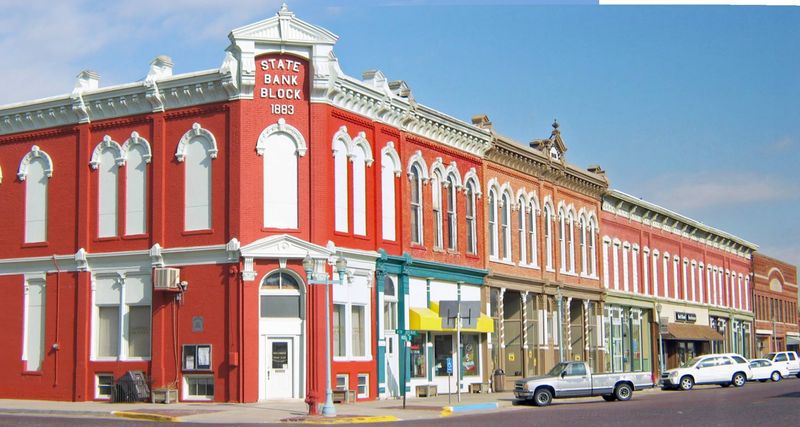
I pulled off a two-lane in southern Nebraska expecting a gas station and a chance to stretch my legs, and instead got two blocks of nineteenth-century storefronts standing shoulder to shoulder with their cornices still on. It was the kind of thing you slow down for, then park for.
Fewer than a thousand people live here, yet the main street looks like a film crew dressed it for a period picture and then forgot to strike the set. What sits behind those doors turns out to be even better than the facades.
Where Southern Nebraska Meets The Republican Valley
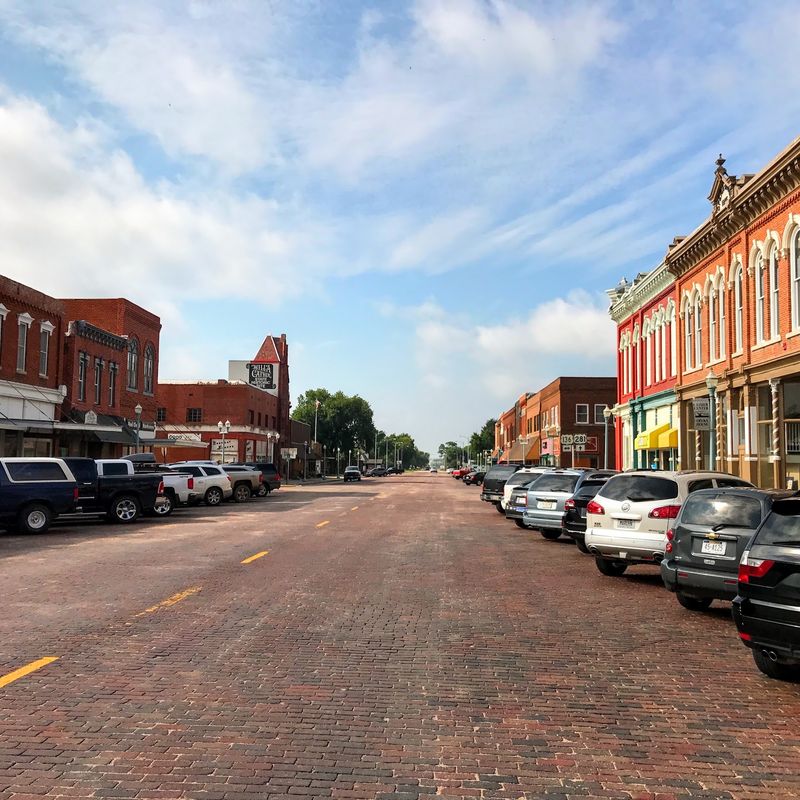
Grain elevators show up first, pale against the sky, as Highway 281 drops toward the Republican River valley in south-central Nebraska. A few minutes later the road turns into a street lined with two-story brick, and the speed limit falls away.
Red Cloud is the county seat of Webster County, a town of fewer than a thousand people sitting a short drive north of the Kansas line. The 2020 census counted 962 residents, small enough that the whole business district fits into a ten-minute walk.
What makes the place unusual is not its size but its survival. The commercial core kept its nineteenth-century storefronts instead of trading them for aluminum facades, and the result reads like a set built for a period film.
Nothing was assembled for visitors; the buildings simply stayed.
The river that named the valley runs just south of town, and the farmland around it still sets the local calendar. Harvest trucks share the pavement with cars carrying people who drove down for the architecture and the novels written here.
It is an odd pairing, and it works.
A Townsite Laid Out By A Future Governor
Silas Garber laid out the townsite in 1871, a few years before he took office as the fourth governor of the state. The name honors the Oglala Lakota leader Red Cloud, whose people knew the Republican valley long before any survey stakes went into the ground.
Ambition showed up in the buildings. Garber opened a bank on the main street, and money from land, cattle, and the arrival of the Burlington line late in the 1870s paid for the ornamental work still visible overhead.
Rail service turned the town into a working division point, complete with a depot, a roundhouse, and crews who needed somewhere to eat and sleep. The population climbed fast.
For a stretch of years the place carried itself like a city in the making.
Then the boom eased, the bank shut down in the 1890s, and the growth curve flattened out. That stall explains the streetscape better than any preservation campaign could: there was never money or reason to knock the block down and rebuild it.
Garber and his wife Lyra later turned up, lightly disguised, in one of Willa Cather’s short novels.
Cornices, Corbels, And Two Blocks Of Storefronts
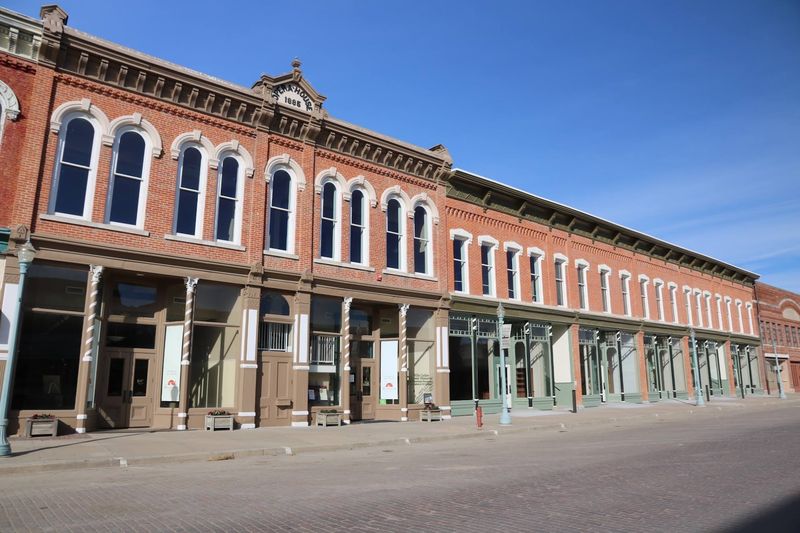
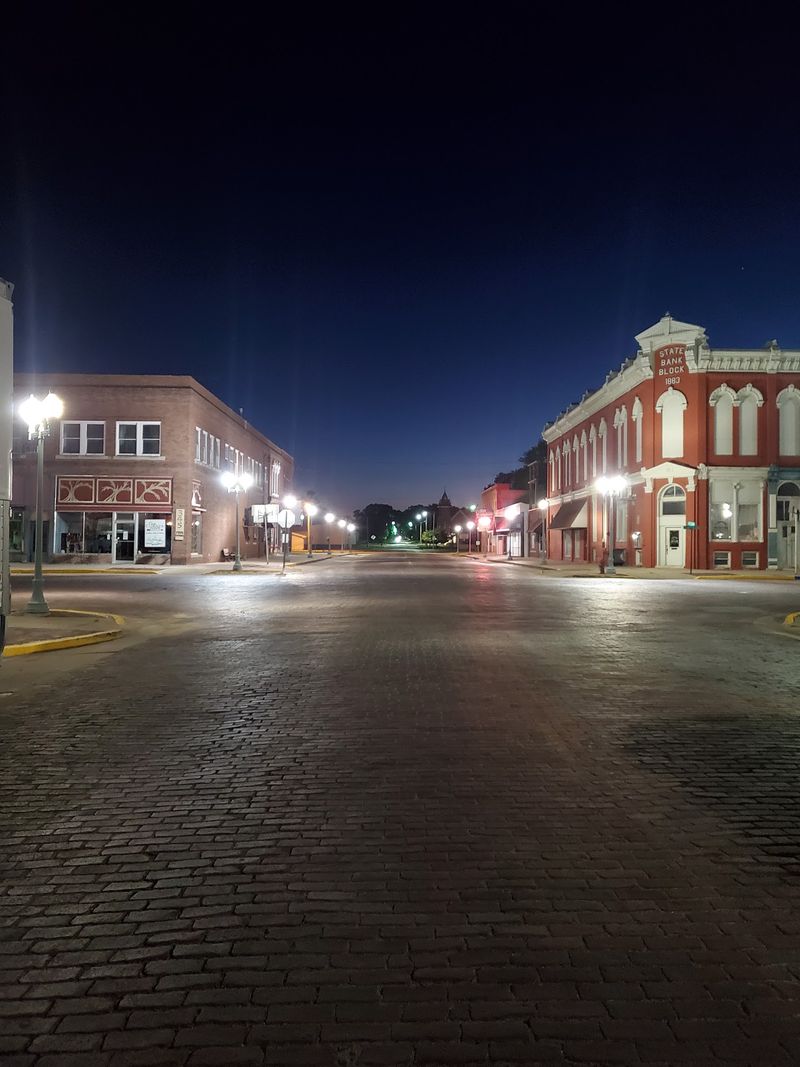
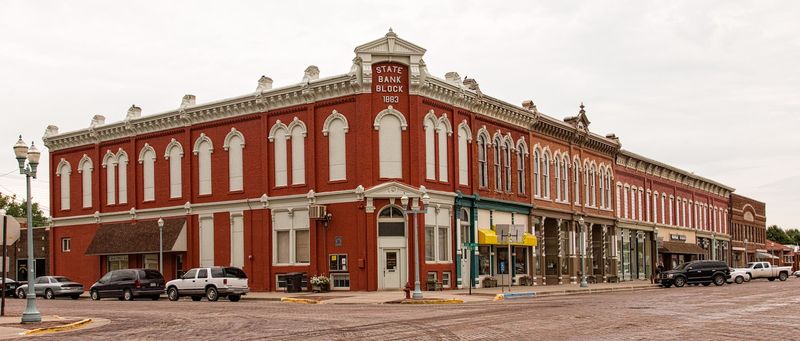
Look up, and the cornices give the game away: pressed metal, stepped and bracketed, running along the tops of buildings raised when the town still expected to keep growing.
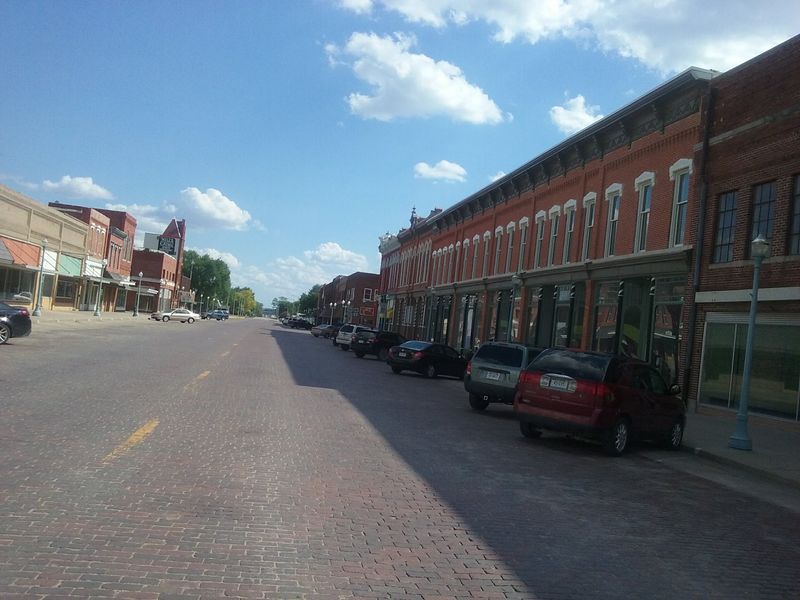
Webster Street carries the commercial district, and the downtown is listed on the National Register of Historic Places. Arched window hoods, corbelled brickwork, and transom glass repeat down both sides of the street in a rhythm modern construction rarely bothers with.
Ground-floor spaces have changed hands many times over the decades, which is normal for any small county seat. Upper floors got left alone, and that is where the detail remains.
Second-story windows keep their original proportions, tall and narrow, lined up in even rows.
Gaps exist too. A few storefronts sit quiet, and some facades are waiting their turn for repair, which keeps the block feeling like a working town rather than a polished attraction.
Early risers get clean light on the east side of the street, while late afternoon throws long shadows across the pavement and makes the brick glow orange. Bring a camera either way.
The 1885 Opera House And Its Second Act
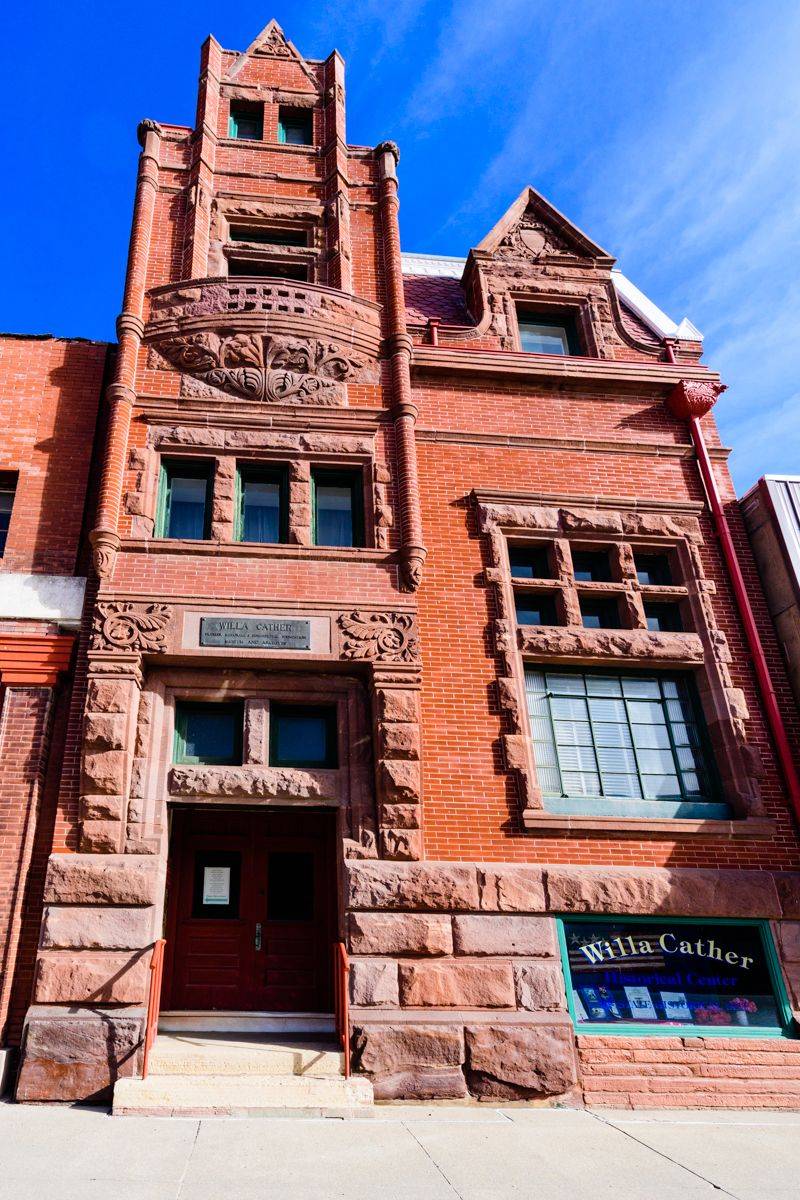
What happens to a second-floor auditorium after the touring circuit dries up? For decades in this town, the answer was: nothing much at all.
The hall went quiet, the way most of its peers across the plains did.
The opera house went up in 1885 with a stage, a gallery, and room for an audience larger than the town’s population at the time. Traveling companies, lecturers, and local programs all used it.
Willa Cather delivered her high school graduation address from that stage in 1890, at the age of sixteen.
Business moved on, the hall was closed off, and the upper floor sat idle while the ground level kept working as retail space. Restoration came much later, led by the Willa Cather Foundation, and the auditorium reopened in the early 2000s.
Live performance returned with it. Concerts, plays, readings, and community events fill the calendar, and an art gallery occupies part of the main floor.
Sitting in a restored 1885 hall in a town of under a thousand people is a strange and pleasant experience, especially once the music starts.
A Nebraska Childhood That Turned Into Literature
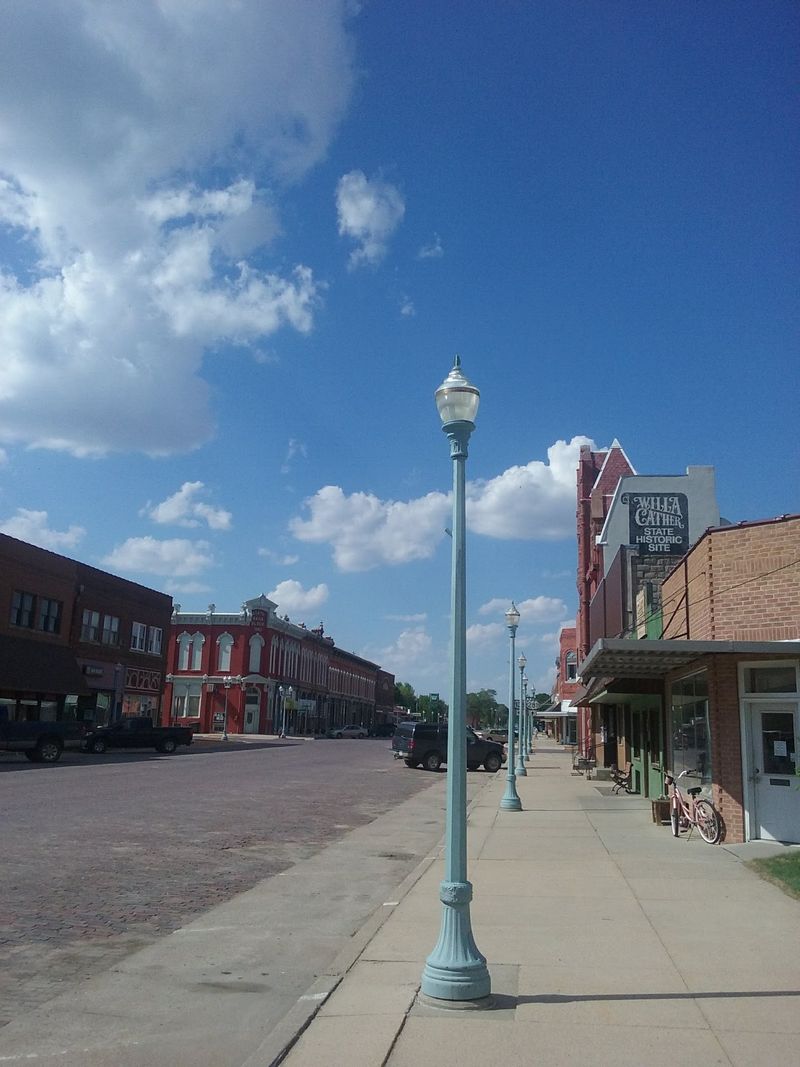
Up a narrow staircase, under a sloped ceiling, sits a small attic room papered in a rose pattern that a teenage girl picked out and hung herself. That girl was Willa Cather, and the room was hers.
The family moved into town in 1884 and rented a modest frame house on Third Avenue, where parents, seven children, and a hired girl shared quarters that would feel tight today. Cather took the attic so she could have a door of her own.
Readers of The Song of the Lark recognize the space immediately, since Thea Kronborg gets a nearly identical room and the same rush of relief on climbing the stairs. The wallpaper itself has been carefully preserved and patched over the years.
The house is a National Historic Landmark and is shown by guided tour rather than left open to wander. Furnishings and layout follow what the family lived with, so the effect is domestic instead of ceremonial.
Standing in that attic, it is easy to see how six novels’ worth of Webster County detail got stored in one head.
Archives, Galleries, And A Bookstore In The Moon Block
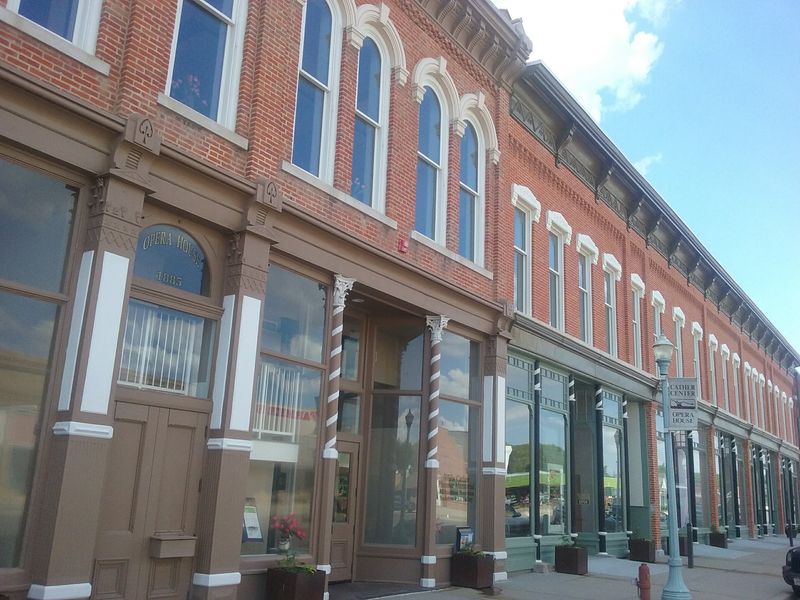
A small farm town holding a research archive sounds improbable until you walk into one. The National Willa Cather Center opened in 2017 inside the restored Moon Block, an 1880s brick commercial building that had spent years waiting for a purpose.
Inside are museum galleries, rotating exhibits, a collection of manuscripts, letters, photographs, and first editions, plus a bookstore stocked with more Cather titles than most city shops carry. Light and temperature are controlled the way any serious collection requires.
The Willa Cather Foundation runs the building, and the organization dates to 1955, making it one of the older literary preservation groups in the country. Guided tours of the historic properties start from the front desk, so the center doubles as the town’s welcome point.
Scholars come for the archive. Everyone else comes for the exhibits, which explain the landscape outside the window as much as the woman who wrote about it.
Give yourself longer than planned, because the shelves and the reading material have a way of eating an afternoon that was supposed to be a quick stop.
Six Hundred Acres The Plow Never Touched
Wind moves across it in visible waves, and by September the big bluestem stands higher than a car door. The Willa Cather Memorial Prairie lies about five miles south of town along Highway 281, roughly 600 acres of mixed-grass prairie that was never broken by a plow.
Native sod like this is rare. Most of the grassland in this part of the state went under cultivation generations ago, so an unplowed tract of this size is closer to a survivor than a park.
Dozens of grasses and wildflowers trade places through the season: spiderwort and coneflower in early summer, goldenrod and sunflower later, then copper and rust across the hills once frost settles in.
Facilities are minimal. There is a pull-off, a sign, and grass, which is the whole point of the place.
Walk in far enough that highway noise drops away and the red grass Cather described stops being a literary phrase and becomes simply what is in front of you. Wear boots, check for ticks in warm months, and carry water.
Country Sites Beyond The City Limits
Six miles of gravel northeast of town stands the Pavelka Farmstead, home place of Anna Pavelka, the woman Cather used as the model for My Antonia. The farmhouse and its outbuildings are preserved and can be visited through the foundation.
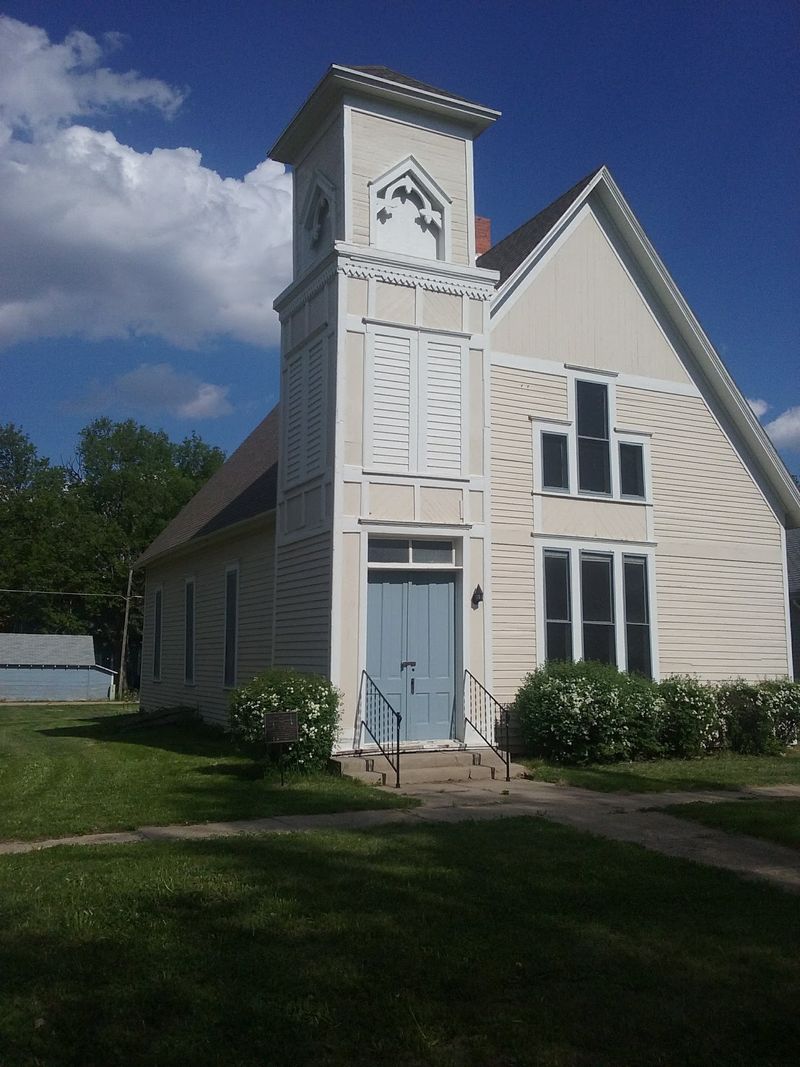
Closer in, Grace Episcopal Church dates to 1884 and still holds its original woodwork and windows, and Cather was confirmed there. The 1897 Burlington Depot, once the busiest building in town, has been restored and now carries exhibits instead of freight.
North of town, the Starke Round Barn rises three stories, framed in the early 1900s without interior support posts, a piece of engineering that has outlasted nearly every barn around it.
Driving the county roads between these stops matters as much as the stops themselves. The Divide, the Republican bottoms, the section-line grid, the far-apart farmsteads: all of it shows up in the fiction more or less unchanged, and seeing it at ground level explains why one writer kept returning to this particular stretch of country for forty years.
Practical Notes Before You Point The Car South
Highway 281 and Highway 136 cross in town, which keeps the drive simple from most directions: roughly an hour south of Hastings, a couple of hours down from Lincoln, and a short hop north of the Kansas state line.
Hours shift with the season at the historic properties, and several sites are shown by guided tour only, so a quick check before leaving home saves a wasted afternoon. House tour tickets are modest, and combination options usually cover several buildings at once.
Photography rules vary by building, so ask at the desk.
The prairie needs no ticket and no schedule. It is open ground, reachable any day the road is clear, and sunrise or sunset out there makes the extra miles pay off.
June brings the foundation’s spring conference, which fills lodging and the opera house calendar at once. Fall suits a casual drive best: harvest in the fields, cooler air, grass at peak color.
Winter strips the trees and shows the buildings plainly, though fewer doors are unlocked. Rooms in town are limited, so book early or sleep in Hastings.
Who This Town Rewards, And Why It Lingers
Not every traveler wants a place this quiet. There is no crowd to join, no queue at the door, and evenings on the sidewalk are mostly your own.
Dining options are few, and the storefronts do not all stay lit.
Readers get the most from a trip like this, though you do not need to have finished a single Cather novel to enjoy standing under an 1885 cornice. Anyone who likes old buildings, prairie horizons, or county seats that held onto their bones will fill a day easily.
Two hours covers the highlights; a whole day covers the county.
Families with restless kids should pair the town with the river or the prairie so there is room to run. Weekend drivers and retirees tend to have the smoothest time, since the pace matches the place.
What stays with you is the ratio: 962 people holding a National Historic Landmark, a restored opera house, a working archive, and 600 acres of unbroken grass. Most towns this size lost all four.
Webster County kept them.