This Nebraska Sanctuary Gives Rescued Goats And Sheep A Home Where You Can Do Goat Yoga
The gravel lane looks like every other farm road in southeast Nebraska, and about halfway down it you start wondering if the GPS has quit on you. Keep going.
At the end sits a red barn, a stretch of woodland, and roughly a hundred rescued goats and sheep who have opinions about whether you should be doing yoga on their turf. It is one of the few places in the state where a llama named Fry might supervise your downward dog, and where the class fee goes straight into feed and vet bills.
A Farm at the End of a Gage County Lane
Follow West Cedar Road out of Pickrell and the pavement gives way to gravel, then to a lane that seems to run longer than it should. Do not turn around.
That lane ends at Shepherd’s Rest Goat and Sheep Rescue, a working sanctuary about 30 minutes south of Lincoln in Gage County.
The address reads 426 W Cedar Rd, Pickrell, NE 68422, though the mailbox matters less than the red barn you spot once the trees open up. Goats notice arriving cars before people do, which makes for a loud welcome.
Officially it is registered as an animal rescue service, not a petting zoo or a roadside attraction. The animals here came from situations where they were neglected, unwanted, or simply seen as livestock rather than individuals.
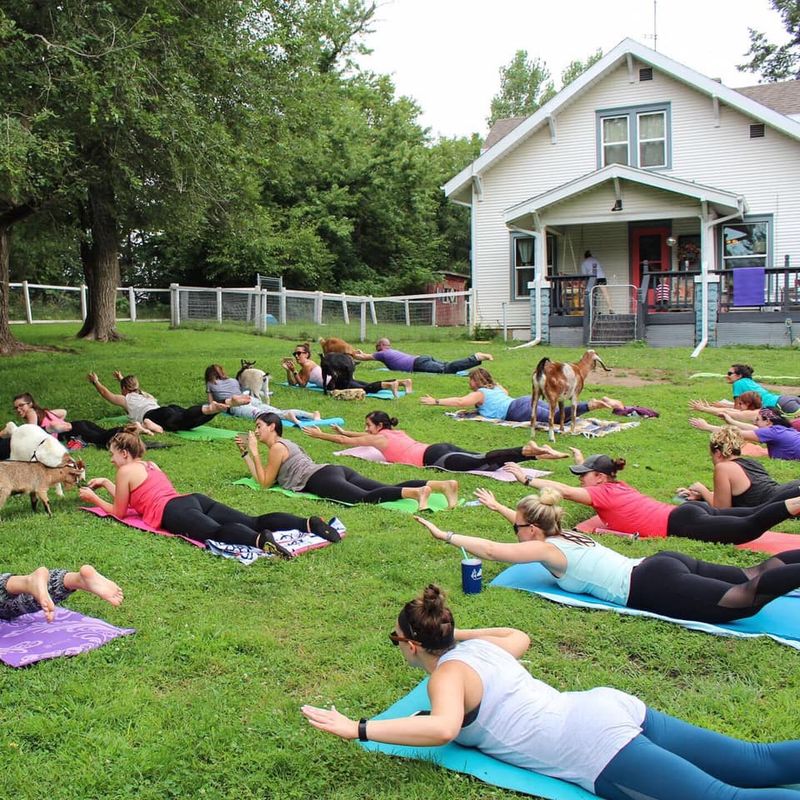
What makes the place unusual is how much it lets you in. You can walk into the pens, sit down, scratch a few ears, and take part in an outdoor yoga class with rescued goats wandering through the mats.
Pickrell is small, quiet, and easy to reach from Beatrice or Lincoln on a free afternoon.
How a Century-Old Homestead Became a Sanctuary
Thirteen acres of woodland and meadow, a farm that has stood for roughly a century, and a creek running along the edge of the property. That is the physical inheritance behind Shepherd’s Rest, and it explains why the operation feels rooted rather than assembled.
Old Nebraska farmsteads get repurposed all the time in this part of the state. Some become event barns, some sit empty as the county road crews pass by.
This one turned into a permanent home for goats and sheep who had nowhere else to land.
The mission is stated plainly: rescue, rehabilitate, and provide a lifelong home. Layered onto that is an education piece, teaching people that goats and sheep can serve as therapy animals, plus qualified animal-assisted therapy work.
Adoption is part of the picture too, so some residents move on to new families while others stay for good.
Goats and sheep are the headline, but a mini horse and llamas share the acreage. Fry, the guard llama, keeps an eye on the herd with the seriousness of a shift supervisor.
Indian Creek, Woodland Paths, and Wildlife
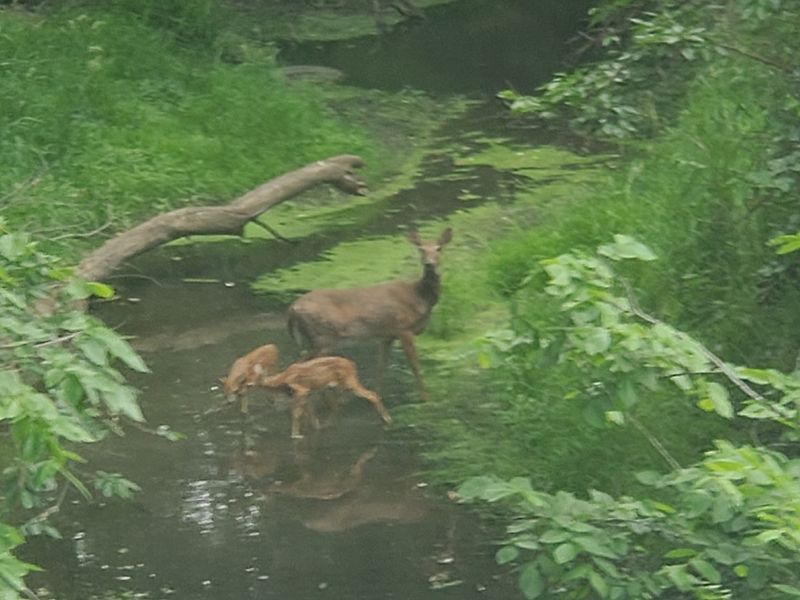
Water changes the character of a Nebraska farm. Indian Creek runs beside the property, and the timber it feeds gives the place shade, birdsong, and a genuine sense of separation from the section roads outside.
Deer move through those trees. So do turkey, quail, and red foxes, which means the animal count on any given visit is higher than the fenced herd suggests.
Early evening is the best window for spotting something wild.
Walking meditation paths thread through the woodland and meadow, laid out for slow travel rather than exercise. You can take one alone, with a leashed dog, or with a goat trailing behind you because a goat decided that was the plan.
The paths matter for another reason. Animal-assisted therapy works better with quiet space around it, and the acreage supplies that without needing a single sign or structure.
For anyone who grew up on a place with a creek and a woodlot, the whole setup will feel immediately familiar. For everyone else, it is a reminder that southeast Nebraska hides more trees than the flatland reputation allows.
Goat Yoga Under an Open Nebraska Sky
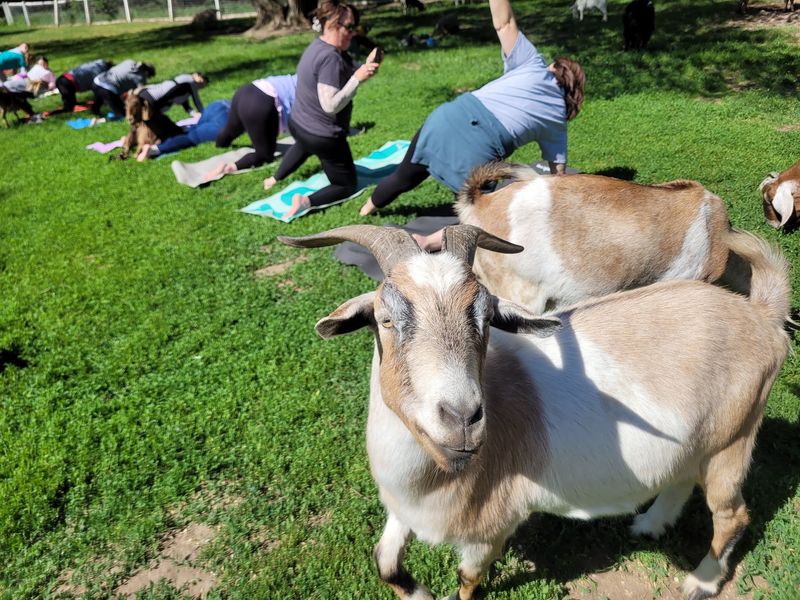
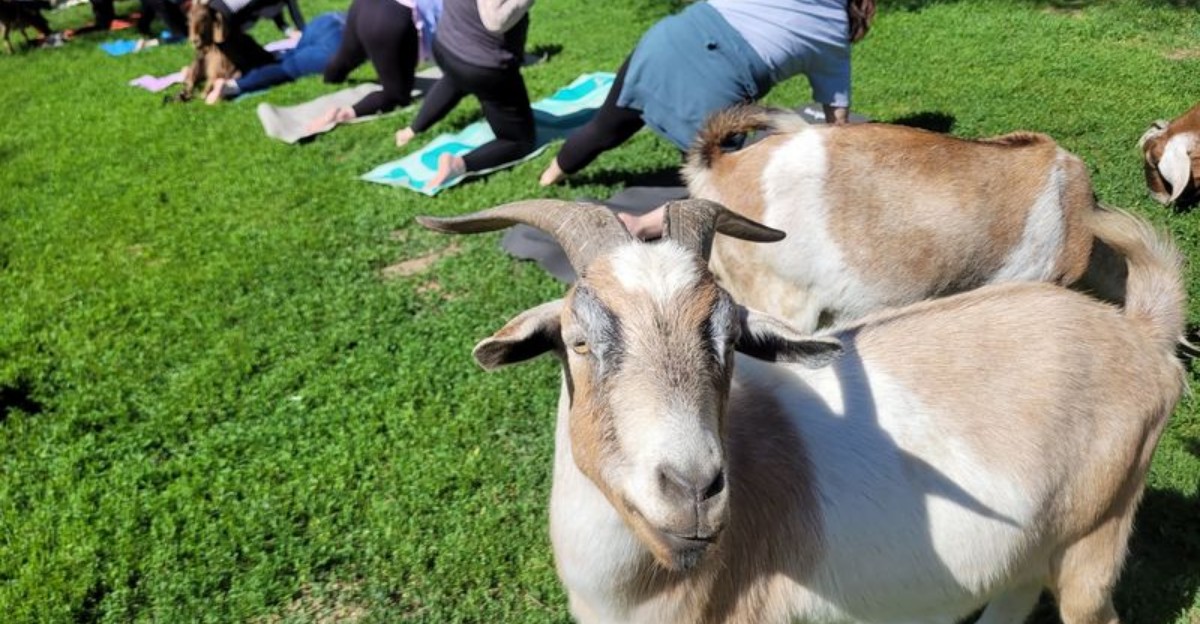
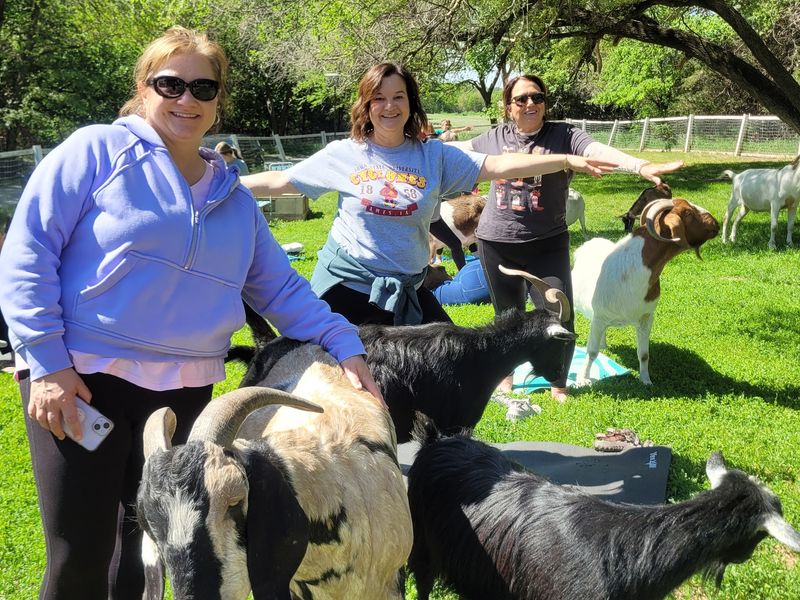
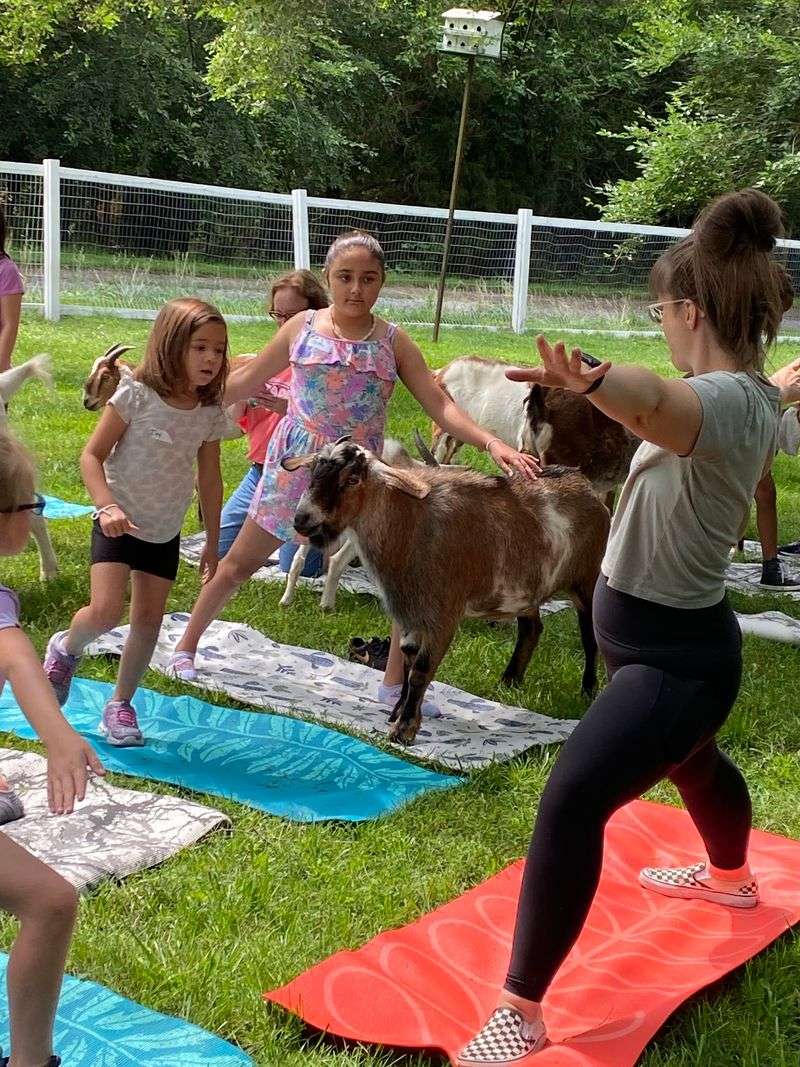
Picture a yoga mat in mown grass, a fence line in the distance, and a curious kid goat deciding your spine is a good place to stand. That is the signature offering here, and it happens outdoors from spring through fall.
Sessions run roughly May through early October, with most classes packed into June, July, and August. Because everything takes place outside, heat waves and spring thunderstorms can push a class to another date, so flexibility helps.
An instructor leads the actual practice, and the poses are approachable rather than advanced. The goats provide the interruptions.
Some nibble at hair, some flop down beside a mat, and a few simply stare at you mid-stretch.
Every fee collected goes toward feed, hooves, medications, and the general cost of keeping a hundred animals comfortable. Many of the goats stretching alongside you are still recovering from earlier neglect.
After the final pose, nobody rushes off. The time built in for hanging out with the herd tends to last longer than the class itself, and the baby goats are unquestionably the crowd magnet.
The Residents Have Names and Reputations
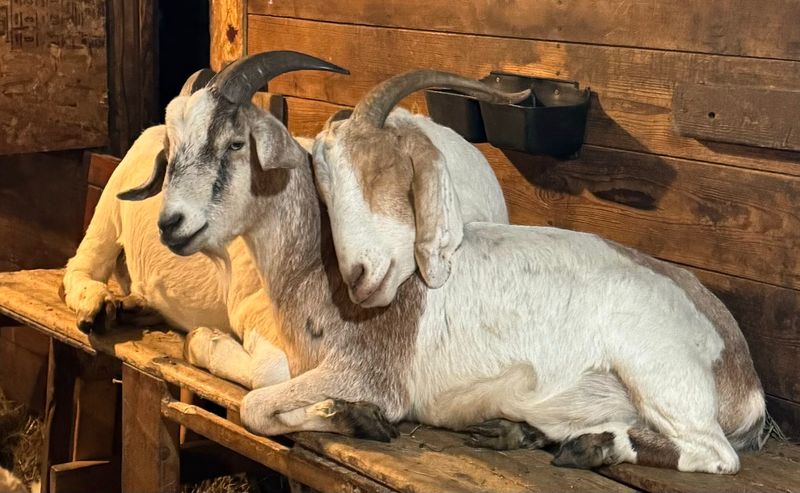
Dobby The House Goat. That is a real resident, and the name alone tells you how this place operates.
Nobody here is a number on an ear tag.
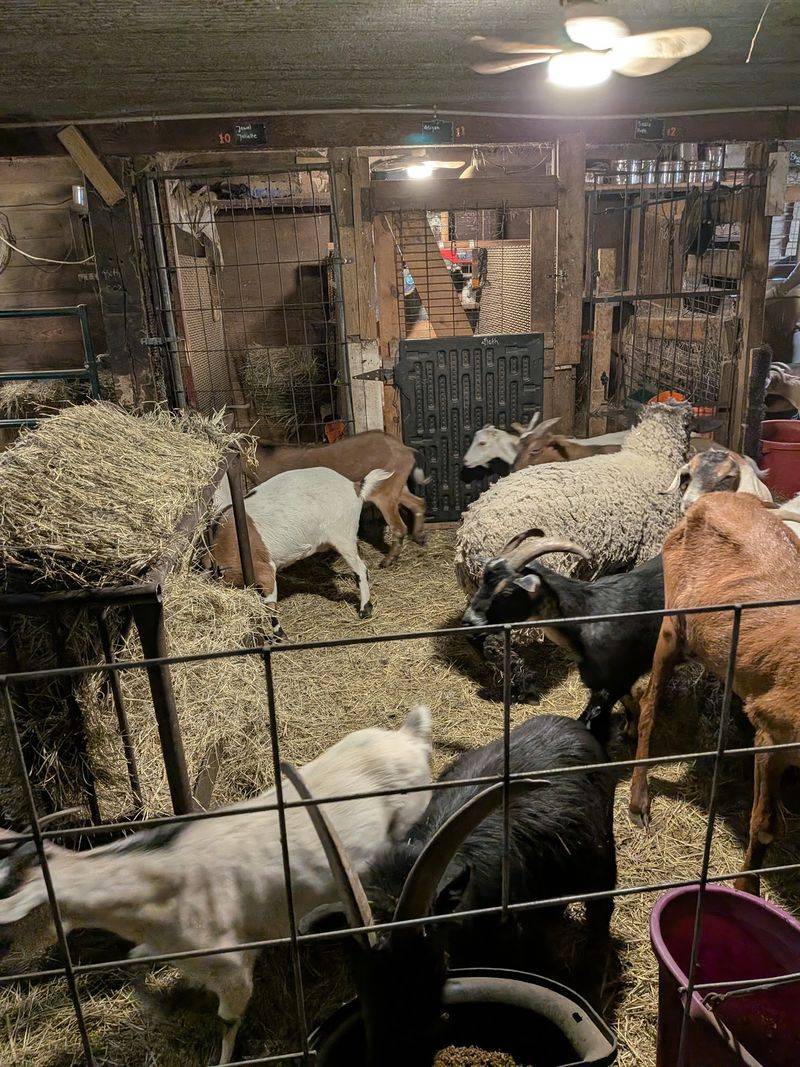
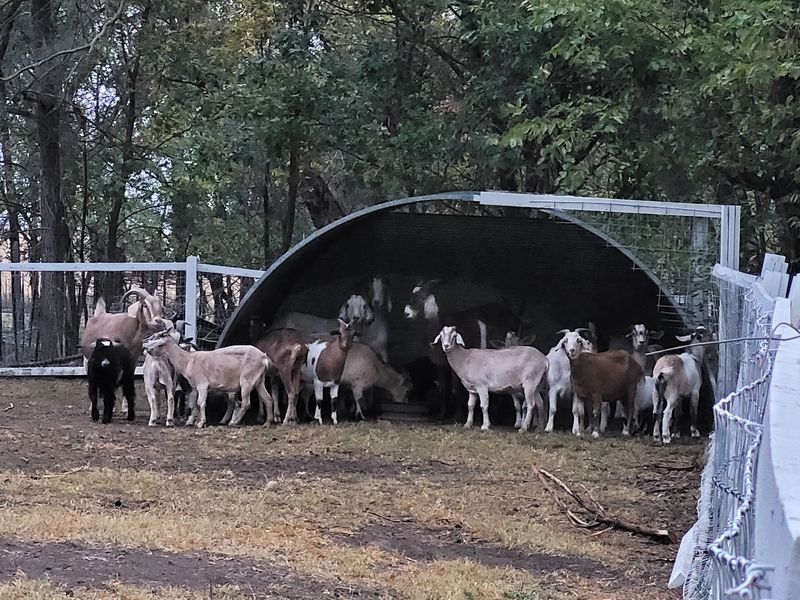
Big goats, tiny goats, springy goats, and goats committed to napping through your entire visit share the pens. Sheep move in their own quieter rhythm, often in a tight cluster near the shade.
The mini horse holds its ground among animals twice its width.
Fry the guard llama deserves separate mention. Guard llamas are working animals on many Nebraska farms, positioned to watch over smaller stock, and Fry takes the assignment personally.
Dogs, cats, and turkeys have also turned up on the property over the years, giving the barnyard a genuinely mixed roster.
The staff and volunteers can walk you through each animal’s background, and they will answer questions about hoof care, feeding, and rehabilitation without making it a lecture. Goats stay available for adoption, which means the lineup shifts season to season.
The one constant is that somebody on site knows every single name.
Camping and Glamping Beside the Herd
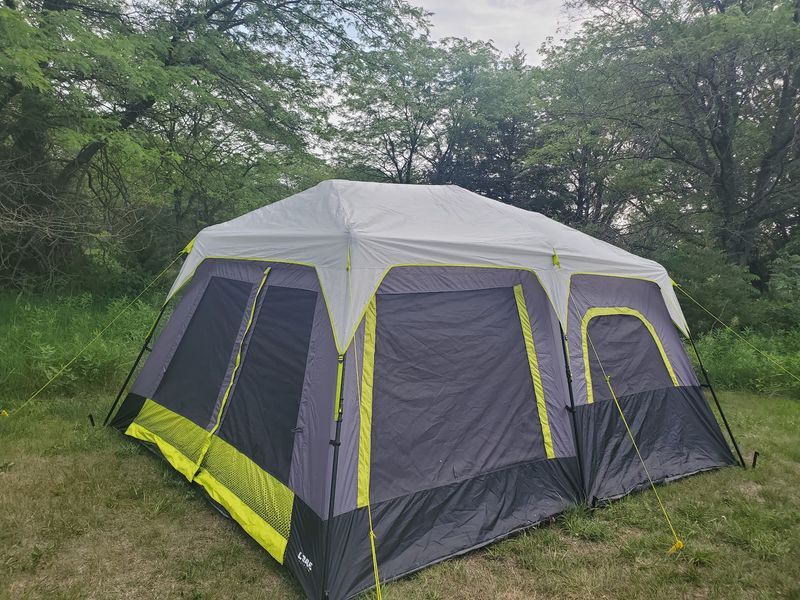
When 2020 shut down group activities, the sanctuary added overnight stays instead of closing the gate. Guests could camp on the acreage, sleep near the animals, and support the rescue in a way that required no crowd at all.
Sites sit on private ground with woods and creek nearby, which makes for a remarkably still night by Nebraska standards. No highway noise, no yard lights from a neighboring town, just the occasional bleat and whatever the deer are doing in the timber.
Set expectations honestly on facilities. There is a camp toilet on the property, functional rather than luxurious, so the glamping label refers more to the setting than to plumbing.
Dogs are welcome, and the walking paths are right there when you wake up.
Booking runs through the sanctuary’s own channels and camping platforms, and availability follows the warm-weather calendar the same way yoga does. A summer or early-fall weekend is the realistic window.
Waking up to a pasture full of rescued goats is a fair trade for skipping the resort bathroom.
Therapy Animals, Not Just Photo Ops
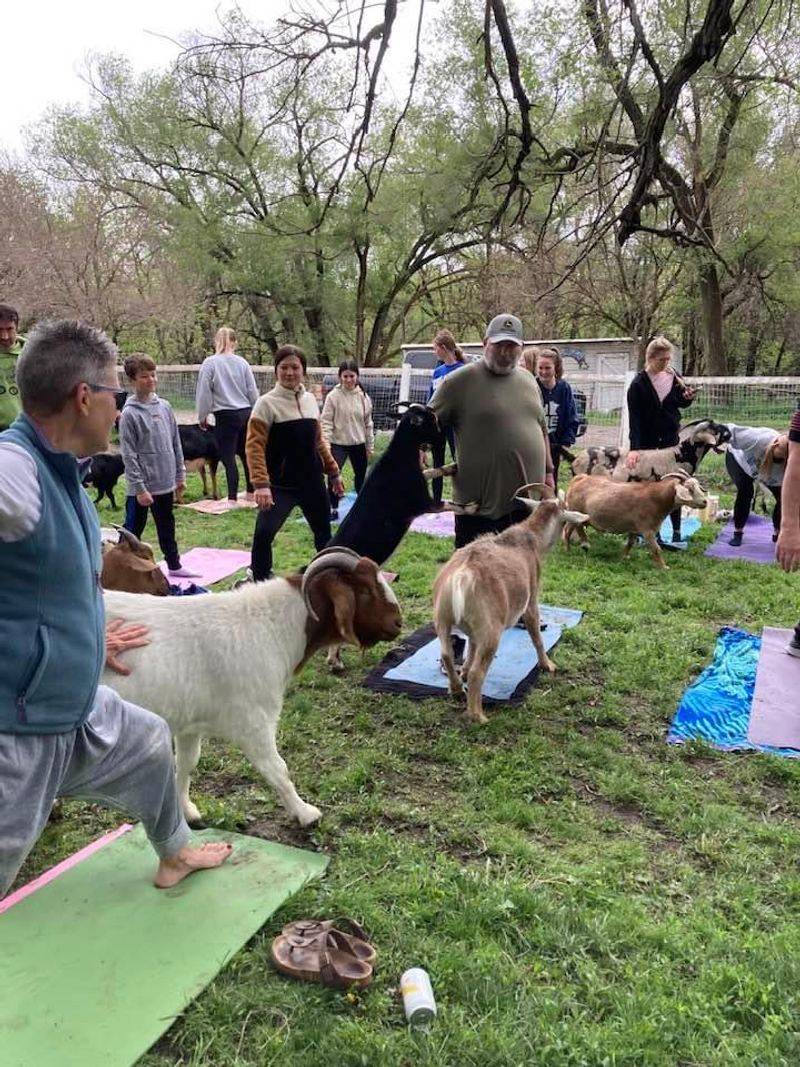
Educating people about goats and sheep as therapy animals sits right in the sanctuary’s stated mission, alongside rescue and rehabilitation. Qualified animal-assisted therapy is offered here, which puts the operation in a different category from a weekend petting stop.
Sitting in a pen with a sheep leaning against your leg does something that a fence-line view never will. The animals are used to human contact, calm about it, and unbothered by a stranger settling into the straw.
Rehabilitation cuts both directions. Animals arriving from neglect learn that people can be safe, and people arriving stressed out find a herd that asks nothing of them.
Groups have made use of this. Summer campers have come through for a yoga lesson followed by open time with the goats, and the staff adapt the pace to whoever is standing in the driveway.
Nothing about the setup feels clinical. There is no waiting room, no paperwork ceremony, no script.
A quiet path, a warm animal, and an afternoon with no agenda cover most of what the therapy angle promises.
Volunteering, Chores, and What You Learn
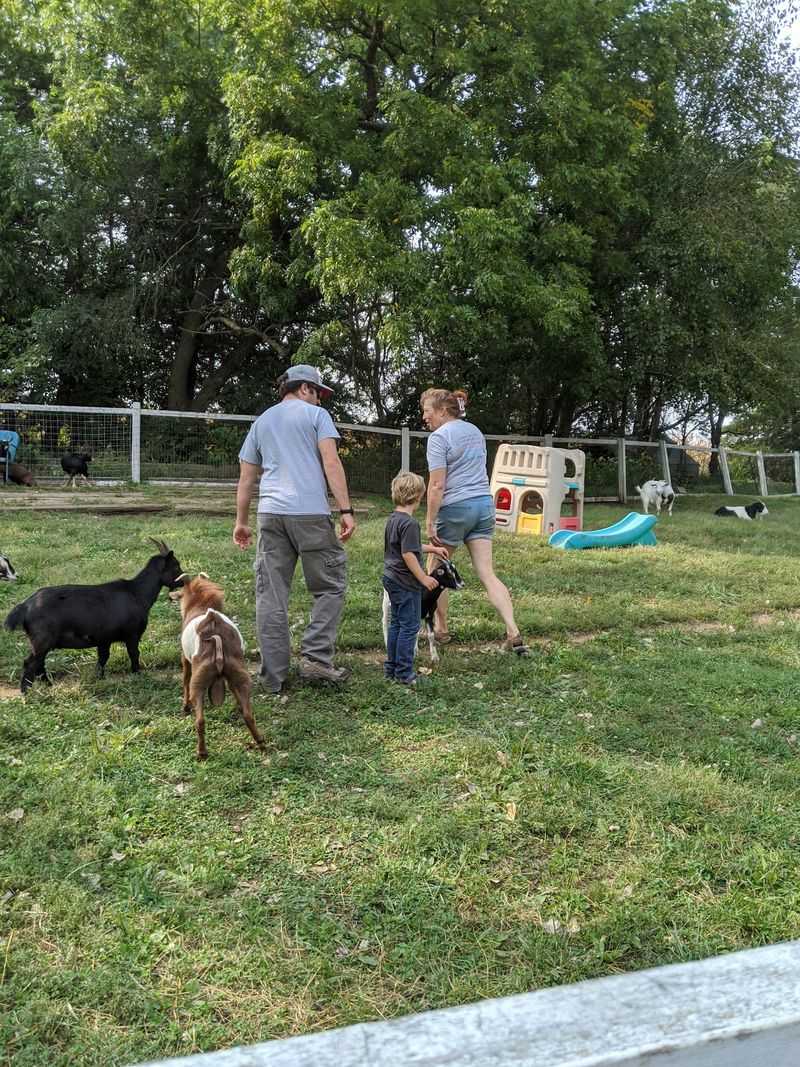
Feeding a hundred animals is not a hands-off job, and the sanctuary leans on volunteers to get through the daily list. Water, hay, pen cleaning, hoof checks, and plenty of goat wrangling fill the hours.
Anyone who signs on picks up practical knowledge fast. Goat care comes with specifics about diet, parasites, hoof trimming, and shelter that surprise people who assumed goats mostly eat tin cans and fence posts.
The volunteer crew is welcoming and free with information, which turns a shift into something closer to an apprenticeship. Ask a question and you get an answer plus a demonstration.
Younger helpers do well here too, since much of the work involves carrying, brushing, and keeping curious animals out of places they should not be.
Family runs the operation, and that shows in how visitors are treated. Nobody is processed through a turnstile.
Regular volunteers end up knowing individual animals by temperament, and that familiarity is exactly what a rescue needs. Reaching out ahead of time is the practical way to find out where help is needed most.
A Good Stop for Families With Young Kids
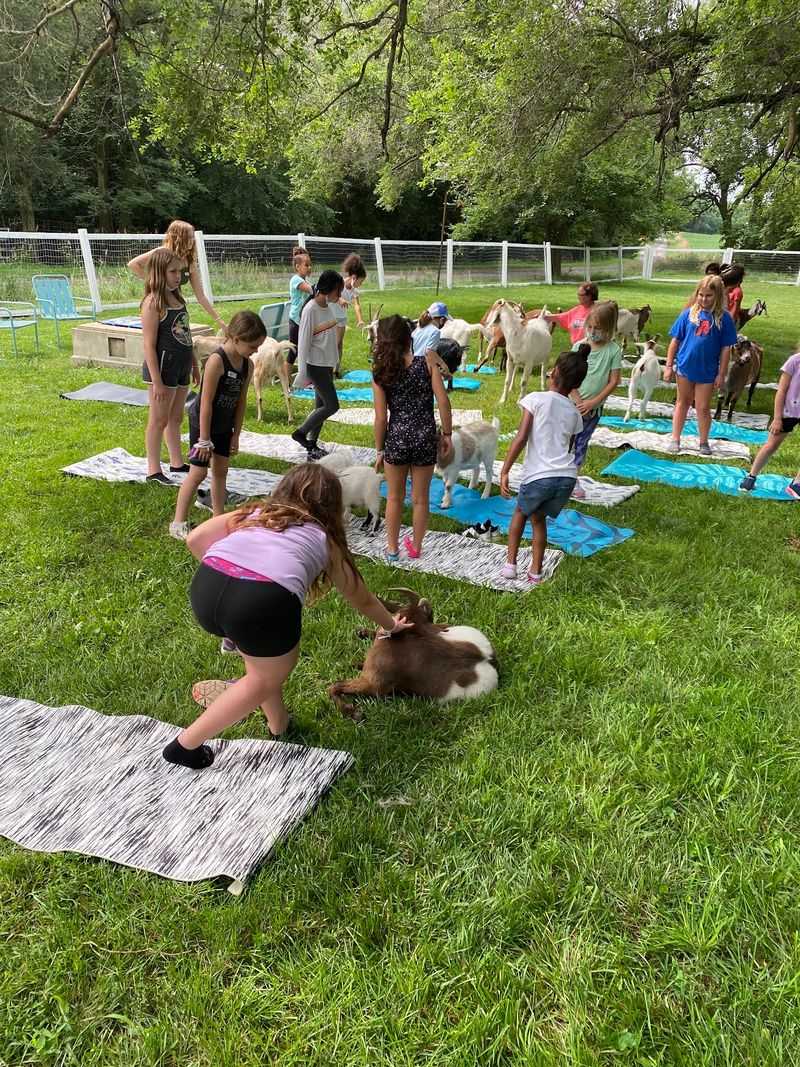
Baby goats settle the question of whether children will enjoy this. They bounce off hay bales, sprint sideways for no reason, and collapse into laps without warning.
Pen access is the difference-maker for kids. Instead of watching animals from behind a rail, they can walk in, sit down, and let the herd come to them, which is a far better hour than most attractions deliver.
Parents get something out of it too. The staff explain where each animal came from and why it needed rescuing, and that conversation lands with children in a way no exhibit placard manages.
Practical notes for a family trip: wear closed shoes you do not mind getting dirty, bring water in summer, and expect the visit to run long once someone finds a favorite goat.
The property is dog friendly, and the walking paths give restless kids somewhere to burn energy between pens.
For Lincoln and Beatrice families hunting an affordable outing that is not another park, a half hour of driving buys an afternoon nobody forgets.
Hours, Seasons, and Timing Your Drive
Late afternoon is the operating rhythm here. Monday through Friday the gate window runs 4 to 8 PM, while Saturday and Sunday shift earlier to noon until 6 PM, giving weekend visitors a much longer runway.
Those weekday hours make sense for a farm. Chores come first, and evening is when the heat breaks and the animals get social again.
Season matters more than the clock for goat yoga. Classes are outdoors only, running roughly May into early October, and the schedule stacks heavily into June, July, and August.
Spring storms and hot spells can move a session, so confirming before you drive is the smart move.
Baby goat season lands in spring, which is the strongest argument for an April or May visit.
Getting there is straightforward from Lincoln, about half an hour south toward Gage County, with Beatrice just down the road. The final stretch is that long gravel lane, so trust the directions and keep driving until the red barn appears on your left.
Costs, Donations, and Where the Money Goes
Hay, grain, hoof trimmers, medication, and vet visits. That is the actual budget behind a hundred rescued animals, and it does not pause between seasons.
Class fees for goat yoga go directly into that care, which reframes the whole activity. You are not buying a novelty photo, you are covering a share of somebody’s feed bill for the week.
Camping fees work the same way, funneling back into the operation rather than into amenities.
Donations are welcomed and genuinely useful, whether left after a visit or handed over during a volunteer shift. Small rescues run on that kind of support, and the difference between a comfortable winter and a tight one often comes down to it.
Adoption is another avenue, since the goats here remain available to the right homes. Anyone in southeast Nebraska with acreage and fencing has a real option worth asking about.
Exact rates shift with the season and the type of session, so check current pricing directly with the sanctuary before planning. Budget for a modest fee plus whatever you feel like adding on the way out.
Why This Pickrell Stop Sticks With You
Most Nebraska day trips end with a photo and a snack. This one ends with a specific goat you will still be talking about on Wednesday, plus the name of the llama who watched you attempt a warrior pose.
The combination is unusual: a genuine rescue operation, a century-old farm with creek timber around it, therapy work, camping, and yoga classes held in a meadow. Few small sanctuaries anywhere manage that range.
Expectations should stay grounded. It is a farm, so there is mud, there are flies in July, and the facilities are functional rather than polished.
Anyone hoping for a gift shop and paved parking will need to adjust.
What you get instead is access. Walk into the pens, sit in the straw, ask questions, and leave knowing that your fee bought hay.
Load the family in the car, drive south out of Lincoln, and let the gravel lane do its work. Somewhere past the last curve, a red barn and a very loud welcoming committee are waiting on you.