This Nebraska Trail Looks Like Another Planet, With Rock Toadstools Balancing On Stone Stems
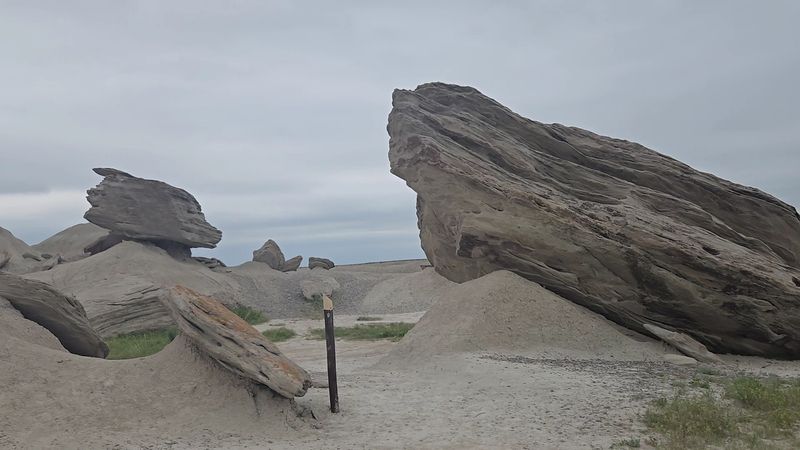
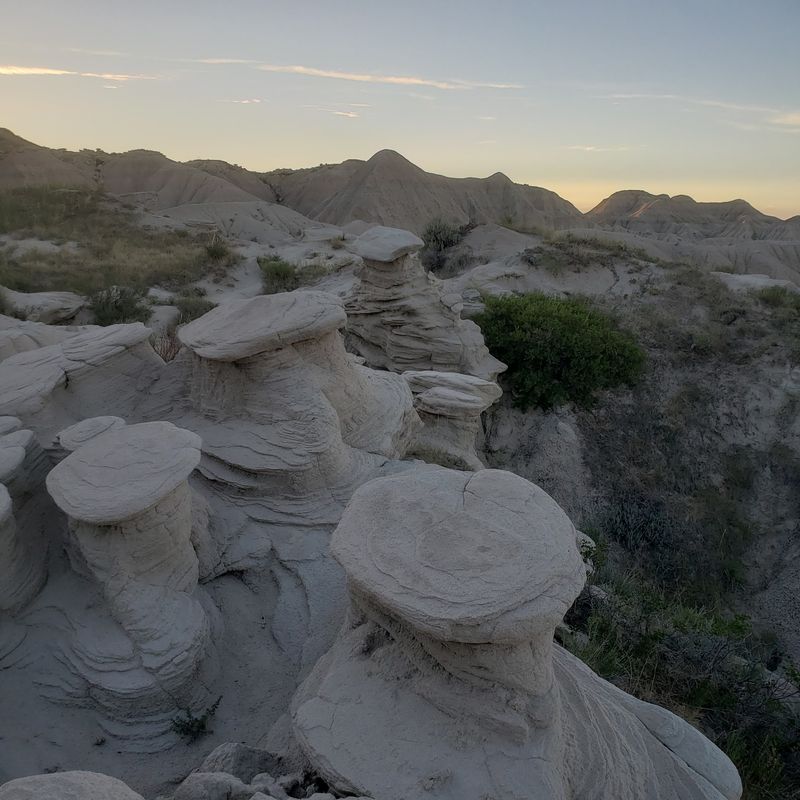
Heavy stone caps sit perched on skinny rock stems, waiting for the wind to finish the job. Some have already toppled.
The ones still standing look like a mushroom patch built for giants.
They rise from a pocket of rugged badlands in the far northwest corner of Nebraska. Ancient footprints and fossils hide in the same pale clay.
A replica sod house waits near the trailhead, looking cozy against all that bare rock.
I like how the drive feels like part of the story. Miles of gravel roll through open grassland before the ground breaks into ridges and gullies.
There’s no cell signal, no snack bar, and no running water.
I can’t imagine a better place to feel small in a good way. So what does it take to see these stone toadstools up close?
A Badlands Surprise Waiting In The Nebraska Grassland
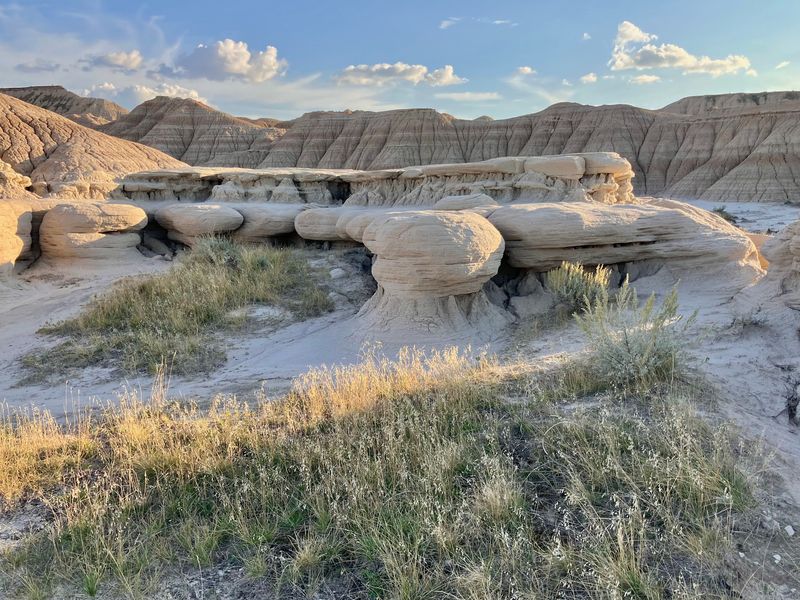
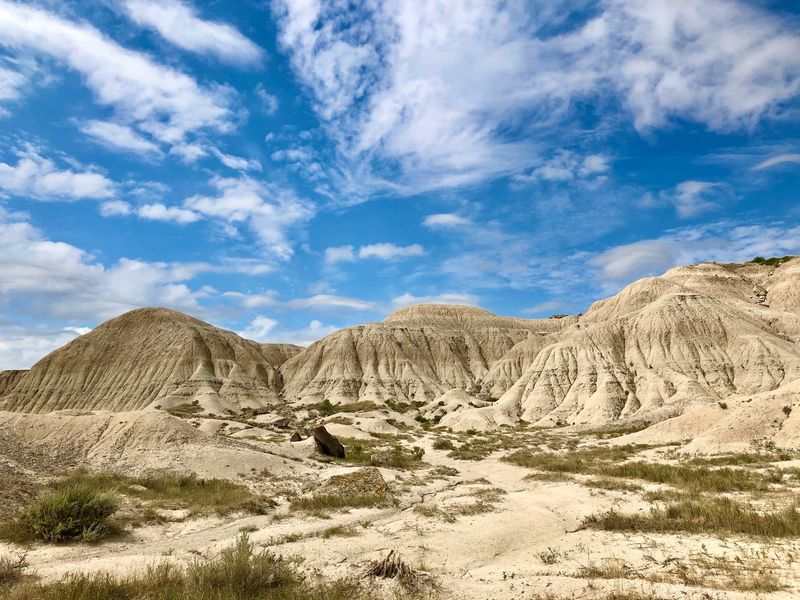
Nobody expects the prairie to suddenly crack open like a dropped dinner plate. Yet that’s exactly what happens at Toadstool Geological Park and Campground, a stretch of rugged badlands inside the Oglala National Grassland.
The park sits in the far northwest corner of Nebraska, close to the South Dakota line. It’s managed by the U.S.
Forest Service, which explains the rustic, no-frills feel of the whole place.
The star attractions are the toadstools themselves. These are rock formations with a wide, hard cap balanced on a thinner, softer stem of eroding clay.
Around them, the land folds into gullies, ridges, and dry creek beds. Grass gives way to bare, pale ground that looks more like the moon than a cattle pasture.
Wind and water carved every bit of it, and they’re still at work. The scene you see today won’t look exactly the same in a few decades.
That alone makes a visit feel a little urgent. Few places in the state let you watch geology happen in slow motion, right in front of your boots.
How Soft Clay And Stubborn Sandstone Built A Mushroom Patch
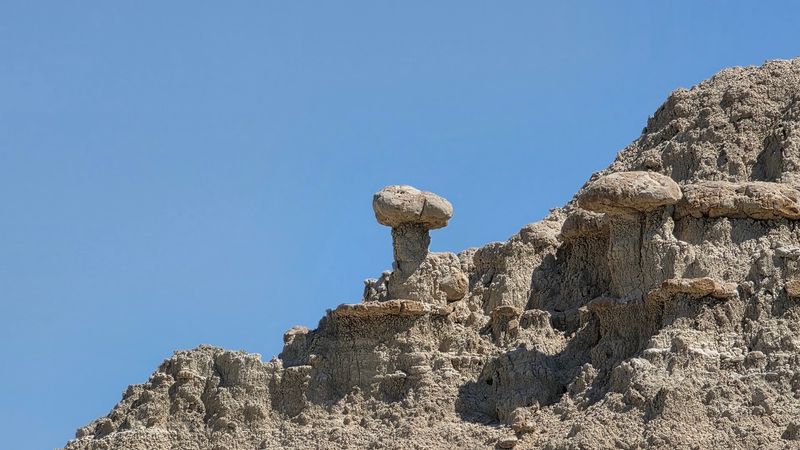
Think of each toadstool as a geology lesson with a hat on. The cap is made of tougher sandstone, while the stem underneath is softer, crumblier material.
Rain and wind chew away at the soft layer much faster than the hard one. Over time, the stem gets skinnier and the cap is left perched on top like a lid.
Eventually, gravity wins the argument. The stem gets too thin, the cap tumbles, and the formation becomes another pile of rocks on the ground.
That’s why many of the toadstools here have already fallen. The ones still upright are basically living on borrowed time, which makes spotting them feel like a small win.
The surrounding badlands follow the same rules on a bigger scale. Ridges, buttes, and narrow channels all show how unevenly different layers wear down.
Interpretive signs along the trail explain the process in plain language. You don’t need a science degree to follow along, just a little curiosity and decent shoes.
Once you understand the recipe, you start seeing tiny toadstools forming everywhere. A pebble shielding a pinch of clay can start the whole thing over again.
Millions Of Years Stacked In Pale Layers
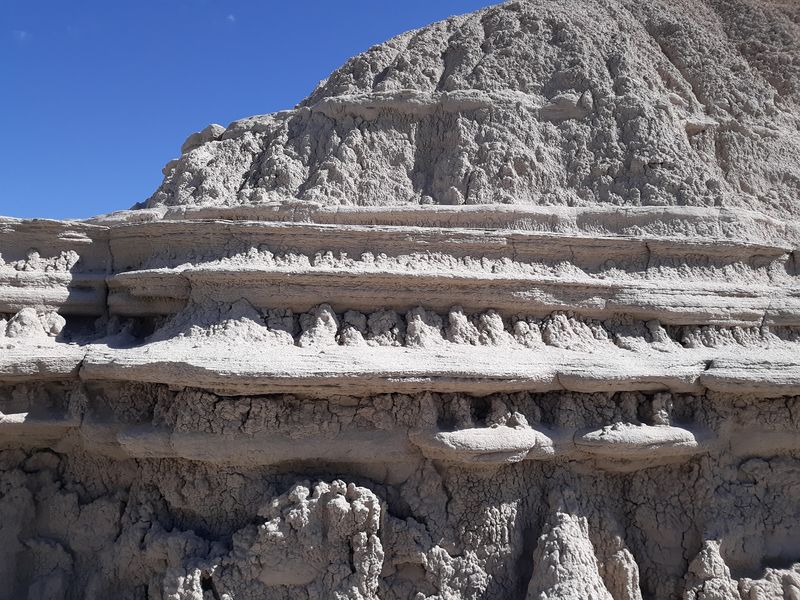
One exhibit sign near the trailhead carries a headline that stops people in their tracks: Africa in Nebraska. It sounds like a typo until you read the rest.
The rock layers here record a story reaching back roughly 35 million years. Back then, the region looked far more like a warm savanna than today’s windswept plains.
Rivers and streams dropped sand, mud, and volcanic ash across the land. Those deposits hardened into the layers you’ll walk past, each one a page in a very old book.
The pale colors aren’t random either. Shifts from gray to tan to cream mark changes in what settled out of the water and air over long stretches of time.
Standing in a gully, you’re surrounded by those stripes on every side. It’s a strange feeling to brush past rock that formed before the Rocky Mountains finished rising.
Signs across the park help put dates and names to what you’re seeing. Take a few minutes with them before you start hiking.
Knowing the backstory turns a pile of odd rocks into a time machine. Suddenly every ridge has something to say.
Ancient Footprints Pressed Into Stone
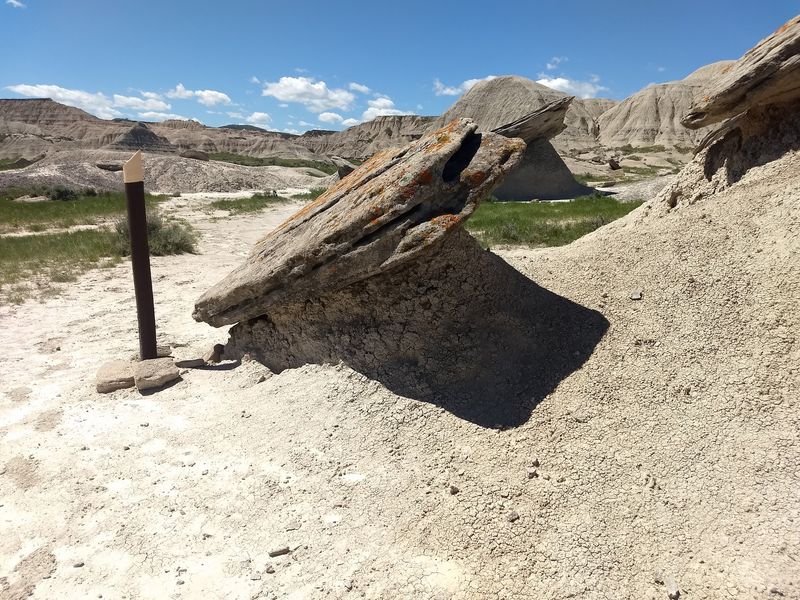
Somewhere along the trail, the ground starts telling stories about who walked here first. Fossil trackways at Toadstool Geological Park and Campground preserve footprints left by ancient animals in what was once soft mud.
Those prints hardened into stone and then waited for erosion to bring them back to the surface. Few parks anywhere let you stand this close to such old footsteps.
Bones and other fossils also turn up in these badlands. The same layers that shape the toadstools hold remains of creatures that roamed the region millions of years ago.
Here’s the rule that matters most: look, photograph, and leave everything in place. Fossils on public land belong to everyone, and collecting them isn’t allowed.
Kids especially love the detective work of spotting tracks. Give them a heads-up before you go and watch their eyes stay glued to the ground.
The trail markers help point out features worth noticing. Pick up the interpretive guide and match each number to what’s in front of you.
It’s a quiet kind of thrill. One minute you’re walking a dry creek bed, and the next you’re following a trail far older than any map.
The One-Mile Loop That Packs In The Highlights
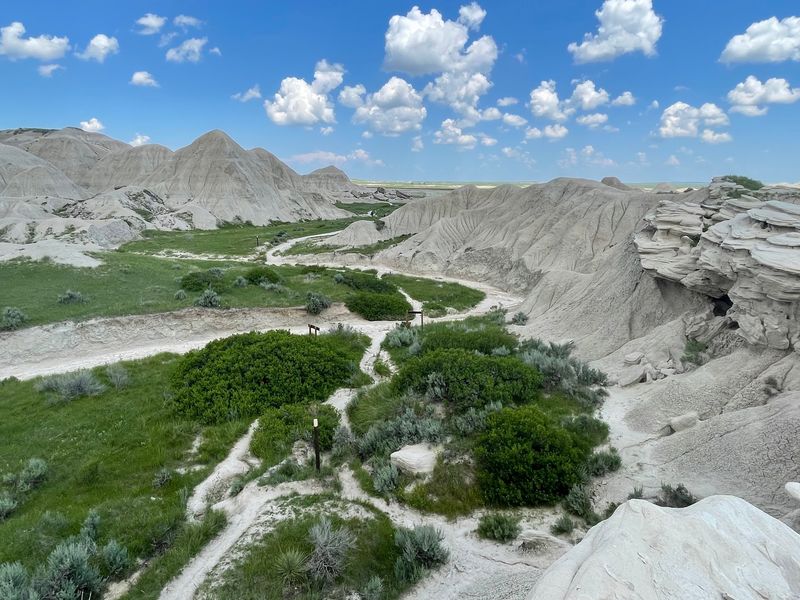
Short on time or not much of a hiker? The interpretive loop is roughly one mile, and it squeezes a surprising amount of scenery into that distance.
The path winds over and through the formations instead of just around them. You’ll cross dry creek beds, slip between ridges, and climb a few gentle rises.
Numbered posts guide the way from one point to the next. A trail map matches each marker to a feature, so the walk doubles as an outdoor classroom.
Some stretches are narrow, and footing can get tricky on loose ground. Sturdy shoes beat sandals here by a mile, or at least by a full loop.
Steep drop-offs pop up in places, so keep little ones close. The badlands all look similar, and it’s easy to get turned around if you wander off the route.
Most people can finish the loop in a relaxed hour with plenty of photo stops. Pace yourself on hot afternoons, since shade is scarce once you leave the parking area.
It’s the best introduction to the park. Do this first, then decide whether your legs want more.
A Longer Trek Named For The Bison
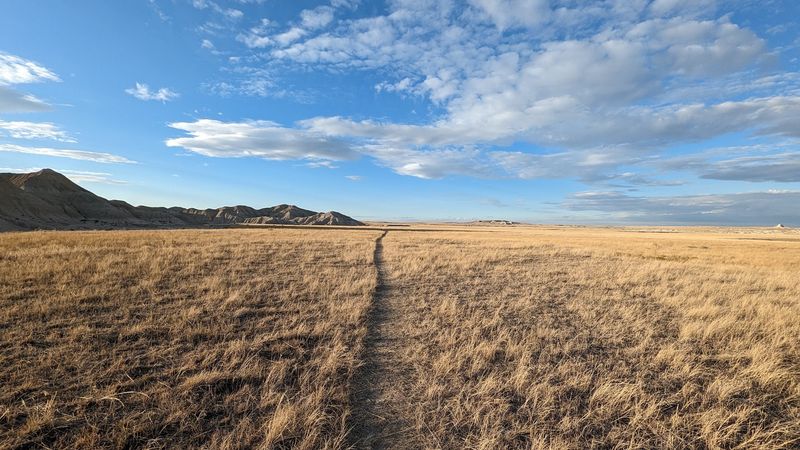
Ready to trade the crowds you won’t find anyway for even more solitude? The Bison Trail heads out from the park across the badlands and open grassland.
It connects Toadstool to the Hudson-Meng Education and Research Center, a site known for a large ancient bison bone bed. Researchers have studied it for decades to learn about the animals and early people of the plains.
The route is much longer than the interpretive loop. Plan for a solid chunk of the day if you hike it, and pack food, water, and sun protection.
Trail markers guide the way, though some can blend into the landscape. A GPS app or downloaded map gives you a helpful backup when the posts get hard to spot.
The payoff is quiet on a grand scale. Wind, grass, and sky are about all the company you’ll have for long stretches.
Check whether the research center is open before planning to tour it. Its hours are seasonal, so a quick call ahead saves disappointment.
Even a partial out-and-back gives you a taste. Turn around whenever the view feels big enough.
A Sod House That Keeps Its Cool
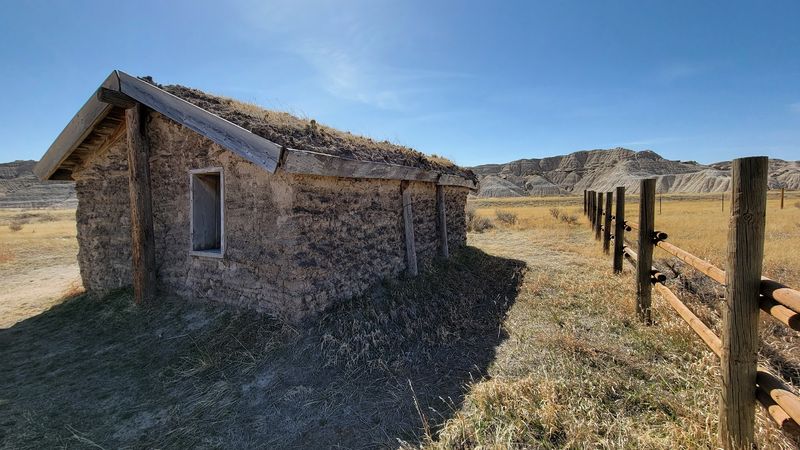
Right near the trailhead stands a reminder that people once called this land home. The park’s replica sod house shows how homesteaders built shelter when trees were nowhere in sight.
Settlers cut thick blocks of prairie turf and stacked them like bricks. The roots held everything together, and the result was a sturdy little home made from the ground itself.
Step inside on a hot day and you’ll notice the difference right away. Those thick earthen walls keep the interior noticeably cooler than the blazing badlands outside.
It’s a small building, so a visit takes only a few minutes. Still, it adds a human layer to a place mostly known for rocks and fossils.
Nebraska’s homestead story runs deep, and sod houses are a big part of it. Plenty of families across the state can trace their roots back to dwellings like this.
Kids tend to find it fascinating. Living in a house made of dirt sounds like a dare until they feel how comfortable it is.
Pair it with the loop trail for a well-rounded stop. Rocks, history, and shade all in one parking lot.
Gravel Miles Through The Oglala National Grassland
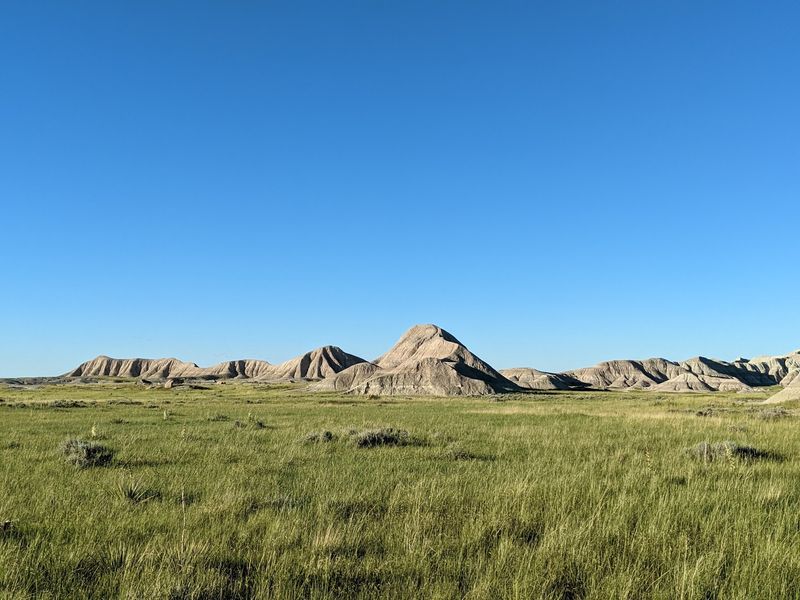
The last stretch to the park is all gravel, and it lasts a while. Expect somewhere around 15 miles of dirt and gravel road before the badlands come into view.
The drive cuts across the Oglala National Grassland. That’s roughly 94,000 acres of mixed-grass prairie, rolling hills, and wide horizons in northwest Nebraska.
Cattle graze much of the open range, so watch for them near the road. Fences and cattle guards are part of the scenery out here.
Road conditions can vary, especially after rain. A vehicle that handles uneven surfaces makes life easier, and towing a large trailer can be a challenge.
Go slow and enjoy the views instead of rushing. The landscape changes gradually, then the ground suddenly breaks open into pale formations.
Wet weather deserves extra caution. Mud can make the roads slick, and trails through the ravines get messy when storms roll through.
Fill up your tank before leaving pavement. Services are far apart in this corner of the state, and the nearest gas station isn’t exactly around the corner.
Rustic Campsites With A Front-Row Badlands View
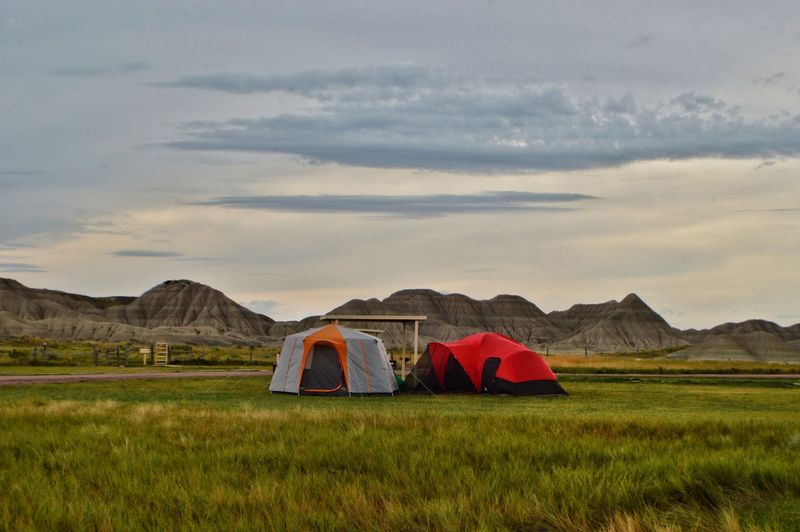
Waking up beside the badlands beats most hotel views by a wide margin. Toadstool Geological Park and Campground offers a small, primitive campground right next to the trailhead parking area.
Sites work for tents and smaller RVs. Each comes with a picnic table, and shade shelters help when the sun gets fierce.
Camping runs first come, first served. Payment uses a self-service envelope system, so bring cash and plan to arrive early if you’re set on staying.
There’s no electricity and no running water. Vault toilets and trash cans cover the basics, but everything else is up to you.
Fire rules depend on conditions. When fire danger runs high, open flames may be off the table, so pack meals that don’t depend on a campfire.
The campground can get windy since there are no trees to slow the breeze. Stake tents firmly and keep loose gear tucked away.
Sunrise over the formations is the real reward. Soft light hits the pale ridges, and for a few minutes the whole place glows.
Dark Skies Far From Any City Glow
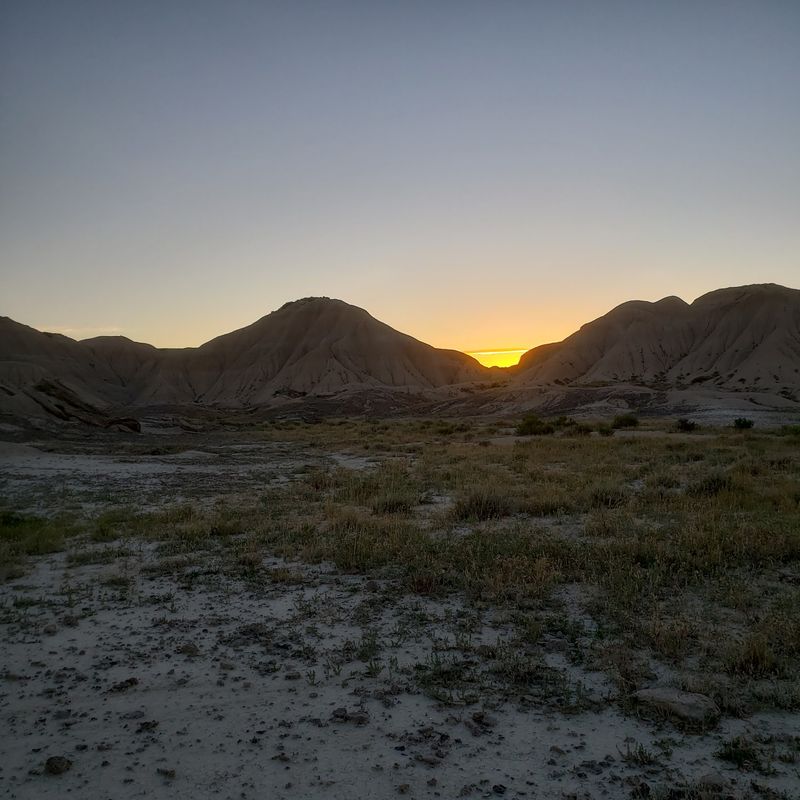
When the sun drops, the show simply switches channels. With almost no towns nearby, light pollution around the park stays remarkably low.
Clear nights can reveal a sky packed with stars. The Milky Way stretching over the silhouetted formations makes an incredible scene for stargazers and photographers alike.
Clouds roll in sometimes, so check the forecast before planning a night around the sky. A moonless night gives you the best chance at a full spread of stars.
The campground has no lighting after dark. Bring a headlamp or flashlight, ideally with a red-light mode to protect your night vision.
Temperatures can drop quickly once the sun goes down. A warm layer makes sitting outside far more pleasant, even after a hot afternoon.
Keep an eye on your footing if you walk around at night. Drop-offs and uneven ground are much harder to spot in the dark.
Lie back on a blanket and let your eyes adjust. Silence, wind, and a sky that seems to go on forever make for a pretty great way to end the day.
Wild Neighbors Sharing The Ridges
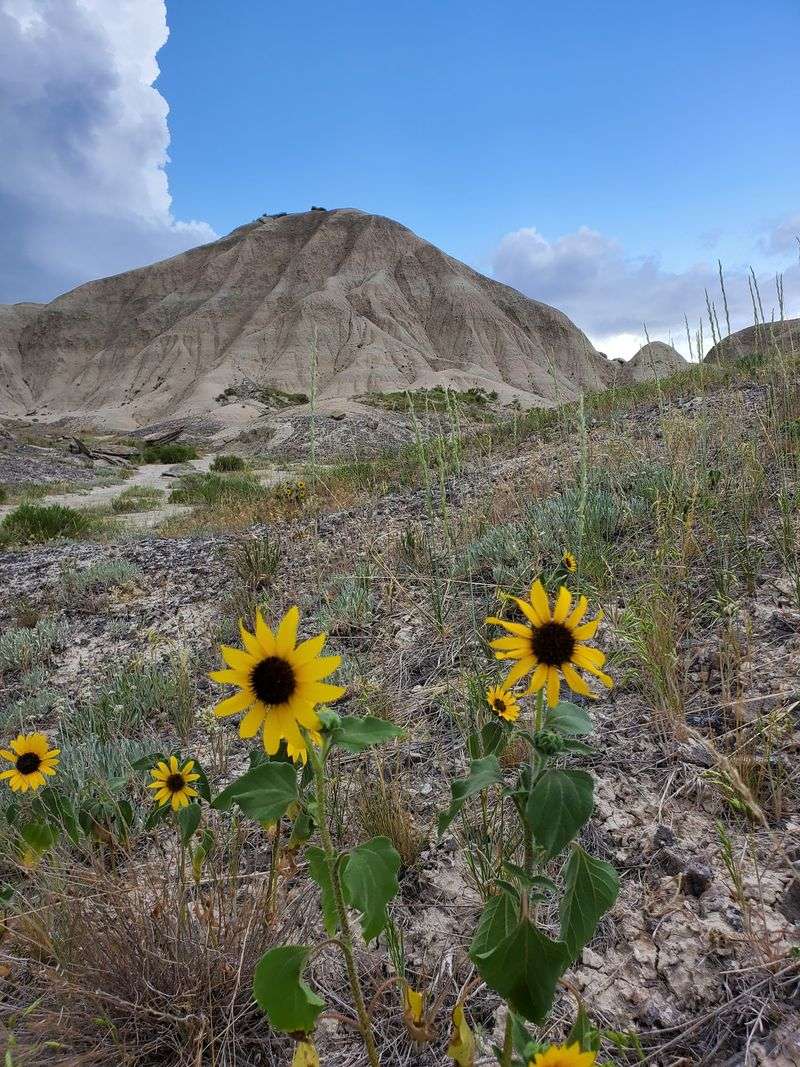
Badlands might look empty, but plenty of creatures call them home. Birds, small rodents, and grazing cattle are common sights around the park.
Bighorn sheep have also been spotted in the area. Seeing them perched on a ridge would make anyone’s trip.
Rattlesnakes live here too, so stay alert. Watch where you step and where you put your hands, especially around rocks and brush.
Mountain lions roam parts of northwest Nebraska as well. Sightings are rare, but keeping kids and pets close is a smart habit.
Mosquitoes can be hungry in warmer months. Bug spray earns its spot in your bag, particularly around dusk at camp.
Wildflowers bloom across the prairie at certain times of year. Their color softens the pale landscape and adds a welcome surprise.
Give every animal plenty of space. Observing from a distance keeps both you and them safe, and binoculars bring the action closer without disturbing anyone.
Some visitors also hunt the ground for colorful rocks, including the region’s famous agates. Check current rules before picking anything up on federal land.
Quiet Days For Families, Hikers, And Photographers
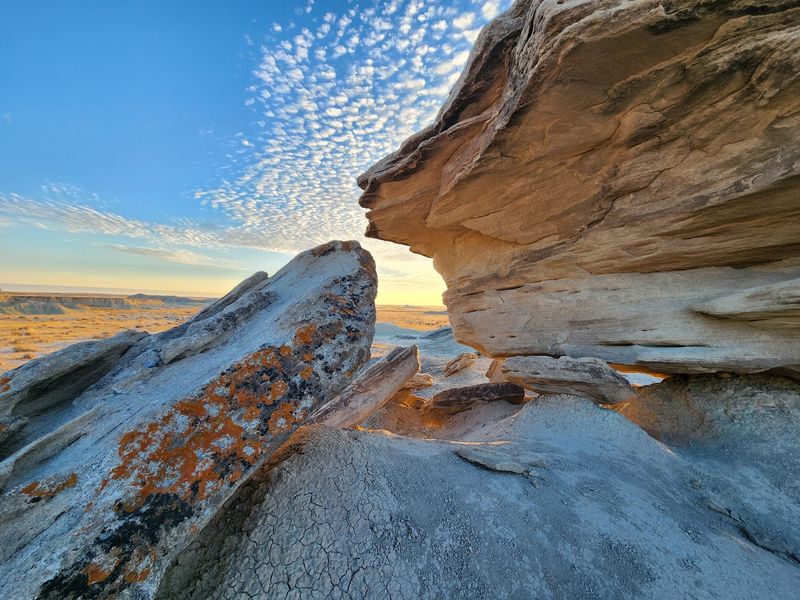
Solitude comes standard here, especially outside summer. Fall and other off-season visits can mean having big stretches of the badlands almost entirely to yourself.
Families get a lot out of the short loop. The interpretive markers turn the walk into a scavenger hunt, and kids love climbing through the strange shapes.
Just keep a close eye on young explorers. Steep edges and crumbly ground mean the fun needs some supervision.
Photographers find endless material in the formations. Low morning and evening light brings out the textures and colors that midday sun tends to flatten.
Serious hikers can stretch things out on longer routes. Casual walkers can stick to the loop and still leave feeling like they saw something special.
Cell service is spotty to nonexistent. That might sound scary, but it’s also a rare chance to unplug and focus on what’s in front of you.
It’s also a budget-friendly outing. A tank of gas, some snacks, and a small day-use fee can turn into a full afternoon of exploring.
Packing Smart For A Place With No Water Tap
Water tops the list, and then you should pack more water. There’s no running water at the park, and the sun reflects hard off the pale rocks.
Temperatures climb fast on clear days. A wide-brimmed hat, sunscreen, and lightweight layers make the hiking far more comfortable.
Wind is a regular companion out here. Lip balm and a light jacket help, even when the forecast looks calm.
Bring hand sanitizer for the vault toilets, plus your own lighting if you’re camping. Cash covers campsite and day-use fees through the envelope system.
The park sits near Harrison, NE 69346, though the nearest towns are still a good drive away. Crawford is a common jumping-off point for the gravel route.
Download maps before you lose signal. Directions can get tricky once you’re deep in the grassland.
Skip visits during heavy rain if you can. Mud makes roads slippery and turns ravine trails into a sticky mess.
Good shoes, a printed trail guide, and a sense of adventure round out the kit. Prepared visitors spend less time worrying and more time staring at rocks.
Why These Balancing Rocks Deserve A Spot On Your Nebraska List
Plenty of road trips promise something different, but few deliver rocks balancing on stems. Toadstool Geological Park and Campground manages it with zero gimmicks and a whole lot of patience from nature.
The formations won’t last forever. Each storm and windy season chips away a little more, which gives today’s visitors a view future generations may not get.
Add fossils, ancient footprints, and a replica sod house, and the stop gets richer. It’s history, geology, and prairie scenery rolled into one dusty package.
The gravel drive takes commitment. Still, the open grassland makes the journey feel like a warm-up act rather than a chore.
Spend an hour on the loop, or stay overnight under a sky full of stars. Either way, this corner of Nebraska rewards anyone willing to wander a little off the pavement.
Pair it with other stops in the area for a full weekend. The Panhandle has a knack for surprising people who thought the state was all cornfields.
Just don’t wait too long. Those toadstools are counting on their skinny stems, and the wind isn’t taking a break.