This New Mexico Pueblo Has Been Home To Generations For Over 1,000 Years
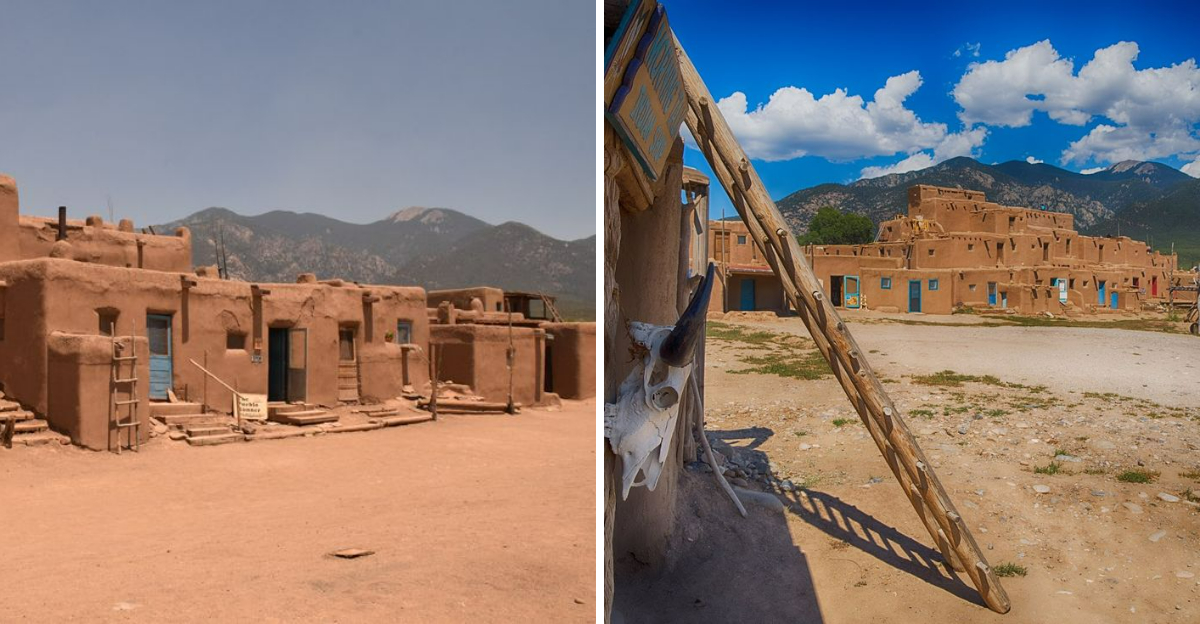
I did not expect to feel it that fast. The moment I crossed into the plaza, something shifted.
This was not a museum. This was not a ruin.
People still live here, in the same mud and straw walls their ancestors built over a thousand years ago, in New Mexico’s high desert. The state is full of history, but nothing quite prepares you for a place this old, this intact, this alive.
It has survived conquest, drought, and centuries of change without losing itself. That alone should make you want to know more.
This is one of New Mexico’s most remarkable places, and the story behind it is far richer than any photo could ever show.
A Place Where Life Never Left
Most ancient sites are empty. Taos Pueblo never got that memo.
People have lived inside these adobe walls continuously for over 1,000 years. That is not a renovation project.
That is commitment at a level most of us cannot wrap our heads around.
The pueblo sits just north of Taos. Around 150 residents still live inside the main buildings year-round.
Many others live outside the pueblo but return for ceremonies and community life, keeping traditions alive with every visit.
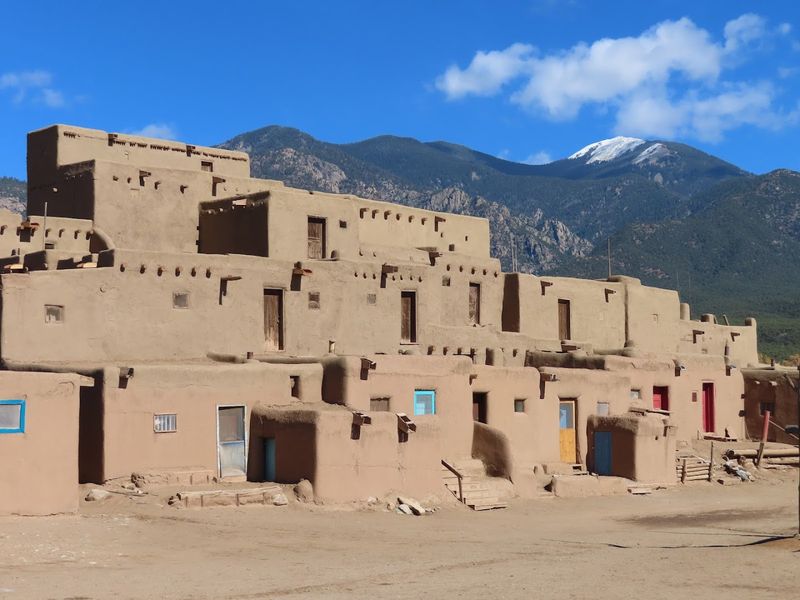
The two main structures are called Hlauuma, the North House, and Hlaukwima, the South House. Both rise several stories high and face each other across the Rio Pueblo de Taos.
That little river has been the heartbeat of this community for centuries.
What makes Taos Pueblo truly remarkable is that it looks nearly the same as it did when Spanish explorers first arrived in 1540. No electricity.
No running water inside the main buildings. Just adobe, sky, and generations of people who chose to stay.
You can feel that choice in the air the moment you step through the entrance. It is grounding in a way that is hard to explain but impossible to forget.
Built By Hand And Still Standing Strong
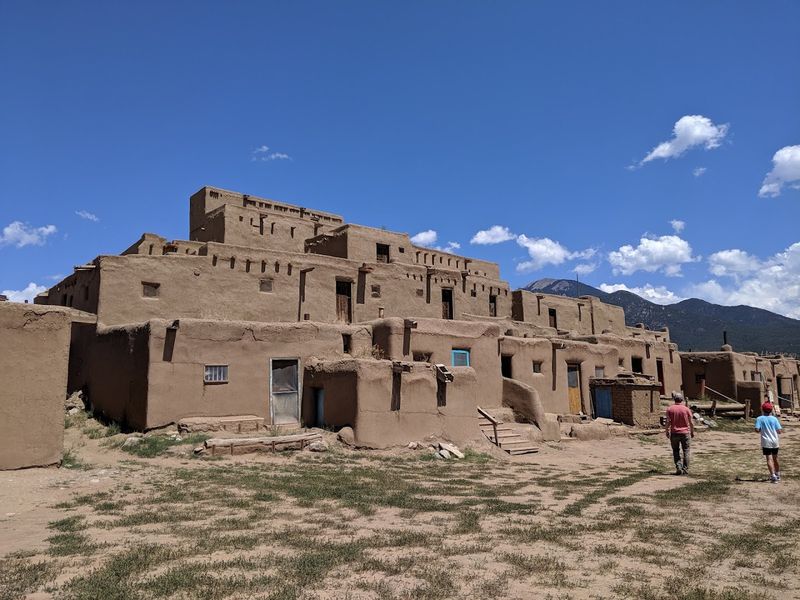
Adobe is basically mud, straw, and stubbornness. And somehow, it has kept these walls standing for over a millennium.
The buildings at Taos Pueblo were developed over many centuries. That timeline puts them firmly in the category of seriously impressive human achievement.
Each wall was shaped by hand using earth from the surrounding land.
There are no nails, no steel beams, and no concrete. Just ancient craft passed down through generations of skilled builders.
Some walls are several feet thick. That thickness keeps the interior cool in summer and warm in winter.
It is natural insulation that modern architects still study today.
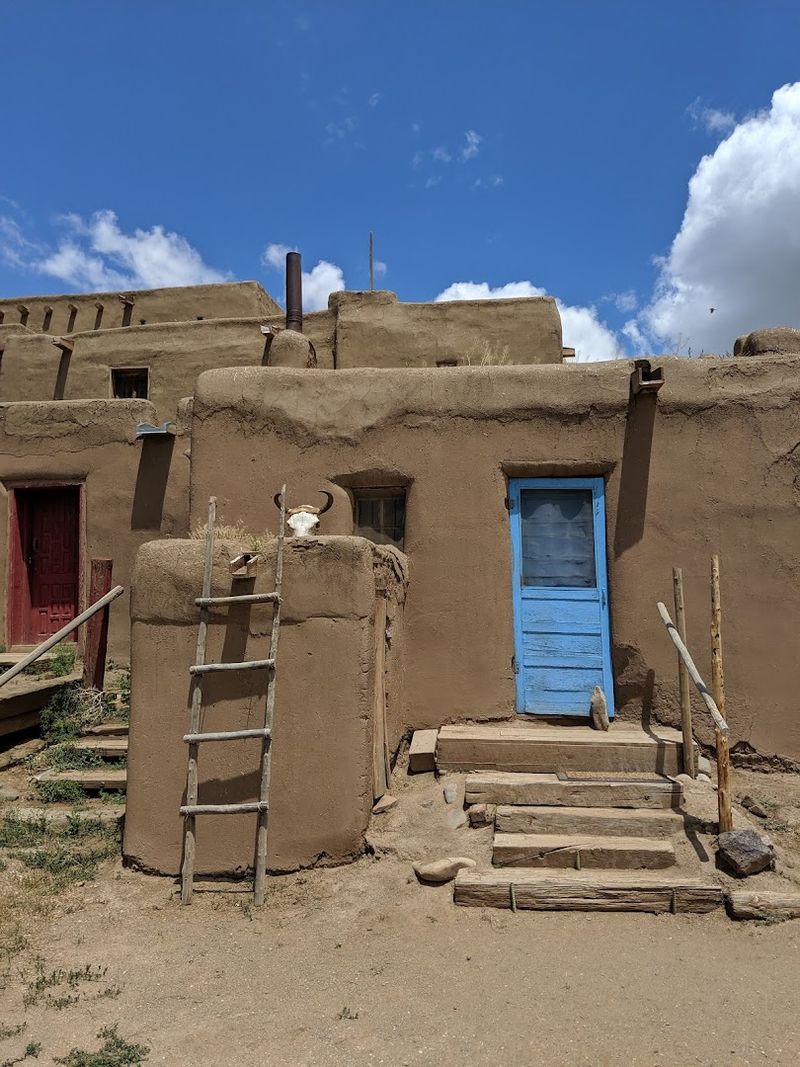
Wooden ladders lean against the upper levels, just as they always have. Original entry was through the roof.
Doors were added later as the community adapted over time without losing its character.
The buildings are repaired and re-plastered regularly by community members. Fresh adobe is applied by hand each year.
That ongoing care is part of what makes Taos Pueblo not just a ruin, but a real, maintained home that breathes with every season.
Recognized On A Global Level
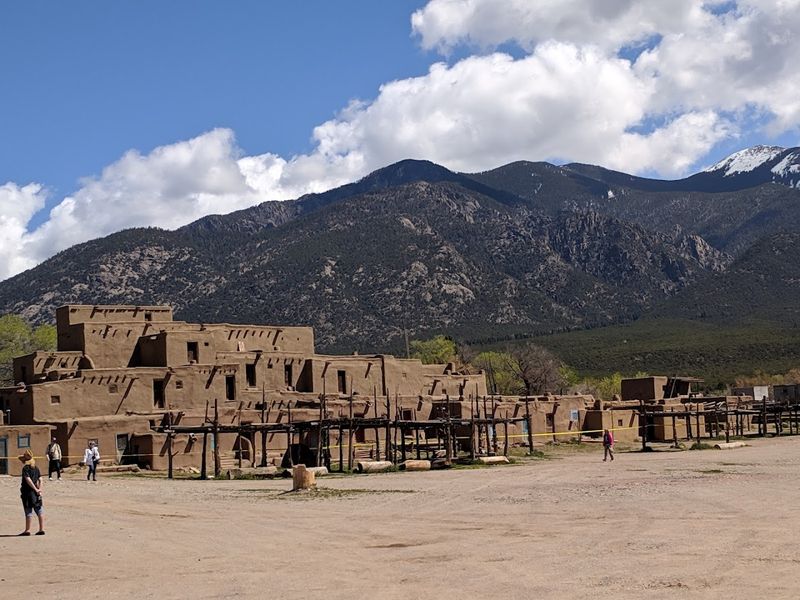
Not every ancient site earns a UNESCO badge. Taos Pueblo earned two major recognitions, and both are well-deserved.
The pueblo holds the distinction of being both a UNESCO World Heritage Site and a National Historic Landmark. That combination puts it in very rare company on a global scale.
UNESCO granted the World Heritage designation in 1992. The organization cited the pueblo’s outstanding cultural significance and its remarkable state of preservation.
Few sites anywhere in the world match that combination so completely.
The National Historic Landmark status came even earlier. It reflects the pueblo’s central role in American history and its importance to Indigenous heritage across the continent.
What makes these recognitions meaningful is that Taos Pueblo earned them while still being lived in. It is not a preserved artifact behind glass.
It is a community that continues to function, gather, and celebrate on the same ground where those designations were awarded.
Visitors often arrive expecting a museum-like experience. What they find instead is something far more alive.
The recognition confirms what the Taos people have always known. This place matters, not just to history books, but to the ongoing story of human culture on this land.
The River That Shapes Daily Life
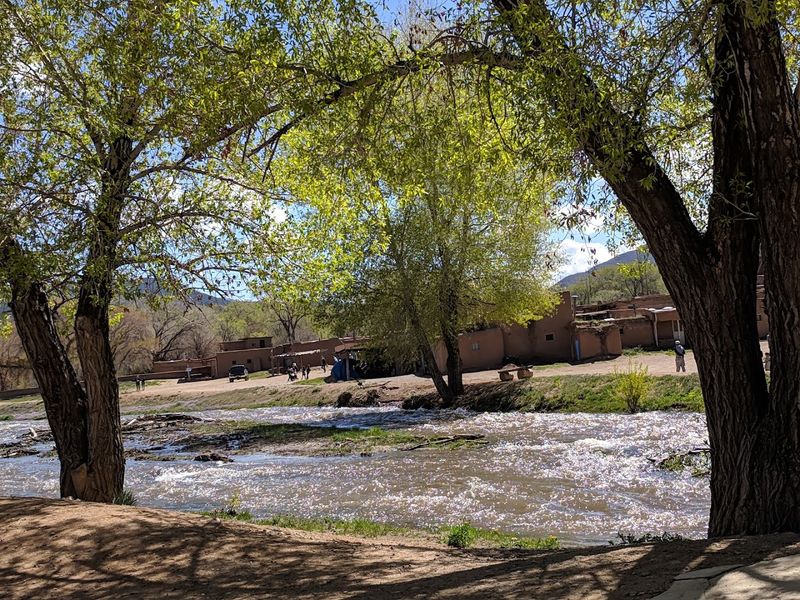
A river running through the middle of your home sounds inconvenient. At Taos Pueblo, it is the whole point.
The Rio Pueblo de Taos flows directly between the North House and South House. That river is not just a geographic feature.
It is sacred water that the community protects with deep intention and legal authority.
The watershed feeding this river sits within a protected area called the Blue Lake region. The Taos people fought for decades to reclaim full control of that land.
In 1970, the U.S. government returned it, marking a significant moment in Indigenous land rights history.
No pipes run through the main buildings. Water is still carried by hand, as it has been for generations.
That practice connects daily life directly to the land.
The surrounding land is treated as a living spiritual space, not a recreational resource. Visitors are asked to respect those boundaries, and most do so gladly once they understand the depth of that relationship.
Standing near the river, you hear the water before you see it. That sound has been the same soundtrack to life here for over a thousand years.
A Tour Led By The People Who Live It
Some tours hand you a pamphlet and wish you luck. A guided tour at Taos Pueblo is a completely different experience.
Tours are available year-round and are led by members of the Taos Pueblo community. That detail matters more than it might seem at first.
You are hearing the story from people whose families are part of it.
Guides walk visitors through the historic structures and share the history of the buildings, the culture, and the ongoing life of the community. They answer questions with patience and depth.
There is no script that feels rehearsed or disconnected.
Photography is permitted in certain areas, but visitors are asked to respect restrictions near homes and ceremonial spaces. Those rules are clearly explained and easy to follow.
Respecting them is part of being a good guest on someone else’s land.
The address for visiting is 120 Veterans Highway, Taos, New Mexico 87571. That kind of shift is rare.
It happens here because the story being told is still unfolding every single day.
Traditions That Continue Without Pause
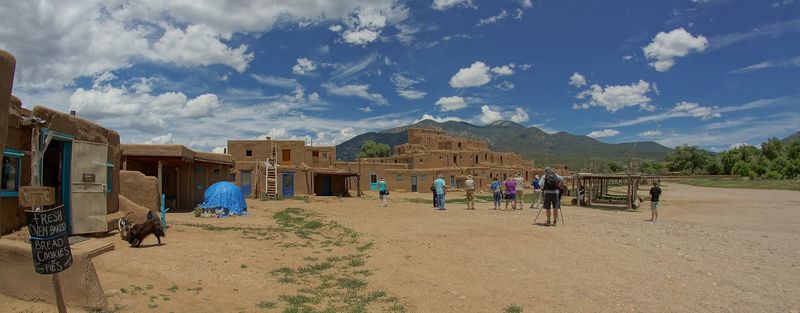
Some traditions survive in books. At Taos Pueblo, they survive in footsteps, drumbeats, and voices carried across an open plaza.
The community holds ceremonial dances and feast days throughout the year. These events are deeply rooted in spiritual practice and community identity.
Many are open to respectful visitors who follow the posted guidelines.
The San Geronimo Feast Day, held each September, is one of the most well-known gatherings. It brings together community members and guests for a celebration that blends Indigenous tradition with Catholic influence, a combination that reflects centuries of layered history.
Drumming, dancing, and singing are central to these ceremonies. Each movement carries meaning that has been passed down through oral tradition for generations.
Watching even briefly is a privilege that visitors are encouraged not to take lightly.
Cameras are typically not permitted during ceremonies. That restriction is a reminder that some experiences are meant to be felt, not captured.
Putting the phone away often leads to the most meaningful moments.
The continuation of these traditions inside a living community, rather than a reconstructed heritage site, is what sets Taos Pueblo apart. Culture here is not performed for tourists.
It is practiced for the people who call this home every single day.
More Than A Thousand Years Of History
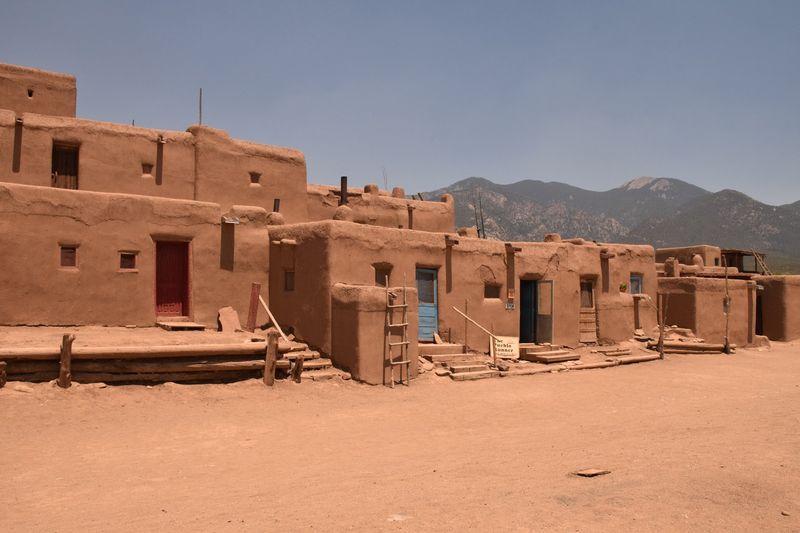
History at most landmarks is something you read on a plaque. Here, you are standing inside it.
Taos Pueblo was already a well-established community when Spanish explorers arrived in 1540. Francisco Vasquez de Coronado’s expedition encountered the pueblo during their search for the legendary Seven Cities of Gold.
They found people, not gold, and a civilization that had been thriving long before their arrival.
The pueblo played a significant role in the Pueblo Revolt of 1680. Taos was one of the key gathering points for the coordinated uprising that successfully drove Spanish colonizers out of the region for twelve years.
That moment stands as one of the most successful Indigenous resistances in North American history.
The community has also navigated the pressures of American expansion, land disputes, and policy changes over the centuries. Each chapter added complexity without erasing the core identity of the Taos people.
Walking through the pueblo today, you are not just seeing architecture. You are seeing the result of a thousand years of decisions, resistance, adaptation, and pride.
Every repaired wall is a small act of continuation.
That kind of layered history does not shout at you. It settles into you slowly, the way adobe holds warmth long after the sun goes down.
Handmade Work You Can See Up Close
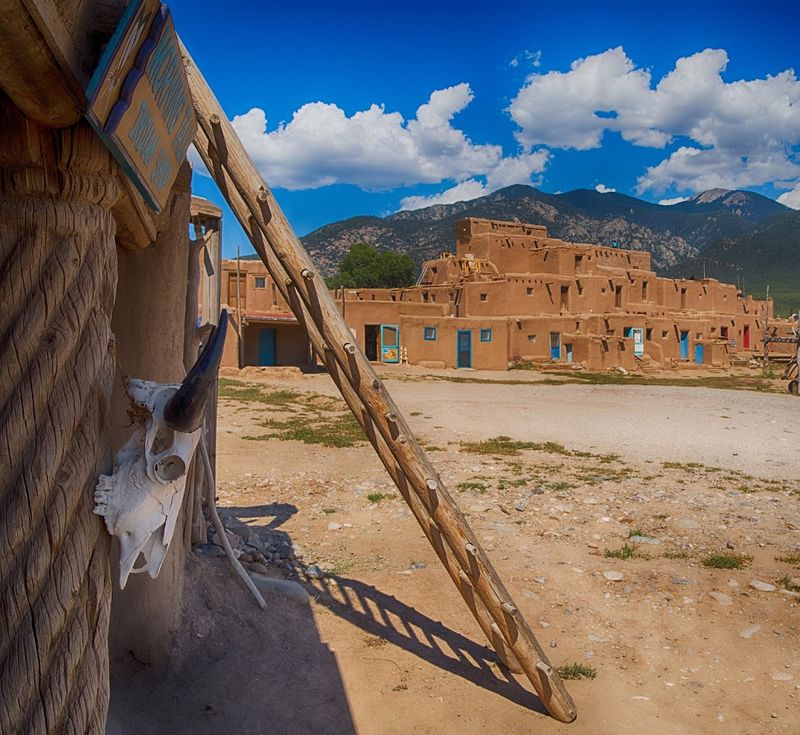
You might arrive for the history and leave with a piece of it in your hands. That is the quiet magic of the marketplace at Taos Pueblo.
Community members operate small shops and studios inside the pueblo grounds. These are not souvenir stands.
They sell work made by hand, including pottery, jewelry, drums, and woven goods that reflect genuine artistic tradition.
Taos Pueblo pottery is particularly well-known. The style is distinct, often featuring micaceous clay that gives the pieces a natural shimmer.
Buying directly from artisans at the pueblo means your money supports the community. It also means you get to hear the story behind what you are buying.
That conversation is often the most valuable part of the purchase.
The art sold here is not mass-produced. It takes time, skill, and a deep connection to tradition to make each piece.
Visitors who take that seriously tend to shop slowly and thoughtfully, which is exactly the right pace for this place.
Even if you do not buy anything, watching an artisan work is its own reward. The focus and care in every movement tells you everything you need to know about how this community values its craft.
Why This Place Stays With You
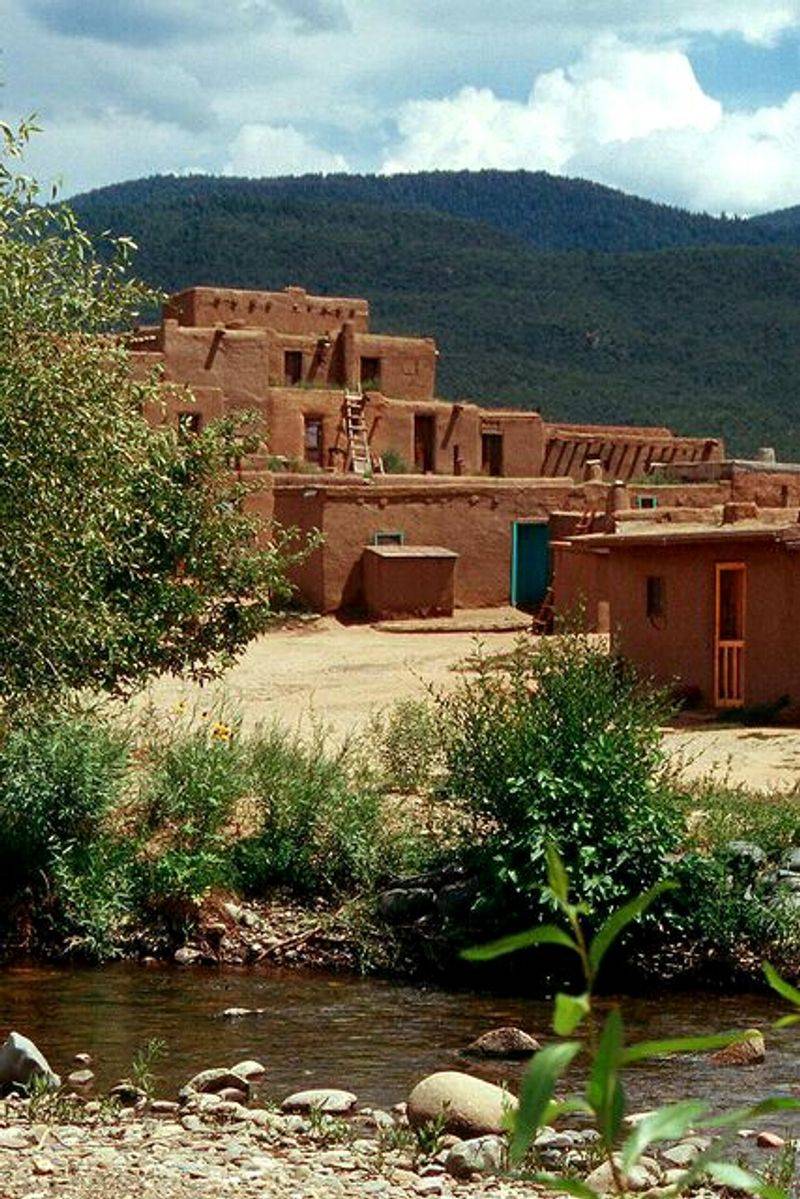
Most travel experiences fade within a week. Taos Pueblo has a way of staying put somewhere in the back of your mind for much longer.
Part of it is the silence. The pueblo sits at over 7,000 feet above sea level with the Taos Mountains rising behind it.
The air is thin and clean, and the quiet feels intentional rather than empty.
Part of it is the scale. Multi-story buildings made entirely by hand, still standing after centuries, create a visual impression that photographs struggle to capture fully.
You have to be there to feel the weight of it.
But most of it is the people. Knowing that families have lived on this exact ground for over a thousand years changes how you think about time.
It makes modern life feel both smaller and more precious at the same moment.
Visitors often describe leaving with a sense of perspective they did not expect to find. That is not something a brochure can promise.
It happens organically when you slow down and actually pay attention to where you are standing.
Taos Pueblo is open to visitors most days throughout the year, with occasional closures for private ceremonies. Checking the schedule at taospueblo.com before your trip ensures you arrive at the right time for the right experience.