This New York Greek Bakery Still Makes Its Own Phyllo By Hand After More Than A Century
You can read a newspaper through this dough.
The bakers stretch pizza-shaped slabs across big tables in a back room until the phyllo turns paper-thin and see-through, using only flour, water, and salt.
They do it entirely by hand. It may be one of the last bakeries in America still doing that, and the family has kept the same recipes going since 1923 in New York City.
Short version? It’s flaky.
The longer version involves four generations, ovens over a century old, a grandmother’s strudel recipe, and Martha Stewart buying the dough.
Quite a lot for some layers of pastry, right?
Paper-Thin Phyllo Stretched Entirely By Hand
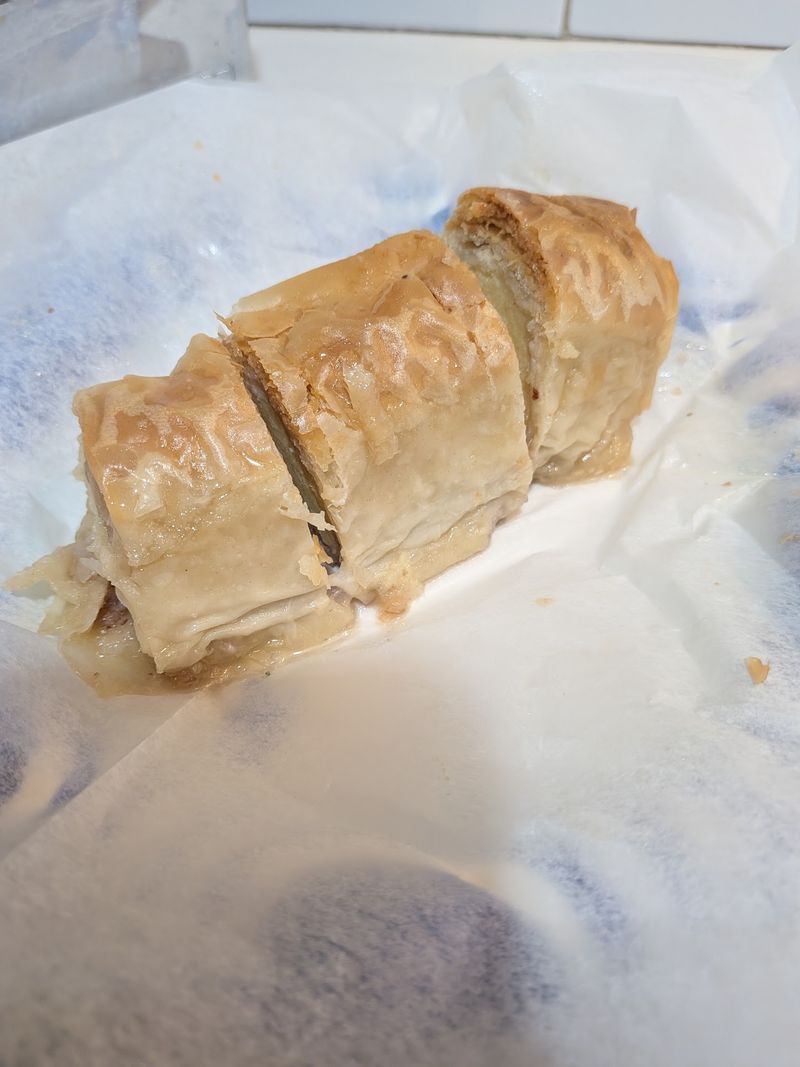
Most phyllo in America comes from a factory and lives in a freezer box. At Poseidon Greek Bakery, it starts as pizza-shaped slabs of dough on large tables in a dedicated back room.
Bakers dust the dough with cornstarch, then stretch it by hand until a newspaper underneath could be read through it.
The preparation takes hours and varies with the weather. Humidity affects how flour absorbs water, so the dough needs careful handling through different seasons.
The recipe itself uses flour, water, and salt. Damp cloths protect the delicate sheets as the bakers prepare the next batch. Poseidon is among the last American bakeries still producing phyllo by hand on this scale.
The bakery works through roughly 25 pounds of it a day, with the stretching starting late in the morning once the shop is already open.
The technique creates the layers that later turn into crisp pies and pastries. The recipe has not changed since 1923, when Demetrios Anagnostou brought the method over from Epirus in northwestern Greece and opened the shop.
Something that looks almost weightless has already demanded an extraordinary amount of work.
A Family Story That Started With One Baker From Epirus
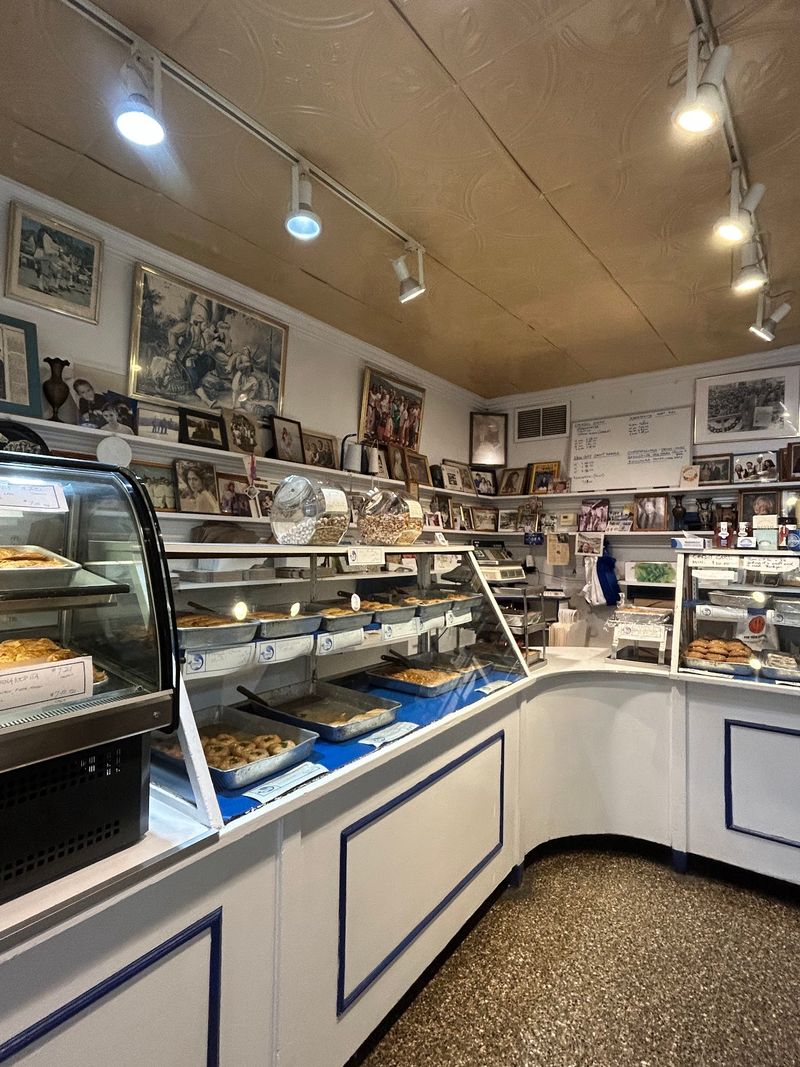
Back in 1923, Greek immigrant Demetrios Anagnostou opened a bakery in Manhattan. His pastry-making skills became a four-generation family business.
The shop originally operated near Eighth Avenue and West 41st Street. During redevelopment in the early 1950s, the family moved to its present Ninth Avenue address, purchasing the building that still houses the bakery. Several generations have lived in apartments upstairs.
The founder’s son continued the business, and the family expanded its baking traditions through his marriage to Menina Fable. Her Central European background brought Austrian strudel into a bakery devoted to Greek sweets.
The fourth generation now continues the hand-stretching practice, with the previous generation still involved in everyday operations.
The history is more than an anniversary on a storefront. It’s present in the recipes and the hands preparing them.
Ovens Older Than Most Buildings On The Block
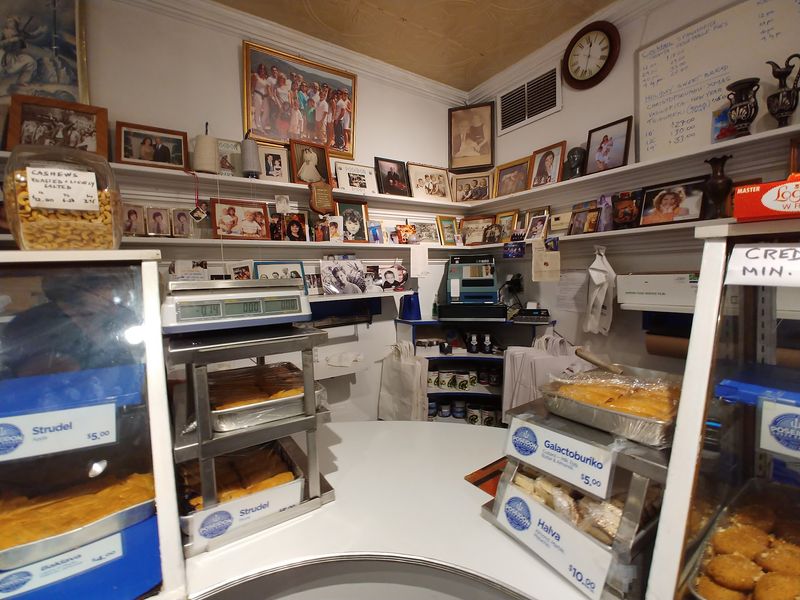
A 150-year-old oven. Read that again, because it’s real.
The original baker acquired that oven, and it remains in use more than a century after Poseidon first opened. Some of the other baking equipment has also served for generations. Those ovens still turn hand-stretched dough into everyday pastries.
There is a rhythm to baking with traditional equipment. The kitchen layers dough around savory fillings or sweet nuts, baking each tray until golden. The familiar machinery belongs to a working bakery, rather than a display of historic objects.
One oven is older than the business itself, which gives those pastries an unusual connection to the past. After so many years, the family knows how its equipment behaves and how its pastries should emerge.
Longstanding recipes, carefully stretched dough, and practiced timing come together in every tray. That’s a pretty remarkable job description for an oven.
Blue And White Charm On Ninth Avenue
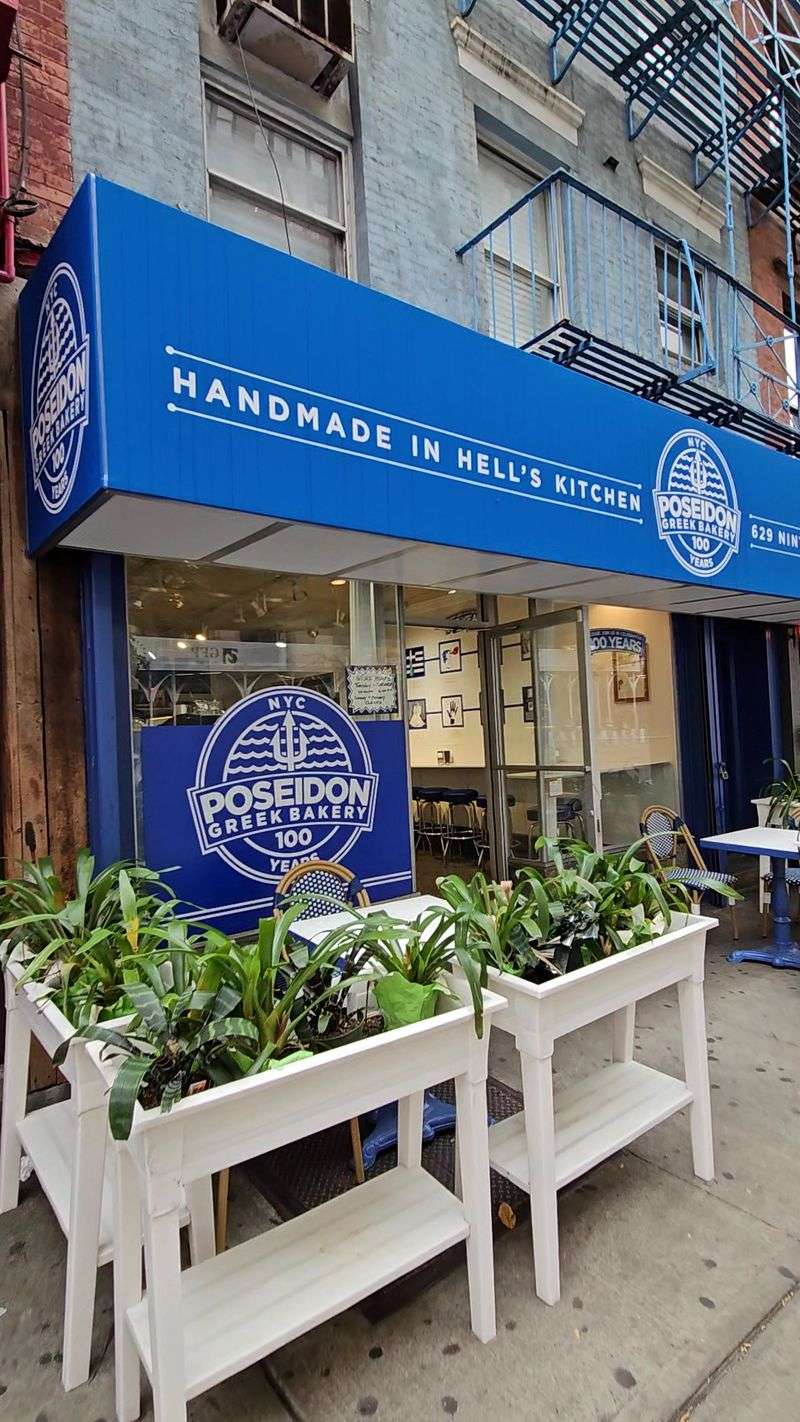
Spot the blue and white, and you’ve found it. Poseidon’s modest storefront wears classic Greek colors, a cheerful contrast to the busier shopfronts along the avenue.
The bakery now operates at 629 Ninth Avenue, New York, between West 44th and West 45th Streets. The family moved here in the early 1950s.
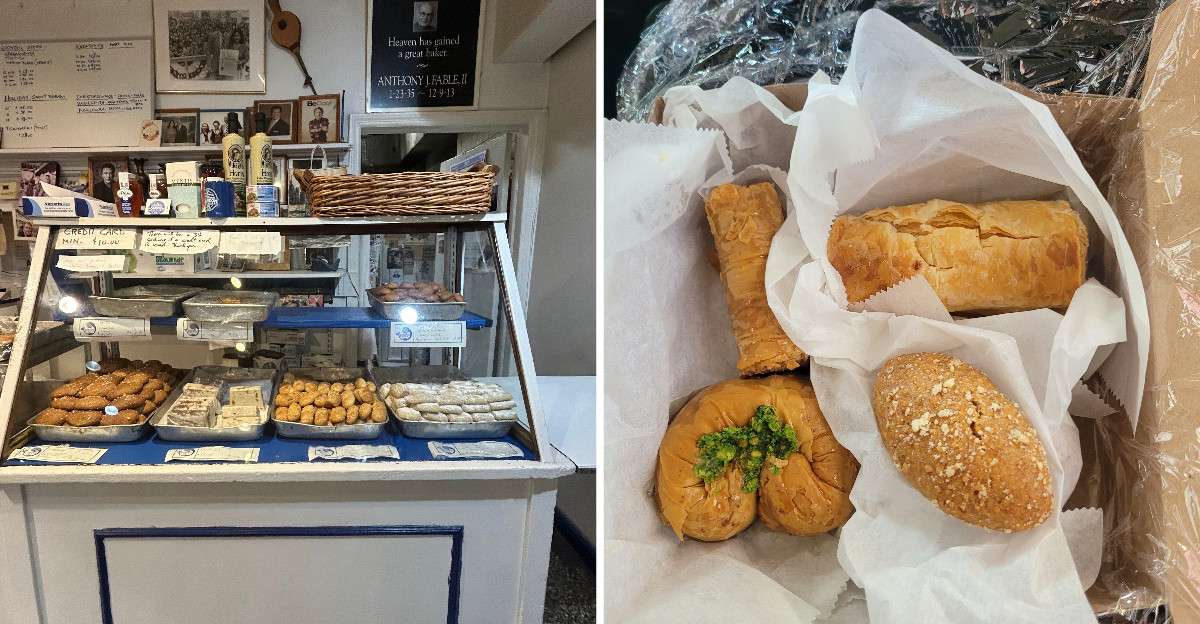
Inside, the shop is compact and unmistakably personal. Family photographs hang behind pastry cases filled with honeyed sweets and pies.
It feels like a neighborhood bakery first, with a century of history close at hand.
This isn’t a sprawling café with an elaborate dining room. The best approach is to browse the cases, choose something freshly baked, and take it with you.
A simple paper bag may contain a spinach pie, a slice of baklava, and a few cookies. It’s difficult to imagine a more appealing little bundle for a Manhattan walk.
Baklava Layers Worth Counting Twice
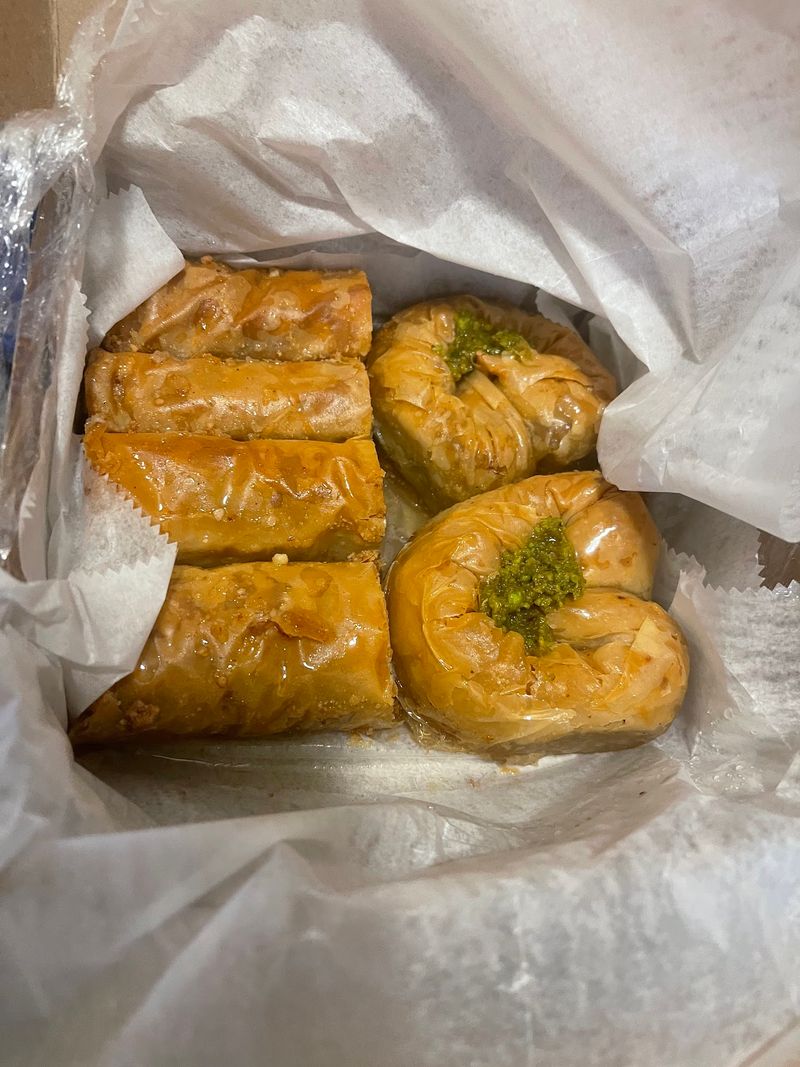
Here’s where all that hand-stretched phyllo really shows off. Baklava is one of Poseidon’s signature sweets, stacking delicate pastry around chopped almonds and walnuts before a generous finish of honey.
You can choose traditional pieces or saragli, the rolled version of baklava. Comparing the textures is especially appealing.
Afali adds pistachios to a circular pastry wrapped in phyllo and dipped in honey, while trigona brings almond paste inside a triangular shell. Each gives familiar ingredients a distinct shape and texture.
The bakery once prepared kataifi, an intricate shredded-pastry sweet, but production ended because of the work required. Each small batch required a full day. Plenty of other pastries still demonstrate the same devotion to careful construction.
Pick one with walnuts, another with pistachios, and something rolled if you’re having trouble deciding. The differences are most interesting when you sample them slowly rather than treating every honeyed pastry as interchangeable.
Savory Pies That Could Steal Your Lunch Plans
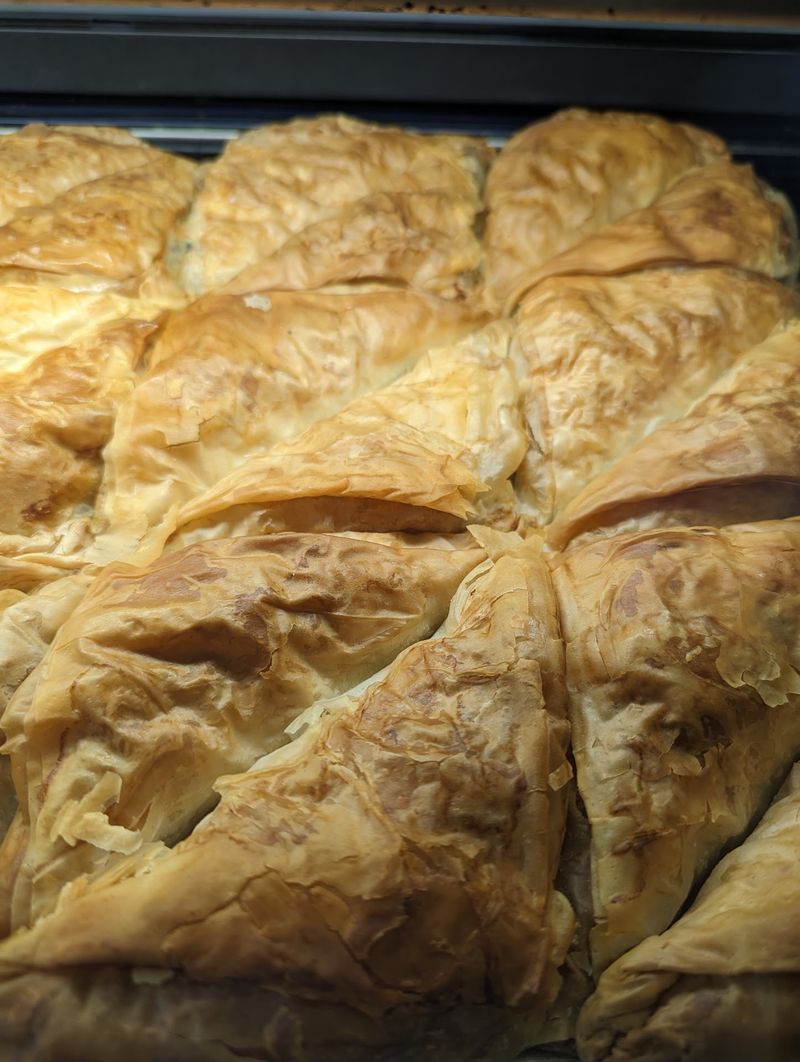
Sweet tooth taking a break? The savory pies here are serious contenders for your next lunch.
Spanakopita combines spinach and feta inside the bakery’s famously thin phyllo, creating a contrast between crisp outer layers and a tender filling.
Tiropita follows a cheesier path, bringing together ricotta, cream cheese, feta, and a touch of mint. Both make a satisfying midday meal.
Kreatopita fills the pastry with seasoned ground beef, while Menina’s Mash brings vegetables into the spotlight.
Named for a member of the baking family, that pie uses ingredients such as spinach, potatoes, and onions with savory seasoning. The recipe began as a way to serve the family more vegetables.
Try two different pies if you’re sharing lunch with a friend. Their fillings produce very different flavors, even though both begin with the same carefully made dough.
Here, the pastry is just as important as what’s folded inside it.
An Austrian Twist Hiding In A Greek Bakery
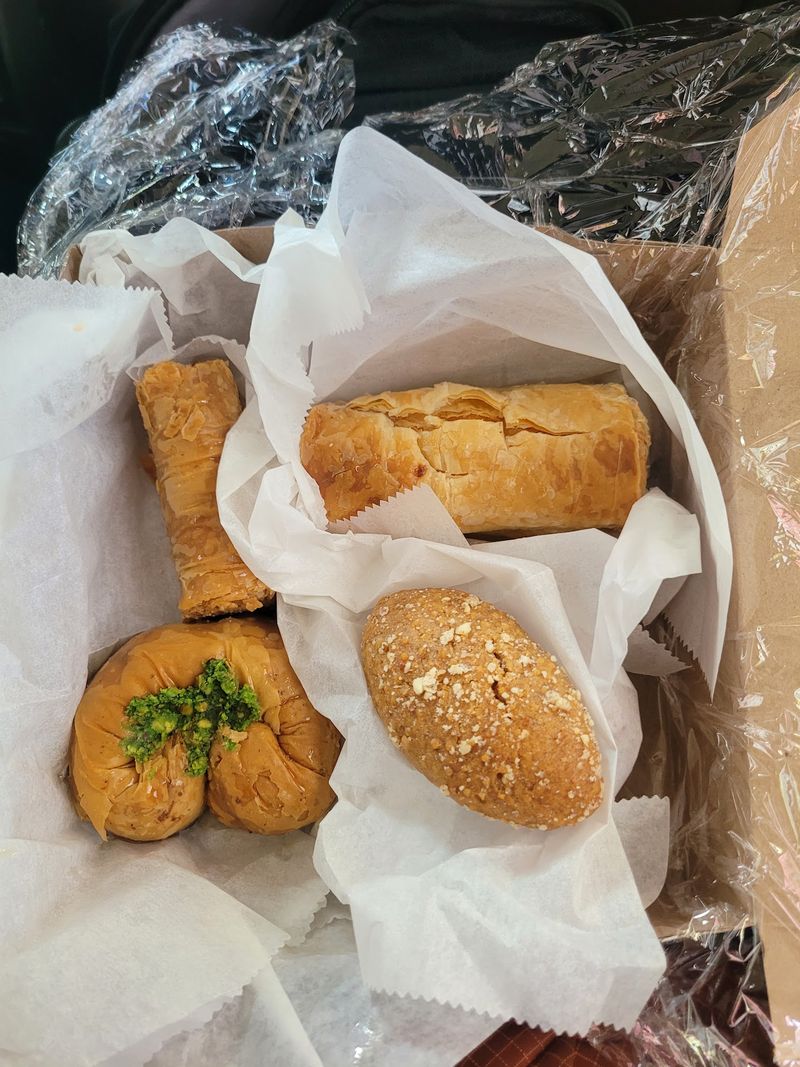
Strudel in a Greek bakery might sound like a plot twist. Blame Menina Fable, and thank her too.
Around 1940, she introduced Austrian strudel recipes to the family business, adding fruit and cheese fillings to the Greek pastries already coming out of the ovens. Her recipes explain why cherry strudel shares the counter with baklava.
The strudel assortment has included apple with raisins and cinnamon, apricot, cherry, and fruit paired with sweetened cheese. Pineapple-cheese and poppy seed varieties add further possibilities when available. Each uses the bakery’s delicate dough.
It’s a sweet example of how family recipes evolve without losing their roots.
A Greek pastry technique met an Austrian tradition in one New York kitchen, and the combination became a regular part of the business.
Choose a fruit filling if you want something tangy after the richness of honey and nuts.
A Custard Pie With A Little Extra Drama
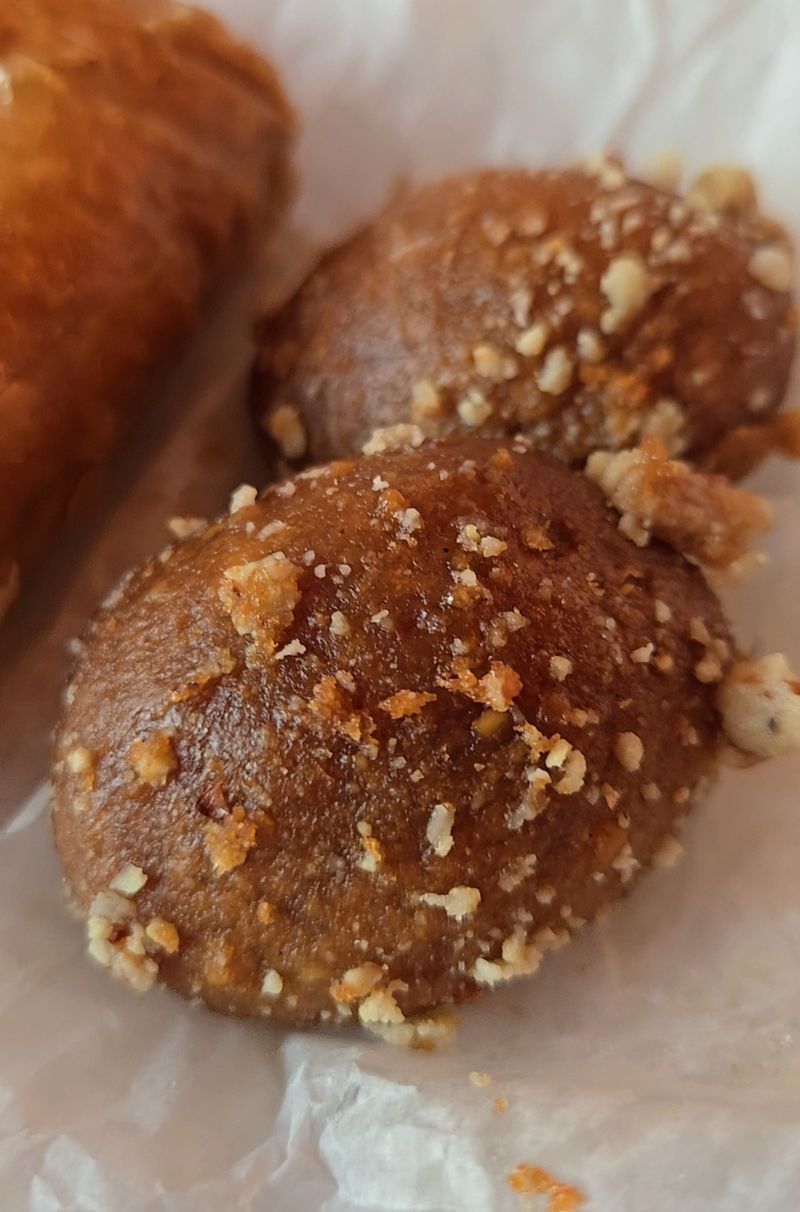
Galaktoboureko deserves a moment of its own. Beneath the crisp phyllo lies a soft semolina custard, giving this Greek sweet a completely different texture from the nut-filled pastries nearby.
The outer dough browns in the oven while the filling stays smooth. A sweet syrup finishes the pastry, bringing the crisp and creamy elements together. Choose it when custard sounds better than walnuts.
There’s something satisfying about a bakery that uses one handmade dough for so many different results.
With baklava, the thin sheets frame layers of chopped nuts. With a custard pastry, they hold a tender center. With strudel, they wrap fruit. The same dough takes on a different role each time.
For a small tasting, pair a piece of galaktoboureko with a rolled baklava. The two pastries share an origin in the same kitchen but deliver entirely different bites.
A Sweet Stop Steps From The Theater District
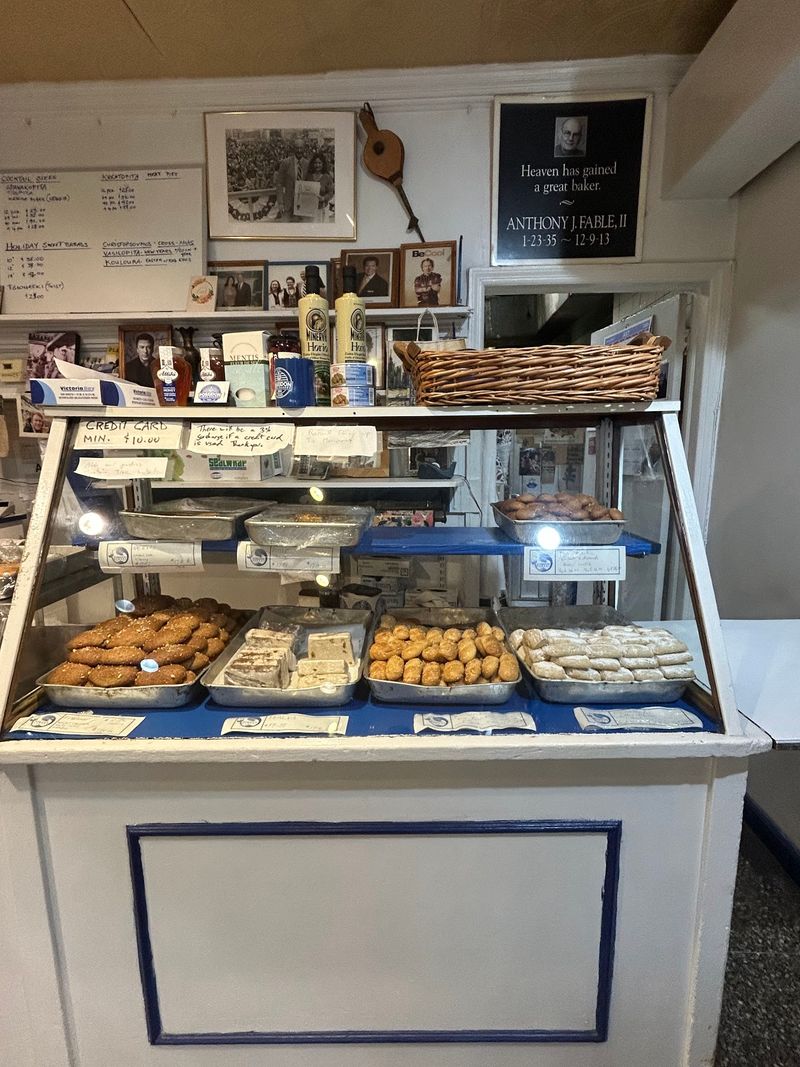
Long before Astoria became famous for Greek food, Hell’s Kitchen had a thriving Greek community.
Poseidon remains a tangible link to that neighborhood history, even as the surrounding blocks have filled with new restaurants, theaters, and shops.
The family helped establish the Ninth Avenue International Food Festival in 1973, bringing different local food traditions together in one street celebration. The bakery remains part of that local tradition.
Visiting is straightforward: doors are generally open Tuesday through Saturday from 10 a.m. until 6 p.m., with Sunday and Monday closed. Plan a daytime stop, not a late dessert run.
Ready-made pastries aren’t the only thing to buy. Poseidon also sells its freshly stretched phyllo for home cooking, making it possible to bring part of this New York tradition into your own kitchen.
A box of sweets is easy to finish; learning to use that extraordinarily delicate dough might be the more memorable souvenir.