This New York Spot Feels Like A Quiet Escape In The Middle Of Midtown Manhattan
Midtown Manhattan does not do quiet. It does not do slow.
It does not do still. So when I walked through those heavy bronze doors on Fifth Avenue, I was not ready for what was on the other side.
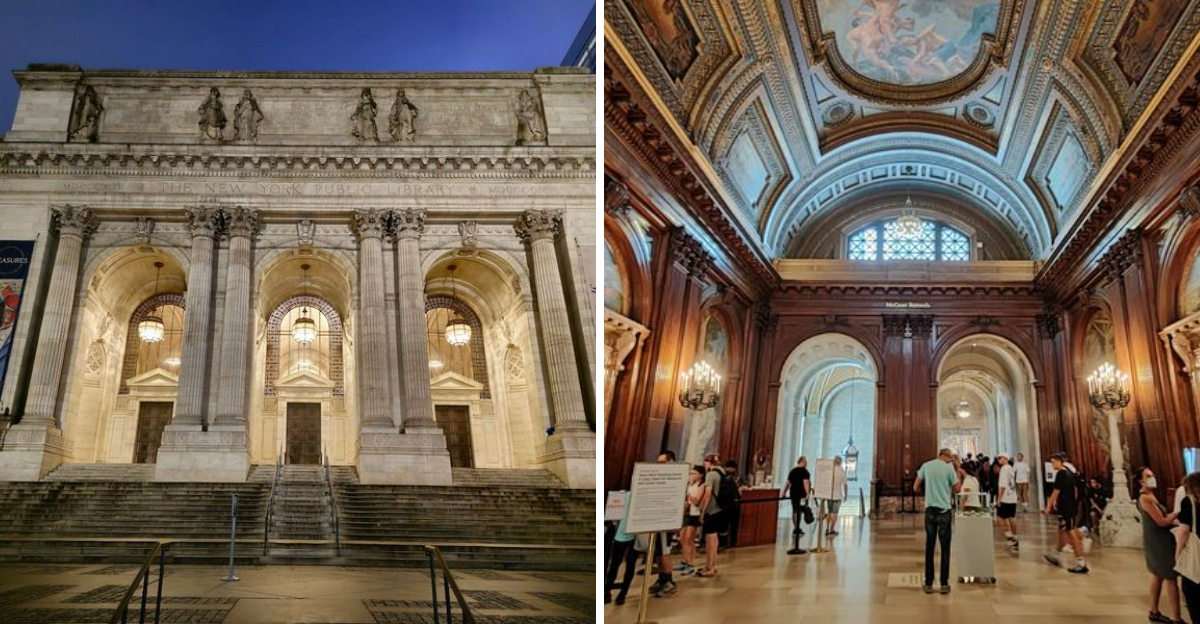
This place is the kind of spot that makes you forget the city even exists. Marble floors, ceilings that seem to belong to a palace, and a silence so thick you almost feel guilty breaking it.
New York State has given the world skyscrapers, Wall Street, and Broadway. But this building, sitting right in the heart of New York State’s most chaotic city, might be its most underrated gift.
Nobody warned me it would feel this good to just stand somewhere and breathe.
Patience And Fortitude Guard The Grand Fifth Avenue Entrance
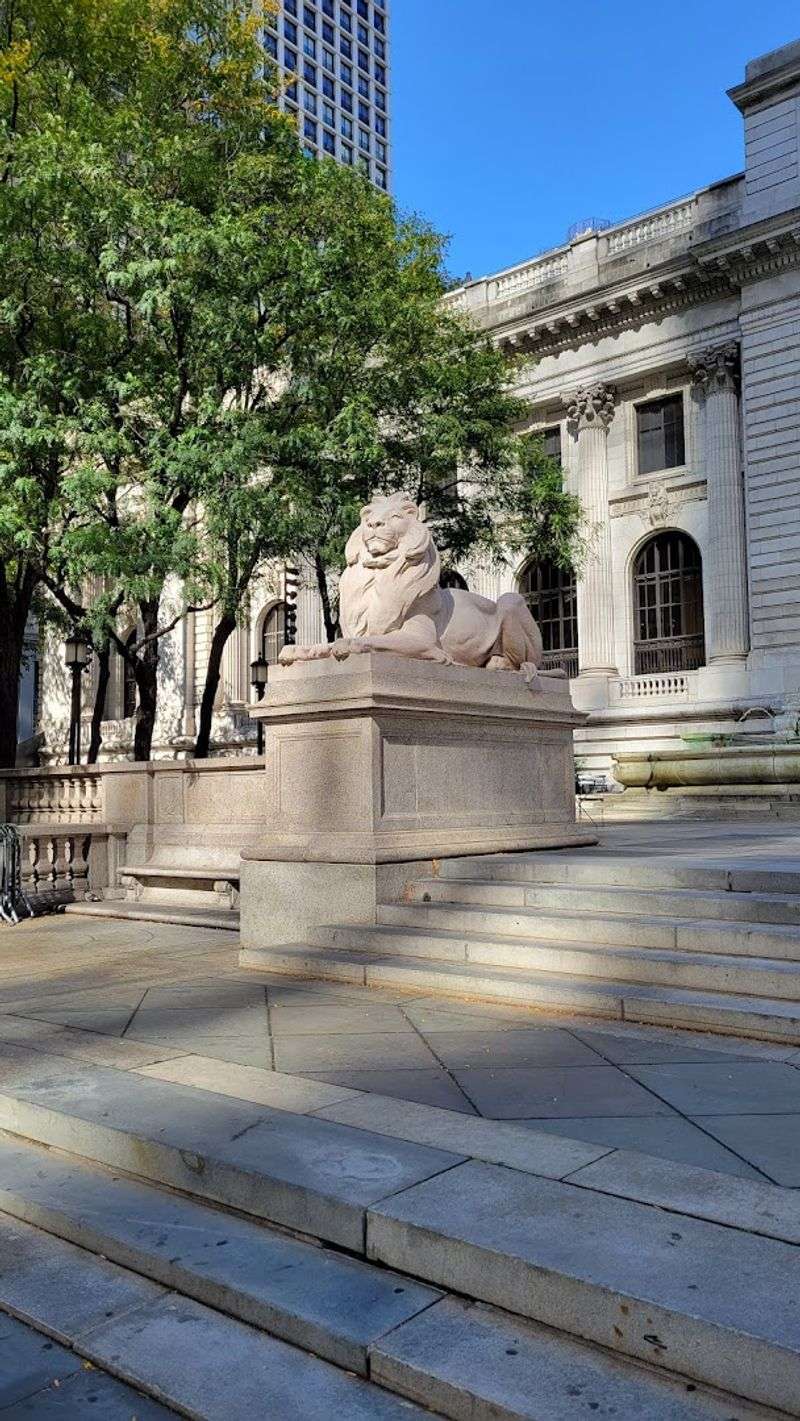
Two massive marble lions flank the steps, and they mean serious business. Their names are Patience and Fortitude, chosen by Mayor Fiorello La Guardia during the Great Depression.
He picked those names because he believed those were exactly the qualities New Yorkers needed to survive hard times. Sculptor Edward Clark Potter designed them, and the Piccirilli Brothers carved them from pink Tennessee marble.
That detail alone is worth stopping to think about.
Originally, the lions had different names. They were called Leo Astor and Leo Lenox.
The lions are dressed up for holidays too, wearing wreaths at Christmas and giant hats for special celebrations.
Standing beside them for a photo feels almost mandatory. They have guarded this building since 1911 and show no signs of stepping aside.
Every visitor who walks past them becomes part of a long, proud tradition of people seeking knowledge in this city. Few entrances in New York City prepare you quite like this one, and you will find these lions waiting at 476 Fifth Avenue.
A Beaux-Arts Masterpiece That Dominates Fifth Avenue
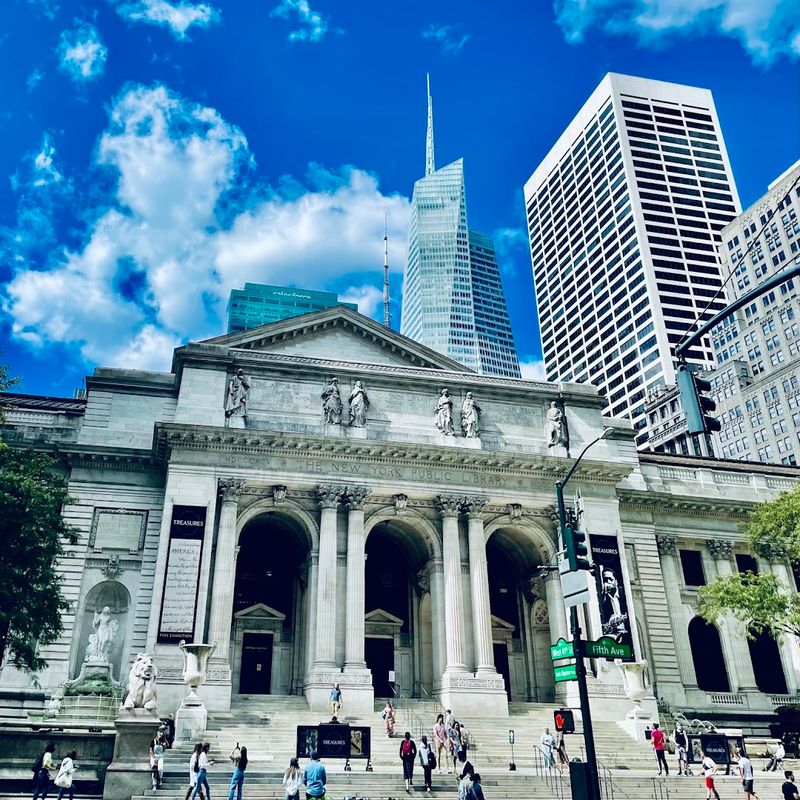
Not every building makes your jaw drop from the sidewalk. This one absolutely does.
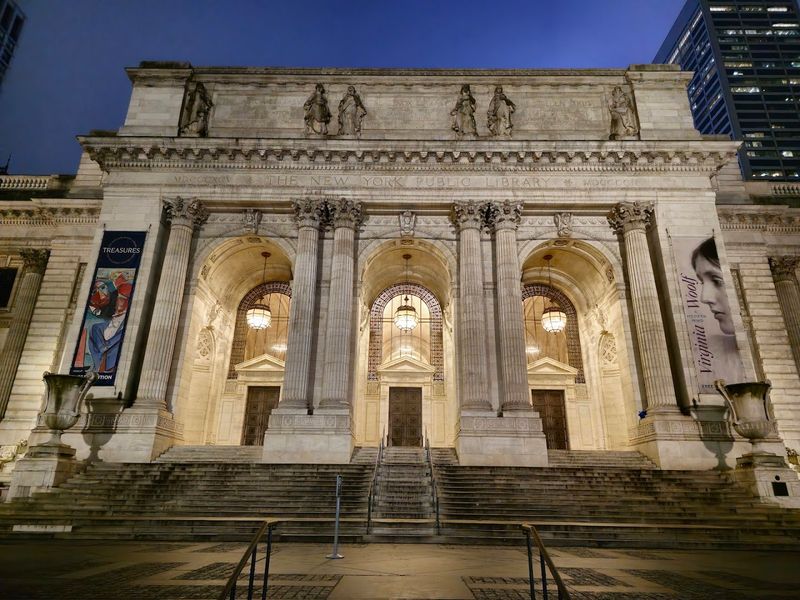
The Stephen A. Schwarzman Building is a masterpiece of Beaux-Arts design, completed in 1911 after 16 years of construction.
Architectural firm Carrere and Hastings designed every detail with intention. When it opened, it was the largest marble structure ever built in the United States.
That record held a long time, and the building still commands respect on the busy corner of Fifth Avenue and 42nd Street.
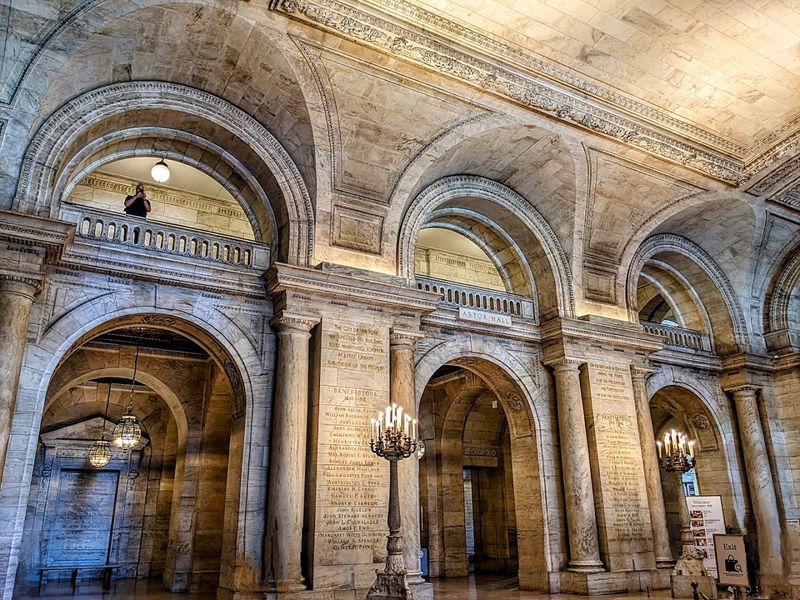
The grand staircase leads you upward with a sense of occasion. Stone archways frame the entrance dramatically.
Ornate carvings, towering columns, and carved fountains create a visual feast before you even step inside. It cost roughly nine million dollars to build, which was an enormous sum back then.
The building sits next to Bryant Park, making the whole block feel like a cultural anchor in Midtown. Photographers love this spot for obvious reasons.
Every angle offers something worth capturing. The architecture alone justifies the trip, even if you never open a single book inside.
The Magnificent Rose Main Reading Room
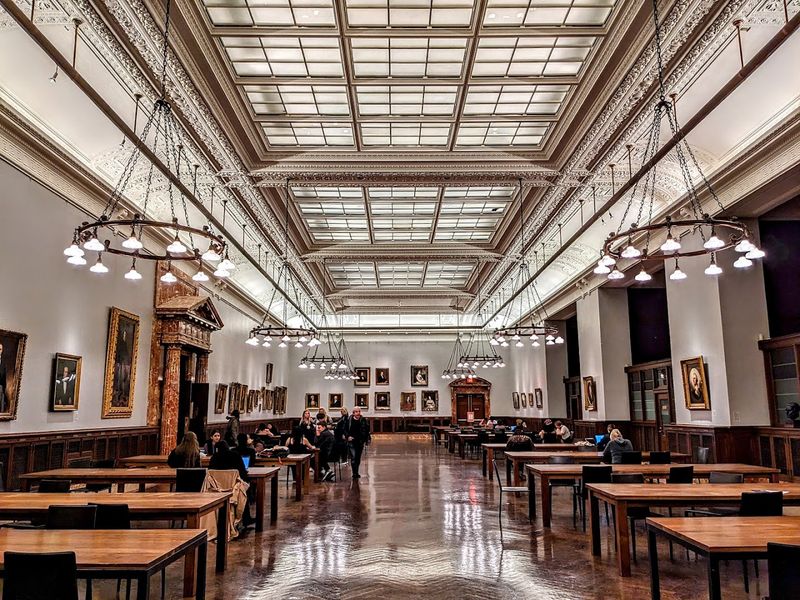
Nothing prepares you for the Rose Main Reading Room. The ceiling stretches 52 feet above you, painted with sweeping murals of clouds and sky.
It is nearly as long as a football field. Rows of oak tables run the length of the room, each lit by warm study lamps.
Massive arched windows pour natural light across the space. The scale of the room and its ceiling makes it one of the most impressive reading spaces in the city.
People come here to study, to research, and sometimes just to sit quietly and feel something. The atmosphere balances grandeur with calm in a way that is hard to describe until you experience it yourself.
Students, researchers, and curious visitors all share the space without friction.
The portraits hanging across the room are worth examining closely. Free guided tours offer access to this room along with fascinating historical context.
Arriving early on weekdays gives you the best chance at a peaceful seat. The room is open to visitors, though certain research areas remain restricted to those with specific library access.
The Library’s Remarkable History And Origins
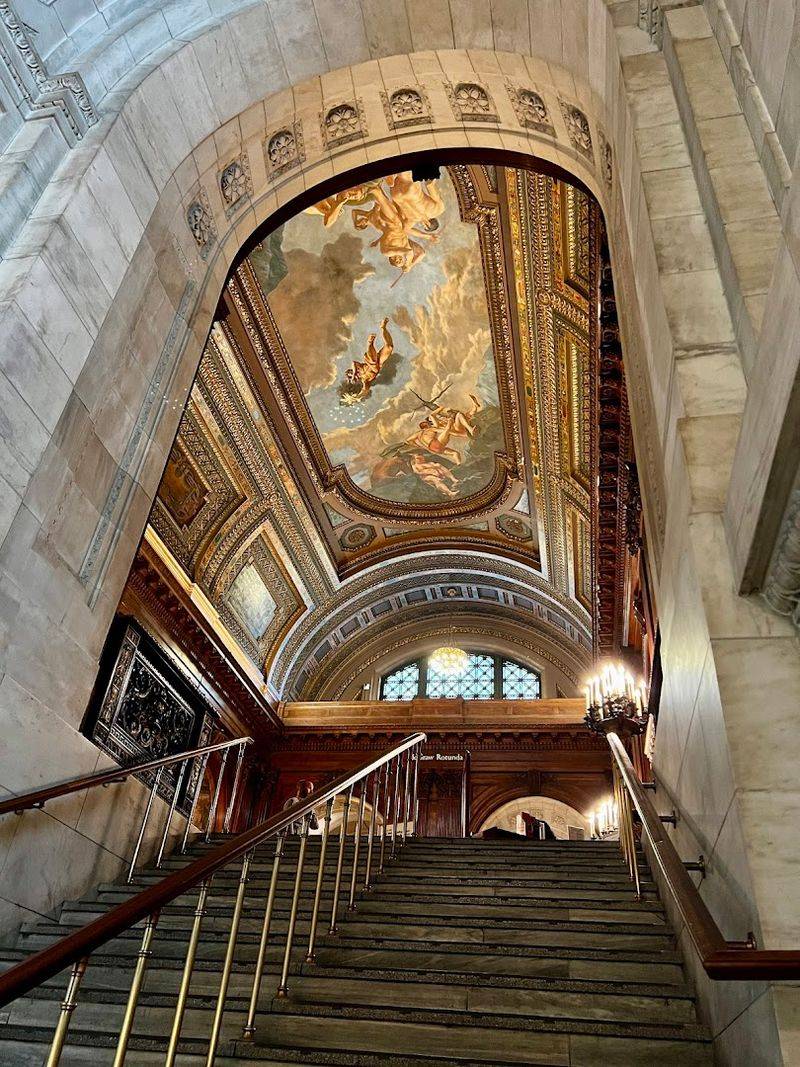
The story behind this building is as fascinating as the building itself. It all started in 1886 when Samuel J.
Tilden left a generous bequest to create a free library and reading room for the city. That single act of generosity changed everything.
The library system was officially formed in 1895. The main branch took years to plan and build before opening its doors on May 23, 1911.
Before the library existed, the site held the Egyptian-style Croton Distributing Reservoir.
The building was renamed in 2008 to honor philanthropist Stephen A. Schwarzman after a major donation funded significant restoration work.
The name change honored a financial commitment that helped preserve this landmark for future generations.
It is often called the 42nd Street Library by locals who have grown up alongside it. More than a century of visitors have passed through these doors seeking knowledge, refuge, and inspiration.
That continuous human thread running through the building gives it a weight and warmth that newer spaces simply cannot replicate.
Rare Treasures Most Visitors Never Expect To Find Inside

Most people expect books. They do not expect a Gutenberg Bible.
This library holds one, and it sits among a collection of rare items that rivals many dedicated museums around the world.
A fair copy of the Declaration of Independence is also housed here. That alone would make this place extraordinary.
But the collection goes further, including the original stuffed animals that inspired A.A. Milne’s Winnie-the-Pooh stories.
Seeing those little figures in person is genuinely moving, even if you are not someone who grew up with the books.
The Polonsky Exhibition of the Library’s Treasures is a free display that rotates remarkable items from the collection.
The library also maintains an entire section dedicated to the history of literature, offering a rich journey through human storytelling across centuries. These treasures are not locked away for scholars only.
They are presented thoughtfully for anyone curious enough to look. That open-access philosophy makes every visit feel genuinely rewarding.
Why You Can Walk In For Free And Stay For Hours
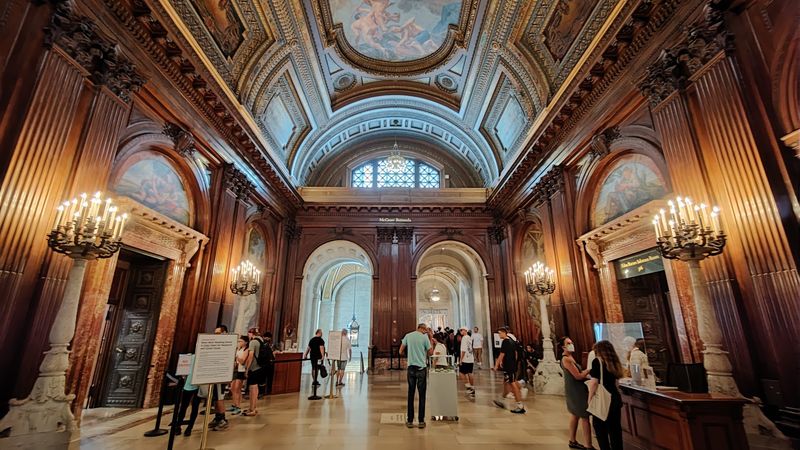
Paying nothing to enter one of the world’s great cultural landmarks feels almost too good to be true. Entry to the Stephen A.
Schwarzman Building is completely free for everyone. No ticket, no membership, no reservation required for a general visit.
Security checks bags at both the main entrance and the 42nd Street exit, so pack light if you can. The process moves quickly and the staff are welcoming throughout.
Once inside, three floors of stunning architecture and curated exhibits are yours to explore at your own pace.
Free guided tours are available and highly recommended for anyone who wants more than a self-guided wander. Tours cover the building’s history, architectural highlights, and key rooms including the Rose Main Reading Room.
Advance sign-up is required online for the main tour, so check the library’s official website before your visit.
Operating hours vary by day. Entry is free, and the library offers guided tours.
Since hours and tour details can change, it is best to check the official NYPL website before visiting.
The Quiet Corners That Make You Stay Longer Than Planned
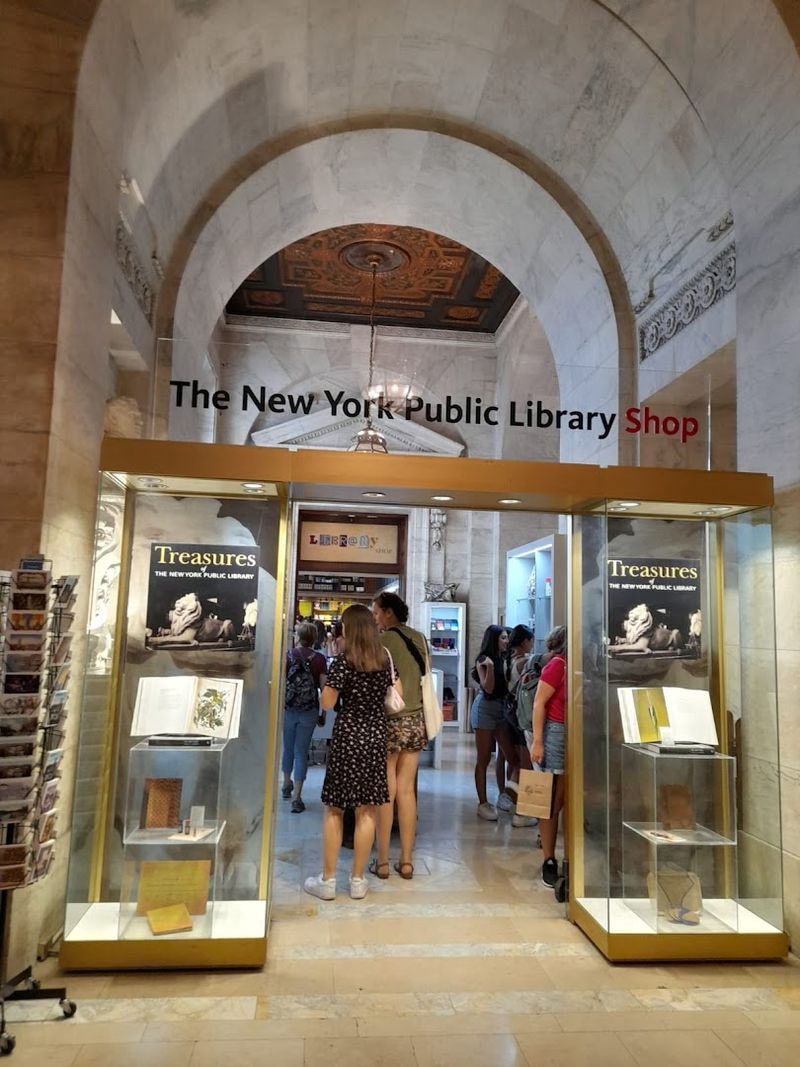
Surviving a long afternoon of architecture appreciation requires fuel, and this building has you covered. A ground-floor café offers a convenient spot to recharge without leaving the building.
It is small but thoughtfully placed, giving visitors a natural pause point in the middle of exploring.
The gift shop sits nearby and deserves more time than most people give it. Books, stationery, and library-branded items fill the shelves in a way that feels curated rather than commercial.
It is the kind of shop where you go in for a postcard and leave with a tote bag and three notebooks.
The building also includes practical comforts that make longer visits easier. Seating areas and open spaces give you room to slow down between rooms and exhibitions.
The overall layout makes it easy to explore at your own pace without feeling rushed.
The building is fully accessible, with accessible entrances available along 40th and 42nd Street. Bryant Park sits right next door, making it easy to combine both spots into one relaxed afternoon outing.
Pop Culture Fame And Famous Film Appearances
You have almost certainly seen this building on screen without realizing it. The Stephen A.
Schwarzman Building has appeared in some of the most recognizable films and television shows ever made. Ghostbusters filmed scenes here.
The Day After Tomorrow used it memorably. Breakfast at Tiffany’s captured its elegance decades ago.
Winnie-the-Pooh and Robin Hood have also been spotted in the building’s displays, as one enthusiastic visitor noted during their trip. The library’s combination of grandeur, history, and cinematic beauty makes it a natural magnet for filmmakers seeking an authentic New York backdrop.
Visiting with that film history in mind adds a completely different layer to the experience. Every grand hallway and marble staircase suddenly looks like a set waiting for its close-up.
The building earns its screen time honestly, because very few real-world locations look this dramatic without any set dressing at all.
A Rare Kind Of Quiet You Would Never Expect In Midtown
Finding genuine quiet in Midtown Manhattan sounds unlikely. But this building delivers it in a way few places in the city can.
The reading rooms carry a focused, steady energy that makes it easier to settle in and stay there.
The main study spaces are designed for long stretches of reading and research. Sitting under those painted ceilings, with natural light filtering through the tall windows, creates an atmosphere that encourages concentration without effort.
It is the kind of setting that keeps people coming back once they discover it.
Access to certain reading areas is managed to maintain a quiet, productive environment for researchers and visitors alike. That balance between openness and structure helps preserve the calm that defines the space.
The building is well-lit throughout, which makes longer visits more comfortable. Seasonal decorations add a subtle layer of charm during the holidays, without taking away from the building’s historic character.
For students, remote workers, or anyone looking for a few hours of calm in a remarkable setting, this library offers something that feels increasingly rare in the middle of the city.