This North Carolina Basilica Hides A 350-Year-Old Spanish Masterpiece Beneath North America’s Largest Elliptical Dome
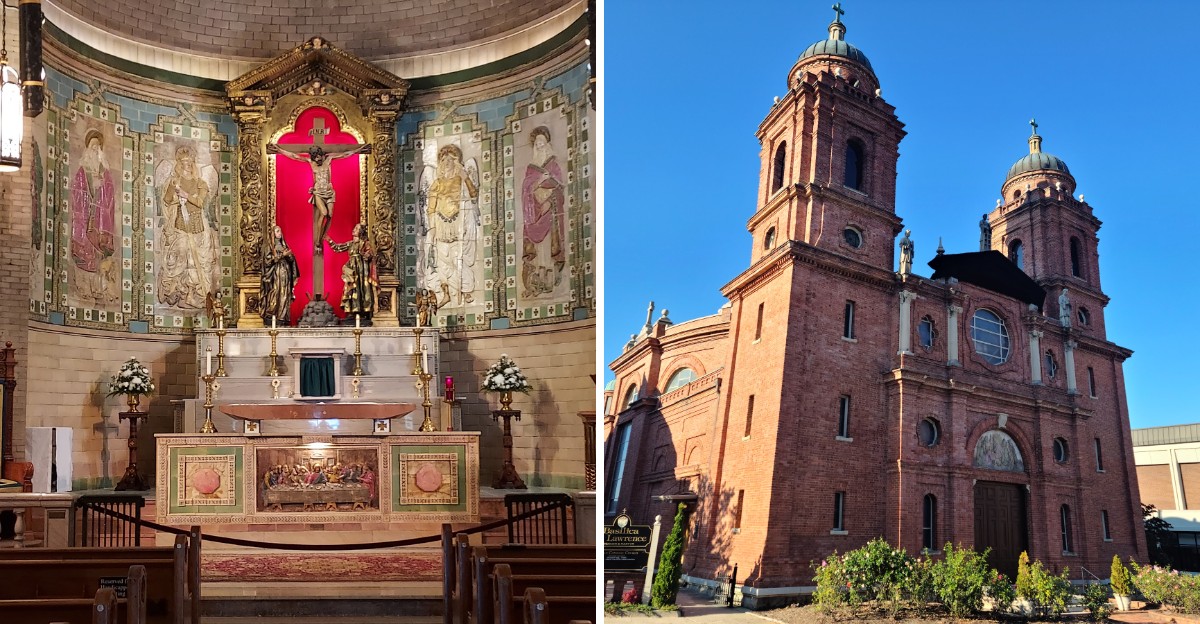
The architect behind this church became so attached to it that his story never really left the building.
That detail pulled me in before I even looked up.
Above the sanctuary, a massive oval dome stretches 58 by 82 feet without wood or steel beams holding it together.
Instead, layers of tile and mortar do all the work.
I’m fascinated by how something that looks so delicate can support itself on that scale.
Then there is the centuries-old Spanish artwork waiting beneath it.
The North Carolina church recently reopened after major restoration work returned attention to its remarkable dome and roof.
Visitors can once again step inside for free guided tours.
For me, the first instinct would be simple.
Walk in, look straight up, and try to figure out how that ceiling is still standing.
Look Up And Try To Find The Beams (Spoiler: You Won’t)
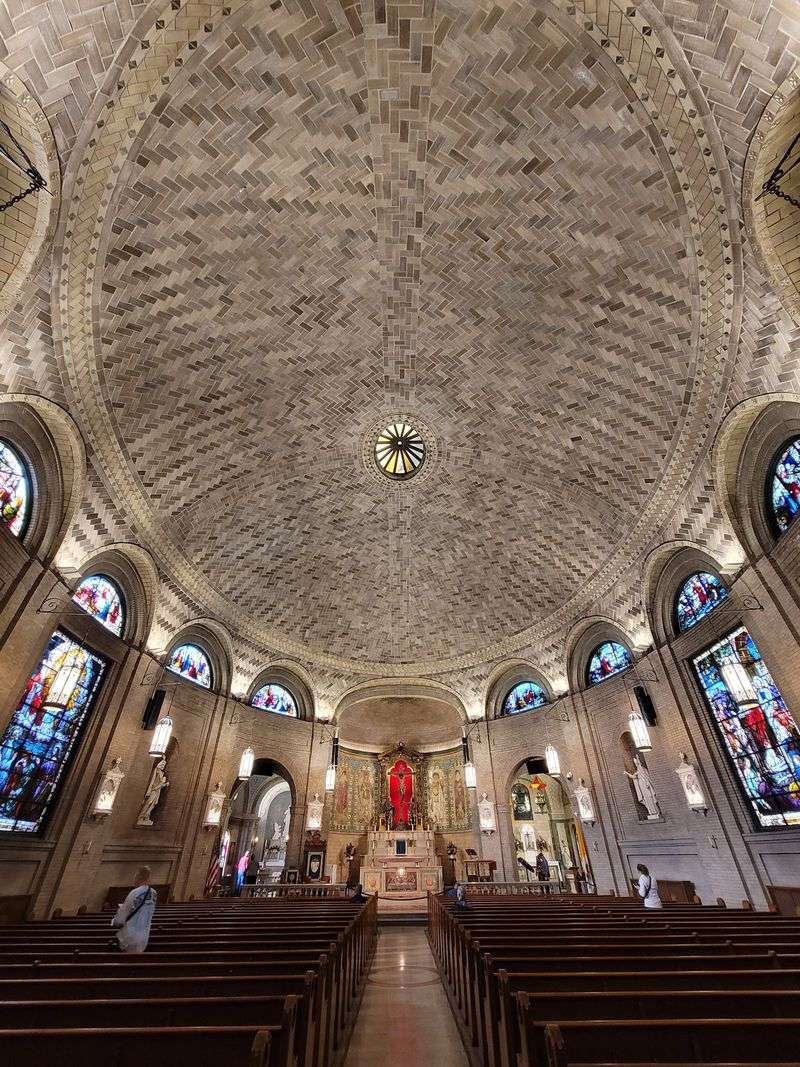
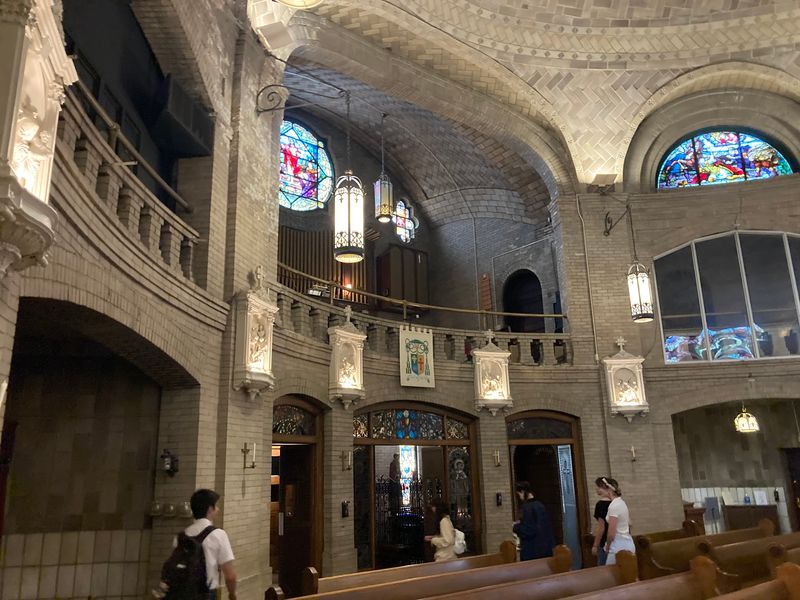
Fifty-eight feet by eighty-two feet. That’s the clear span of the oval dome crowning the Basilica of Saint Lawrence, Deacon and Martyr.
It holds the title of largest freestanding elliptical dome in North America. Even better, nothing hidden is propping it up.
The builders skipped wood and steel beams entirely. The dome’s layered tile-and-mortar construction supports its enormous curved ceiling without the wood or steel beams found in more conventional buildings.
That system came from Rafael Guastavino, a Spanish architect who made it famous across the country. He worked with Richard Sharpe Smith to design the church in a Spanish Renaissance Revival style.
Here’s a fun way to appreciate it. Stand near the center and tilt your head back slowly.
Your brain keeps searching for support, and it keeps coming up empty. The curve simply carries its own weight, like a giant eggshell made of clay.
Construction ran from 1905 to 1909. More than a century later, that tile shell still stands strong in downtown Asheville.
Bring a little patience to this moment. The longer you look, the more the pattern of the tiles starts to reveal how the trick works.
A Spanish Carving Older Than The United States Waits Inside
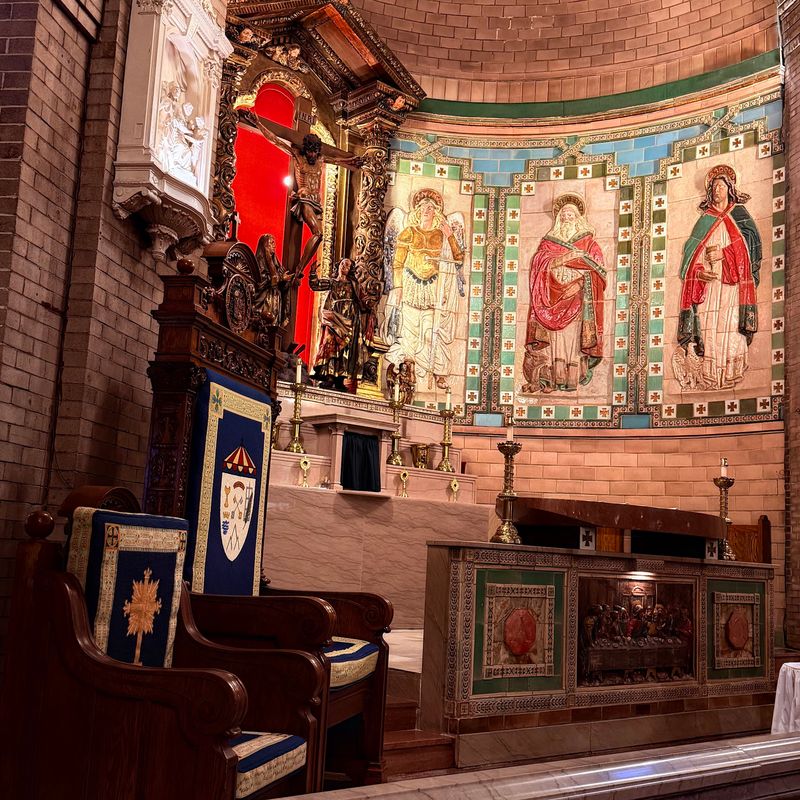
Long before anyone laid a single tile in Asheville, a Spanish woodcarver was hard at work. The result now rests beneath that famous dome.
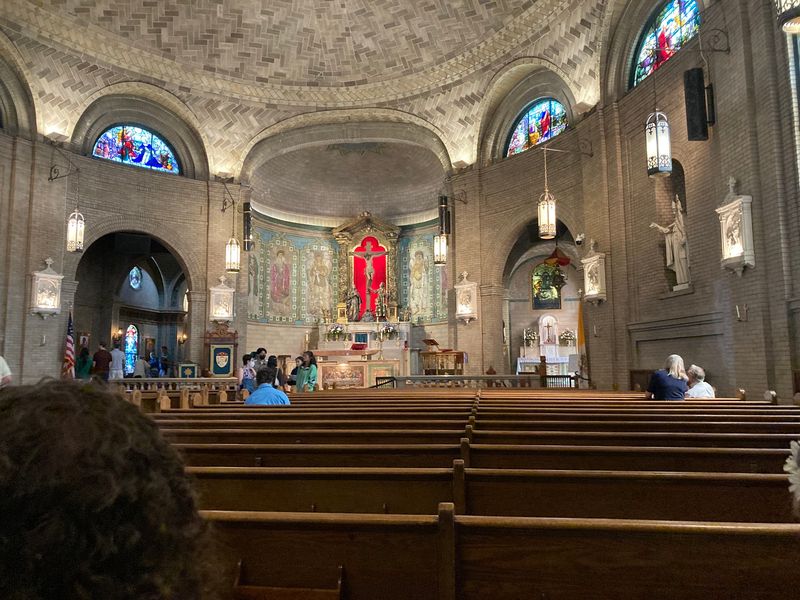
The piece shows the Virgin Mary and John the Apostle mourning at the Crucifixion of Christ. It’s described as a rare and fine example of Spanish wood carving from the middle 17th century.
Do the math, and that puts it at roughly 350 to 370 years old. It predates the founding of the United States by more than a century.
I love how this carving connects the building to its Spanish roots. Guastavino came from Spain, and so does this treasure.
When you find it, slow down a bit. Wood carving from this era took serious skill, since one wrong cut couldn’t be undone.
Look at the faces and the way the figures hold themselves. Grief is hard to show in stone, and even harder in wood.
It’s a quiet piece in a grand room. That contrast makes it easy to miss if you rush, so give it a few honest minutes before moving on.
Finding this place is refreshingly easy. The basilica stands at 97 Haywood St, Asheville, NC 28801, right in the downtown core.
That location means you can fold a visit into a day of exploring the city. No long mountain drive is needed once you’re in town.
The Architect Never Really Left
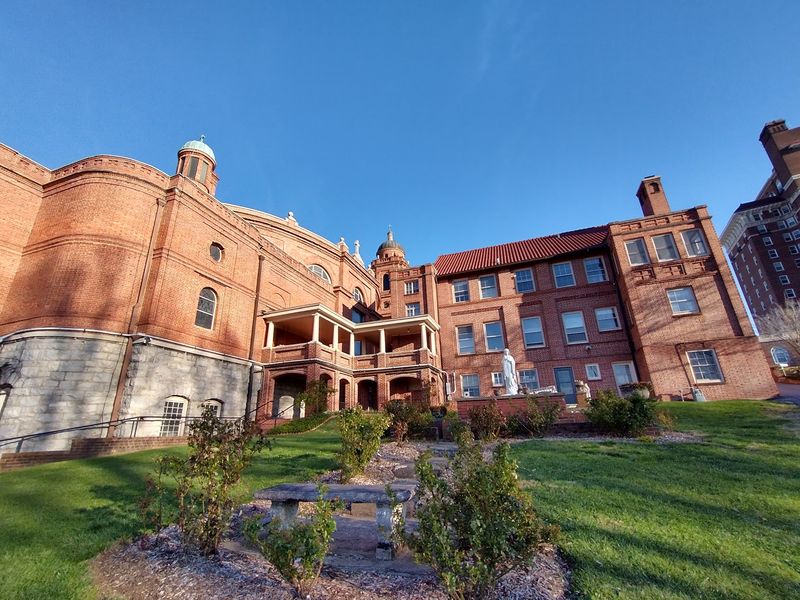
Most architects hand over the keys and move on to the next job. Rafael Guastavino chose a different ending.
He is interred right inside the Basilica of Saint Lawrence, Deacon and Martyr. Talk about believing in your own work.
Guastavino was a Spanish builder whose tile vaulting appears in famous buildings around the country. He also worked on projects at the nearby Biltmore estate.
Still, this Asheville church is where he chose to rest. That says a lot about how much the project meant to him.
Knowing this changes the visit a little. You aren’t just admiring a building, you’re standing inside one man’s proudest statement.
Take a moment to find his resting place during your tour. The guides and the self-guided brochure can point you in the right direction.
It’s a gentle reminder that great design often comes from deep personal care. Guastavino trusted his tiles to hold up a massive dome.
Apparently, he also trusted them to hold his legacy. Over a century later, both are still doing their job beautifully.
Fresh Copper, Clear Skylight, And A Big Comeback
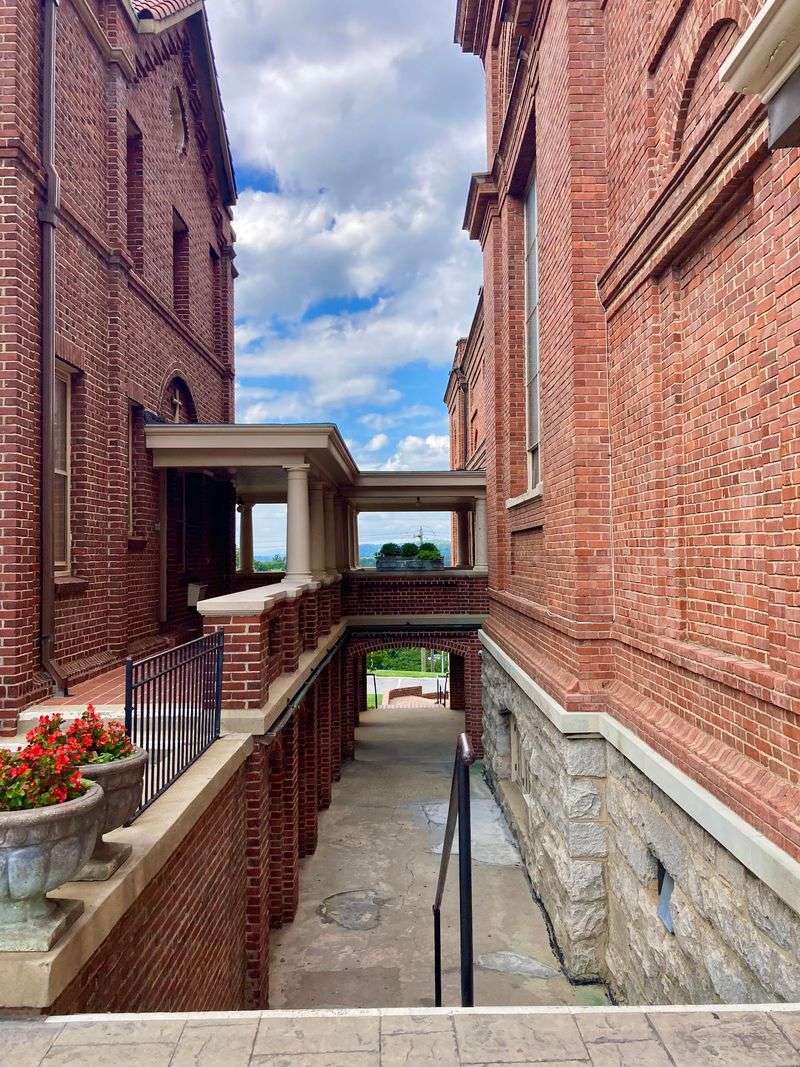
Nearly eight million dollars went into the first phase of restoration. That’s a lot of care for one dome.
The basilica reopened after finishing Phase I of a major project. Crews replaced the copper-clad roof on the elliptical dome and restored its oculus skylight.
The work didn’t stop at the top. New storm drains, gutters, and cornices went in, and the masonry got stabilized.
Those aren’t flashy upgrades, but they matter enormously. Water is the quiet enemy of old buildings, and this one now has better defenses.
The oculus is the round opening at the dome’s peak. With it restored, daylight can pour into the space the way the designers intended.
Visitor access has returned following the restoration, with designated hours for exploring the basilica’s remarkable interior. Free self-guided tours are available, and visitors interested in a guided experience can contact the parish about arrangements.
I find comebacks like this genuinely exciting. A community decided this building deserved another century, and then made it happen.
If you visited years ago, a return trip makes sense now. You’ll see the dome looking better cared for than it has in a long time.
Statues From Italy And Glass From Germany Share The Spotlight
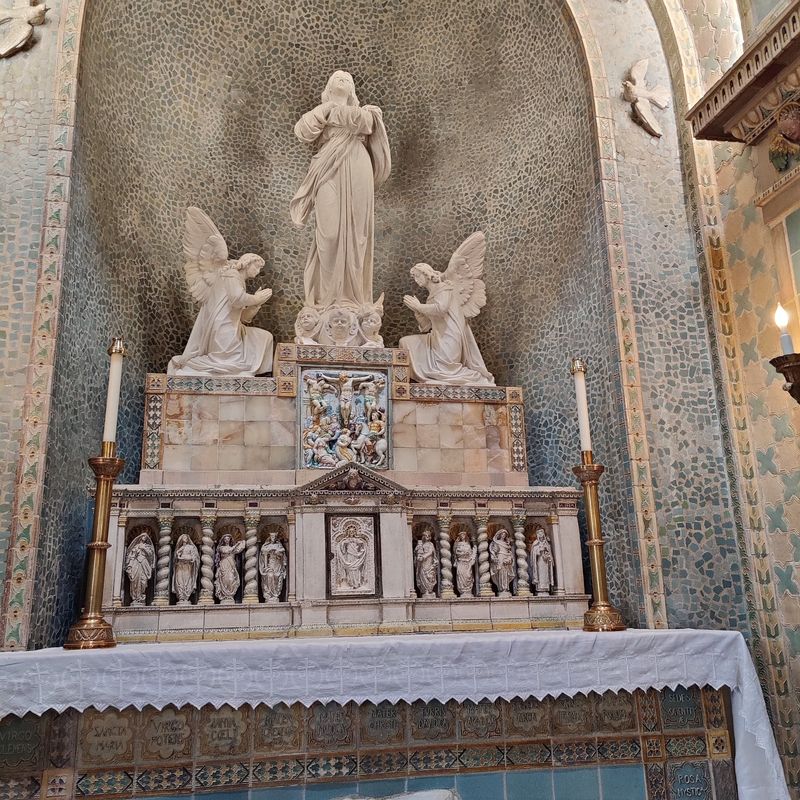
Spain gets plenty of credit here, but it isn’t the only country represented. The art collection inside reads like a quick trip across Europe.
Statues throughout the church were made in Italy by the Daprato Statuary Company. Each one adds a calm, steady presence to the room.
Then there’s the stained glass. Many of the elaborate windows came from Munich, Germany, a city known for this kind of craft.
On a bright day, those windows turn sunlight into color. It’s a simple effect, yet it never seems to get old.
A smart move is to walk the edges of the room slowly. Many visitors focus only on the dome and miss the detail at eye level.
Look for the stories told in each window. Stained glass was once a way to teach scenes from scripture to people who couldn’t read.
There’s also a 17th-century painting called The Visitation. It’s believed to be the work of Italian painter Massimo Stanzione.
So yes, you can tour three European art traditions in one Asheville afternoon. No passport required.
Tennessee Marble Brings The Altar Close To Home
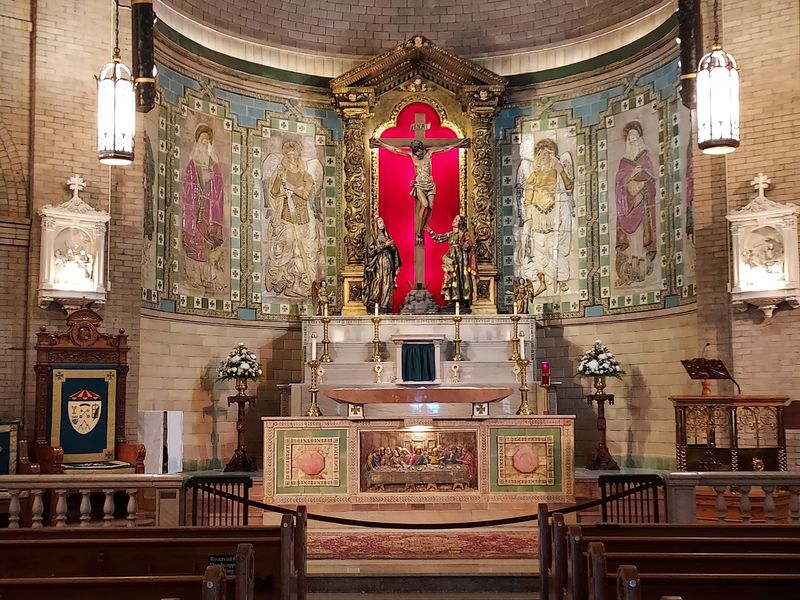
After all that European art, here’s a local twist. The high altar is crafted from Tennessee marble.
That stone came from just over the mountains. It gives the church a regional connection right at its center.
Tennessee marble has a long history in American buildings. Builders prized it for its rich tones and polished finish.
Seeing it here makes a nice point about the whole project. Spanish design, Italian statues, German glass, and Southern stone all work together in one room.
The altar sits at the heart of worship, so treat this area with respect. If Mass or prayer is happening, admire it quietly from a distance.
For the best view, check the timing of your visit. Coming outside of services gives you more freedom to look closely.
I like that the most important spot uses material from nearby. It feels grounded, almost like the mountains got a seat at the table.
Give the altar a careful look before you leave. The craftsmanship rewards anyone willing to slow down for a minute or two.
Free Tours Make You Sound Smart At Dinner Later
Self-guided or guided? Happily, both options are on the table at the Basilica of Saint Lawrence, Deacon and Martyr.
Brochures for self-guided tours wait in the side vestibule. Grab one and explore at your own pace.
Prefer a real person explaining things? Contact the parish ahead of time to ask about guided tour arrangements and availability.
A guide can point out details your eyes would skim right past. Tile patterns, art origins, and the architect’s story all come alive faster that way.
Some practical advice helps here. Visiting hours can be specific, so check the schedule before you go.
It’s also smart to contact the parish ahead of time about guided tours. The parish office is open Tuesday through Friday, from 9 AM until noon.
Remember that this is an active church first. Keep voices low, and step aside respectfully if a service is underway.
By the end, you’ll know exactly how a dome stays up without beams. That’s a fun fact worth sharing over dinner in town.
Join A Mass And Hear The Dome Do Its Thing
Touring is wonderful, but this building was made for worship. Attending Mass shows you the space doing exactly what it was built to do.
The Saturday Vigil Mass begins at 5 PM. On Sunday, English Masses are at 9 AM and noon, with a Spanish Mass at 4 PM.
Weekday Masses offer several opportunities to experience the basilica’s beautiful interior. Services take place Monday and Wednesday at 5:30 PM, while Tuesday, Thursday, and Friday Masses begin at 8 AM.
Weekend services include the Saturday Vigil at 5 PM, Sunday English Masses at 9 AM and noon, and Spanish Mass at 4 PM.
Visitors from any background can appreciate the setting respectfully. Simply follow along quietly and enjoy the sense of history around you.
Schedules can change around holidays and special events. Checking with the parish before your trip is always a wise idea.
The Spanish Mass is a lovely touch, given the church’s Spanish design roots. It ties the present community to the building’s story in a meaningful way.
Arrive a little early if you can. Those spare minutes let you take in the dome before the service begins.
Downtown Asheville Puts This Landmark Within Easy Reach
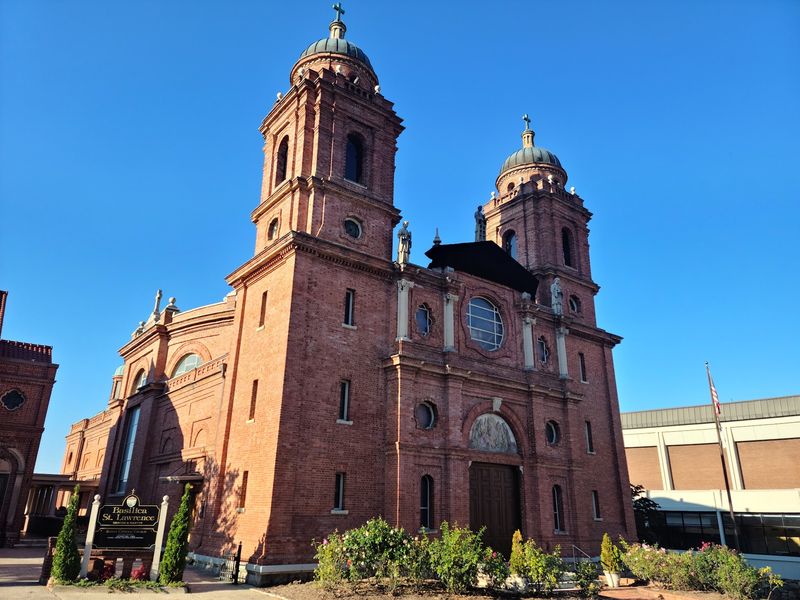
It also carries real bragging rights for North Carolina. The church is the only basilica in the western part of the state.
Pope John Paul II elevated it to a minor basilica in 1993. Years earlier, in 1978, it joined the National Register of Historic Places.
Those honors are a big deal. Only a small number of churches in the country hold basilica status.
Parking downtown can take some planning. Give yourself extra time, and look into nearby paid lots or street parking options.
Wear comfortable shoes, since you’ll likely want to keep walking afterward. Downtown Asheville is packed with places to wander.
For a North Carolina trip with real history, this stop earns its spot. Few buildings anywhere can match a beamless dome and a centuries-old Spanish carving under one roof.