This North Carolina Beach Is One Of The Few Places You Can Hunt For Ancient Sea Biscuits
Most beachcombers hope for a perfect shell.
Here, you could accidentally pick up something that has been waiting around since the dinosaurs had the place to themselves.
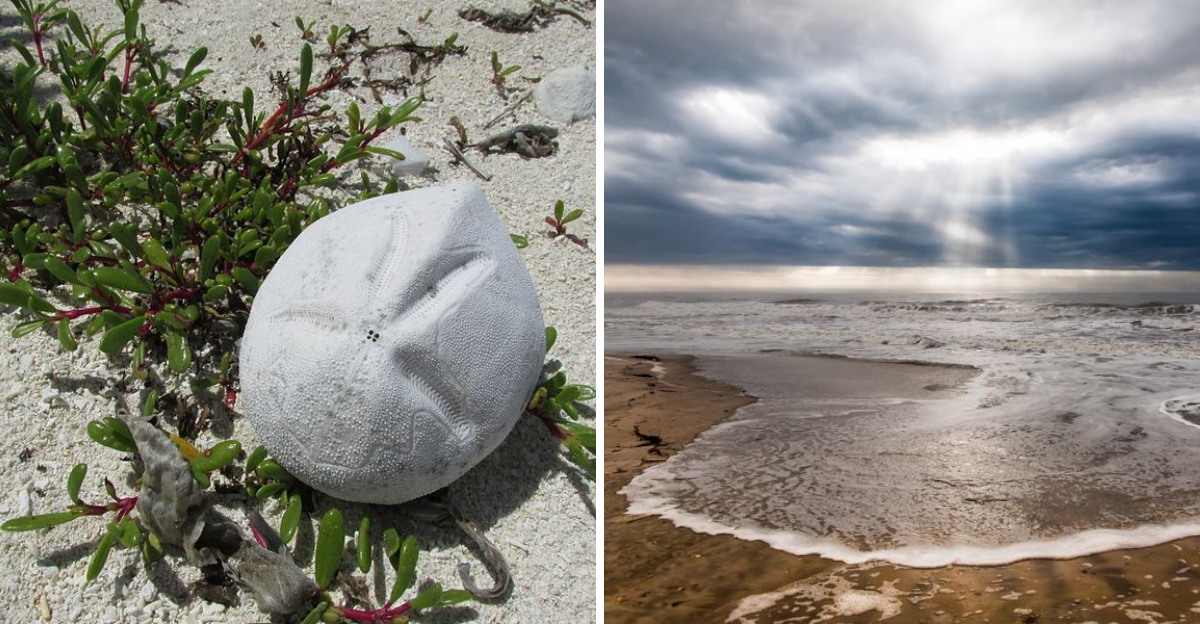
Along one stretch of the North Carolina coast, strange stone-like objects marked with delicate star patterns sometimes appear in the sand. They are fossilized sea biscuits, ancient relatives of sand dollars that once lived on a seafloor unimaginably older than today’s shoreline.
That makes an ordinary walk near the water feel suspiciously like a treasure hunt.
A wave rolls back, something unusual catches the sunlight, and suddenly bending down to inspect the sand seems far more important than whatever the rest of the day had planned.
Storms and beach nourishment can help bring these fossils within reach, but finding one still requires sharp eyes and a little luck.
The ocean apparently has a junk drawer.
Every so often, it opens it.
Start Near The East End Where Fossil Finds Turn Up Most Often
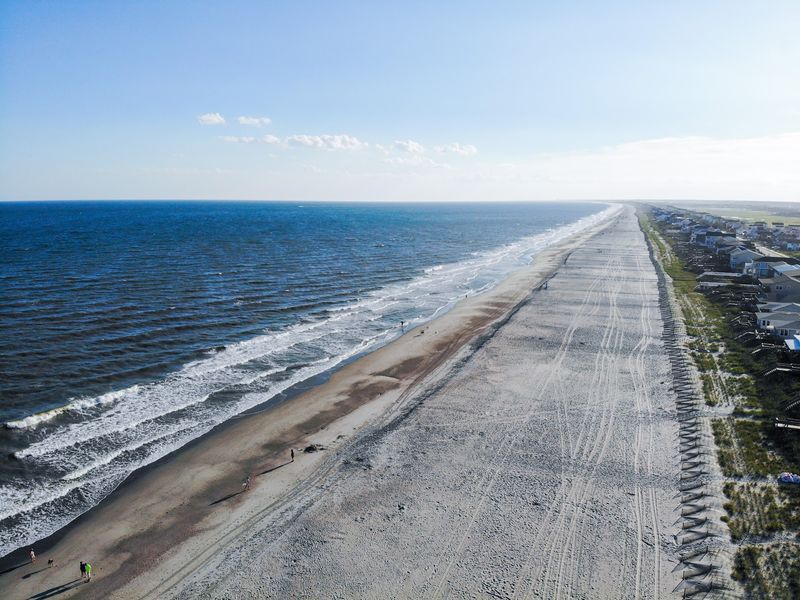
Currents do the sorting work here, and the eastern end of the island is where they drop the heaviest finds. Walk toward Lockwood Folly Inlet and you step onto a natural sifting ground, a place where moving water separates light sand from dense shell and stone.
The inlet pushes and pulls with every tide cycle, reshaping the beach face overnight. A stretch that looked picked clean yesterday can be layered with fresh material by breakfast.
That constant turnover is why regular hunters return to the same few hundred yards again and again.
Wade into ankle-deep water near the inlet and scan the bottom, since sand dollars often settle where the wash slows. Water shoes help, because broken shell gathers thickly in this zone and the footing shifts under your heels.
Parking along the eastern streets of Holden Beach is limited, so early arrivals get both a space and a quiet ribbon of North Carolina shoreline.
Plan on an hour of unhurried walking rather than a brisk lap. Crouching pays off more than covering distance, and this end of the island serves up shell lines worth studying closely.
You Can Spot The Star-Shaped Pattern Before You Even Pick One Up
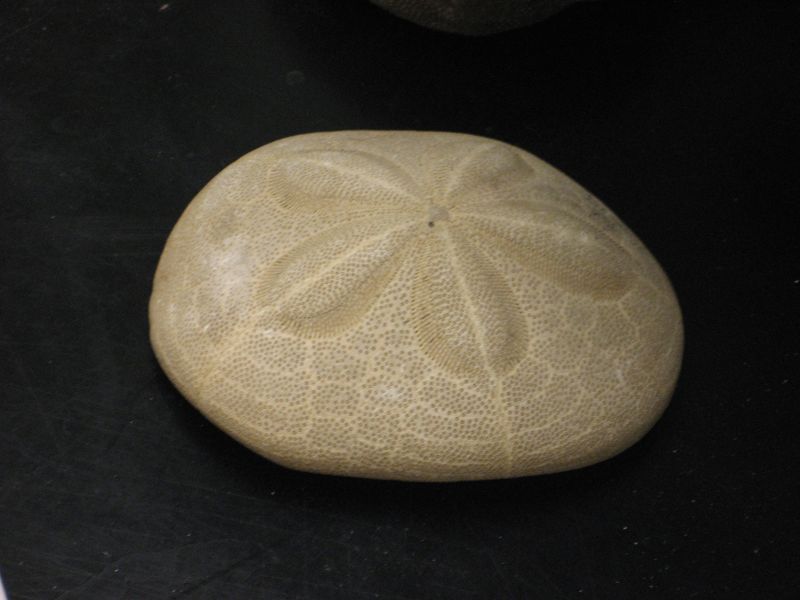
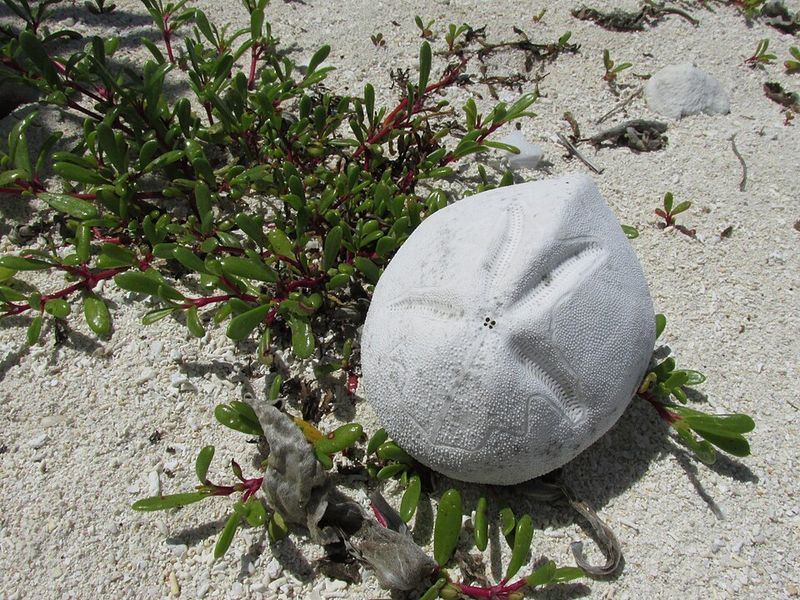
Fossil hunters learn to read texture before they notice color. An ancient sea biscuit sits in the shell line looking rounder and thicker than everything around it, shaped like a small stone cookie someone dropped in the sand.
Weight gives the fossil away the instant you lift it. Modern sand dollars feel papery and break with a squeeze, while these old echinoids carry a rock-like heft, smooth and dense, tinted like wet concrete or weathered bone.
Study the upper surface and a five-petaled star appears, a flower pattern pressed permanently into stone. That symmetry once helped the living animal breathe and feed while it burrowed through soft seafloor mud.
The species turning up most often along this shore is Hardouinia mortonis, an extinct relative of today’s sea urchins. Its sturdy build is exactly why it survived tens of millions of years while thinner shells crumbled away.
Once you have held a single specimen, your eye recalibrates fast. A half-buried curve suddenly looks obvious among broken clam shells and smooth gray pebbles, and the next find usually comes much quicker than the first.
Walk The Waterline At Low Tide For Your Best Chance
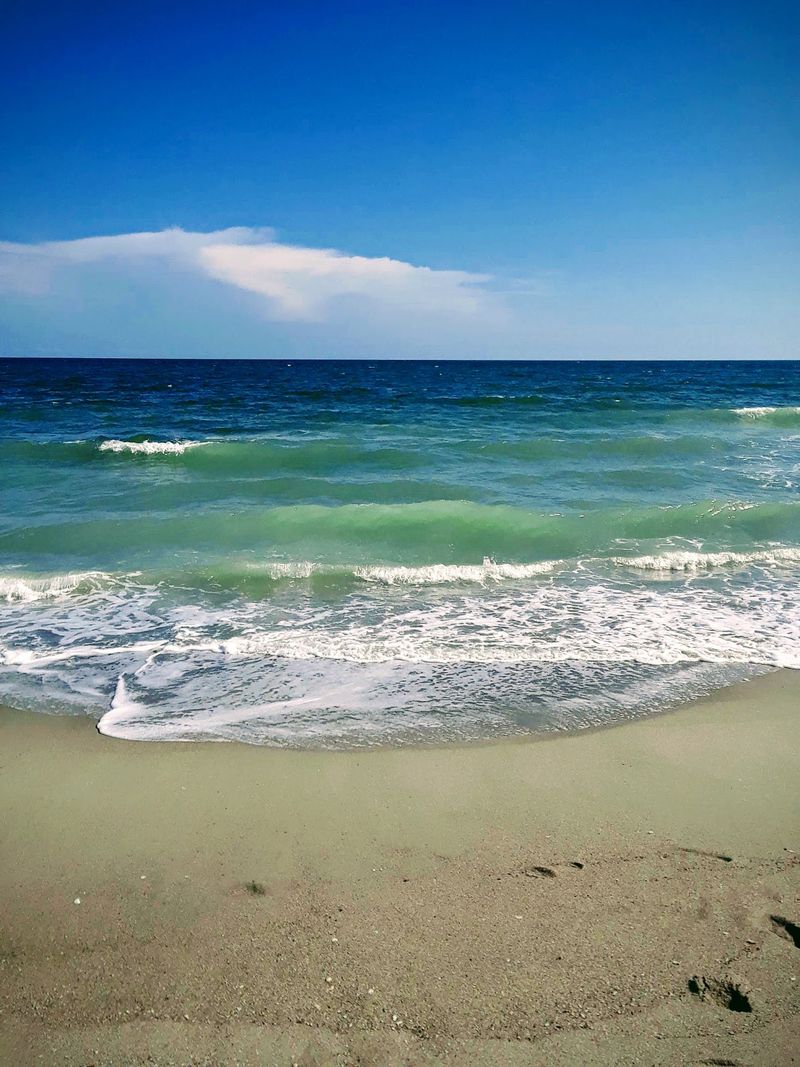
Tide charts are the fossil hunter’s best planning tool, and they are free on nearly any weather app. Aim to be on the sand an hour before low tide and stay through the hour after, which gives you a wide window of freshly drained beach.
As the water retreats, it leaves long ribbons of shell, gravel, and fossil fragments along the waterline. Those ribbons act like a treasure map, marking exactly where heavy material settled out of the wash.
Walk slowly with the sun at your back so shadows highlight shapes instead of flattening them. Sunrise trips reward you with cool air, quiet sand, and low light that makes rounded fossils stand out.
Late evening works nearly as well, especially in summer when families head off for dinner and the sand empties out. Fewer footprints mean fewer disturbed shell beds.
Watch the returning tide once you turn back toward your access point, because shallow sloughs near the inlet refill quickly. A dry route out is not always a dry route home.
Keep a rinse bucket in the car, since a quick freshwater soak brings out the pattern on every fossil you carry off.
Check Around The Pier When Fresh Shell Beds Appear
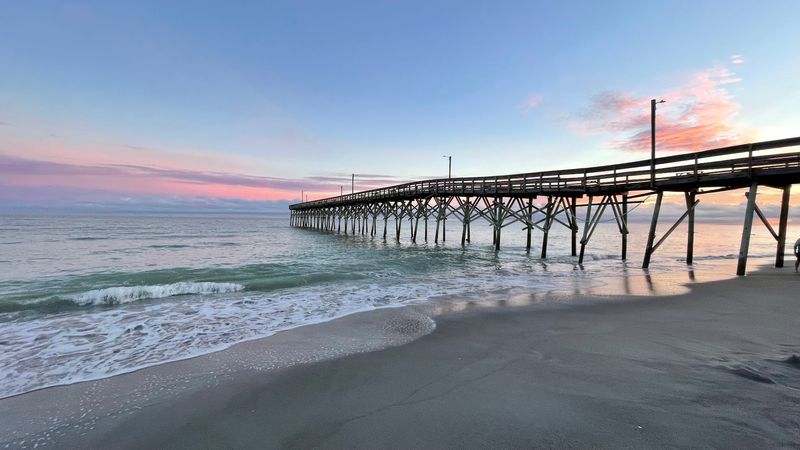
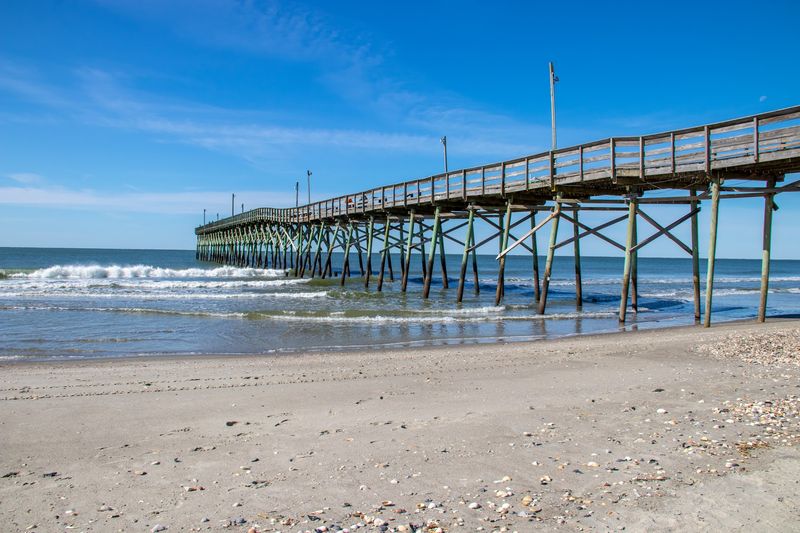
The beach around Holden Beach Pier remains one of the better-known spots for searching for fossilized sea biscuits, even though the pier itself is closed to the public in 2026.
Moving water around the structure can sort shells, fragments, and heavier material into concentrated patches along the shoreline. Those coarse beds of broken shell are worth examining closely because fossils and shark teeth can blend surprisingly well with the surrounding debris.
Low tide usually exposes more beach and gives you a larger area to search. Instead of scanning only from standing height, crouch beside promising shell beds and work through the material slowly.
Fossilized sea biscuits can be partly buried or disguised among similarly colored shell fragments.
This stretch receives plenty of foot traffic, so obvious surface finds may disappear quickly. A patient search through one productive patch can be more rewarding than covering a long distance at a fast pace.
Because Holden Beach Pier is closed due to structural concerns, stay outside all restricted areas and do not walk beneath or enter the pier structure. Concentrate your search on the accessible public beach nearby instead.
An early low tide can be especially pleasant, and sunrise adds a pretty good reason to set the alarm before everyone else reaches the sand.
Look Closely After Rough Surf Brings New Treasures Ashore
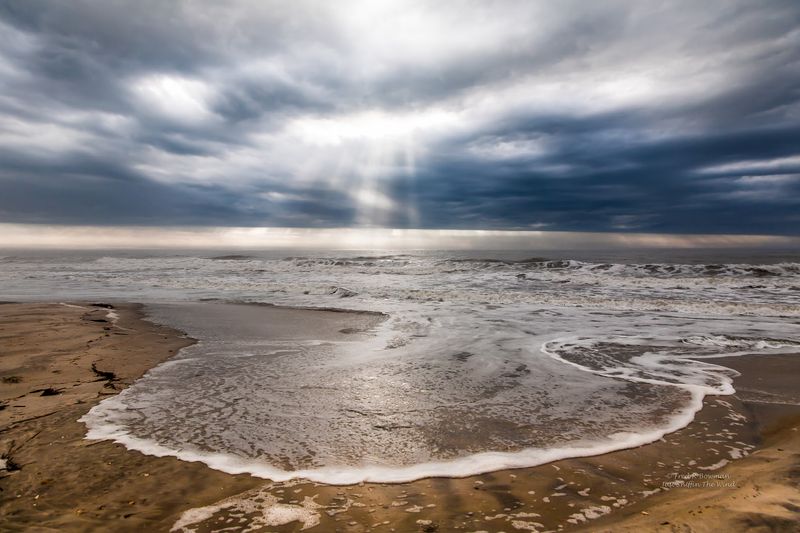
Storms rearrange this coastline in ways no calm week ever will. Heavy surf churns the seafloor, tearing into ancient sediment layers and lifting material that has been buried for ages.
Waves then carry that loosened debris shoreward and stack it in fresh windrows along the beach. The result is a brand new surface to search, often within a single day.
Beachcombers who watch the forecast know that the mornings right after rough weather can be extraordinary. Shell lines run deeper, heavier, and far more varied, with fossil fragments mixed among everyday clams and cockles.
Winter offers some of the best odds of all. Strong December systems have blanketed the beach with sediment from the Peedee Formation, the fossil-bearing layer that sits offshore, and discoveries spiked in the days that followed.
Safety comes first, of course. Wait until conditions settle, skip any area with strong runouts or crumbling dune edges, and keep young searchers well back from the swash.
Dress warmly, pack a thermos of something hot, and treat a blustery gray morning as prime hunting time rather than a wasted trip. Bundled-up walkers often have the whole beach to themselves.
Bring A Small Bag Because You May Find More Than Sea Biscuits
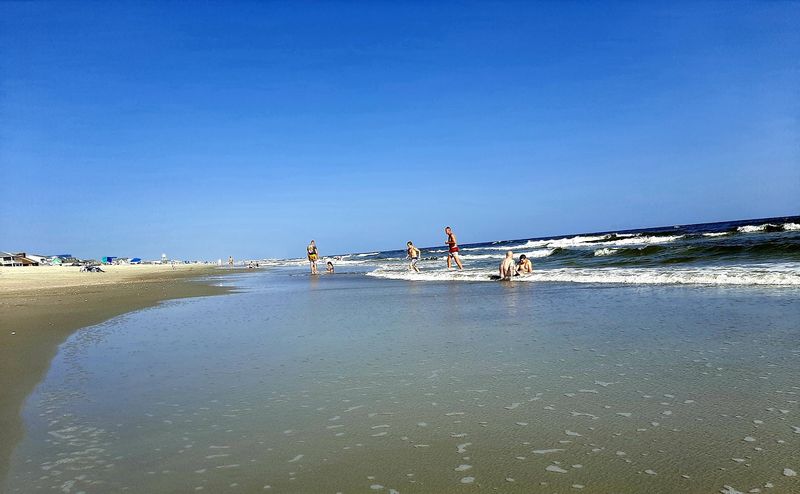
A mesh bag beats a plastic one, letting sand and seawater drain while you keep walking. Fill it slowly, because the haul here rarely stops at sea biscuits.
Shark teeth are the headline attraction for many visitors to this part of North Carolina, and they surface in the very same shell beds. Small black triangles catch the eye once you learn their glossy sheen.
Shell collectors do well too. Knobbed, channeled, and lightning whelks turn up alongside slick olive shells, slender augers, and calico scallops splashed with orange and purple.
The prize for many is the Scotch bonnet, the official state shell, with its delicate ridged spiral. Fossilized coral appears now and then, along with fragments of ancient turtle shell and the pebbly plates of burrfish.
After certain nourishment projects, the list has grown stranger still. Mosasaur teeth from Cretaceous seas, bits of marine reptile bone, and Ice Age enamel from mammoths and mastodons have all been recovered from these sands.
Sort your finds on a towel back at the house, rinse them in fresh water, and label the best ones while the morning is still fresh in your mind.
Learn Why Beach Nourishment Exposed Fossils Hidden Offshore
Beach nourishment sounds technical, but the idea behind it is simple. Crews dredge sand from offshore borrow areas and pump it onto the shoreline to replace what erosion and storms carry away.
The engineering goal is protection for dunes, roads, and homes. The unexpected bonus was geological.
Dredging along this stretch of coast reached into the Peedee Formation, a fossil-rich marine sediment layer that had rested undisturbed for tens of millions of years. Sea biscuits, shark teeth, and stranger relics rode the slurry pipe right onto the beach.
A major project in the spring of 2022 stands out. Hundreds of sea biscuits washed ashore afterward, and word spread quickly among collectors up and down the coast.
Nourishment work happens periodically rather than every season, so the supply thins over time as waves grind older material down. Newly placed sand tends to produce the richest results.
Checking the town’s website before a trip is a smart move, since project schedules and access closures are posted there. Machinery on the sand also means temporary detours to nearby walkovers.
A little planning turns a casual stroll into a well-timed hunt.
Leave With A Piece Of Coastal History Millions Of Years Old
Hold one of these fossils in your palm and the math becomes hard to absorb. Hardouinia mortonis lived roughly 66 to 70 million years ago, near the close of the Cretaceous Period.
While the last dinosaurs moved across the land, these urchins burrowed through warm, shallow seafloor mud that later hardened into the Peedee Formation. The animal is long gone, yet the shape survived intact.
Most souvenirs fade or break. A sea biscuit sits on a shelf looking exactly as it did the day the ocean handed it over, cool and heavy and stamped with its little stone star.
Families often turn the search into a lesson without meaning to. Children who spend a morning crouched over shell lines on this North Carolina barrier island tend to remember the geology far longer than any classroom diagram.
Take only what you will genuinely keep, leave the beach as you found it, and respect posted sea turtle nesting areas from May through August.
Then head home with something rare: a small piece of deep time, collected by hand, from a shoreline still quietly giving up its secrets.