This North Carolina Buddhist Temple Looks Straight Out Of Thailand And Its Giant Green Statue Is Impossible To Ignore
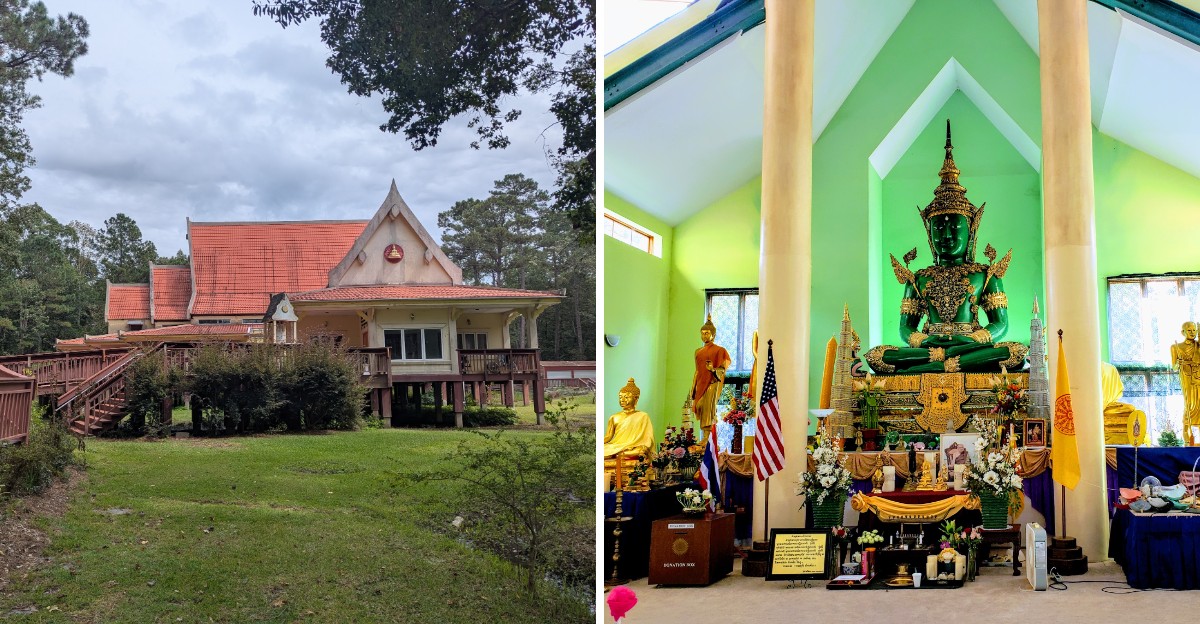
North Carolina has plenty of roadside surprises, but a giant green Buddha behind a wall of pines is hard to top.
That is the kind of sight that makes you wonder whether your GPS has quietly sent you to Thailand.
It has not. This peaceful monastery feels wonderfully unexpected in coastal Brunswick County, where the setting changes the mood almost immediately.
The experience is less about checking off an attraction and more about slowing your brain down for a minute.
That may be the real plot twist.
Come curious, keep your voice low, and prepare for one of those stops that makes an ordinary drive suddenly feel much more interesting.
That Giant Green Buddha Is Even Harder To Ignore In Person
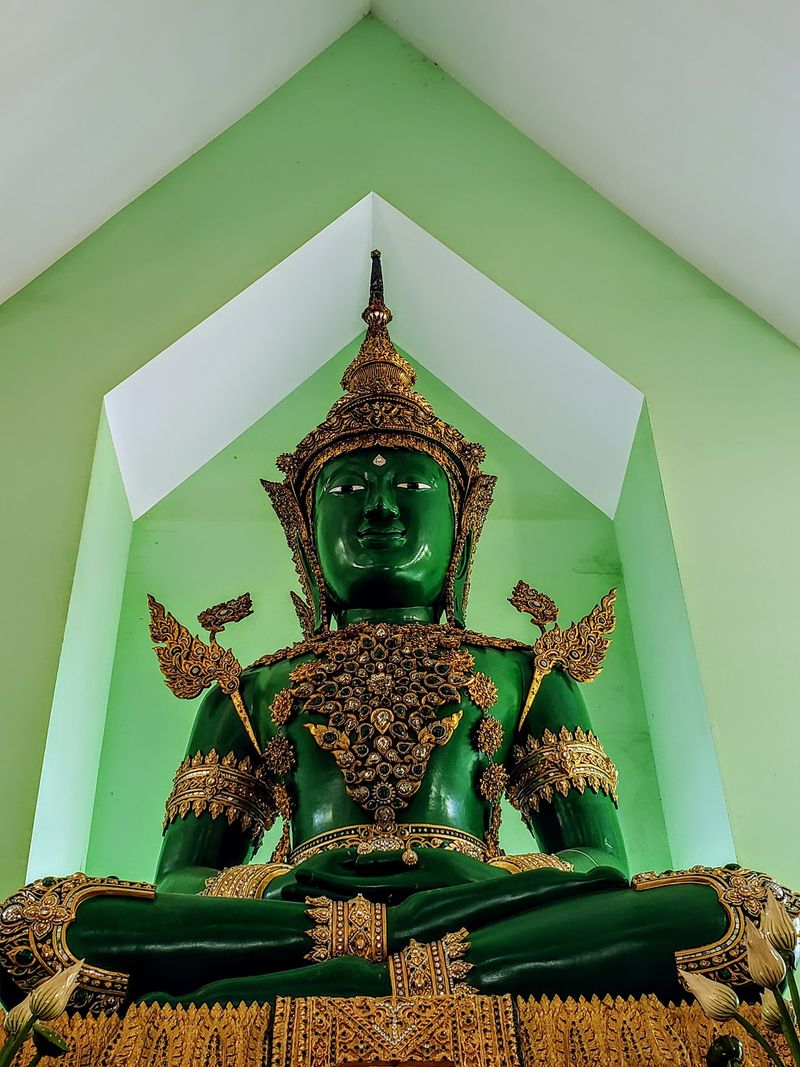
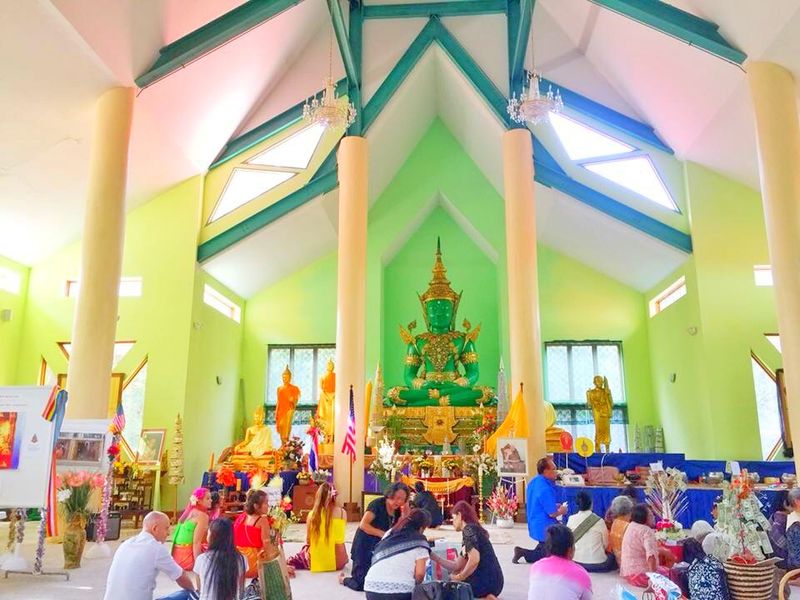
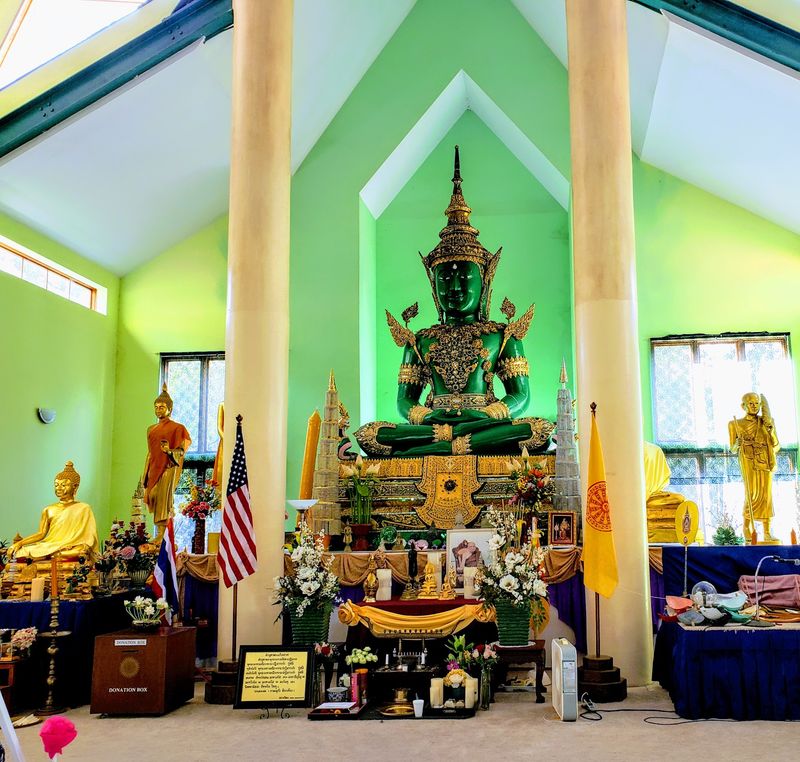
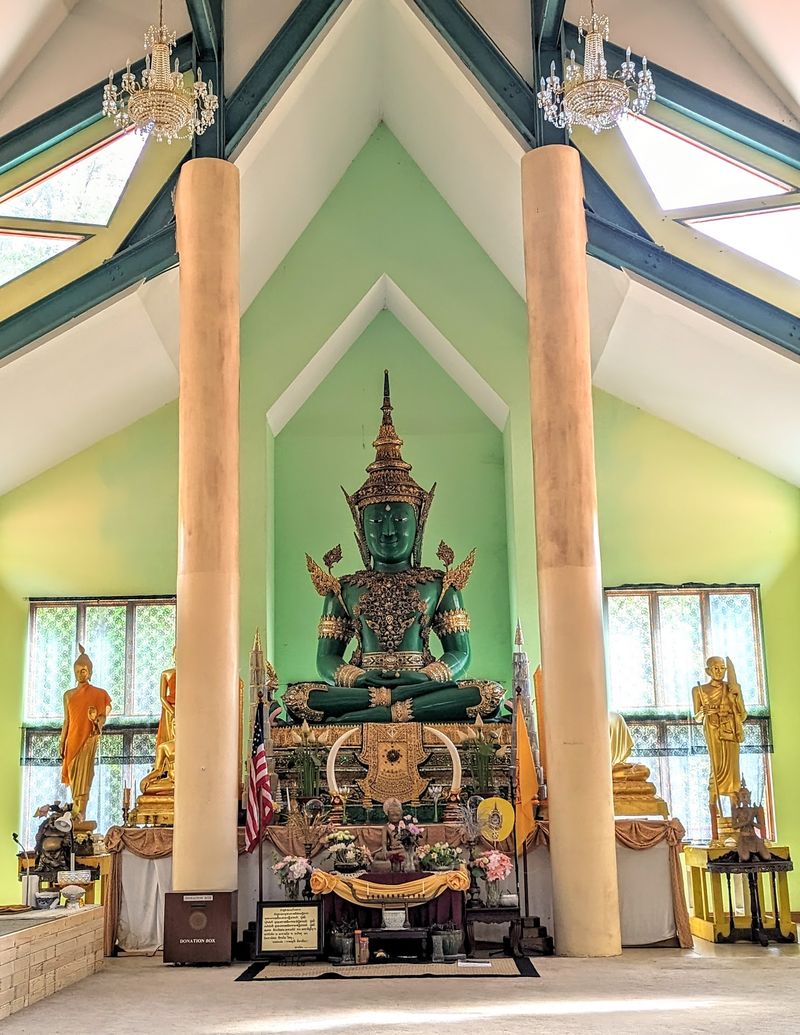
Photographs flatten it. Inside the main hall, the seated green Buddha rises as the room’s undeniable center, its surface catching the soft light that filters through the windows.
Flowers, candles, and carefully arranged decorative offerings crowd the base, and the color reads somewhere between jade and deep sea glass.
Wat Carolina keeps this figure as the heart of its worship space, a reminder of the Buddhist teachings the monks practice daily.
Shoes come off at the door, voices drop without anyone asking, and the floor feels cool underfoot.
Sit for a few minutes on the mat and the statue’s stillness starts to work on you.
Details emerge slowly: the fold of a robe, the curve of a hand resting palm upward, gold trim glinting along the edges of the altar.
Morning visits tend to be quietest, since doors open at 7 AM daily and the property stays open until 5 PM. Photography is generally welcome, though pausing to bow or simply stand quietly first shows respect the monks appreciate.
Families with children often linger longest here, pointing out small details they missed on the first pass.
How A Slice Of Thailand Ended Up In Rural North Carolina
The story begins with a visit to Oak Island in 1986.
Abbot Phrakru Buddhamonpricha traveled to the coast, saw potential in the quiet countryside, and soon after joined his siblings in founding the Buddhist Association of North Carolina.
His siblings donated roughly 21 acres, and Wat Carolina was formally established in 1988.
That is a remarkably short path from idea to sacred ground, and it explains why the place feels personal rather than institutional.
The abbot returned to America from Indonesia to lead the new community, building a spiritual home for Thai Buddhists while leaving the gate open to neighbors, students, and travelers who simply wanted to ask questions.
Nearly four decades later, that welcome remains the defining trait.
Monks often stop what they are doing to explain a custom, translate a chant, or point out which building serves which purpose. Knowing the backstory changes how the grounds look.
Every shrine, pathway, and painted eave represents donated labor, pooled savings, and a family’s decision to share its faith with an unfamiliar landscape.
Ask about the early years and you may hear names of volunteers who mixed concrete and planted the first trees.
You will find the hall at 1610 Midway Rd SE, Bolivia, NC 28422.
Look Up Because The Temple Roof Is Packed With Unexpected Detail
Most people aim their cameras at the statues and miss the best craftsmanship overhead.
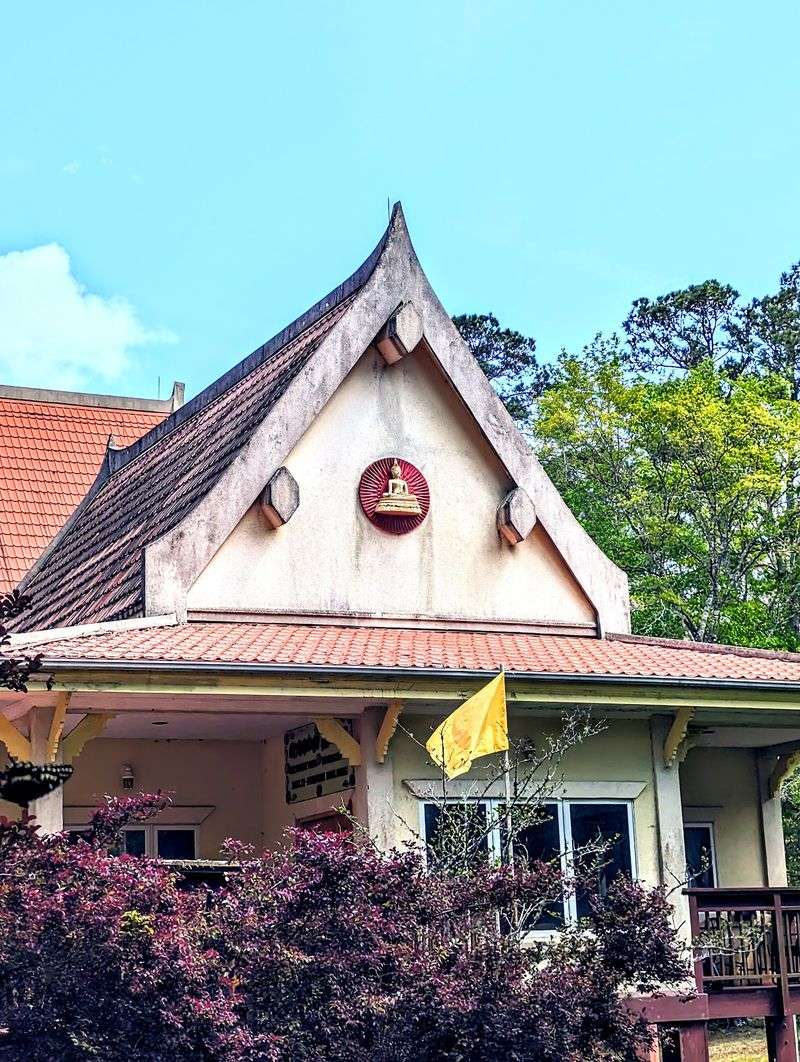
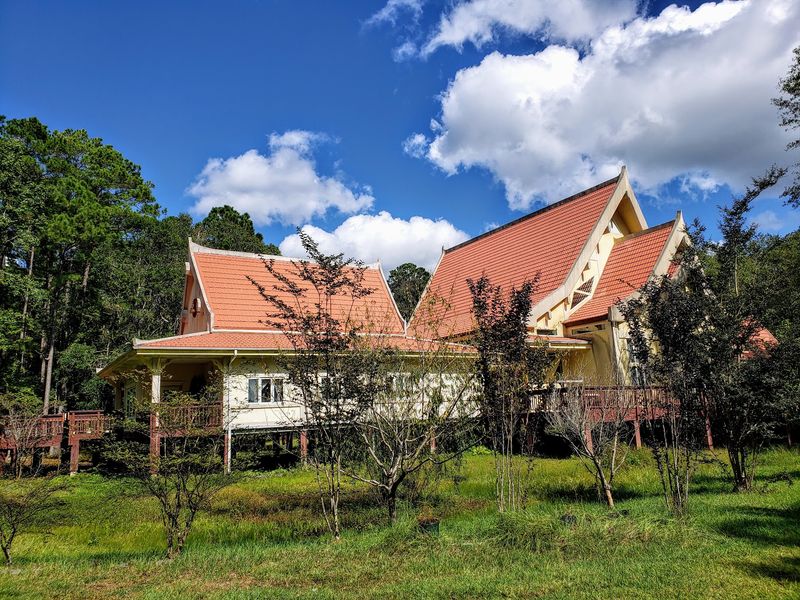
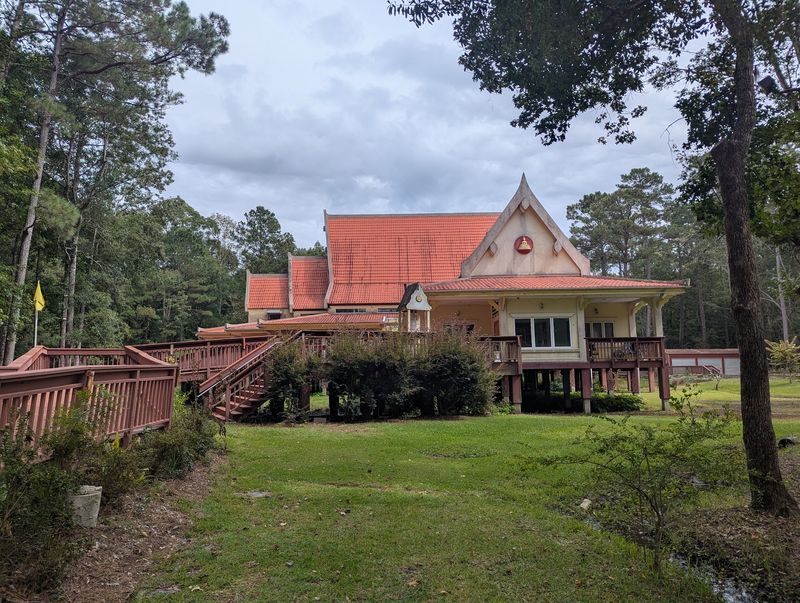
The tiered roofline carries decorative lamyongs, the sweeping bargeboards that run down each gable edge, shaped to suggest the rippling body of the Naga serpent or the feathers of Garuda, the mythical bird.
At the lower corners, finials called hang hong curl outward like a Naga’s head.
Crowning the peak sits the chofa, the sky tassel, formed in the shape of Garuda’s beak reaching toward open air.
Red and white panels accented with gold trim complete the scheme, the same palette you would see on temple roofs in Bangkok or Chiang Mai.
Sunlight does interesting things to it: gold edges flare in late afternoon, while overcast days deepen the reds. Rain-slicked tiles look especially vivid after a summer storm.
Give yourself ten quiet minutes to circle the building slowly and count the layers.
The tiers are not decoration for decoration’s sake, since each level lifts the eye upward, a design idea meant to carry attention from the everyday world toward something larger.
Bring a zoom lens if you have one.
The finest carving sits well above eye level, and details are easy to lose at a glance.
North Carolina’s First Theravada Buddhist Community Started Here In The 1980s
Being first counts for something.
When the monastery formally opened in 1988, it became what a statewide Buddhist temple guide identifies as North Carolina’s first Theravada community.
Theravada is the older branch of Buddhist practice, common in Thailand, Sri Lanka, Myanmar, Laos, and Cambodia.
Its monks live simply, follow a strict daily schedule, and rely on the generosity of the surrounding community for food and supplies.
The Buddhist Association of North Carolina, founded the same year by the abbot and his siblings, handled the practical work of keeping a monastery running.
Its early members drove long distances for services, sometimes hours each way, to sit together and hear the teachings in person. Decades of steady use have shaped the place.
Weekly services, meditation sessions, language and culture lessons, and memorial blessings have all happened inside these walls, and generations of children have grown up crossing the same wooden threshold.
Weather has left marks too, from long humid summers to hurricanes rolling in off the Atlantic.
Repairs continue as donations allow, which makes the temple’s endurance part of its story rather than a footnote.
Wander The Grounds And The Setting Gets More Surprising At Every Turn
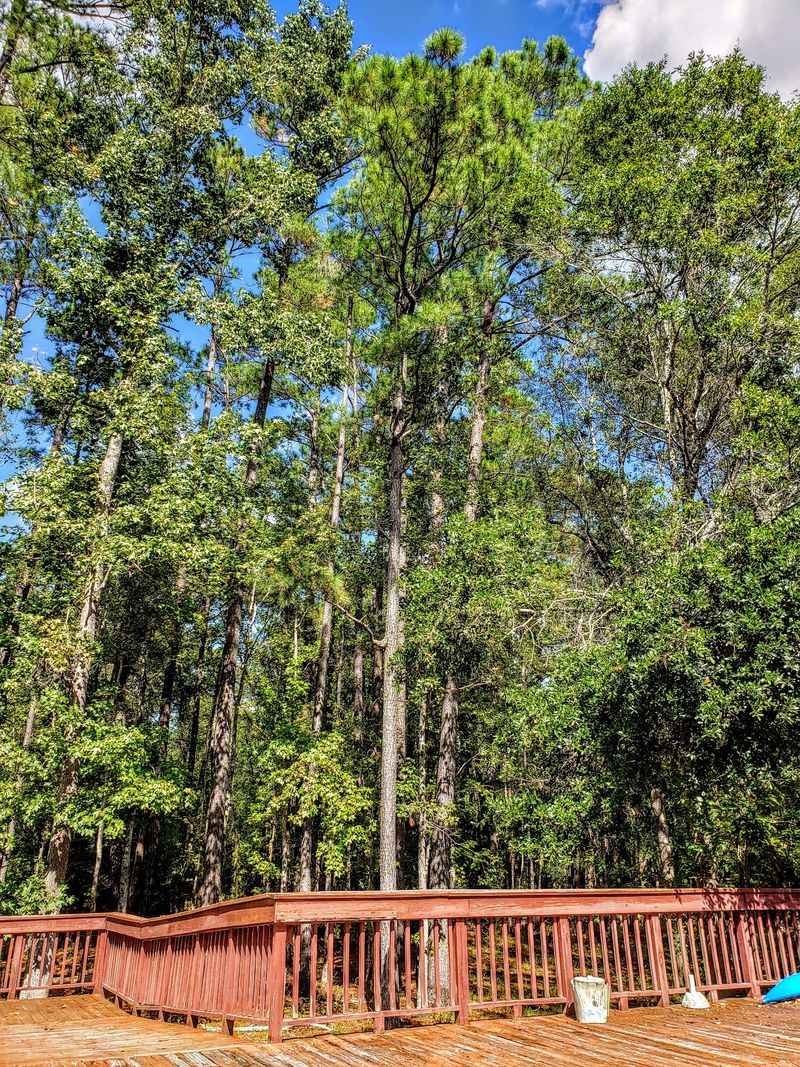
Past the main hall, gravel and grass paths lead off into the trees.
Statues appear where you least expect them: a small shrine beside a cluster of shrubs, a figure half shaded by longleaf pines, an offering table holding marigolds and a bowl of rice.
Birdsong carries easily across the open sections, and the air smells of warm pine needles in summer. Squirrels tend to be your closest company on a weekday morning.
Benches sit at intervals, which is an invitation more than a convenience. Sitting still is part of the point here, and the grounds are laid out so that no single spot shows you everything at once.
Follow one bend and a golden ornament catches light you did not notice a minute earlier.
Practical notes for walkers: wear closed shoes, since paths can be soft after rain, and bring water in the warmer months.
Shade is plentiful but patchy, and the mosquito season runs long in this part of the coastal plain.
Seasonal changes are worth timing.
Spring brings fresh green and flowering shrubs, autumn cools the walk considerably, and winter strips the canopy so the roofline shows through the branches from farther away.
Why This 22-Acre Retreat Feels Worlds Away From The Carolina Coast
Beaches sit only a short drive east, yet the shift in mood is immediate.
Trade the sound of surf and boardwalk traffic for wind moving through pine tops, and you understand why people plan a stop here between shore days.
Thai Buddhist records list the monastery property at about 21 acres, surrounding the buildings with a broad wooded setting. Nothing about the surroundings suggests a tourist corridor.
Wilmington lies roughly 20 miles to the northeast, while Oak Island and other Brunswick County beaches remain within easy driving distance.
Quiet like this is useful.
Meditation asks for fewer distractions, and the property’s layout delivers that without feeling remote or hard to reach from the main highway.
Cell service fades in and out, which honestly helps the experience along. Come mid-morning on a weekday for the stillest version of the visit.
Doors open at 7 AM and close at 5 PM every day of the week, so you can build a stop around lunch on the coast or an afternoon of exploring Brunswick County back roads.
Visitors Can Discover Much More Than A Striking Photo Opportunity
Cameras out is fine, but the deeper reward comes from staying a while.
Newcomers are welcome to join meditation sessions, ask about the teachings, and learn the basic customs that shape daily life at the monastery.
Questions are genuinely welcome. Dress respectfully: shoulders and upper arms covered, and knee-length clothing for women.
Shoes come off before entering temple spaces, a small gesture that signals you understand where you are standing.
Sundays and Buddhist holy days can include meditation, food offerings to monks, and shared meals for lay participants. Food served at community gatherings varies by occasion, so the shared meal is better treated as part of the ceremony than as a predictable restaurant-style menu.
Donations for temple upkeep are welcomed during special ceremonies, and visitors who want to contribute can ask the community how best to help.
The Most Unexpected Part May Be Where This Thai Temple Is Hiding
Farm fields, pine stands, roadside produce stands, and then a Thai temple roof.
That sequence catches nearly everyone off guard the first time they drive Midway Road. The village of Bolivia is small and unhurried, the kind of place travelers pass through on the way to somewhere else.
Then a gate, a sign, and tiered gables appear above the treeline. Turning in changes the day entirely.
Rural North Carolina rarely advertises this sort of cultural find, which is exactly what makes the discovery stick.
Visitors arrive expecting a quick photo and leave having talked with a monk about mindfulness, which is a fair trade for a detour of a few miles.
Plan on 45 minutes to an hour if you are passing through, longer if you sit for meditation or stay for a Sunday meal. Parking is simple, admission is free, and a respectful attitude counts more than any preparation.
Pair the stop with a beach afternoon, a plate of local seafood, or a drive along the Brunswick County waterways.
Whatever you build around it, the memory that follows you home is likely to be the green Buddha and the sound of wind in the pines behind the roofline.