This North Carolina Cemetery Is Often Called One Of The State’s Most Beautiful
Beauty is not the first thing most people expect to find behind cemetery gates.
That assumption changes quickly here. Near downtown Raleigh, quiet roads curve through one of North Carolina’s most unexpectedly graceful historic places.
The mood feels less gloomy than reflective.
Every turn reveals another reason visitors slow their pace without even meaning to.
Time seems to behave differently beneath the old trees.
Maybe that is why this place keeps earning attention for something cemeteries are rarely praised for.
Come for the history, and you may leave remembering the scenery just as clearly.
Why This Raleigh Landmark Keeps Getting Called One Of North Carolina’s Most Beautiful Cemeteries
Beauty here was planned, not accidental.
When the Raleigh Cemetery Association shaped these grounds, the goal was a calm sanctuary rather than a plain field of markers, and that thinking still shows in the sweeping lawns and gentle slopes.
Praise for the place tends to circle back to one thing: the way art, greenery, and memory sit comfortably side by side.
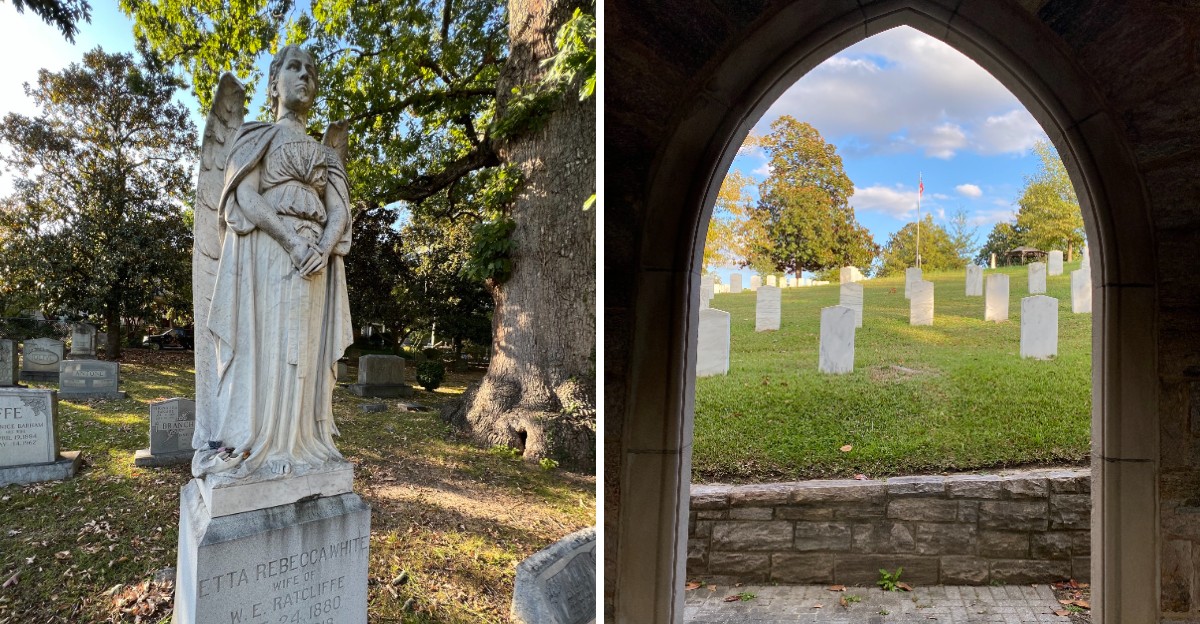
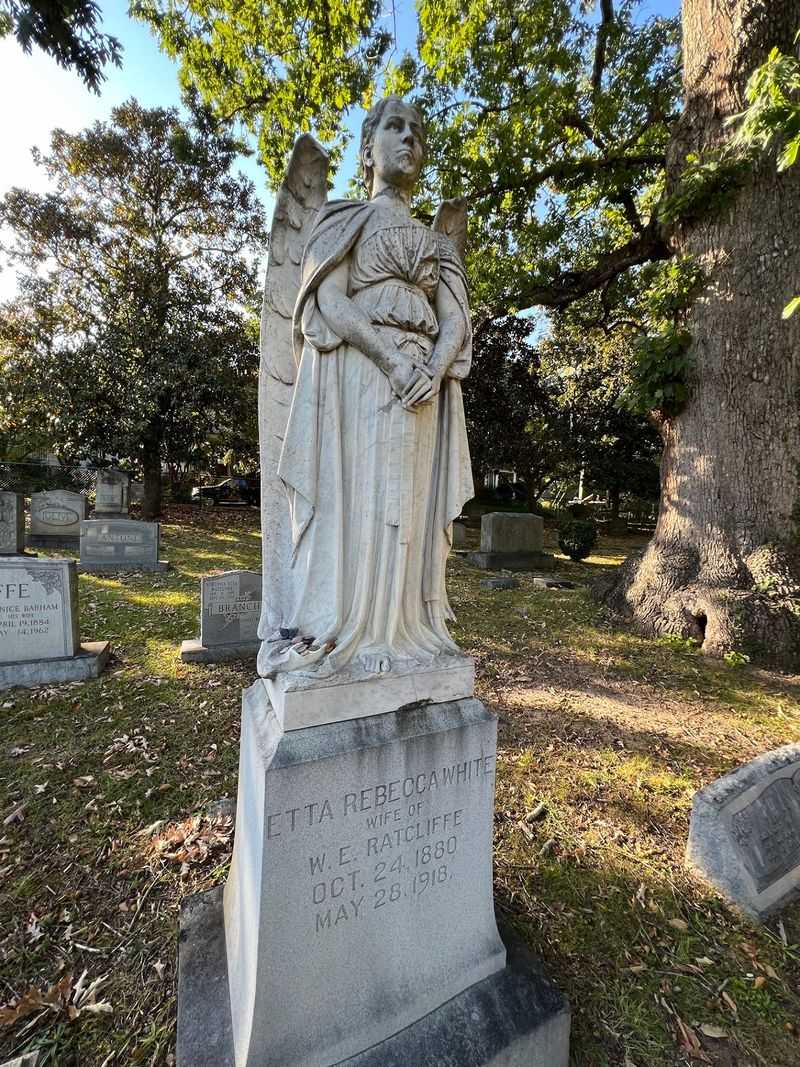
Marble angels catch morning light, shade pools under wide branches, and the paths bend just enough to hide what comes next.
Founders called it a modern cemetery, meaning a spot where living people could find comfort instead of gloom. That idea never faded.
Walk in on a clear spring morning and you will notice how quiet settles over the hills, even though busy streets sit only blocks away.
Birds chatter, gravel crunches underfoot, and stone monuments rise like small sculptures in a garden.
Respect from generations of Raleigh residents keeps the whole scene polished and cared for.
Daily visiting hours run from 8 am to 6 pm at Oakwood Cemetery, 701 Oakwood Ave, Raleigh, NC 27601, with the gates closing promptly at the end of the day.
More Than 150 Years Of History Are Hidden Across These 72 Acres
1869 marks the official beginning, the year the Raleigh Cemetery Association established the grounds that grew into one of the city’s most treasured green spaces.
Two years earlier, in 1867, the Ladies Memorial Association of Wake County set aside roughly two and a half acres for the Confederate Cemetery.
A separate Hebrew Cemetery was established within Oakwood soon afterward and formally deeded to the Hebrew Cemetery Company in 1871. His gift helped shape the layout visitors still follow today.
Historic Oakwood Cemetery currently describes its grounds as covering 72 acres, with additional space reserved for future burials.
That leaves plenty of quiet, wooded edges where deer sometimes wander through in the early hours.
Names carved into the stone read like a roll call of state leadership.
Seven governors rest here, along with five United States senators and four Civil War generals, plus thousands of everyday citizens whose stories fill out the picture.
History does not stay locked in books at this North Carolina site.
It shows up in dates, family plots, and the shifting styles of markers, giving anyone with curiosity something concrete to study.
Follow The Winding Roads And The Cemetery Starts Feeling More Like A Historic Garden
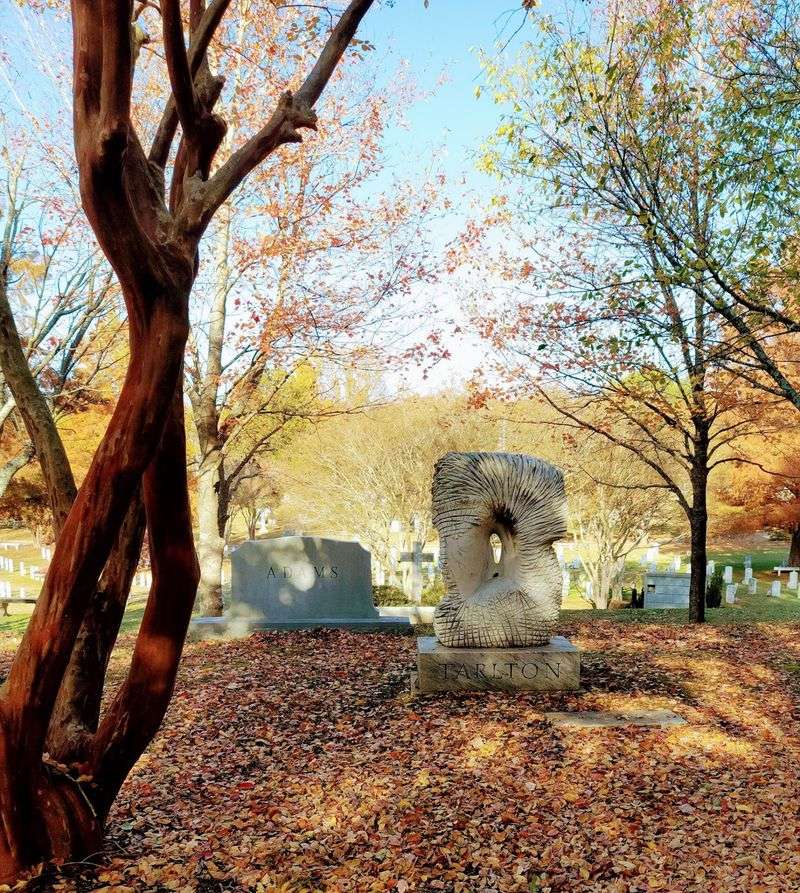
Straight lines are hard to find here, and that is entirely on purpose.
Nineteenth century designers followed the rural cemetery movement, an idea that burial grounds should double as public parks where families could stroll, picnic, and breathe fresh air.
Roads curl around hillsides instead of cutting through them.
Footpaths branch off toward hidden corners, and each turn reveals a new grouping of monuments framed by shrubs and flowering plants. Bring comfortable shoes.
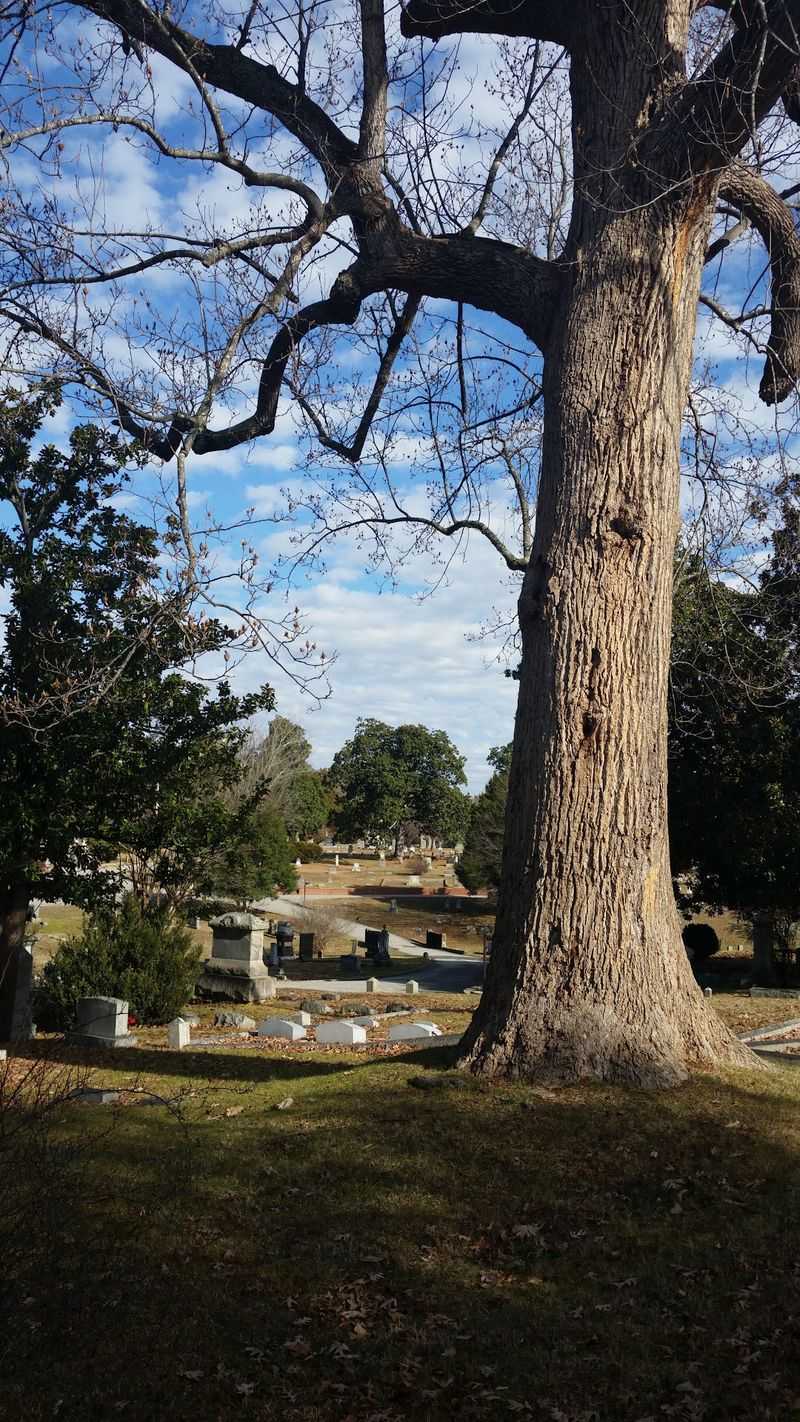
The terrain rolls up and down, and the most rewarding views often sit at the top of a rise where you can look out over rows of stone and treetops at once.
Gardeners tend beds of seasonal flowers throughout the grounds, adding bursts of color against gray granite and white marble.
On a warm afternoon the air carries a soft green smell of cut grass and leaf mulch.
Photographers love the light here, especially in the last hour before closing when long shadows stretch across the lawns.
Families pushing strollers, retirees with walking sticks, and students sketching monuments all share the same unhurried pace.
Thousands Of Monuments Turn A Quiet Walk Into An Outdoor Sculpture Tour
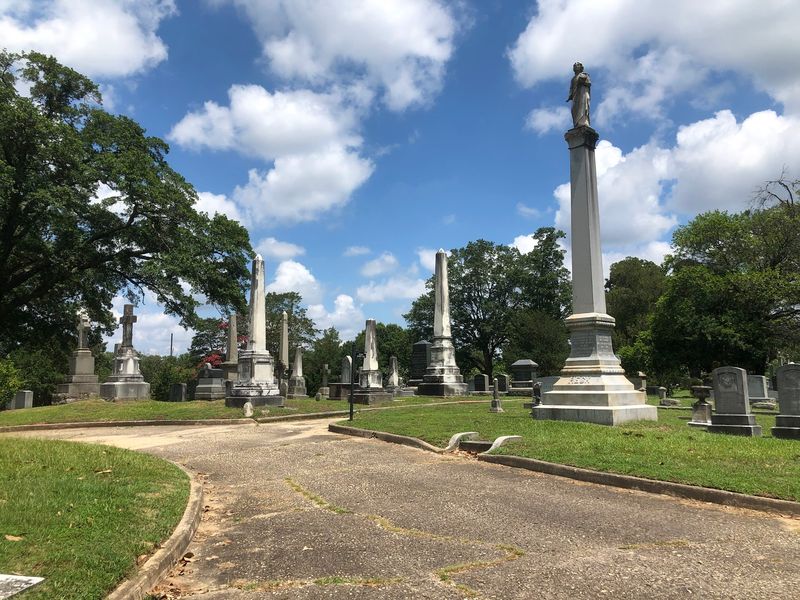
Picture a museum without walls, where the exhibits stand in grass and change with the weather.
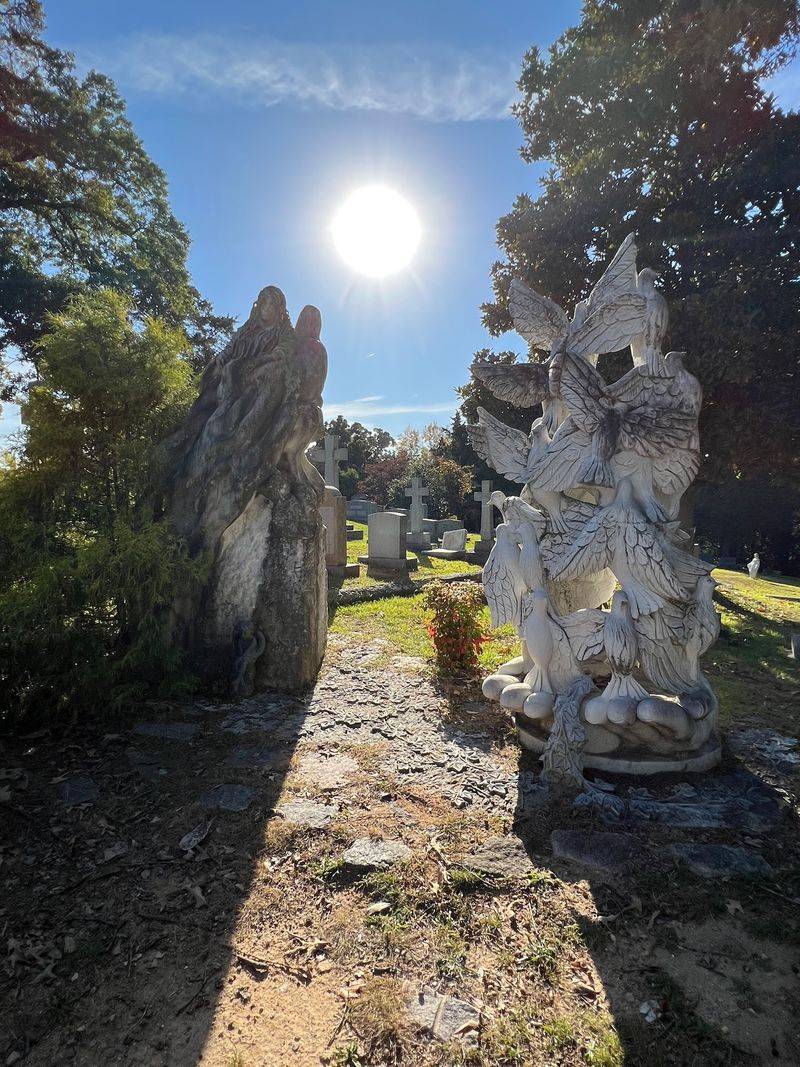
That is roughly what awaits along the paths, where carvings, statues, and bas-relief panels stretch in every direction.
More than 22,000 people rest within these grounds, and their markers range from simple flat stones to elaborate mausoleums with iron doors and carved columns.
Granite, marble, sandstone, and bronze all appear, each aging differently under Carolina weather. Craftsmanship varies by decade, which makes the walk a lesson in changing taste.
Victorian monuments lean ornate and sentimental, while later markers grow cleaner and more restrained.
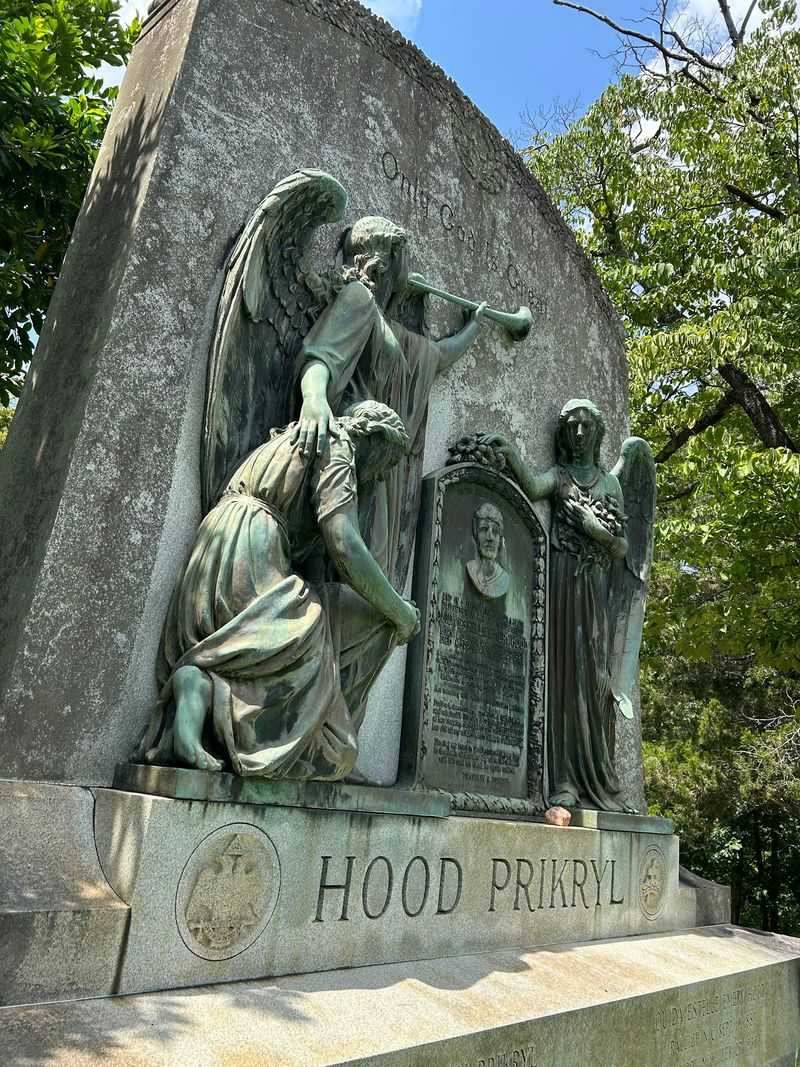
Look for the draped figures and finely cut lettering on older stones.
Some carvers signed their work, a small detail most visitors never spot.
A community Chapel Mausoleum and the restored 1896 receiving vault add distinctive structures to the cemetery landscape.
Bring a small notebook if you enjoy sketching, or just let your eyes wander from one silhouette to the next.
Art and memory blend so completely here that an hour disappears without warning.
Look Closely Because The Symbols Carved Into The Stones Tell Their Own Stories
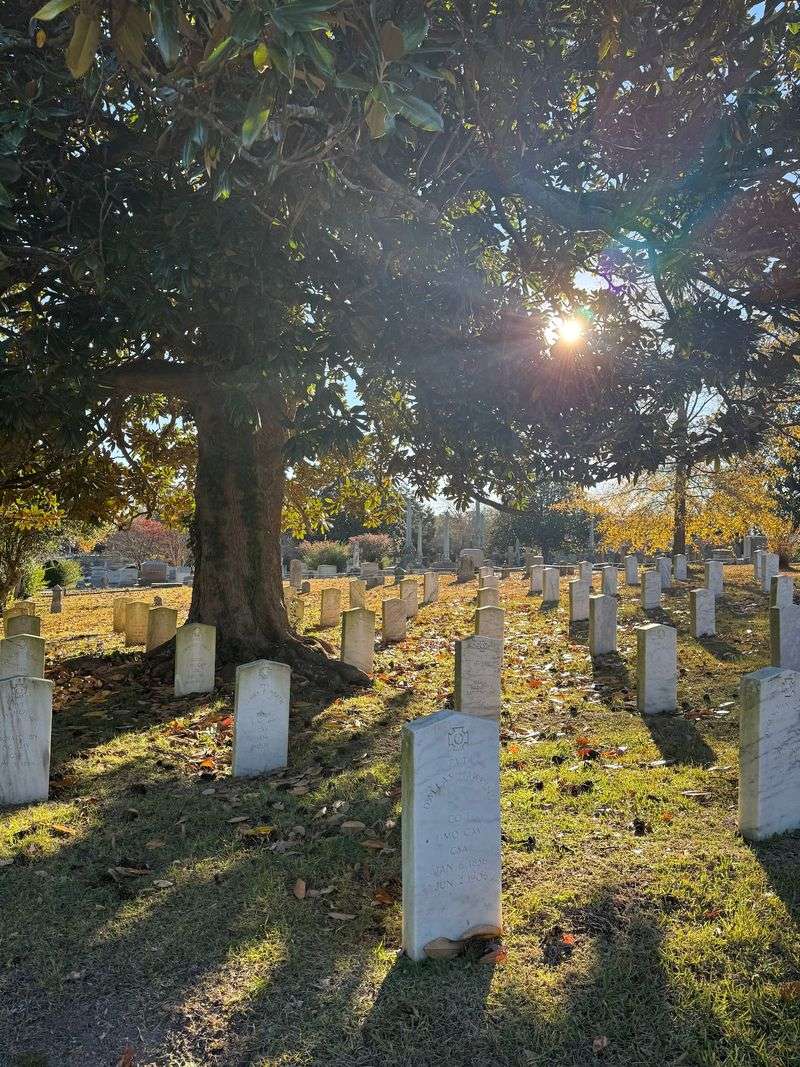
Every carving on these old markers once carried a meaning that visitors understood instantly.
Victorian families spoke a whole visual language, and learning a bit of it turns a casual stroll into detective work.
An angel usually stands for guardianship or resurrection. A cherub, small and round-cheeked, often marks the grave of a child. Urns show up constantly, frequently draped with carved fabric that represents the veil between worlds.
Broken columns signal a life that ended far too early, while clasped hands suggest a lasting bond between a married couple or close friends.
Roses reward the closest inspection.
A tight bud, a partly opened bloom, or a full flower could hint at how old the person was when they died. Bring reading glasses if you use them, since decades of weather have softened many of the finer lines.
Morning or late afternoon light works best because low sun throws shadows into the grooves and makes faint carvings readable again.
Once you start noticing these details, you cannot unsee them, and the whole hillside begins to feel like a conversation written in stone.
Towering Oaks, Dogwoods And Azaleas Change The Scenery With Every Season
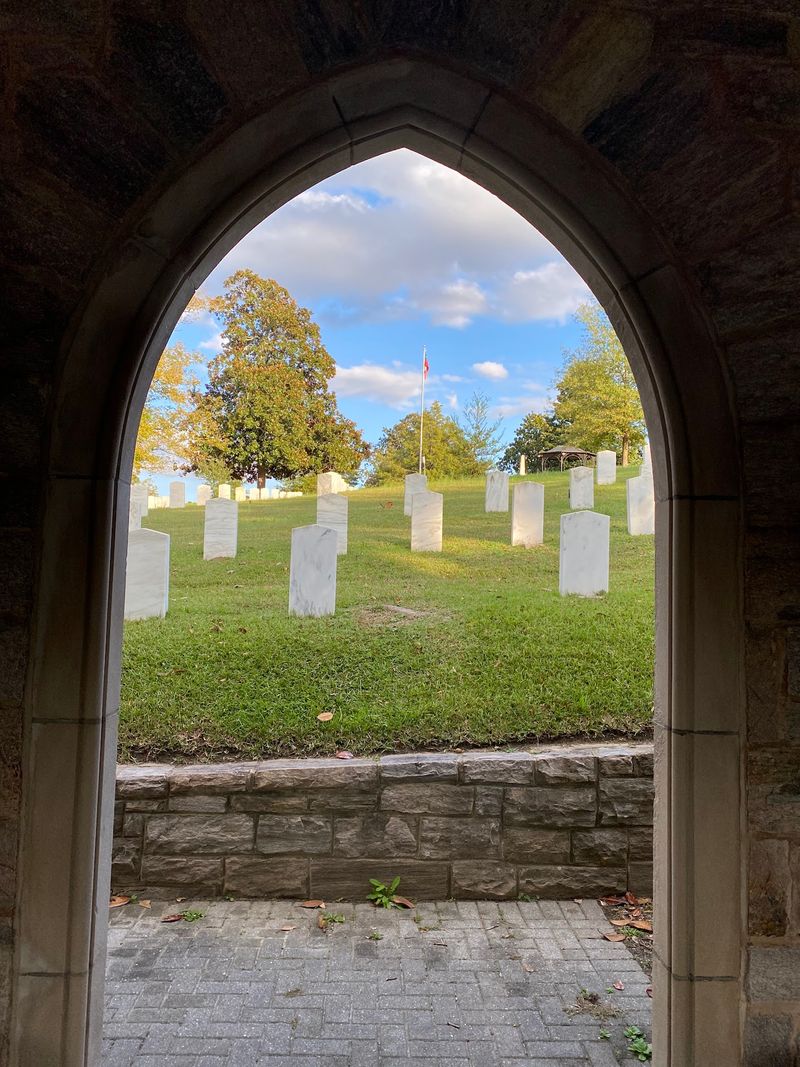
Come back four times a year and you will swear you visited four different places.
Spring opens with dogwood blossoms floating like white confetti above the monuments, followed closely by azaleas in deep pink and coral.
Summer brings heavy green shade from the oaks, and magnolias offer cool spots to pause when the humidity climbs.
Their glossy leaves rustle in a way that makes the whole hillside feel insulated from traffic. Autumn is the showstopper.
Leaves turn fiery red, brilliant gold, and burnt orange, and the color spreads across the rolling ground until the stones seem to float in it.
The landscaped grounds include oaks, cedars, maples, dogwoods, hollies, river birches, weeping willows, magnolias, and other mature trees and shrubs.
A small creek threads through part of the grounds, adding the soft sound of moving water. Winter strips things down to bare branches and clean sightlines, which is actually the best time to see the layout and distant monuments clearly.
Anyone who loves trees will find this corner of North Carolina worth repeat visits, notebook and camera in hand.
Guided Tours Reveal Pieces Of Raleigh History Most Visitors Never Hear About
Stories hide behind almost every marker, and a knowledgeable guide pulls them into daylight.
Tours here cover specific themes, from the Civil War section to the meaning behind monument artwork to the broader growth of the city itself.
Executive Director Robin Simonton leads many of these walks and connects individual lives to larger events in a way that makes history feel personal.
Prominent figures get their due, but so do ordinary residents whose work shaped neighborhoods.
A free monthly tour called Stroll Through History explores different sections each time. Fresh research keeps the content changing, so returning guests rarely hear the same talk twice.
Check the cemetery website before you go, since tour schedules shift with the seasons and weather. Wear supportive shoes and carry water, because groups cover uneven ground and stop often.
Arriving early gives you time to wander a bit on your own first, which makes the guided portion land better.
Guides also point out sections you might walk right past, including quieter corners where some of the most surprising Raleigh stories are waiting.
The Surprising Reason People Come Here To Walk Even When They Aren’t Visiting A Grave
Joggers, cyclists, and neighbors out for a morning loop are a normal sight along these lanes.
Staff describe the property as a cemetery full of life, and that phrase fits the daily rhythm perfectly.
Long before Pullen Park became a city favorite, this ground was already designed as a park-like retreat.
Downtown sits barely half a mile away, yet the hills feel worlds removed from traffic noise. Deer sometimes graze near the wooded edges at dawn. Songbirds fill the canopy, and a small creek adds a steady trickle beneath the shade.
Walkers appreciate the paved lanes, the gentle inclines, and the absence of crowds.
The gates open at 8 AM and close at 6 PM during daylight saving time and 5 PM during standard time, so check the day’s hours before a late visit.
Photographers, genealogy researchers, and people simply needing a quiet hour all find room here.
That mix of history, leafy scenery, and stillness explains why this North Carolina landmark works as a rejuvenating escape, not just a place of remembrance.