This North Carolina Hilltop Basilica Looks Too European To Be Real
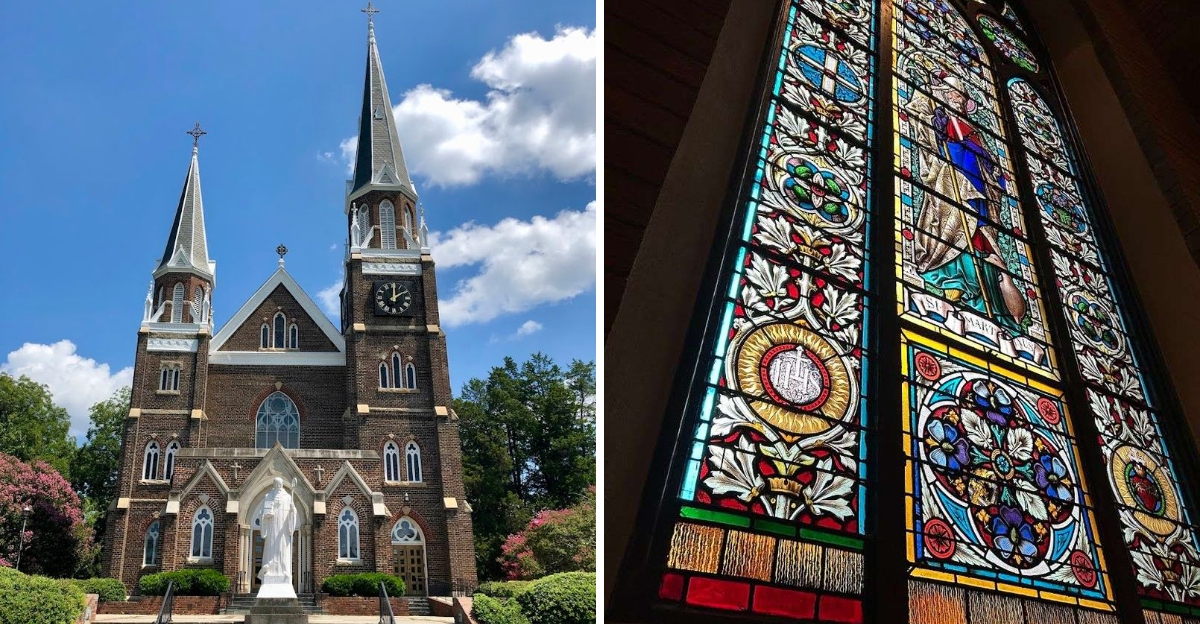
Gothic towers near Charlotte sound like something the map made up to mess with tired road-trippers.
The drive feels ordinary at first, all familiar hills and quiet turns, until a hilltop basilica rises above the trees like it missed its stop in Europe.
Stone walls and pointed arches give the whole place a strange, beautiful seriousness.
It does not feel like a quick roadside find.
It feels like the kind of place that makes people lower their voices without knowing why.
North Carolina has plenty of pretty surprises, but this one lands differently because it feels so far from what the road prepares you to see.
Built by Benedictine monks and later named a basilica in 1998, the landmark carries a quiet weight that stays with you after the first look.
For anyone who loves places that feel almost impossible at first glance, this hilltop wonder makes the short drive feel unexpectedly grand.
Look Up Before The Twin Towers Steal The Whole Visit
The first mistake is thinking you will glance at the towers and move on.
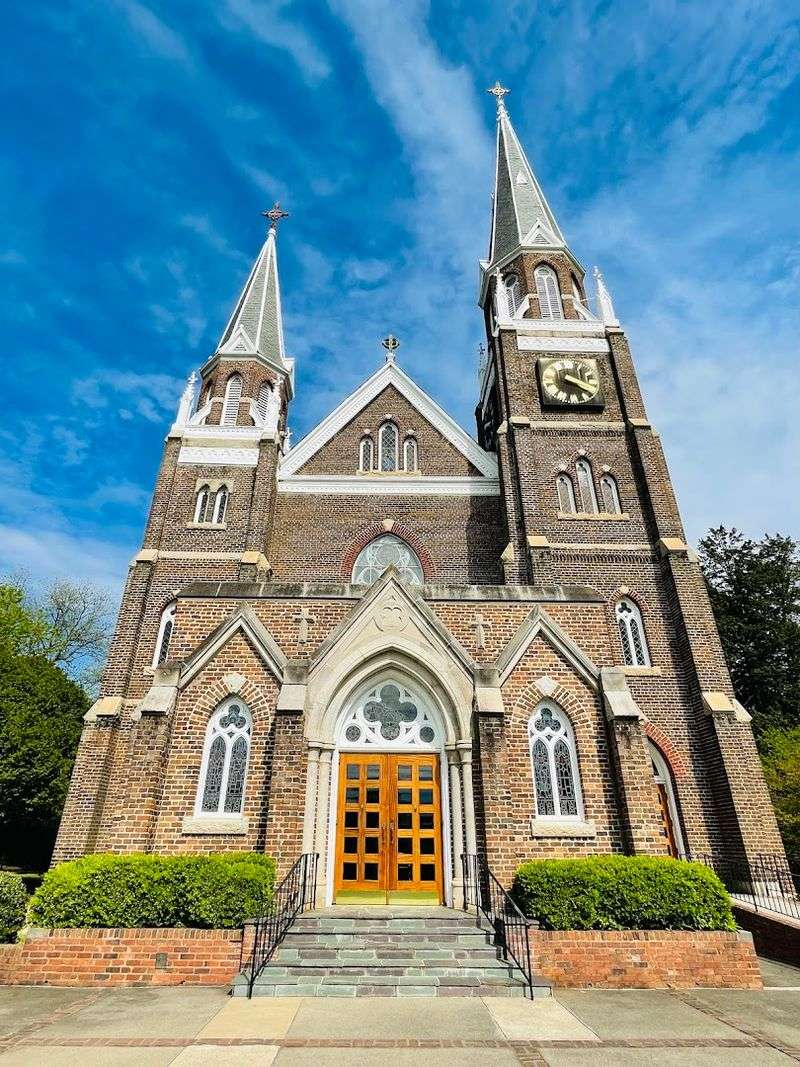
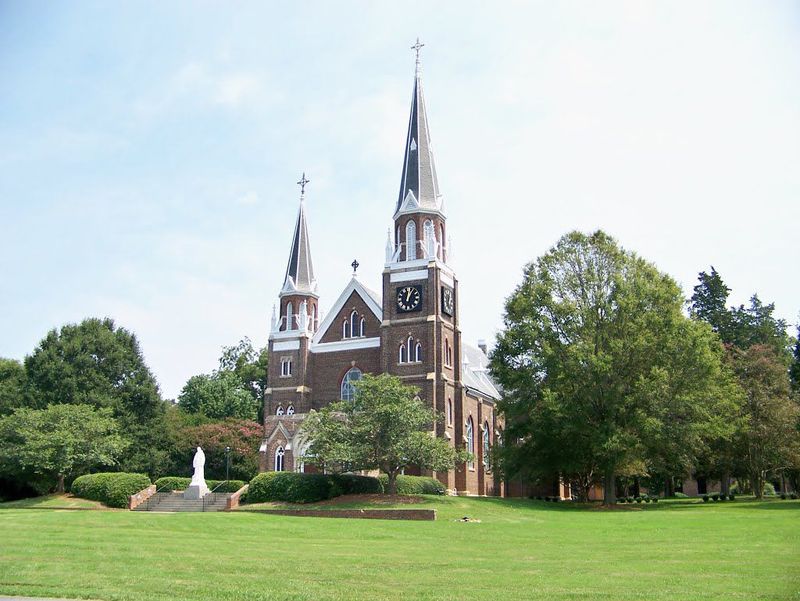
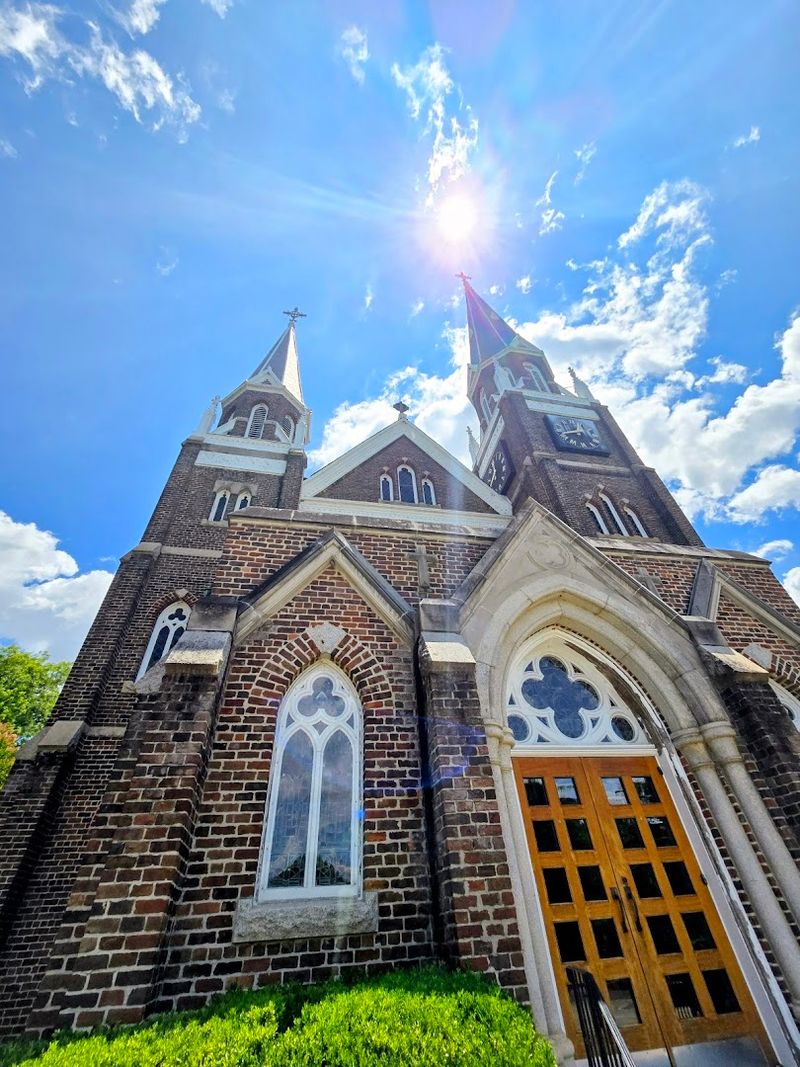
At Mary Help of Christians Basilica, twin towers define the first impression, drawing the eye upward before the doors are even reached. That architectural height creates a dramatic sense of presence on the grounds.
The basilica sits on the grounds of Belmont Abbey College in Belmont, where stone, arches, trees, and open sky all work together to create a setting that feels much older than its North Carolina address suggests.
Even people who are not architecture experts can sense the European influence in the pointed forms, vertical lines, and balanced front façade.
The effect is strongest when the towers appear through campus greenery, almost like the building is revealing itself in pieces. That slow reveal gives the visit its first little jolt of surprise.
This is not a roadside chapel or a pretty college building with a steeple. It is a serious sacred landmark with scale, presence, and a visual rhythm that makes cameras come out quickly.
Arriving with extra time is smart because the exterior alone deserves a slow look.
Step Inside And Let The Old-World Details Slow You Down
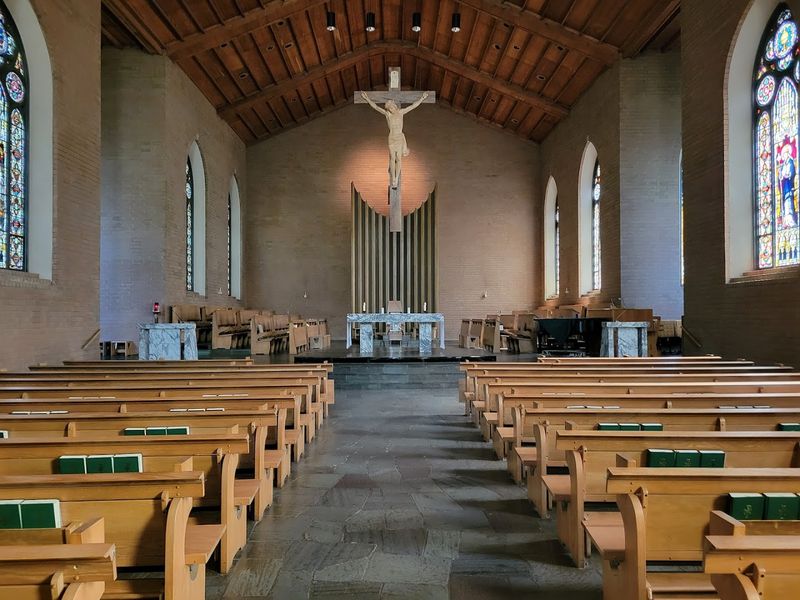
Crossing into the basilica changes the pace immediately. The outside world falls back, voices soften, and the interior invites the kind of looking that rewards patience.
Belmont Abbey’s own history notes that the basilica was built in 1892 and renovated in 1965, which helps explain the mix of older Gothic Revival bones and a more restrained interior character.
Visitors may notice the brick walls, stone details, timber ceiling, sacred art, stained glass, and the quiet order of a space still used daily by the Benedictine community.
This is not a museum pretending to be a church. It is an active place of worship, so the beauty has to share the room with prayer, Mass, silence, and people who come for spiritual reasons rather than sightseeing.
That makes respectful behavior matter. Move slowly, keep voices low, and let the details emerge instead of trying to consume the room all at once.
One of the most talked-about interior details is the baptismal font connected by local tradition. That history should be handled with care, because its power comes from transformation, memory, and the weight of what the stone represents.
Notice How The Campus Makes The Basilica Feel Even More Hidden
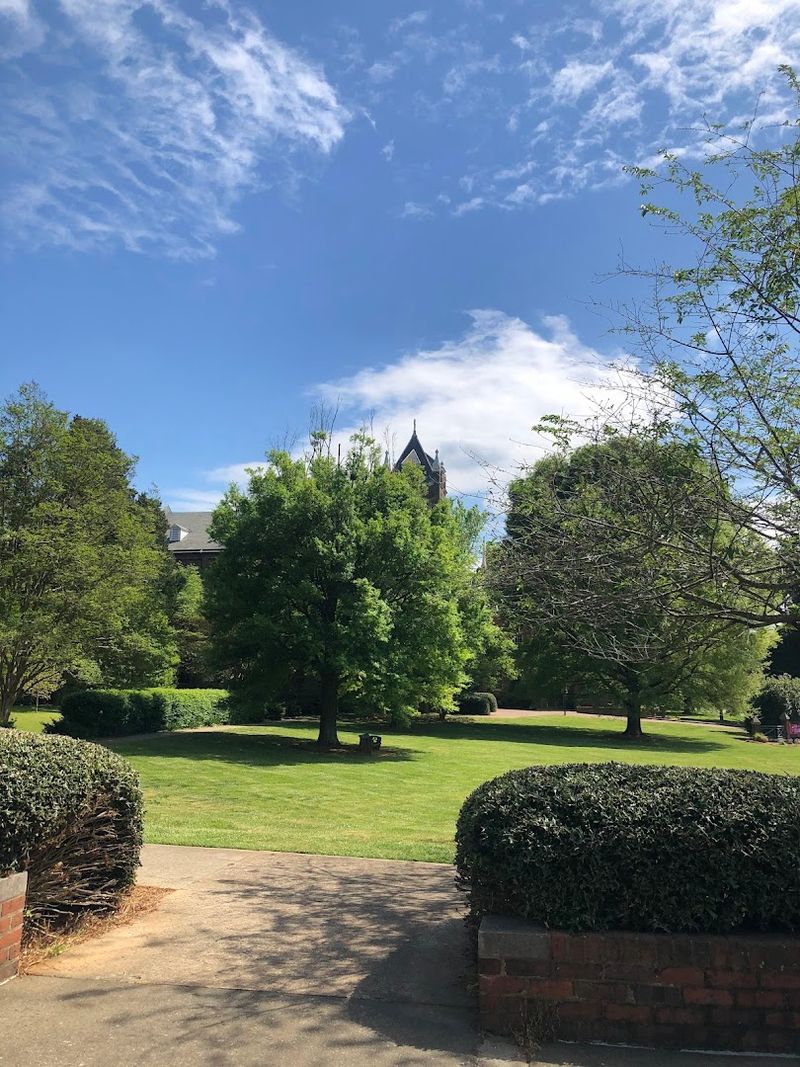
The campus setting gives the basilica much of its magic. Belmont Abbey College and the Benedictine monastery share a landscape of mature trees, walking paths, stone buildings, lawns, and quiet corners that make the church feel discovered rather than displayed.
You do not simply pull up to a huge attraction surrounded by souvenir signs and noise. You move through a working Catholic college and monastic environment where the basilica serves as the spiritual center of daily life.
That context changes the visit. Students walk nearby, monks gather for prayer, visitors pause in the church, and the building remains woven into the rhythm of campus rather than frozen as a historic object.
The surrounding grounds also add visual drama because the basilica can appear and disappear behind trees and buildings as you move through the area.
In summer, the greenery softens the stone and makes the towers feel almost hidden until they rise suddenly into view.
The campus includes places for prayer and reflection, including the Marian grotto and Saint Joseph Adoration Chapel, which deepen the sense that this is a living sacred landscape.
North Carolina has plenty of pretty campuses, but Belmont Abbey makes architecture, faith, and quiet feel unusually connected.
Follow The Quiet Toward Stained Glass And Sacred Light
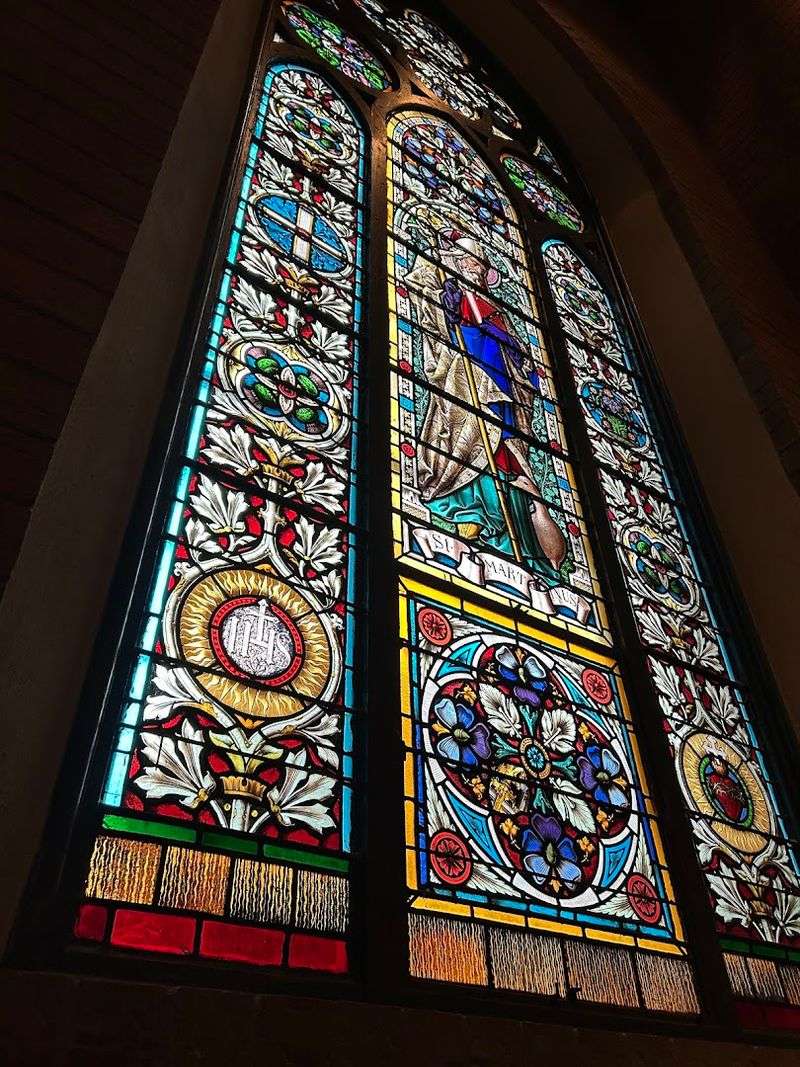
Stained glass does not need to shout when sunlight is doing the hard work. Inside Mary Help of Christians Basilica, the windows are among the details that make the church feel unexpectedly European in a small North Carolina town.
Historical descriptions of Mary Help of Christians Basilica reference stained glass from Francis Mayer and Company of Munich, a respected Bavarian workshop. The windows are associated with craftsmanship recognized during the World’s Columbian Exposition era.
Even without knowing that background, visitors can feel the effect once colored light begins moving across the interior.
Sacred scenes, rich tones, and filtered daylight soften the brick and stone, turning the room into something more contemplative than decorative.
Morning and late-afternoon light can change the mood dramatically, so two visits on the same day might not feel identical.
The best approach is to slow down rather than rush from window to window. Let the color settle.
Notice how the glass interacts with the architecture, the altar, the pews, and the quiet around you.
North Carolina has larger churches and flashier attractions, but this basilica offers something more subtle: art, light, worship, and stillness working together in a space that asks visitors to lower their volume.
Pause Long Enough For The Historic Stonework To Sink In
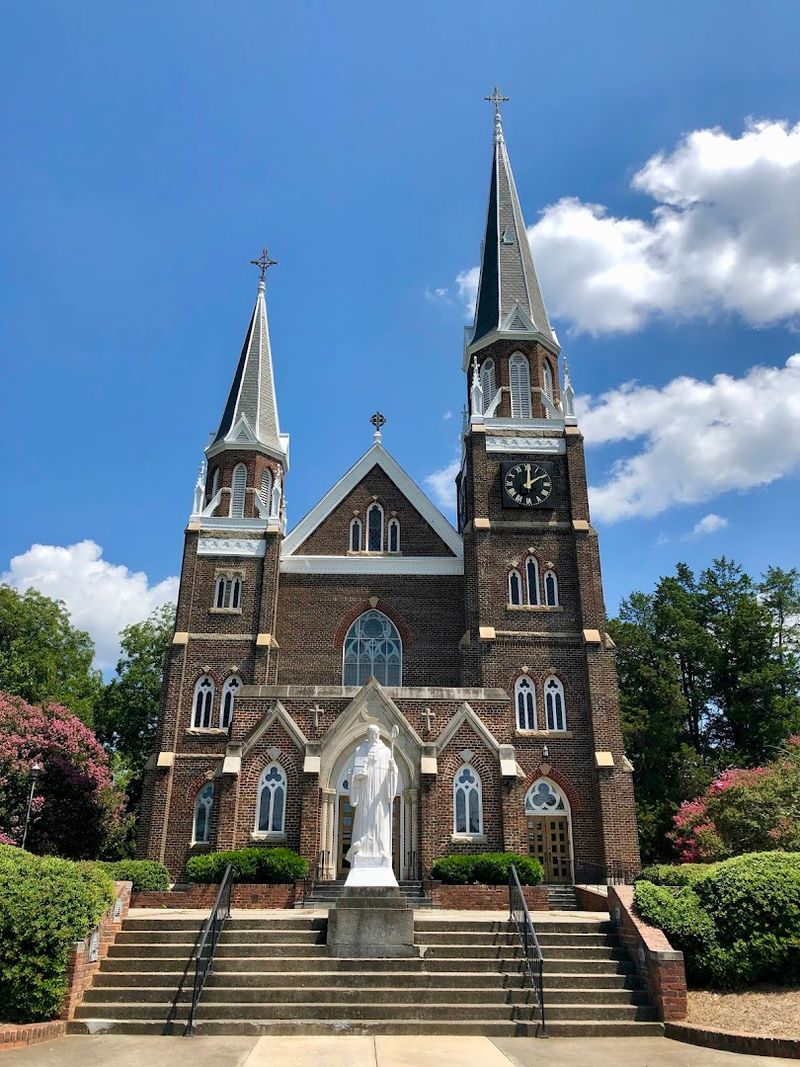
Stone has a way of making time feel heavier. The basilica’s historic fabric reaches back to the late 19th century, when Benedictine monks established Belmont Abbey and built a church meant to serve both the monastery and the wider Catholic community.
Official abbey sources describe the basilica as built in 1892 and renovated in 1965, while Belmont Abbey College identifies it as listed on the National Register of Historic Places.
That history gives the building a seriousness that becomes clearer when you stand outside and look at the walls, towers, arches, and proportions without hurrying.
Gothic Revival architecture was designed to lift the eye, and this church does that with a quiet confidence rather than theatrical excess. The stonework feels especially striking because of where it is: not in an old European city, but on a hilltop campus near Charlotte.
That contrast makes the building feel almost improbable. Visitors drawn to architecture should take time to study how the towers frame the entrance, how the pointed details guide the eye, and how the surrounding trees soften the structure without hiding it.
The basilica does not need dramatic language to impress anyone. More than a century of presence already does that work.
Bring A Camera For The View Before You Reach The Doors
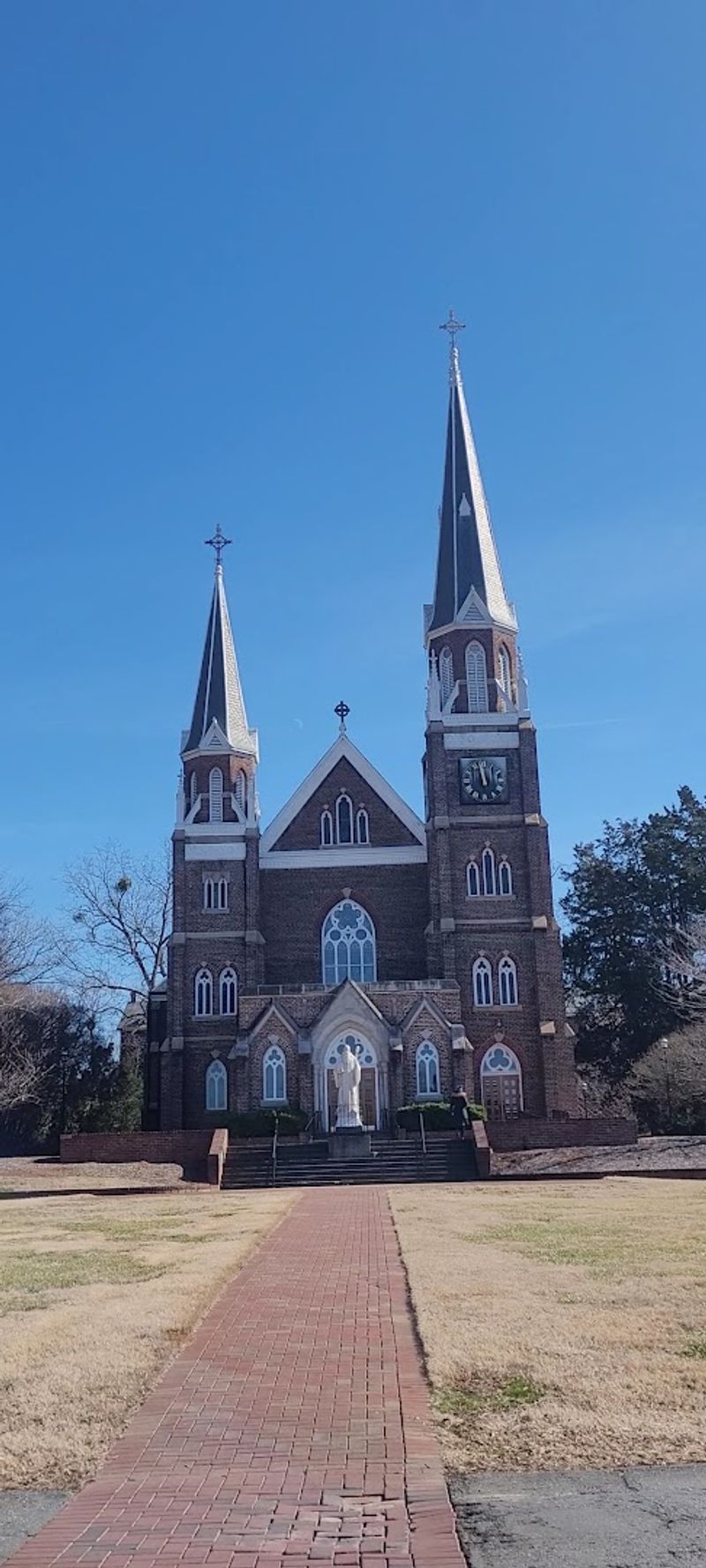
Some of the best photos happen before you step inside. The basilica’s hilltop setting, twin towers, campus greenery, and stone façade create several strong angles from the walkways and open spaces around Belmont Abbey College.
Wide shots help capture the full shape of the building, while closer views bring out arches, tower details, textured walls, and the way the stone changes tone with the light.
Morning can give the campus a calmer feel, especially before the day’s activity builds, while late afternoon can warm the exterior and make the towers stand out against the sky.
Seasonal changes matter too. Summer greenery can make the basilica feel hidden and lush, while autumn color adds a completely different frame around the stone.
Photographers should remember that this is an active campus and sacred site, not a staged backdrop, so respectful distance and awareness of worshippers, students, and monks matter. No photo is worth interrupting prayer or blocking a walkway.
The reward for patience is a building that looks different from almost every angle. One moment it feels like a European abbey church.
The next, the North Carolina trees and campus paths remind you exactly where you are.
Let Belmont Abbey Turn A Quick Stop Into A Peaceful Detour
A quick visit can easily become a longer pause here.
Visitors to Belmont Abbey are welcomed into the basilica for Mass, confessions, and personal prayer alongside the Liturgy of the Hours. The community follows a daily cycle of morning prayer, conventual Mass, midday prayer, vespers, and compline, subject to occasional changes.
That active liturgical life makes the church feel different from a historic building that only opens for tours. Silence still has a purpose here.
Prayer is not part of the atmosphere; it is the reason the place exists. Visitors who are not Catholic can still appreciate the calm, architecture, stained glass, and grounds, as long as they approach the space with respect.
The Marian grotto and Saint Joseph Adoration Chapel add quieter places for reflection, and nearby Belmont makes it easy to turn the stop into a half-day outing with coffee, lunch, or a walk through town. That combination is why the basilica works so well as a detour from Charlotte.
It is close enough to reach without planning a major trip, but the mood changes so completely once you arrive that it feels much farther away. The best visits happen when nobody rushes to leave.
Leave Wondering How This European-Looking Landmark Is So Close To Charlotte
Standing outside the Mary Help of Christians Basilica after a long visit, the thought that keeps returning is how close all of this is to a major American city. Charlotte is just a short drive away, yet the basilica at 100 Belmont-Mt.
Holly Road, Belmont, North Carolina 28012 feels worlds apart from the glass towers and busy highways of the urban center. That contrast is a big part of what makes the discovery so satisfying.
Elevated to the status of a minor basilica by Pope John Paul II in 1998, this church carries a designation shared by only a select number of sacred sites worldwide.
From 1910 until 1977, it held the unique title of abbey-cathedral, the only church in United States history to hold that distinction.
The Basilica and the surrounding Belmont Abbey Historic District were added to the National Register of Historic Places in 1973, cementing the site’s cultural and architectural significance.
For travelers passing through North Carolina with even a few spare hours, this hilltop landmark offers something genuinely rare: a European-quality experience without the transatlantic flight, waiting just minutes from Charlotte’s doorstep.