This North Carolina Island Village Has Hundreds Of Cats Roaming Its Streets
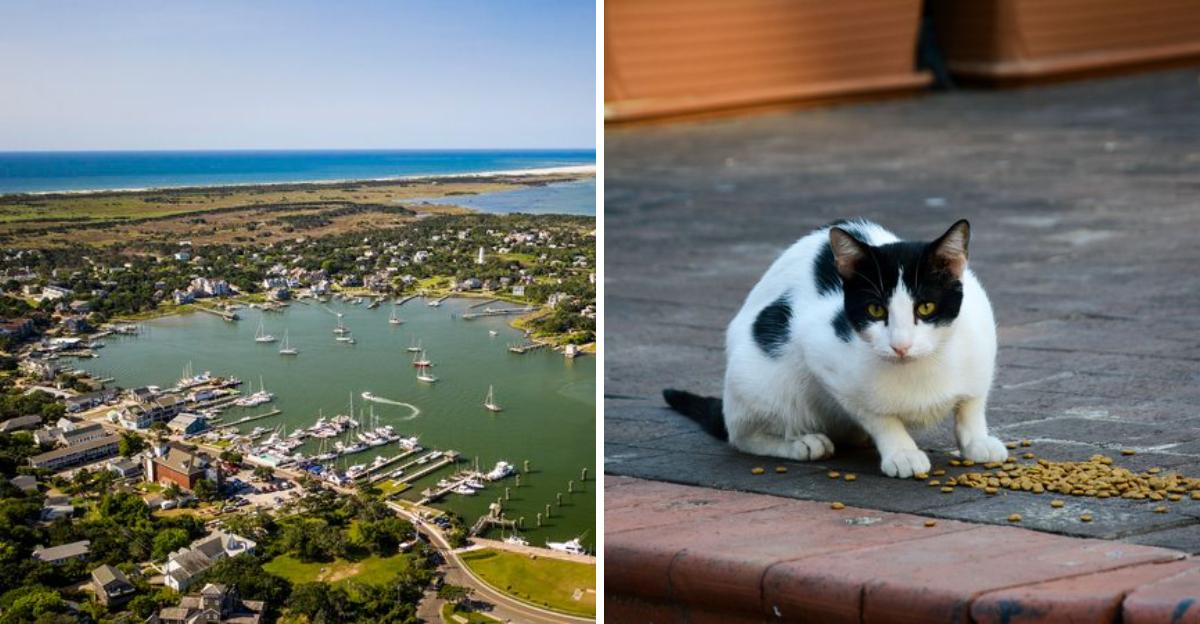
No, this is not Istanbul. But the cats clearly did not get that memo.
On one North Carolina island village, free-roaming felines have become part of the local scenery in a way that feels almost hilariously official. They lounge like they pay taxes.
They patrol porch rails. They stroll past bicycles with the confidence of tiny mayors.
Locals even have a name for them: Ocracats. That alone should tell you these animals are more than random strays.
Their story is tangled up with generations of island life and a community that chose to care for them rather than treat them like background noise.
So yes, the ferries are charming and the village has plenty of coastal character.
But sooner or later, a cat will cross your path and quietly take over the entire visit. Again, not Istanbul. The cats just seem determined to make a competitive case.
Meet The Free-Roaming Cats That Have Become Part Of Everyday Island Life
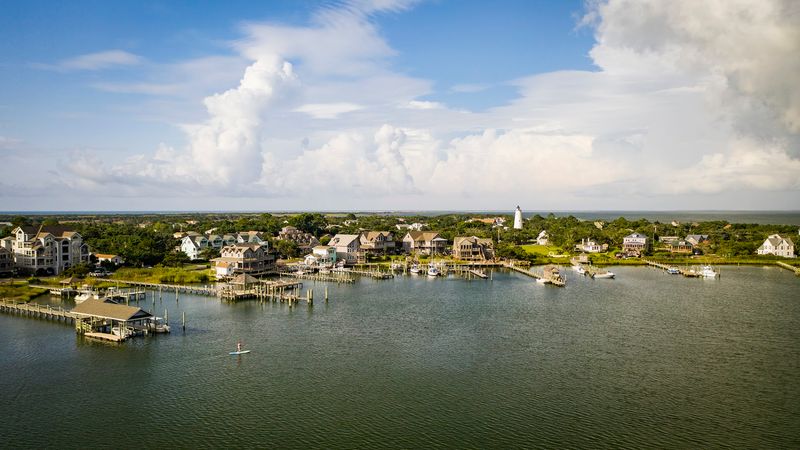
Ferry rides here end with salt air, creaking dock lines, and often a calico blinking at you from a shaded step. Islanders call these community felines Ocracats, and they have held a place in village life for generations.
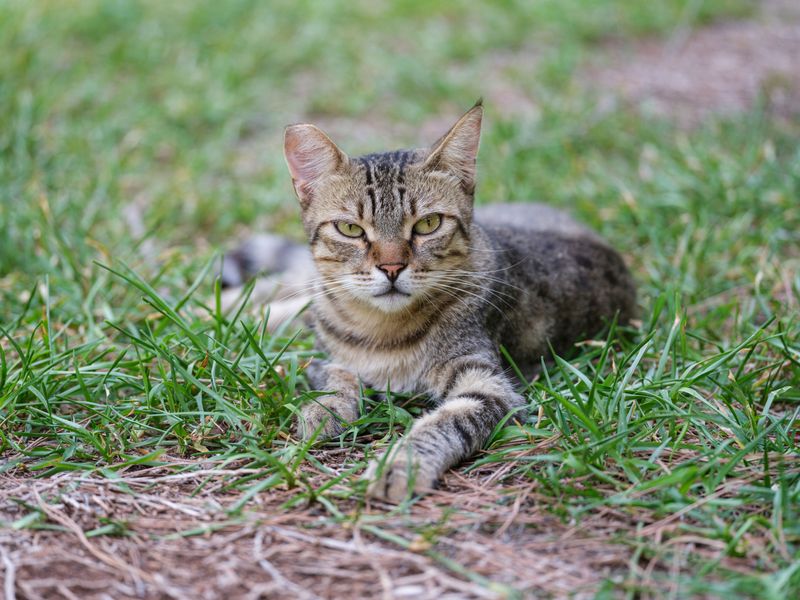
Most keep their own schedules, dozing through hot afternoons and drifting out when shadows stretch across the sandy lanes. Some greet strangers with a slow figure-eight around the ankles.
Others simply watch from a distance, tails curled neatly.
You will notice them beside bicycle racks, under hydrangea bushes, and near screened porches where the paint has softened from decades of sea wind. Their easy presence matches the unhurried rhythm of the place, where golf carts outnumber cars and nobody rushes.
Visitors exploring this corner of North Carolina often say the cats surprised them more than the lighthouse did. Roughly 375 of them share the village, and long-time residents can name many by sight.
Kittens born near the harbor learn early which shop doorways stay coolest at midday and which neighbors keep a water bowl filled.
Look For Ocracats Lounging Near Porches Fences And Quiet Village Lanes
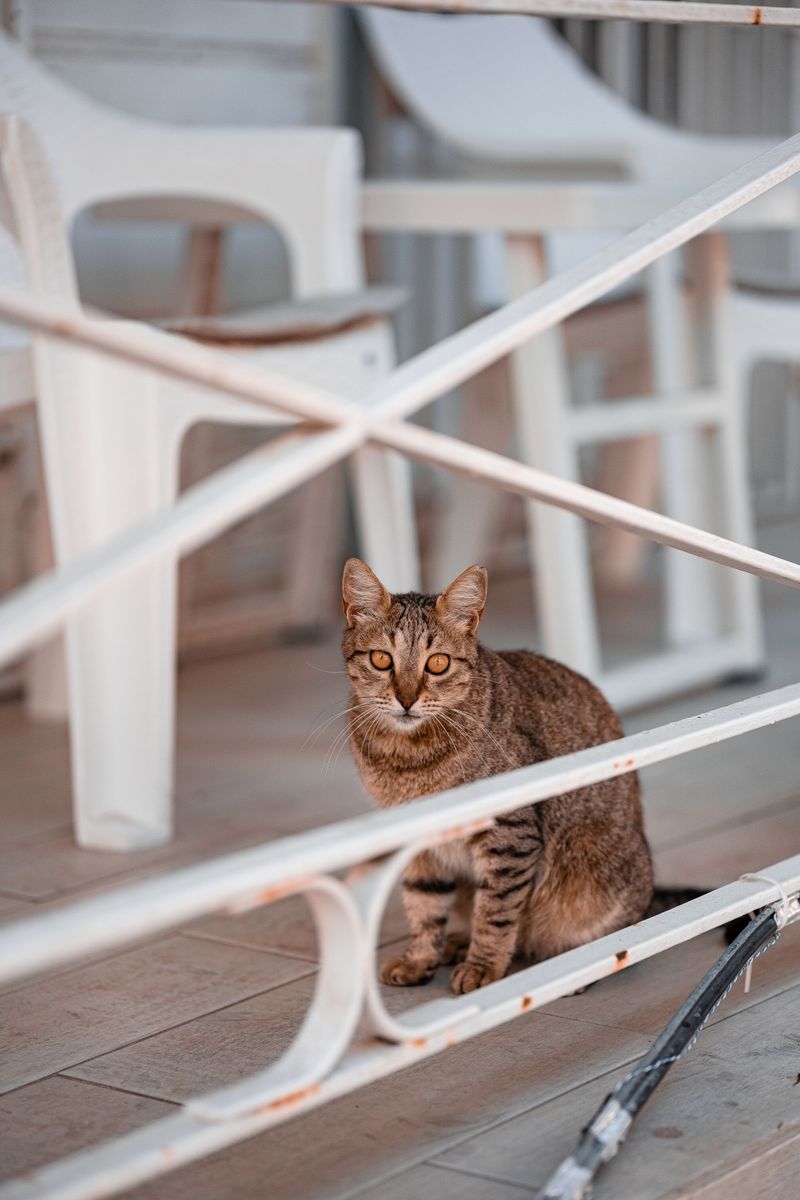
Slow down on Howard Street, where crushed shells crunch underfoot and live oaks knit a green ceiling overhead. That is prime cat-spotting territory, and locals expect you to linger.
Fence rails make excellent lookout posts. A tabby may stretch along the top board, one paw dangling, while another naps in a flowerpot that clearly used to hold geraniums.
Cats here treat private property as a shared amenity, and homeowners rarely object.
Peek toward the shaded space under a raised cottage and you may find three sets of eyes studying you politely. Bicycle baskets, boat trailers, and the steps of small galleries all serve as beds.
Late afternoon works best for sightings, once the sun eases and the breeze off Silver Lake turns cool. Walk quietly, keep your hands to yourself unless a cat clearly invites contact, and let it come to you.
Photographers often find the best light between the church and the harbor.
Four square miles sounds small until you start wandering the maze of unmarked lanes, each with its own whiskered greeter.
Learn How The Island’s Cat Population Grew So Large
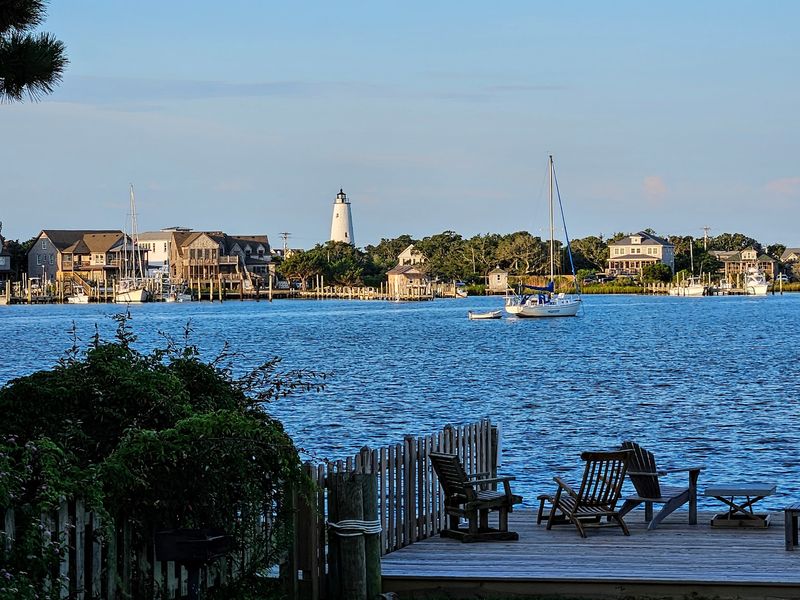
Cats arrived by boat long before ferries did. Sailing vessels carried them as working animals whose job was keeping rats out of stored grain and rope lockers, and some stepped ashore and never left.
One famous arrival was a cat remembered as Sam Salt, said to be the only living thing found aboard the Carroll A. Deering after the schooner ran aground in 1921.
The waters off this stretch of North Carolina earned the nickname graveyard of the Atlantic for good reason, and wrecks occasionally delivered new feline residents to the shore.
By 1923, newspapers were already describing hundreds of cats roaming freely across the island. Local lore also links a few bloodlines to seafarers who once anchored in these shallow inlets.
Generations of kittens followed, joined now and then by pets left behind at the end of a summer. Without organized care, the math moved quickly in one direction.
Understanding that history changes how the village looks. Every cat you pass belongs to a story that started on the water.
Spot Different Colonies As You Explore The Four-Square-Mile Village
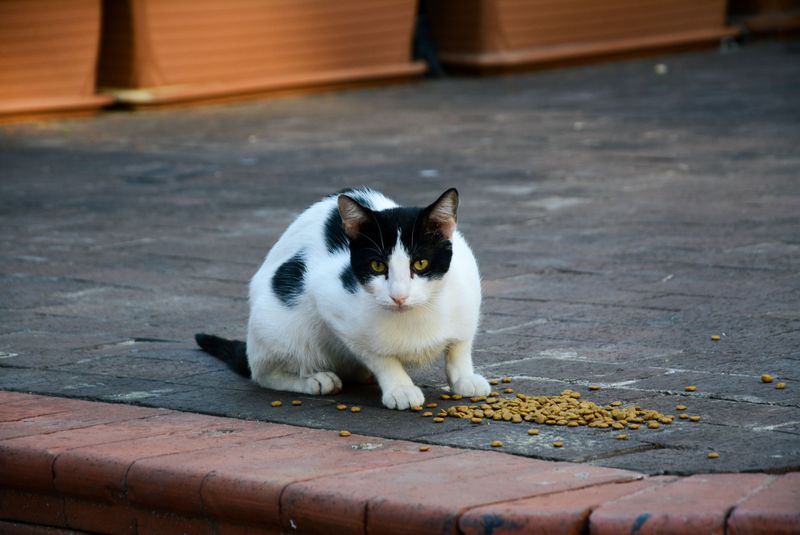
Colonies form wherever food, shade, and safety overlap. Volunteers feed at set spots each day, so groups of cats gather near those stations with the reliability of a dinner bell.
Wander toward a fishing dock and you may see a trio waiting where nets get rinsed. Behind a garden gate, another cluster shares a shallow dish under the fig leaves.
Sizes vary. Some groups number just two or three, while others hold a half dozen, with a bold ambassador who steps forward as the shy ones hold back.
Colony members often share coat patterns, a clue that many are related.
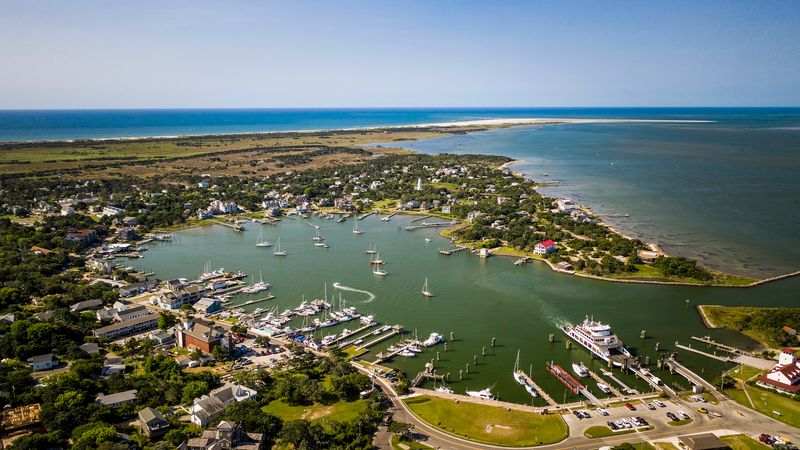
Because the village covers only about four square miles, a slow morning walk can carry you past several distinct groups. Silver Lake harbor, the lanes near the 1823 lighthouse, and the quiet blocks behind the shops each host their own.
Keep a respectful distance from feeding areas. Watching from a few steps back lets the cats eat calmly.
Never move a cat, and skip the snacks from your lunch plate.
Discover The Volunteer Group Working To Feed And Care For Community Cats
Ocracats, Inc. has quietly run this operation since the early 1990s. Donations and mail reach the nonprofit at P.O.
Box 993, Ocracoke, NC 27960, and every dollar goes toward food, medicine, and transport. Volunteers, most of them island residents, split the daily rounds.
Their work looks simple from the outside: bowls filled, water refreshed, shelters checked after a storm. Up close it means early mornings, hurricane preparation, and long ferry trips to mainland veterinarians.
Sick or injured cats receive treatment. Kittens young enough to socialize get placed into homes rather than left to grow up outdoors.
Ear tips are notched during surgery, a quiet signal that a cat already belongs to the managed population.
Visitors can help without doing much at all. Buying a T-shirt, dropping change in a donation jar at a village shop, or reporting a limping cat gives the volunteers useful support.
That steady, unglamorous effort is the reason the cats you meet look sleek, alert, and well fed.
Find Out How Spaying And Neutering Have Helped Reduce Their Numbers
Numbers tell this part of the story best. More than 600 cats have been spayed or neutered over the past decade, many during clinics set up inside the Ocracoke Volunteer Fire Department.
The approach is called Trap-Neuter-Release. Cats are humanely trapped, treated by a veterinarian, then returned to the colony where they already know every fence line and shady corner.
Recovery happens in a quiet space before release, usually within a day or two.
Results show up in the kitten counts. Volunteers recorded 91 kittens in 2020 and only 12 in 2024.
Each surgery prevents dozens of future kittens, which is why the trend holds.
As of June 2025, roughly 375 free-roaming cats lived in the village, well below the crowds described a century ago. Fewer litters mean healthier animals, calmer colonies, and less strain on the people funding the food.
Communities across North Carolina have studied the model. What makes it work here is scale: a small island, committed neighbors, and a shared understanding that the cats are staying.
Keep Your Camera Ready Because Cats Can Appear Almost Anywhere
Photographers who come for the 1823 lighthouse usually go home with a phone full of cats instead. The subjects are everywhere, and most are unbothered by attention.
Morning light along Silver Lake turns fur golden and puts sparkling water behind your frame. Later, deep shade under the live oaks creates soft, moody portraits without any editing.
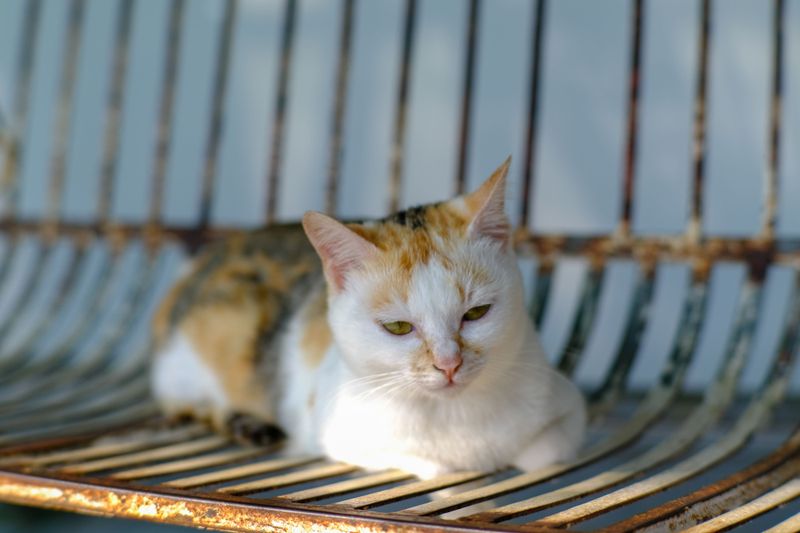
Overcast days flatter tabby stripes and calico patches equally.
Watch for the small comic moments: a cat asleep in an empty crate outside a shop, another supervising a fisherman from a piling, a pair sharing one narrow bench. Sunset near the harbor brings both cats and pelicans into the same shot.
Practical tips help. Crouch to eye level rather than shooting downward, skip the flash, and give the animal room to walk away if it wants to.
Patience beats chasing every time.
Weathered cedar shingles, faded picket fences, crab pots, and blooming oleander make natural backdrops. Bring a lens you can focus quickly, because the best pose lasts about four seconds.
Leave With A Very Different Memory Of This Remote Outer Banks Village
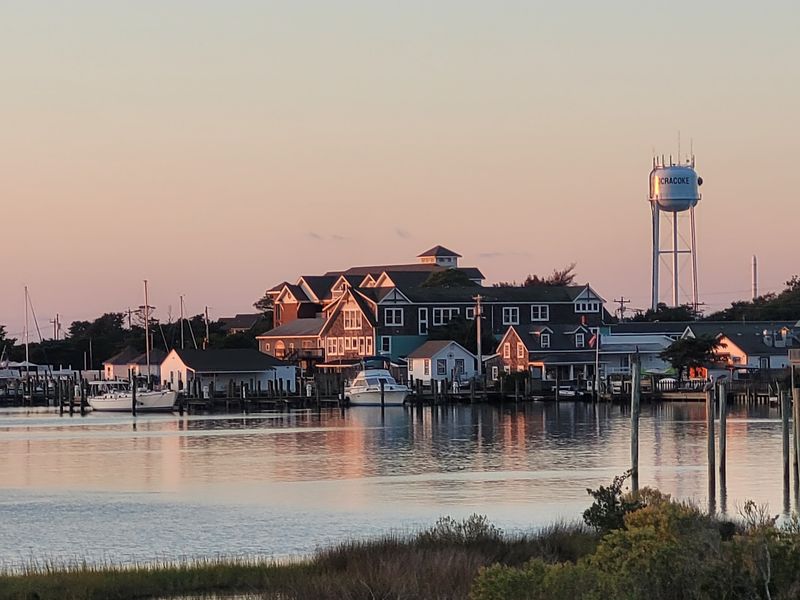
The ferry pulls away and the village shrinks to a line of rooftops, a white lighthouse, and green water. Somewhere back there, a cat is settling into the warm spot you just left.
Most travelers arrive expecting beaches, the tiny British Cemetery with its World War II graves, and fresh seafood by the harbor. Shops and restaurants ring Silver Lake, where boats rock gently at their moorings.
All of that delivers.
What sticks, though, is smaller. It is the tabby that walked you three blocks down a sandy lane, the calico stretched across a shop step, the neighbor refilling a water dish at dusk.
Those moments say something about the place. Caring for hundreds of animals, year after year, on an island reachable only by boat or plane takes genuine commitment.
Nothing about it feels staged for visitors.
Few corners of North Carolina hand you a memory quite like that. Bring home the photos, the pound cake, and the satisfaction of being greeted by the locals, whiskers and all.