This North Carolina Landmark Hides A Whole 1800s Village That Feels Frozen In Time
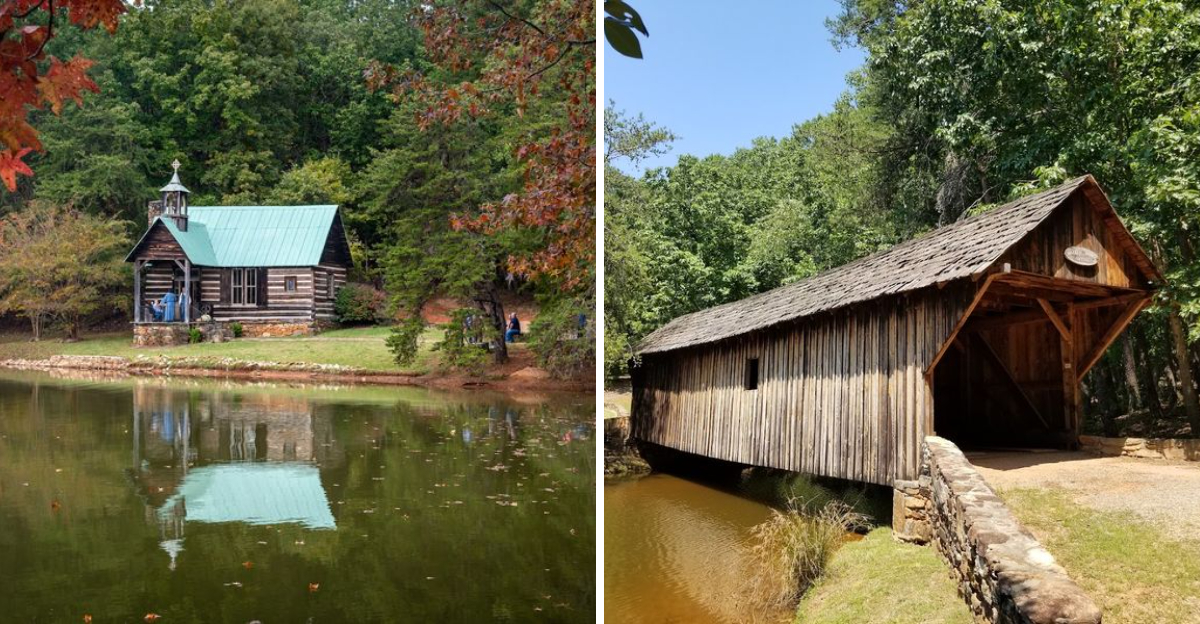
History usually asks people to behave quietly, but this place makes the past feel so close that even your modern shoes seem slightly underdressed.
Out in the rolling foothills, an entire village of restored log buildings gives visitors the strange feeling that the 1800s forgot to leave.
Nothing about it feels like staring at dusty objects from behind glass, because the paths and handmade details make the whole experience feel alive in a way that sneaks up on you.
For a historic destination in North Carolina, it has an unusual kind of pull.
The craftsmanship feels impressive without turning the visit into homework, and the setting makes every old structure seem like it still has a job to do.
You come curious, then leave wondering how time travel managed to look this convincing.
Walk Into A Village Built From Real Historic Cabins
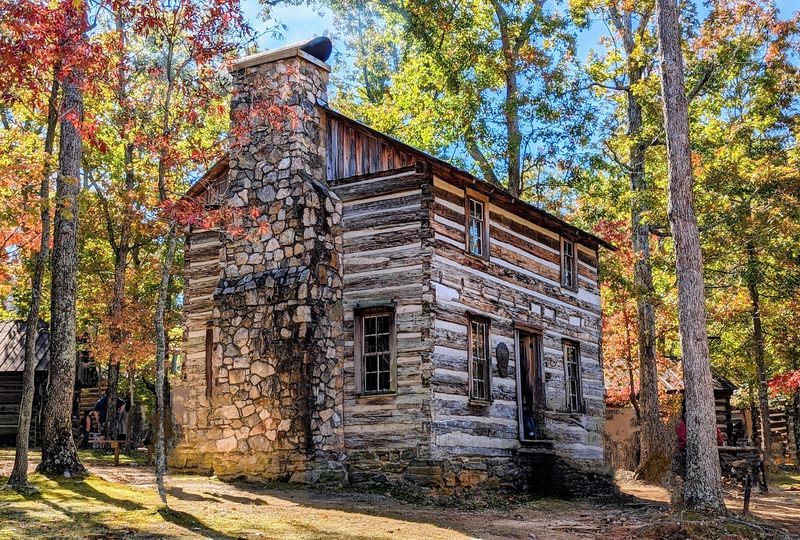
Crossing into Hart Square Village feels different from entering a regular museum because the buildings are real, weathered, and full of the kind of details that cannot be convincingly faked.
The village sits at 5055 Hope Road, Vale, North Carolina 28168, where more than 100 historic log structures have been gathered across a broad rural property.
These cabins, barns, churches, trade shops, and community buildings were not built as movie-set replicas.
They were rescued, moved, restored, and preserved so visitors could understand how people lived, worked, worshipped, cooked, traded, and survived in earlier North Carolina communities.
Dr. Robert Hart III began the project in 1973, saving structures that might otherwise have disappeared through neglect, development, or demolition. That effort gives the village its unusual emotional weight.
Each building feels like it arrived with a past attached. You can see the notches in the logs, the wear in the floors, the small rooms, and the practical choices made by people who built for use rather than decoration.
Hart Square Village works because it lets history feel physical. You do not only read about the 1800s.
You walk through its doorways.
See Why The Log Structures Feel So Rare
Collections this large do not happen by accident, which is why Hart Square Village feels so remarkable once the scale sets in.
The site is widely described as the largest collection of historic log structures in the United States, with buildings dating roughly from the late 1700s through the 1800s.
Many came from Catawba County and surrounding areas, which helps the village feel regionally grounded instead of assembled from random pieces. The craftsmanship is worth studying slowly.
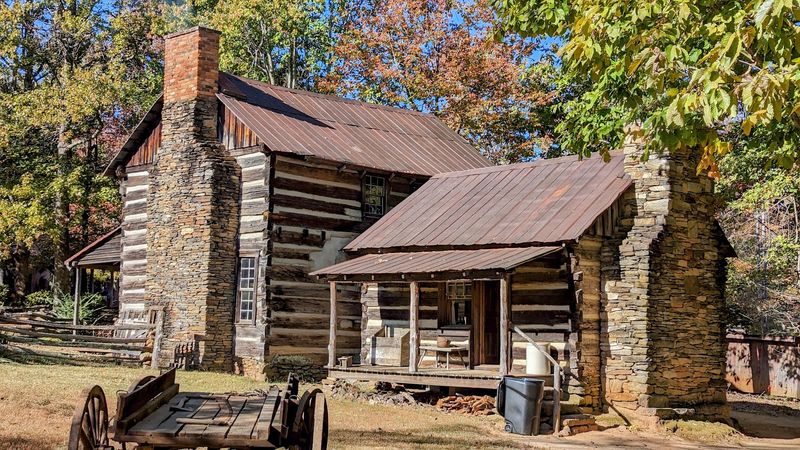
Hand-hewn logs, fitted corners, chinking, wide fireplaces, simple stairways, and practical porches show how builders worked with available materials and hard-earned knowledge.
These structures were made before power tools, before modern insulation, and before convenience shaped the way homes were designed.
Nothing about them feels casual. Every beam had to matter.
Every doorway, loft, hearth, and work area served a purpose. That rarity is part of the power here.
North Carolina once had many more log buildings scattered across rural communities, but time is not gentle with wood, weather, and abandoned homes. Hart Square Village protects what might have vanished.
Seeing so many authentic structures together turns individual cabins into a fuller story of settlement, labor, and everyday resilience.
Follow The Paths Past Barns, Shops, And Churches
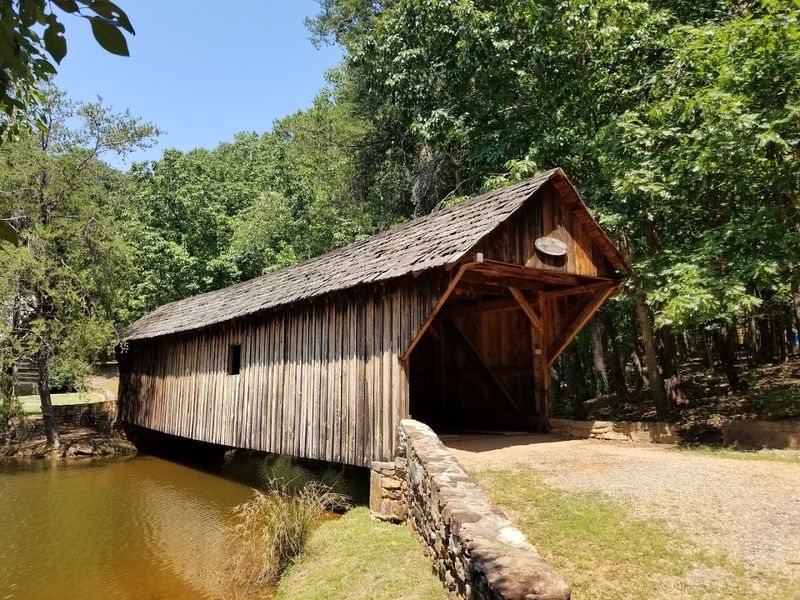
Wandering through Hart Square Village feels like moving through a community instead of a display. Paths lead visitors past cabins, barns, chapels, churches, a schoolhouse, a tavern, trade shops, and working spaces that help explain how a rural 19th-century settlement functioned.
That variety matters. A village was never only a row of homes.
It needed places to worship, teach, grind grain, repair tools, store crops, gather neighbors, and pass down skills. Hart Square’s layout gives those roles room to breathe.
One building may point toward domestic life. Another shows the work of a craftsperson.
Another reveals how faith, education, and local trade shaped the community. Comfortable shoes are a smart idea because the property is large, and the terrain feels more like a real outdoor village than a polished indoor museum.
That is part of the appeal. The paths invite slow looking, not a quick march from one label to the next.
You notice porch heights, rooflines, stonework, door latches, and how the buildings relate to one another. The whole place becomes more interesting when you stop treating it like a checklist.
Hart Square is best explored at the pace of curiosity.
Let The Old Buildings Tell The Story Slowly
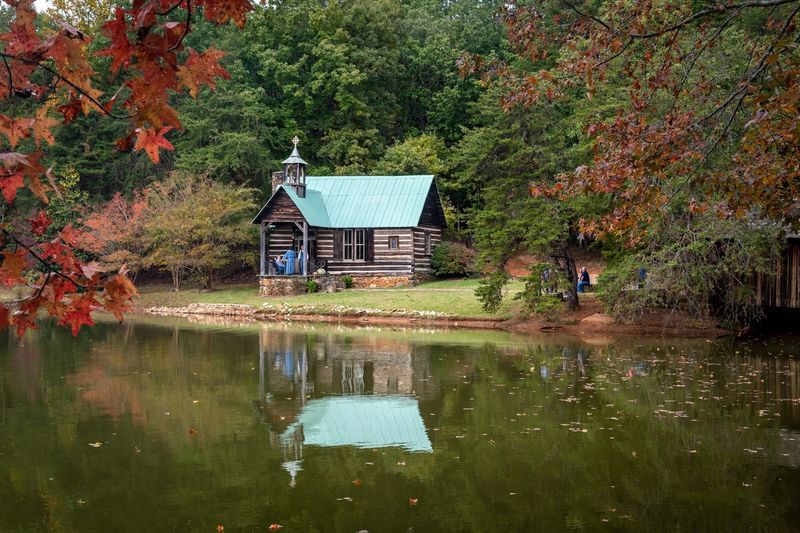
Rushing through Hart Square Village would flatten the very thing that makes it special. The buildings need time.
Interiors hold furniture, tools, domestic objects, trade equipment, and artifacts that help visitors imagine daily life beyond the romance of “simpler times.” Life in these buildings was not simple. It was demanding, physical, resourceful, and deeply tied to weather, land, family, faith, and community knowledge.
A small bed, a cooking hearth, a hand tool, a spinning wheel, or a plain wooden table can say more than a dramatic exhibit panel because these objects show how people actually lived.
The Hart Square Foundation now stewards the property and collection, continuing the preservation work while opening the village through tours, events, classes, and educational programs.
That stewardship matters because buildings like these do not preserve themselves. Wood needs care.
Roofs need attention. Stories need people willing to repeat them accurately.
Visitors who linger inside each structure can feel how much work went into both the original building and the later rescue. The experience is quiet but not empty.
Every room seems to carry traces of the people who used spaces like this for survival, comfort, work, and home.
Visit During A Festival For The Livelier Version
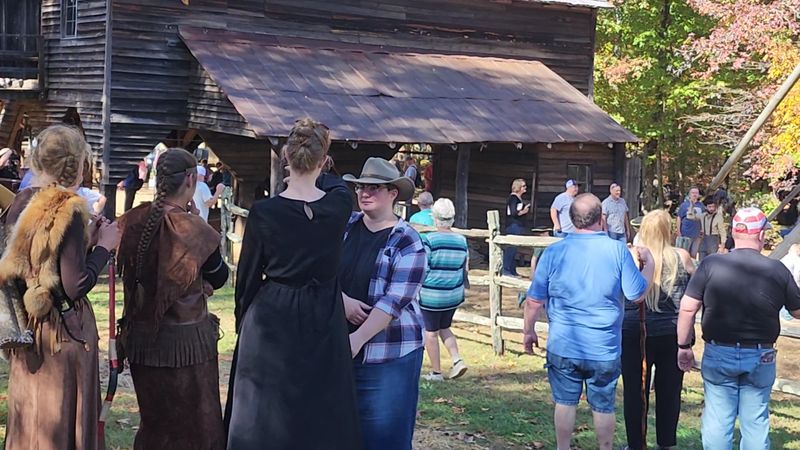
Festival days change the whole personality of Hart Square Village. A regular visit can feel peaceful and reflective, but heritage events fill the grounds with music, demonstrations, foodways, craft traditions, and historical interpretation that make the buildings feel active again.
The annual Heritage Festival is the signature event, bringing the village to life with artisans, demonstrators, and old-time skills shown across the property.
Christmas in the Village offers a different mood, with lantern light, seasonal traditions, and historic buildings turned into a warm holiday walk through the past.
These events require separate tickets and planning because they can draw strong interest. That is especially true for visitors who want to see blacksmithing, weaving, cooking, music, woodworking, and other traditional practices happening in the spaces where they make the most sense.
Watching a craftsperson work inside or beside a preserved building changes the way the structure feels. It becomes less like a still object and more like a working piece of a wider world.
Hart Square’s festivals are not just added entertainment. They help visitors understand how sound, movement, smoke, tools, conversation, and labor once filled places like this.
Bring Someone Who Loves Hands-On History
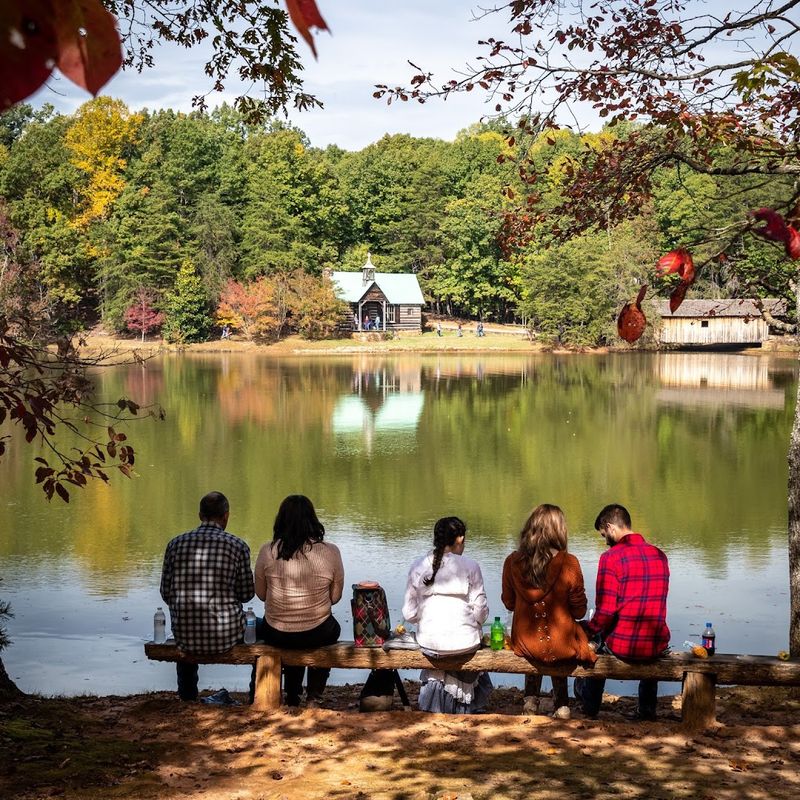
Curious people thrive at Hart Square Village because the site rewards questions. This is the kind of historic place where a companion who likes asking “what was that used for?” can make the whole visit better.
The Hart Square Foundation offers educational programming, public tours, private group tours, folkways classes, music programs, and events that connect visitors with traditional arts and Appalachian heritage.
That hands-on approach gives the village a different energy from a museum built only around observation.
School groups, families, craft lovers, history readers, and casual travelers can all find a way into the story. Some visitors may care most about architecture.
Others may focus on cooking, music, textiles, blacksmithing, farming, faith, or family life. The village has enough range to meet all of those interests.
Kids often respond to the physical reality of the buildings because the past suddenly has doorways, stairs, benches, tools, and smoke-darkened spaces instead of only textbook dates. Adults can be surprised by how much there is to learn from small details.
Bring someone patient, curious, and willing to listen. Hart Square is not at its best when treated like a quick photo stop.
It is built for people who want history to feel touchable.
Notice The Details Inside Each Preserved Space
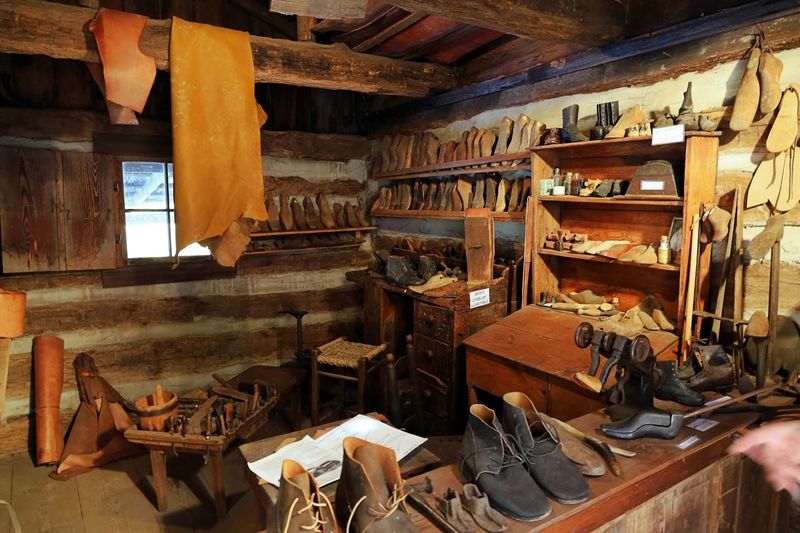
Small details carry the deepest surprises at Hart Square Village. A visitor moving too quickly may see only cabins and barns, but a slower look reveals how much care has gone into the interiors.
Shelves, beds, cradles, quilts, iron tools, cookware, spinning equipment, wooden furniture, farm implements, and trade objects all help explain the practical world behind each building.
Visitors encounter chapels, a pre-Civil War cotton gin, a tavern, a print shop, and a one-room schoolhouse across the site. These elements together present a broad view of rural life instead of a single narrow story.
Details also show how communities reused materials, solved problems, and made beauty within strict limits. A handmade quilt is not only decorative.
It is warmth, labor, skill, and family memory. A tool is not only an object.
It is knowledge passed through hands. A small schoolroom suggests discipline, hope, and the value placed on learning even when resources were limited.
Hart Square works so well because it does not depend on one showpiece. The whole village is the showpiece.
Every corner, latch, beam, and worn surface adds another clue to how people built lives in this part of North Carolina.
Make Time For The Traditional Craft Demonstrations
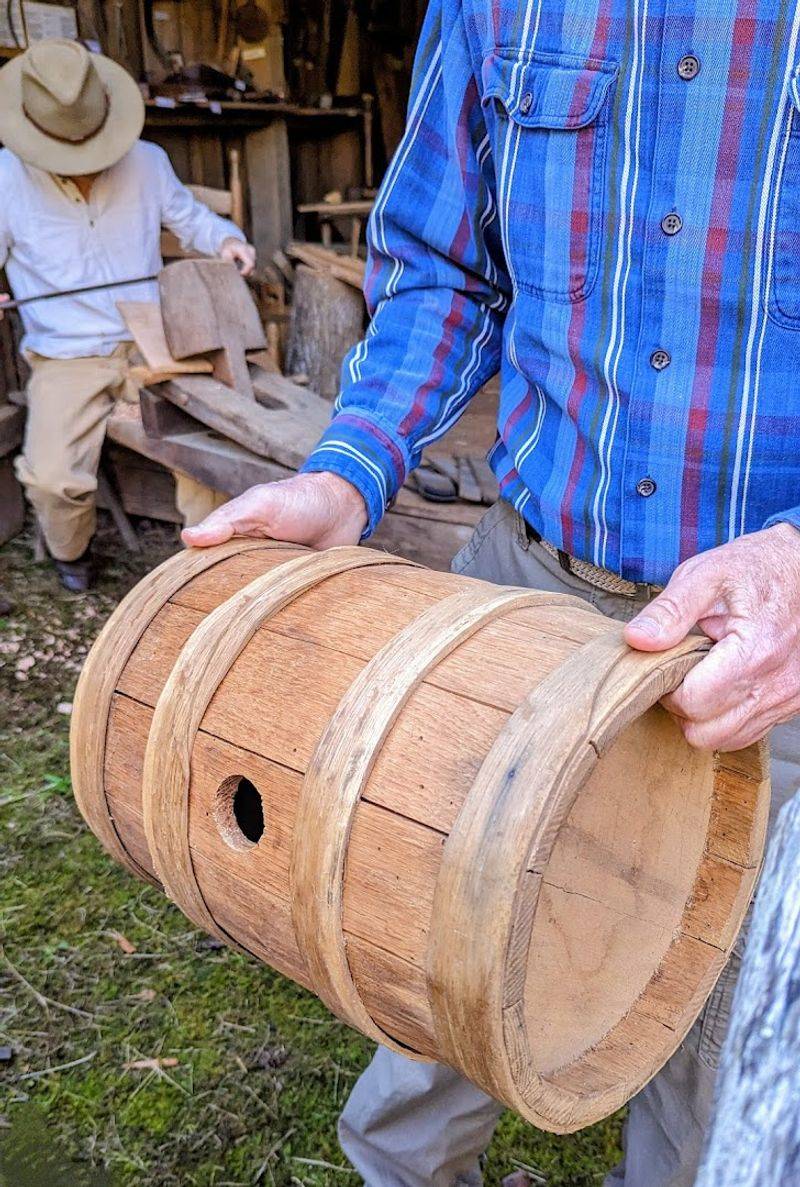
Traditional craft demonstrations are where Hart Square Village feels most alive. Seeing blacksmithing, basket weaving, quilting, cooking, music, woodworking, or other folkways in motion helps connect the preserved buildings to the skills that once kept communities functioning.
These were not hobbies in the modern sense. Many were necessary forms of survival, trade, repair, food preservation, and household production.
Classes and workshops at Hart Square’s Folkways Program focus on traditional arts, culture, Appalachian heritage, and self-reliance. The experience encourages visitors to engage with history rather than simply observe it.
Demonstrations and classes also help explain why preservation has to include knowledge, not only buildings.
A cabin can be saved, but the skills that filled it with life need teachers, students, and repeated practice. Checking the event and class schedule before visiting is smart because offerings vary, and popular programs can fill.
The best visits happen when a building, an artifact, and a living skill all line up in the same moment. A blacksmith at work, music from a porch, or someone demonstrating an old household craft can make the whole village feel less frozen and more remembered.
Hart Square does not only preserve wood. It preserves ways of knowing.