This North Carolina Monastery Welcomes Visitors To Share A Meal After Morning Prayers
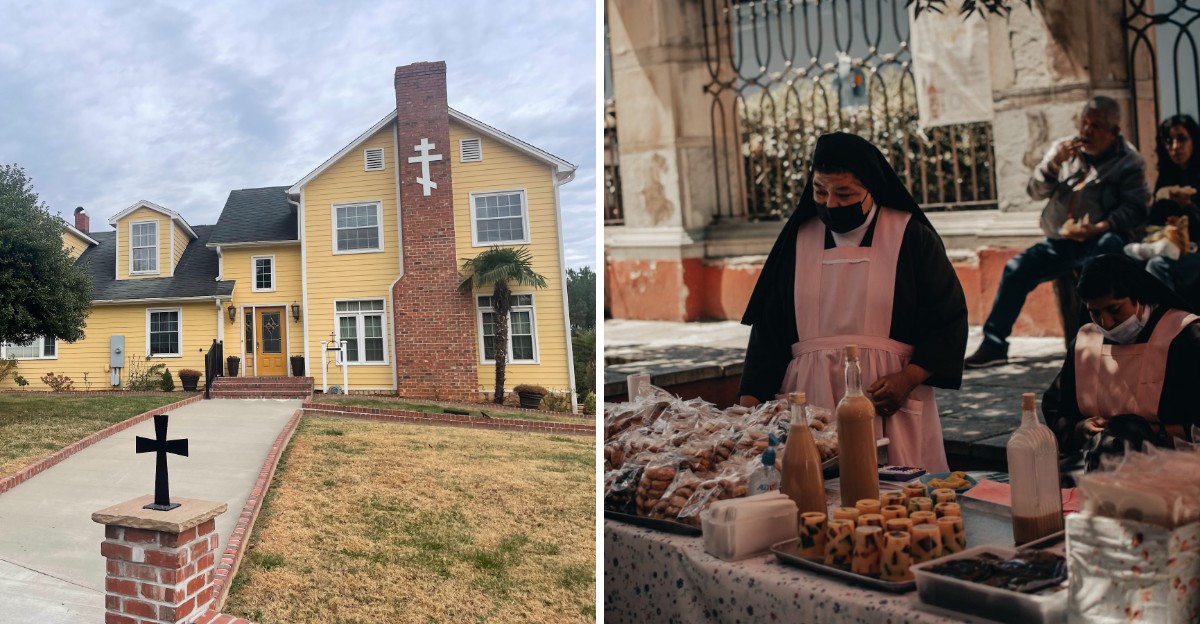
Olive trees in the North Carolina foothills were not something I expected to find.
That detail alone made me curious about the monks tending them.
The community grows Mediterranean crops while following traditions rooted much farther back than the garden outside.
I’m especially drawn to how weekends unfold here.
Visitors who arrange their trip ahead of time can attend the Divine Liturgy and then remain for the shared meal afterward.
Nothing about that sounds rushed.
The monastery itself is dedicated to a centuries-old icon with deep Byzantine roots, which gives the quiet setting an even longer sense of history.
For me, the contrast is what stays with me most.
A Sunday morning here begins with prayer rather than plans for brunch, then moves naturally toward a table shared with others.
Weekend Liturgy Ends Right Where Breakfast Begins
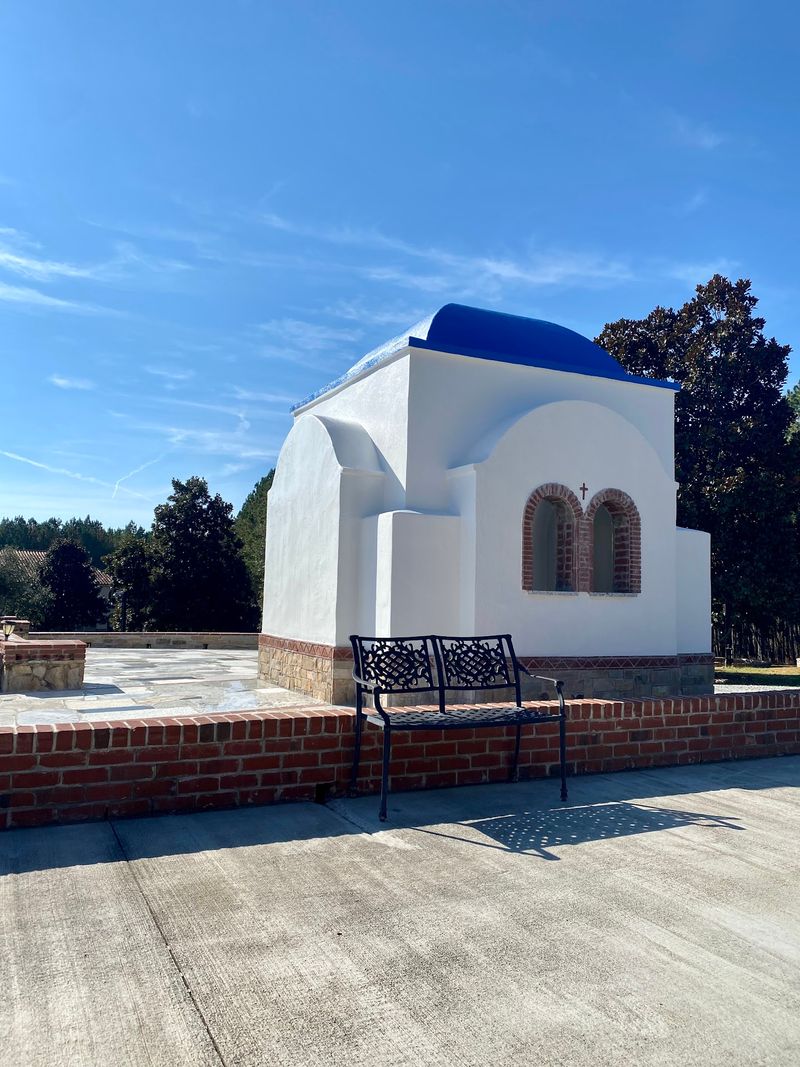
Saturday and Sunday mornings follow a lovely rhythm at Panagia Pammakaristos Monastery. The Divine Liturgy begins at 8:30 a.m., and a meal follows once the service ends.
That pairing is the heart of the experience. You come for prayer, and you stay to share a table with the community.
The monastery even offers a friendly nudge on its schedule. Arriving early to Liturgy is called blessed, which is a pretty gentle way to say don’t stroll in late.
Weekday services look very different. Orthros, the morning prayer, and Liturgy can start as early as 2:00 a.m. or around 7:00 a.m., depending on the day.
A visitor meal isn’t listed after those weekday services. So if sharing a meal is your main goal, the weekend schedule is your best bet.
Planning matters here more than at most places. Pilgrims who want to attend services or meals are asked to contact the monastery ahead of time.
Think of it less like a reservation and more like letting your hosts know you’re coming. Good manners never go out of style, especially in North Carolina.
One call ahead can save you a lot of guessing.
Dinner Conversation Is Replaced By Something Better
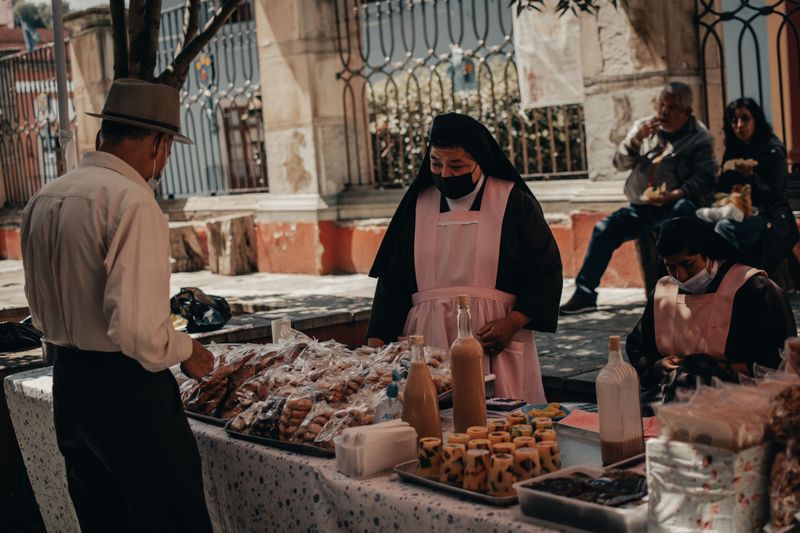
Sharing a meal after morning prayers isn’t your typical weekend outing. At Panagia Pammakaristos Monastery, Saturday and Sunday Divine Liturgy is followed by a meal.
That gathering offers visitors a chance to experience another part of monastic life. Worship comes first, and the meal follows the community’s daily rhythm.
There’s a good reason to plan ahead. The monastery asks pilgrims to contact the community before attending services or joining a meal.
Unlike a restaurant, this isn’t somewhere you can simply walk in and expect a table. The monks follow a structured schedule of prayer, work, and worship.
Orthodox monasteries have longstanding traditions surrounding shared meals. Prayer, quiet reflection, and spiritual readings are part of monastic life, although specific practices differ between communities.
For first-time visitors, the experience may feel different from an ordinary Sunday gathering. That’s part of what makes it interesting.
My advice? Follow the guidance of your hosts, respect the monastery’s peaceful atmosphere, and arrive prepared to experience something outside your usual routine.
You might discover that sharing a simple meal after morning prayers feels more meaningful than an elaborate weekend outing.
Three Monks Arrived And A Mountain Community Grew
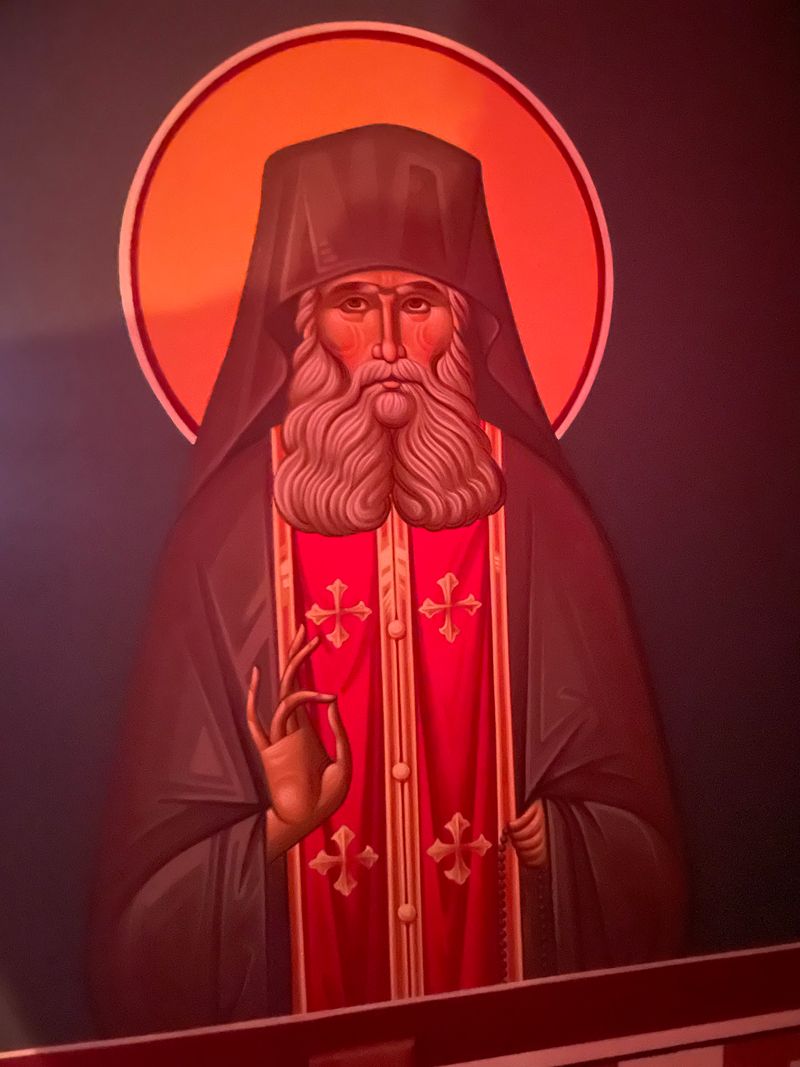
October 12, 1998, is the date that started it all. That day, three monks arrived in the foothills of the Blue Ridge Mountains to establish the monastery.
The search for the land was personal. Elder Ephraim traveled through North Carolina himself to find the right property.
He wasn’t just any visitor with a map. Elder Ephraim had served as Abbot of Philotheou Monastery on Mount Athos in Greece.
He later led Saint Anthony’s Monastery in Arizona as well. His influence shaped Orthodox monastic life across the United States before his passing in 2019.
That connection still shows. The community here follows the same spiritual path he taught, centered on prayer, quiet work, and worship.
Today, the Head Priest and Abbot is Archimandrite Nektarios. He guides a community that has kept a steady schedule of services for more than two decades.
It’s pretty remarkable when you think about it. A tradition born on a Greek peninsula now rings out from the hills of rural Stokes County.
Knowing this backstory makes a visit feel richer. You’re stepping into a living link between Mount Athos and North Carolina.
An Ancient Icon Gives The Monastery Its Name
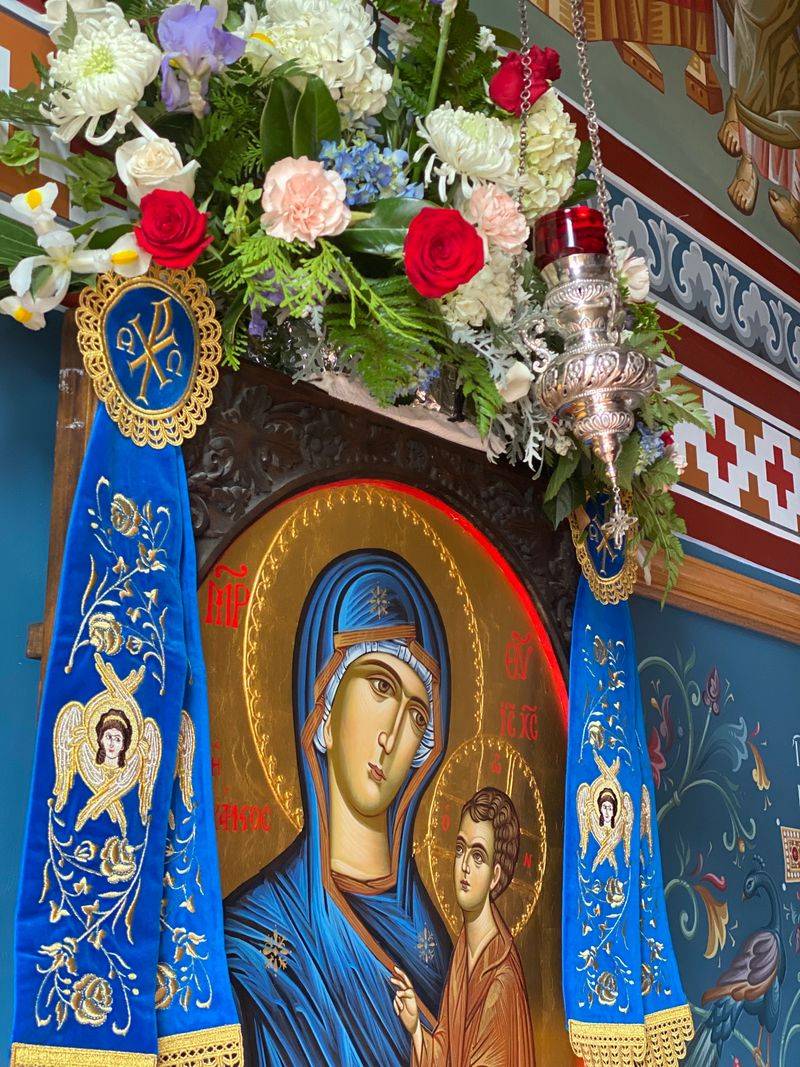
Most buildings get names from donors or streets. Panagia Pammakaristos Monastery takes its name from a 12th-century holy icon.
The phrase Panagia Pammakaristos means All Holy Virgin Most Blessed. It’s a mouthful, but a beautiful one once you know the meaning.
The name carries a big history lesson too. It’s shared with a famous Byzantine church in Constantinople, which is modern-day Istanbul, Turkey.
After the Fall of Constantinople, that ancient church served as the seat of the Greek Patriarchate. So this quiet North Carolina monastery echoes one of the most important churches in Orthodox history.
The original icon also has a comeback story. It survived for centuries and went through a careful tile-by-tile restoration.
That work finished in May 2023. The mosaic was returned to its original splendor, one tiny piece at a time.
Imagine the patience that takes. Honestly, most of us can’t finish a thousand-piece puzzle without losing a few pieces under the couch.
Learning about the icon before you visit is a smart move. It helps you understand why this place feels so connected to the wider Orthodox world.
Olive Trees And Cacti In The Carolina Hills? Really
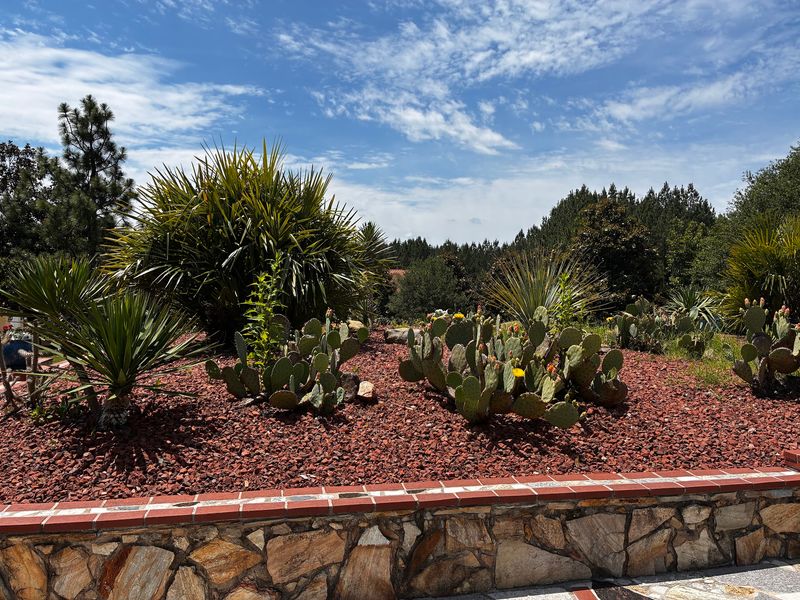
Palm trees and cacti are probably the last things you’d expect near the Sauratown Mountains. Yet visitors to the grounds might spot both.
The surprises keep coming. The monks grow grapes, olives, and lemons, giving the property a little Mediterranean flair.
The monastery’s rural grounds provide a quiet setting for the monks’ daily work and prayer, surrounded by the wooded landscape of the Sauratown Mountains. There’s also a vegetable garden, which feels a bit more like home for North Carolina.
These spaces aren’t just for show. They’re where the monks carry out daily tasks as part of their life of quiet work and prayer.
Silent work is actually a key part of the monastic routine. Tending vines or pulling weeds becomes another way to stay focused on prayer.
It’s a nice reminder for the rest of us. Even simple chores can feel meaningful when done with care and attention.
As a guest, admire the gardens respectfully. These are working spaces tied to the community’s spiritual life, not a public park.
Still, it’s hard not to smile at the sight. Lemons and olives in Stokes County feel like a small, happy mystery worth seeing for yourself.
Pack The Long Sleeves Before You Leave Home
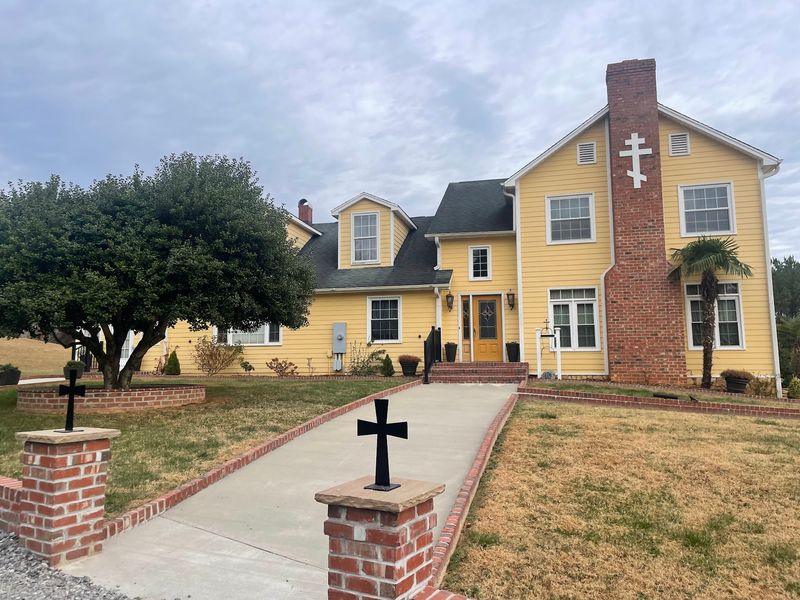
Shorts and flip-flops won’t make the cut here. The monastery has a clear dress code, and every visitor is expected to follow it.
Ladies should wear loose, ankle-length skirts or dresses that aren’t see-through. Pants aren’t allowed for women.
Long-sleeved shirts are required, and v-necks are a no. A head covering is also needed, and it should be a scarf rather than a hat.
Men have an easier packing list. Long pants, long-sleeved shirts, socks, and shoes will do the job.
Socks or hose and shoes are always required for everyone. Bare ankles in sandals simply don’t fit the setting.
Behavior matters just as much as clothing. Loud conversations, insolent chatter, unrestrained laughter, and rude gestures aren’t permitted.
Parents need to supervise their children at all times. Smoking, hunting, fishing, and firearms are strictly forbidden on the holy grounds.
It’s smart to ask before taking photos or videos too. Many Orthodox monasteries don’t allow them without permission.
A spare scarf in the car can save the day. Think of it as the monastery version of always carrying an umbrella.
Stillness Is The Whole Point Of Life Here
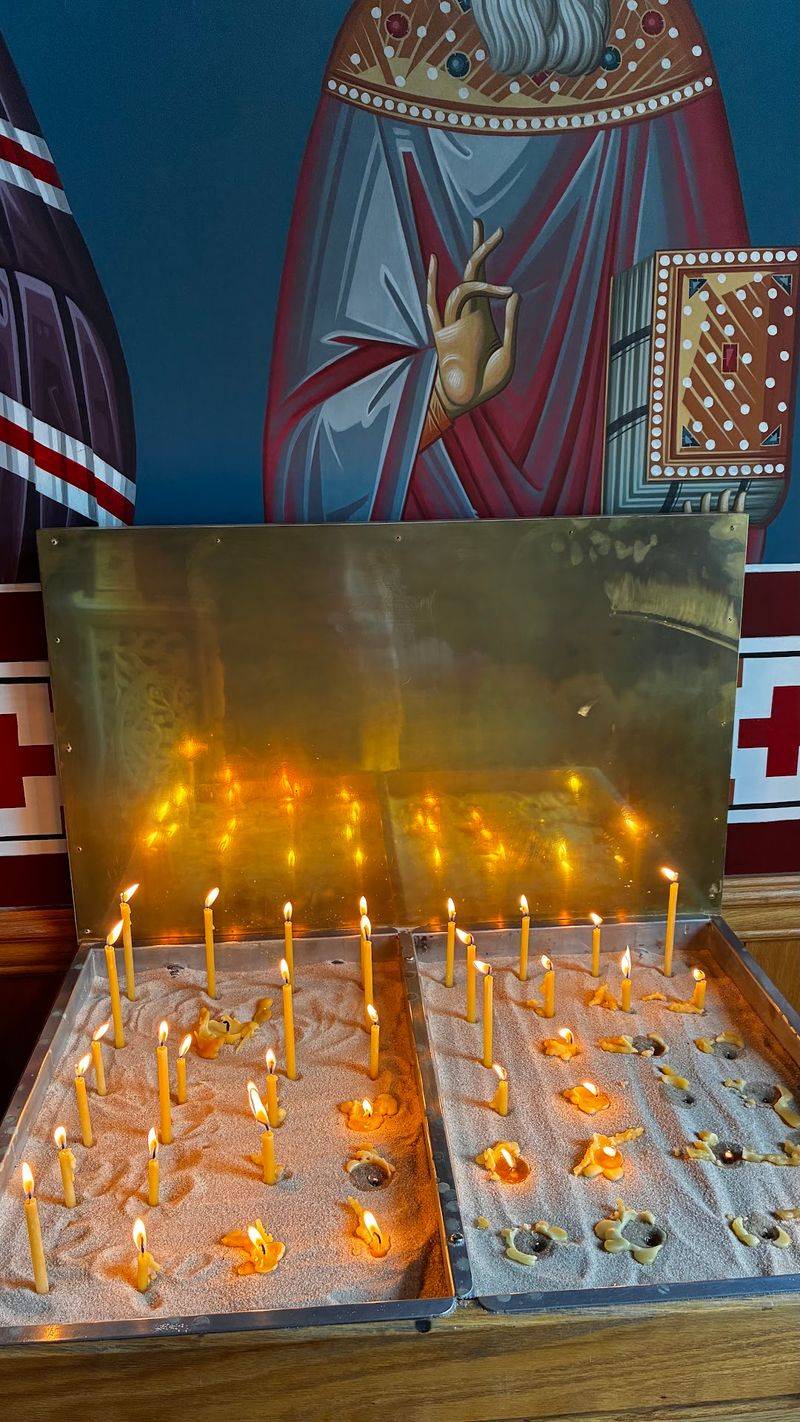
Prayer isn’t a once-a-week event for the monks. It shapes every hour of their day.
The community follows a path called hesychasm, which means spiritual stillness. It’s paired with constant prayer, especially the Jesus prayer.
Night vigils are part of the routine too. That explains why some weekday services begin at hours when most people are fast asleep.
The goal is spiritual purification, illumination, and theosis. In simple terms, it’s about growing closer to God through steady effort.
Regular worship and the sacraments hold it all together. The monastery’s mission is to grow the Orthodox Faith and spiritually nourish the faithful.
For visitors, this explains the hush you’ll notice. The quiet isn’t chilly or unfriendly; it’s part of how the monks live and pray.
The main building houses the church and the cells where the monks live. Life here is centered on worship from the ground up.
You don’t need to understand every Greek term to appreciate it. Simply being in a place devoted to prayer can be refreshing.
In a noisy world, that calm feels rare.
Plenty Of Rooms Await Pilgrims Who Want To Stay
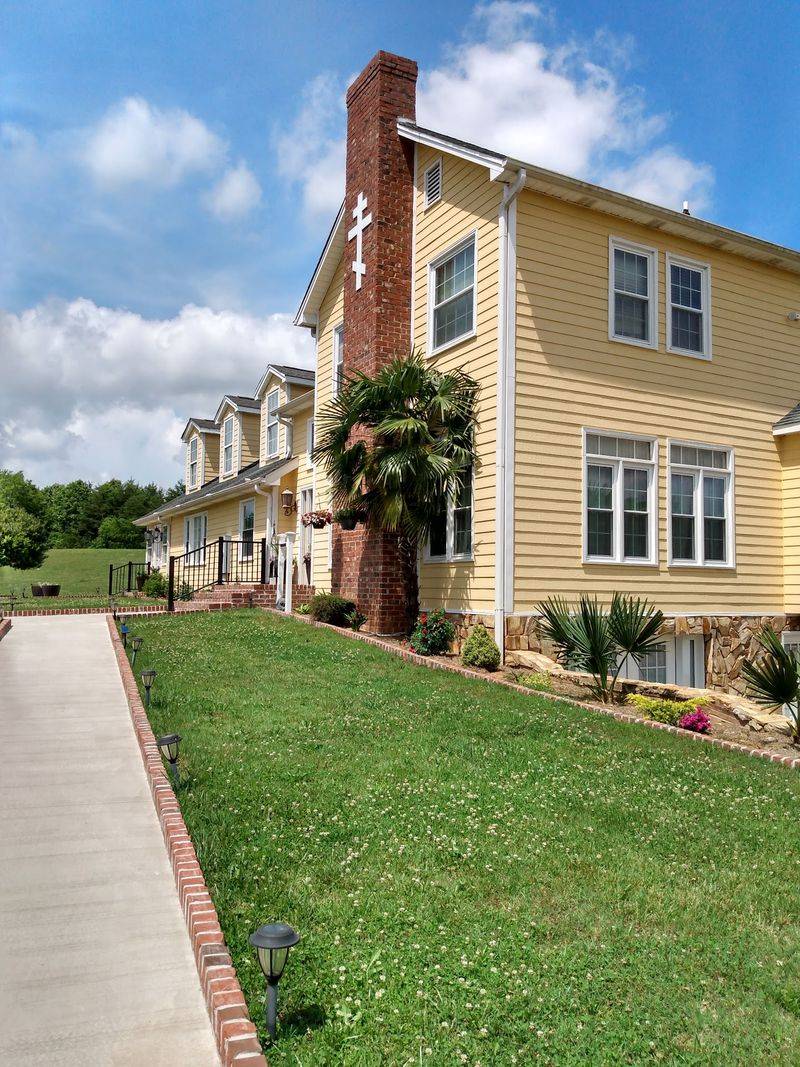
Early services and a long drive can make a day trip tricky. Luckily, Panagia Pammakaristos Monastery has guesthouses for pilgrims.
The guest buildings offer a lot of rooms. That gives visitors a chance to experience the monastery’s rhythm for more than a few hours.
Staying over makes the schedule much easier to manage. You can be on time for Liturgy without racing down country roads at dawn.
Like everything else here, stays should be arranged ahead of time. The monastery asks all visitors to reach out before planning a visit.
Visitor hours run Monday through Friday, from 9:30 a.m. to 5:30 p.m. Weekend services follow their own schedule, so confirm details when you call.
A guesthouse stay isn’t a hotel getaway. Expect a simple, prayerful setting shaped by the same dress code and quiet manners as the rest of the grounds.
That simplicity might be the best part. No room service, no buzzing lobby, just peace and the sound of the hills.
For many pilgrims, an overnight visit turns curiosity into a deeper experience. It’s a chance to truly slow down.
Finding Your Way To This Sauratown Mountains Retreat
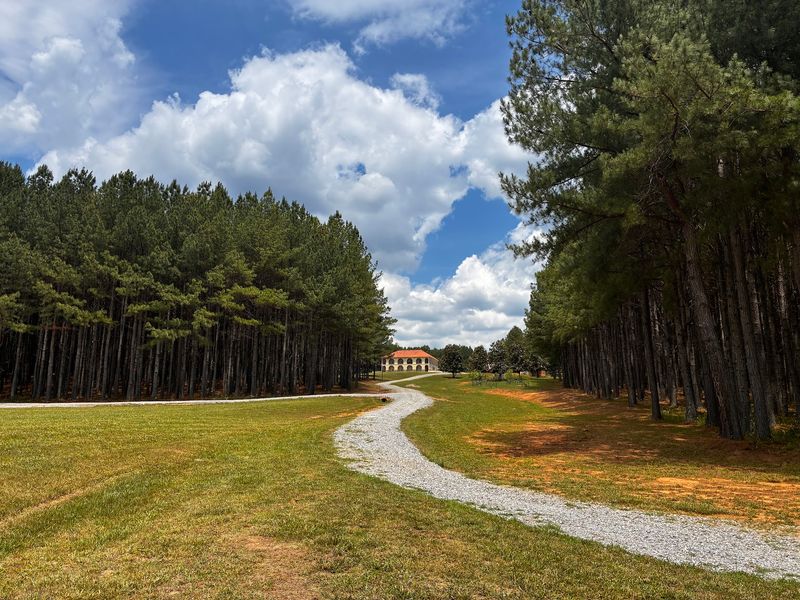
Country roads lead the way to this peaceful spot. Panagia Pammakaristos Monastery sits at 1115 Saint Ephraim’s Way, Lawsonville, NC 27022.
The setting is the Sauratown Mountains of North Carolina. It’s rural, green, and far from the busy feel of big-city life.
The street name itself is a nice touch. Saint Ephraim’s Way nods to the spiritual roots of the community.
Plan your route before you go, since rural areas can be tricky. Cell service and quick turns can surprise even confident drivers.
Remember that the monastery wants visitors to call ahead. That one step helps the monks prepare and helps you avoid showing up at the wrong time.
Leave yourself extra time for the trip. Arriving early to Liturgy is encouraged, and rushing doesn’t match the mood of the place.
The monastery operates as a nonprofit religious organization. It exists to serve the faithful, not to act like a tourist attraction.
Treat your visit as a guest, not a sightseer. Come prepared, dress modestly, and enjoy a morning of prayer followed by a shared meal.
That’s a pretty special way to spend a weekend.