This 1896 North Carolina Mountain Chapel Hides Gothic Beauty Behind Its Bright Red Doors
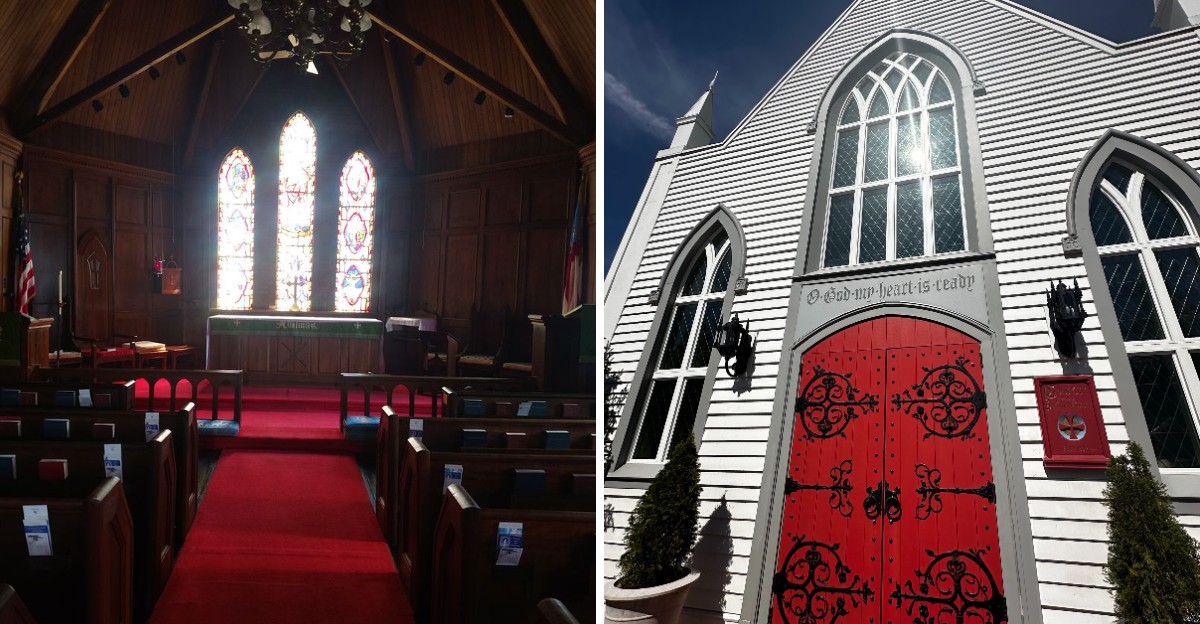
Those red doors look almost too bold for such a quiet little church.
Set high in the North Carolina mountains, the 1896 chapel seems modest at first glance, which makes the details even more fun to discover.
The closer you get, the more the building starts showing off.
Dark wood, Gothic touches, and carefully crafted artwork turn a simple roadside stop into something that feels much older than the afternoon around it. Even the silence has personality here.
You may arrive expecting a quick look and end up studying corners you would normally walk past.
Apparently, a tiny mountain church can keep quite a few secrets behind two very red doors.
Those Bright Red Doors Hide A Carpenter Gothic Landmark From 1896
Around the next mountain bend, the road slips into a tiny town filled with cozy cafes, local shops, and flower baskets spilling over with color.
Right in the middle of that cheerful scene stands a white wooden church with a pointed roof that has watched over the street for well over a century. That landmark is the Church of the Incarnation, and its first building was finished in 1896.
Builders used a style called Carpenter Gothic, which takes the grand pointed shapes of stone cathedrals and recreates them in wood.
Carpenter Gothic became popular in America during the 1800s because skilled woodworkers could craft fancy details without costly stone.
Thin trim, sharp gables, and tall narrow windows gave small towns a touch of elegance. Here, that charm survives in remarkably good shape.
In 2020, a big renovation added striking red doors facing Main Street.
In Episcopal tradition, red doors often stand for sanctuary and refuge, a quiet signal that everyone is welcome.
Plan a slow stroll along Main Street before you arrive.
The walk lets you notice how the church fits into the town like an old friend, simple and steady among the busy storefronts nearby.
You can find it at 520 Main St, Highlands, NC 28741.
Pointed Arches And A Soaring Steeple Give The Little Chapel Its Storybook Look
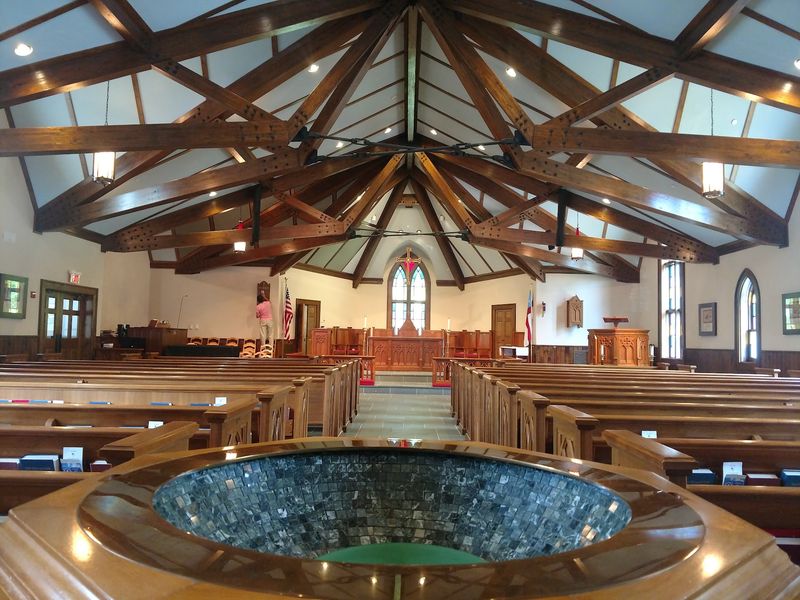
Look up. That is the best advice for anyone standing on the corner of Main and Fifth Streets, because the rooflines here seem to reach straight for the clouds.
The original 1896 chapel shows off classic Victorian Gothic Revival features.
A steeply pitched roof sheds heavy mountain rain and winter snow.
Narrow lancet windows, pointed at the top like a raised hand, let soft light slip inside, while a distinctive circular bell tower rises on the Fifth Street side.
During the 2020 renovation, designers added a fresh spire above the Main Street entrance.
It was planned to match the older bell tower, so the two now feel like partners rather than strangers.
The new steeple rises above the Main Street entrance, balancing the older bell tower on the Fifth Street side.
New Gothic-arched windows were also added to the front of the church.
Together with the steeple, they give the whole building a fairy-tale outline that looks especially lovely against a bright blue North Carolina sky.
Photographers often find the best angles from across the street.
Morning light warms the white siding, while late afternoon shadows sharpen every peak and point.
Bring patience, since passing cars and curious visitors move through often.
The Original 1896 Sanctuary Is Still Used For Worship Today
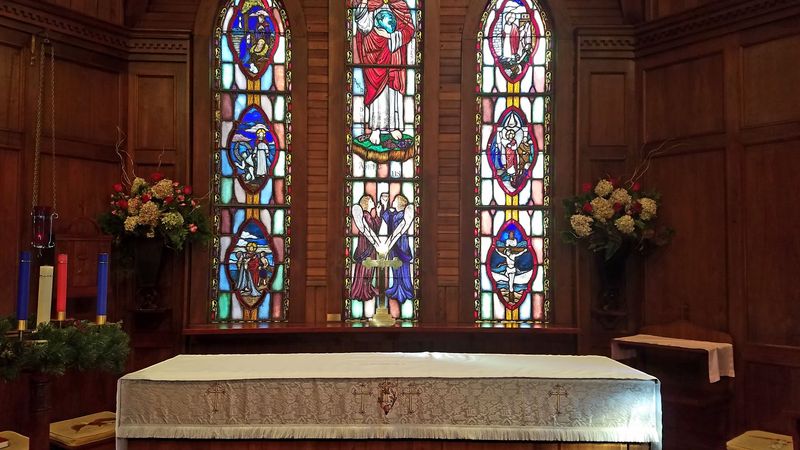
Some old buildings become museums.
This one never stopped doing the job it was built for.
For more than a hundred years, the first church building served as the heart of the congregation.
Then, in 2002, a new main sanctuary was built on the property, and the original structure took on a new role as a chapel.
It faces Fifth Street and holds about 100 worshippers, a cozy number that makes services feel close and personal.
Here is a fun twist. When the larger sanctuary was renovated in 2020, the Old Chapel was left out of the construction work on purpose.
While crews worked next door, services moved back into this historic room, bringing the congregation home to where it all began. Today a glass-lined corridor links the chapel to the main sanctuary.
Walking through it feels like stepping between two eras, with daylight pouring in on both sides.
The church remains an active Episcopal parish, so respect matters when visiting.
Check the official website for service times, dress comfortably, and speak softly inside.
Even a few quiet minutes in those old wooden surroundings can feel surprisingly peaceful after a busy morning of shopping and sightseeing.
Step Inside And The Stained Glass Gets Far More Detailed Than You Expect
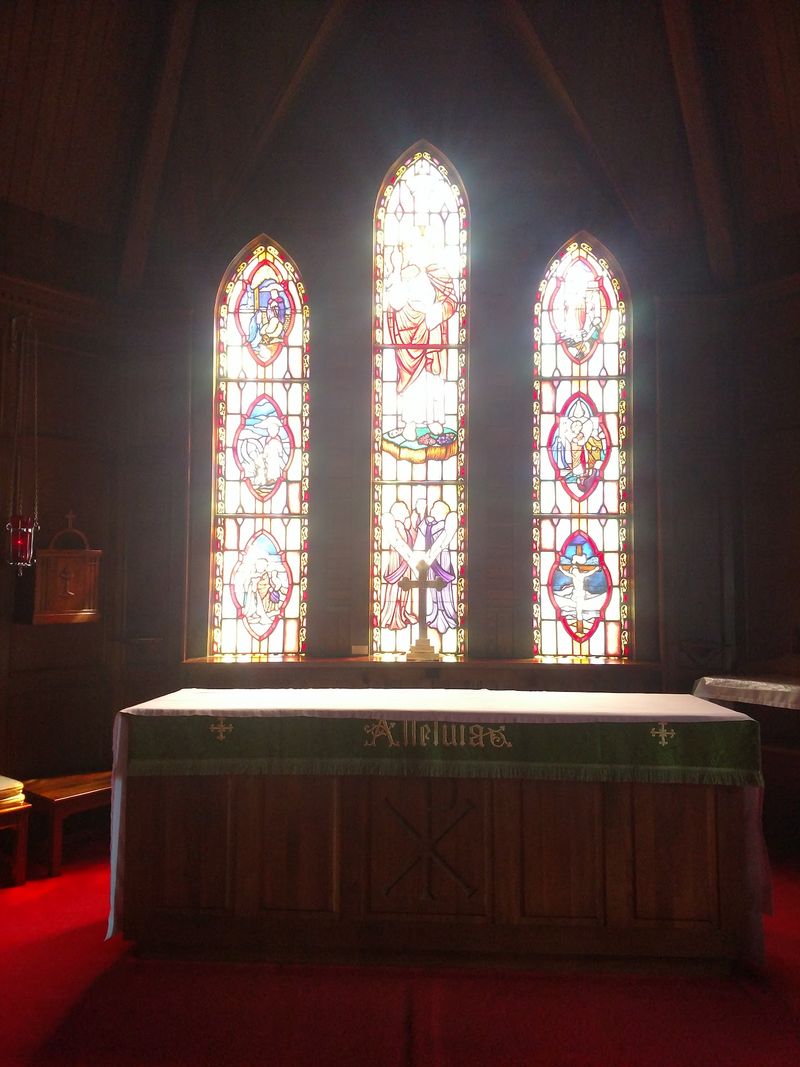
Plain windows used to line the main sanctuary.
Sunlight came through, but the glass itself had little to say. That changed with the 2020 renovation.
Ordinary panes were swapped for diamond-pane leaded windows, where small glass shapes are joined by thin strips of metal.
When light hits them, the walls seem to sparkle with a gentle crisscross pattern, almost like frost on a winter window.
The real showstopper sits near the front. Artist Eric Johnson created the Star of Bethlehem altarpiece, and he drew ideas from a 19th-century Pre-Raphaelite tapestry.
That art movement loved deep colors, medieval styling, and symbols packed into every corner, so expect jewel tones of ruby, sapphire, and emerald.
Give yourself time to study it.
Stand back first to take in the whole design, then step closer to see how the small details fit together.
Your eyes will keep finding something new.
The artwork blends Christian symbols with images of the local environment, a thoughtful nod to the mountains of North Carolina surrounding the church.
Bright sunny days make the colors glow most vividly, so a midday visit is a smart choice.
Tiny Animals And Mountain Plants Are Hidden Throughout The Sacred Artwork
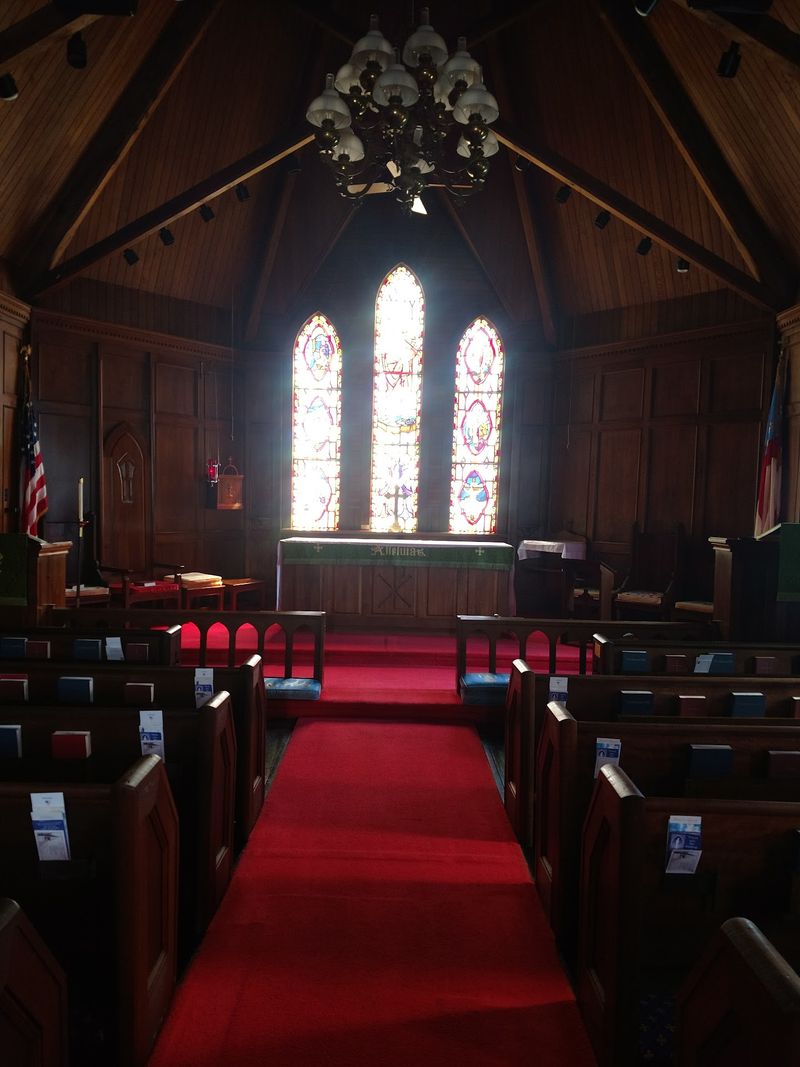
Think of it as a treasure hunt with a gentle purpose.
Hidden in the church art are creatures and plants that could have wandered in straight from the nearby forest.
When the 2020 renovation brought new artwork and stained glass into the building, designers made a clear choice.
Much of the art would reflect the plants and animals of the region. Faith and nature were woven together, so the walls speak about both heaven and the hills outside.
The Star of Bethlehem altarpiece is the best place to start searching.
Trees, flowers, and animals are arranged around the holy family, almost as if the whole natural world gathered to celebrate. Each living thing seems to have its own small place in the scene.
Families with kids can turn this into a quiet game. Ask young visitors to count the animals they spot, or to name a flower they might see on a hike later.
It keeps little eyes busy and curious.
Afterward, take a walk around town and notice the real versions.
Rhododendrons, tall hardwoods, and fluttering birds fill the Highlands area, making the artwork feel like a love letter to its own backyard.
A Major Renovation Carefully Blended More Than A Century Of Additions Together
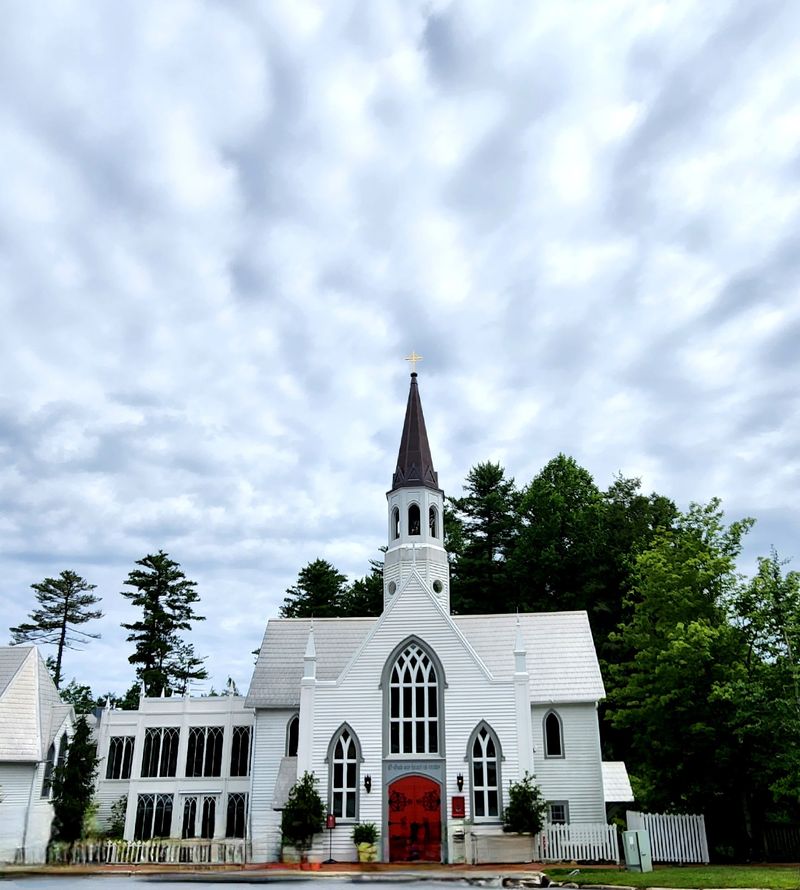
By 2018, the church had grown into what some described as a quirky set of interconnected spaces.
More than a hundred years of additions had piled up, each built in its own era and style.
The congregation launched its $6 million capital campaign in 2019, then began construction with Cram & Ferguson in 2020.
The goals were practical and creative at the same time.
Leaders wanted a better worship experience, more room, and buildings that finally looked like one family. Seating in the main sanctuary grew from 220 to 290.
That extra space helps during holidays and summer, when visitors flock to this cool mountain town to escape the heat of lower parts of North Carolina.
Perhaps the trickiest task was connecting the 1896 Carpenter Gothic chapel with everything built afterward.
Designers matched shapes, colors, and details so old and new blend smoothly instead of clashing. The guiding motto was simple and memorable: illuminate, invite, and inspire.
Walking the grounds today, you might struggle to tell exactly where one century ends and the next begins.
That seamless feeling is the whole point, and it shows how careful planning can honor history while still making room for a growing community.
The White Picket Fence Makes The Historic Chapel Look Almost Frozen In Time
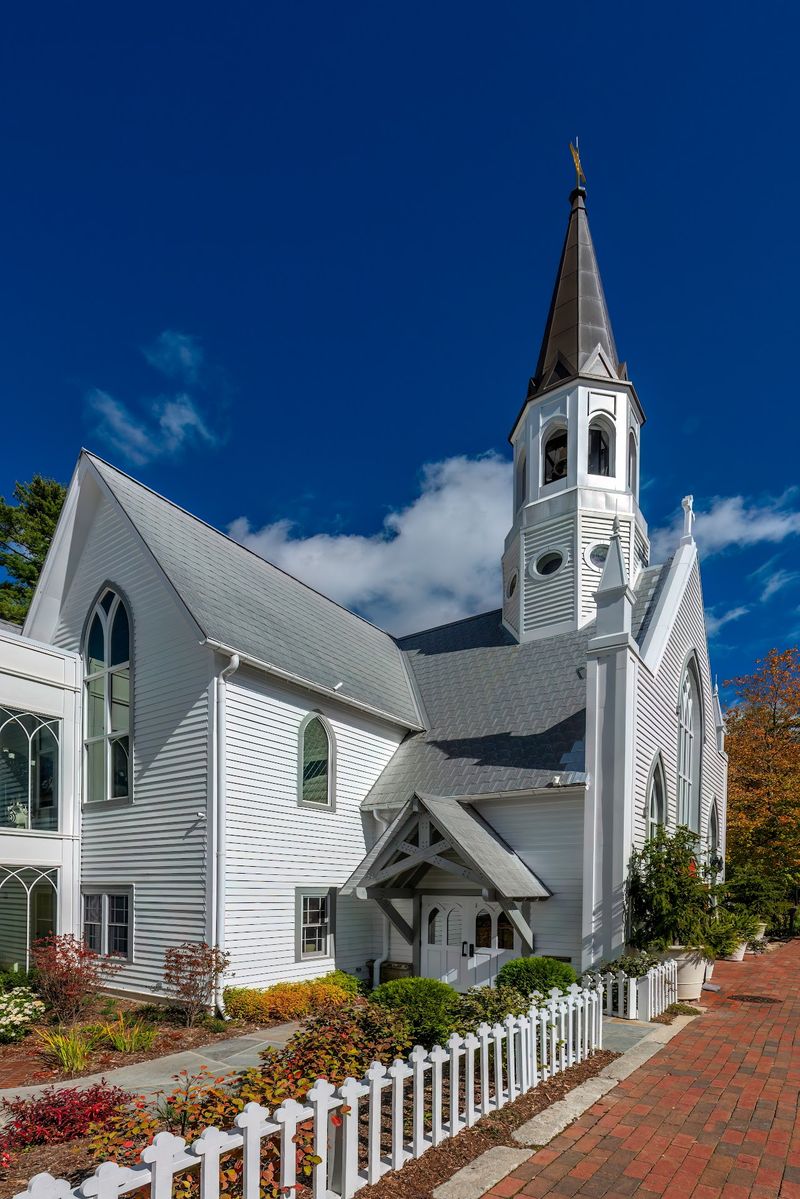
Few things say small-town charm quite like a white picket fence.
Here, one has framed the church grounds at the corner of Main and Fifth Streets for generations.
The current white picket fence replaced an earlier wire fence that once helped keep neighboring cows away from the church grounds. The simple wooden boards, painted crisp and clean, match the white siding of the old chapel.
Together they create a scene that looks lifted from a vintage postcard.
Stand at the fence on a quiet morning and listen.
Birds chatter in the trees, footsteps tap along the sidewalk, and maybe a church bell rings from above. The modern world feels a little farther away for a moment.
Seasons change the picture in delightful ways.
Spring brings fresh green leaves, summer adds bright blooms, and autumn paints the hills behind town in orange and gold.
Winter frost can make the white fence almost glow under a pale sky.
Many visitors snap photos right here, and it is easy to see why.
For a balanced shot, step back far enough to include the fence, the chapel roof, and the bell tower together. Patience with passing traffic will pay off nicely.
Why Those Striking Red Doors Became Such An Important Part Of Its New Look
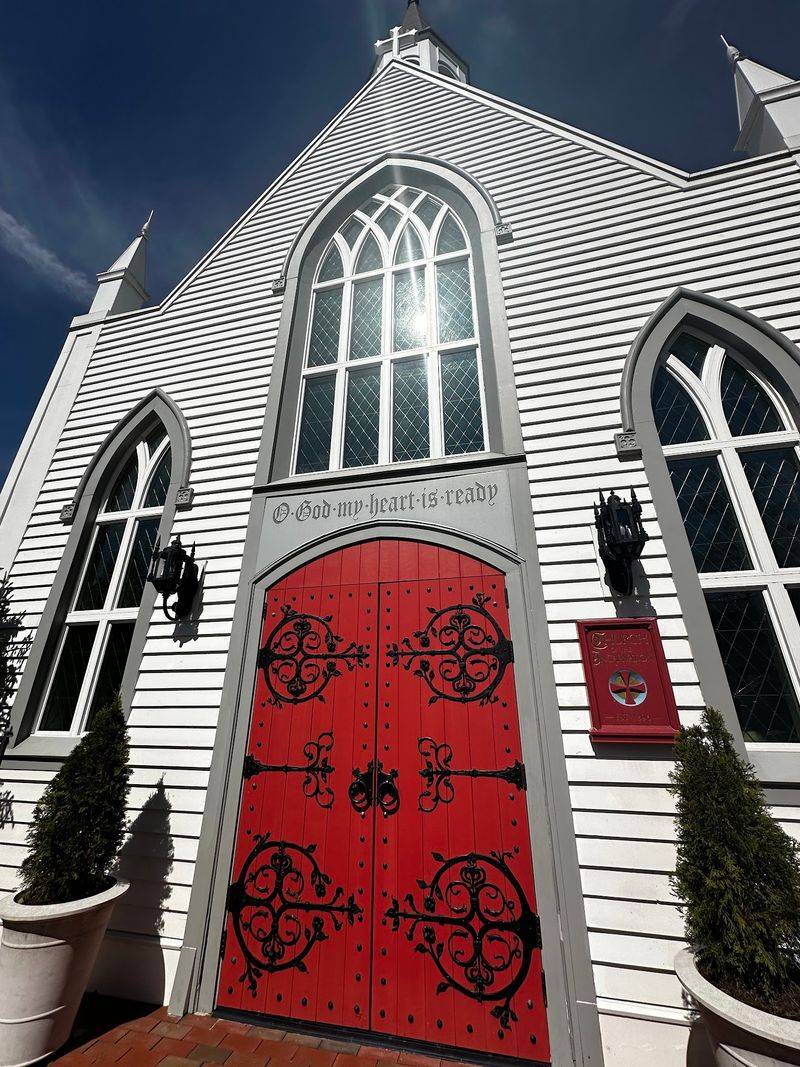
Color can send a message before anyone says a word.
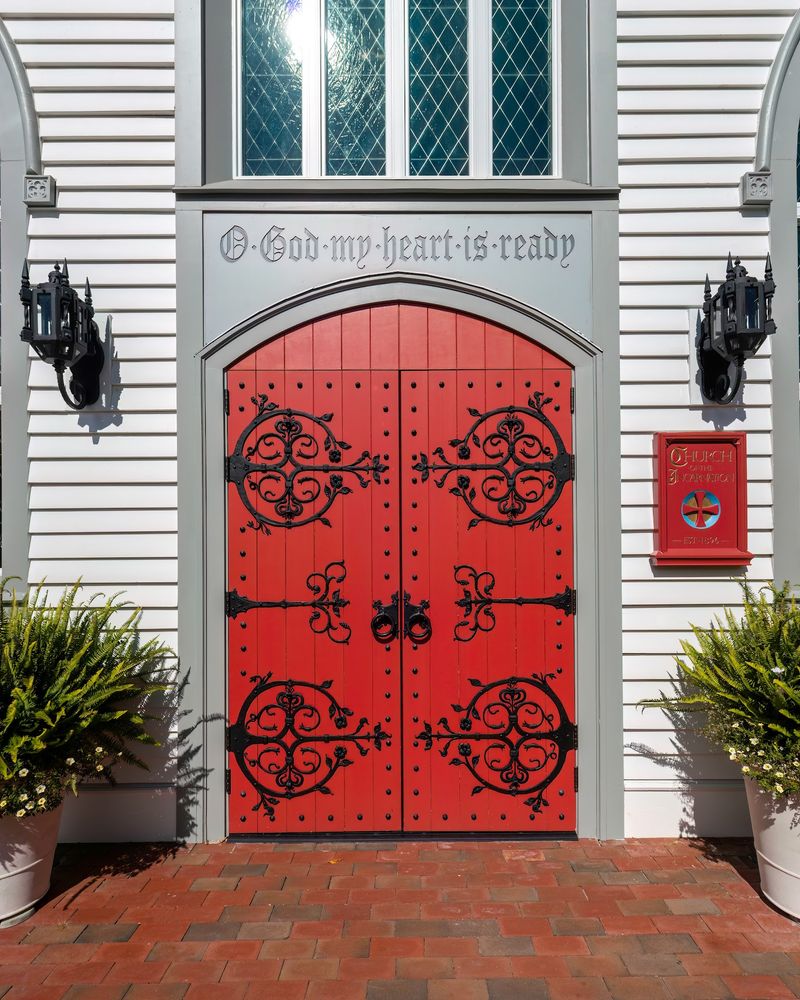
Those glossy red doors on Main Street were chosen to do exactly that. Added during the 2020 renovation, the richly lacquered doors serve as both a real entrance and a symbol of welcome into church life.
Designers found inspiration far from the mountains, at St. Mark’s Episcopal Church in Philadelphia.
Those famous red doors feature detailed black-iron straps shaped like Jack-in-the-pulpit blooms, a woodland wildflower.
That flower choice fits beautifully here.
Jack-in-the-pulpit grows in shady forests across the Appalachians, so the connection to North Carolina woodlands feels natural and fitting.
The bigger idea behind the renovation was opening the church to its neighbors.
Red doors in Episcopal tradition stand for refuge, safety, and welcome.
On a gray, foggy mountain day, their warm shine stands out like a friendly lantern on the street. Before leaving, pause and look closely at the finish and hardware.
Notice how the deep red contrasts with the white walls and dark iron.
It is a small detail, yet it ties together everything this historic place hopes to share with every person who walks by.