This 115-Foot North Carolina Tower Is The Largest Memorial Of Its Kind In America
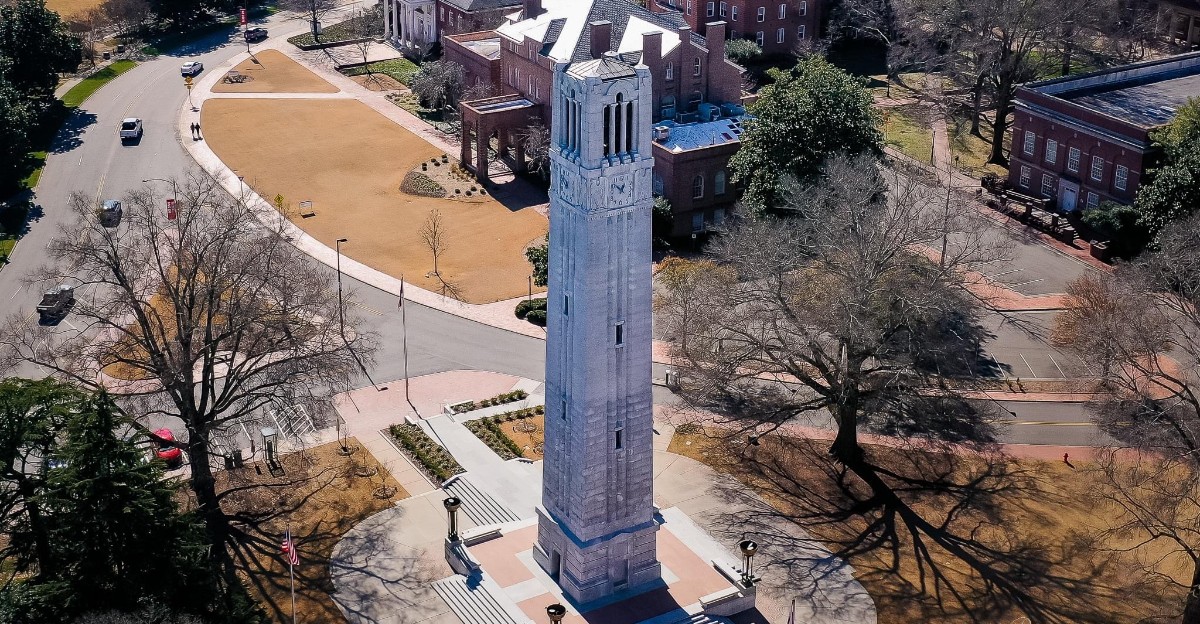
One tower in North Carolina can stop a campus walk without saying a word.
At 115 feet tall, it rises above the sidewalks with the kind of presence that makes people look up before they know the story.
Then the meaning behind the stone changes everything.
The Memorial Belltower honors former NC State students who died during World War I, giving the landmark a weight that goes far beyond its height.
By day, the granite feels stately and quiet. After dark, the red glow makes the tower impossible to ignore.
It is not simply something to photograph.
It is a place where campus pride and remembrance meet in the same frame.
This 115-Foot Tower Is America’s Largest Memorial To Fallen World War I Soldiers
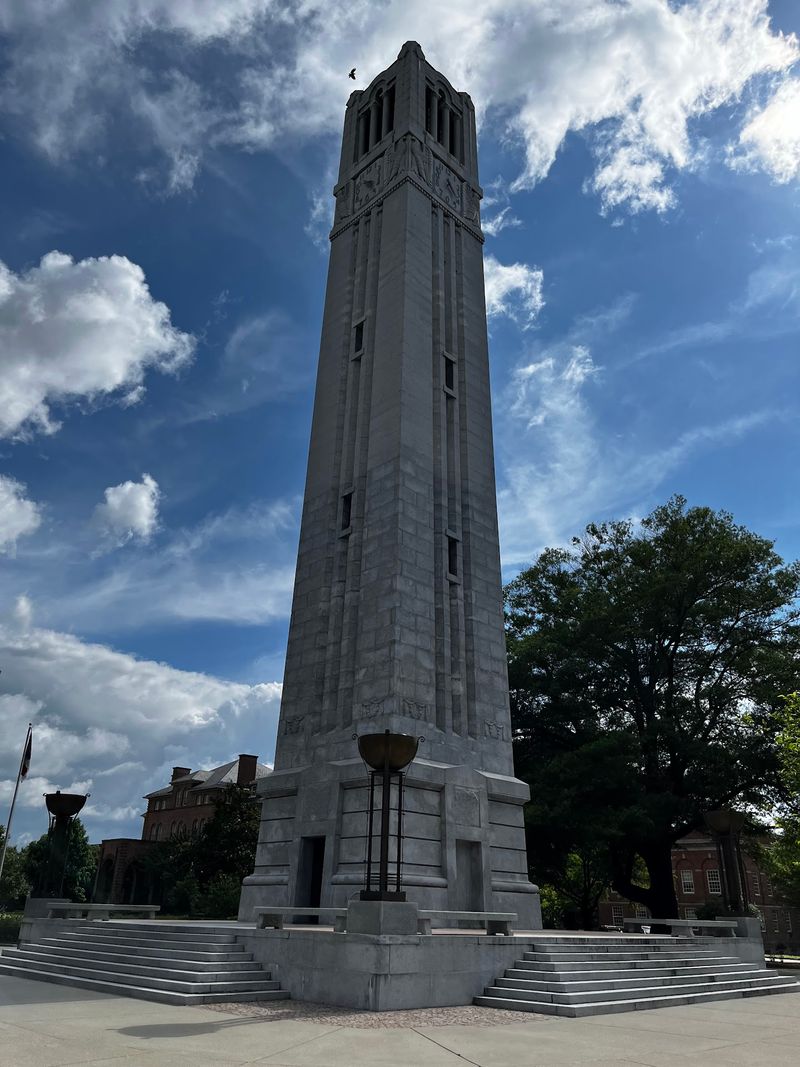
Look up from Hillsborough Street, and the pale stone draws your eyes far above the passing traffic.
At 115 feet, the tower gives the campus entrance a strong, graceful outline that is easy to recognize from nearby sidewalks.
According to NC State, Memorial Belltower is the largest memorial of its kind in the United States dedicated to fallen World War I soldiers.
Its original purpose was to honor university alumni who died during that conflict, rather than serve as a general monument to every American soldier. That distinction matters when you read the impressive claim attached to this landmark.
The national comparison concerns its particular memorial category, while its meaning begins with the lives remembered by one university community.
For a first visit, start outside and give yourself time to study the tower from several angles.
A view from farther back reveals its full height; moving closer brings the stonework and entrance into focus. Keep sidewalks clear while taking pictures, especially when classes change.
Even a short stop can offer something deeper than a photograph: a chance to notice how a busy campus makes room for memory, gratitude, and reflection amid everyday life.
Find it at 2101 Hillsborough St, Raleigh, NC 27607.
Thirty-Five Names Are Inscribed On The Shrine Room Plaque At Its Base
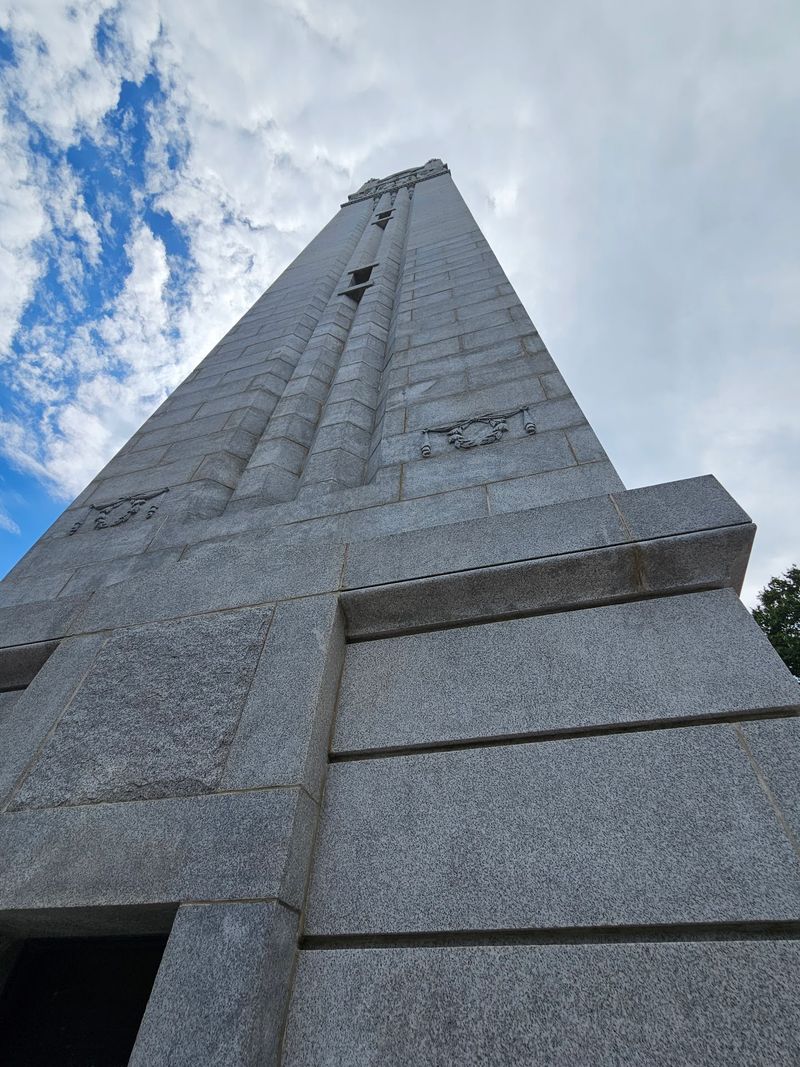
Behind the landmark’s grand outline lies a story told through individual names.
The shrine room honors 35 NC State alumni who died during World War I, bringing the memorial’s purpose down to a deeply human scale.
Memorial Belltower also includes the symbolic name George E. Jefferson. University accounts explain that it represents unnamed NC State alumni who served and died in the conflict, adding a broader note of remembrance to the room’s tribute.
The story behind that name involves an early mistake: a former student was reported dead but had survived.
Rather than leave an incorrect record, the inscription was changed into a symbolic name with a lasting purpose.
Reading about the room before visiting helps make sense of details that might otherwise pass unnoticed.
Names are not simply decoration here; they connect the building to people who once belonged to the same campus community as today’s students. Do not assume the interior is open whenever the outdoor grounds are accessible.
Check university information for available tours or special access, and treat any visit inside as a quiet memorial experience.
If you remain outdoors, the history still changes how the tower feels.
Beneath the clock and bells is a place built around remembrance, where the smallest details carry more weight than the tallest stone.
More Than 1,400 Tons Of Granite Rise Above The Campus
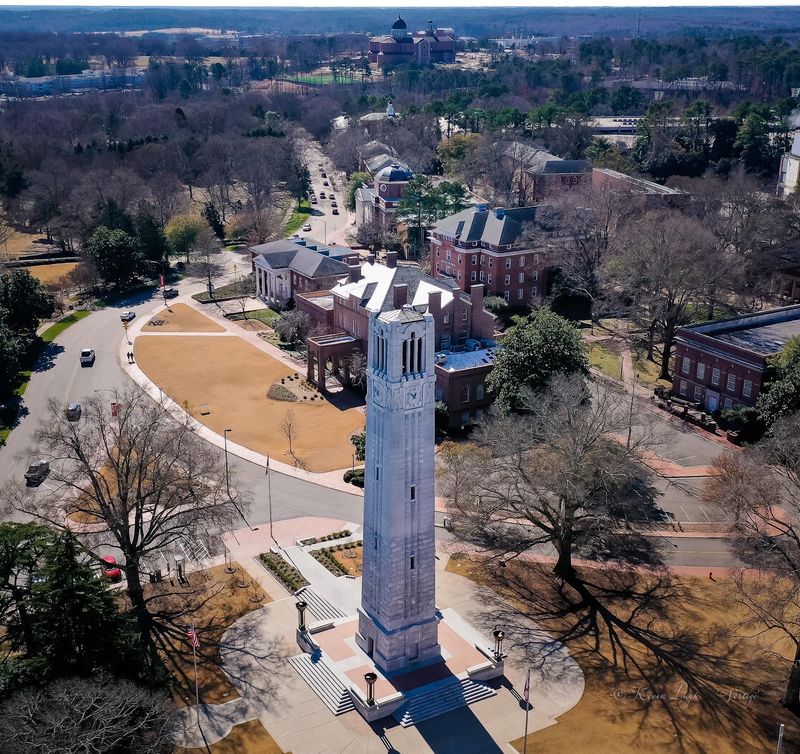
From a distance, the surface looks smooth and pale; up close, the granite reveals grain, seams, and carefully shaped edges.
Those details make the building worth studying slowly instead of treating it only as a skyline marker.
University descriptions put the granite at roughly 1,400 tons, supported by a concrete base weighing about 700 tons.
The stone came from Mount Airy, connecting the Raleigh landmark to another part of North Carolina through the material itself. Memorial Belltower combines classical design elements with distinctive Art Deco themes.
You do not need architectural training to enjoy that mix: notice the substantial lower structure, the arches, and the strong lines leading toward the clock.
Try viewing one side in sunlight and another in shade.
Changing light makes the joints and carved surfaces easier to see, giving the same stone a different appearance without changing its color.
A wide photograph captures the tower’s proportions, while a closer picture can show the craftsmanship. Stay on public walking areas rather than stepping onto planted beds for a better angle.
The most striking contrast is simple: an enormous amount of heavy stone creates a shape that seems to lift your gaze effortlessly into the open sky above.
Construction Stretched Across Nearly Three Decades Before The Memorial Was Dedicated
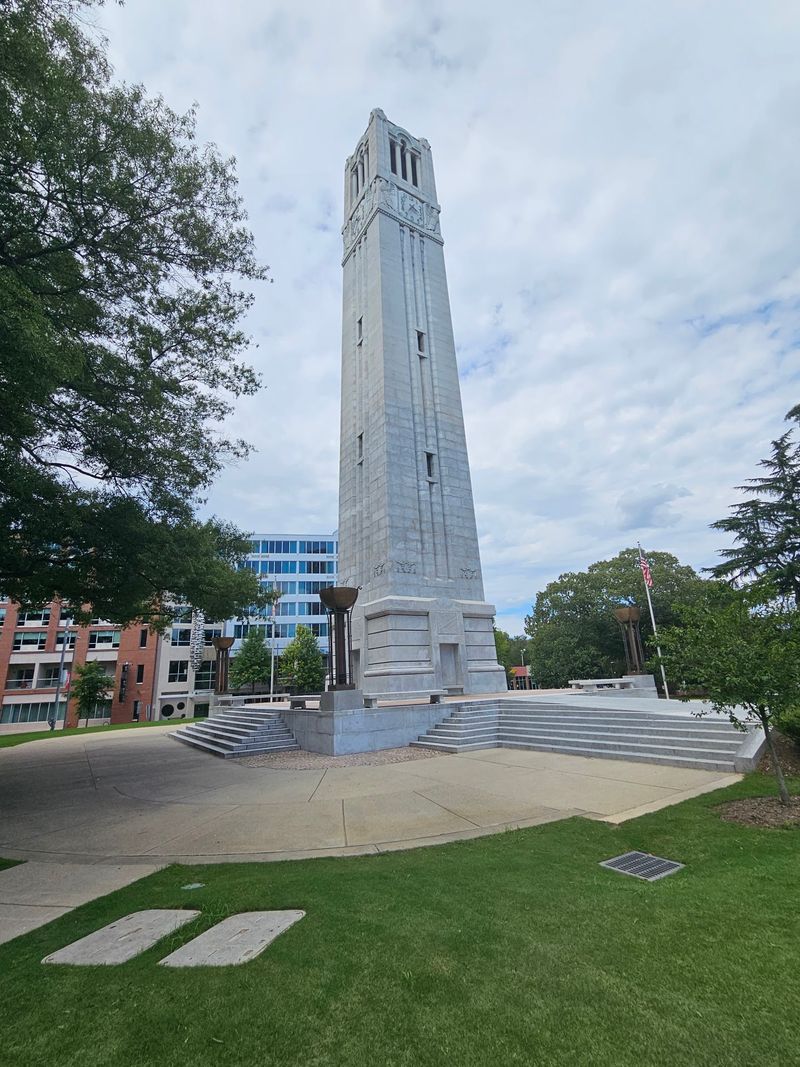
A landmark can look permanent even when its beginnings were anything but simple.
The tower grew through years of fundraising, unfinished work, and renewed effort, making its history a lesson in patience as much as design.
The idea emerged in 1918, with alumnus Vance Sykes helping inspire the memorial project.
Workers laid the cornerstone on November 10, 1921, but that ceremony marked a beginning rather than a quick path to completion. Memorial Belltower advanced in stages as money became available.
Financial problems and the Great Depression slowed progress, while later world events added further delays to the larger project.
Support from the Works Progress Administration helped bring the stone structure to completion in 1937.
The formal dedication followed on November 11, 1949, just over 28 years after the cornerstone was laid.
Those dates explain why different accounts may give different answers to when the tower was finished. Completing the stonework, dedicating the memorial, and fulfilling its original musical plans were separate milestones.
When you stand beside the base, imagine generations watching the project move forward piece by piece.
Its finished appearance hides a long chain of contributions, and that shared effort helps explain why the building means so much to the university community today.
Fifty-Five Real Bells Finally Filled The Tower A Century After The Original Vision
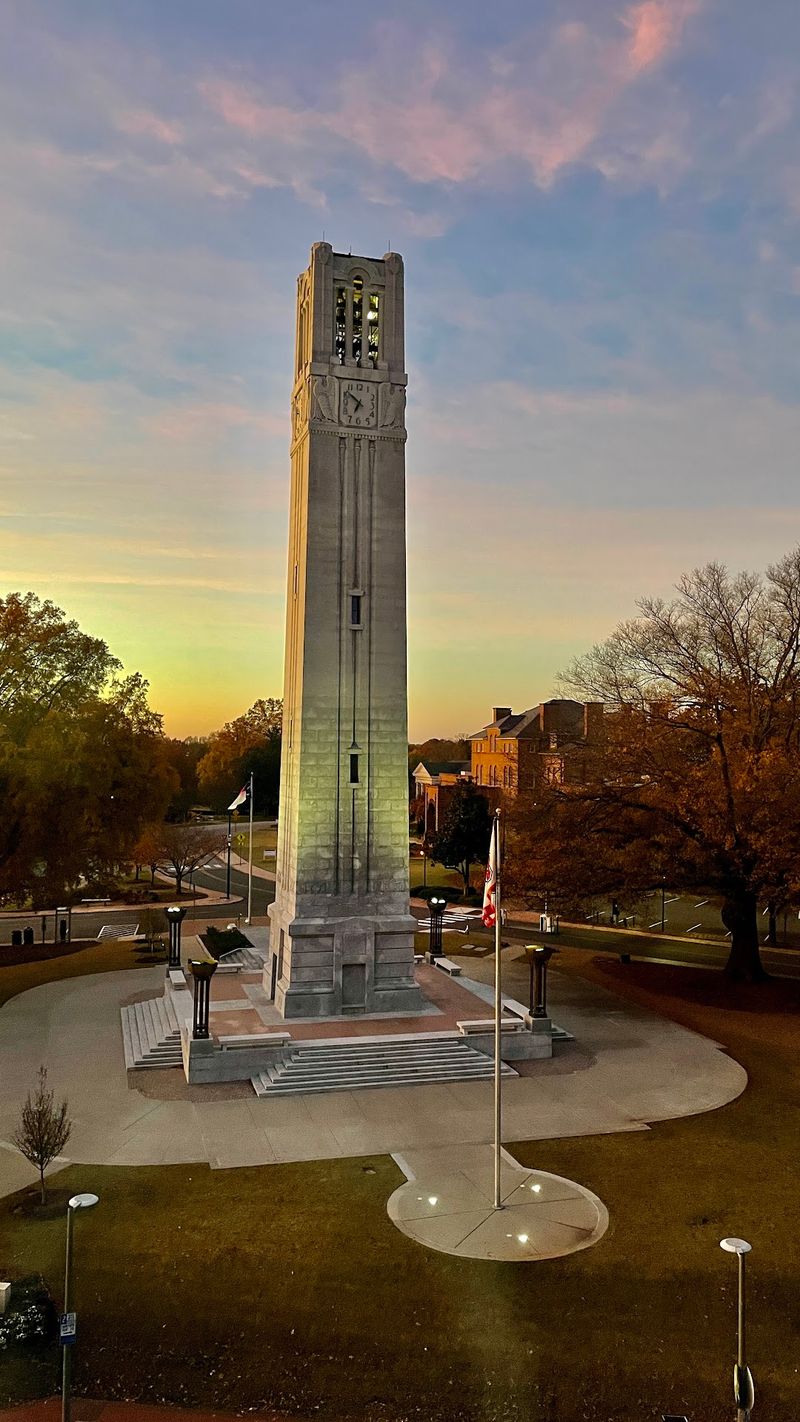
For decades, the sounds heard around the tower came from an electronic system rather than the full set of bells its planners imagined.
The missing carillon left an important part of the original dream waiting for another generation.
A gift from alumnus Bill Henry and his wife, Frances, helped change that.
Renovation work between 2019 and 2021 brought a 55-bell carillon to Memorial Belltower, completing a musical goal roughly a century after the early plans. Across the North Carolina campus, the difference is more than a technical upgrade.
Real bells turn the tower into an instrument, with different sizes producing notes that can be combined into complete pieces of music.
Carillonneur Tom Gurin performed the inaugural recital on May 14, 2021.
The occasion marked a new chapter for a monument that had already stood through decades of campus change.
To hear a performance, check the university’s current event information before setting out.
A casual visit does not guarantee a concert, and the listening experience depends on timing as well as your position outdoors. During a recital, pause somewhere safe and let the notes travel through the open air.
Watching the tower while hearing its bells makes the long wait for that original vision feel tangible.
The Entire Landmark Glows Red For Some Of The University’s Biggest Moments
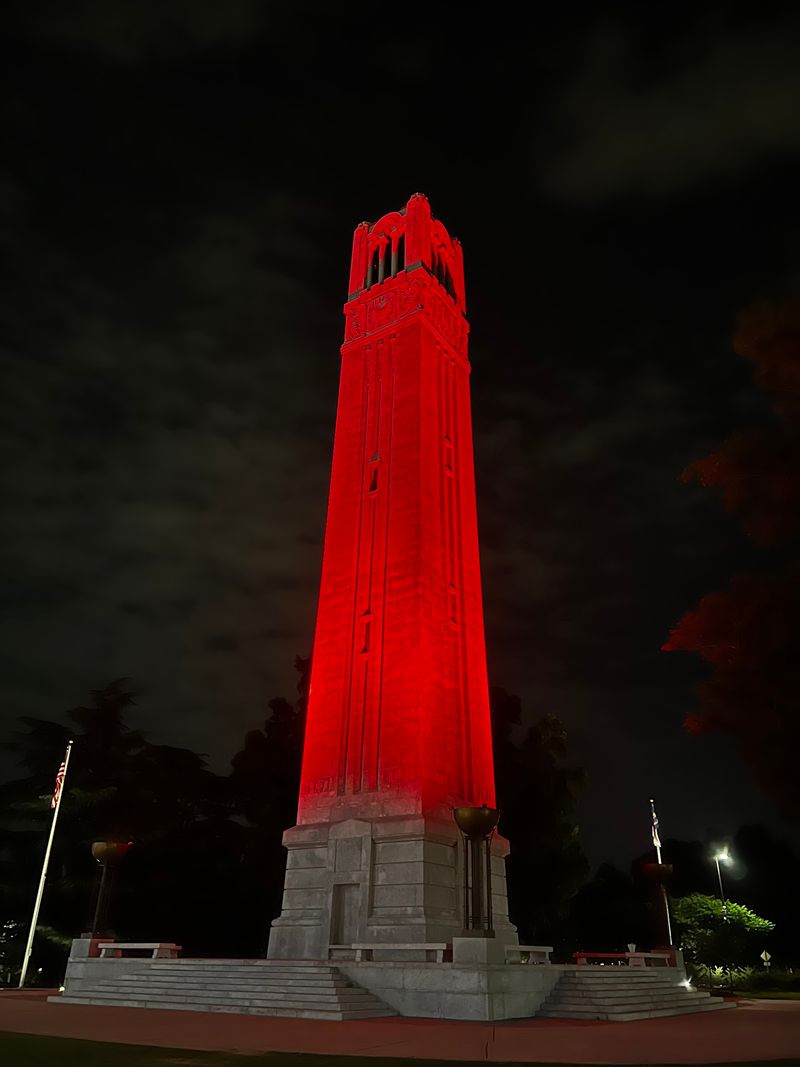
After sunset, familiar granite can become a bright signal of campus pride.
Red lighting changes the tower’s appearance completely, turning its pale daytime surfaces into a bold silhouette against the dark sky. The university began its red lighting tradition in 1999.
Selected athletic achievements and major campus occasions, including commencement, are among the moments that can bring this colorful celebration to Memorial Belltower.
Not every evening is a red evening, so avoid planning a visit around an assumed lighting schedule.
Check official university announcements if seeing the special display is a priority for your trip.
Four bronze torchieres stand around the tower’s base, linking decorative fixtures with the landmark’s architectural style.
Modern lighting allows the memorial to take on its nighttime appearance without changing the stone that defines it. For photographs, arrive around dusk when some blue remains in the sky.
Hold your camera steady, keep flash off for distant shots, and leave space for pedestrians moving along the surrounding paths.
The red glow adds celebration without replacing the tower’s original meaning.
Students may see a shared achievement, visitors may notice a striking evening scene, and both can recognize how one landmark holds remembrance and joy together in the same public space.
Senior Class Rings Spend The Night Inside Before Graduation
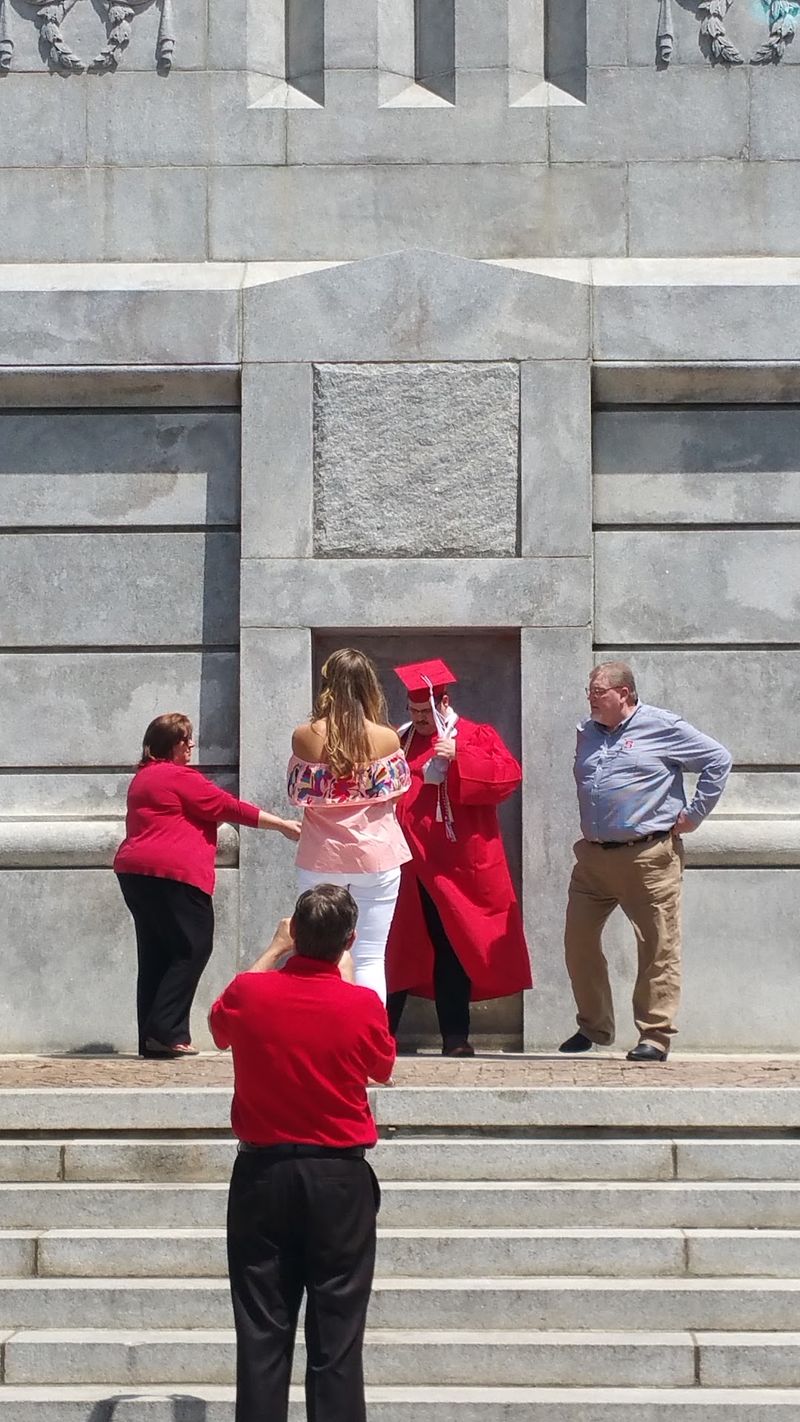
A small piece of jewelry gets an unusually meaningful overnight stay before reaching its owner.
Through NC State’s ring tradition, class rings spend a night in the shrine room, linking a personal achievement with the university’s shared history.
Known as the Fellowship of the Ring, the tradition brings the rings into Memorial Belltower before their presentation.
Their placement near the memorial connects current students with earlier generations whose lives remain part of the campus story. The ritual is symbolic, not a claim that the building physically changes the rings.
Its meaning comes from where they rest and from the community that has chosen to mark this important transition together.
For families, that background can add another layer to graduation photographs outside the tower.
A ring in the picture becomes more than an accessory; it carries a story about belonging, effort, and the years spent studying.
Visitors should not expect to enter the shrine room or observe a ring event without checking arrangements. University ceremonies follow their own schedules, and access may be limited.
Give graduates room when the surrounding walkways are busy with portraits.
Watching students celebrate from a respectful distance offers a glimpse of how a memorial can also become part of a hopeful beginning.
Why This Tower Became Much More Than A War Memorial
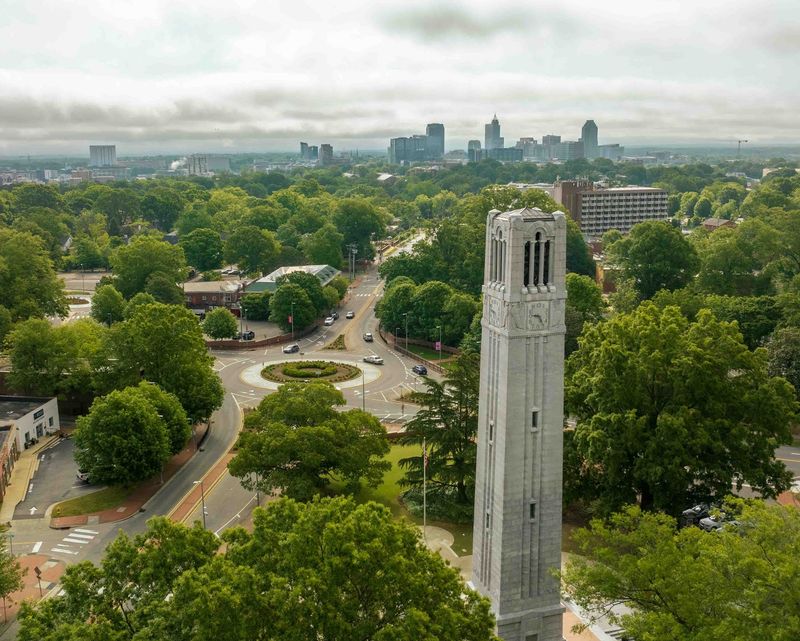
Some buildings become part of daily life without losing the reason they were built.
Here, remembrance shares space with graduation portraits, campus gatherings, musical performances, and the ordinary rhythm of people walking to class.
Memorial Belltower appears on the university’s official seal, showing how closely its image is tied to NC State’s identity.
Its recognizable shape serves as a visual shorthand for a community much larger than the surrounding lawn.
Events such as Packapalooza bring activity to the Hillsborough Street area, while the Krispy Kreme Challenge has used the tower as its starting and finishing landmark.
That student-founded fundraiser supports the North Carolina Children’s Hospital, extending the setting’s connection with service. For travelers, the best approach is to leave room for both sides of the experience.
Read the memorial’s history, appreciate the architecture, and notice how today’s campus continues around it.
Comfortable shoes help if you plan to explore the nearby walking routes after your stop.
Check parking rules and event notices beforehand, since a working university has different needs from a dedicated sightseeing park.
You do not need a long itinerary to understand the appeal.
A few thoughtful minutes beneath the stone, clock, and bells can reveal a landmark shaped by loss, persistence, and belonging.