This North Carolina University Started With Just $900 And 23 Students, And Its Story Goes Back 135 Years
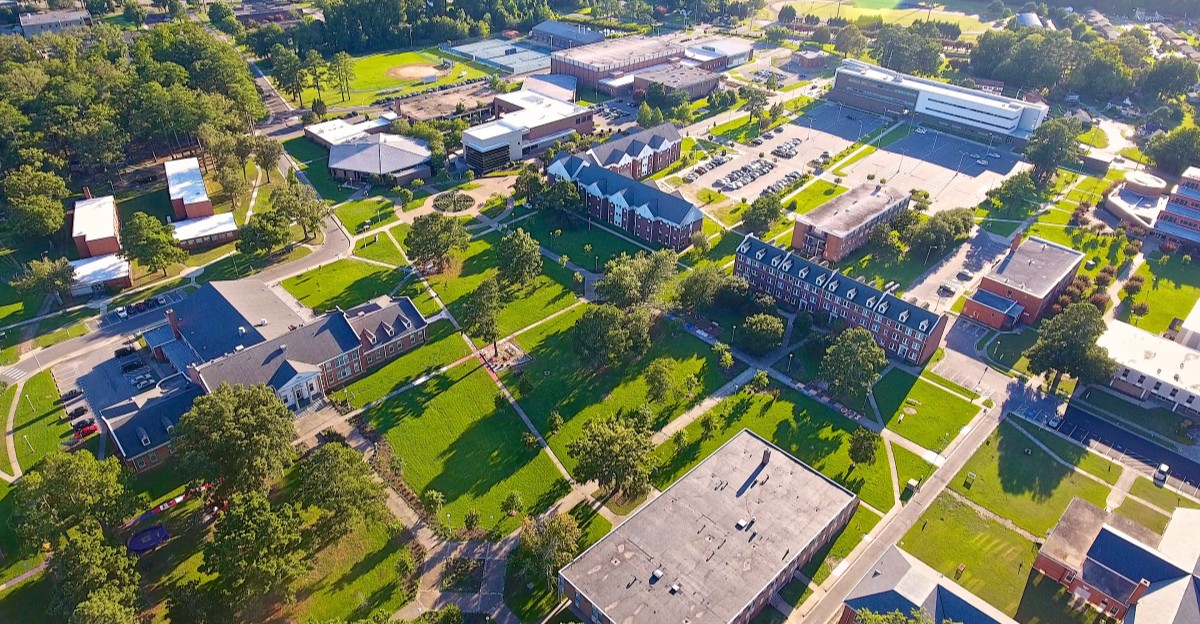
Nine hundred dollars and 23 students.
That was enough to start a school in 1892, and I still cannot wrap my head around how small that beginning was.
The North Carolina campus grew from a teacher-training school into a full university with flight training and its own planetarium. That alone is a wild jump.
I’m even more interested in the pieces of history that survived along the way.
The campus preserves the state’s only surviving Rosenwald practice school on a college campus, while its historic quad holds national recognition of its own.
For me, the contrast is what makes the story work.
This place began with pocket change and two teachers.
Now students can train in the sky.
That is one heck of a timeline.
A Tiny Budget Started One Very Big Idea
Back in 1891, a lawmaker named Hugh Cale had a plan. He was an African American representative from Pasquotank County, and he pushed House Bill 383 through the North Carolina General Assembly.
That bill created the State Colored Normal School at Elizabeth City on March 3, 1891. Its goal was clear: train Black teachers to teach in the state’s common schools.
The doors opened on January 4, 1892. The school had 23 students, two faculty members, and a budget of just $900.
Think about that for a second. Many families spend more than that on a single summer vacation today.
Peter Weddick Moore became the first leader of the young school. He guided it through those early, scrappy years when every dollar had a job.
That school is now Elizabeth City State University, a proud historically Black university. It still carries that founding mission of opportunity in its bones.
I believe that origin story is the best part of the whole place. It proves big things can start small, as long as someone refuses to quit.
Not bad for a school that began with less money than a used car. Hugh Cale clearly knew what he was doing.
Watch The Name Change As The School Keeps Growing
Names tell stories, and this school has collected a few. Each new name marked a bigger step forward.
The original two-year normal school kept expanding its classes and resources. By 1937, the school had become a four-year institution, and on March 30, 1939, it officially adopted the name Elizabeth City State Teachers College.
Two years later, in May 1939, the college awarded its first bachelor of science degrees. Those degrees were in elementary education, which fit the school’s teacher-training roots perfectly.
The changes kept coming. In 1963, the school became Elizabeth City State College.
Then 1969 brought the name people know today, Elizabeth City State University. The new title reflected the institution’s expanding academic mission beyond its original focus on teacher training.
In 1972, the university joined the University of North Carolina system. That move placed it alongside the state’s other public universities.
I like how each name feels like a growth chart on a kitchen doorframe. You can almost see the school getting taller with every mark.
So when you hear an older relative call it by a different name, don’t correct them too fast. They might be remembering an earlier chapter of the same story.
Ready to see it for yourself? Set your map to 1704 Weeksville Rd, Elizabeth City, NC 27909.
Walk A Quad That Made The National Register
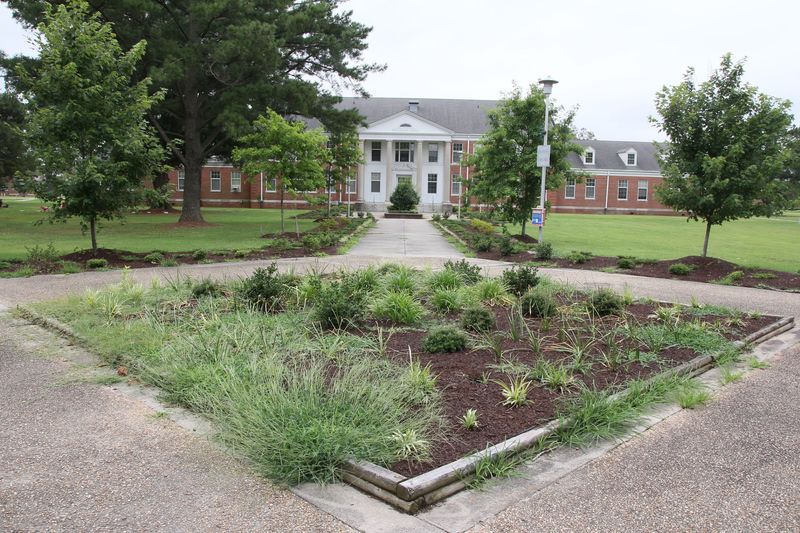
History buffs, grab your walking shoes. In 1994, the Elizabeth City State Teachers College Historic District joined the National Register of Historic Places.
The district includes the original campus quadrangle and six significant buildings. Their styles include Colonial Revival and Bungalow, also called American Craftsman.
Here’s the roll call. The list features the Principal’s House, Moore Hall, Bias Hall, Butler Hall, and the Practice School.
The G.R. Little Library is part of it too.
Today, that building goes by the H.L. Trigg Building.
Lane Hall holds a special title as the oldest standing building on campus. Its history stretches back to the early 20th century, so it has watched more than a century of students hurry to class.
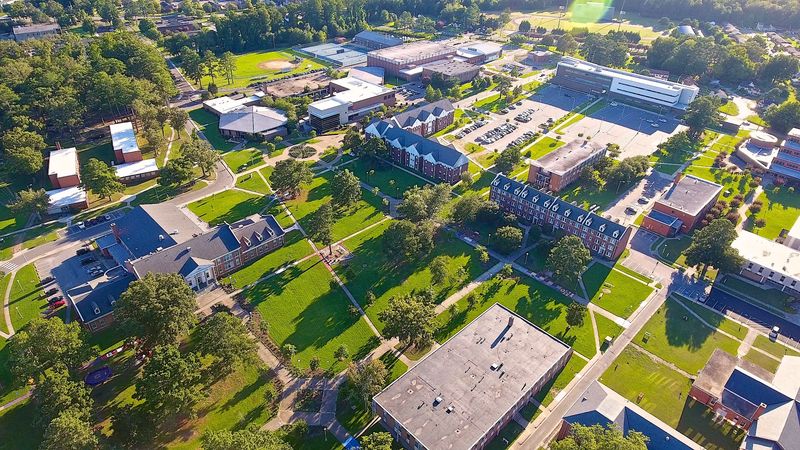
The campus covers about 200 acres, with homes and neighborhoods around much of it. The layout is compact and walkable, which makes a self-guided stroll easy.
My tip is simple. Slow down near the quad and look at the rooflines, porches, and brickwork.
These buildings are not museum pieces behind glass. They are working parts of a living campus, and that makes them even cooler.
North Carolina’s Only Intact Rosenwald School Sits Right Here
Rosenwald Schools were built across the South in the early 1900s to educate Black children during segregation. Thousands once existed, but many have disappeared.
Elizabeth City State University holds a rare survivor. Its Rosenwald Practice School is the only surviving Rosenwald practice school of its kind in North Carolina and possibly the nation.
Let that sink in. Of the small number of Rosenwald practice schools established on college campuses, this one remains an exceptionally rare survivor.
The building celebrated its 100th anniversary on campus in 2023. That is a century of standing tall through changing times.
Right now, the school is undergoing restoration. Once the work wraps up, it will become the Northeastern North Carolina African American Research and Cultural Heritage Institute.
That’s a long name with a meaningful purpose. The institute will share the history of African American education during segregation.
I can’t imagine a better home for that story. The building itself was part of the history it will teach.
Keep an eye out for news on the reopening. When those doors open, it should be one of the most powerful stops in northeastern North Carolina.
Future Pilots Earn Their Wings On This Campus
Most college students worry about parking. Aviation students here worry about runway checklists.
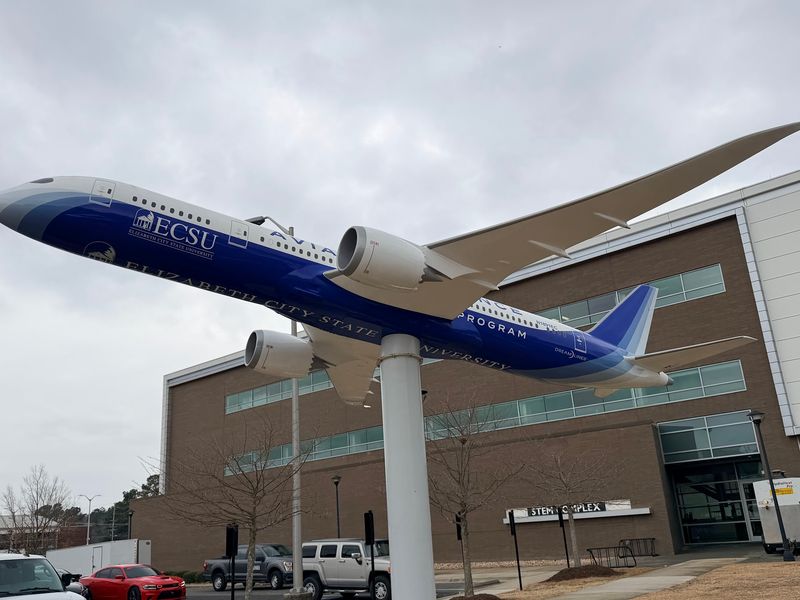
Elizabeth City State University hosts the only four-year aviation science degree program in North Carolina. That alone makes it stand out.
ECSU promotes its aviation program as one of the nation’s most affordable, helped by the NC Promise tuition program. Credit goes to the NC Promise Program, which keeps tuition remarkably low for students.
Classes cover aviation operations, safety, management, and aerospace systems. Students train on flight simulators and a growing fleet of 21 aircraft, gaining hands-on experience for careers in aviation.
The best part? Students in the Flight Education concentration can pursue FAA pilot certifications alongside their university studies.
Drones get attention too. The Unmanned Aircraft Systems program explores drone operations, remote sensing, and new UAS technology.
Growth is already taking flight. The new Currituck Flight Training Center officially opened on October 23, 2026, adding classrooms, aircraft hangars, and more training opportunities for aspiring pilots.
I like how this program connects back to the school’s roots. It started by preparing teachers for needed jobs, and now it prepares pilots for a booming industry.
If someone in your family dreams about the cockpit, this campus deserves a serious look. The view from the classroom here can include clouds.
Look Up, Because There’s A Planetarium Too
Stars on a college campus usually mean star athletes. At this school, they also mean actual stars.
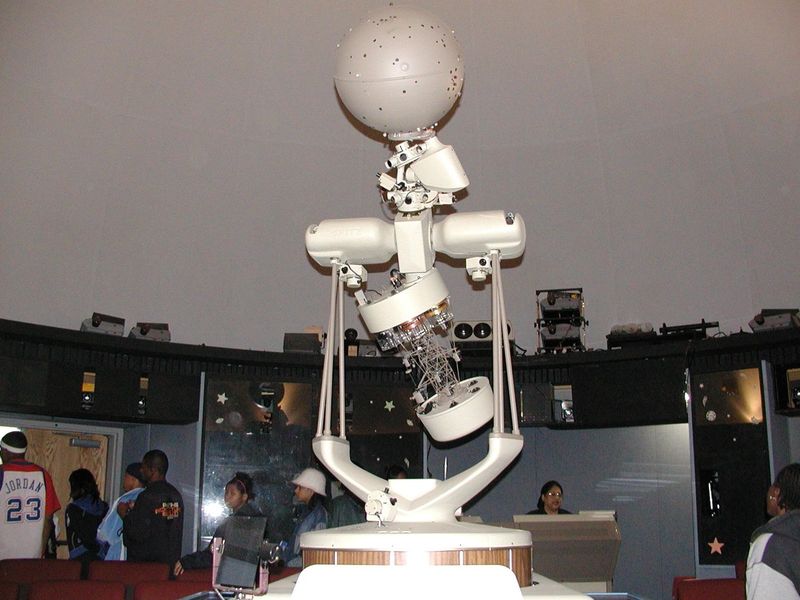
Elizabeth City State University runs the Khan Planetarium, a space for science and wonder. It supports cultural and intellectual enrichment for students and the wider community.
That community angle matters. A planetarium makes a university feel open to families, curious kids, and anyone who likes looking up.
Of course, the classroom side runs deep as well. The university offers programs in education, business, and STEM fields.
Students can also study Homeland Security, which prepares them for public service roles. Army ROTC adds another path for students who want leadership training.
Hands-on learning and research show up across the academic experience. That approach helps students connect what they study with real careers.
I believe a planetarium says a lot about a school’s personality. It shows a place that wants people to stay curious long after the bell rings.
The Khan Planetarium offers free shows for the public, but advance reservations are required. Book a visit before heading to campus for your own tour of the night sky.
Royal Blue Takes Over On Game Day
Royal blue and white. Those are the colors you’ll spot everywhere when the Vikings play.
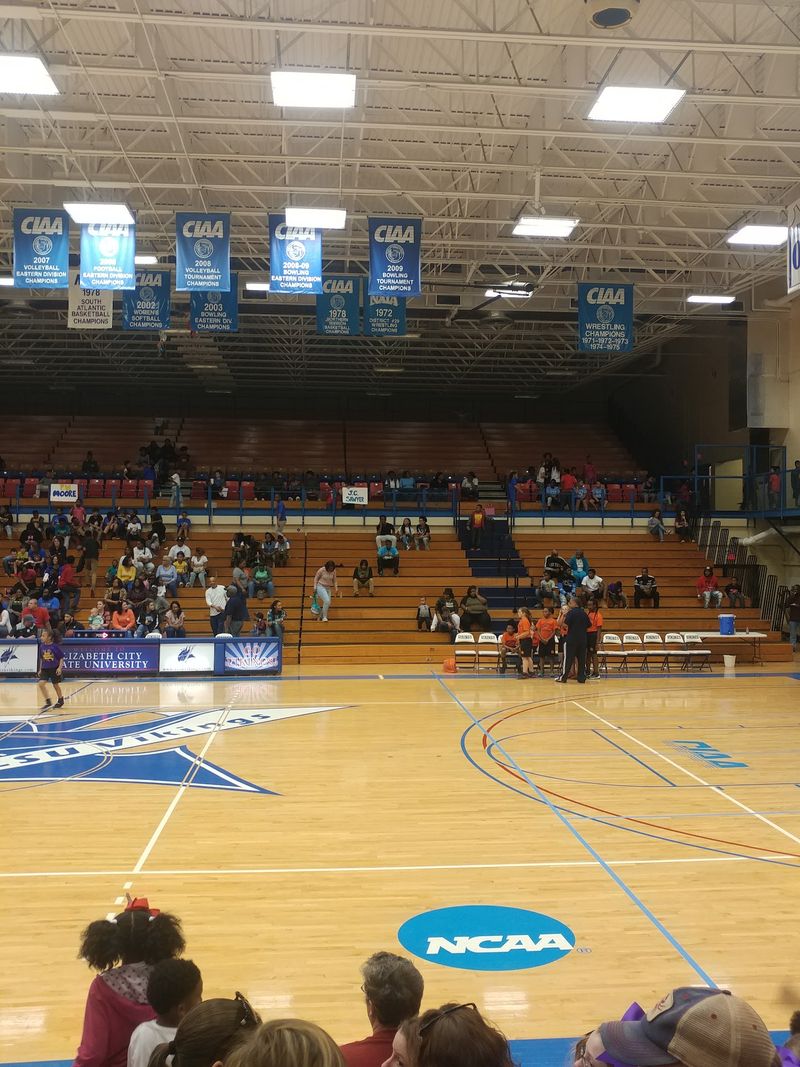
The ECSU Vikings compete in NCAA Division II. They belong to the Central Intercollegiate Athletic Association, better known as the CIAA.
Football fans head to Roebuck Stadium. Basketball action happens inside the Vaughan Center.
The school has big ideas for game days. Plans include family-friendly activities, vendors, and food trucks for a county fair kind of feel.
That sounds like a solid Saturday to me. Good luck keeping kids away from the food trucks.
Games also help the surrounding town. Visitors coming for sports often fill local hotels and restaurants in Elizabeth City.
Homecoming is one of the biggest annual events on the calendar. Viking Fest, campus concerts, cultural celebrations, and student activities offer even more reasons to visit.
Each event gives alumni, students, and neighbors a reason to gather. The name Viking Feast alone makes me want an invitation.
Pick a home game, wear something blue, and join in. You don’t need to know every rule to enjoy the energy of a proud HBCU crowd.
Over 120 Clubs Keep Viking Pride Buzzing

Viking Pride is the phrase you’ll hear around here. It sums up a campus spirit built on community and belonging.
Elizabeth City State University offers more than 120 student organizations. Options range from cultural and dance groups to student government.
Media lovers get a treat. Students can get involved with the campus TV and radio stations.
Greek life plays a major role as well. Many fraternities and sororities are active, including members of the Divine Nine.
These groups help with community service and campus activities. They also keep the social calendar full.
Small class sizes give students more time with their professors. That personal attention can make a big campus feel a lot smaller.
Support services cover academic advising, career counseling, tutoring, and mental health resources. Having those in one place helps students stay on track.
The university has also connected students with the surrounding community through its One Team, One Goal, One Community initiative. Past volunteer efforts have supported organizations such as the Food Bank, Salvation Army, and Habitat for Humanity.
My advice for new students is easy. Join one club early, because that’s often where college starts to feel like home.
Plan Your Visit And Peek At What Comes Next
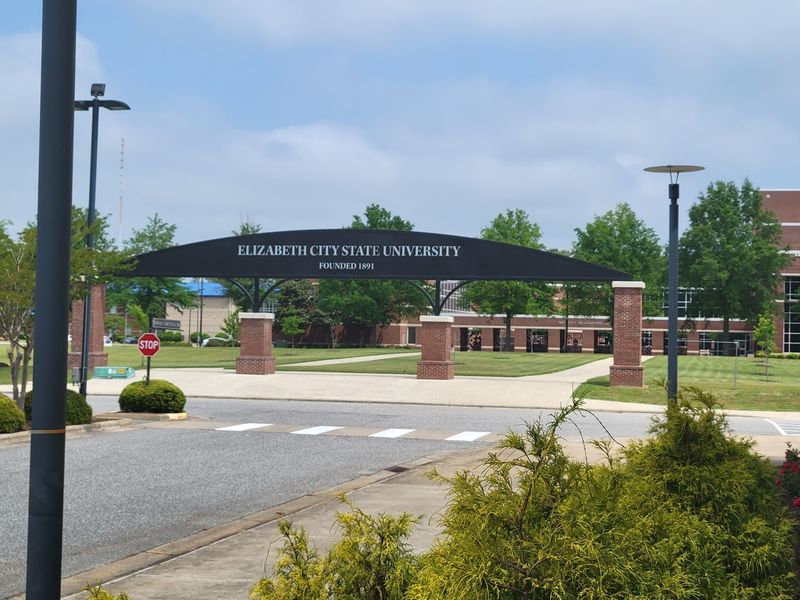
The campus sits near the Pasquotank River in northeastern North Carolina. Offices typically keep weekday hours, Monday through Friday from 8 am to 5 pm.
First-time visitors can schedule an official campus tour through the university’s Welcome Center. Tours highlight campus landmarks and give visitors a closer look at student life.
The university also opens its doors through its Community Connection series. Past guests have included Nikki Giovanni, the Virginia Symphony, and the cast of A Different World.
Now for the future. Elizabeth City State University aims to grow enrollment to at least 2,700 students by 2030.
Plans call for at least five new workforce-focused programs. Fields include artificial intelligence, emerging technologies, business and entrepreneurship, and health sciences.
Aviation keeps climbing too. The school plans four more aviation hubs across North Carolina.
I love that a school founded on $900 now talks about AI and flight hubs. Those 23 first students would hardly recognize the place.
Still, the heart feels the same. It’s a school that keeps opening doors, one class at a time.