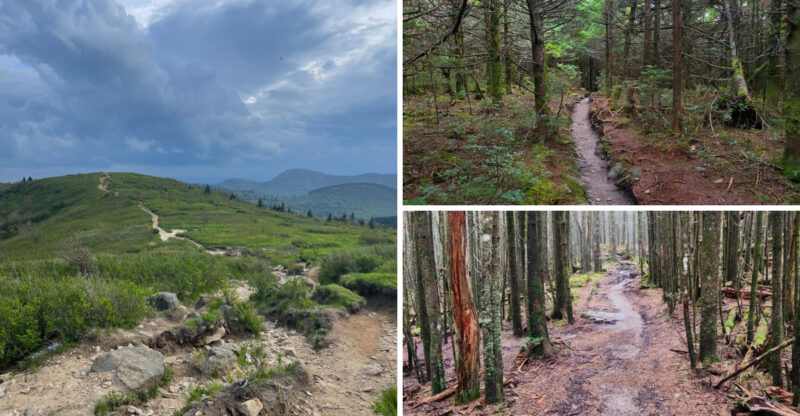
This North Carolina Woodland Trail Is Spring’s Most Magical Escape
Imagine walking among trees that have stood taller than ten-story buildings for over four centuries, their massive trunks wider than most living rooms. Spring in the Appalachian Mountains brings a transformation so spectacular that even the most seasoned hikers find themselves stopping mid-trail to simply stare upward in wonder.
Where ancient giants reach toward endless blue sky while wildflowers carpet the forest floor in a riot of color, you’ll discover why this particular stretch of wilderness feels like stepping into a storybook. North Carolina’s best-kept secret isn’t a secret anymore, and these towering sentinels are ready to share their magic with you.
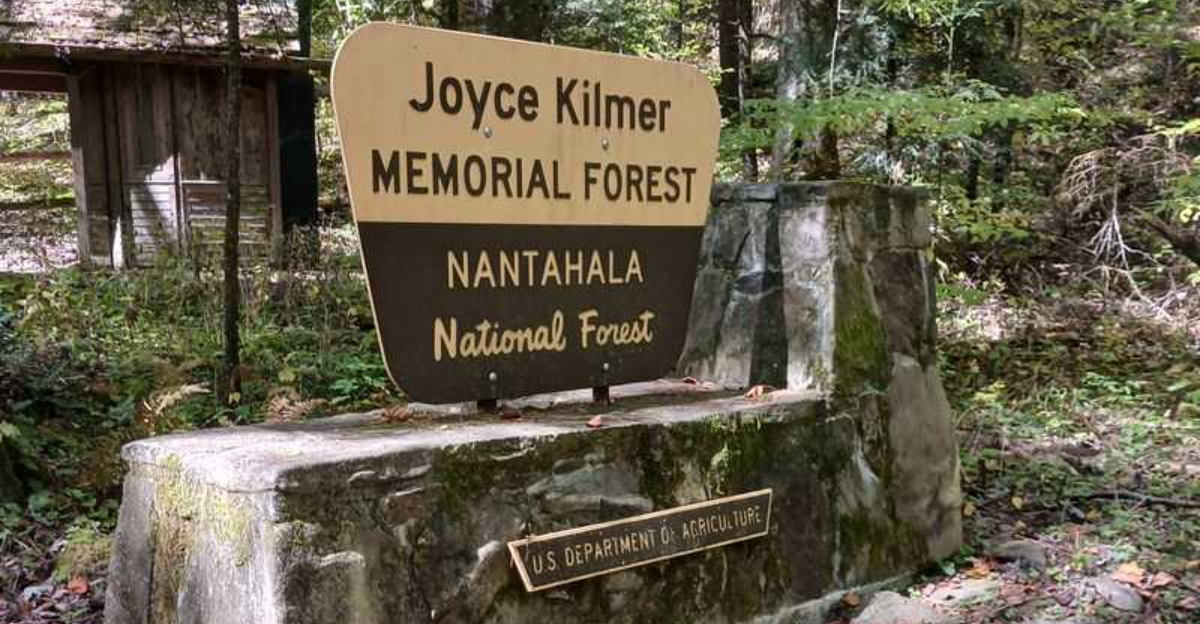
Just a scenic drive from Robbinsville brings you to Joyce Kilmer Memorial Forest at 5410 Joyce Kilmer Rd, where nature has been writing its own epic poem for longer than America has existed. The two-mile loop trail winds through one of the last remaining old-growth forests in the eastern United States, offering an experience that smartphones simply cannot capture adequately.
Pack your hiking boots, bring your sense of wonder, and prepare to feel wonderfully small beneath a canopy that predates the Revolutionary War.
1. Ancient Giants Reaching Skyward
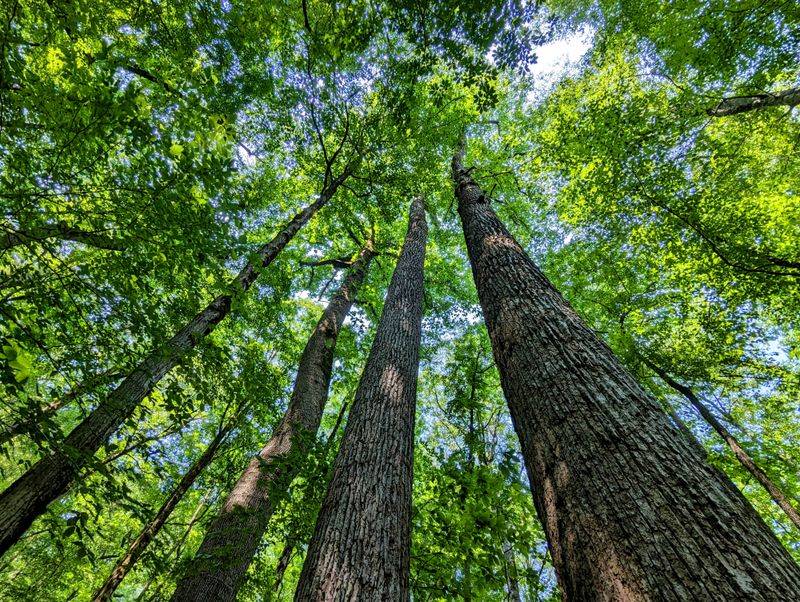
Walking among trees that were already centuries old when George Washington was born creates a humbling perspective shift. The yellow poplar giants tower more than 100 feet overhead, their trunks so massive that five adults holding hands barely encircle them.
These botanical skyscrapers have witnessed everything from Cherokee settlements to modern hikers snapping selfies at their bases.
Joyce Kilmer Memorial Forest preserves what loggers nearly destroyed across the entire Appalachian region during the early 1900s. The Great Depression’s economic collapse inadvertently saved these trees when lumber prices crashed, making harvest unprofitable.
Today we benefit from that fortunate timing, experiencing a forest ecosystem that functions exactly as nature designed without human interference for over 400 years.
Eastern hemlock, red oak, white oak, American basswood, beech, and sycamore join the poplars in creating a diverse canopy community. Each species contributes its own character to the forest’s personality, from the hemlocks’ dark evergreen presence to the sycamores’ distinctive peeling bark.
Spring brings fresh leaf growth that transforms the canopy into a luminous green cathedral, filtering sunlight into golden beams that dance across the forest floor throughout the day.
2. Memorial Loop Trail Adventure
The two-mile figure-eight trail system offers hikers an immersive journey through botanical history without requiring extreme fitness levels. Most visitors complete the lower 1.25-mile loop in about an hour, pausing frequently to photograph trees or simply absorb the cathedral-like atmosphere.
The upper 0.75-mile section ventures into Poplar Cove, where the forest’s largest specimens await those willing to climb a few extra stairs.
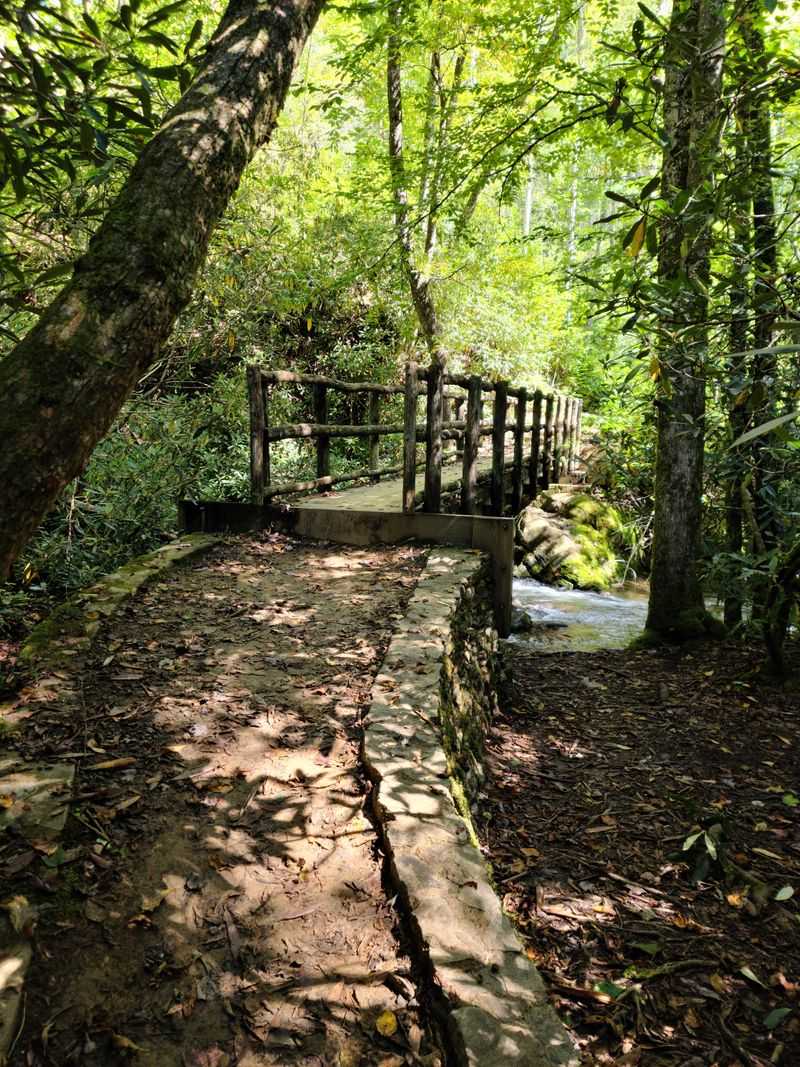
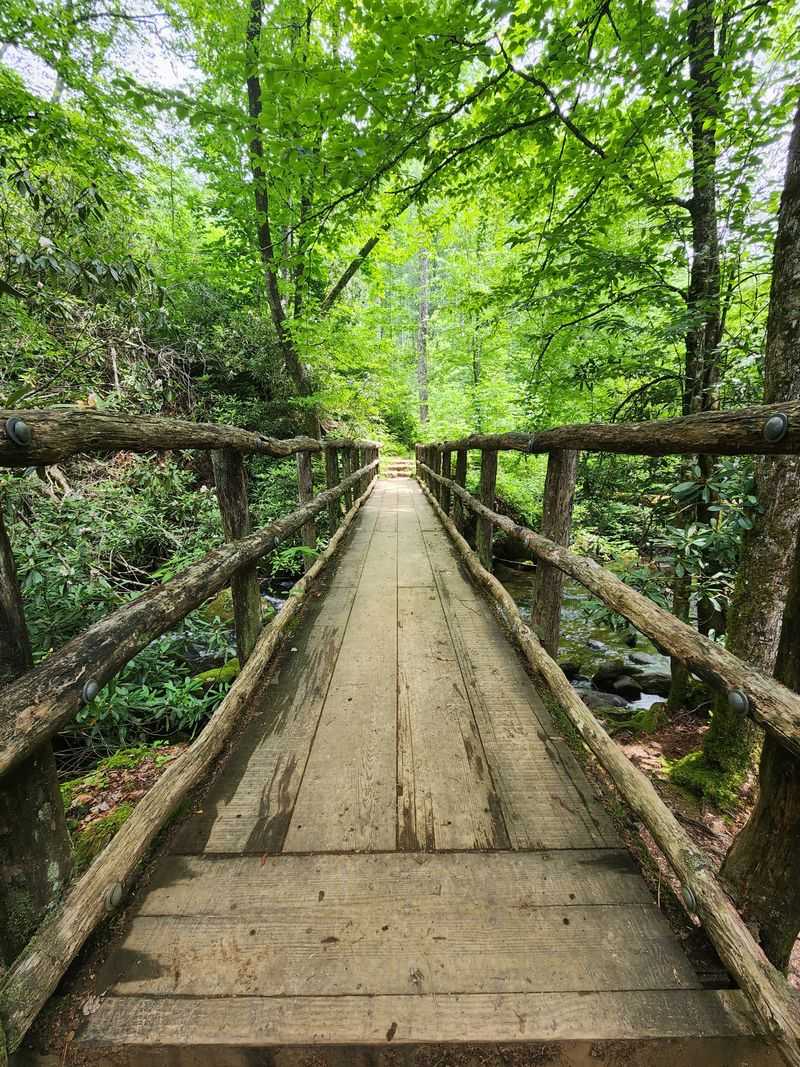
Trail designers thoughtfully routed the path to showcase the forest’s most impressive features while minimizing environmental impact. Well-maintained footbridges cross babbling creeks where spring runoff creates miniature waterfalls over moss-covered rocks.
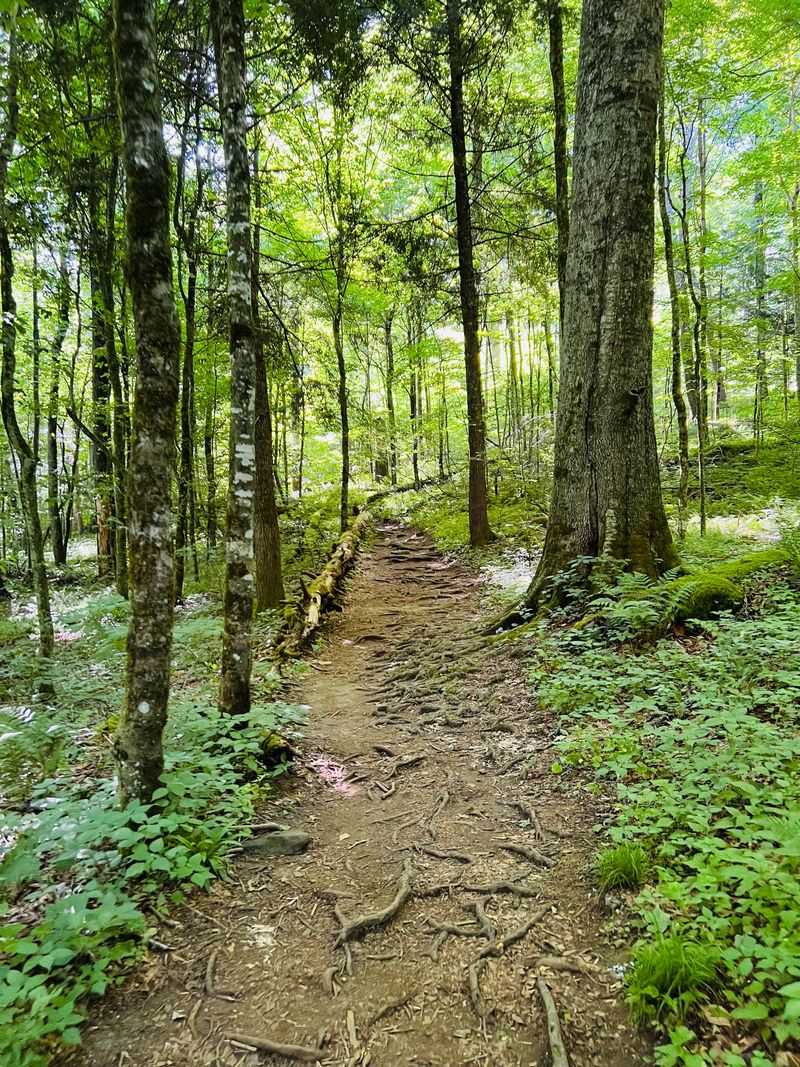
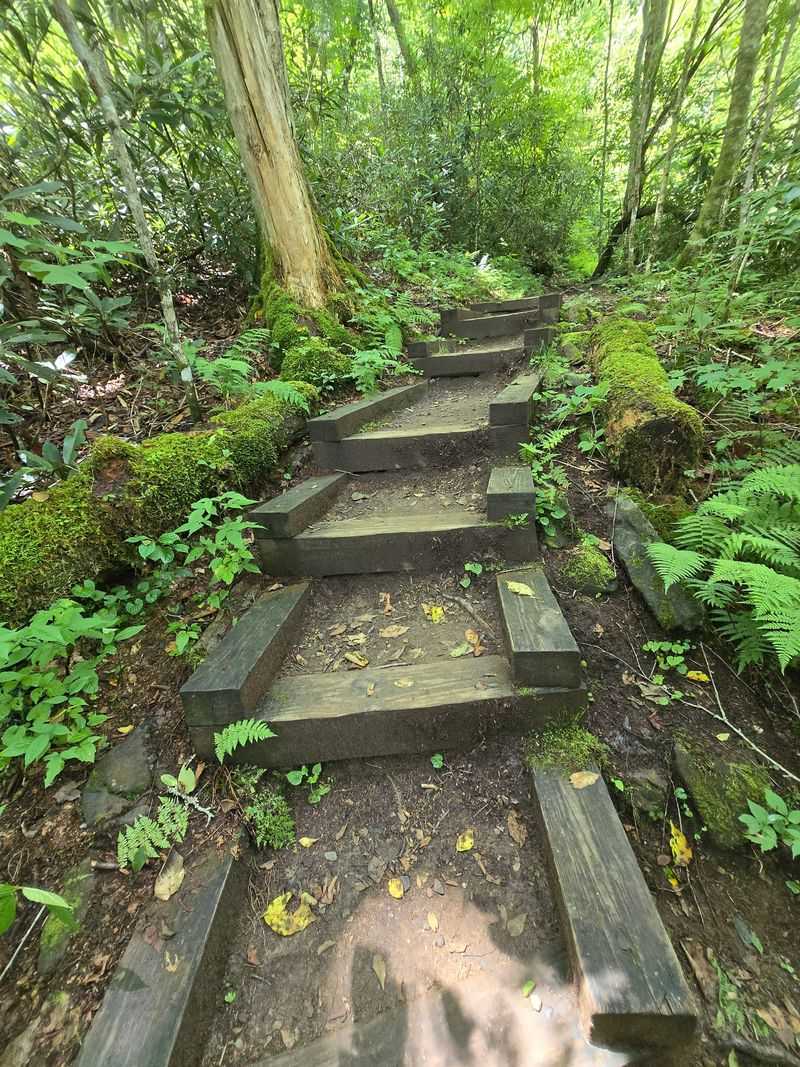
The trail surface alternates between packed earth and exposed roots that create natural staircases, requiring hikers to watch their footing while resisting the constant temptation to gaze upward.
Located at 5410 Joyce Kilmer Rd, the trailhead provides ample parking, clean restrooms, and shaded picnic tables perfect for post-hike snacks. Arrive early during spring weekends when wildflower enthusiasts and photographers fill the small lot by mid-morning.
The figure-eight design allows flexible hiking options, letting tired legs turn back after the lower loop or ambitious explorers continue into the upper forest’s deeper wilderness character.
3. Spring Wildflower Spectacular
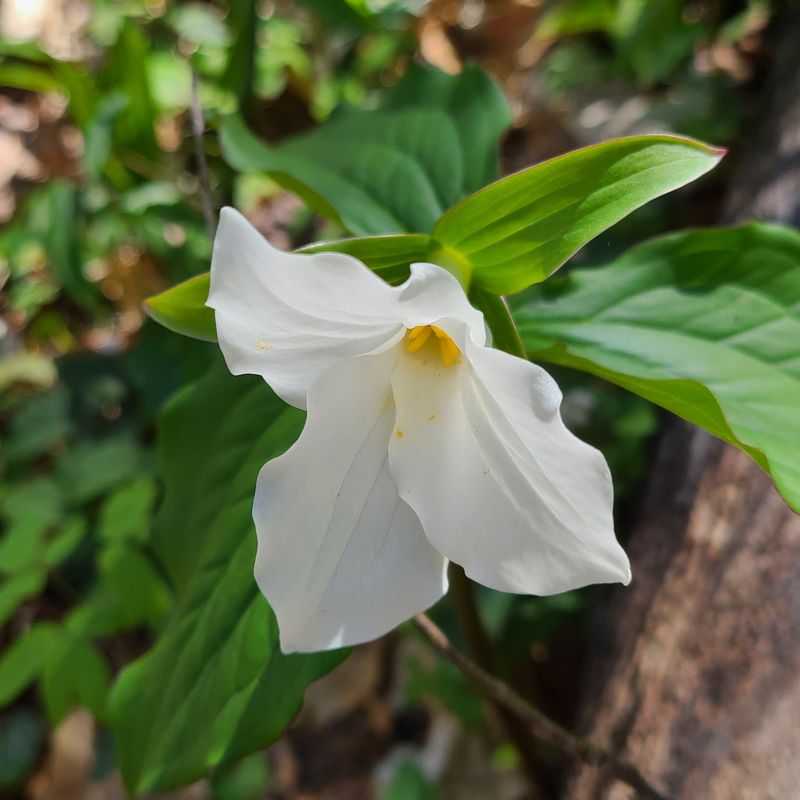
Before the forest canopy fully leafs out each spring, an explosion of wildflowers transforms the understory into a botanical treasure hunt. Bloodroot pushes through last autumn’s leaves first, its pure white petals opening like tiny stars against dark soil.
Wood anemone follows quickly, creating drifts of delicate blooms that nod gently in mountain breezes filtering through the awakening forest.
Trillium species steal the show with their distinctive three-petaled flowers ranging from white to deep burgundy, each plant requiring seven years to reach blooming maturity. Sharp-eyed visitors spot jack-in-the-pulpit hiding beneath broad leaves, its unusual hooded flower structure resembling a tiny preacher in a botanical pulpit.
Spring beauty, toothwort, and wild ginger add subtle accents to the floral display that peaks during April and early May.
Late spring brings rhododendron, mountain laurel, and azalea into their glory, painting the forest edges with vibrant pinks, purples, and whites. These woody shrubs create spectacular tunnel effects along portions of the trail where their branches arch overhead.
Photographers arrive before dawn to capture morning light illuminating dew-covered petals, while casual hikers simply enjoy nature’s free flower show that requires no admission fee beyond the drive to Robbinsville.
4. Joyce Kilmer’s Lasting Legacy
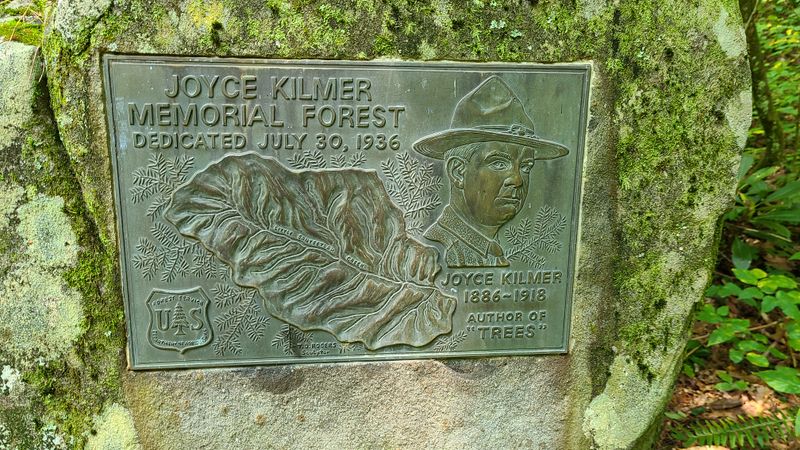
Sergeant Joyce Kilmer never saw the forest that bears his name, having fallen in France during World War I’s final summer offensive in 1918. His poem “Trees” had already made him famous, celebrating the simple beauty of nature’s wooden giants with lines memorized by generations of schoolchildren.
Congress designated this pristine forest as his memorial in 1936, ensuring these ancient trees would honor a poet who understood their worth.
The memorial plaque sits along the lower loop trail, a modest stone marker that visitors often pass while craning their necks to admire the living monuments surrounding it. Kilmer’s words feel prophetic here, where poems truly cannot match the majesty of trees that have grown undisturbed for centuries.
His brief life ended at age 31, yet his literary legacy protected 3,800 acres from the logger’s saw.
Critics sometimes dismiss “Trees” as overly sentimental, but standing among these giants renders such academic debates irrelevant. The forest speaks Kilmer’s truth more eloquently than any analysis, its towering poplars and ancient hemlocks proving that some subjects genuinely defy human artistic improvement.
Spring visitors often read the poem aloud at the memorial, their voices small beneath the canopy that serves as Kilmer’s eternal monument.
5. Wildlife Encounters And Observations
Black bears roam these woods regularly, leaving claw marks on trees and overturned logs where they’ve searched for grubs and insects. Spring brings hungry bears from their winter dens, making early morning and evening hikes the most likely times for distant sightings.
Rangers emphasize that attacks remain extremely rare, but hikers should make noise on the trail and never approach wildlife for photographs regardless of how cute cubs appear.
Wild boar populations create muddy wallows near creek crossings, their rooting behavior evident in disturbed soil and vegetation. These non-native animals descended from European stock released decades ago for hunting, now competing with native species for food resources.
Sharp-eyed hikers spot their distinctive split-hoof tracks in soft trail mud, evidence of nocturnal wanderings through the ancient forest.
Birdsong fills the spring canopy as migratory species return to nest among the towering trees and dense understory. Warblers flash brilliant yellow and orange plumage while hunting insects in the fresh leaf growth overhead.
Woodpeckers hammer dead snags, their drumming echoing through the forest as they excavate nesting cavities that later house everything from flying squirrels to screech owls. Patient observers sitting quietly on trailside logs often see more wildlife than hikers constantly moving and talking along the path.
6. Pristine Preservation Standards
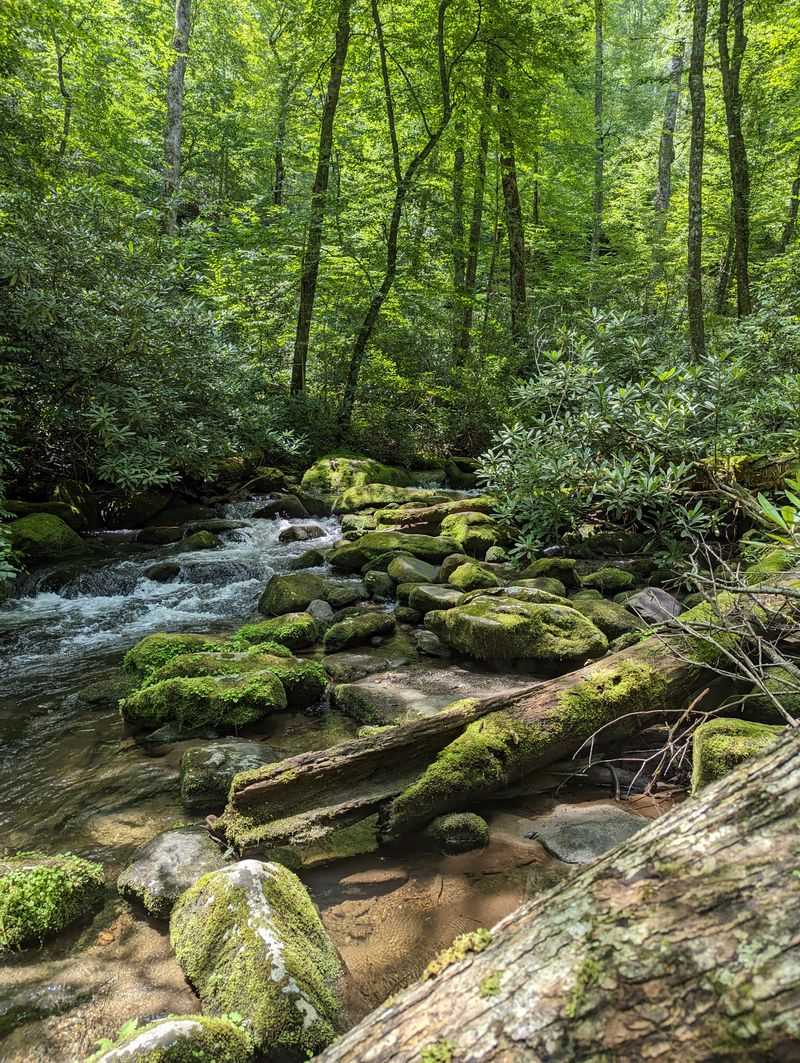
Strict regulations maintain Joyce Kilmer Memorial Forest in its primitive condition, prohibiting removal of any plant material whether living or dead. Fallen giants remain where they toppled, gradually decomposing to feed the next generation of forest growth in nature’s perfect recycling system.
This hands-off management philosophy contrasts sharply with typical forestry practices, creating a living laboratory where ecological processes unfold without human interference.
Camping and overnight parking remain forbidden within the memorial forest boundaries, protecting the area from the impacts that concentrated human presence inevitably creates. Day-use only policies ensure that visitors experience the forest without leaving lasting traces of their passage beyond footprints.
Leave No Trace principles aren’t merely suggestions here but essential practices that preserve this irreplaceable ecosystem for future generations who deserve their own chance to walk among centuries-old trees.
The U.S. Forest Service partners with volunteers from the Partners of the Joyce Kilmer-Slickrock Wilderness organization to maintain trails and educate visitors about conservation importance.
These dedicated individuals donate countless hours removing fallen branches from paths, monitoring trail erosion, and answering questions from curious hikers. Their efforts ensure that the forest at 5410 Joyce Kilmer Rd remains accessible while protected, balancing public enjoyment with ecological preservation in a model that other protected areas study and emulate.
7. Seasonal Weather And Trail Conditions
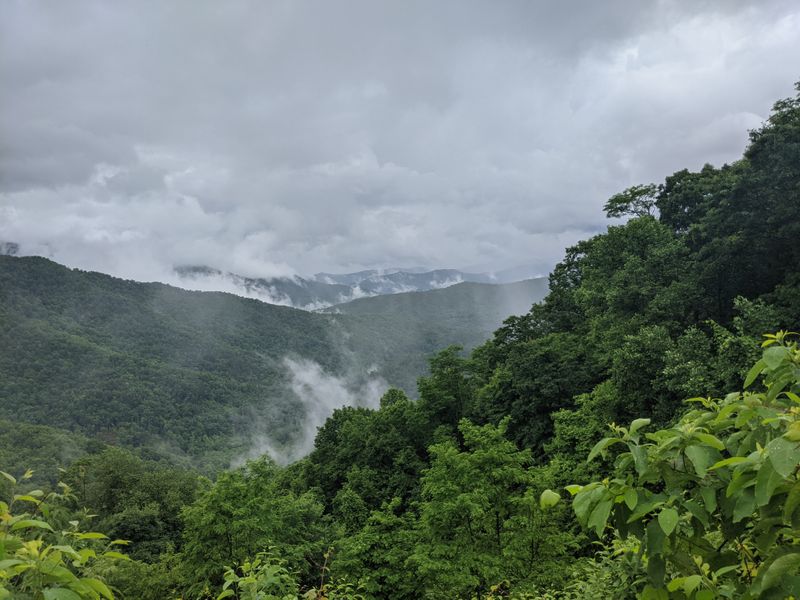
Spring weather in the Nantahala Mountains arrives unpredictably, with sunny mornings transforming into afternoon thunderstorms that send hikers scrambling for rain jackets. The trail becomes slippery when wet, its exposed roots and rocky sections turning into minor obstacle courses that require careful foot placement.
Waterproof hiking boots prove their worth during spring visits when morning dew soaks vegetation and recent rainfall leaves puddles across low-lying trail sections.
Elevation at the trailhead sits around 3,000 feet, meaning temperatures run cooler than surrounding valleys and weather changes rapidly as mountain conditions dictate. Layered clothing allows hikers to adjust for temperature swings between shaded creek valleys and sunny ridge sections.
Spring days might start with frost on picnic tables and warm to comfortable hiking temperatures by noon, then cool again as afternoon clouds roll across the mountains.
Check current conditions before making the drive from Robbinsville, as severe weather occasionally closes forest roads or damages trail infrastructure. The Forest Service maintains updated information about accessibility, warning visitors when conditions make hiking hazardous or unpleasant.
Winter’s final storms sometimes linger into April, dropping surprise snow that transforms the ancient forest into a monochrome wonderland but makes trails treacherous for unprepared hikers wearing sneakers instead of proper footwear.
8. Photography Paradise For All Skill Levels
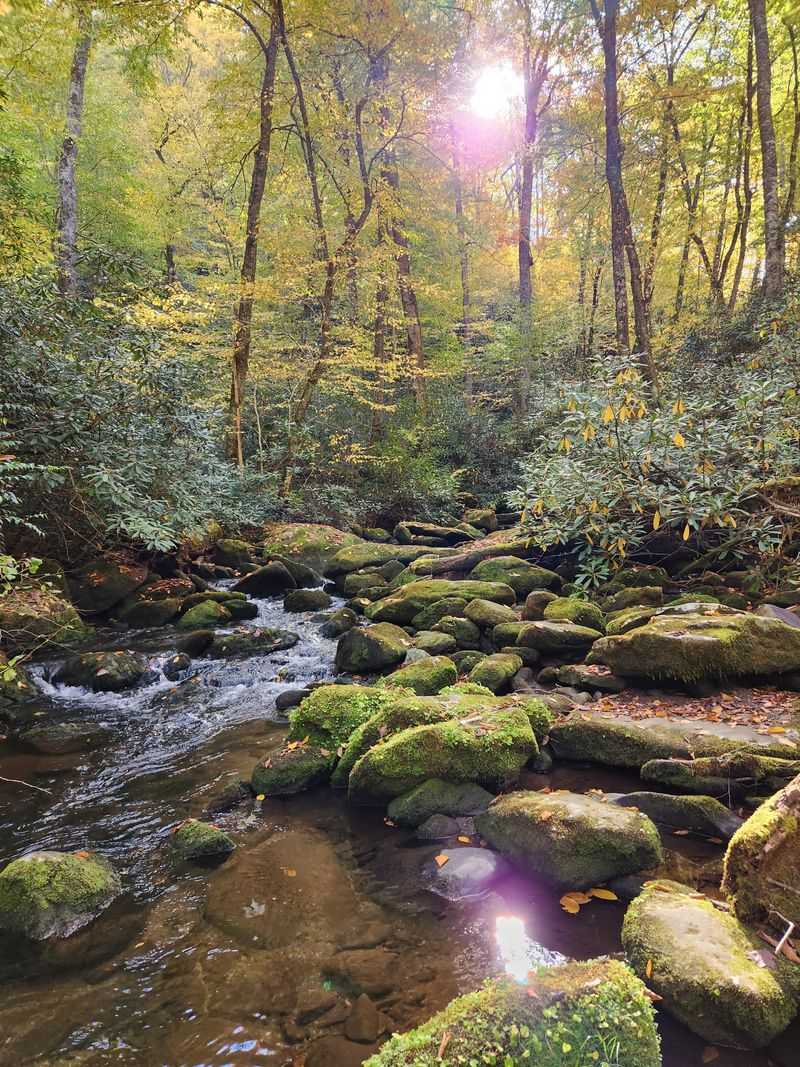
Professional photographers arrive before dawn to capture magical morning light filtering through the ancient canopy, their tripods positioned carefully to avoid damaging sensitive vegetation. The forest’s vertical drama creates natural leading lines that draw viewers’ eyes skyward, while the interplay of light and shadow offers endless compositional opportunities.
Spring’s fresh green leaves glow almost luminescent when backlit by early sun, creating images that seem too vibrant to be real without filters or editing.
Smartphone cameras struggle with the extreme contrast between bright canopy and dark forest floor, often producing disappointing results despite the scene’s obvious beauty. Photographers who understand their camera’s exposure compensation settings capture far better images, slightly overexposing to preserve shadow detail while accepting some blown highlights in the brightest sky patches.
Overcast days actually provide superior lighting for forest photography, eliminating harsh shadows and allowing rich color saturation throughout the frame.
Creek crossings offer intimate compositional opportunities where flowing water, moss-covered rocks, and surrounding vegetation create miniature landscapes worth close examination. Macro photographers discover entire worlds in the spring wildflowers and emerging ferns, their cameras revealing details invisible to casual observation.
The two-mile trail provides enough variety to fill memory cards without requiring marathon hiking efforts, making Joyce Kilmer accessible to photographers with limited mobility who still want spectacular natural subjects.
9. Accessible Features And Visitor Amenities
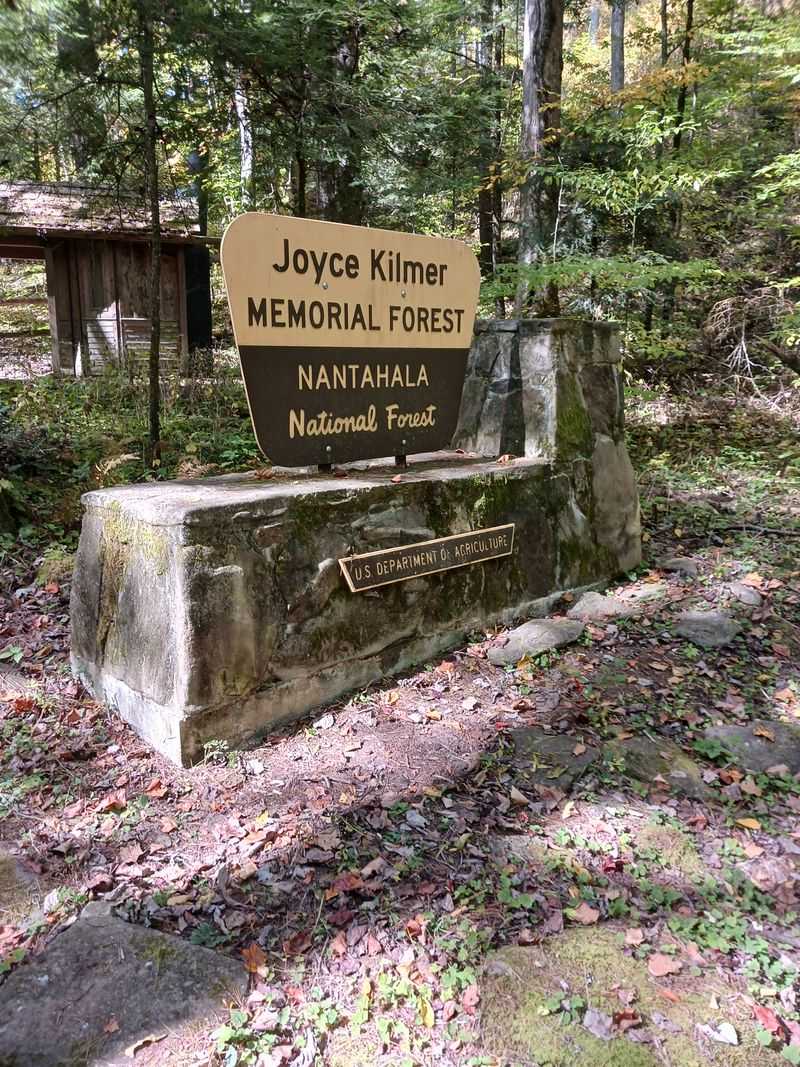
This trailhead provides well-maintained restroom facilities that visitors consistently praise in online reviews for cleanliness and functionality. Covered picnic tables offer shaded spots for pre-hike snacks or post-adventure lunches, with mountain views visible through surrounding trees.
Ample parking accommodates typical weekday crowds, though spring weekends see the lot fill by mid-morning as word spreads about the wildflower displays.
Informational kiosks near the trailhead provide maps, safety information, and educational content about the forest’s ecological and historical significance. These displays help visitors understand what makes this particular forest special, explaining old-growth characteristics and the conservation efforts that protect it.
Rangers and volunteers often staff the area during busy periods, answering questions and offering hiking advice tailored to visitors’ fitness levels and time constraints.
While the trail itself features stairs, roots, and uneven surfaces that challenge mobility-impaired visitors, the lower loop’s initial section offers relatively flat terrain where families with young children or elderly hikers can experience the forest’s majesty. Benches positioned at scenic spots allow rest breaks while soaking in the atmosphere that makes this forest feel almost sacred.
The figure-eight design lets visitors customize their experience, turning back whenever fatigue or time constraints dictate without missing the forest’s essential character and most impressive specimens.
10. Cherokee Heritage And Cultural Significance
Long before Joyce Kilmer’s name became attached to these woods, Cherokee people knew every tree, spring, and animal trail throughout these mountains. Their deep connection to the land extended beyond mere survival, encompassing spiritual relationships with the natural world that modern visitors struggle to fully comprehend.
The forest provided medicine, food, shelter materials, and sacred spaces where ceremonies connected the people with forces larger than individual human existence.
Forced removal along the Trail of Tears in the 1830s devastated Cherokee communities, yet some families remained hidden in these remote mountains, their descendants still living in nearby areas today. The Eastern Band of Cherokee Indians maintains cultural ties to lands now designated as public forests, viewing them as ancestral homelands rather than recreational amenities.
Their traditional ecological knowledge accumulated over millennia offers insights that contemporary forest management increasingly recognizes as valuable for understanding complex ecosystem relationships.
Spring held special significance in Cherokee seasonal rounds, marking the time when new plant growth provided fresh foods after winter’s limited diet. Many wildflowers blooming along the Joyce Kilmer trail served medicinal purposes in traditional healing practices, their properties documented through generations of careful observation.
Respectful visitors recognize that they walk through landscapes rich with human history extending far beyond the 1936 memorial designation, their footsteps following paths worn by countless others across unknown centuries.
11. Nearby Cherohala Skyway Connection
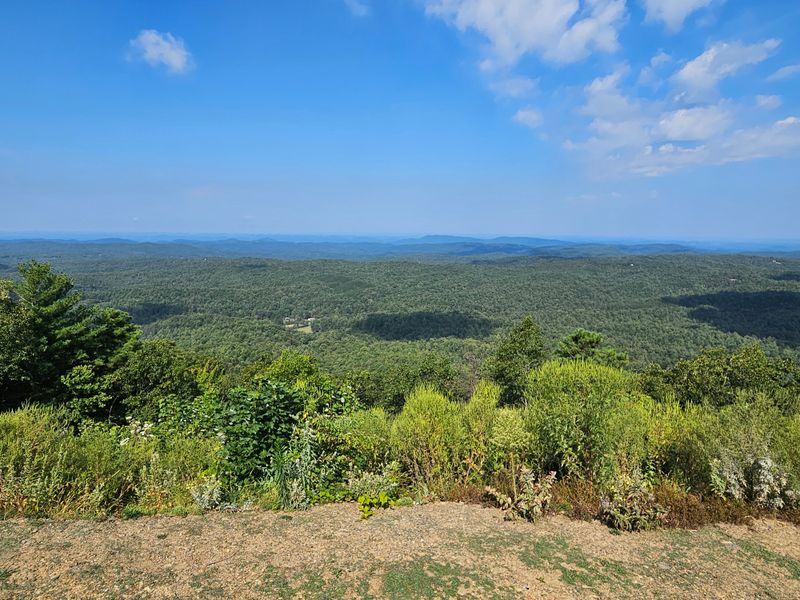
The Cherohala Skyway’s 43 miles of scenic highway connect Joyce Kilmer Memorial Forest with stunning overlooks and additional recreation areas across the Unicoi Mountains. This National Scenic Byway climbs to elevations exceeding 5,000 feet, offering panoramic views that stretch across multiple states on clear days.
Spring drives showcase the mountains’ gradual awakening as elevation determines leaf-out timing, creating a vertical progression of seasonal change visible from strategic overlooks.
Visitors often combine forest hiking with skyway driving, creating full-day adventures that showcase southern Appalachian diversity. The junction sits just 2.5 miles from Joyce Kilmer’s entrance, making the connection convenient for travelers wanting to maximize their mountain experience.
Numerous pullouts along the skyway provide photography opportunities and short walks to viewpoints where the ancient forest visible below emphasizes the landscape’s scale and grandeur.
Late spring brings rhododendron blooms to high-elevation roadside sections, creating natural flower gardens that rival any cultivated display. Motorcyclists particularly love the skyway’s smooth pavement and sweeping curves that offer exhilarating riding without the traffic congestion plaguing more famous mountain roads.
The route’s relative obscurity compared to the Blue Ridge Parkway means fewer crowds and more opportunities to stop spontaneously when a view demands attention or a hawk circles overhead hunting in mountain thermals.
12. Joyce Kilmer-Slickrock Wilderness Context
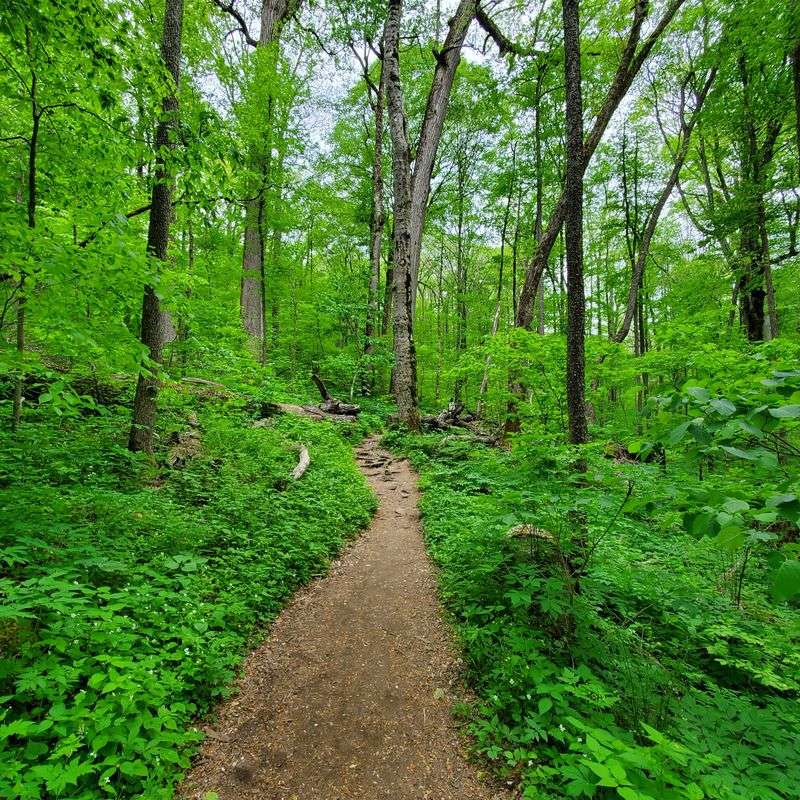
The memorial forest comprises just a fraction of the 19,246-acre Joyce Kilmer-Slickrock Wilderness that Congress designated in 1975 to ensure permanent protection. This larger wilderness area spans the North Carolina-Tennessee border, encompassing rugged terrain where backpackers find solitude increasingly rare in the eastern United States.
Strict wilderness regulations prohibit motorized equipment and mechanized transport, preserving the area’s primitive character for those seeking genuine backcountry experiences beyond the memorial forest’s day-use trail.
Multiple trailheads access the wilderness from various directions, offering everything from easy day hikes to challenging multi-day backpacking routes through remote sections rarely visited by casual tourists. The Slickrock Creek drainage on the Tennessee side provides particularly spectacular scenery where waterfalls cascade over ancient rock formations.
Experienced wilderness travelers find the area’s trail network sufficient for week-long trips without retracing steps, though proper navigation skills become essential in areas where trail maintenance receives less attention than the popular memorial forest loop.
Wilderness designation represents America’s highest level of federal land protection, prioritizing ecological integrity over recreational convenience or resource extraction. These areas serve as biological anchors where natural processes operate without human manipulation, providing baseline data for understanding ecosystem function.
The Partners of the Joyce Kilmer-Slickrock Wilderness work tirelessly to educate visitors about wilderness ethics, ensuring that increased recreational pressure doesn’t compromise the values that wilderness designation exists to protect.
13. Planning Your Spring Visit Successfully
Successful Joyce Kilmer visits begin with realistic time planning that accounts for the winding mountain roads leading to the trailhead from Robbinsville. The drive takes longer than GPS estimates suggest, with narrow roads demanding slower speeds than highway driving.
Budget at least 90 minutes for the lower loop hike including photography stops, or three hours if completing the full figure-eight trail and lingering to properly appreciate the ancient giants.
Pack more water than seems necessary, as spring’s moderate temperatures and shaded trail conditions deceive hikers about hydration needs. Snacks fuel energy for the trail’s modest elevation changes that accumulate surprisingly over the two-mile route.
A small first-aid kit, fully charged phone for emergency communication, and trail map supplement good preparation, though cell service remains spotty throughout the area requiring self-reliance rather than digital rescue options.
Weekday visits offer the best chances for solitude and wildlife sightings, with weekends bringing crowds that diminish the wilderness atmosphere considerably. Early morning arrivals secure parking and allow hiking before afternoon weather develops, while also providing optimal lighting for photography as sun angles illuminate the canopy dramatically.
The forest located at 5410 Joyce Kilmer Rd rewards visitors who approach it with respect, patience, and wonder, offering experiences that Instagram posts merely hint at but never fully capture or convey to distant followers.