This Northern California Beach Is Covered In Sea Glass Instead Of Sand
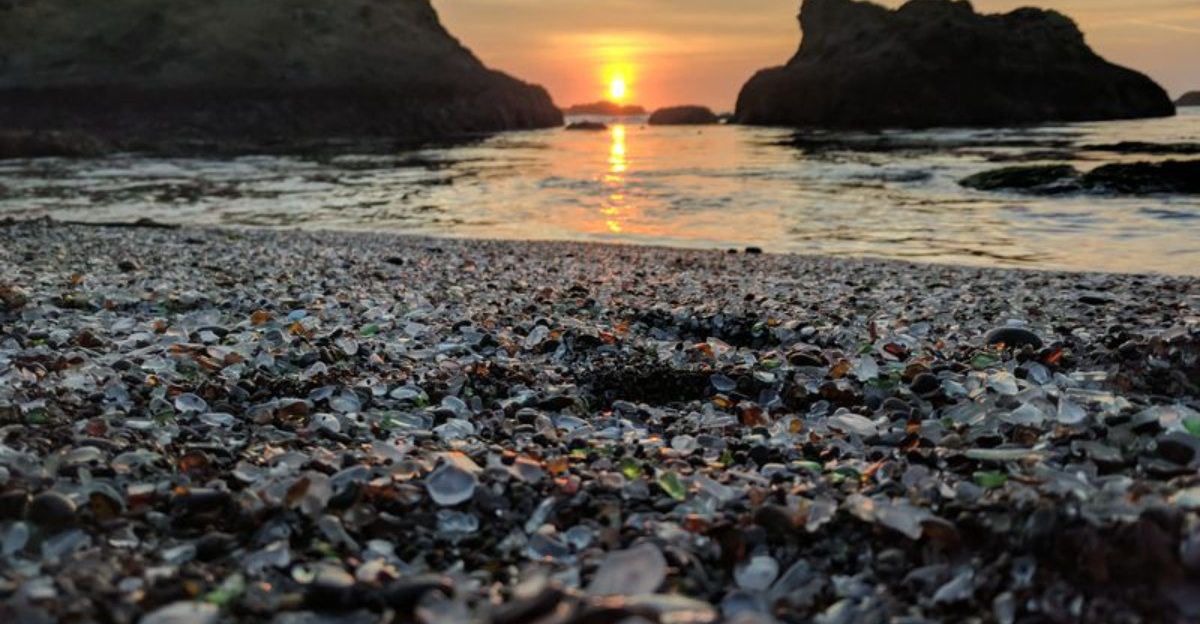
Along one rugged stretch of Northern California coastline, the shoreline doesn’t just meet the ocean – it glitters.
Thousands of jewel-like glass fragments shimmer across the sand, catching sunlight in flashes of emerald, cobalt, amber, and seafoam.
With every crashing wave, more polished pieces tumble ashore, creating a kaleidoscope effect that feels almost unreal.
Glass Beach near Fort Bragg looks less like a typical beach and more like a treasure field shaped by time and tide.
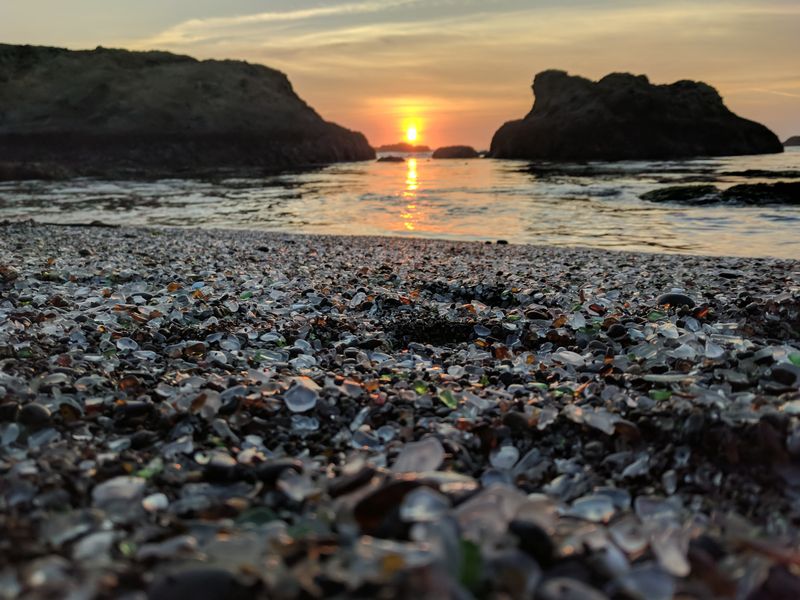
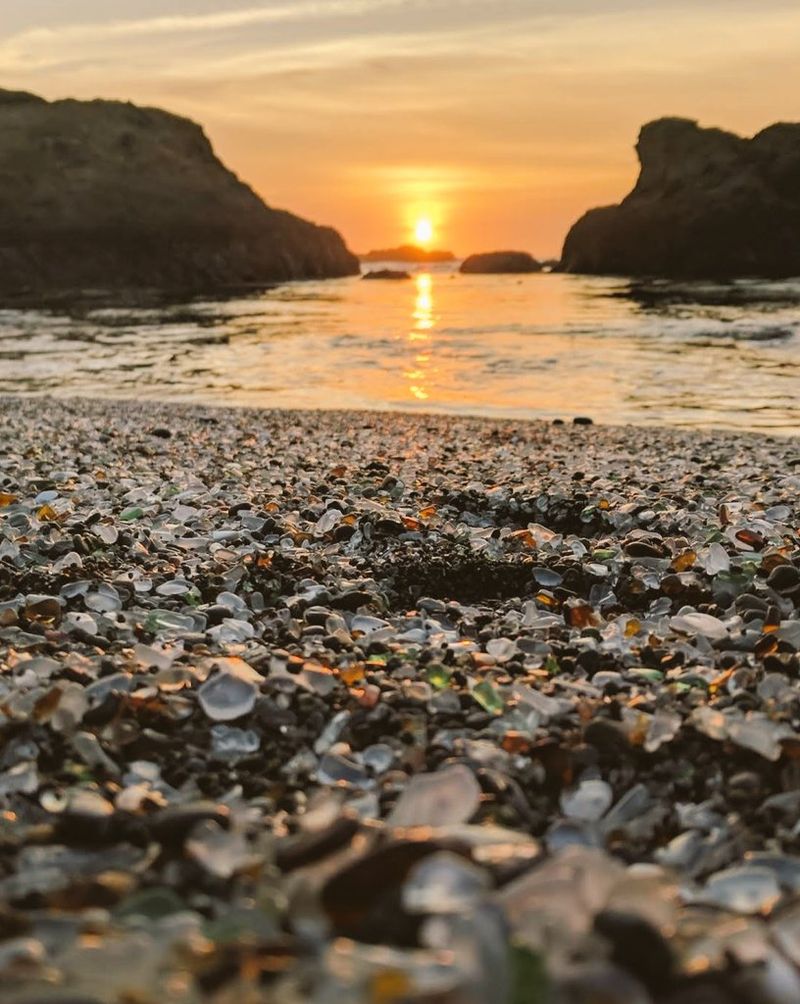
Instead of shells and pebbles, the ground sparkles with smooth sea glass in nearly every color imaginable – each piece rounded and frosted by decades of relentless surf.
Travelers come from across the globe to witness the phenomenon firsthand, drawn by photos that barely capture the brilliance visible in person.
What makes the beach even more fascinating is the story behind it – a place where discarded debris was slowly transformed by the Pacific into something unexpectedly beautiful.
Walking the shoreline feels part discovery, part reflection. Every glint of color hints at a past life, reshaped by waves into something entirely new.
It’s not just one of California’s most unusual beaches – it’s one of its most mesmerizing, where nature turned yesterday’s waste into a shoreline that quite literally sparkles.
1. Decades Of Dumping Created An Accidental Wonder
For over sixty years, residents of Fort Bragg used the coastal cliffs as their primary disposal site. Between 1906 and 1967, people threw everything from household garbage to old appliances and automobiles over the edge onto the beach below.
Glass bottles, jars, and broken dishes accumulated alongside metal scraps and other refuse.
The area became known locally as “The Dumps” and consisted of three main sites along the coast. Families would drive to the cliff edge and simply push their unwanted items over the side.
No one imagined that this careless practice would eventually create something beautiful.
In 1967, the North Coast Water Quality Board finally ordered the dumps closed. The decision came as environmental awareness began growing across California.
Cleanup crews removed the larger metal objects, cars, and appliances over the following years.
However, tons of broken glass remained scattered across the rocky shoreline, setting the stage for nature’s transformation process to begin.
2. Ocean Waves Transformed Trash Into Treasure
The Pacific Ocean began its work on the abandoned glass immediately after the dumps closed. Constant wave action rolled the sharp glass fragments against rocks and sand.
Each tide brought thousands of repetitions of this natural tumbling process. The rough edges gradually wore down while the glass surfaces became frosted and smooth.
This transformation takes decades rather than months or years. Salt water and sand act like natural sandpaper, grinding away at the glass continuously.
The frosted appearance develops as the smooth outer surface of the glass gets etched by the abrasive action. Smaller pieces polish faster than larger chunks due to increased surface area exposure.
The result is thousands of gem-like pieces in various sizes scattered across the beach. Some pieces are as small as a fingernail while others measure several inches across.
The ocean essentially created an outdoor jewelry box, turning human waste into something people now travel great distances to see and photograph.
3. Part Of MacKerricher State Park Today
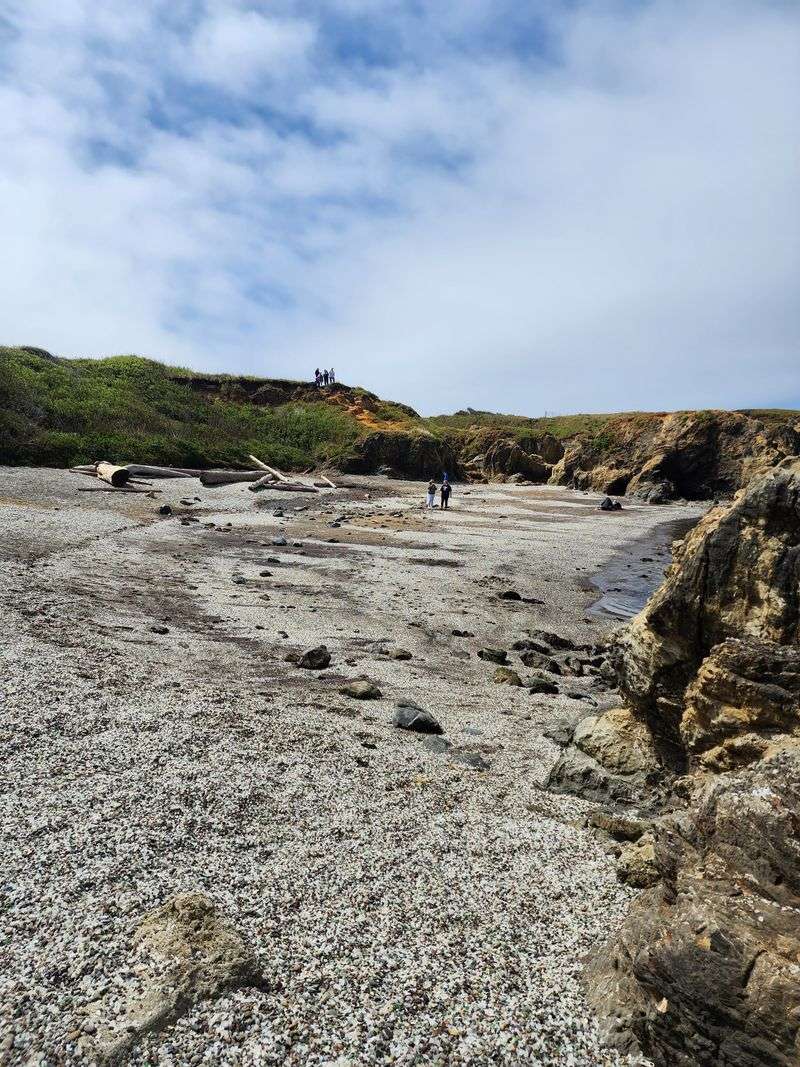
Glass Beach now sits within the protected boundaries of MacKerricher State Park. The park encompasses several miles of coastline north of Fort Bragg and includes diverse habitats.
State park designation brought official protection and management to the unique beach. Visitors can access the area through marked trails and designated parking areas.
The park system maintains the site while balancing preservation with public access. Rangers monitor the beach and educate visitors about its history and importance.
Interpretive signs near the parking area explain how the beach formed and why protection matters. The state park setting ensures that Glass Beach will remain accessible for future generations.
MacKerricher State Park offers additional attractions beyond Glass Beach itself. Coastal trails wind along dramatic cliffs with ocean views.
Seal watching opportunities exist at nearby rocky outcrops. Tide pools host diverse marine life during low tide periods.
The park provides a full day of exploration possibilities for visitors who come specifically for Glass Beach but discover much more to experience.
4. Thousands Visit Every Year
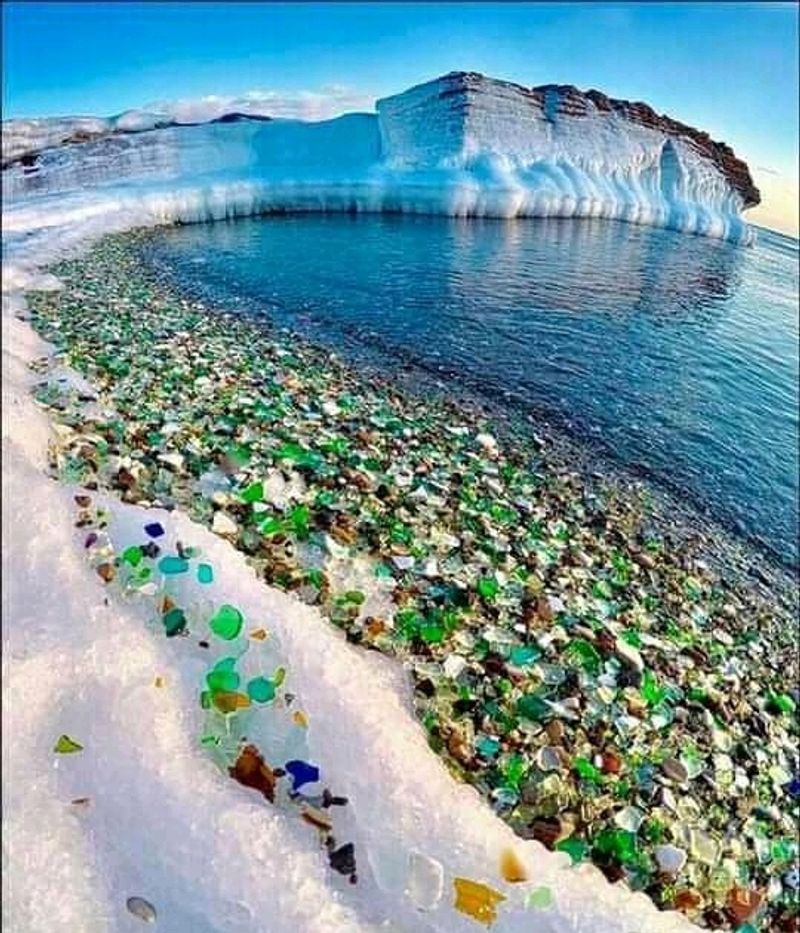
Glass Beach attracts between 30,000 and 40,000 visitors annually according to park estimates. Summer months bring the largest crowds, with 1,000 to 1,200 people visiting on peak days.
The beach has become one of the most photographed locations along the Northern California coast. Social media posts and travel articles continue spreading awareness and drawing more curious visitors each year.
The popularity creates both benefits and challenges for this fragile site. Economic benefits flow to Fort Bragg through increased tourism spending.
Local businesses appreciate the steady stream of visitors seeking food, lodging, and supplies. However, heavy foot traffic impacts the beach environment.
The sheer number of people compacts soil along access trails and disturbs the natural arrangement of glass and stones.
Park managers work to balance access with preservation through visitor education programs. Peak season can mean crowded conditions on the relatively small beach area.
Early morning visits often provide a quieter experience with better photo opportunities. Weekdays see fewer visitors than weekends throughout most of the year.
5. Taking Glass Is Now Prohibited
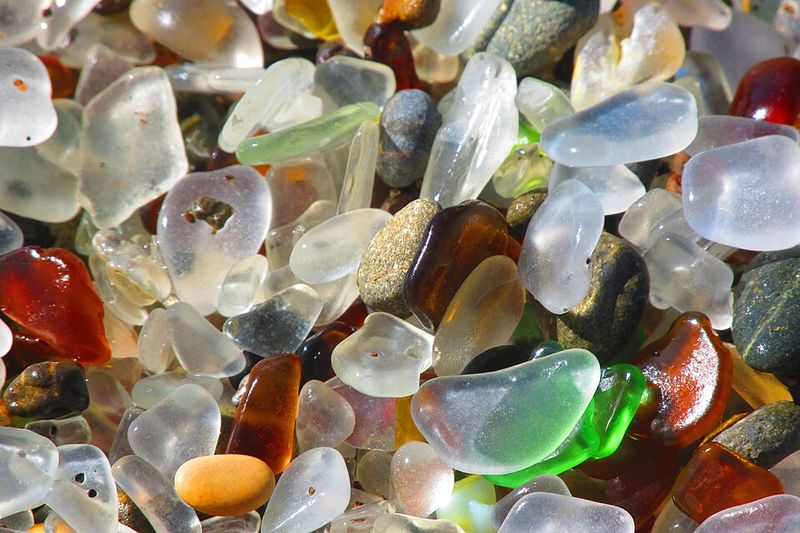
California state park regulations strictly prohibit removing sea glass from Glass Beach. Signs posted at access points clearly state this rule.
Rangers patrol the area and can issue citations to people caught collecting glass. The prohibition exists because the beach’s defining feature would disappear if every visitor took pieces home as souvenirs.
Early visitors could legally collect glass before the area became part of the state park system. Old-timers remember when glass covered the beach so thickly that walking was difficult.
Decades of collecting by thousands of visitors significantly reduced the amount of visible glass. Some areas that once glittered with dense glass coverage now show mostly rock and sand.
The collection ban helps slow the depletion but cannot completely stop it. Some visitors ignore the rules and pocket pieces anyway.
Natural processes also continue moving glass offshore or burying it under sand. Park officials encourage people to take only photographs and memories.
Several shops in Fort Bragg sell legally collected sea glass from other locations for those who want a tangible souvenir.
6. Best Viewing During Low Tide
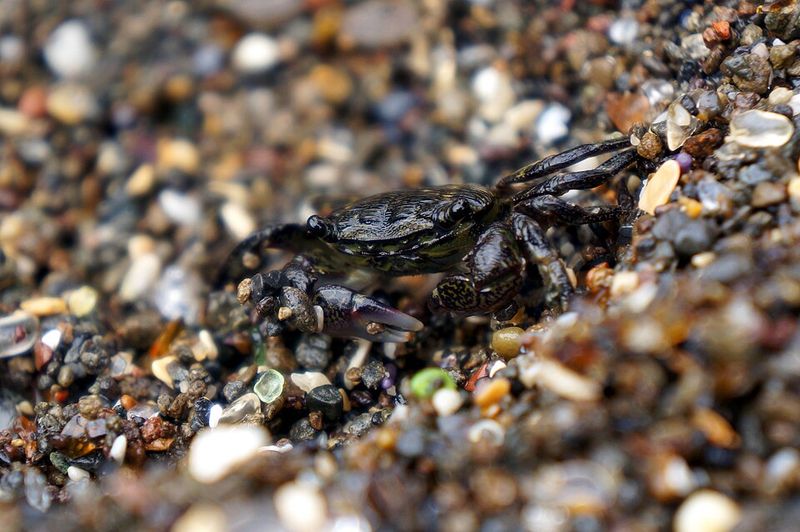
Timing a visit with low tide reveals significantly more sea glass than high tide periods. Receding water exposes glass pieces that normally sit underwater or covered by waves.
Wet glass catches light differently than dry pieces, creating enhanced color and sparkle. Tide pool areas around the glass contain additional marine life worth observing.
Tide charts are available online and at the Fort Bragg visitor center. Planning ahead ensures arrival during optimal viewing windows.
The lowest tides of each month provide the best opportunities for seeing the most glass. Morning low tides often coincide with better lighting conditions for photography than afternoon low tides.
High tide can actually be dangerous at Glass Beach due to sneaker waves. Large waves occasionally surge higher than expected and can knock people off rocks.
Staying aware of wave patterns and maintaining distance from the water’s edge matters for safety. The beach’s rocky nature makes footing tricky when wet.
Appropriate footwear with good traction helps prevent slips on algae-covered rocks that become exposed during tidal changes.
7. Rainbow Colors Cover The Shoreline
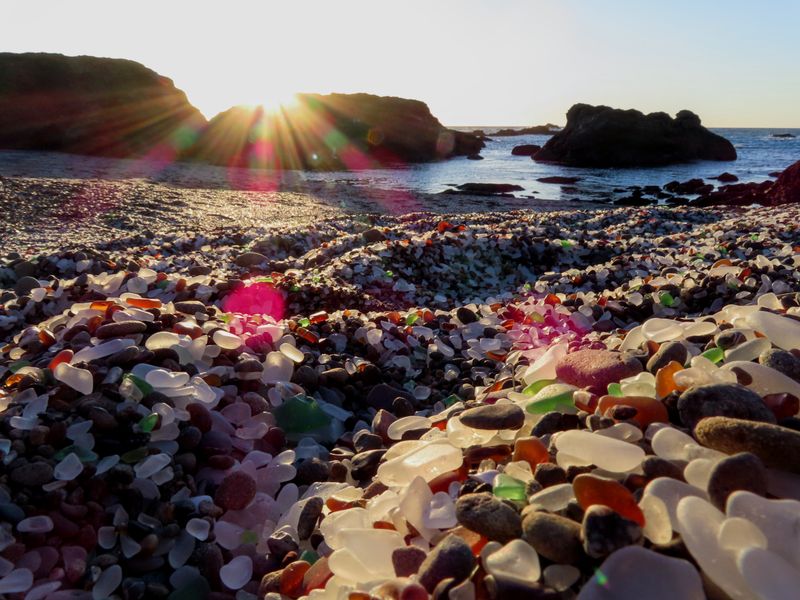
Walking onto Glass Beach reveals an unexpected palette of colors glinting in the sunlight. Green and brown pieces dominate the scene since these colors came from the most common bottles and jars.
Clear glass appears frequently as well, blending almost invisibly until light hits it at the right angle. Amber pieces add warm golden tones throughout the mix.
Blue glass catches attention immediately due to its relative rarity and vibrant appearance. Cobalt blue medicine bottles and vintage glass products contribute these prized pieces.
White and aqua shades appear less frequently but stand out beautifully against darker stones. Red glass is extremely rare since few products historically used this color.
The color distribution changes with the tides and seasons as waves constantly rearrange the glass. Morning light makes certain colors more visible while afternoon sun highlights others.
Photographers find endless opportunities to capture the changing appearance of this colorful mosaic.
The variety creates a visual experience that differs from any other beach in California or beyond.
8. Easy Access From Downtown Fort Bragg
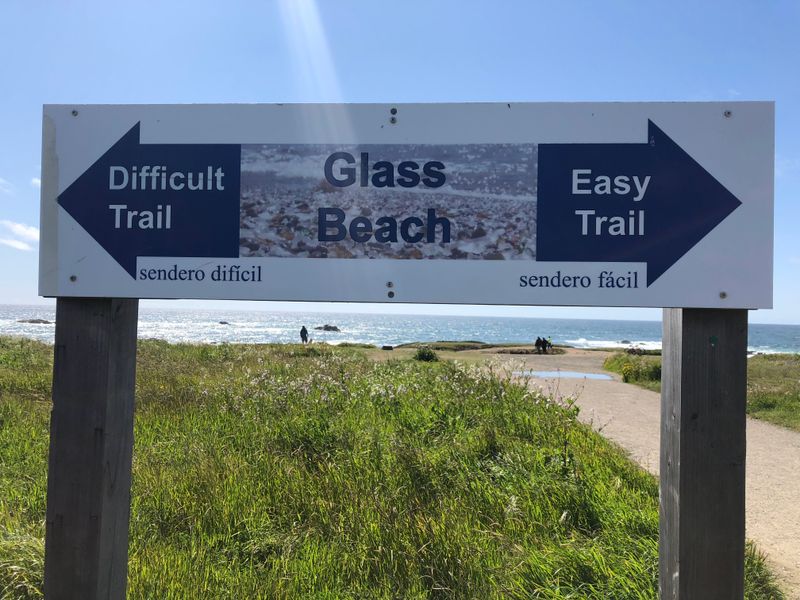
Glass Beach sits less than two miles from downtown Fort Bragg. Visitors can reach the site by car in just a few minutes from Main Street.
Glass Beach Drive leads directly to a small parking area at the trailhead. The parking lot accommodates roughly 20 vehicles, though it fills quickly during summer weekends and holidays.
A short walking path leads from the parking area down to the beach level. The trail covers approximately 500 feet and includes some uneven terrain.
Wooden steps and packed dirt sections make up most of the route. The descent is manageable for most fitness levels but may challenge those with mobility limitations.
No facilities exist at the beach itself, so visitors should plan accordingly before arriving.
Street parking along Glass Beach Drive provides overflow options when the lot fills. Nearby residents request that visitors respect private property and park only in designated areas.
The neighborhood surrounding the beach consists of residential homes.
Keeping noise levels reasonable and staying on marked paths helps maintain good relationships between tourists and local residents who live near this popular attraction.
9. Photography Opportunities Abound
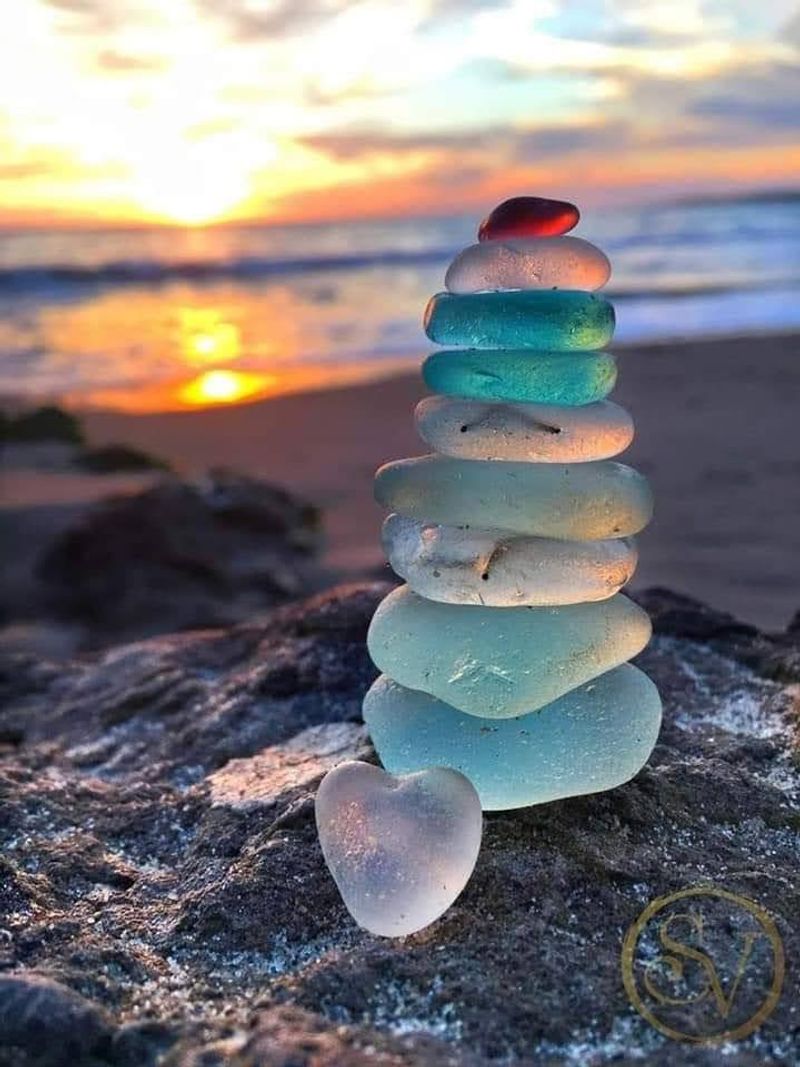
Glass Beach ranks among the most photogenic locations on the California coast. Macro photography reveals intricate details in individual glass pieces.
Wide-angle shots capture the colorful expanse against dramatic ocean backdrops. Sunrise and sunset provide especially beautiful lighting conditions that make colors glow.
Overcast days create soft, even light that reduces harsh shadows and glare on glass surfaces.
Successful photography at Glass Beach requires some patience and experimentation. Getting low to the ground brings the camera closer to the colorful subjects.
Wet glass photographs better than dry glass due to enhanced color saturation. Light spray bottles can dampen glass for better shots during dry conditions.
Polarizing filters help reduce glare from both wet glass and ocean water in the background.
Social media has made Glass Beach even more famous through countless shared images. Instagram and Pinterest feature hundreds of thousands of photos tagged at this location.
The photogenic nature of the beach contributes significantly to its growing popularity. Visitors often spend hours exploring different angles and compositions.
The constantly changing arrangement of glass ensures that no two visits yield identical photographic opportunities.
10. A Living Lesson In Environmental Transformation
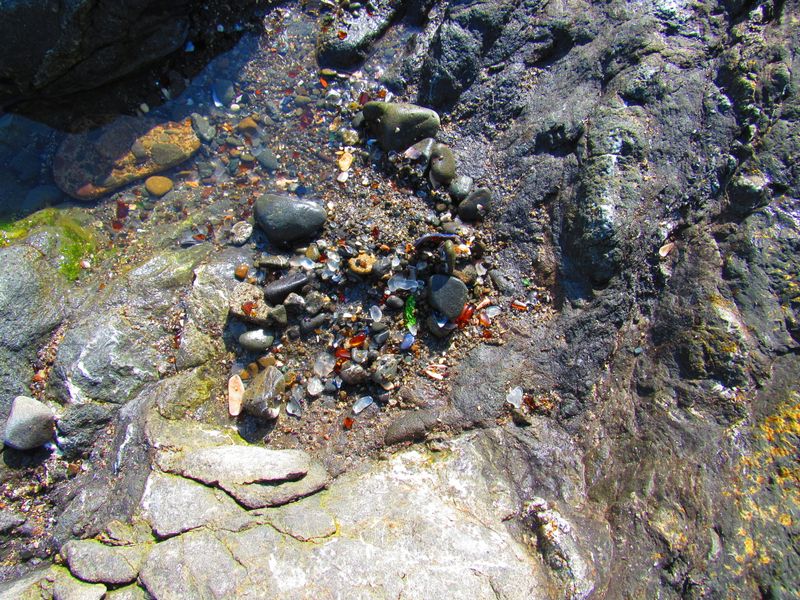
Glass Beach serves as a powerful example of environmental recovery and transformation. The site demonstrates how nature can reclaim and beautify areas damaged by human activity.
Schools and educational groups visit to learn about waste management, ocean processes, and environmental stewardship. The beach’s history provides clear lessons about the long-term consequences of improper disposal practices.
Modern visitors find it hard to imagine the beach as a garbage dump. Historical photographs displayed at the site show the dramatic difference between past and present.
The transformation took decades and happened entirely through natural processes. However, the glass will eventually disappear as wave action continues breaking pieces into ever-smaller fragments.
Scientists estimate that Glass Beach may look completely different within another 50 to 100 years.
The story encourages reflection on current waste management practices and their potential future impacts. What seems like a convenient disposal solution today might create problems for generations to come.
Glass Beach accidentally became beautiful, but most pollution does not transform so fortunately.
The site reminds visitors that human actions have lasting consequences on natural environments throughout California and beyond.