This Northern California Bike Trail Winds For 30 Miles Along A Quiet Creek Through Scenic Parks
Some rides earn their reputation loudly, with dramatic climbs and summit photos that spread across every cycling group on the internet.
This trail earns it quietly, which is honestly more impressive.
You will roll up expecting a pleasant enough path through the greenery, maybe a duck or two if you are lucky, and then somewhere around mile two you will realize you have been smiling for longer than you can account for.
That is when it clicks.
This Northern California trail does not try to overwhelm you with distance or difficulty.
It tries to remind you what riding is actually supposed to feel like when you strip everything back.
Fresh air, wildlife you were not expecting, scenery that keeps changing just enough to hold your attention, and that particular satisfaction of a trail that delivers more than the map suggested it would.
This one deserves more credit than it gets.
The Trail Overview
Nobody warned me how quickly this trail gets under your skin.
Coyote Creek Trail runs along Coyote Creek through the heart of Santa Clara County, connecting Hellyer County Park to Metcalf Road.
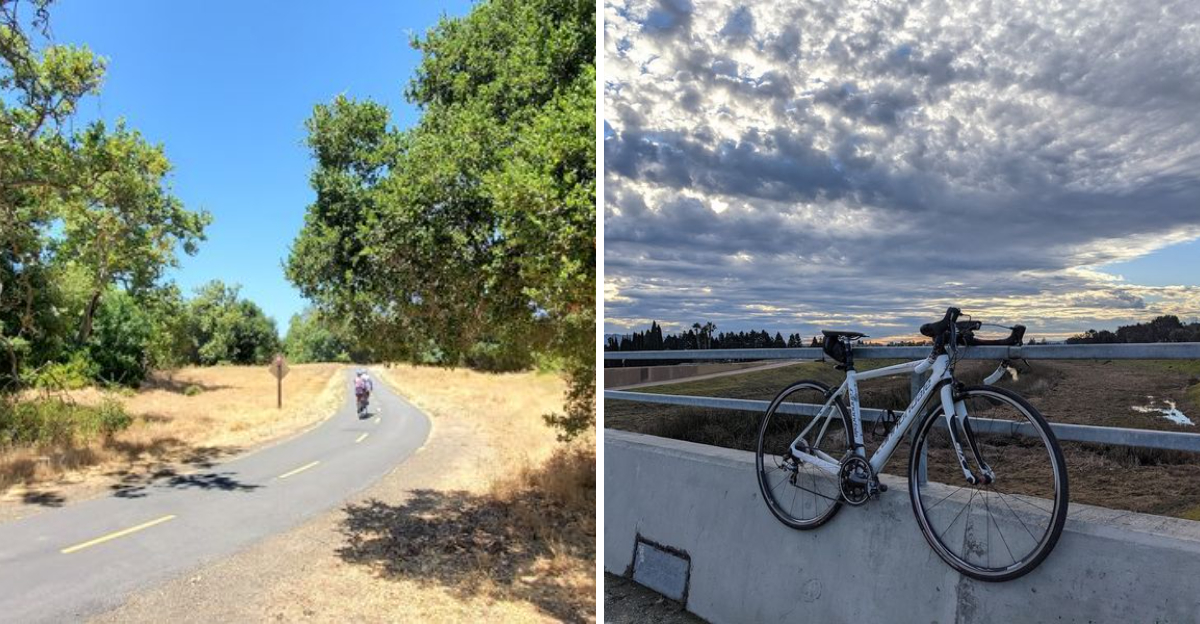
The surface is smooth asphalt the whole way, which means cyclists, joggers, and inline skaters all share the path without much drama.
Families with strollers show up regularly, and you will see serious cyclists zipping past casual riders without anyone losing their cool.
The elevation change is minimal.
You are not climbing anything dramatic, which is honestly part of the appeal.
This is a trail you can enjoy without training for it.
What catches most people off guard is how green and lush the corridor feels, even in the middle of a built-up suburban area.
The creek runs alongside much of the route, and the sound of moving water makes the whole experience feel more remote than it actually is.
First-timers often look up and realize they forgot to check their phone for an hour.
Starting Point
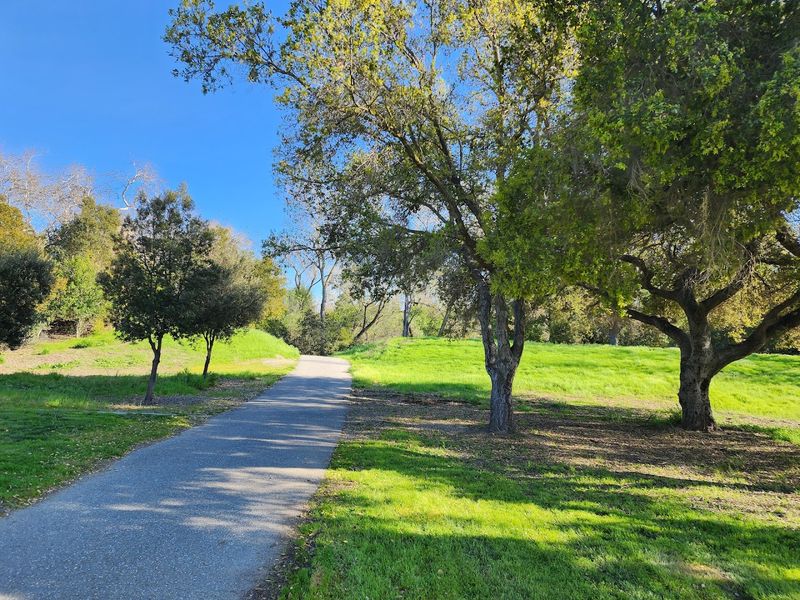
Most people kick off the ride at Hellyer County Park, and honestly, it is the smartest place to start.
Parking is available right inside the park at 985 Hellyer Avenue, San Jose. There is a small fee to enter by car, but it is nothing that will ruin your day.
The park itself has restrooms, picnic tables, and open grass areas where you can stretch before clipping in or lacing up.
It feels like a proper send-off rather than just a parking lot with a trailhead sign.
On weekends, the energy here is genuinely cheerful.
Families are setting up, cyclists are adjusting helmets, and dogs are already losing their minds with excitement.
From the trailhead, the path dips south and immediately starts delivering on its promise.
Within the first half mile, the creek comes into view and the tree canopy starts doing its thing.
The noise from nearby roads fades faster than you expect.
I remember thinking the transition from park to trail felt almost cinematic.
One moment you are in a county park, and the next you are somewhere that feels genuinely wild.
That contrast is part of what makes this starting point so satisfying.
The Creek Views
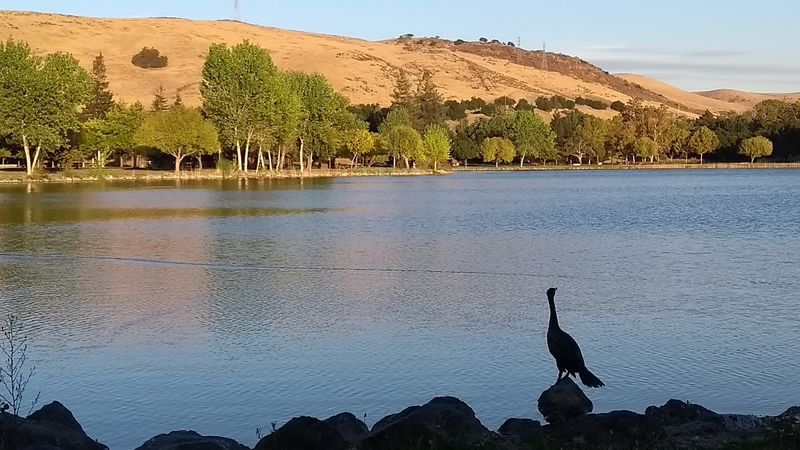
There is a moment on this trail, somewhere around mile two, where you round a gentle bend and the creek opens up wide.
The water catches the light in a way that makes you brake without thinking.
It is one of those instinctive stops that no trail map can prepare you for.
Coyote Creek is not a raging river.
It is calm, steady, and lined with willows, cottonwoods, and native grasses.
In spring, the banks are thick with green growth.
In summer, the shade from those trees becomes the reason you keep coming back.
The creek itself supports a surprisingly healthy riparian ecosystem, which is a fancy way of saying there is a lot of life packed into a narrow corridor.
Water birds wade in the shallows.
Turtles park themselves on half-submerged logs.
If you slow down enough, you start noticing things most people cycle right past.
The reflections in the water on a still morning are genuinely beautiful.
I took more photos at this stretch than anywhere else on the trail.
Not because I planned to, but because it kept demanding attention.
Bring a camera or accept that your phone will be out constantly.
Wildlife Along The Route
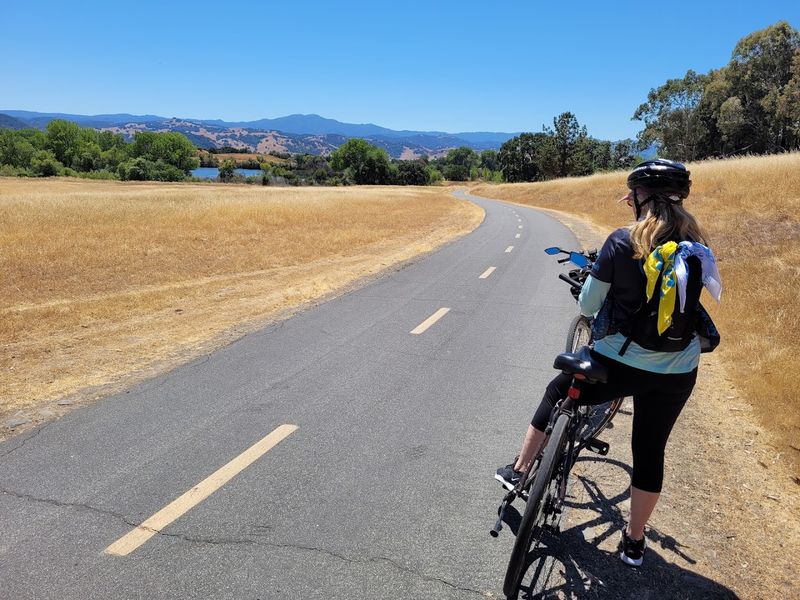
The wildlife on this trail is not subtle.
Within the first mile, I spotted a great blue heron standing absolutely still in the shallows like it owned the place.
It did not flinch when cyclists rolled past.
That level of confidence is either inspiring or unsettling, depending on your mood.
Coyote Creek Trail sits within a flyway corridor, meaning birds use it as a seasonal travel route.
You can spot egrets, red-tailed hawks, and the occasional kingfisher depending on the time of year.
In the early morning hours, the bird activity is especially dense.
Experienced birders show up with serious binoculars.
Casual riders just enjoy the unexpected sightings.
Beyond birds, ground squirrels dart across the path constantly.
Deer are occasionally spotted near the southern end of the trail where the vegetation gets thicker.
Rabbits appear without warning and disappear just as fast.
The trail feels genuinely alive in a way that suburban paths rarely do.
This is not a manicured nature experience.
It is more spontaneous than that, which is exactly what makes it memorable.
Keep your eyes open and your speed reasonable, and the trail rewards you generously with moments that feel like small gifts.
The Shaded Canopy Sections
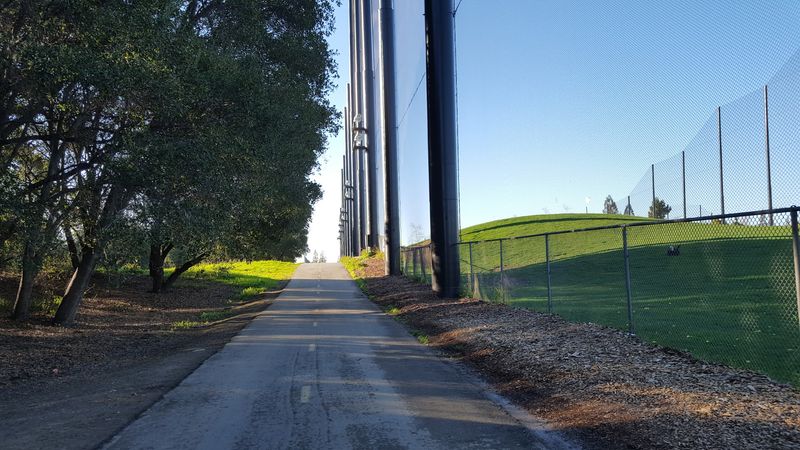
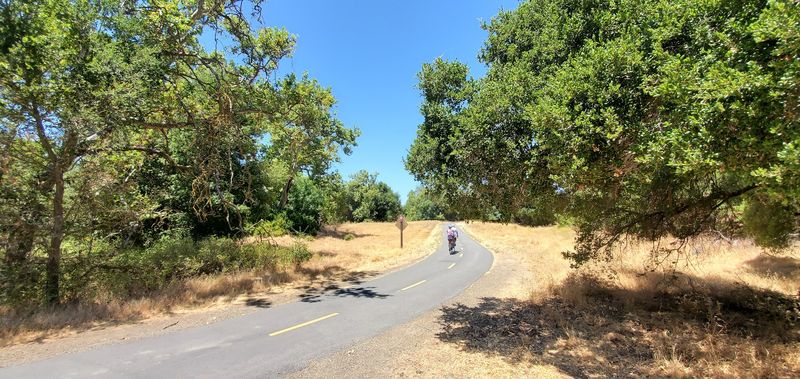
About halfway through the trail, the trees close in on both sides and you ride through what can only be described as a green tunnel.
The light drops, the temperature follows, and the whole mood of the ride shifts.
It feels like the trail is letting you in on a secret.
These canopy sections are formed mostly by mature cottonwoods and valley oaks that have grown together overhead over decades.
The effect is dramatic in a quiet way.
Sound changes too.
The ambient noise of the surrounding city disappears and gets replaced by bird calls and the rustle of leaves.
It is the kind of environment that makes you pedal slower without realizing it.
On hot summer days, these shaded corridors are the reason people choose this trail over others.
The temperature difference under the canopy can feel significant after riding through exposed sections.
I hit one of these stretches on a warm afternoon and genuinely stopped pedaling just to sit in the cool air for a moment.
There is no grand overlook or dramatic vista here, just dense, living shade that feels earned after the sunny stretches.
Sometimes the most satisfying views are the ones that happen above you rather than in front of you.
Seasonal Changes
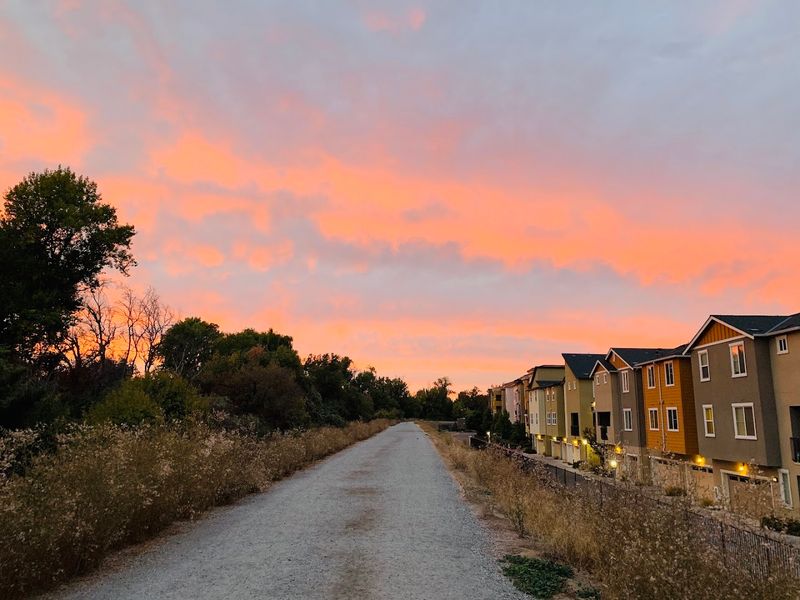
Come back to this trail in a different season and you will swear you are on a completely different route.
That is not an exaggeration.
The riparian corridor along Coyote Creek transforms dramatically throughout the year, and each version has something worth showing up for.
Spring brings the most obvious drama.
The creek runs higher, the vegetation explodes with new growth, and wildflowers appear along the banks.
Fall delivers rich yellows and oranges from the cottonwoods, turning the trail into something that looks genuinely photogenic.
Winter visits are quieter and more contemplative, with fewer riders and mist hanging over the water on cold mornings.
Summer is peak season for families and casual cyclists, but it rewards early risers who beat the heat.
The trail opens at dawn and the morning light through the trees at that hour is worth setting an alarm for.
Locals who ride this trail regularly often develop a favorite season.
Some swear by fall color.
Others love the spring bird activity.
I keep returning in early morning summer rides because the light and the quiet hit differently before 8 a.m.
The point is, one visit is rarely enough.
The trail keeps changing, and so does your reason for coming back.
Trail Etiquette And Tips
Shared trails have their own social rules, and Coyote Creek Trail is no exception.
Cyclists yield to pedestrians.
Faster riders call out before passing.
Dogs stay on leash.
These are not just suggestions.
They are what keeps a high-traffic trail enjoyable for everyone on it.
On weekends between 9 a.m. and noon, the trail gets genuinely busy near the Hellyer Park end.
If you prefer a quieter experience, arriving before 8 a.m. or heading out on a weekday makes a real difference.
The southern sections near Metcalf Road tend to be less crowded regardless of the day, which is worth knowing if you want more space.
Bring water.
There are no vendors along the route and the park facilities at Hellyer are your best bet for restrooms before you head out.
A small saddle bag with a basic repair kit is smart for cyclists since the nearest bike shop is not on the trail.
The path is well-maintained but you will occasionally encounter debris after storms.
Wearing a helmet is required common sense rather than optional.
First-time visitors often underestimate how quickly 5.5 miles goes by.
Most people finish and immediately start planning their next visit, which tells you everything you need to know about how the trail lands.
Why This Trail Punches Above Its Weight
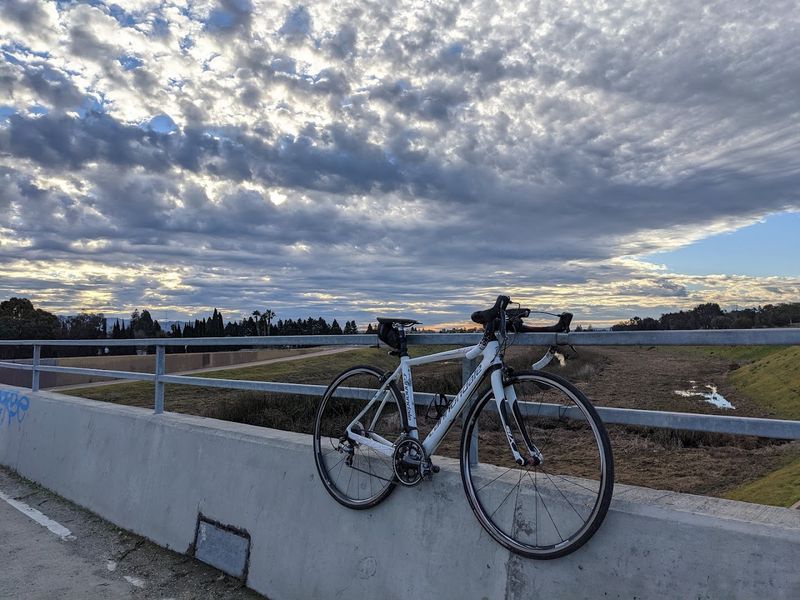
On paper, a 5.5-mile paved trail through a suburban county does not sound like must-see territory.
Then you actually ride it and realize the description does it almost no justice.
The combination of creek access, wildlife, tree cover, and smooth pavement adds up to something that feels far more curated than any county trail has a right to feel.
Part of what makes Coyote Creek Trail punch above its weight is its accessibility.
You do not need a car rack, a shuttle, or a trail map app to enjoy it.
You show up, you ride, and the trail does the rest.
That simplicity is rare and worth appreciating in a region where outdoor experiences often require significant planning.
The trail also connects to a broader network of paths within Santa Clara County, meaning experienced cyclists can extend their ride well beyond the 5.5-mile stretch if they want more mileage.
For newcomers to the area or anyone looking for a reliable go-to route, this trail earns its reputation quickly.
I have recommended it to friends who were skeptical and heard back from all of them within a week.
The message is always the same: they did not expect it to be that good.
Honestly, neither did I the first time.