This Ohio Roundhouse Feels Like A Cathedral Built For Massive Steam Locomotives
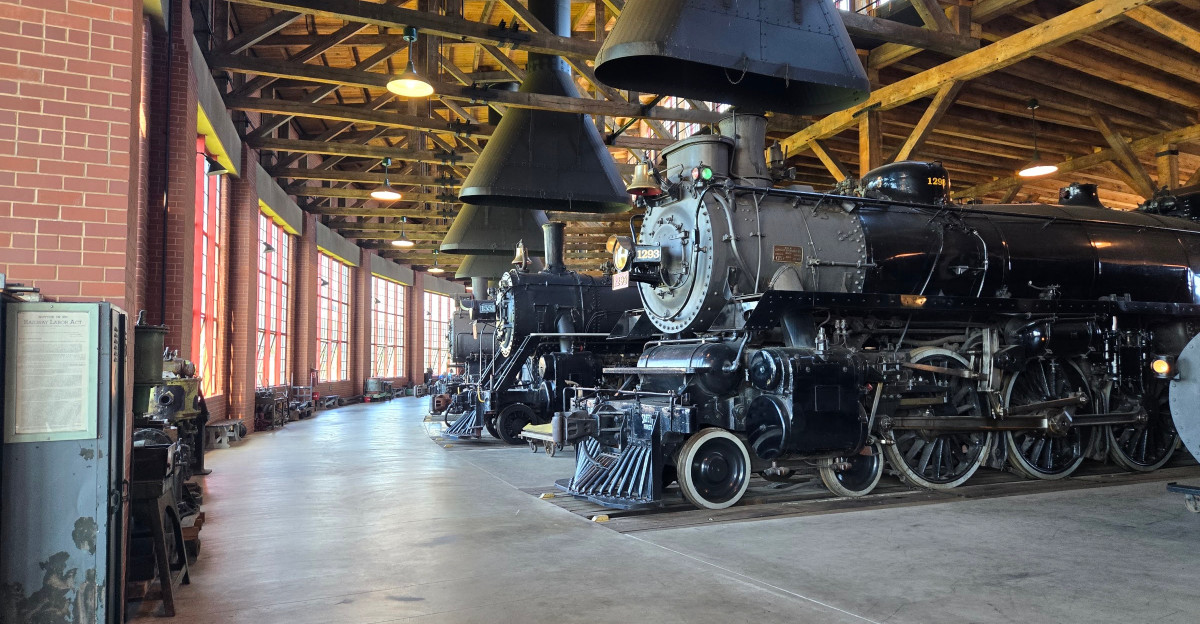
A 450-ton steam locomotive sleeps inside a brick building with heavy timber beams overhead. That engine is the biggest one here, and it has plenty of giant company.
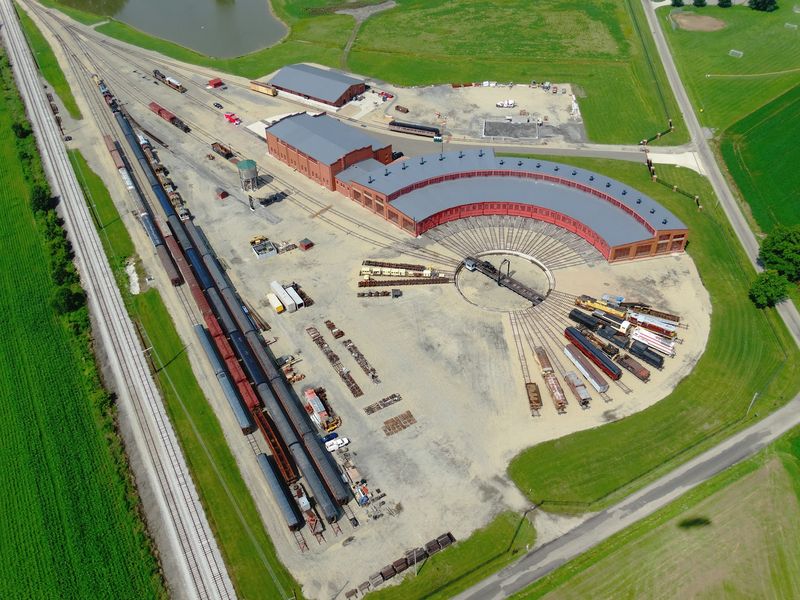
The building holds 18 stalls arranged in a curve around a working 115-foot turntable. It was finished in 2011. It became the first large roundhouse built in the United States since 1951.
All of this sits in the rolling Amish country of Ohio. Restoration crews still work on the old engines and cars while tour groups pass by. So this isn’t a dusty display.
It’s a shop that keeps history running.
I’m curious how it feels to stand beside wheels taller than a grown adult. I’d also love to see that turntable swing a giant into place.
One Man’s Train Dream Turned Into A Real Roundhouse
Most people collect stamps or coins. Jerry Joe Jacobson, who built the Ohio Central Railroad System, collected entire steam locomotives.
When he sold his railroad business in September 2008, he kept his personal collection. Then he needed somewhere to park it, which is not a small problem when your hobby weighs hundreds of tons.
His answer was the Age of Steam Roundhouse. Jacobson bought 34 acres near Sugarcreek and commissioned a building designed to look and function like a roundhouse from an earlier railroad era.
The massive structure was completed in 2010, and by the summer of 2011, its stalls were filled with locomotives and other historic equipment. The building stands out among American railroad landmarks.
The Jerry and Laura Jacobson Foundation was established to care for the collection and share railroad history with the public.
Today, guided tours bring visitors into the same working complex where specialists maintain these remarkable machines.
Knowing the backstory changes the experience. The brick walls, tracks, and timber beams are part of a lifelong idea made real, not merely scenery around old trains.
Look Up, Because The Ceiling Deserves Applause Too
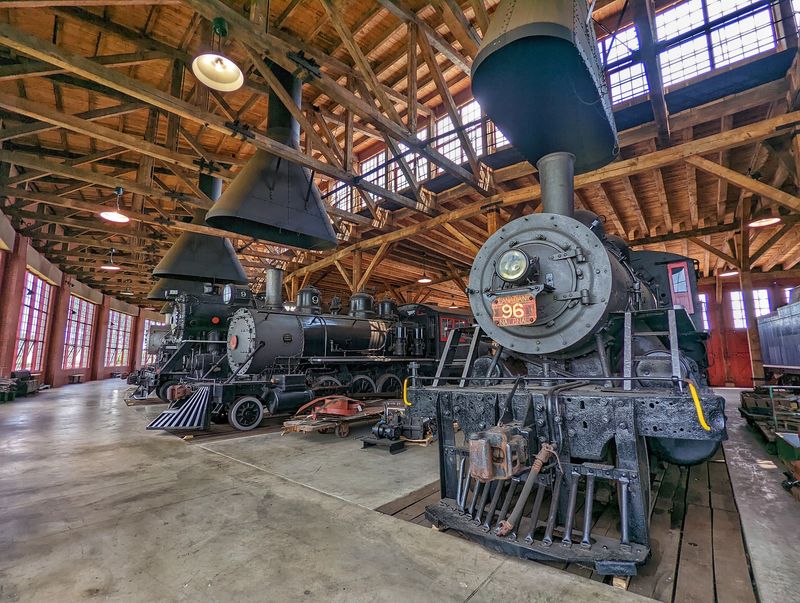
Cathedrals have soaring arches and stained glass. This building swaps those for massive wooden beams and solid brick walls, and the effect is surprisingly similar.
The original roundhouse covers approximately 48,000 square feet.
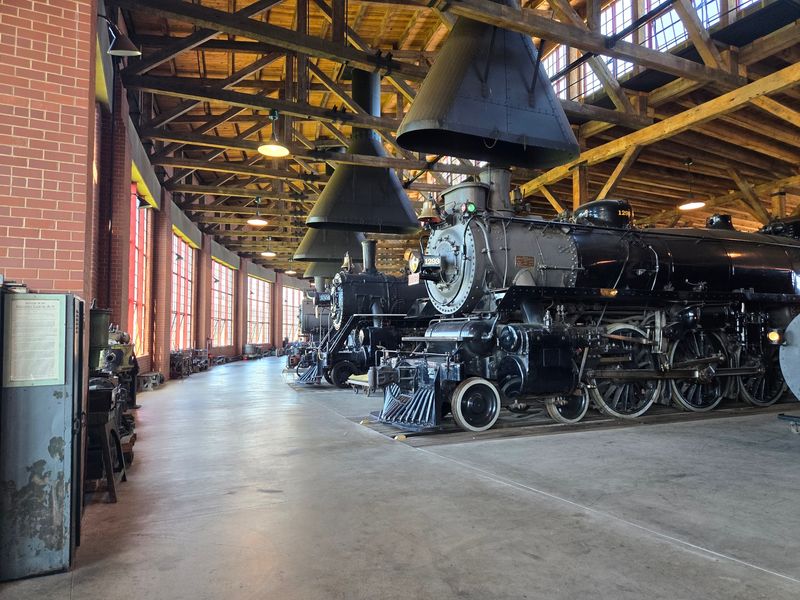
Heavy timber trusses support the roof above 18 tracks that fan out toward the turntable. Each stall has room for a steam locomotive and its tender, the separate car carrying fuel and water.
Although the building is modern, its design follows the practical appearance of roundhouses from the 1940s.
Tall windows admit daylight, while overhead smoke hoods recall the days when engines arrived under steam and needed a place to cool down.
The timber craftsmanship feels particularly fitting in this part of Amish country, where traditional woodworking remains familiar. Look past the locomotives for a moment and follow the repeating pattern of beams above their boilers.
The brick-and-timber construction makes the place memorable even before you start comparing wheel arrangements. The architecture has plenty of presence too.
The Spinning Heart Of The Whole Operation
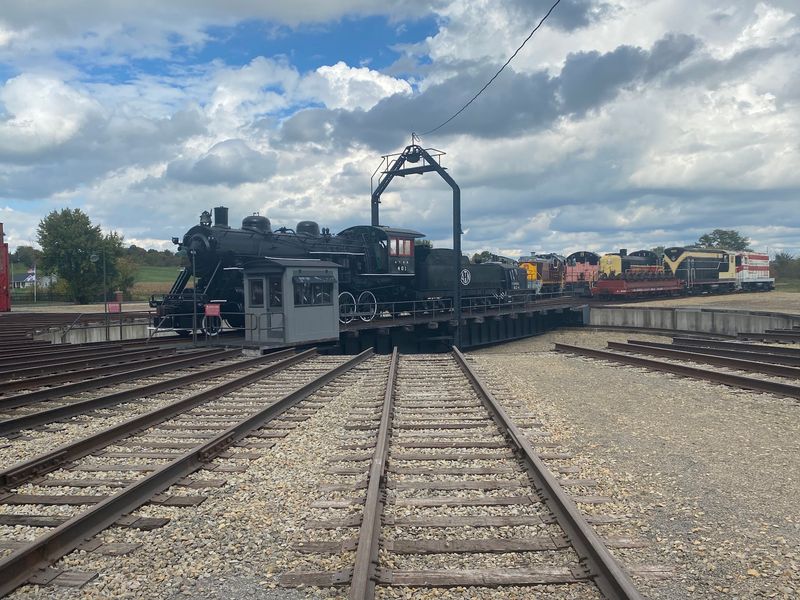
A 115-foot bridge that spins in a circle sounds like a carnival ride. In fact, it’s one of the most important tools in the entire complex.
The working turntable sits at the center of the roundhouse’s fan of tracks.
A locomotive rolls onto the bridge, the table rotates, and the rails line up with the chosen stall. The engine can then move straight into position.
Steam locomotives are long and heavy, and their wheels follow rails rather than steering like a car.
A turntable lets a railroad redirect equipment without needing an enormous loop of track. It also makes the curved arrangement of an old-fashioned roundhouse immediately understandable.
Think of the stalls as spokes and the turntable as the hub. Once you see them together, the geometry becomes wonderfully practical.
Regular guided tours include the turntable area, though a moving demonstration depends on museum operations that day.
Even when standing still, the steel bridge makes the scale of the collection clear. Just imagine bringing a giant locomotive onto that narrow span and turning it toward its place indoors.
Meet The 450-Ton Heavyweight Champion
Four hundred fifty tons. That’s the weight of Bessemer & Lake Erie 2-10-4 No. 643 without its fuel and water, and it’s the largest locomotive in the museum’s collection.
Built in 1944, this enormous engine measures more than 108 feet long and stands over 16 feet tall. With a full load of coal and water, its weight rises to approximately 572 tons.
The numbers are impressive, but the real surprise is seeing how much space one locomotive occupies.
No. 643 arrived at the museum in sections, with its major components reunited in January 2024. After extensive cosmetic restoration, it went on public display in March 2025.
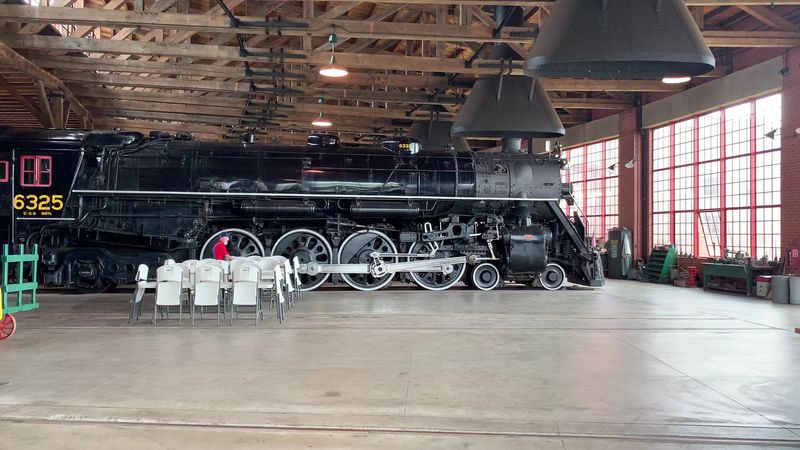
Other historic engines share the spotlight. Nickel Plate Road Berkshire No. 763 and Grand Trunk Western Northern No. 6325 demonstrate different arrangements of driving wheels and different jobs on American railroads.
The museum preserves freight cars, passenger equipment, and diesel locomotives. It’s quite a collection, but this Ohio giant has a special talent for making everyone nearby feel miniature.
Some Of These Engines Are Delightfully Weird
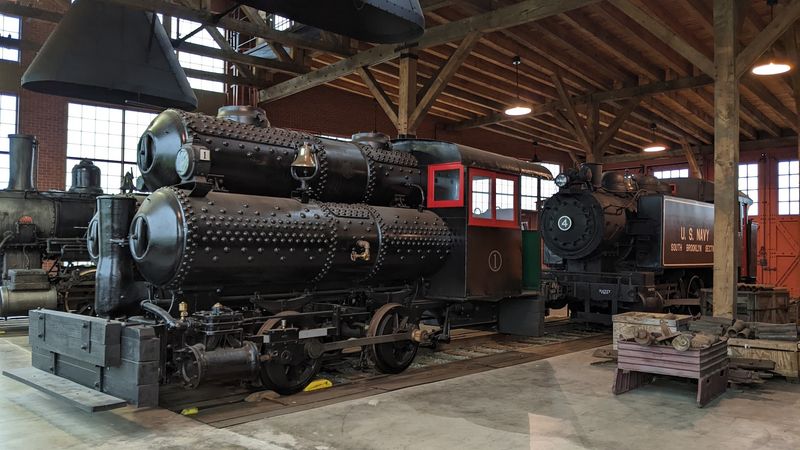
Not every locomotive here is a muscle-bound giant. A few are the quirky cousins of the steam family.
Take Reading 0-4-0 Camelback No. 1187, built in 1903. Its engineer’s cab sits above the middle of the boiler, giving the little switcher an unmistakable profile.
The unusual design accommodated a broad firebox suited to the type of coal the railroad used.
Then there’s a three-tank compressed-air locomotive built in 1915. Instead of creating steam with its own boiler, it used pressurized air stored in large tanks to move its pistons.
Its early assignments included hauling sugarcane in Cuba, a job that required frequent refilling with compressed air.
The collection also has a fireless steam switcher, built in 1940, which received hot water and steam from a stationary source instead of heating them aboard. It looks familiar at first, until you realize its method of operation is completely different.
These unusual machines show how inventive railway engineering could be. Not every industrial job required a towering engine. Sometimes the cleverest answer came in a compact, distinctly odd-looking package.
Real Restoration Work Happens Right Here
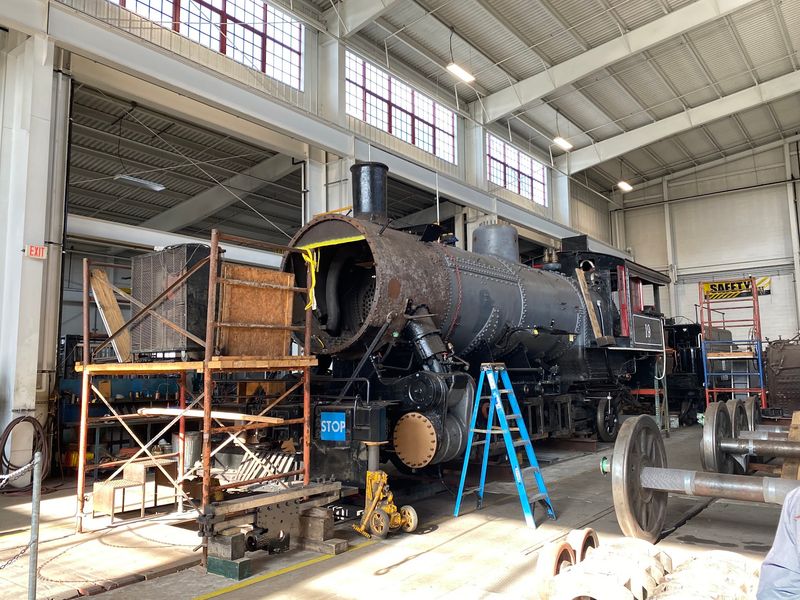
Here’s what sets this museum apart from a quiet gallery.
The Age of Steam Roundhouse is a working facility, with a back shop where specialists maintain, repair, and restore historic equipment.
Its machine shop and overhead cranes make large projects possible.
A locomotive may need mechanical attention, newly fabricated parts, careful cleaning, or a full cosmetic restoration before returning to the display stalls.
Tours introduce visitors to the site’s operating purpose, although the work visible on a particular day depends on the crew’s schedule.
The complex also contains storage tracks, a depot, and other structures that help recreate a traditional railroad servicing yard.
The collection keeps evolving. McCloud River No. 19 celebrated its return to steam with a special April 2026 event, demonstrating how much effort can go into putting an old engine back on Ohio rails.
In May 2026, the museum completed a separate 10-stall East Roundhouse. Its steel-framed interior provides additional storage for railroad equipment, rather than another regularly toured exhibition building.
Plan Your Visit Around The Guided Tour Schedule
Spontaneous road trippers, take note. You can’t just wander in here on a whim.
Because this is an active railroad facility, the roundhouse can only be explored on a guided tour.
The regular season runs from April through November, with tours on Thursday, Friday, and Saturday at 10 a.m., noon, and 2 p.m.
Find the museum at 213 Smokey Lane Rd SW, Sugarcreek, OH 44681. The depot and museum store are open from 9:30 a.m. to 3:30 p.m. on regular tour days, giving everyone a clear place to begin.
The standard Roundhouse Tour lasts approximately 90 minutes and covers about one-third of a mile on foot. Its route is on one level and accessible to wheelchairs and mobility scooters.
Comfortable, closed-toe shoes are recommended, and visitors bringing young children may use their own strollers.
Regular tours focus on the buildings and locomotive collection rather than train rides. Special events offer different activities, so choose the outing that fits your plans. Reserve ahead when possible because tour groups have limited capacity.
Lanterns, Santa, And Steam Festivals Shake Things Up
Lantern light on old iron sounds pretty magical. That’s the idea behind the museum’s evening lantern tours, which bring railroad stories into the roundhouse after daylight fades.
The 2026 lantern evenings took place October 16, 17, 23, and 24, with guided walks beginning at 6 and 7 p.m. It is one of several ways the museum changes the experience beyond its standard tours.
For a deeper look at railroad engineering, Ferroequinologist Tours run for about three hours and explore spaces such as the restoration and machine shops.
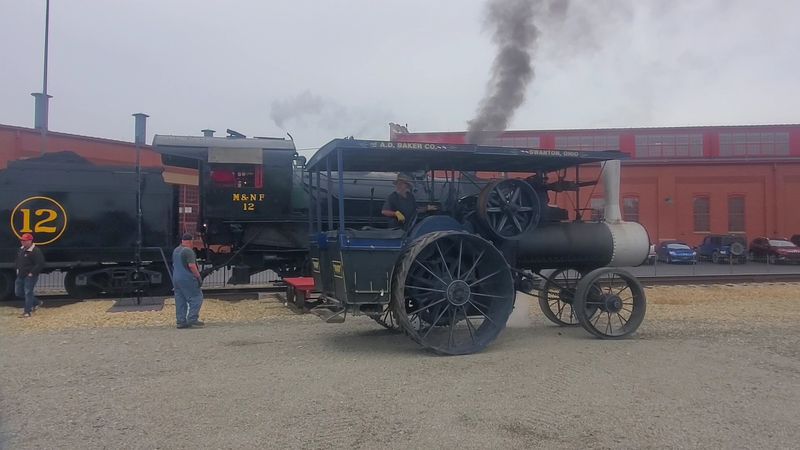
Family programs include shorter youth tours, while the Fall Steam Festival celebrates historic machinery and old-fashioned activities.
Santa Comes to the Roundhouse is scheduled for December 11 and 12, 2026.
The program features a steam-powered train trip to meet Santa, along with a holiday craft, treats, and gifts for children. It is a special event rather than a regular roundhouse tour.
Train rides are reserved for selected programs, so that distinction matters when planning a visit. Between the regular season and special celebrations, this corner of Ohio keeps finding ways to put its remarkable railway collection to work.