This 150-Year-Old Georgia Mill Still Grinds Corn And Wheat With Its Original 1,500-Pound Stones
The rumble stopped me before anything else did. It rolled through the floorboards like distant thunder, steady and low.
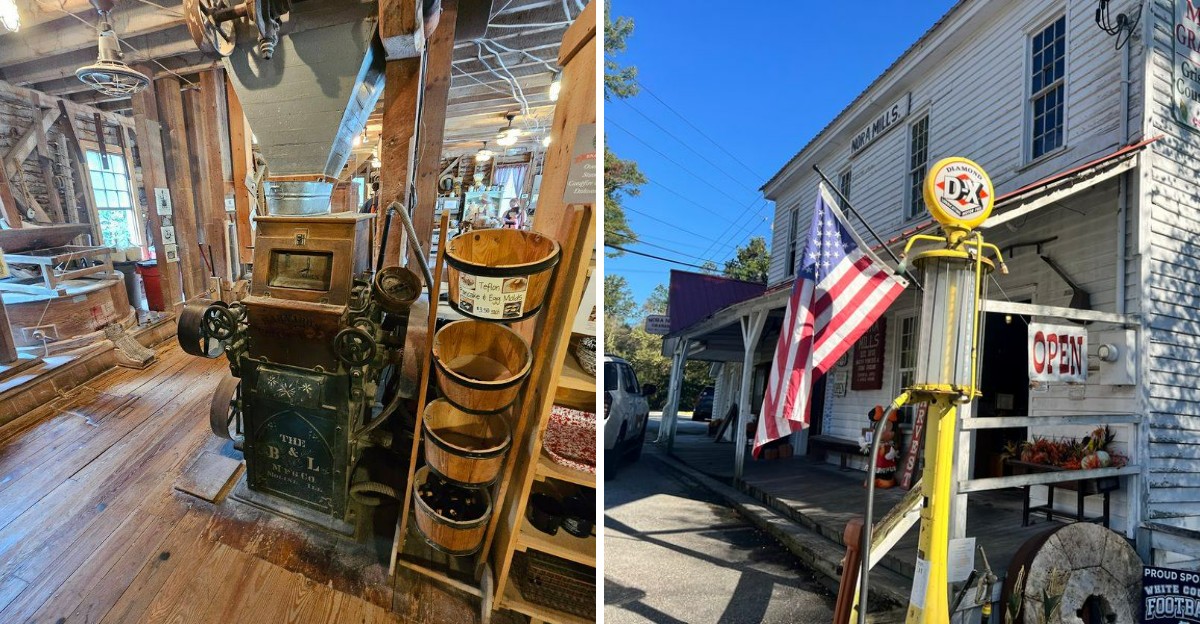
I followed the sound past a creaky screen door and found the source: two massive stones, older than anyone’s grandparents, still grinding corn exactly the way they did over a century ago. Water turned a wheel outside.
Gears groaned. Flour dust hung in the air like fog.
An older man scooped warm cornmeal into a paper bag and told me the stones had never once been replaced, just sharpened and loved back to life. I bought grits I didn’t need and asked questions I hadn’t planned on asking.
Georgia builds plenty of new things, but this mill refuses to let the old ways disappear. It just keeps turning, one harvest at a time, feeding people the same way it has for generations across this corner of Georgia.
A Gold Prospector’s Second Act In 1876
Gold brought a man named John Martin to north Georgia, but grain kept him here. In 1876 he built a mill in the Sautee-Nacoochee Valley instead of chasing another strike.
His smartest decision was skipping the classic spinning water wheel. He installed a water turbine instead, which was forward thinking for the time.
In 1902 the property sold to Dr. Lamartine G. Hardman, who later became Governor of Georgia.
He renamed it in honor of his late sister, and the name stuck.
The Hardman family held the mill until 1998, which is a remarkably long run. That kind of continuity is rare in any business, let alone one powered by a river.
Standing outside, you can see how little has changed in a century and a half. The building still leans into its work rather than posing for photos.
The mill dates back to 1876, making 2026 its 150th year.
You will find all of it at Nora Mill Granary Grist Mill & Country Store, 7107 S Main St, Helen, GA 30545.
French Burr Stones That Weigh 1,500 Pounds Each
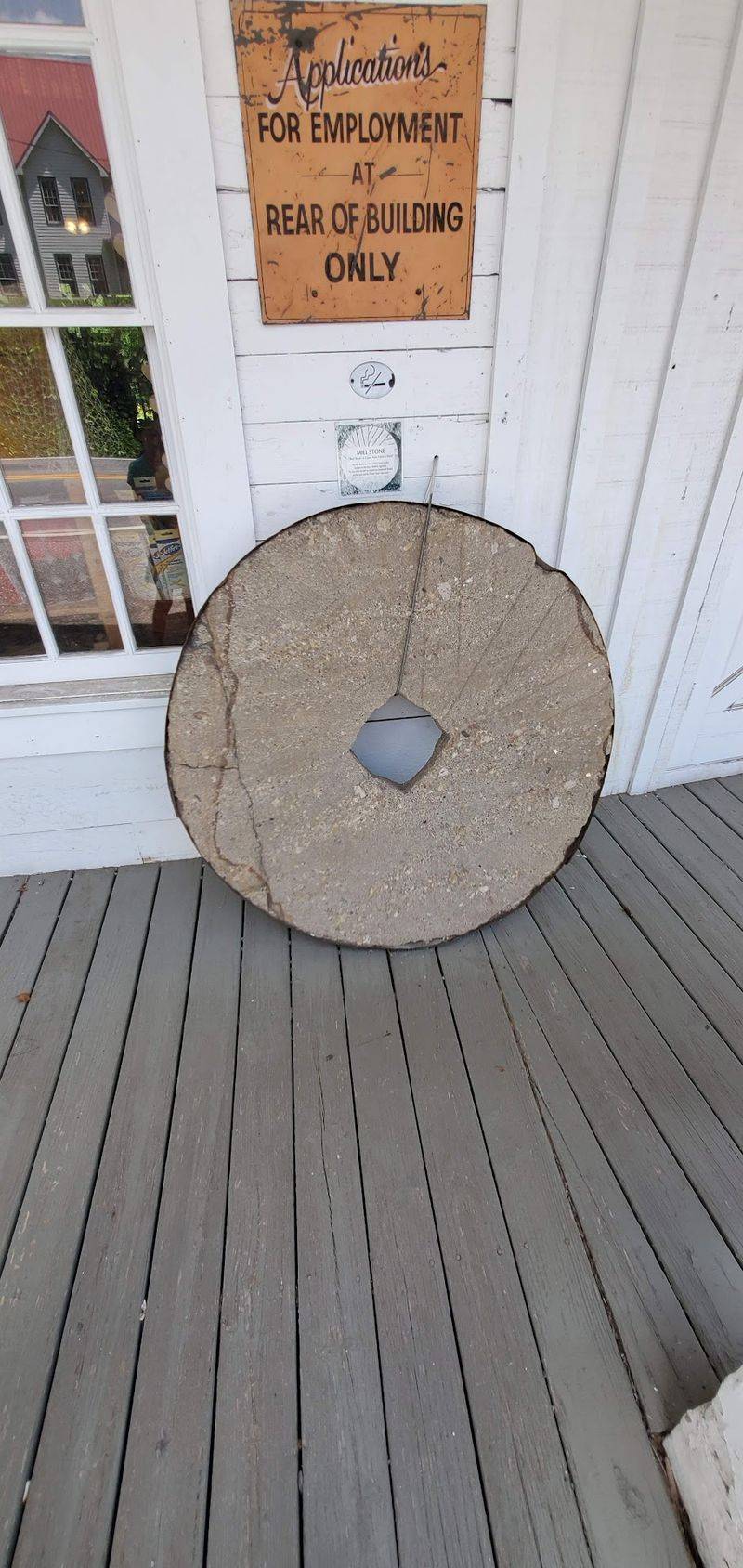
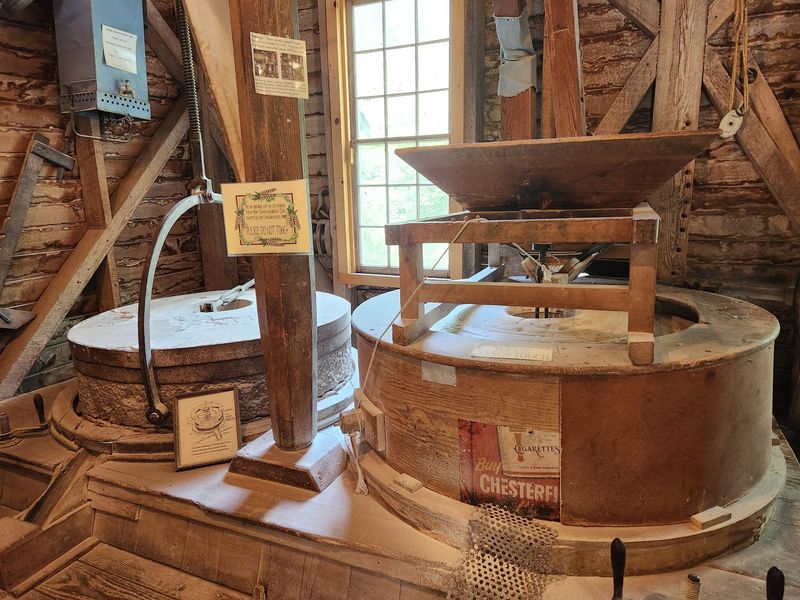
Two stones weighing 1,500 pounds apiece do the heavy lifting here. They were quarried in the Marne Valley of northern France and shipped across an ocean.
The material is freshwater quartz, also called chert. Millers prized it because it grinds fine flour without leaving grit behind.
George Washington used the same style of stones at his Mount Vernon gristmill. That detail alone makes the machinery feel enormous in importance.
These are not replicas sitting behind velvet rope. The originals were installed in the 1800s and still turn out product today when water power is running.
Watching them work is oddly hypnotic. The rhythm is slow and steady, nothing like the shriek of modern industrial equipment.
Stone grinding also keeps the germ of the grain intact. Modern roller mills usually strip that part away, taking flavor and nutrition with it.
That is the real reason the cornmeal tastes different from grocery store brands. Nothing fancy, just old technology doing its job well.
I left with a new respect for rocks. I did not expect that sentence to ever apply to me.
The Chattahoochee River Does The Work
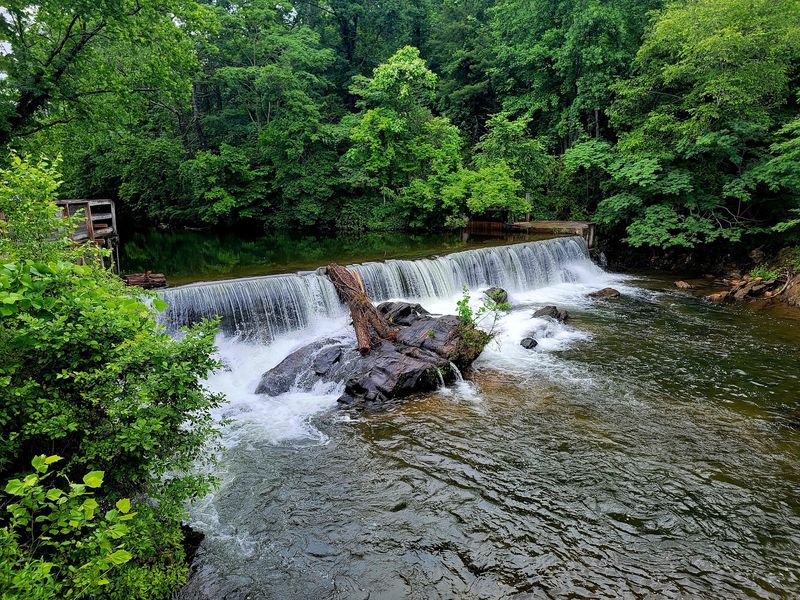
No electric motor gets top billing here. The Chattahoochee River supplies the muscle, just as it did in the 1870s.
Water travels through a 100-foot wooden raceway that runs from the river to the mill. It feeds a turbine sitting underneath the building.
That turbine spins the grinding stones. It replaced the traditional water wheel from the very beginning, which was an unusual choice back then.
Standing on the deck out back, you can hear water moving beneath your feet. The sound is steady and surprisingly loud.
The dam creates a small waterfall behind the property. It is one of the most photographed spots on the whole site.
Water power remains central to the mill’s operation, continuing a system that dates back to its earliest years.
Seeing the system explained in person makes the science click. Kids especially seem to get it once they watch the water disappear under the floor.
Bring a camera for the back view. The river, the dam, and the old timbers all line up nicely.
Grits So Good They Earned A Nickname
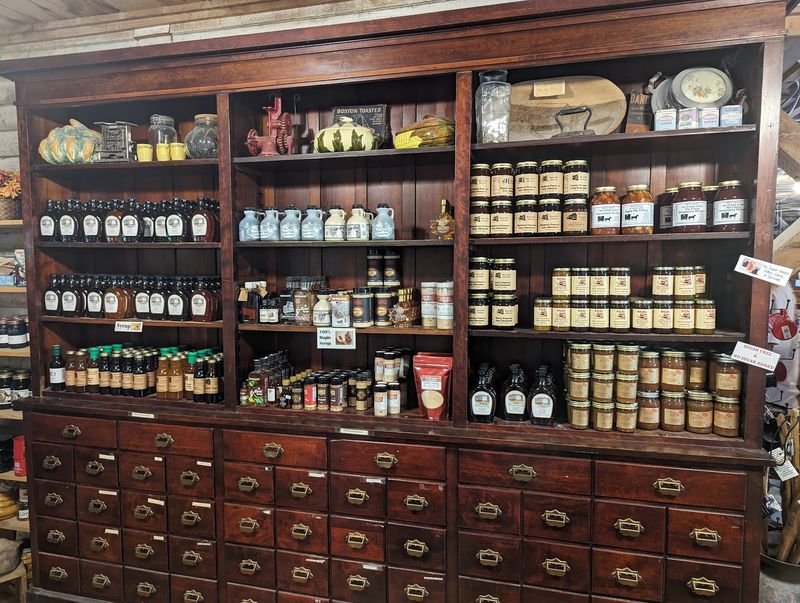
Georgia Ice Cream. That is what folks call the white grits made here, and the yellow speckled ones go by Dixie Ice Cream.
Grits remain one of the mill’s signature products and are available to customers beyond Georgia.
The difference comes down to the stones and the speed. Slow grinding keeps flavor that fast industrial processing tends to lose.
Cook them a little longer than the instant kind and the texture turns silky. Butter helps, though the corn flavor stands fine on its own.
Both white and yellow versions are sold by the bag. Yellow has a slightly stronger corn taste, white runs milder and creamier.
Even visitors from outside the South tend to leave with a bag. I have watched it happen more than once.
If you only buy one thing, make it grits. Everything else can be a second trip.
Free Samples Straight From The Mill Kitchen
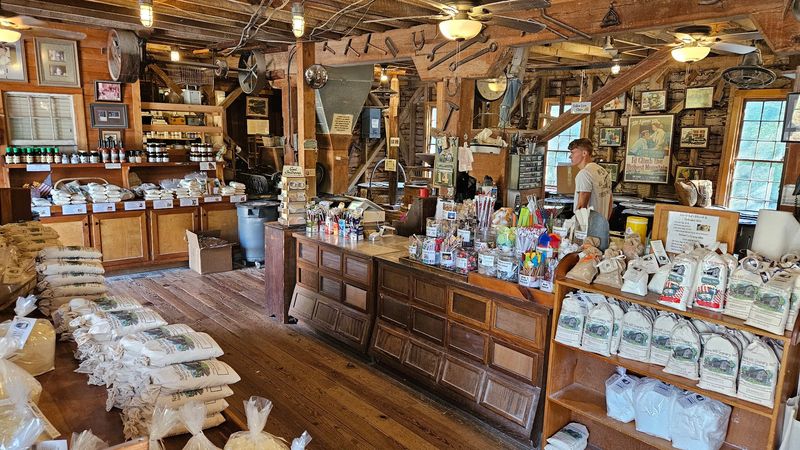
Tiny wooden spoons and warm cups changed my whole shopping list. A kitchen inside the building cooks up free daily samples.
Grits, pioneer’s porridge, and cornbread show up regularly on the tasting counter. Sometimes other country store items join the lineup.
Pioneer’s porridge surprised me most. It is hearty, slightly nutty, and far better than the name suggests.
Tasting before buying takes the guesswork out completely. You know exactly what you are carrying home.
There is no charge and no pressure to buy anything. Admission to the mill is free too.
Staff members are happy to explain how each product is made. They know the machinery and the recipes equally well.
My advice is simple: taste everything offered, even items you think you will not like. Northerners who swear they dislike grits often change their minds right there.
Samples also make the visit family friendly. Kids who are bored by old machinery perk up fast when food appears.
Go hungry. That is the only real preparation needed.
An Old-Fashioned Country Store Next Door
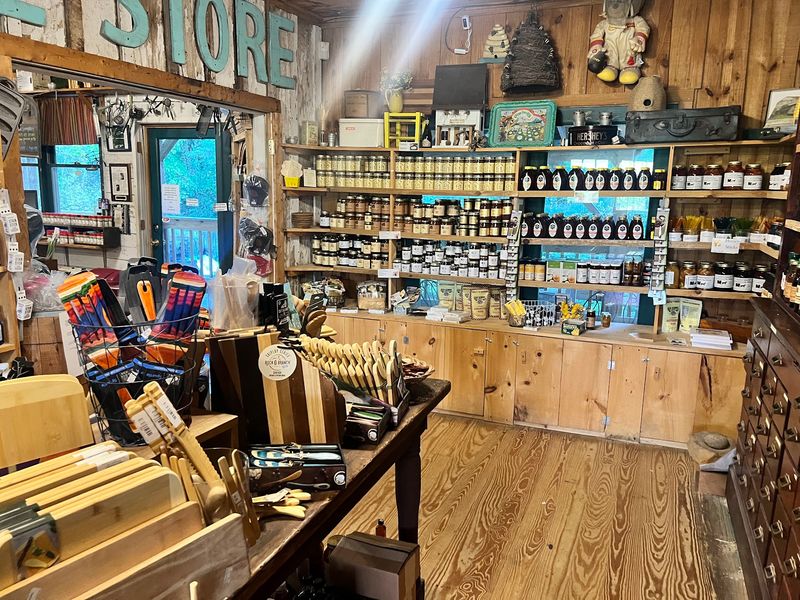
Shelves packed floor to ceiling greet you the moment you step through the door. The general store sits right beside the working mill.
Original cabinetry lines the walls and it is genuinely beautiful woodwork. Nobody built a fake version of this.
Inventory covers candy, jams, jellies, honey, syrups, and cast iron cookware. Kitchen gadgets and specialty goods fill the rest.
Jam names alone are worth the trip. TOE Jam mixes tangerine, orange, and elderberry, while FROG Jam blends fig, raspberry, orange, and ginger.
The mill supports local and American-made products. Extra grains come from other working mills around the country.
Pie fillings, pickles, seasonings, sauces, and soaps round out the selection. There are wooden utensils and speckleware too.
The store offers a broad mix of pantry staples, kitchen goods, and locally focused products.
Give yourself time to browse slowly. Half the fun is spotting something you did not know you needed.
Four Generations Keeping The Stones Turning
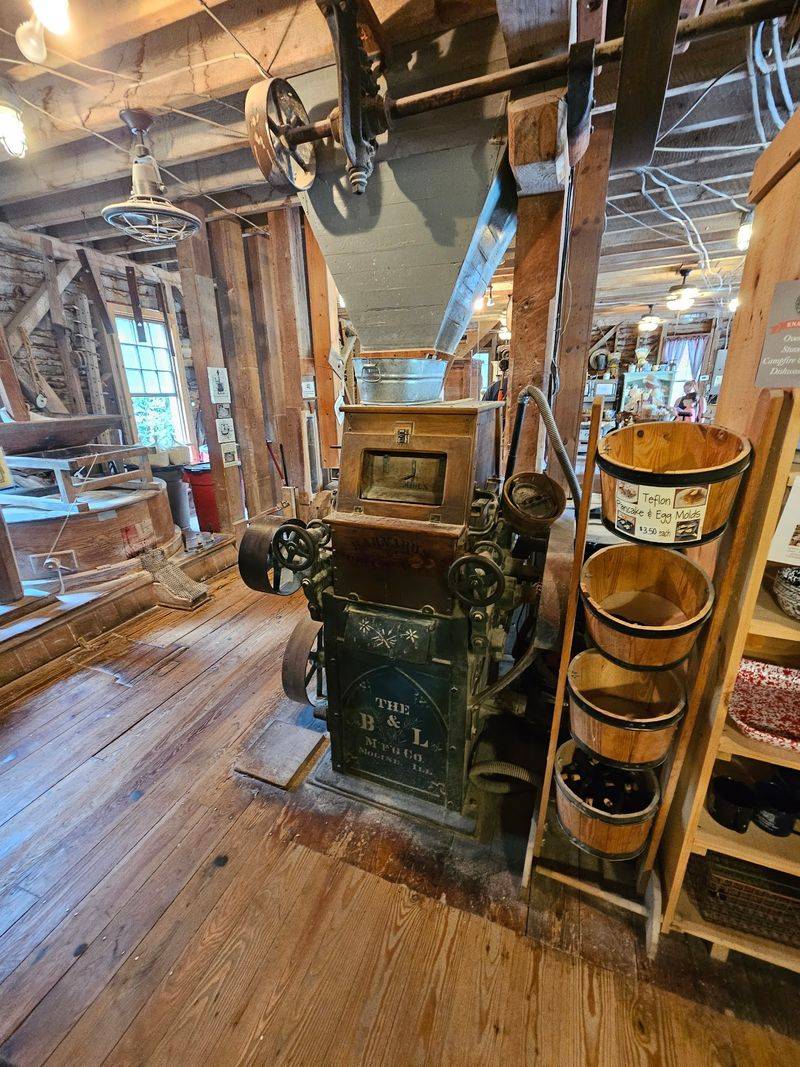
A new chapter began in the early 1980s when the Fain family became involved with the mill. He worked alongside his parents to restore and run it.
Today the third and fourth generations of that same family handle operations. A daughter and her son oversee daily work.
The grandson currently holds the title of Miller. That is an actual job here, not a nostalgic label.
Family ownership shows up in small ways. Staff answer questions with real detail instead of memorized scripts.
Corn arrives by truck, some of it farmed in Kentucky. It gets unloaded into grain bins holding 8,000 to 10,000 pounds.
From there it is weighed, ground, then separated into cornmeal and grits. The sequence has barely changed since 1876.
Catching a delivery in progress is a treat. The whole operation gets busy and loud in the best way.
Knowing real people run this keeps it from feeling like a museum exhibit. It feels like a workplace, because it is one.
Trout Feeding On The Back Deck
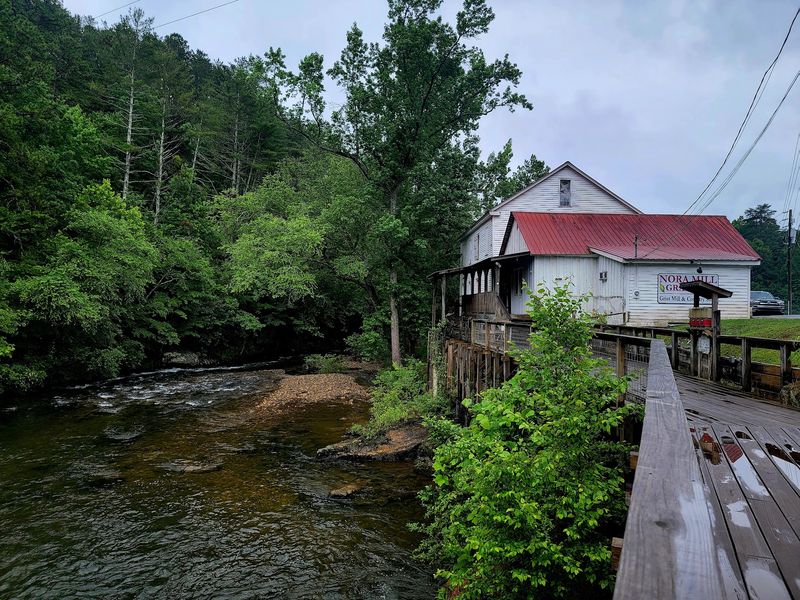
Rainbow trout gather below the deck like they have an appointment. Visitors can buy fish food outside and toss it over the rail.
The observation deck sits atop the raceway that carries water to the mill. That means you are standing on working equipment.
Views take in the river, the dam, and the back of the four-story building. In autumn the trees turning color make it even better.
Kids go straight for the fish. Adults usually stay for the scenery and end up staying longer than planned.
There is also a ring toss game on the right side of the front porch. Simple, old-fashioned, and weirdly competitive.
The whole back area costs nothing to enjoy. Bring a few quarters for fish food and you are set.
Go out back even if you are in a hurry. Plenty of people shop inside and never realize what is behind the building.
It is the quietest spot on the property. The river drowns out the road noise completely.
Planning Your Stop Without The Headache
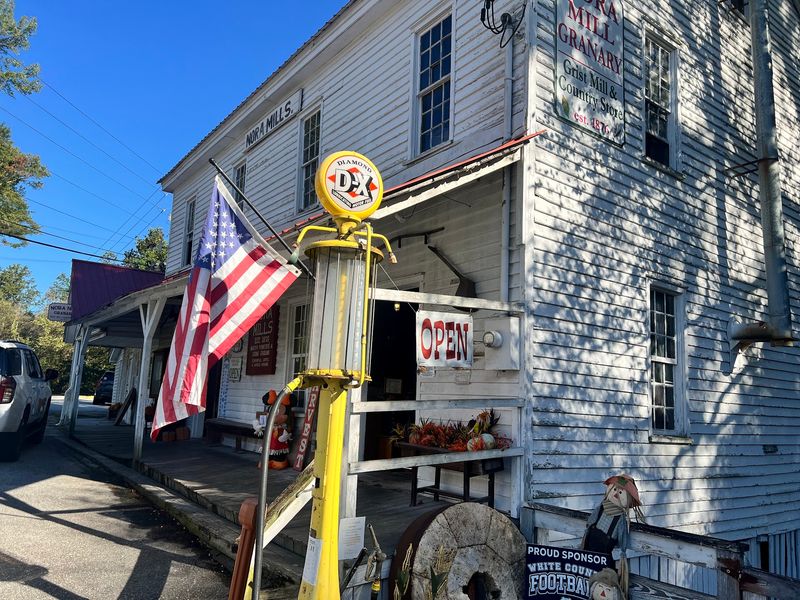
A little planning makes this visit much smoother. Doors open from 9 AM to 5 PM Monday through Friday and 10 AM to 5 PM on weekends.
The mill closes on Easter, Thanksgiving, and Christmas Day. Every other day of the year it runs.
Parking is the one real challenge. Spaces are limited and the lot sits right beside a busy road.
Back out carefully and watch traffic closely. There is no crosswalk, so crossing to the antique shop across the road takes patience.
The property holds a spot on the National Register of Historic Places. It is also a landmark on the Helen to Hardman Farm Heritage Trail.
Tours of the working operation are offered regularly. School groups come through often, so weekday mornings can be lively.
Products are available online if you run out at home. Shipping saves the trip, though it skips the smell of fresh cornmeal.