This Old-School Maryland Jewish Deli Is Famous For Its Mile-High Corned Beef
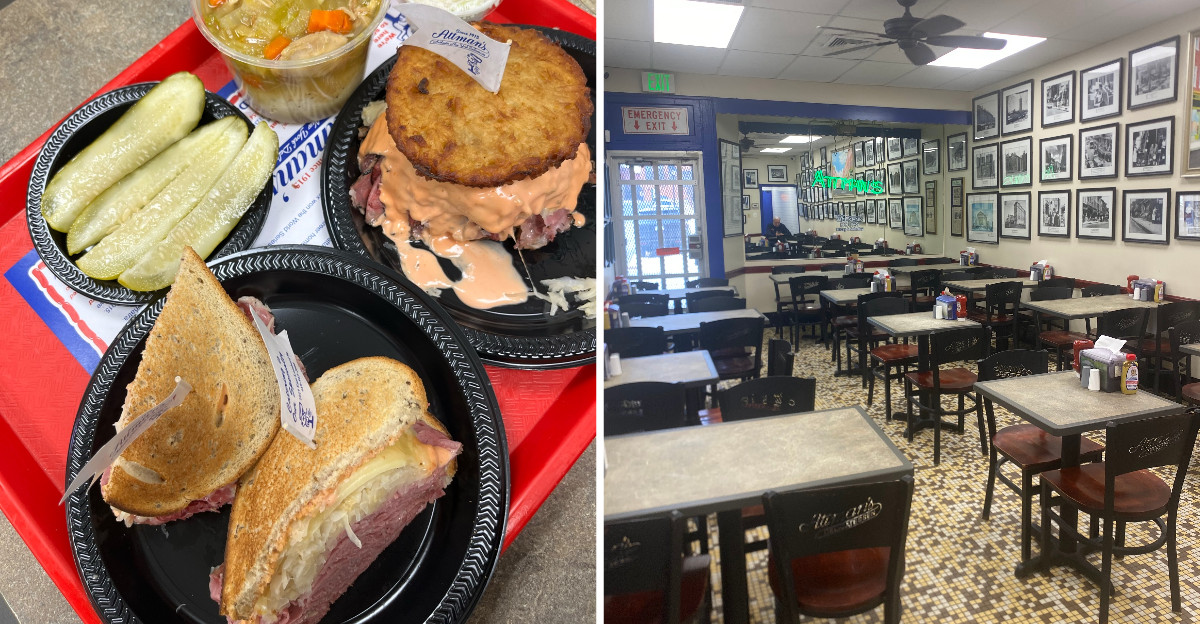
This sandwich has a height problem. That becomes obvious the moment a Maryland deli sets down its corned beef on rye.
The first bite requires planning, two hands, and a willingness to lose the battle for neatness. Everything else stays refreshingly old-school.
The counter moves fast. The mustard keeps things sharp. The meat does not believe in modest portions.
History lives in the routine rather than in a speech about tradition. People line up because the formula still works.
There is no need to modernize something this satisfying. The only real question is whether to compress the sandwich first or simply accept the mess.
Where It All Began
Back in 1915, a stretch of East Lombard Street was packed with delis, fish sellers, and poultry dealers.
The area earned the nickname Corned Beef Row, and it buzzed from morning until closing.
Harry Attman, a Jewish immigrant from a village near Kyiv, opened a small confectionery and deli in Baltimore in 1915.
He and Ida built the business while selling sandwiches and specialty foods to local customers.
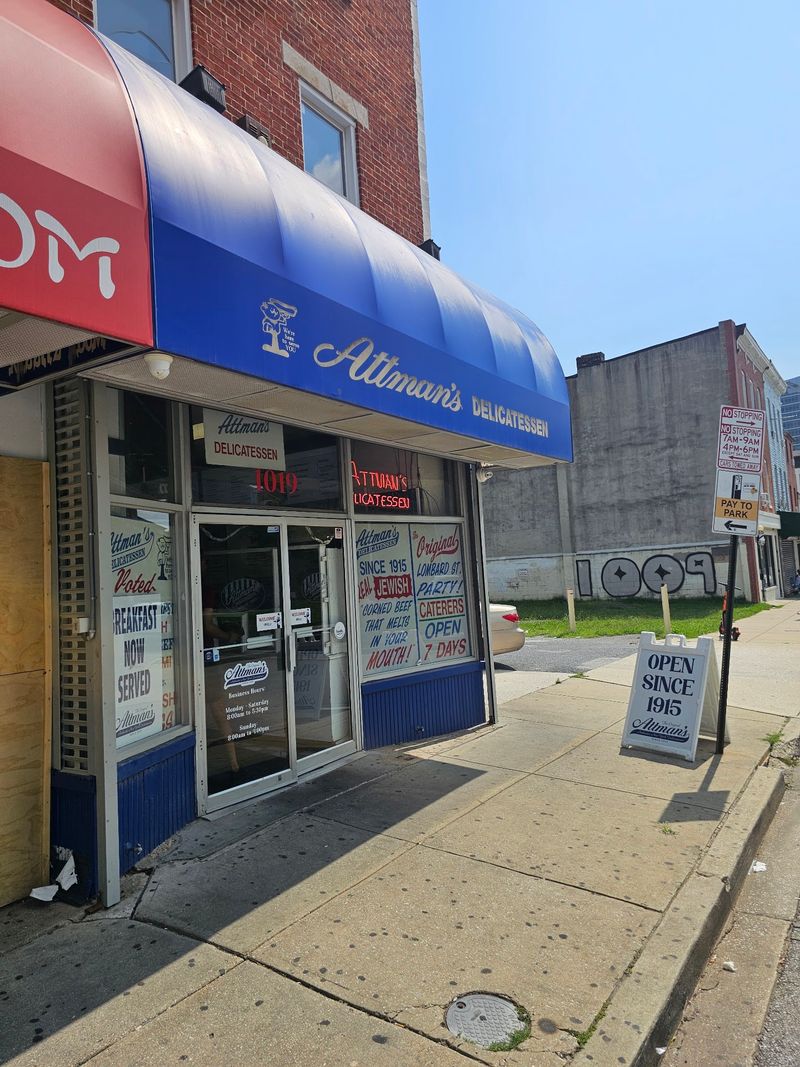
The Attmans moved the business to 1019 East Lombard Street around 1933. Over the following decades, the operation gradually evolved from a specialty grocery into the sandwich-focused delicatessen known today.
Supermarkets pulled grocery shoppers away, and much of the Jewish community moved out of East Baltimore. Attman’s adjusted instead of folding, helping it remain one of the few surviving delis associated with the old Corned Beef Row.
The understated brick storefront gives little indication of the century-plus history behind the business.
No flashy gimmicks, just a sign and a steady stream of hungry customers heading toward 1019 E Lombard St, Baltimore.
The Sandwich That Started Legends
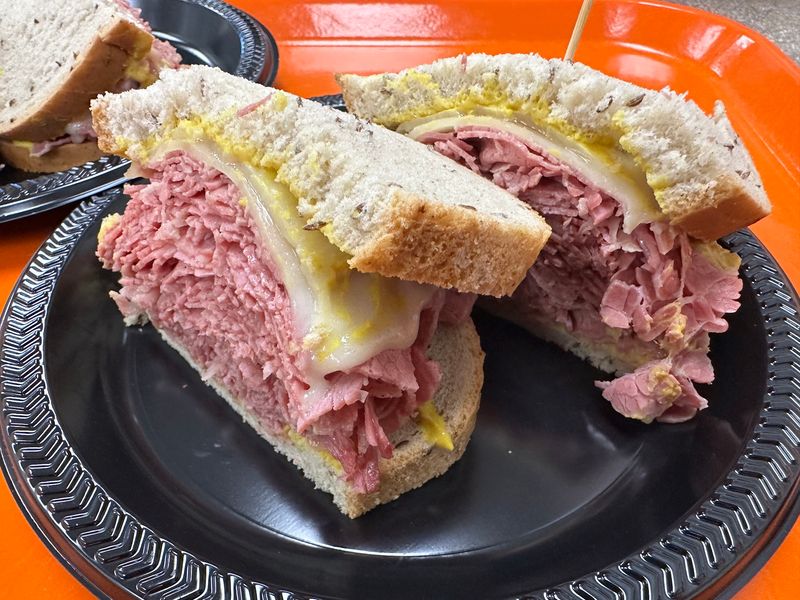
Order the hot corned beef on rye and watch the slicer go to work. The meat comes off warm, marbled, and tender enough that it barely needs teeth.
Preparation follows an old routine. The corned beef still comes steaming hot from kettles throughout the day at the Baltimore deli.
Rye bread holds it all together, barely. A swipe of house mustard cuts the richness, and that sharp tang is exactly what the stack needs.
The piled-high construction makes the sandwich noticeably thicker than a standard deli order. Its generous stack of meat is part of the style Attman’s continues to promote.
People call these mile high sandwiches, and the description fits. The current menu even offers an extra-heavy option for diners who want an especially large sandwich.
Nothing about it is fussy. No microgreens, no clever sauce, no plate art. Just beef, bread, and mustard doing honest work.
Maryland cooks are famous for seafood, yet this sandwich has quietly built its own following across the state. Folks drive in from the counties just for lunch.
Menu Adventures Past Corned Beef
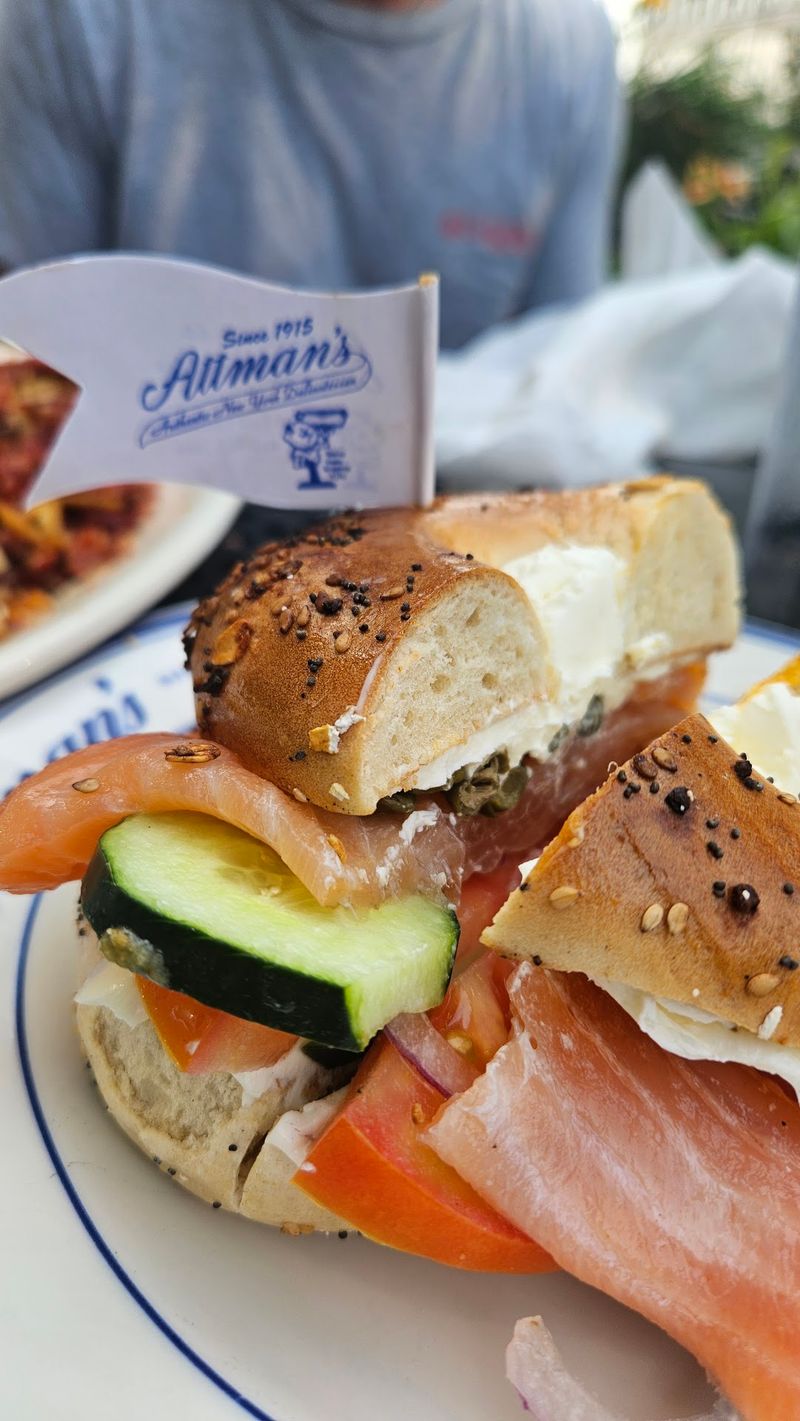
Corned beef hogs the spotlight, but the rest of the menu deserves attention too. Ashkenazi Jewish classics fill the board, and choosing takes a minute.
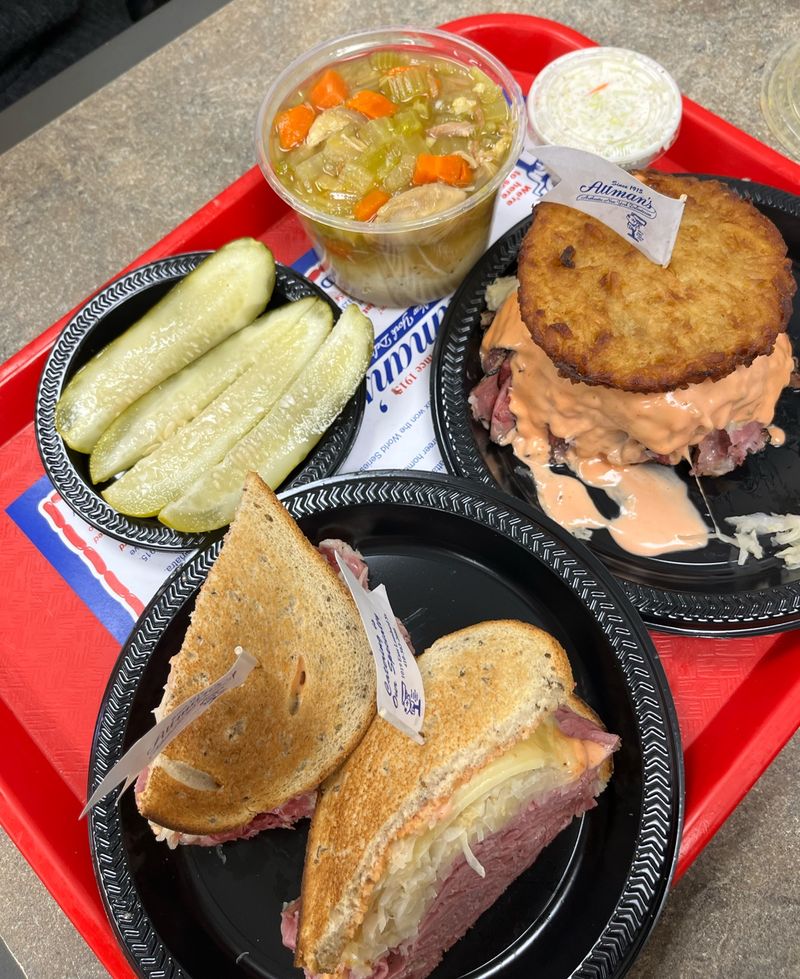
Hot pastrami arrives peppery and rich. Roast brisket of beef goes tender and beefy. The Reuben stacks corned beef with sauerkraut, melted Swiss, and Russian dressing, and it holds a strong local reputation.
Knishes deserve their own paragraph. Those savory pastries currently come in both potato and meat versions on the Lombard Street menu.
Jumbo potato latkes come out crisp at the edges and soft in the middle. Sour cream or applesauce is available upon request with the potato latkes.
Hot dogs round things out, including Attman’s jumbo Jewish hot dog topped with bologna. Matzo ball soup shows up too, for anyone who wants a spoon instead of a sandwich.
Desserts fill their own substantial section of the current menu. Ida’s Jewish Apple Cake and a classic New York cheesecake close the meal on a sweet note.
Second visits pay off, since you cannot possibly try everything at once. Attman’s works like a greatest hits album where the deep cuts are just as good as the single.
Pickle Barrels And Briny Bliss
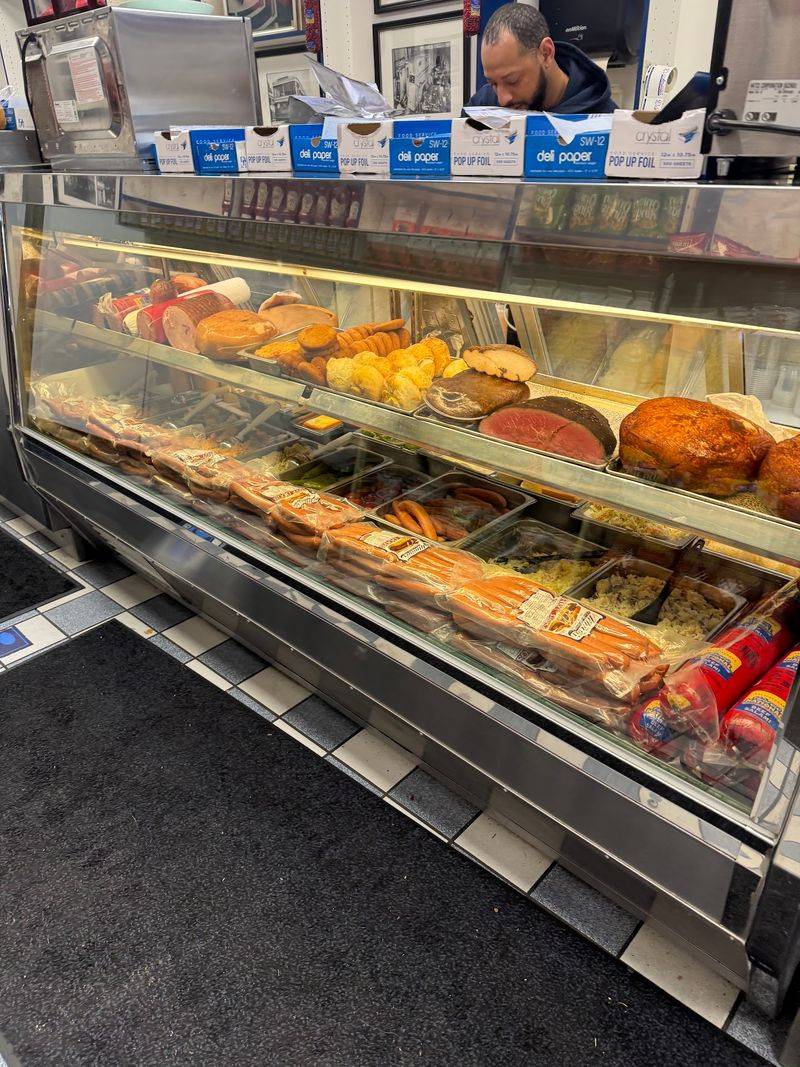
Few things wake up a palate faster than a cold pickle after a mouthful of warm beef. The Lombard Street menu gives its pickled sides a section of their own.
Jumbo kosher dills anchor the lineup. Pickled tomatoes join them, along with onions that snap between your teeth.
Brine perfume hits you before you reach the counter. That vinegary sharpness mixes with rye and simmering meat, and your stomach starts making plans.
Pickled plum tomatoes are sold alongside the different dill options. Their tart profile gives diners another acidic side for the rich deli meats.
Balance is the whole point. Rich meat needs something acidic beside it, and these pickles handle that job perfectly.
Jumbo green and well-done kosher pickles are both available individually. Pickled onions, tomatoes, and hot cherry peppers expand the choices beyond the traditional dill.
Grab extras for the ride home. Pickles travel well, and they make leftover sandwiches taste freshly made.
Small touches like this separate a good deli from a great one. Maryland has fancy restaurants with tasting menus, yet a barrel of pickles can still steal the show.
Inside The Kibitz Room
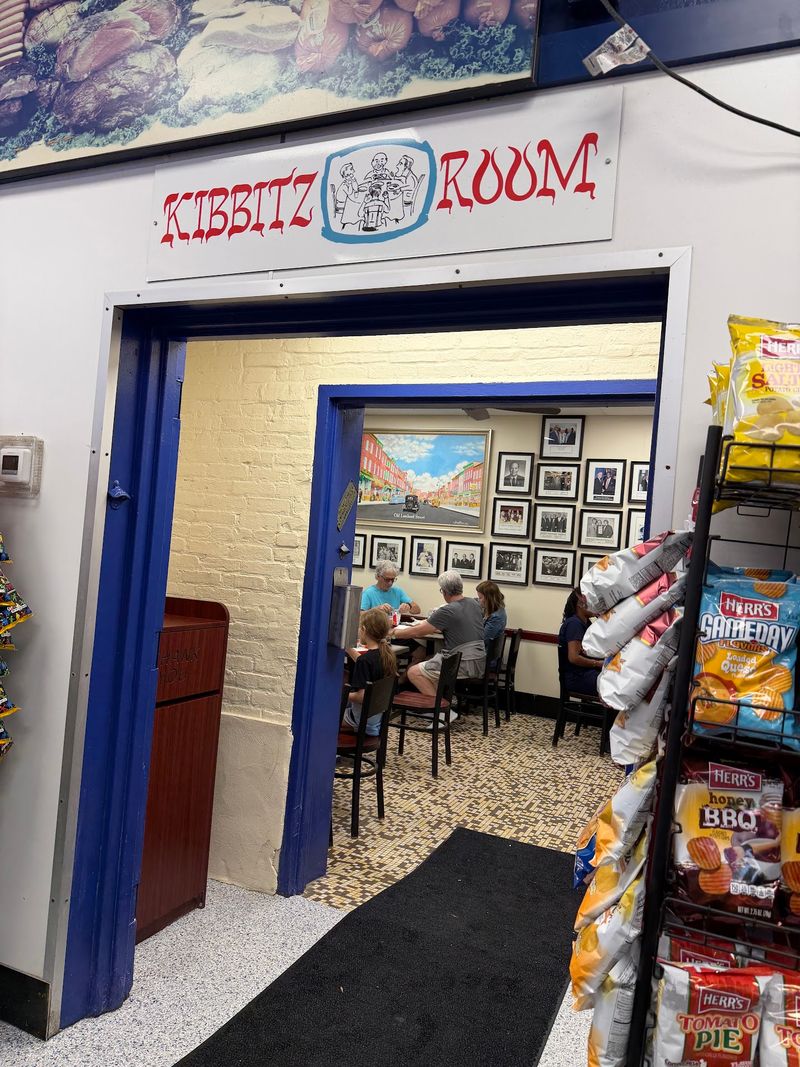
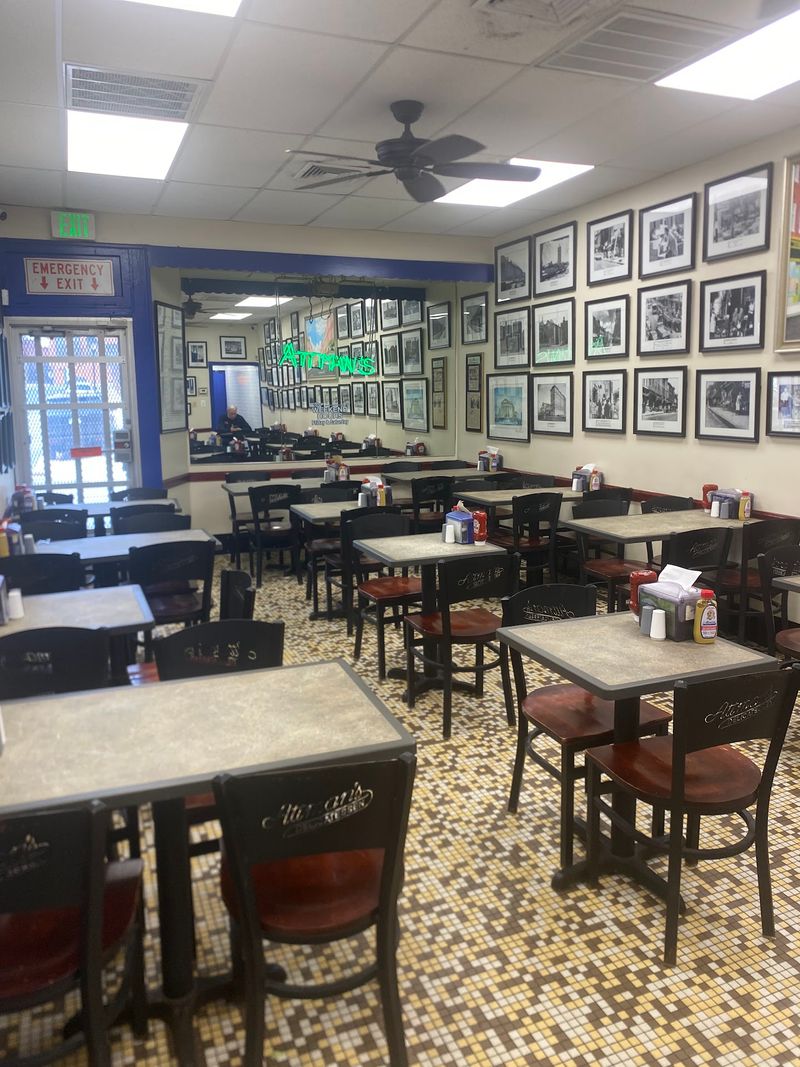
Seymour Attman opened the Kibitz Room in the early 1970s, creating a dedicated dining space beside the deli. Naming a dining room after friendly chatter was a smart move, because that is exactly what happens inside.
Old photographs cover the walls, layered with posters and clippings. Many of the photographs and clippings connect directly to Baltimore or the deli’s own history.
Tables sit close together. Conversations overlap, silverware clinks, and someone always laughs a little too loud at the corner table.
The room stays warm even during the busiest stretch of midday. Families squeeze in beside office workers, and nobody seems bothered by the tight quarters.
The wall displays give diners a visual timeline reaching across decades of Baltimore and Attman family history. That backdrop reinforces the room’s connection to the original Lombard Street operation.
Nothing here has been redesigned to look retro. It simply never stopped being itself, which is rarer than you might think.
Generations have eaten in this room, and that thread keeps going. Attman’s built a gathering place, not just a lunch counter.
Corned Beef Row Remembered
Lombard Street once carried the nickname Corned Beef Row, and the name was completely literal. Delis lined the block from Albemarle Street toward Central Avenue.
Russian and other Eastern European Jewish immigrants operated many of the businesses along the old market street.
Fish sellers kept fresh carp, poultry dealers kept live chickens and ducks, and shoppers moved between them all day long.
It was the commercial heart of Jewish Baltimore. Bakeries, butchers, and grocers created a neighborhood where you could buy dinner and catch up on news in the same trip.
Then things shifted. As Baltimore’s Jewish population increasingly moved away from the old East Baltimore neighborhood, many of the street’s traditional family businesses disappeared.
Attman’s held on. Very few delis remain on the street today, which makes this address feel like a bookmark in a much longer story.
Walk the block now and the change is obvious. Still, the moment you open that door, the old street comes back through smell and sound alone.
Maryland has lost plenty of neighborhood institutions over the years. This one kept its lights on, and the whole state benefits from that stubbornness.
Three Generations, One Counter
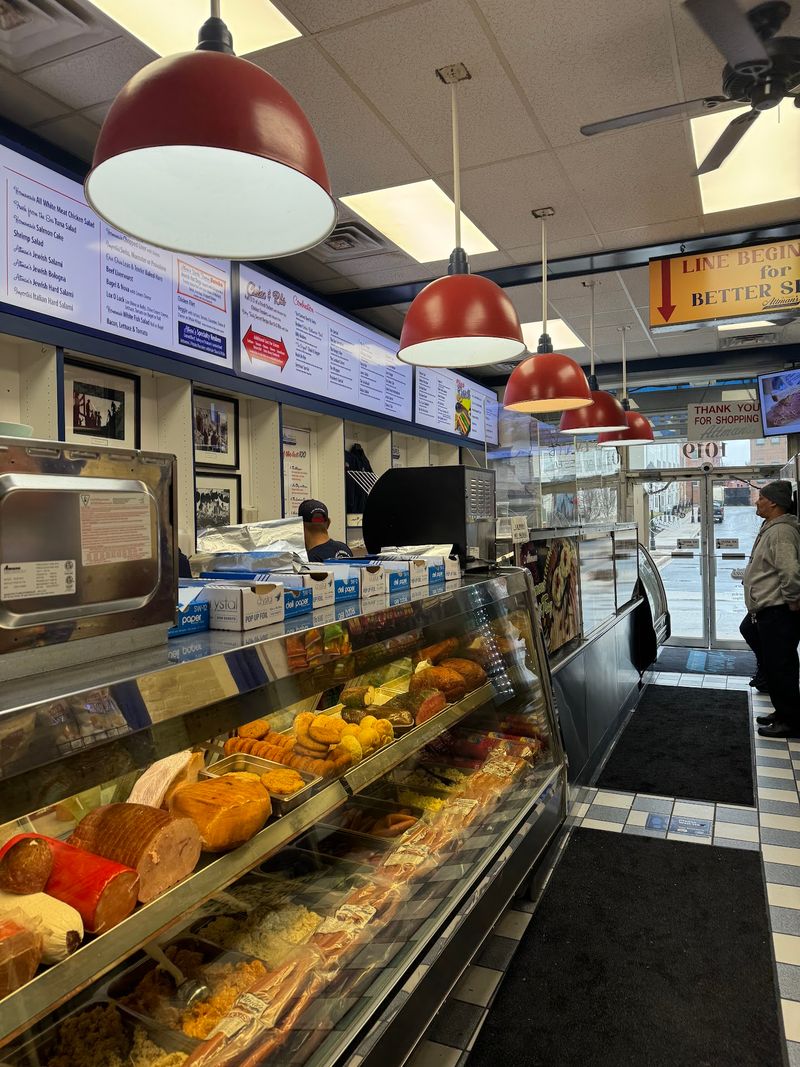
Family businesses rarely make it past the second generation.
Attman’s is on its third, holding the title of oldest continuously family owned Jewish deli in the United States.
Harry Attman laid the foundation with a small grocery and a lot of hustle. His son Seymour turned the place into the sandwich destination people line up for today.
Marc Attman, Harry’s grandson, runs things now. He trained as an optometrist, then committed himself to keeping the deli thriving.
Continuity shows up in small ways. The family still emphasizes piled-high sandwiches, hot corned beef, and its signature deli mustard as core parts of the Attman’s tradition.
More than a century of continuous operation has allowed multiple generations of Baltimore families to know the same deli. That longevity remains central to Attman’s identity.
Attman’s Original Deli Mustard remains available both on sandwiches and as a packaged product to take home. The condiment remains closely associated with the deli’s classic corned beef on rye.
Maryland businesses come and go, yet this family keeps showing up and slicing. Pride tastes like something, and you can find it stacked on rye at Attman’s.
Plan Your Deli Visit
Timing matters more than you would expect. Doors open at 8 AM most days, and the lunch rush builds fast toward midday.
Lines get long. Everything is made to order, so patience is part of the deal, and the wait usually moves quicker than it looks.
Hours run until 5:30 PM Monday through Saturday, with a 4 PM close on Sunday.
Know your order before reaching the counter. The menu is huge, the staff is quick, and hesitating slows down everyone behind you.
Portions are enormous, so splitting a sandwich is a smart move. Order one plus a knish or latkes and share across the table.
Parking exists nearby, though the approach can feel a little tricky the first time. Give yourself an extra minute.
Takeout works well if you want to eat by the harbor instead. The Kibitz Room is worth sitting in at least once, though.
Bring an appetite that means business. A trip to Attman’s rewards hungry visitors, and Maryland has few lunches that deliver this much flavor and history in one paper wrapped bundle.