This Old-School Nebraska Steakhouse Pairs Hand-Cut Steaks With Italian Family Recipes
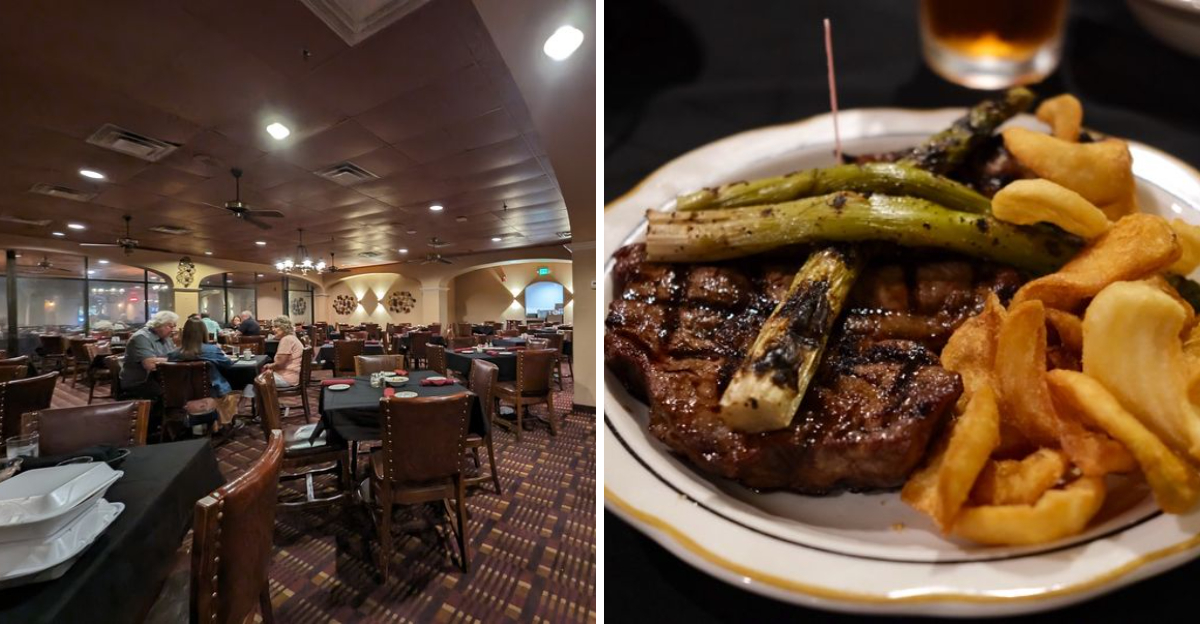
You can tell pretty quickly when a steakhouse has been doing things its own way for a long time.
The room feels settled in. The menu does not chase trends. And once a hand-cut steak hits the table beside a plate rooted in Italian family cooking, the whole meal starts to feel more personal.
Nebraska still has old-school restaurants where tradition matters as much as the cut of beef.
Go hungry enough to commit. Start with the steak, then add the Italian dish you almost talked yourself out of.
Share bites across the table. Compare sauces. Notice how easily a simple dinner turns into the kind of meal people remember because everything feels familiar without being boring.
There is no need to rush through a place like this.
Take your time and see why some restaurants earn loyalty by changing very little.
By the end, you may understand why regulars keep coming back to the same table and ordering the same favorites.
It Has Been Part Of Omaha Since 1946
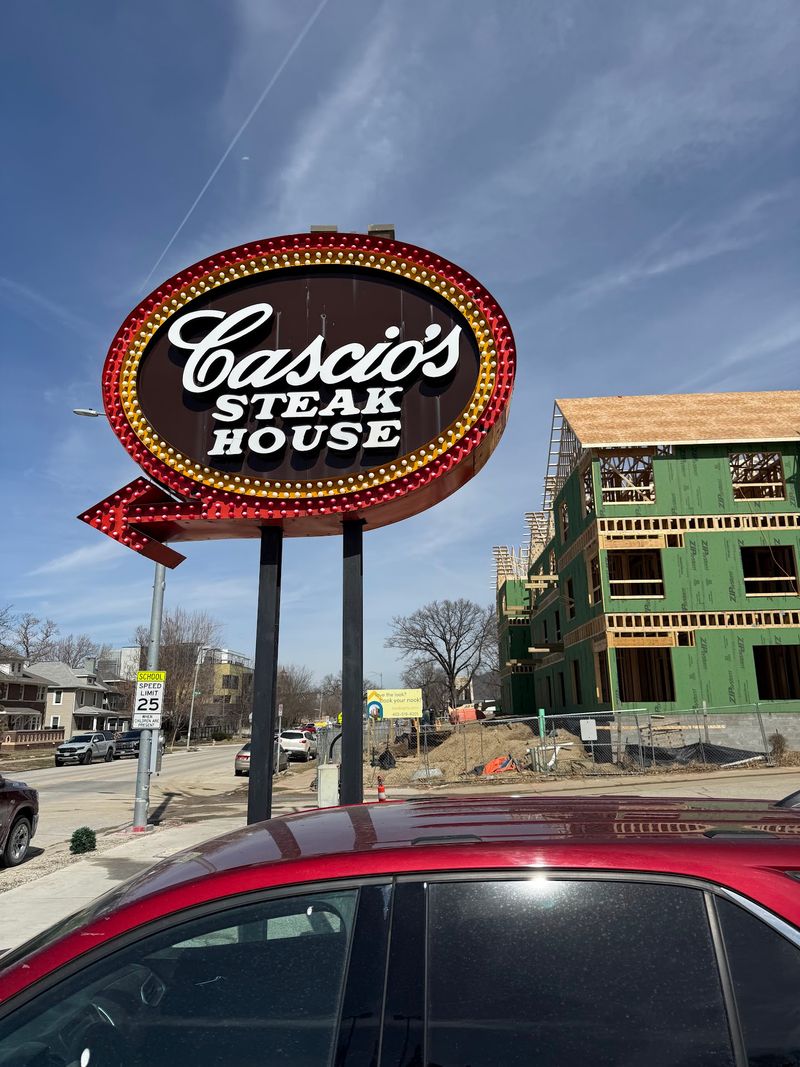
Nearly eight decades of continuous operation is a rare achievement in the restaurant business, and Cascio’s Steakhouse has been serving Omaha since 1946.
Brothers Al and Joe Cascio originally opened the place as Cascio’s Grille before it grew into the full steakhouse it is today.
That kind of longevity does not happen by accident, and the restaurant’s history is woven into the fabric of the city itself.
At 1620 S 10th St, Omaha, NE 68108, the steakhouse has watched entire generations of Omaha families grow up and return with their own children.
The original concept was straightforward: good food, generous portions, and a welcoming atmosphere rooted in Sicilian family tradition.
Those values have carried the restaurant across more than seven decades without losing their core appeal.
Few dining establishments anywhere can claim a history that stretches back to the postwar era and still attract new customers today.
Cascio’s manages that balance by honoring what made it work from the beginning while remaining a functioning, everyday destination for locals and visitors alike.
The Cascio Family Is Still Running The Restaurant
Family ownership in the restaurant world often means one or two generations before the business changes hands, but Cascio’s Steakhouse is now on its third generation of family leadership.
The current owner took over in 2008, continuing a line of stewardship that began when his grandfather and great-uncle opened the doors more than seventy-five years ago.
The transition between generations has not been seamless by accident.
The previous generation bought the business in 1999 and spent years maintaining the standards that had made the restaurant an Omaha institution before passing the reins along.
That kind of intentional continuity shows up in the food, the atmosphere, and the way the dining room feels when guests walk in.
Running a restaurant that carries this much community history comes with real responsibility.
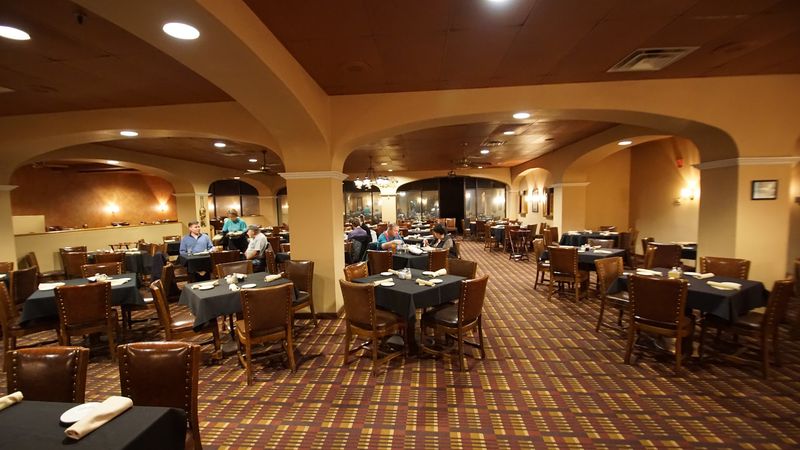
The current ownership has leaned into that history rather than trying to modernize it away, keeping the original dining room decor intact and preserving recipes that date back to the founding brothers.
Guests who have been coming for thirty or forty years tend to notice when a restaurant stays true to itself, and at Cascio’s, that loyalty runs deep on both sides of the table.
The Steaks Are Hand-Cut In-House
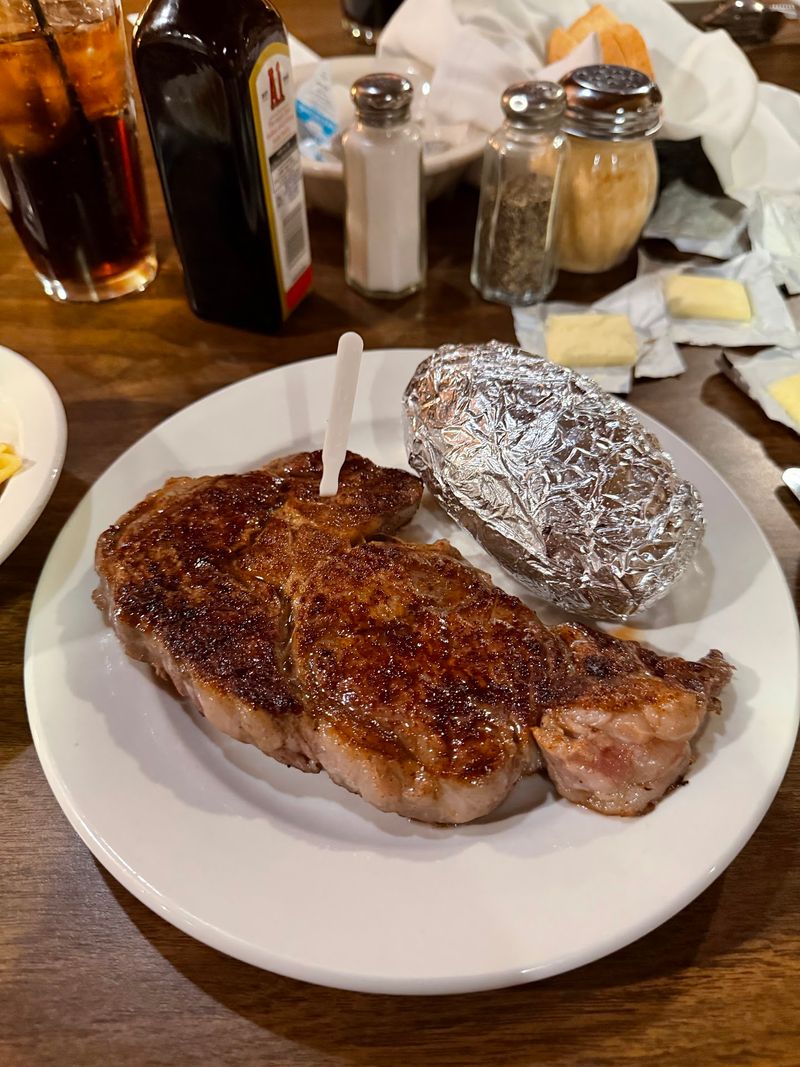
Hand-cut steaks are not as common as they once were, which is part of what sets Cascio’s apart from many other steakhouses operating today.
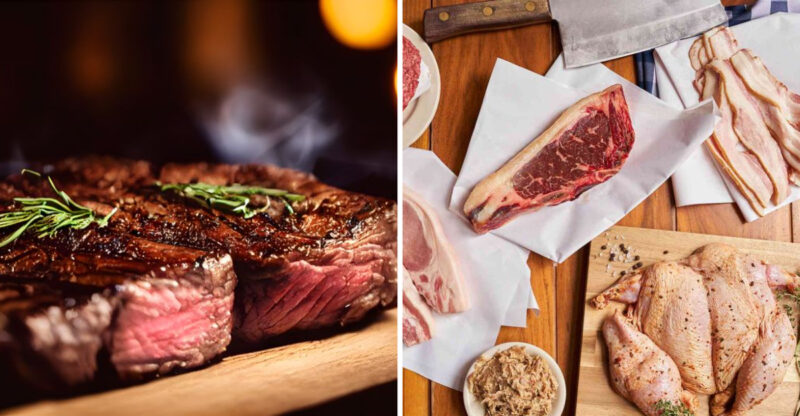
The kitchen uses Certified Angus Beef, and every steak is aged for 21 days before being cut in-house. That aging process allows the natural flavors of the beef to develop in a way that shorter timelines simply do not allow.
Cutting steaks in-house gives the kitchen direct control over thickness, portion size, and quality at every stage before the meat reaches the grill.
It is a more labor-intensive approach than ordering pre-cut portions from a supplier, but the difference tends to be noticeable on the plate.
The texture and flavor of a properly aged, hand-cut steak have a consistency that pre-portioned cuts often lack.
Certified Angus Beef is a specific designation that requires cattle to meet quality standards beyond the basic USDA grading system, covering marbling, size, and overall quality.
Pairing that standard with a 21-day aging process and in-house cutting reflects a level of care that runs through the entire Cascio’s kitchen.
Steak Comes With A Full Old-School Dinner
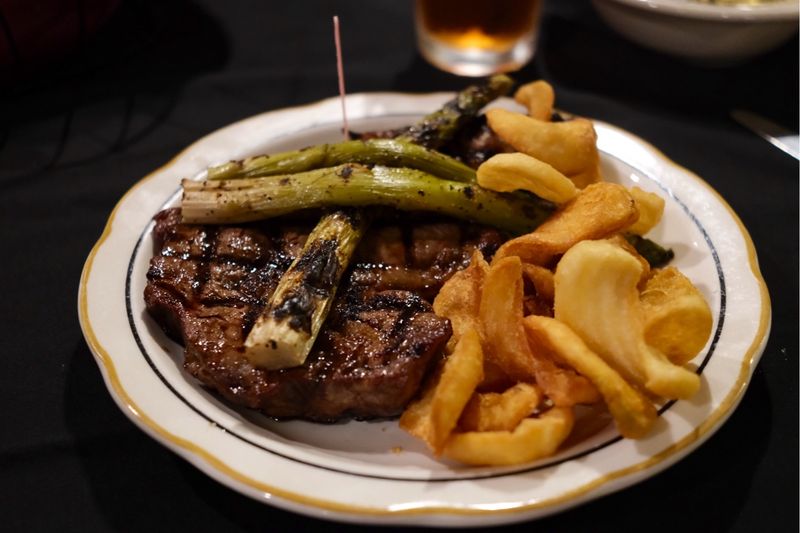
Ordering a steak at Cascio’s is not just ordering a steak. Many of the dinner options come with a full spread that reflects how steakhouse dining used to work before the era of a la carte pricing took over.
A typical setup could include a salad, a choice of potato, spaghetti or mostaccioli with the house sauce, and bread with butter alongside the main cut.
That kind of generous, all-inclusive dinner format has become harder to find at modern restaurants, where sides are often charged separately and portions are scaled back.
At Cascio’s, the full dinner approach gives the meal a sense of occasion and value that guests tend to appreciate. It also means first-time visitors often leave surprised by just how much arrives at the table.
The pasta side is not an afterthought.
Served with the same slow-simmered sauce that anchors the Italian half of the menu, the spaghetti or mostaccioli that comes alongside a steak is made with the same care as a standalone pasta order.
Getting both a well-prepared steak and a properly sauced pasta in one sitting gives Cascio’s dinners a character that genuinely reflects the restaurant’s dual Italian and steakhouse identity.
Italian Recipes Are Just As Important As The Beef
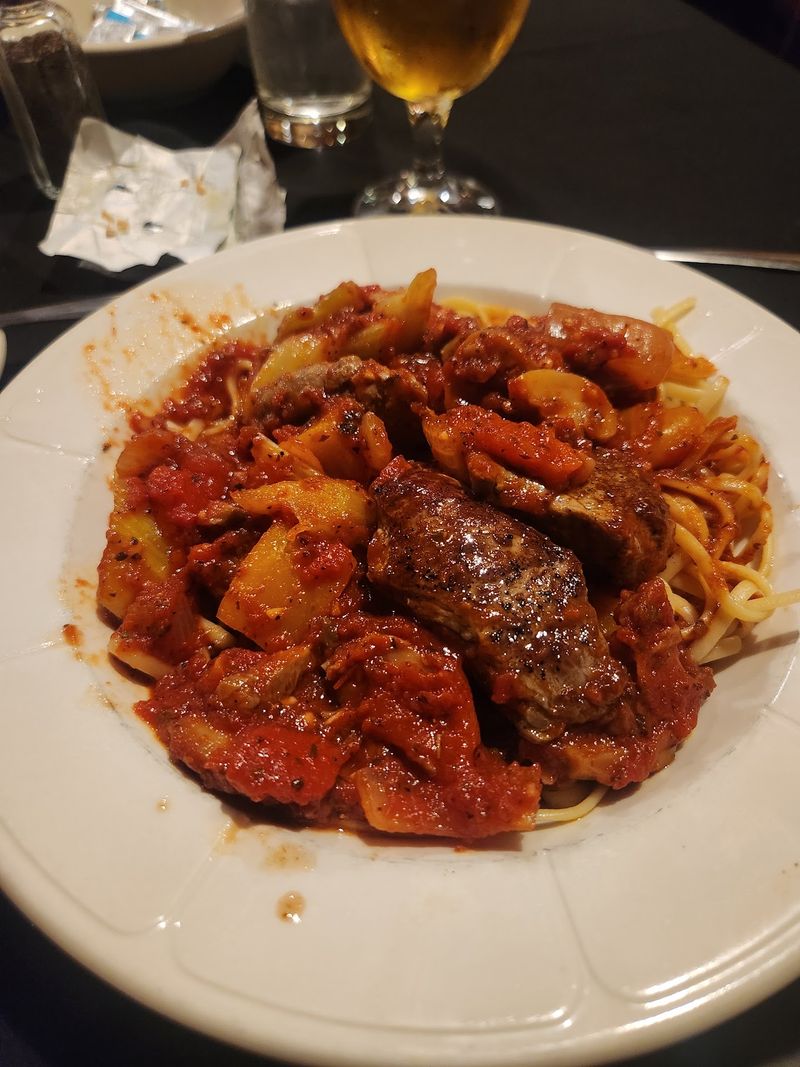
A lot of steakhouses tuck a pasta dish or two onto the menu as a nod to non-beef eaters, but at Cascio’s the Italian side of the menu carries real weight.
Dishes like spaghetti with meat sauce or meatballs, mostaccioli, chicken Parmigiano, lasagna, and ravioli are not filler options. They are the result of decades of family cooking rooted in Sicilian tradition.
The balance between the steakhouse and Italian-American sides of the menu is one of the things that makes Cascio’s feel different from other Omaha restaurants.
A table of four could reasonably split between steak orders and pasta orders and both sides would be eating something the kitchen genuinely specializes in.
That kind of range is uncommon and reflects the founding family’s background as much as it does any business decision.
For guests who have never been, the Italian menu is worth exploring even if the steaks are the main draw.
The recipes on that side of the menu trace back to the Cascio brothers and their Sicilian heritage, and several of the dishes have remained largely unchanged for more than seventy-five years.
That kind of menu depth is part of what keeps Cascio’s relevant across multiple generations of diners.
Some Recipes Have Survived For Generations
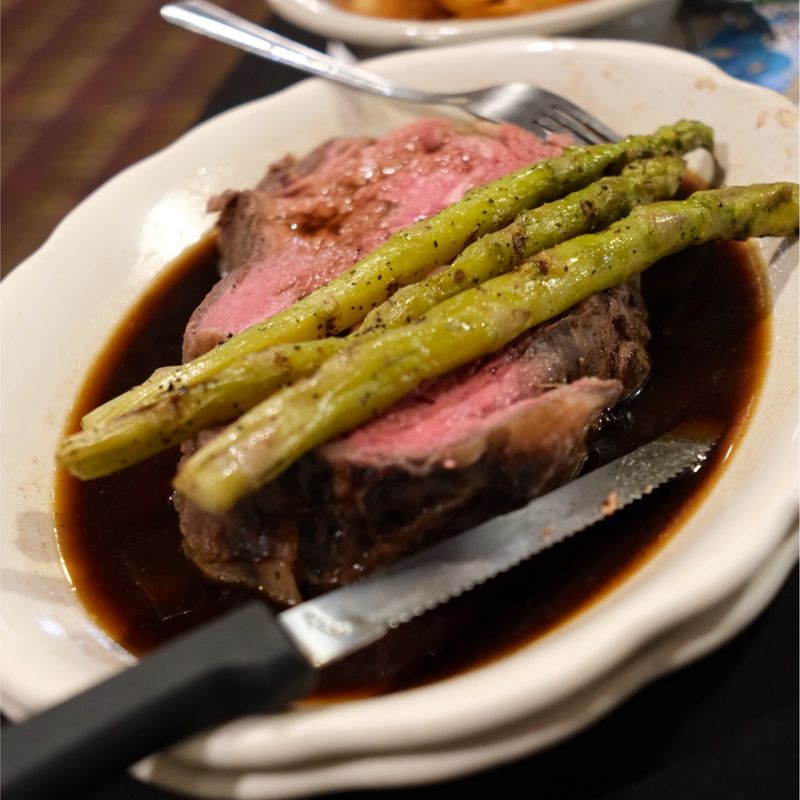
There is something genuinely rare about sitting down to a dish that has been made the same way for over seventy-five years.
At Cascio’s, many of the recipes on the current menu trace directly back to the versions created by Al and Joe Cascio when they first opened the restaurant in 1946.
Those recipes were not revised to match food trends or modernized for a new audience. They were simply kept.
That kind of menu continuity gives Cascio’s a character that is hard to manufacture.
A newer restaurant can aim for a vintage feel through decor and branding, but the actual food at Cascio’s carries a lineage that goes back to the postwar era.
Regulars who have been eating there for decades are essentially eating the same dishes their parents and grandparents once ordered.
Preserving original recipes across multiple generations of family ownership requires deliberate effort. Ingredients change, kitchen staff turns over, and the temptation to update or simplify is always present.
The fact that Cascio’s has maintained its foundational dishes through all of that speaks to a commitment that goes beyond nostalgia. The recipes are treated as part of the restaurant’s identity, not just its history.
The Restaurant Is Much Larger Than It Looks
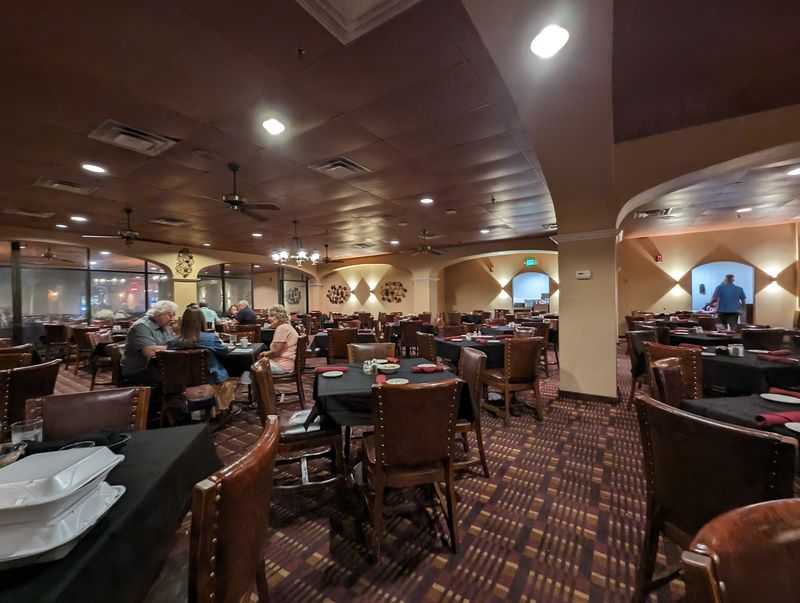
After a fire destroyed the original building in 1978, the Cascio family made the decision to rebuild on the same South 10th Street location.
What emerged was a substantially larger structure than what had existed before, covering somewhere between 36,000 and 38,000 square feet.
The rebuilt restaurant reopened around 1980 and has been operating in that expanded form ever since.
The current building can seat up to 1,240 people across its main dining room and several private event spaces.
That capacity is significant for a family-owned restaurant and allows Cascio’s to serve both regular dinner guests and large private gatherings without one side of the operation disrupting the other.
The scale of the space also means that even on busy evenings, the main dining room does not necessarily feel crowded or rushed.
From the outside, the building does not always telegraph just how much space exists inside.
Guests who visit for the first time often find themselves surprised by the number of rooms, levels, and dining configurations available.
That interior scale gives the restaurant a flexibility that most comparably sized family-owned establishments simply do not have.
It is one of the practical reasons Cascio’s has been able to sustain both its everyday restaurant business and its reputation as a venue for large celebrations over the same eight decades.
You Will Find It Near Omaha’s Historic Little Italy
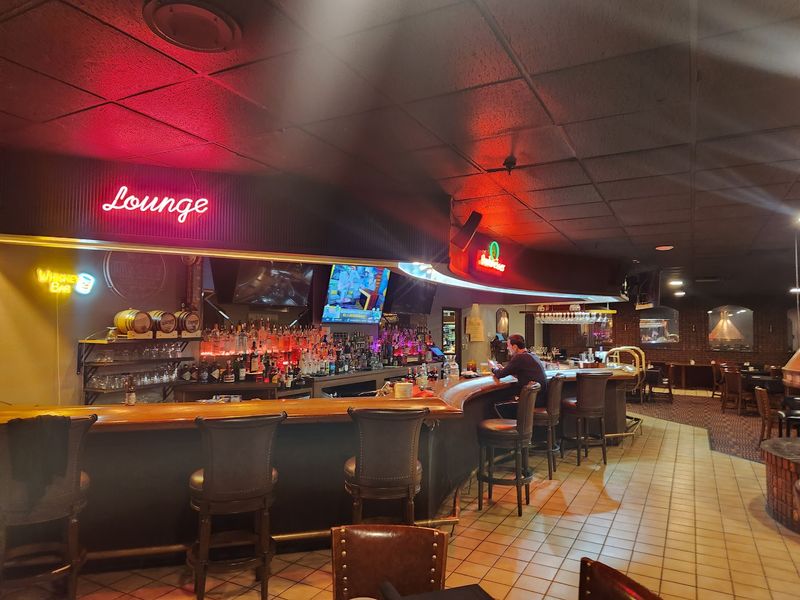
Geography and identity tend to align at Cascio’s in a way that feels entirely natural.
Cascio’s Steakhouse sits at 1620 S 10th St, Omaha, Nebraska 68108, placing it on the edge of Omaha’s historic Little Italy neighborhood.
For a restaurant built on Sicilian family recipes and Nebraska beef, that location is about as fitting as it gets.
The Little Italy area of Omaha has deep roots in the city’s Italian immigrant community, and the neighborhood’s character has shaped the surrounding blocks for generations.
Being situated at the edge of that district gives Cascio’s a geographic context that reinforces everything the menu and the dining room communicate about the restaurant’s origins and identity.
For visitors coming from outside Omaha, the South 10th Street location is accessible and relatively easy to navigate.