This Oregon Sanctuary Blends Cliffside Chapels, Gardens, Art, And Elevated Views
Quiet places usually win me over when they give you something to discover slowly.
This Oregon sanctuary seems to work that way, mixing chapel spaces, gardens, art, and elevated views into an experience that can unfold gradually.
The appeal is not one single feature screaming for attention. It is the feeling that you can wander, notice something new, and stay longer than planned without forcing the visit.
Honestly, that sounds refreshing!
A place does not need to be loud to feel memorable. This one seems especially suited to anyone craving a calmer kind of stop during a busy day.
How A Friar Built A Sanctuary
Back in 1923, a Servite priest named Friar Ambrose Mayer bought this hillside property from the Union Pacific Railroad Company.
He wanted a natural cathedral, something in America that echoed the famous sanctuary of Our Lady of Lourdes in France.
The cliffside grotto was carved from the 110-foot basalt face in 1923, and a Carrara marble replica of Michelangelo’s Pietà was placed there in 1946.
The first Mass and dedication took place on May 29, 1924, drawing about 3,000 people.
Decades of growth followed, and in 1983 the site earned its designation as a National Sanctuary of Our Sorrowful Mother. Servite Friars still care for the grounds today, keeping the gates open to visitors of every background.
You will find The Grotto at 8840 NE Skidmore St in Portland, about eight miles from the downtown core.
Inside The Cliffside Cave
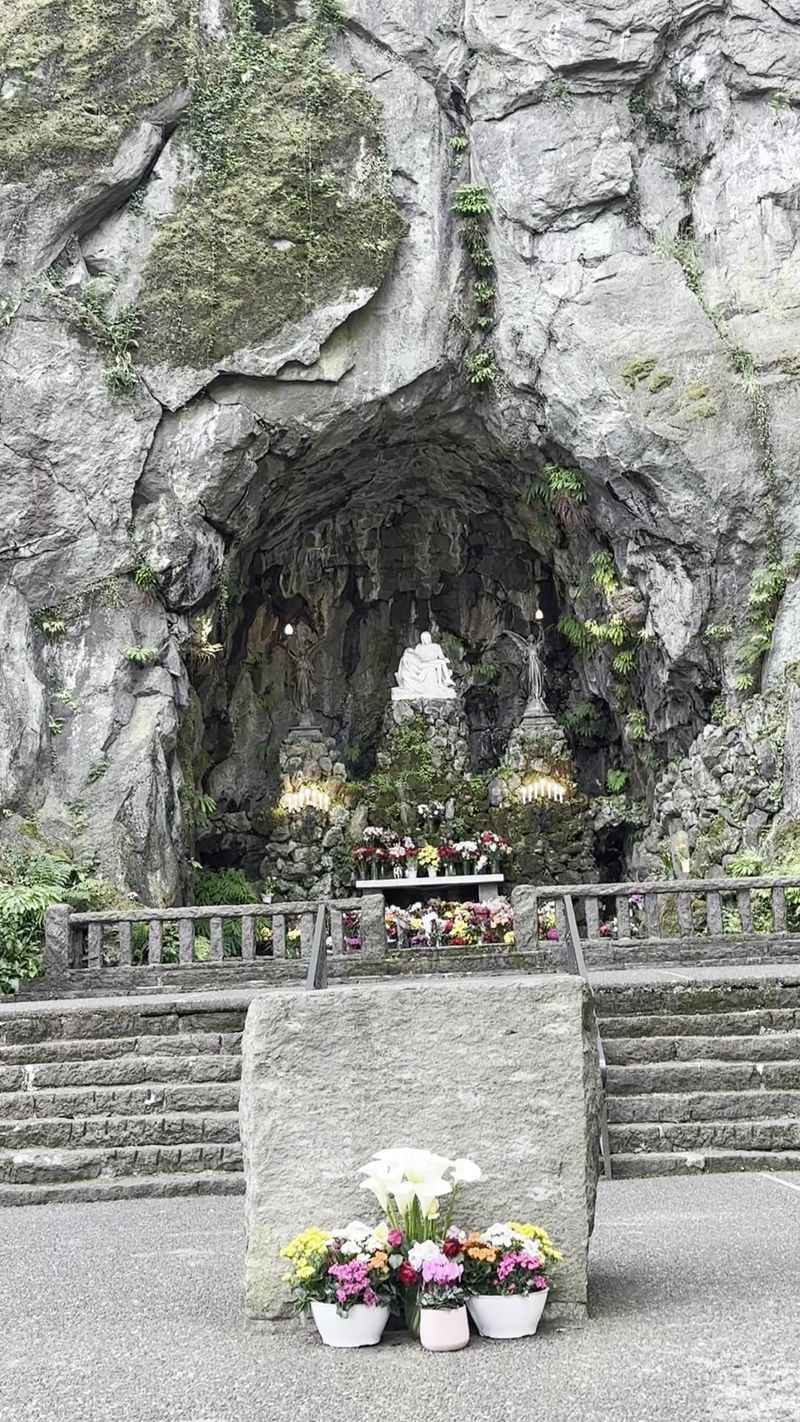
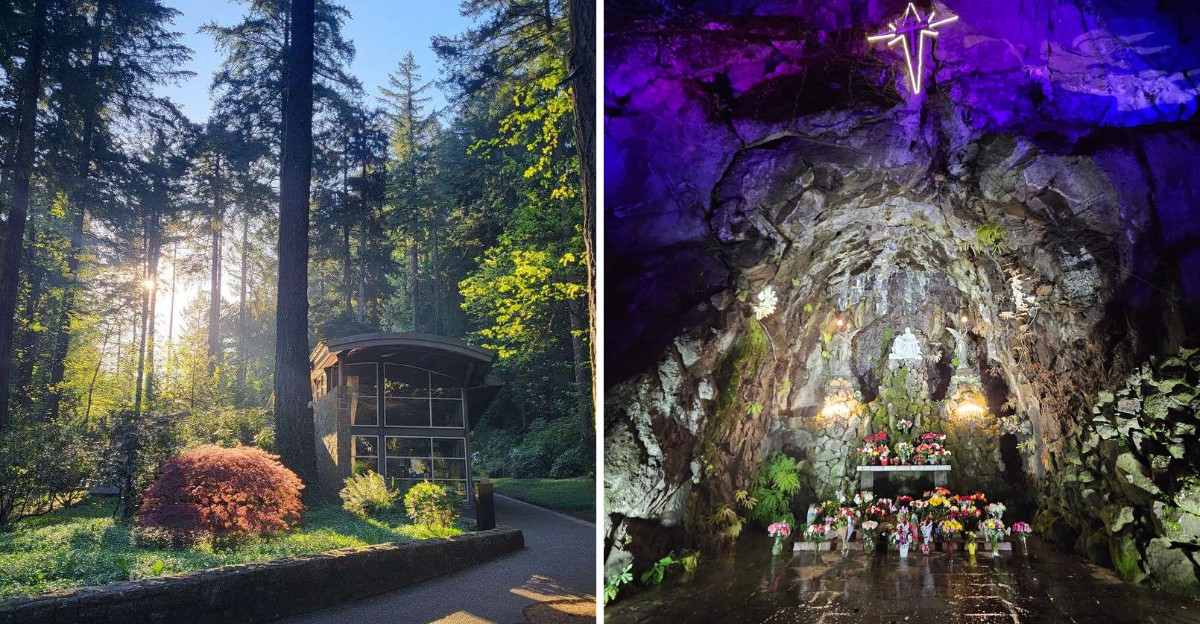
Nothing prepares you for the moment the cave opens up in front of you.
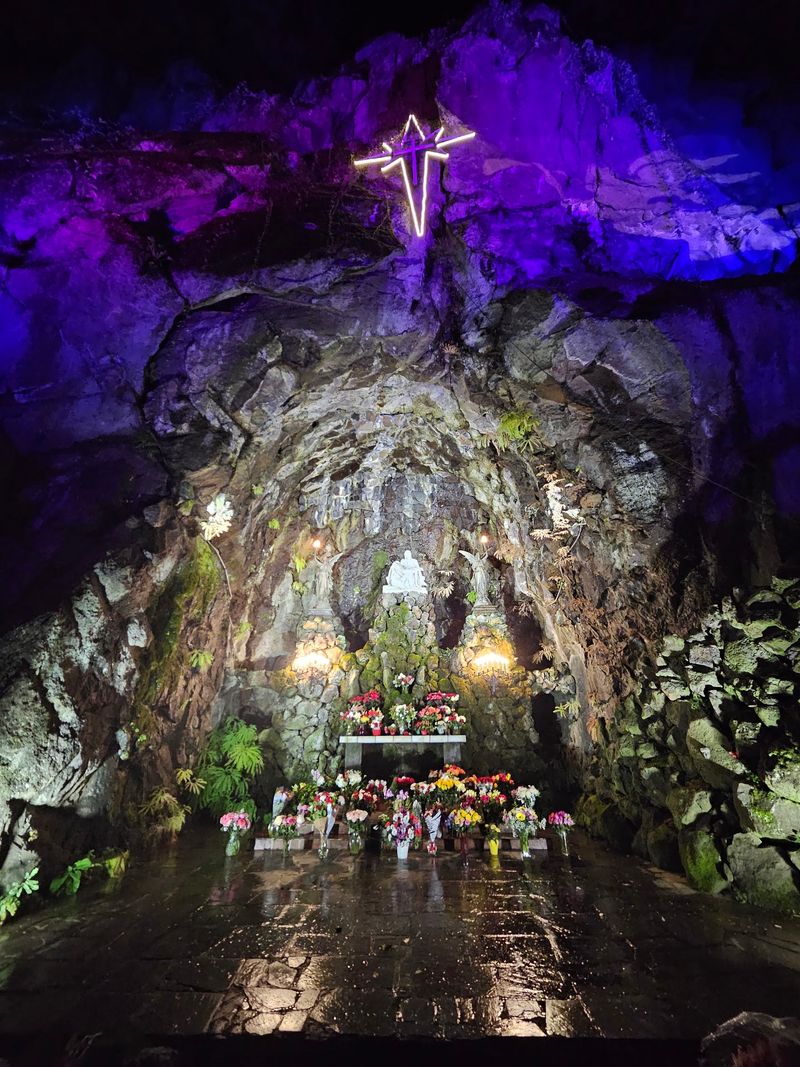
Water-stained rock curves overhead, and there in the center sits the marble Pieta, Mary cradling her son.
Votive candles line the grotto area beneath the basalt cliff, with the Carrara marble Pietà forming the central focus.
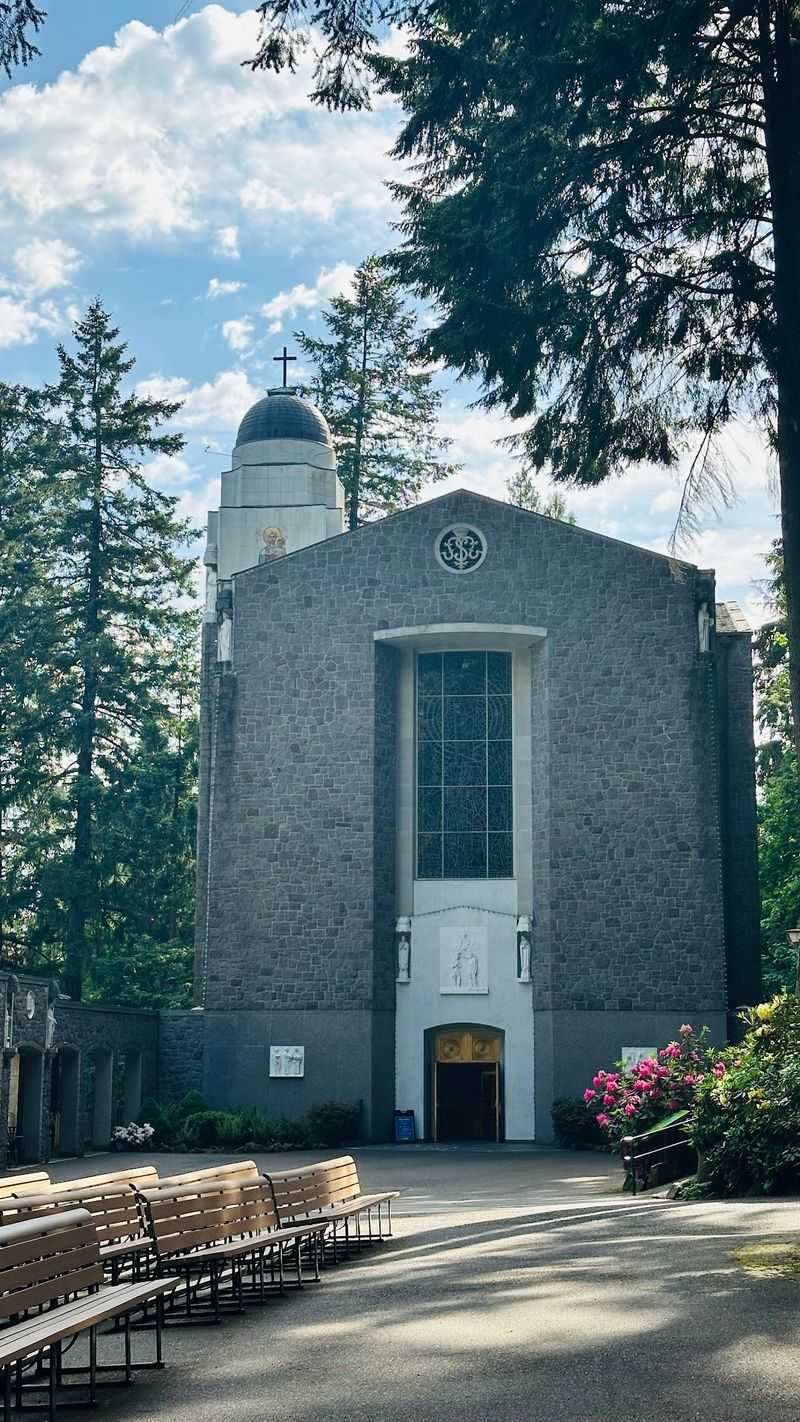
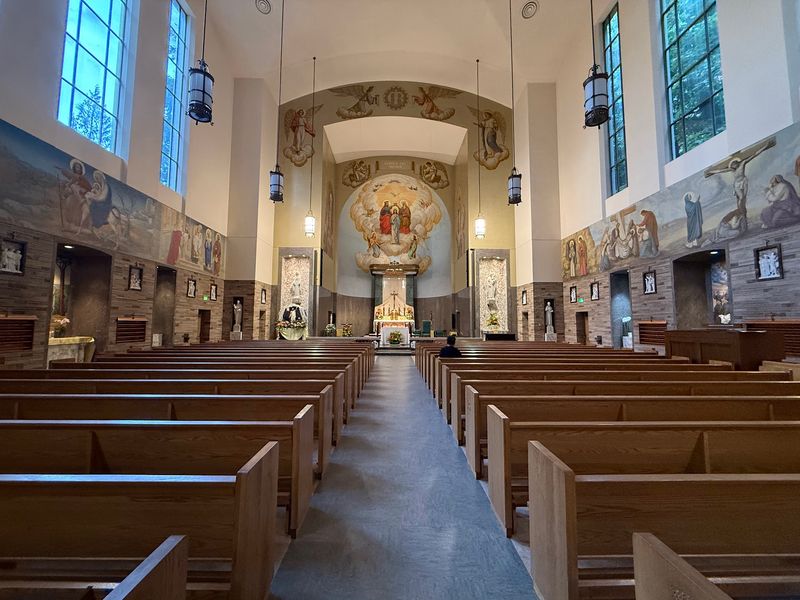
The cave anchors the lower plaza, which stays free to enter all year. Nearby, the Chapel of Mary was built in 1955 and seats 450 people. Its acoustics also make it a venue for musical performances.
Marble, stained glass, and detailed artwork fill the chapel interior, and Mass happens daily and on Sundays. Outdoor Mass sometimes takes place right in the plaza, under open sky.
A circular path near the parking area leads past 14 bronze bas-relief Stations of the Cross set in tufa-stone shrines among trees, flowers, and ferns.
The Pietà here is a replica of Michelangelo’s, and the cave itself was carved into a basalt cliff that rises roughly 110 feet above the plaza. The nearby Interpretive Center includes a brief video tracing the history of The Grotto.
Riding The Elevator Skyward
A cliffside elevator normally carries visitors from the lower level to the Upper Gardens about 110 feet above. The Upper Gardens will close from October 5, 2026 through the end of January while the elevator is modernized.
Admission to the Upper Gardens is purchased before taking the elevator.
Up top, meticulously groomed pathways wander through rhododendron beds, dense foliage, and towering evergreens. Benches appear exactly where you want one, usually facing a view.
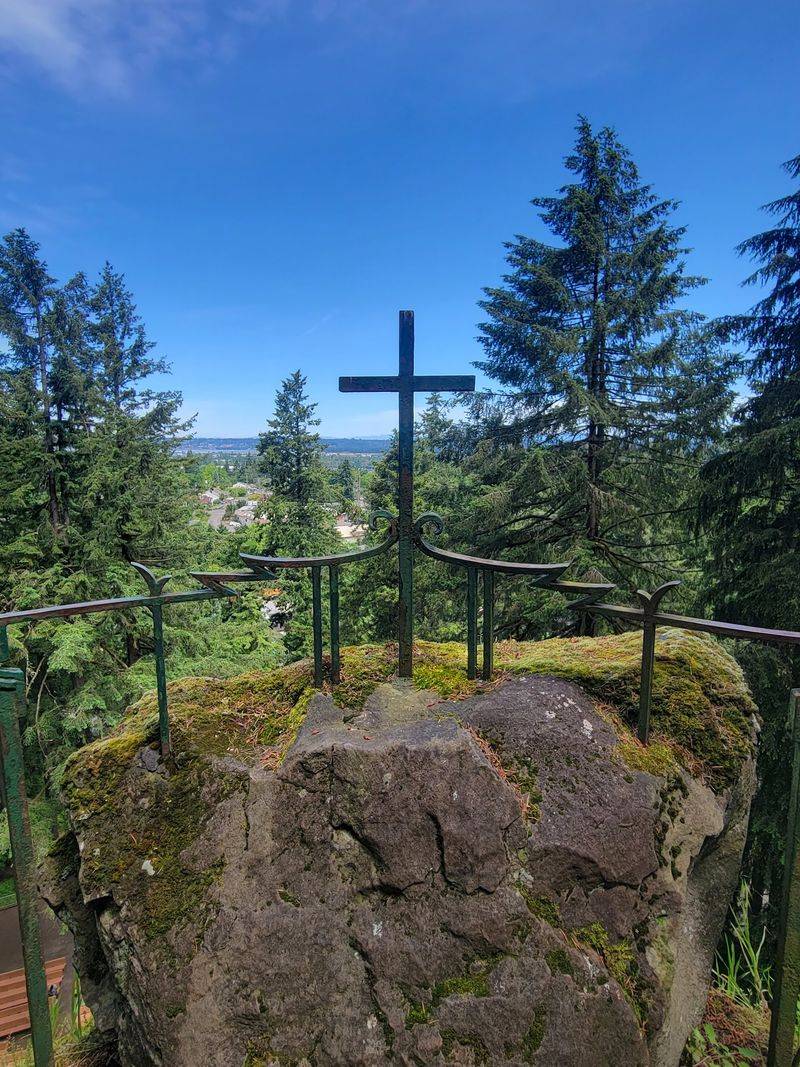
Those views sweep across the Columbia River Valley toward the Cascade Mountains, with Mount St. Helens standing out on a clear day. On especially crisp mornings, Mount Rainier shows up far in the distance too.
The Upper Gardens provide panoramic views across the Columbia River Valley toward Mount St. Helens, with Mount Rainier sometimes visible on clear days.
The modernization replaces the elevator’s mechanical and electrical systems, which the sanctuary says will improve both its speed and the number of people it can carry.
Because the upper level sits on an exposed ridge under heavy tree cover, it runs noticeably cooler than the streets below, so a jacket is worth bringing even on a warm day.
The Upper Gardens combine landscaped paths, overlooks, shrines, and quiet spaces above the lower plaza.
Two Chapels Worth Seeking Out
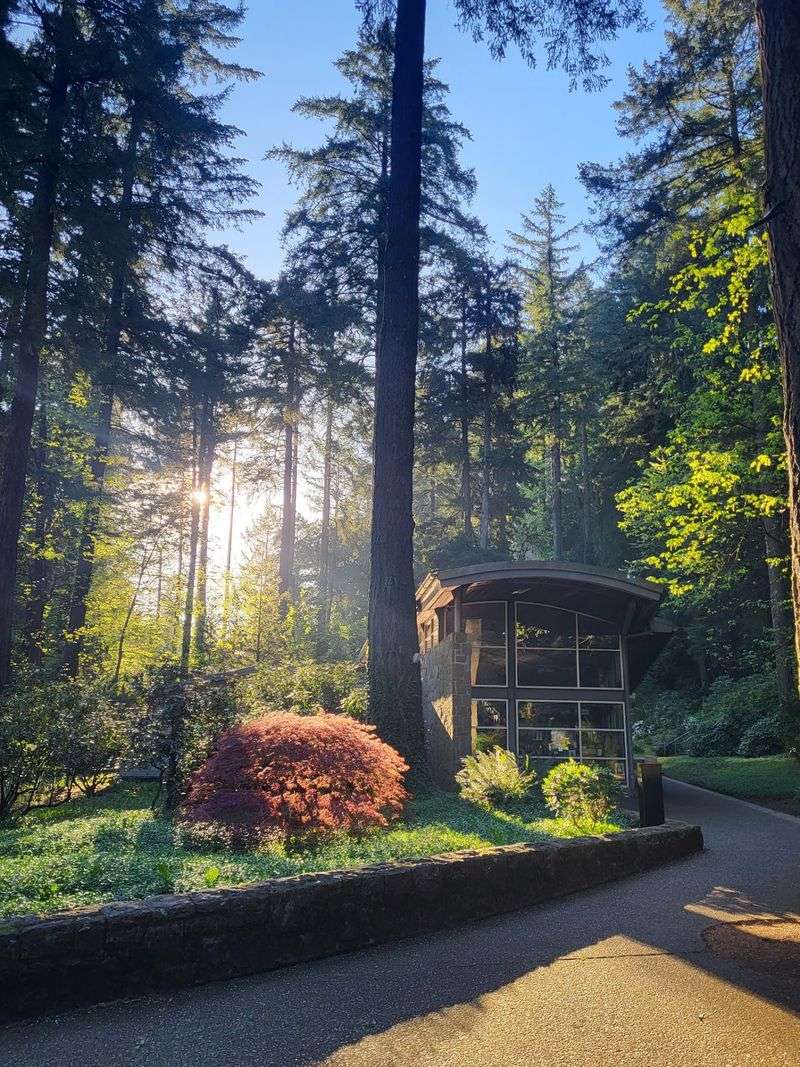
Architecture fans get a treat up in the gardens. The Marilyn Moyer Meditation Chapel, finished in 1991, is built from polished granite and glass and hangs out over the cliff edge.
Its entire north wall is glass, framing the valley below like a living painting. The design has collected both national and international awards, and one look explains why.
Inside, the glass-walled Meditation Chapel provides a quiet space overlooking the Columbia River Valley.
Then there is the Chapel of St. Anne, a small brick building dating back to 1934. It was constructed to house the Blessed Sacrament during the first International Marian Congress held in the United States.
Inside, reproductions of Madonna paintings from countries around the world line the walls.
Two very different buildings, separated by nearly six decades, both doing the same job. Between the modern glass and the vintage brick, The Grotto proves that quiet spaces come in more than one shape.
Shrines From Around The World
Walk the upper paths and you start collecting countries. Scattered among the greenery sit shrines built in the styles of communities from far beyond Oregon.
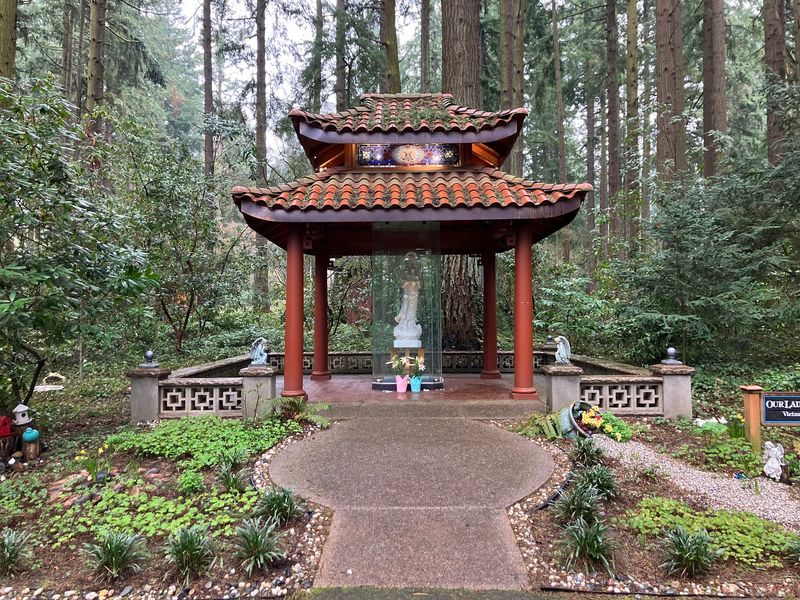
The Upper Gardens include the Lithuanian Wayside Shrine, the Polish Shrine, the Filipino Faith Shrine, the Shrine of Our Lady of Guadalupe, and the Shrine of Our Lady of La Vang.
Different materials, decorative details, and cultural traditions distinguish the shrines throughout the Upper Gardens. I kept stopping to study the details in the woodwork and stone.
Nearby spreads the Peace Garden, a 1.5-acre space created in 1989 around a large pond and a flowing stream. Bronze plaques set along the winding path depict the Mysteries of the Rosary.
The gardens also hold a brick labyrinth modeled on the medieval one at Chartres Cathedral, laid out for walking rather than solving.
The Marilyn Moyer Meditation Chapel sits at the cliff edge on this level, with glass walls that open onto the view across the valley.
A rose garden adds color in the warmer months, filling the air with sweetness. Water sounds follow you through most of this section.
Slow Paths And Quiet Corners
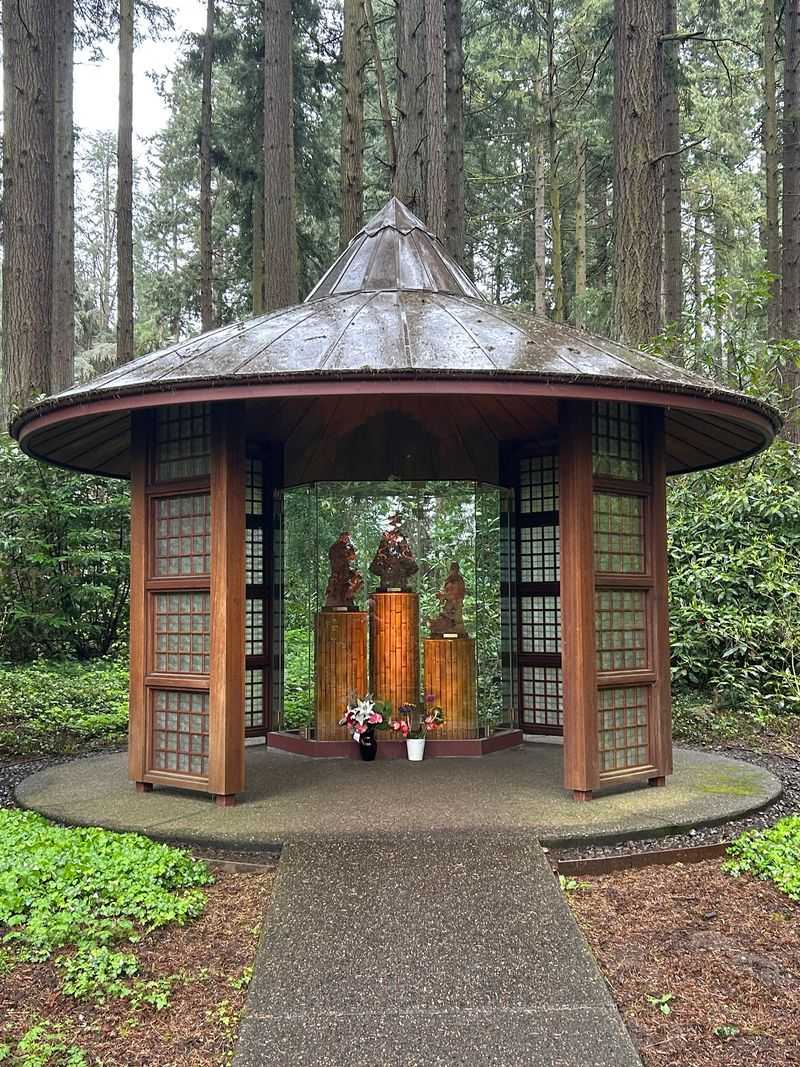
Slowing down is basically the main activity here, and the grounds are designed for it. A crimson brick labyrinth in the upper gardens copies the ancient one at Chartres Cathedral in France.
It is not a maze meant to trick you. One single winding path leads to the center, then back out again, which is the whole point of walking meditation.
The Grotto presents the labyrinth as a place for meditation and contemplation along a single path leading to the center and back out.
Down on the lower level, the forested loop with the Stations of the Cross gives you another kind of walk, shaded and hushed under old trees. Bronze figures emerge from the ferns as you round each bend.
Another area, the Via Matris, focuses on Mary’s role in the life of Jesus through 34 carved wooden scenes.
The Upper Gardens walking path is less than a mile long, and The Grotto says an average visit lasts about 90 minutes to two hours.
Seasons, Lights, And Choirs
Spring cracks the place wide open with color. Rhododendrons, azaleas, and cherry blossoms take over once the winter rain eases off, and the gardens practically hum.
Summer brings long daylight and dense greenery across much of the sanctuary.
Autumn brings changing foliage across the gardens before the Upper Gardens close on October 5, 2026 for elevator modernization.
The 2026 Christmas Festival of Lights is scheduled to begin November 27, with additional 2026 schedule details still to be announced.
Choirs perform inside the Chapel of Mary during the festival, and official guidance recommends arriving 30 to 45 minutes before a specific concert.
The festival also includes outdoor caroling, puppet shows, musical performances, and snacks and drinks for purchase.
The Plaza Level stays open during the Upper Gardens closure, so the grotto itself, the chapel, and the lower grounds remain reachable while the elevator work is underway.
Summer is also the stretch when the sanctuary draws its most international crowd, according to staff who work there year-round.
Something blooms or glows in every season, which means no two visits to this Oregon sanctuary ever feel quite the same.
Smart Tips Before You Go
A little planning goes a long way at this sanctuary. Parking is free on site, and buses run nearby, making the eight-mile trip from downtown Portland simple enough.
Current September 2026 hours are 9 a.m. to 6:30 p.m., with Upper Gardens admission sold until 5:30 p.m. The Upper Gardens will close October 5 through the end of January for elevator modernization.
Lower level access costs nothing, while the upper gardens require a modest admission that covers the elevator ride. Discounts exist for seniors and youth.
All areas are accessible, with paved pathways, some gentle slopes and uneven surfaces, and free loaner wheelchairs available on a first-come, first-served basis.
Service animals are welcome throughout, and leashed dogs may join you on the lower grounds, though not upstairs or inside buildings. Comfortable shoes are smart, and a waterproof jacket is smarter during the wetter months.
The Grotto says an average visit lasts about 90 minutes to two hours, with additional time useful for Mass or a longer garden visit.