This Oregon Town Looks So Perfect It Feels Like A Movie Set
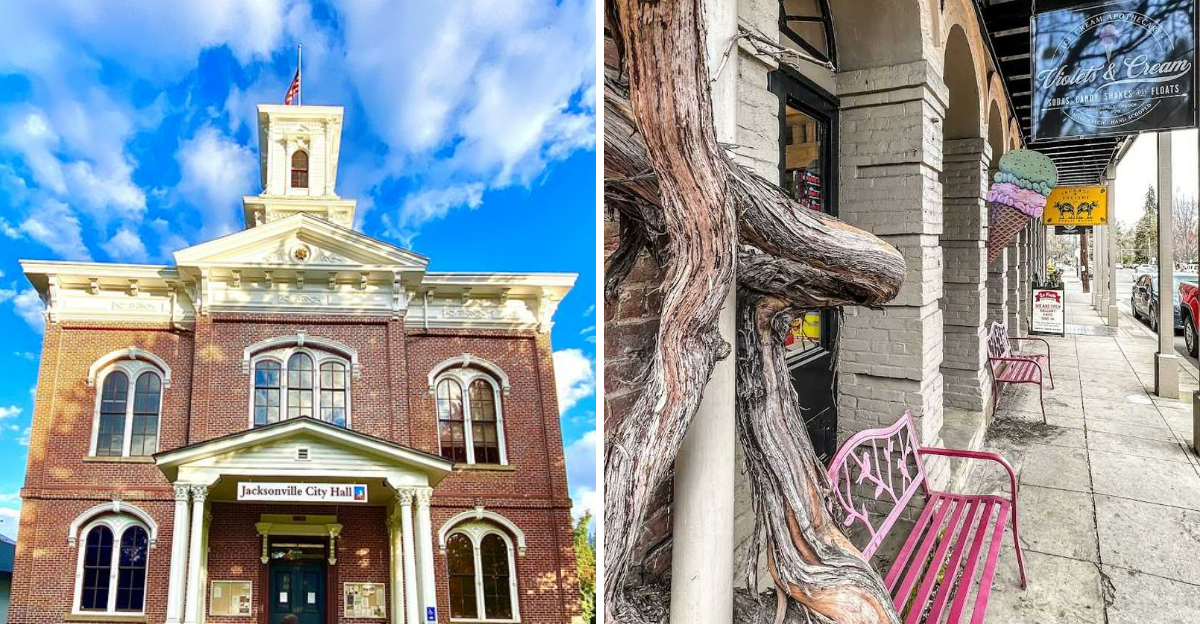
I kept waiting for a film crew to appear. That is genuinely how it felt the first time I drove into this Oregon town.
The streets were too pretty, the buildings too well-preserved, the whole scene too cinematic to be accidental. I stood on the main street and just looked around, convinced I was missing something.
I was not. This is simply what the town looks like, and it has looked this way for over a century.
Oregon has plenty of charming small towns, but this one operates on a different level entirely. It does not try to be picturesque.
It just is. The kind of place that makes you slow your car down without thinking about it.
The kind of place you tell people about when you get home. Come with no agenda and leave completely won over.
A National Historic Landmark That Time Forgot
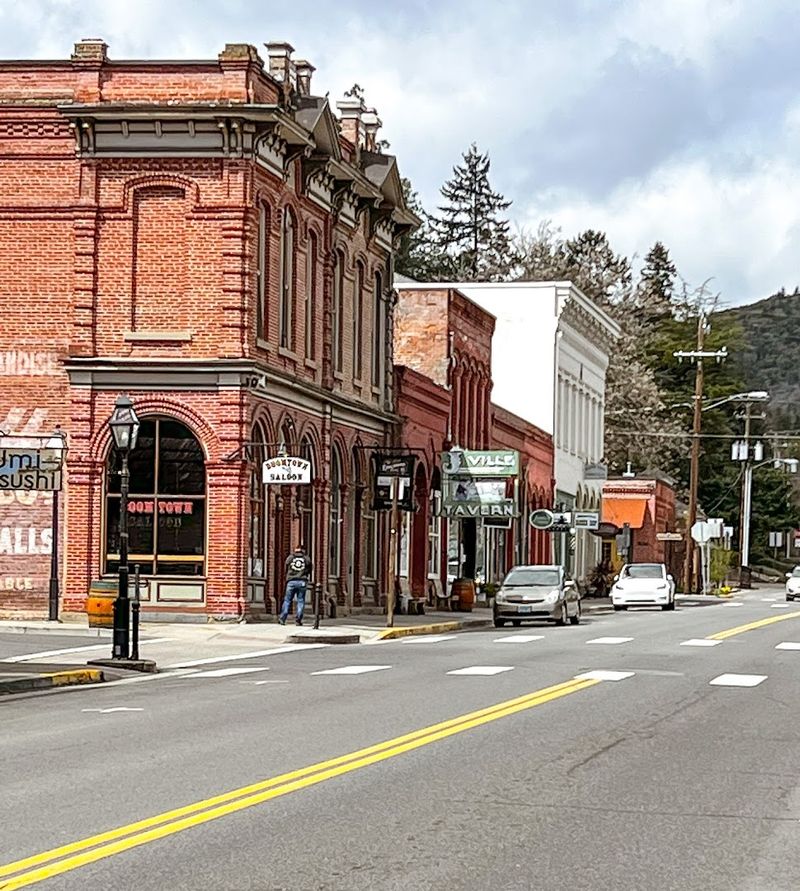
Back in 1966, the federal government made it official: Jacksonville was too important to ignore. It became the first National Historic Landmark District in Oregon, and the designation stuck for good reason.
The town holds over 100 buildings, some dating back to the 1850s. Walking through the district feels less like sightseeing and more like flipping through a living history book.
What makes it truly special is how complete the collection is. You are not seeing a handful of preserved buildings surrounded by modern construction.
You are seeing an entire town that survived nearly intact.
The architectural styles range from Greek Revival to Italianate to Gothic Revival. Each building tells a different chapter of the same story.
Most towns this old would have torn things down and rebuilt. Jacksonville never got that memo, and honestly, we are all better off for it.
The result is something rare in America: a real town that looks almost exactly as it did over 150 years ago.
The Street That Looks Like Hollywood Built It
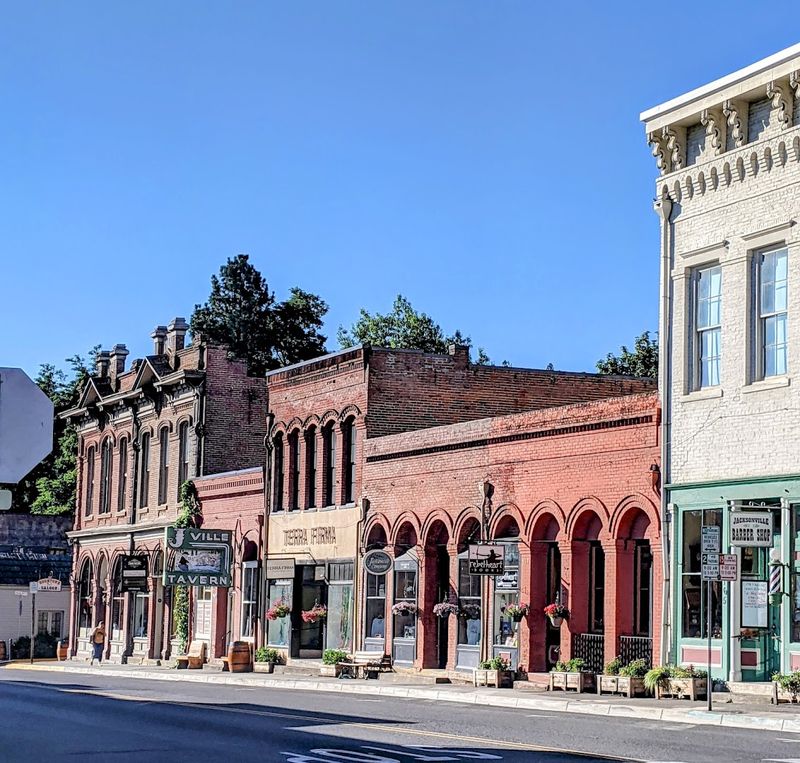
Picture the main street of every Western movie you have ever seen. Now picture it being completely real and fully functional.
That is California Street in Jacksonville.
Brick buildings line both sides of the road. Wooden sidewalks run in front of storefronts that have barely changed since the 1870s.
No glass towers, no chain stores, no neon signs screaming for your attention.
The absence of modern clutter is what makes it so striking. Your eye has nowhere modern to land, so it just takes in all that beautiful, weathered history.
It feels genuinely cinematic without trying to be.
Jacksonville sits about 5 miles west of Medford in Jackson County. The address is simply Jacksonville, Oregon 97530, and it is easy to find once you head west off the main highway.
California Street is walkable in under ten minutes, but you will want to slow down. Every building has a story carved into its brickwork.
The whole street rewards curiosity, and you will find yourself stopping constantly just to look up.
The Railroad Snub That Saved Everything
Here is an irony worth savoring: the thing that nearly killed Jacksonville is the exact reason it looks so stunning today. When the railroad bypassed the town in the 1880s, the local economy quietly collapsed.
Businesses closed. Residents moved to Medford, where the trains actually stopped.
The county seat followed in 1927, leaving Jacksonville with very little reason to modernize.
No modernization meant no demolition. Shops were left standing with their original furnishings still inside.
Historians sometimes call this phenomenon preservation by poverty, and Jacksonville is its most perfect example.
Other towns with booming economies tore down their old buildings to put up newer, bigger ones. Jacksonville simply could not afford to.
Every financial setback turned into an architectural gift for future generations.
It sounds like a sad story until you stand on California Street and realize what was accidentally preserved. The town essentially froze itself in amber without meaning to.
What looked like failure in the 1880s turned into one of the most remarkable preservation stories in American history.
Actual Hollywood Came Calling Here
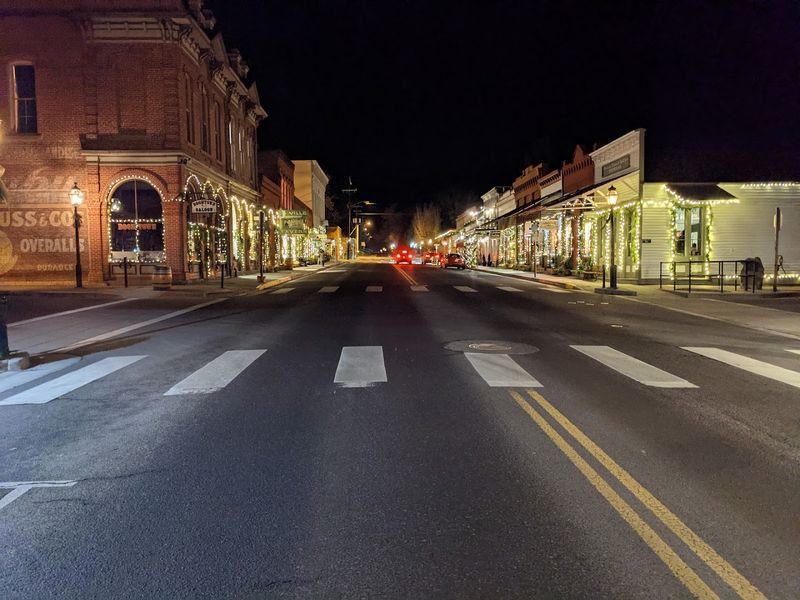
Not every town can say Hollywood showed up and felt right at home. Jacksonville can say exactly that, and the film record backs it up completely.
The 1972 film The Great Northfield Minnesota Raid used Jacksonville as its primary filming location. The production team dressed the town to look like an 1870s setting, and the town barely needed any changes.
It was already there.
Then in 1988, a made-for-TV movie called Inherit the Wind was also filmed on these very streets. Again, the town served as a ready-made period backdrop.
That is not a coincidence; that is exceptional preservation doing its job.
Even earlier, the 1946 film Canyon Passage drew inspiration from small gold mining towns exactly like Jacksonville. The town has a cinematic quality that directors recognize immediately.
Standing on California Street, you can almost hear a film director yelling action. The light falls on the brick facades in a way that looks professionally lit.
It is the kind of place that makes you reach for your camera before you even realize you are doing it.
The Beekman Bank Still Stands Exactly As It Was
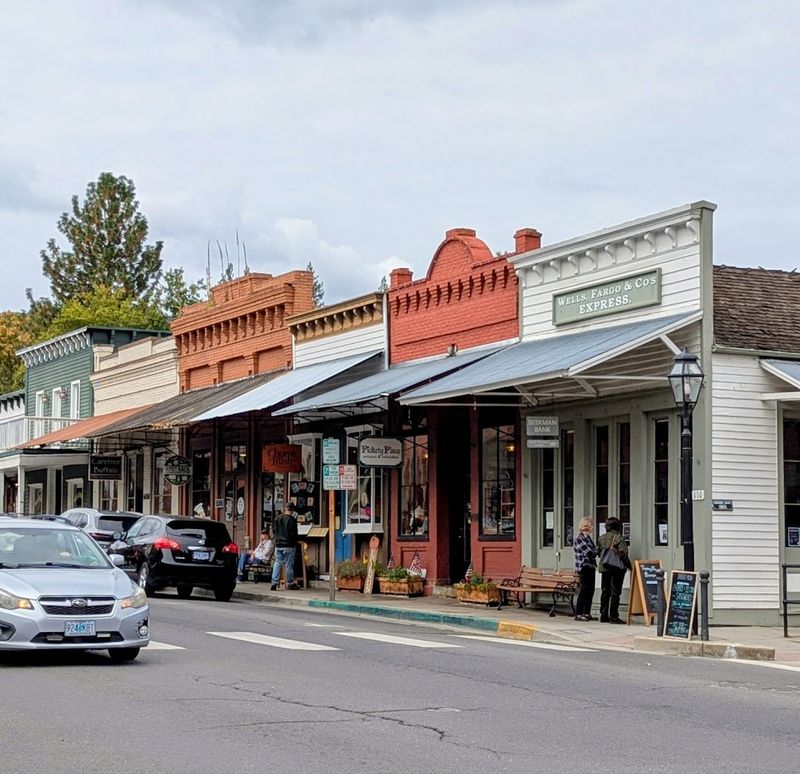
Most bank buildings get gutted and renovated every few decades. The Beekman Bank in Jacksonville never got that treatment, and the result is extraordinary.
The current Beekman Bank building dates to the 1860s and still preserves much of its historic character. You can stand inside and see the same counters, the same ironwork, the same layout that gold miners used when they came to deposit their earnings.
Nothing was replaced because there was never enough money or motivation to do so.
That accidental preservation makes it one of the most authentic 19th-century bank interiors in the entire country. Museums usually recreate this kind of thing.
Jacksonville just kept the real version standing.
The Beekman Bank is part of what makes the town feel so cinematic. Authentic props are already in place, exactly where they belong.
No set designer could do better work.
Visiting the bank feels like a quiet privilege. You are not looking at a replica or a reconstruction.
You are looking at the actual thing, preserved by time, neglect, and a little bit of luck. That combination is rarer than most people realize, and worth every mile of the drive out here.
Oregon’s Oldest Brick Building Is Still Standing
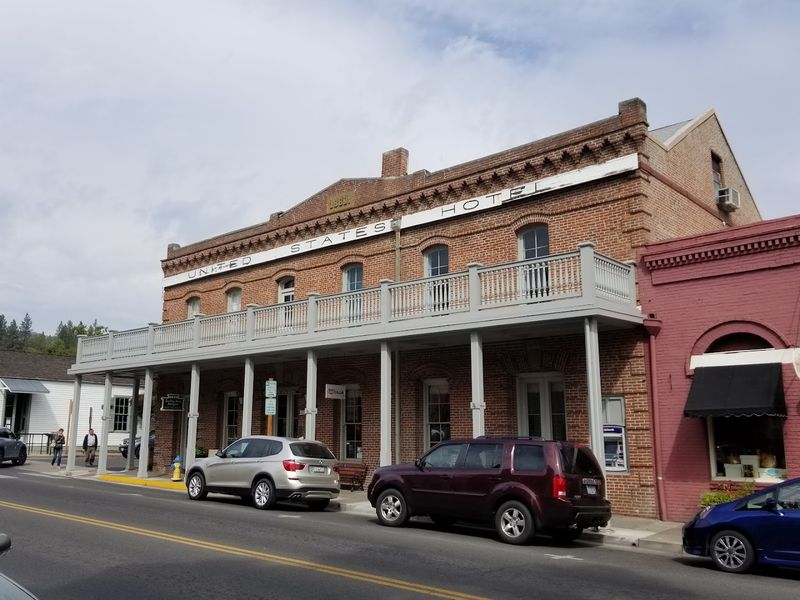
Some buildings simply outlast everything around them. The Brunner Building in Jacksonville has done exactly that, surviving over 150 years while the world changed completely around it.
Constructed around 1855, it is considered one of the oldest brick buildings still standing in the state. That alone would make it worth visiting, but the context makes it even better.
It is not sitting in a museum. It is right there on the street, surrounded by other historic structures, looking completely at home.
Brick construction was a serious statement in the 1850s. It signaled permanence and ambition in a town that was still figuring out what it wanted to be.
The miners and merchants who built these structures were betting on Jacksonville’s future.
That bet did not pay off the way they hoped, but the buildings outlasted every expectation. The Brunner Building is a quiet reminder that sometimes the most lasting things are built without knowing how long they will last.
Pass it on California Street and you might not immediately know which building it is. But once you learn its age, you will look at every brick differently.
History has a way of changing your eyesight.
The Old Courthouse Turned Museum
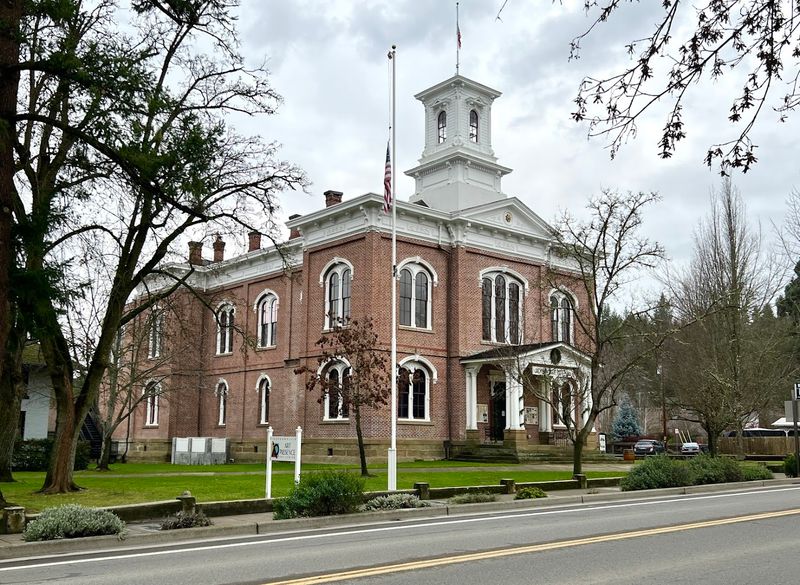
When a county courthouse gets replaced, the old building usually faces a grim future. Jacksonville had a different idea entirely for its 1884 courthouse.
Rather than demolishing it when the county seat moved to Medford, the town converted the building into a museum. Today it serves as the Jacksonville Museum of Southern Oregon History, and it is one of the best ways to understand what this place was before it became a landmark.
The building itself is worth seeing even before you step inside. The 1884 architecture is confident and well-proportioned, the kind of civic structure that small towns built when they believed they were destined for greatness.
Inside, exhibits cover the gold rush era, the lives of early settlers, and the cultural history of the broader region. The displays connect the physical buildings on the street to the real people who built and used them.
That context transforms a walk down California Street from pretty to profound.
It is one of those places where you go in expecting to spend twenty minutes and end up staying for over an hour. The museum earns your time honestly, with real artifacts and genuine stories that do not need any exaggeration.
Historic Buildings With Surprises Inside
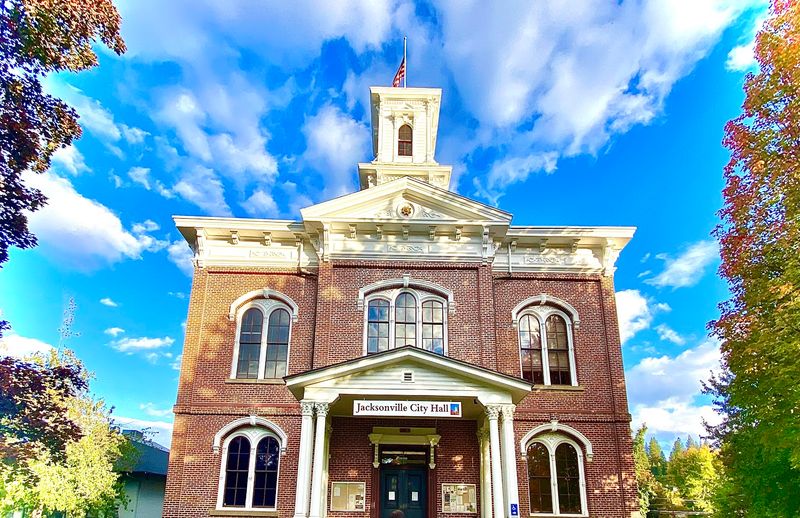
Historic preservation sounds serious until you realize it also means excellent shopping inside genuinely beautiful old buildings. Jacksonville figured that part out a long time ago.
The town’s commercial district is full of independent boutiques and art galleries, many operating inside beautifully preserved historic buildings. Buying a piece of local art inside an 1870s brick storefront hits differently than buying it in a strip mall.
The variety of shops keeps the town from feeling like a pure museum experience. You can browse handmade jewelry, regional paintings, and locally produced goods all within a short walk.
Everything feels curated without feeling pretentious.
Art galleries here tend to focus on Southern Oregon artists and landscapes. The work on display often reflects the same natural beauty that surrounds the town, and the historic settings give the pieces an interesting contrast.
Local shops offer a chance to browse regional goods and handmade finds without leaving the historic district. The whole experience is relaxed and unhurried, which matches the pace of the town perfectly.
Jacksonville rewards slow exploration far more than a quick drive-through ever could. Take your time, because the town clearly took its time too.
A Walkable Town That Rewards Every Step
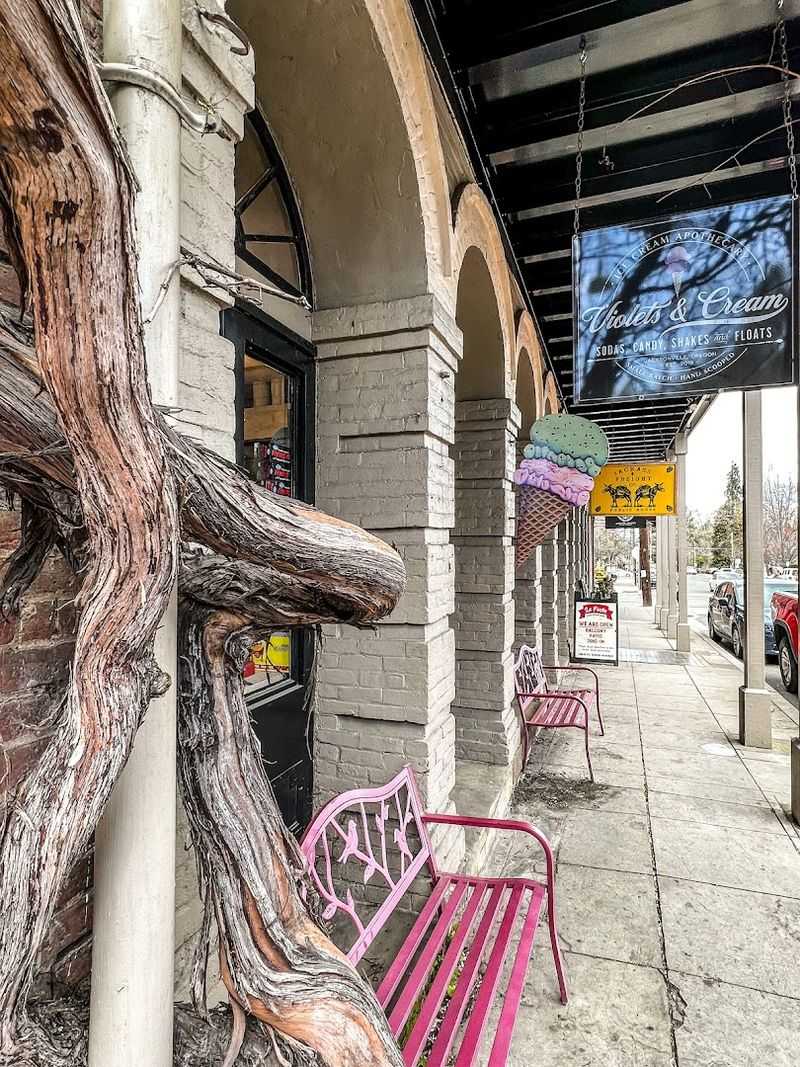
Some historic towns look great in photos but feel exhausting on foot. Jacksonville is the opposite: it is compact, easy to navigate, and genuinely enjoyable to explore at walking pace.
The entire historic district can be covered on foot without any real effort. Wooden sidewalks connect the main storefronts, and the flat terrain makes it accessible for most visitors.
You do not need a map to enjoy it; just start walking and let the buildings pull your attention.
Every block offers something different. One stretch might give you a row of commercial brick buildings, while the next reveals a quiet church or a well-preserved Victorian home set back from the street.
The variety keeps the walk interesting from start to finish.
Jacksonville sits at 42.3135 degrees north latitude in Jackson County, and the surrounding landscape adds to the experience. The hills visible beyond the rooftops remind you that this town grew out of a wild, resource-rich landscape that shaped everything about it.
Ending a walk through town on California Street as the afternoon light hits the brick facades is one of those quietly perfect travel moments. No ticket required, no reservation needed.
Just show up and pay attention. That is all Jacksonville asks.