This Peaceful Massachusetts Coastal Town Is Winning Over People Who Avoid Busy Destinations
Busy coastal towns can make relaxation feel like another task to manage. This Massachusetts community offers the opposite.
The streets move at a gentler pace, the harbor feels close, and historic details reveal themselves without demanding attention.
You can spend an afternoon walking with no real destination and still feel like you used the time well. That is the charm.
There is less pressure to chase attractions or beat crowds to the next viewpoint. Instead, the town rewards noticing things: an old doorway, a quiet lane, a glimpse of water between houses.
For travelers who avoid hectic seaside stops, calm is the main attraction here.
Where The American Navy Began
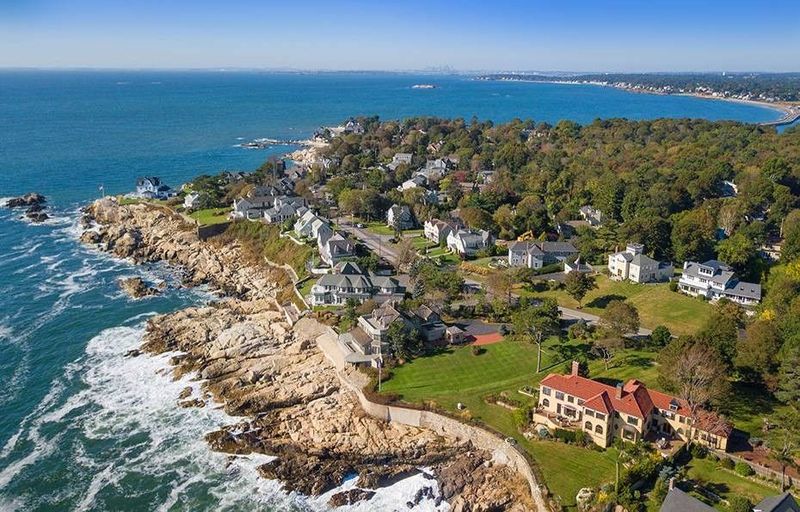
Long before it became a quiet retreat, this peninsula was a working fishing port with salt on every plank. European settlers arrived in 1629, and the town split from neighboring Salem in 1649.
The indigenous Naumkeag people called the land Massebequash. By the mid-1600s, Marblehead had the largest fishing industry in New England.
Revolutionary history runs deep here too. Colonel John Glover organized Marblehead’s militia, and his schooner Hannah was taken into Continental service in 1775.
The Navy describes Hannah as the first armed vessel to sail under Continental pay and control, while Marblehead’s broader Birthplace of the American Navy claim remains disputed.
Beverly is one of several communities with a competing claim.
Glover’s regiment did something even bolder. On Christmas night in 1776, those sailors rowed General Washington and his troops across the frozen Delaware River.
In 1765, with just under 5,000 residents, Marblehead was the second-largest town in Massachusetts and the sixth-largest in British North America. The figure shows how large the port had become before the Revolution.
Start your trip with maps and local guidance from the Marblehead Chamber of Commerce at 62 Pleasant St.
Narrow Lanes And Painted Doors
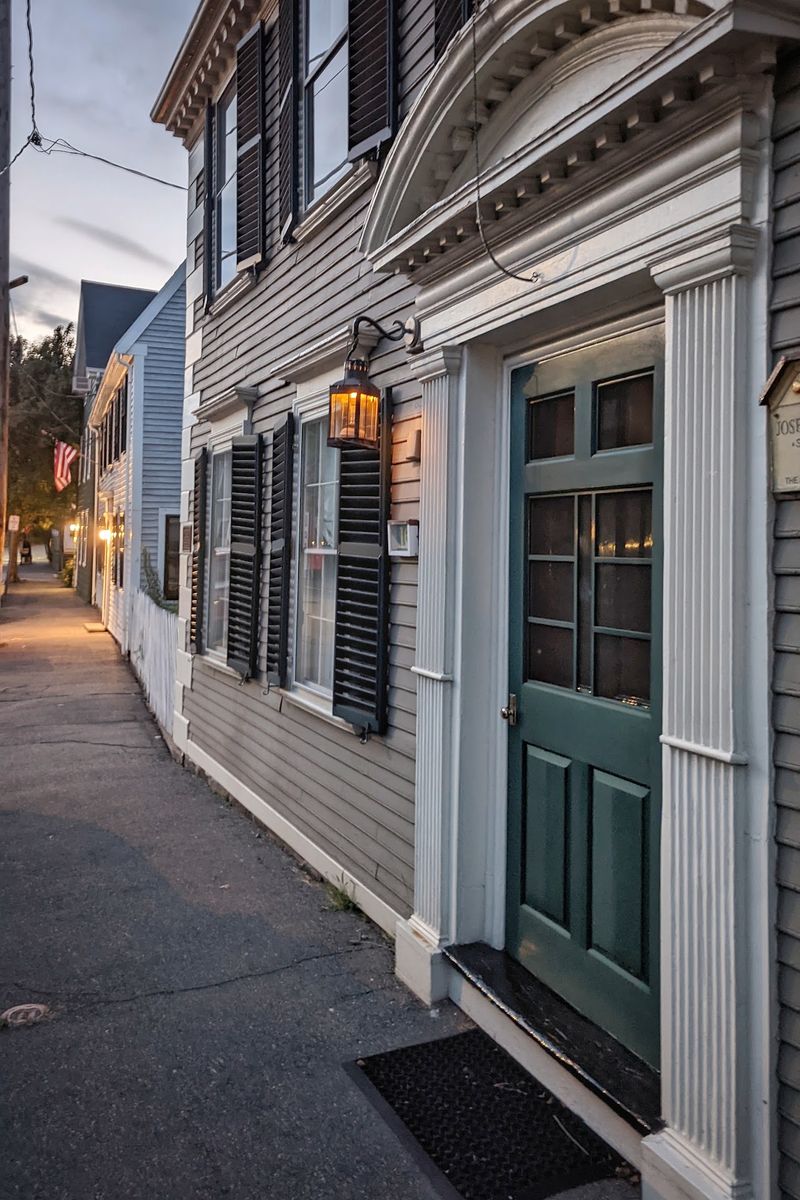
Old Town is easiest to appreciate on foot, where centuries of development reveal themselves block by block.
Its narrow, irregular streets predate modern planning and weave through compact historic blocks.
Houses sit at odd angles, facing every direction, like pieces of a puzzle nudged together by hand. Sidewalks narrow, then vanish, then reappear.
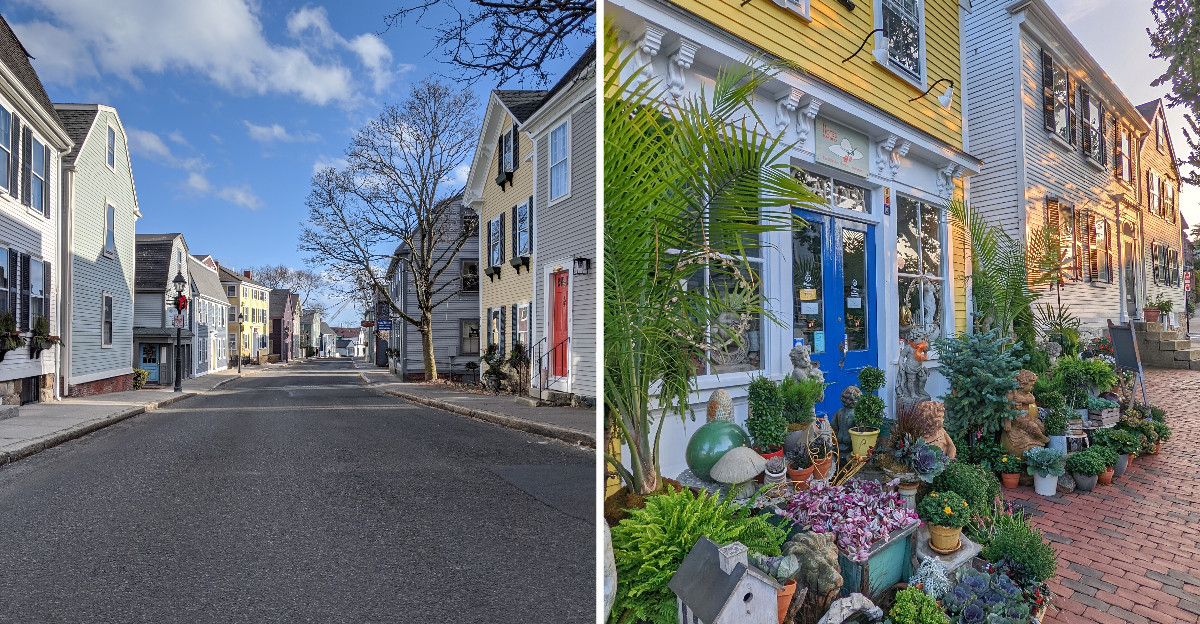
Color is the other surprise. Mustard yellow, deep teal, cranberry red, and slate blue clapboards line the lanes in cheerful disorder.
Small plaques beside many front doors list the year built, the original owner, and that person’s trade. Coopers, mariners, blacksmiths, and merchants all get their moment.
Those plaques turn an ordinary walk into a quick lesson in Marblehead’s working history. Occupations such as mariners, ship captains, shoremen, and cordwainers still appear on houses around the district.
Abbot Hall And Revolutionary Art
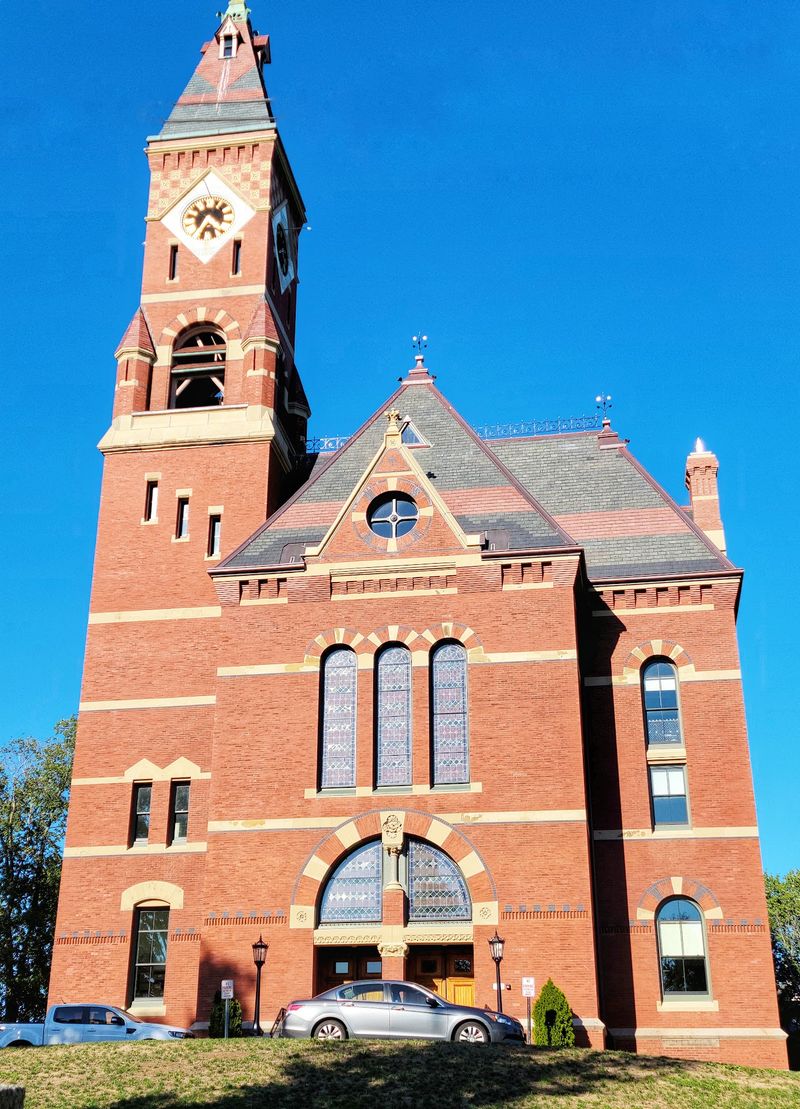
A clock tower rises above the rooftops, and it makes a handy landmark when the lanes confuse you.
Abbot Hall serves as the town hall, built in Romanesque Revival style with heavy brick and a commanding presence.
Inside hangs The Spirit of ’76, one of the most recognized paintings in American history. The original gives visitors a direct look at the scale and detail usually reduced in reproductions.
The large composition depicts a drummer, a fifer, and a flag bearer marching together. Admission to view it costs nothing, and the room stays quiet enough to linger.
Civic history continues just down the street at the Old Town House, built between 1727 and 1729. Built in 1727–29, it predates Boston’s Faneuil Hall and has remained in public use ever since.
Town meetings, gatherings, and local business have filled that space for nearly three centuries. Its continued public use preserves a direct link to Marblehead’s eighteenth-century civic center.
Both buildings remain active civic spaces rather than functioning only as historic exhibits. Meetings, exhibitions, and community events continue to use them today.
Georgian Grandeur On Washington Street
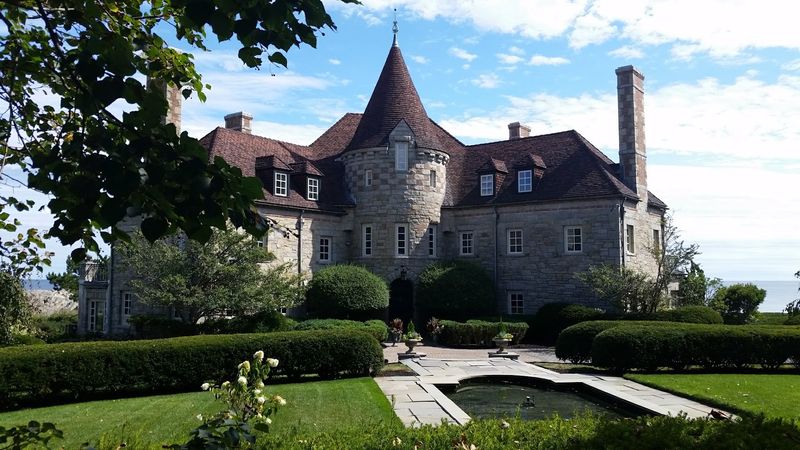
Few colonial houses in the country match the scale of the Jeremiah Lee Mansion.
Built in 1768 for a wealthy merchant, it stands as a National Historic Landmark and a showpiece of Georgian design.
Wide wooden boards were beveled, scored, painted, and coated with sand to imitate blocks of cut stone.
The surviving treatment still gives the wooden façade a masonry-like appearance.
Original hand painted wallpaper still covers several walls, which is remarkably rare for a house this old. Wide staircases, tall windows, and carved paneling fill the rooms.
Guided visits explain how merchant families lived, entertained, and traded across the Atlantic.
Across the way, the Marblehead Museum holds more of the story. Its collections include the J.O.J. Frost gallery, filled with folk paintings of the town’s seafaring past, plus a Civil War collection.
Frost began painting at age 70, drawing on boyhood memories and experiences aboard fishing schooners. His untrained folk-art style records everyday Marblehead life both ashore and at sea.
The Lee Mansion is currently open June through October for guided tours, while the J.O.J. Frost Gallery operates on a broader seasonal schedule.
Hilltop Views At Old Burial Hill
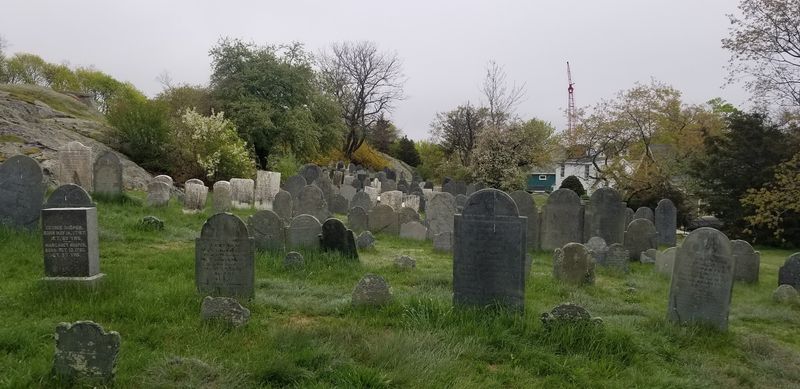
Climb the stone steps off Orne Street and the whole harbor opens beneath you. Old Burial Hill ranks among the oldest graveyards in New England, and the view from the top is unforgettable.
Slate markers lean at angles across grassy slopes, carved with winged faces and curling script.
Town records estimate that about 600 Revolutionary War soldiers are buried here, although only a small number of those graves are marked.
Old Burial Hill is open from dawn to dusk seven days a week. Paths wind among old slate markers, monuments, and memorials across the exposed hilltop.
The elevated site provides a broad free view over Old Marblehead, the harbor, and the sea. You can trace the shape of the peninsula, the causeway, and the crowded mooring field in one slow turn.
Treat the ground with respect, since the stones are fragile and the site remains meaningful to residents. Stay on the paths where they exist.
Photographers love the late afternoon here, when low sun rakes across the carvings. Autumn adds color along the edges of the hill.
Sailboats, Beaches And A Skeletal Lighthouse
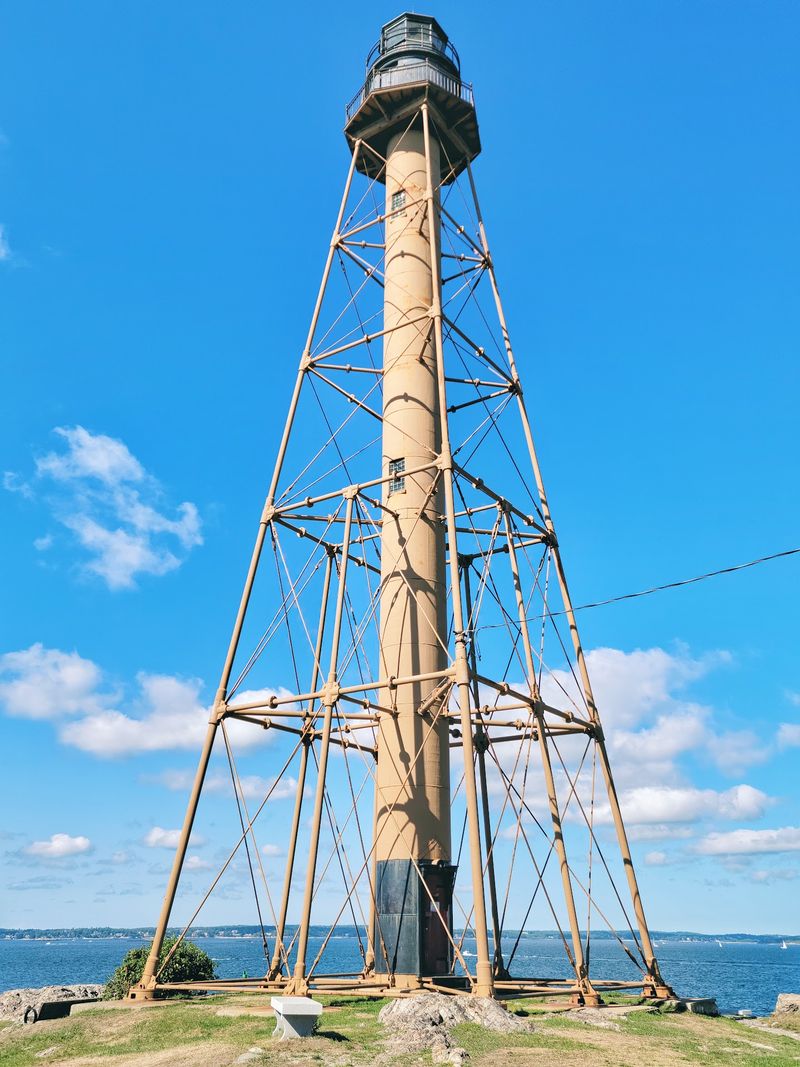
Sailboats dominate views across Marblehead Harbor during the boating season.
Known as the Yachting Capital of America, the town supports several long standing yacht clubs and a mooring field packed with hulls.
Sailing, kayaking, and paddleboarding all thrive in the protected water. Jordan’s Launch operates seasonal harbor rides and launch service from State Street Landing.
At Chandler Hovey Park stands Marblehead Light, a 105-foot cast-iron skeletal tower first lit in 1896 after replacing the original 1835 lighthouse.
It remains the only lighthouse of its type in New England, and its open framework looks almost industrial against the sky.
Sand lovers head to Devereux Beach, the largest stretch in town, with room for swimming and picnics. Across the causeway, Riverhead Beach offers a 1.65-acre beach and a public boat ramp on Marblehead Harbor.
Birders should not skip the Marblehead Neck Wildlife Sanctuary, a small wooded refuge along the migration route. Crocker Park and Castle Rock Park add elevated lookouts.
Waterfront and beach parking can be limited or regulated during summer, so check current town rules before driving out.
Galleries, Shops And Small Stages
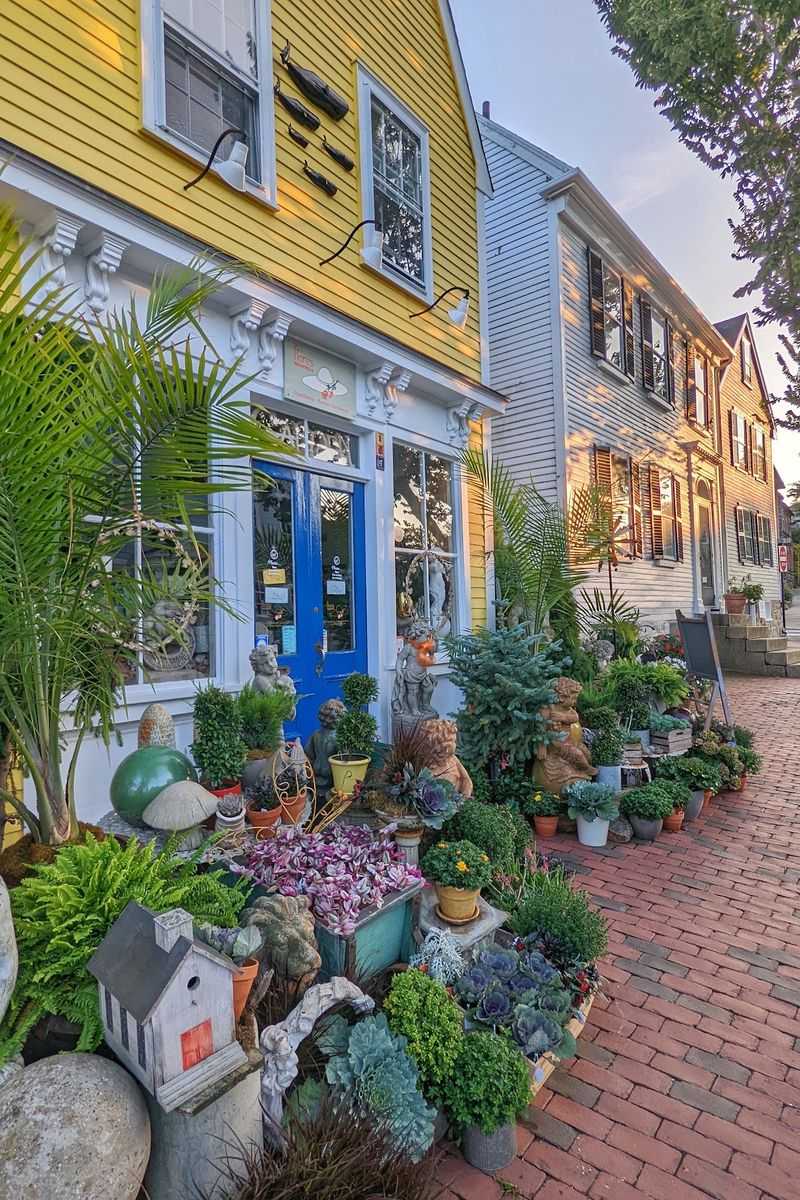
Not a single shopping mall interrupts the view, and residents seem proud of that.
Downtown shops are independent, small, and stuffed with things you will not find in a catalog.
Art galleries sit beside gift stores, bookshops, and studios selling pottery or handmade jewelry. Browsing takes an afternoon if you let it.
The arts community here punches well above the town’s size of roughly 20,000 residents. Galleries, museums, music venues, and theaters make it a creative anchor on the North Shore of Massachusetts.
Marblehead Little Theatre is an active community theater that marked its 70th anniversary in 2026.
Summer brings the Marblehead Festival of Arts, a community wide celebration of visual art, music, and performance. Streets and public buildings fill with exhibits.
The annual Marblehead Classic Boat Regatta brings traditional sailing vessels to local waters, while Glover’s Regiment stages a separate summer encampment with Revolutionary-era demonstrations.
Together with the arts festival, those events mix maritime tradition, living history, and visual art across the summer calendar.
Shop hours can be shorter than city visitors expect, especially midweek in winter. I learned to check signs in windows rather than assume anything.
Getting There And Timing It Right
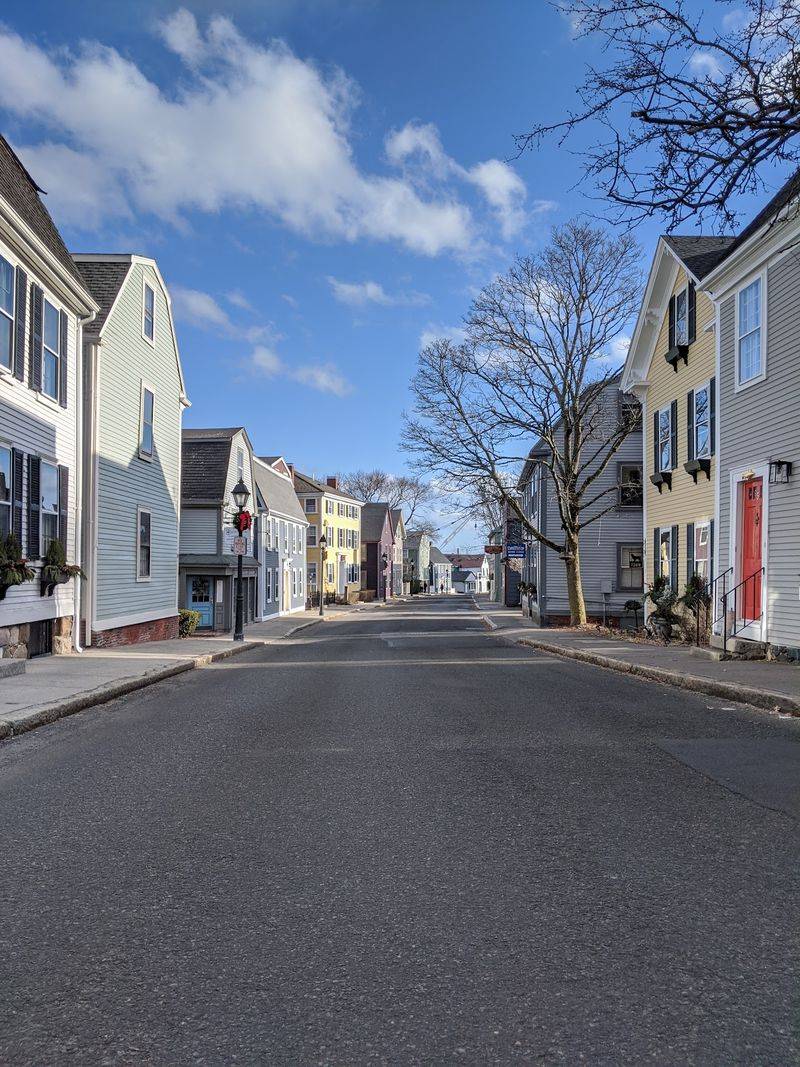
Planning is refreshingly simple, mostly because the town is compact. Old Town covers a small area, though the hills give your legs a workout.
Park once and walk, because narrow lanes and limited spaces make driving around frustrating. Municipal lots near the harbor are your best bet.
Marblehead sits 18 miles north of Boston, and the town’s visitor site estimates a drive of about 30 to 45 minutes from downtown under typical conditions.
MBTA routes 441 and 442 connect Marblehead with Wonderland station, where riders can transfer to Blue Line service toward Boston.
June through August delivers warm weather and full access to beaches, boating, and festivals. Those months are also the busiest, especially around beach days, boating events, and the Independence Day festival.
October pairs fall color with harbor views across the historic district and waterfront parks.
November through January brings colder weather and a quieter seasonal calendar. Historic streets remain walkable, although several visitor attractions operate reduced or seasonal hours.
Whatever season you pick, this peninsula in Massachusetts holds onto its calm. That slower pace remains part of Marblehead’s appeal once the busiest summer dates have passed.