This Remarkably Preserved Nebraska Prairie Fort Lets Visitors Walk Straight Into The 1870s
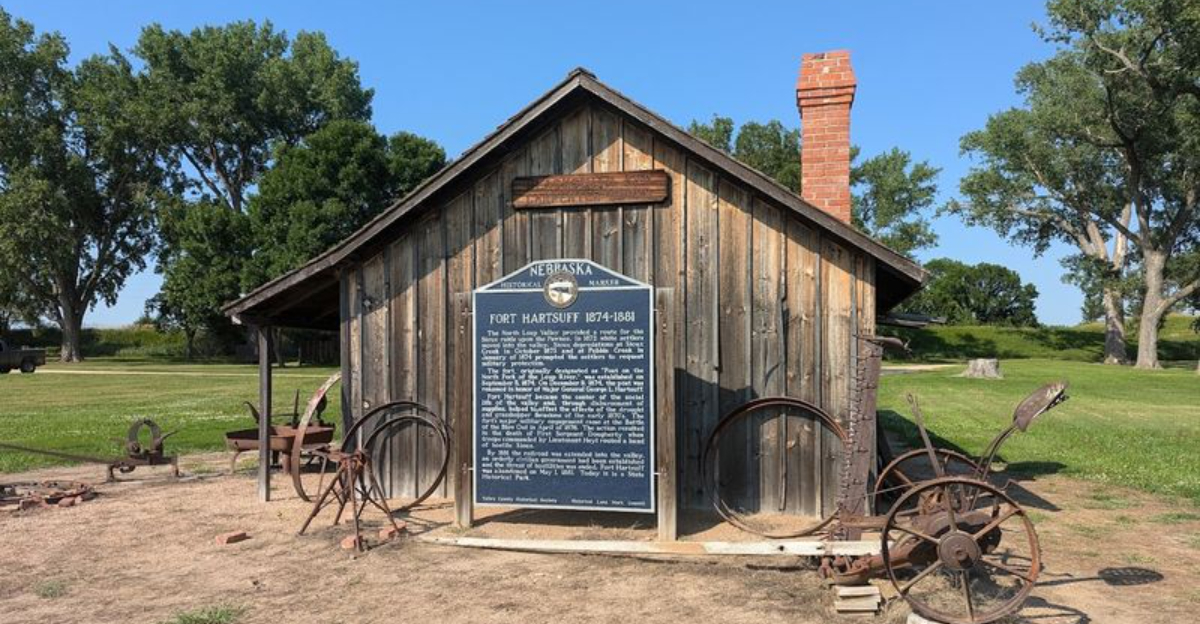
A quiet prairie road can hide a surprisingly convincing doorway into another century.
The first glimpse feels almost too complete: pale buildings gathered around an open parade ground, neat fences cutting across the grass, and barely a hint of modern life.
Nothing needs dramatic lighting or theatrical effects. The setting does the work.
This corner of Nebraska makes the 1870s feel close enough to wander through at your own pace.
Visitors can move between preserved spaces, notice the small details, and begin piecing together what daily life may have looked like at a remote frontier post.
The appeal is not only in what remains, but in how naturally the entire place encourages curiosity.
What happened inside these walls? Who spent long winters here? Which routines filled an ordinary day?
Those answers are better discovered slowly.
The grounds feel peaceful now, yet every doorway suggests another story waiting beyond it.
Fort Hartsuff’s Unusual Construction And Surviving Original Buildings
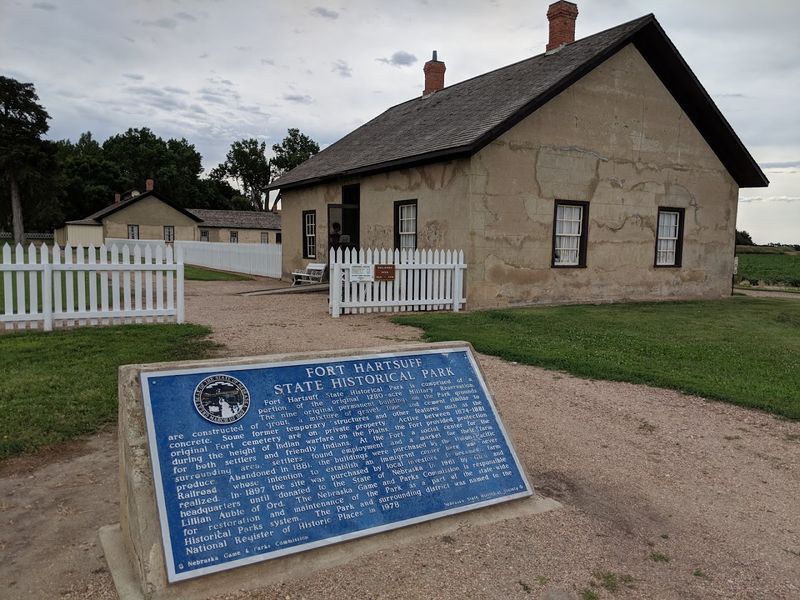
Most frontier forts from the 1870s are long gone, leaving behind little more than grass-covered mounds and historical markers.
Fort Hartsuff is a striking exception, and the reason comes down to an unusual building choice made before a single wall went up.
Rather than relying on timber, which was scarce across the Nebraska Sandhills, builders turned to a lime-and-gravel mixture known as grout to form the walls of the post’s structures.
That practical decision turned out to be an accidental act of preservation. The material proved far more durable than wood against Nebraska’s freezing winters, blistering summers, and relentless wind.
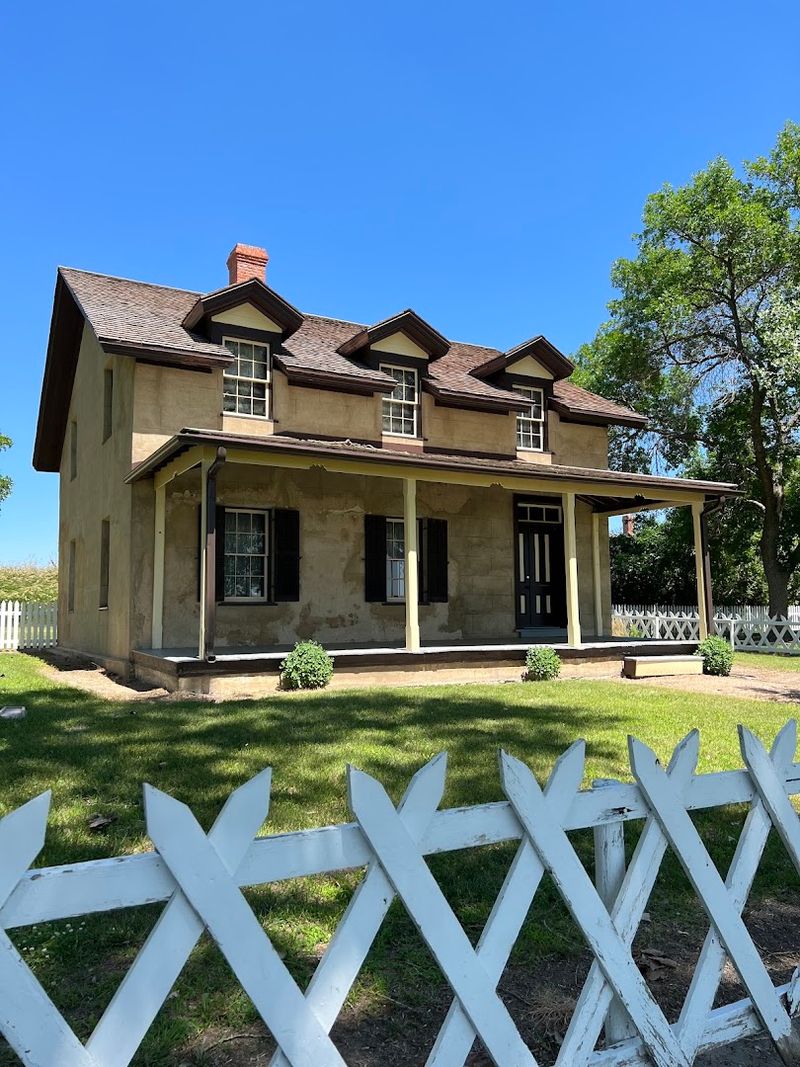
Nine major original buildings remain standing today, including the post headquarters, enlisted men’s barracks, officers’ quarters, the commanding officer’s residence, and the hospital.
Visitors walking among these structures can actually run a hand along walls that soldiers leaned against more than 150 years ago.
The park sits at 82034 Fort Ave, Burwell, NE 68823, though it is physically located closer to the small community of Elyria.
The Nebraska Game and Parks Commission took over the site in 1961, beginning a careful restoration process that used historical records and archaeological findings to guide every decision.
Restored Barracks And Period Interiors That Recreate Everyday Military Life
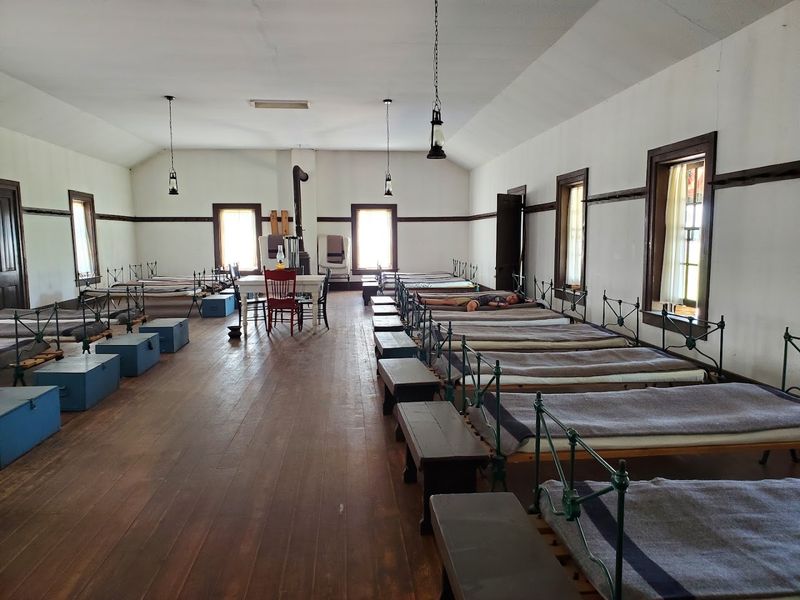
Stepping through the door of the enlisted men’s barracks feels less like entering a museum and more like interrupting a day in 1876.
Rows of narrow beds line the walls, each dressed in period-appropriate bedding, with personal gear and equipment arranged nearby just as a soldier might have left them.
The attention to detail in these restored spaces is what separates Fort Hartsuff from a typical historical marker or empty ruin.
Interpretive displays throughout the barracks explain the rhythms of daily life for enlisted men stationed at such an isolated post.
Soldiers dealt with long stretches of routine work, harsh weather, limited supplies, and the psychological weight of being far from any city or town.
The furnishings and household objects placed throughout the rooms help translate those abstract facts into something tangible and relatable.
Officers’ quarters offer a contrast in comfort, reflecting the clear social hierarchy that defined military life on the Plains.
Period furniture, personal effects, and household items fill the rooms in ways that suggest real occupation rather than staged display.
Visiting during the operating season from May through September gives the best chance of finding staff available to answer questions and provide additional context about what daily routines actually looked like inside these walls.
The Guardhouse And What Military Discipline Looked Like On The Frontier
Not every corner of Fort Hartsuff tells a comfortable story, and the guardhouse makes that clear from the moment visitors step inside.
Reconstructed confinement areas show the tight, dim spaces where soldiers who broke regulations were held, and the conditions were far from lenient.
Hard bunks, minimal light, and little room to move were standard features of military punishment at frontier posts during this era.
The guardhouse serves as a grounding reminder that life at the fort was governed by strict rules, and violations carried real consequences.
Infractions could range from insubordination and absence without leave to more serious offenses, all handled within the post’s own chain of command.
Seeing the physical space where punishment was carried out adds a layer of honesty to the broader story of frontier military service that polished exhibits sometimes leave out.
For younger visitors especially, the guardhouse tends to spark genuine curiosity and plenty of questions.
The reconstructed cells are compact enough to make the discomfort feel real without being graphic or sensationalized.
Understanding this side of fort life helps round out the picture of what it actually meant to be stationed at a remote Plains post during the 1870s.
The Post Hospital And Frontier Medicine Far From Civilization
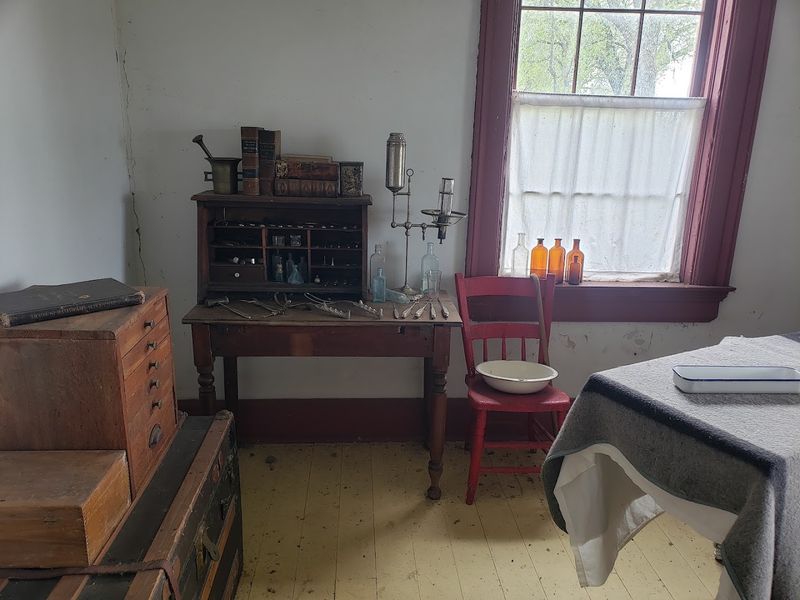
Medical care on the frontier was a sobering reality, and the post hospital at Fort Hartsuff makes that clear in a way that textbooks rarely do.
The preserved building still holds period medical tools, medications, and equipment that reflect how doctors and orderlies managed illness and injury at a post that sat hours away from the nearest established town. .
The hospital was a critical piece of the fort’s infrastructure, and its survival gives modern visitors a window into the limits and ingenuity of 19th-century frontier medicine.
Display cases and interpretive panels explain common treatments, the role of the post surgeon, and how medical emergencies were handled when resupply could take weeks.
The tools displayed are authentic to the period, and many of them look almost alarmingly simple by today’s standards.
Families with children often find this building particularly engaging because it connects history to something universally relatable, which is the experience of being sick or hurt and needing help.
The hospital’s quiet interior and careful presentation make it one of the more thoughtful spaces in the park.
Checking current operating hours at 308-346-4715 before visiting ensures the building will be accessible during the trip.
Support Buildings And The Enormous Effort To Keep A Remote Fort Running
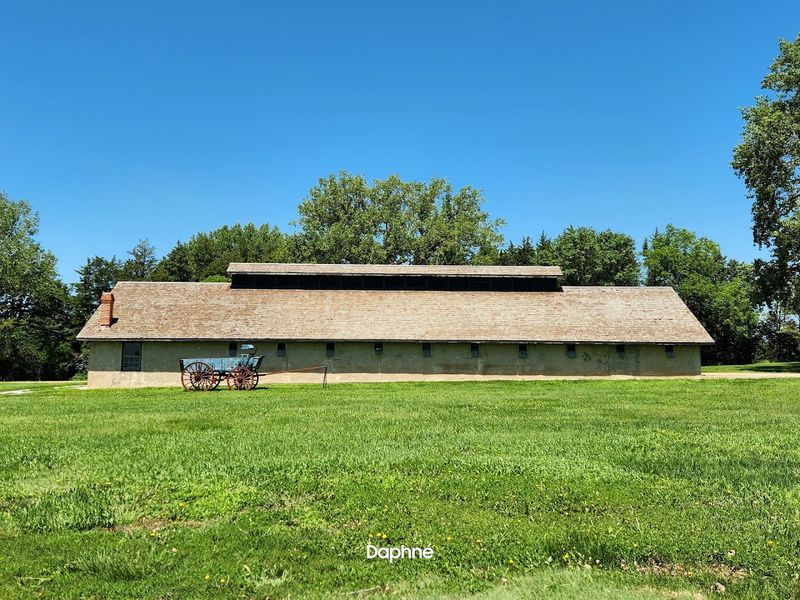
Running a military post in the middle of the Nebraska Plains in the 1870s was an enormous logistical challenge, and the support buildings at Fort Hartsuff tell that story plainly.
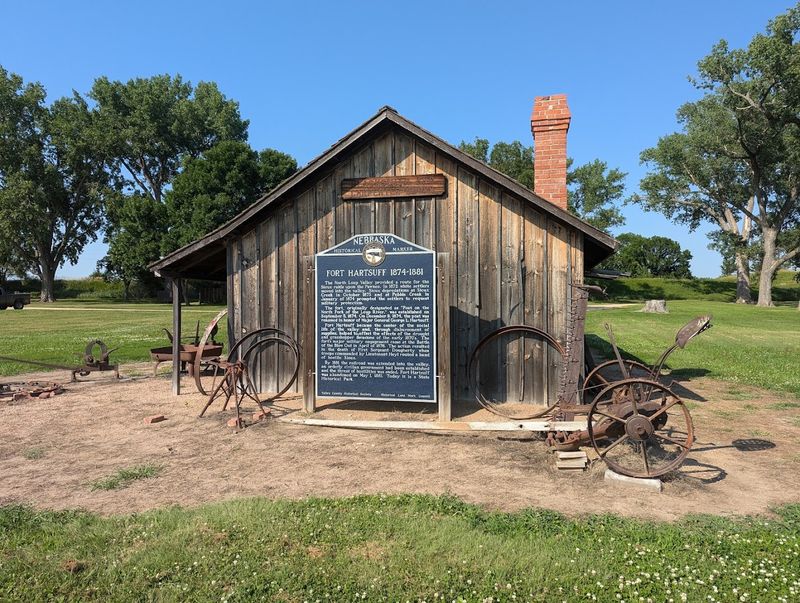
A blacksmith shop, carpenter shop, storehouse, bakery area, and commissary are among the structures that show how much labor went into keeping the post functional day after day.
Every nail, loaf of bread, repaired horseshoe, and stored supply represented hours of skilled and unskilled work by the soldiers stationed there.
The blacksmith shop in particular tends to draw visitors in, with its cast iron equipment and the sense of heat and noise that the space once contained.
Cast iron stoves and ovens found throughout the support structures have survived remarkably well, and their presence gives a tactile sense of the work that defined fort life beyond the parade ground.
These were not ceremonial buildings but working spaces where practical problems got solved every single day.
Understanding the support side of fort life shifts the perspective from soldiers as fighters to soldiers as laborers, craftsmen, and tradespeople.
Much of what kept the post alive had nothing to do with combat.
The variety of support structures preserved and reconstructed at the park makes it possible to appreciate the full scope of what a functioning frontier military installation actually required to stay operational through harsh Plains conditions.
The Parade Ground Setting and the Landscape That Has Barely Changed
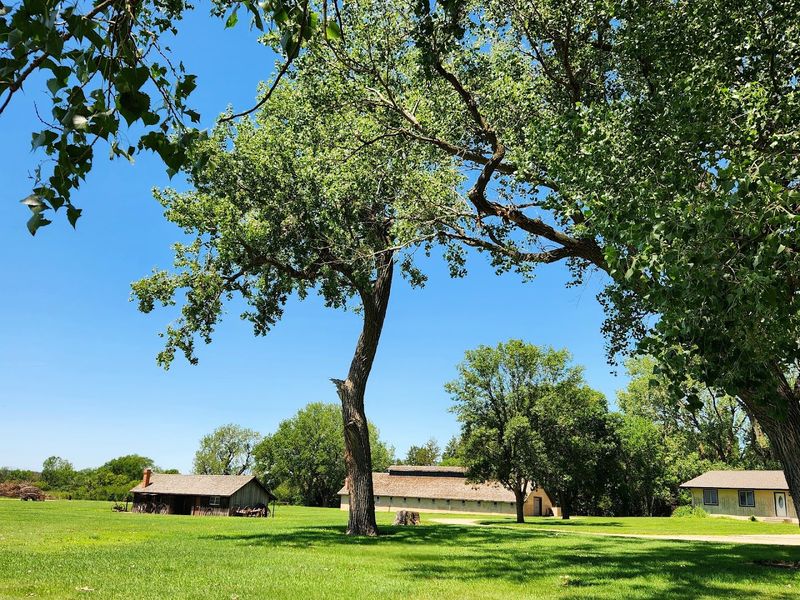
Walking across the parade ground at Fort Hartsuff is one of those quiet moments that can stop a person mid-step.
The open space sits at the center of the complex, flanked by original and reconstructed buildings arranged in the orderly pattern that military posts followed across the frontier.
The layout makes it easy to understand how the community functioned as a single organized unit, with each building serving a specific and necessary role.
What makes the setting especially striking is the landscape surrounding it.
The North Loup Valley stretches out in every direction, and the eastern edge of the Nebraska Sandhills sits close enough to feel present without overwhelming the scene.
The grasses, the wide sky, and the absence of modern development in the immediate area mean the view from the parade ground has not changed dramatically from what soldiers would have seen during their daily formations in the 1870s.
The fort saw very little actual combat during its seven-year existence, with soldiers participating in only one minor skirmish known as the Battle of the Blowout.
The post’s real work was presence, stability, and support for the settlers moving into the region.
Standing on the parade ground with that context in mind makes the quiet feel intentional rather than empty, like the landscape itself is holding the memory of those years in place.
The Fort’s Unexpected Role As An Economic And Social Lifeline
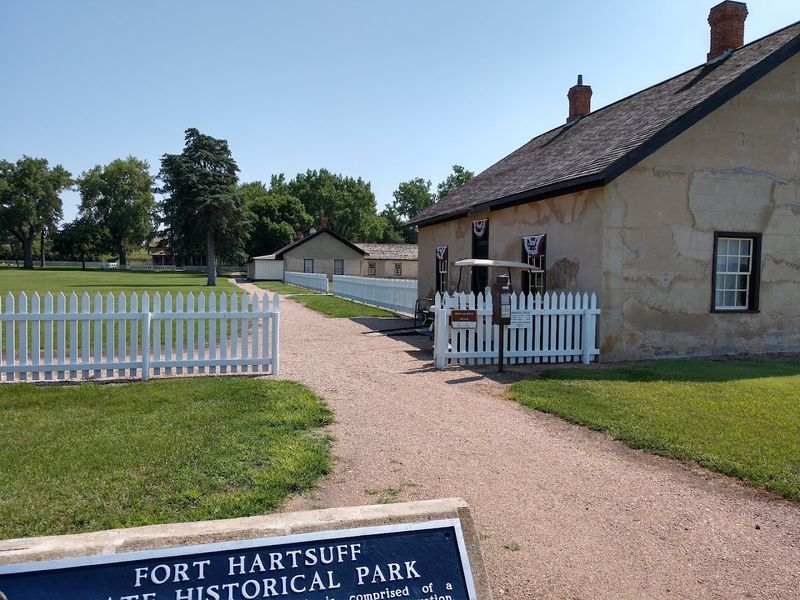
Fort Hartsuff influenced the North Loup Valley in ways that reached well beyond its military purpose.
Its construction created paid work for nearby settlers, while the active post became a dependable customer for crops, livestock, firewood, and other locally produced supplies.
That economic activity arrived at an especially important moment.
The devastating grasshopper outbreak of 1874 destroyed fields across Nebraska, leaving many farming families with little food to sell and few ways to earn money.
Jobs and trading opportunities connected to the fort helped some residents remain in the valley instead of abandoning their homesteads entirely.
The post also became an informal gathering place in a region where neighbors often lived miles apart.
Military personnel, civilian workers, farmers, merchants, and visiting families crossed paths during deliveries, celebrations, religious services, and other community occasions.
These interactions made the fort one of the area’s busiest social centers, bringing news, conversation, and occasional entertainment to an otherwise isolated landscape.
Visitors who focus only on uniforms and defensive duties can easily miss this quieter part of the story.
Fort Hartsuff supported a developing rural community, strengthened the local economy, and gave scattered settlers a place to connect during one of the region’s most difficult periods.
Planning A Visit To Fort Hartsuff And What To Expect When You Arrive
Getting to Fort Hartsuff takes a bit of planning, and that preparation pays off once the buildings come into view.
The park is situated southeast of Burwell and closer to the small community of Elyria.
From Burwell, the route generally follows Nebraska Highway 11 southeast toward Elyria and then heads north on Fort Avenue, though confirming directions before departure is always a good idea.
The historical buildings and gift shop operate seasonally, generally from May through September, with hours running Wednesday through Saturday from 9 AM to 5 PM based on current information.
The grounds themselves are open daily from 8 AM to dusk year-round, so a walk around the exterior is possible even outside of regular hours.
A valid Nebraska state park vehicle permit is required for entry, and a nominal admission fee applies for access to the Visitors’ Interpretive Center.
Living-history events occur periodically throughout the season and may include period demonstrations, military reenactments, and hands-on activities that bring the grounds to life in a completely different way.
Calling ahead at 308-346-4715 or checking the official Nebraska Game and Parks website before visiting helps confirm current hours, event schedules, and any seasonal closures that might affect the trip.