This Riverfront Park Turns A Downtown Walk Into Nebraska’s Prettiest Fountain-Side Escape
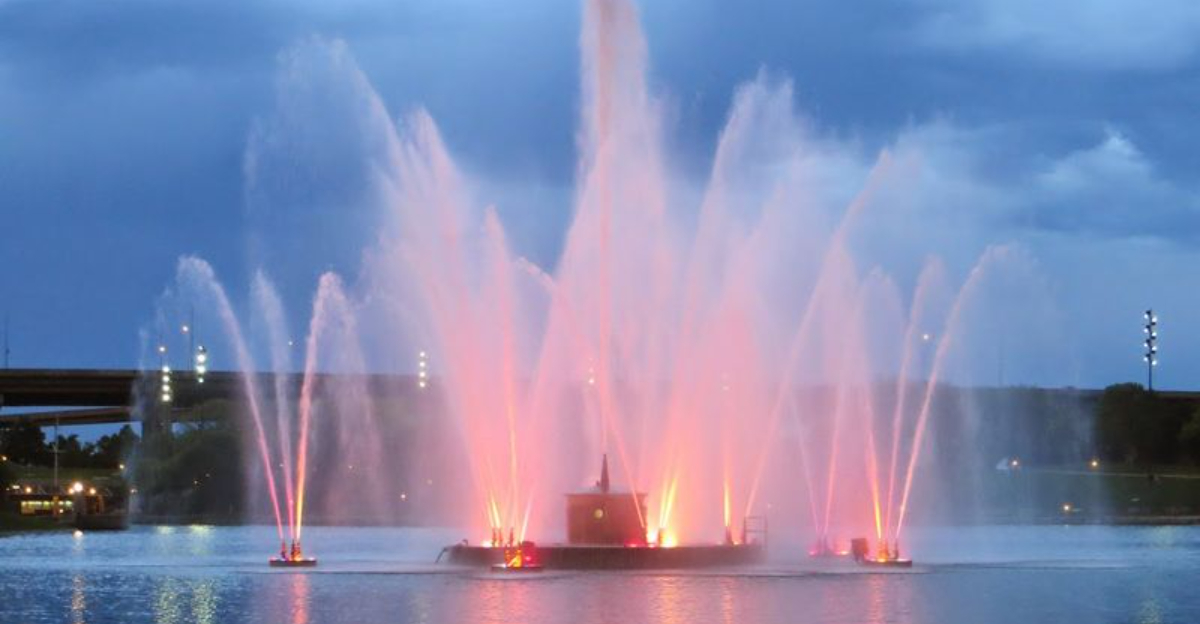
Downtown walks get better when water starts showing off.
One minute, the day is all sidewalks, street corners, and figuring out where to go next. Then the fountain comes into view and the whole pace changes.
A simple stroll starts feeling like a small escape with skyline views, fresh paths, and enough scenery to make people slow down.
Omaha gives Nebraska a riverfront that knows how to make errands feel jealous.
The fountain is the attention-grabber, but the setting does plenty of work around it.
People can wander near the water, sit for a while, or turn a casual downtown visit into something calmer than expected.
It feels polished without becoming stiff, scenic without asking for a complicated plan. What better
Bring coffee. Bring comfortable shoes.
Bring the friend who claims they only want a quick walk and then starts taking photos every few steps.
By the time the fountain is doing its thing, downtown feels a little softer.
Start With The Fountain Because It Knows It Is The Main Character
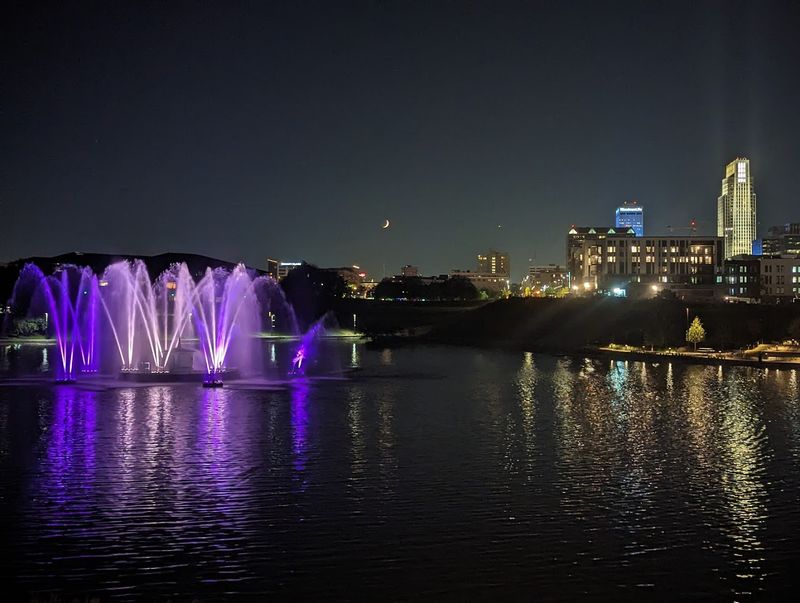
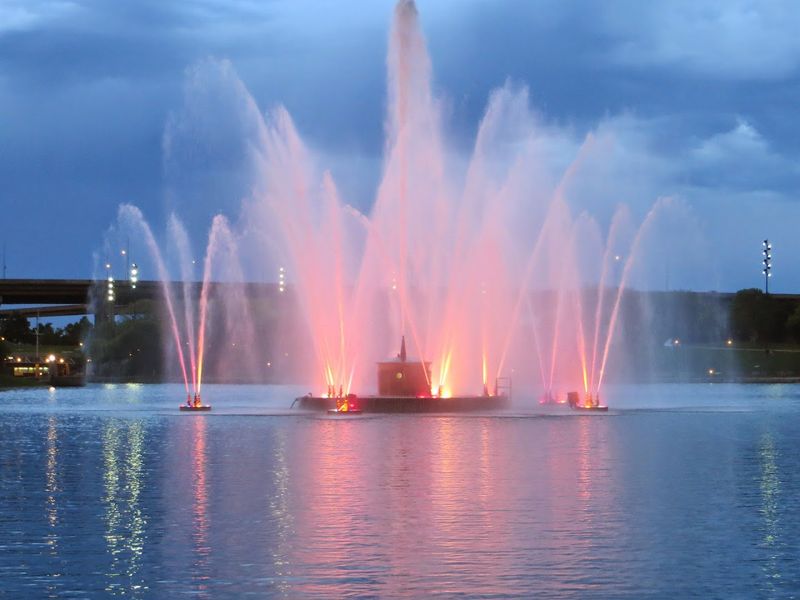
Nothing prepares a first-time visitor for the scale of the main fountain at Heartland of America Park.
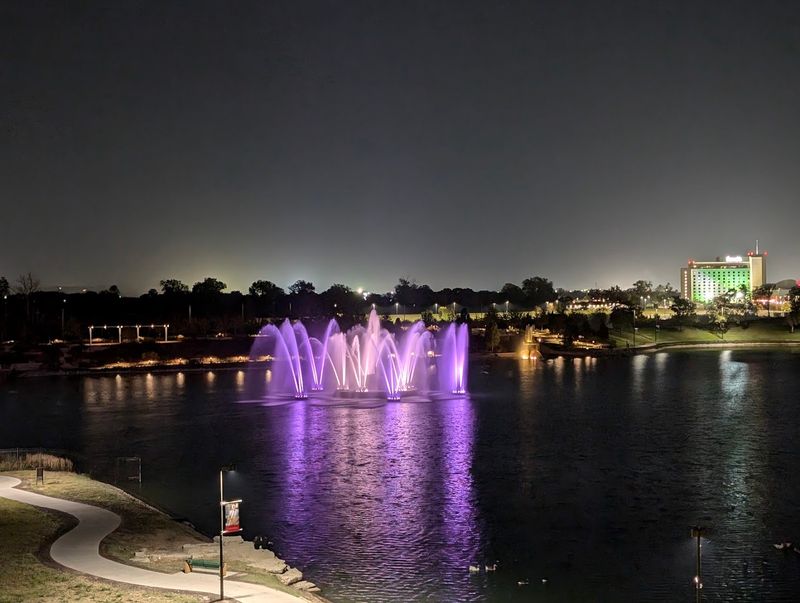
The jet reaches 320 feet into the air and runs a choreographed light show in the evenings that is visible all the way from Iowa across the Missouri River.
That combination of height, movement, and color gives the park a centerpiece that feels genuinely cinematic rather than decorative.
The fountain typically operates seasonally from May 1 through October 31, with evening light shows running after dark.
Arriving around sunset gives visitors the best of both versions: the fountain catching the last daylight and then shifting into its lit-up nighttime mode.
The transition happens gradually, and the park fills with a noticeably slower crowd once the sky dims.
Located at 800 Douglas St in Omaha, NE 68102, the park is easy to reach from the Old Market area on foot.
Standing near the lake edge while the fountain runs overhead is the kind of moment that makes a downtown walk feel like it was planned perfectly, even when it was completely spontaneous.
Walk The Lake Paths Before Picking A Favorite View
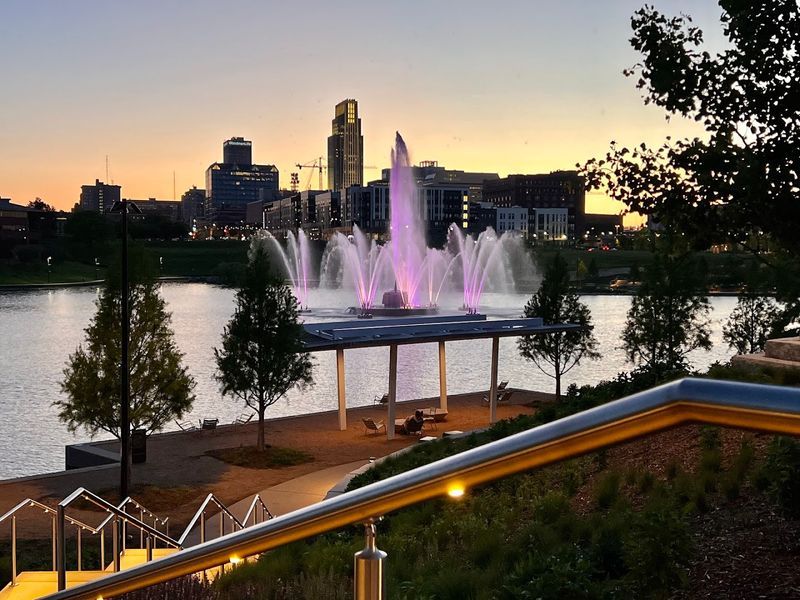
The lake at Nebraska’s Heartland of America Park is surrounded by paved paths that shift the view every few hundred feet, which makes a full loop feel more like an exploration than a simple lap.
One angle frames the downtown skyline. Another opens toward the Missouri River.
A third gives that classic over-water fountain perspective that photographs better than expected from a city park.
Three fountains now sit across the reconfigured lake, adding movement and sound throughout the space rather than concentrating everything at one spot.
The paths are smooth and accessible, making them comfortable for strollers, dogs on leashes, and anyone who prefers a relaxed pace over a workout trail.
The park covers 31 acres, which is large enough that the lake paths feel genuinely spacious rather than crowded, even on busy weekend afternoons.
Weekday mornings tend to be quieter, with a mix of joggers and early walkers who seem to have discovered that the park belongs to them before the rest of the city catches up.
Taking the full loop at least once before settling on a favorite bench or overlook spot is well worth the extra few minutes.
Make Farnam Pier The Photo Stop
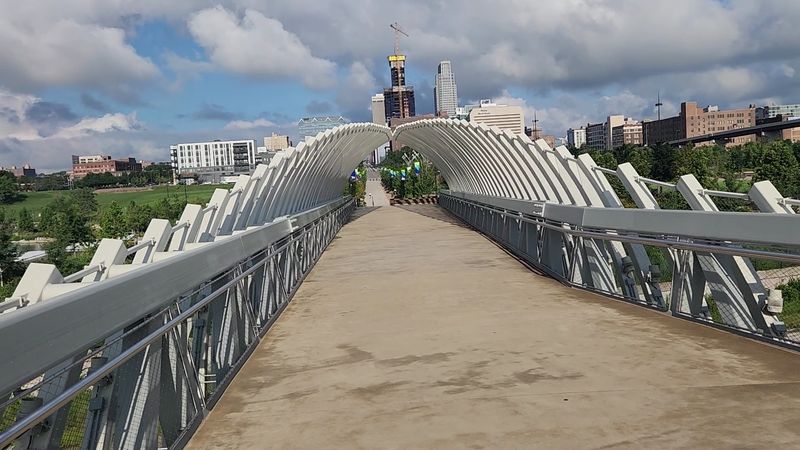
Farnam Pier is one of the most structurally interesting additions the redesign brought to the park.
The pier pushes past the flood wall and active railyard that would otherwise block river access, extending out over the Missouri River to give visitors an unobstructed view that simply did not exist before the renovation.
Standing at the end of the pier, the sense of being over the river rather than near it changes the feel of the visit entirely.
The water moves below, the skyline sits behind, and the open horizon ahead gives the spot a sense of scale that most urban parks cannot offer.
It is a quieter section of the park compared to the fountain area, which makes it easier to linger without feeling rushed by foot traffic.
Photographers tend to gravitate here for both daytime and golden-hour shots, and the framing options shift depending on where along the pier a visitor positions themselves.
Bringing a camera or simply taking a few extra minutes to stand at the railing before heading back toward the lake paths rewards the effort. The pier earns its reputation as the park’s most dramatic single feature.
Try The Skate Ribbon When The Season Fits
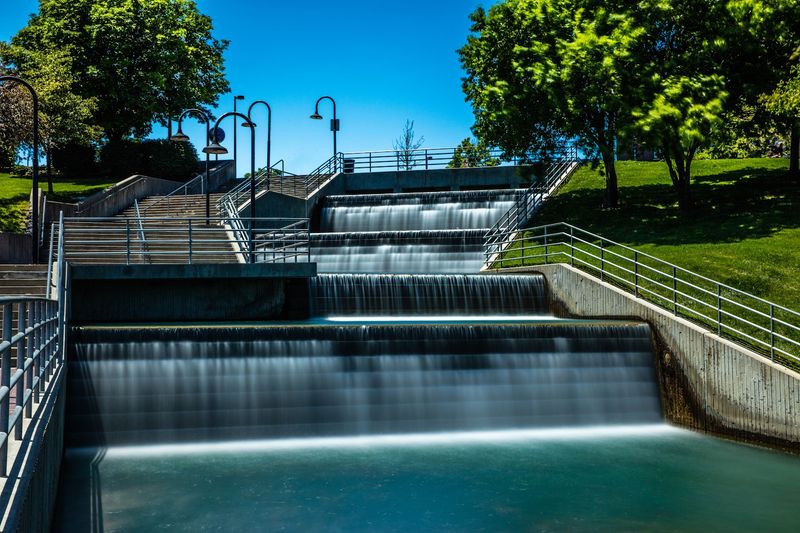
The Skate Ribbon near 8th and Farnam Streets gives the park a playful energy that sets it apart from most riverfront green spaces.
Ice skating runs through the colder months, and roller skating takes over when warmer weather arrives, keeping the feature active across all four seasons rather than shutting down after winter ends.
Skate rentals are available on-site, and visitors need to complete a waiver before entering the skating area.
That small administrative step is quick and straightforward, and it keeps the space feeling organized even when the ribbon draws a crowd.
Bringing personal skates skips the rental line and gets visitors on the surface faster.
Families with kids tend to gravitate toward the ribbon, but the mix of skaters on any given afternoon is broader than expected, including adults skating solo and groups of friends who stumbled into the activity.
Nebraska winters can make outdoor plans feel unappealing, but skating beside a lit fountain on a cold evening has a charm that is hard to replicate indoors.
Summer roller skating keeps that same casual energy going long after the ice melts.
Save Time For The Lakeside Amphitheater
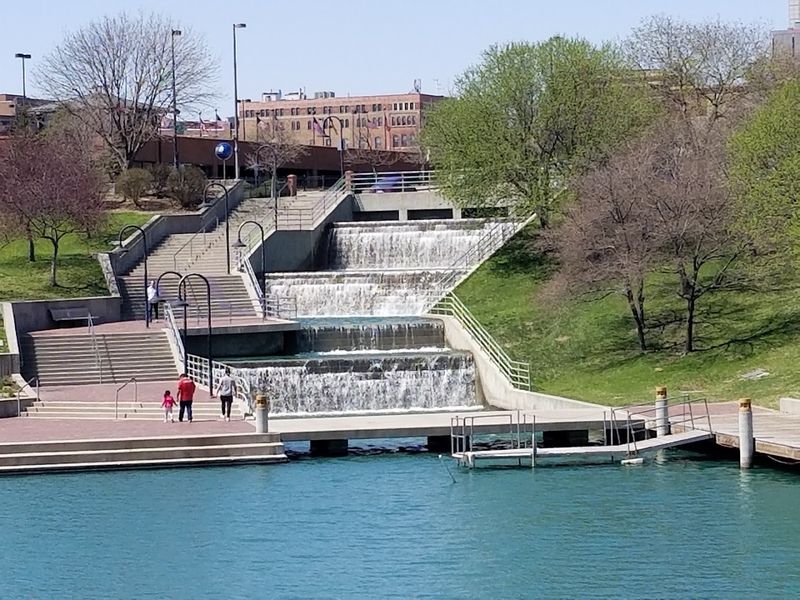
In the park’s layout near the lake, the amphitheater seats roughly 200 to 250 people with additional standing and lawn room around the natural stage area.
The scale keeps it feeling intimate rather than stadium-sized, which suits the park’s overall relaxed personality well.
Even without a scheduled event, the amphitheater gives visitors a natural place to pause and sit with a view.
The surrounding lake setting means that the backdrop shifts with the light throughout the day, and the space feels genuinely restful rather than just functional.
Local performances, community programming, and outdoor events bring the amphitheater to life on a rotating basis throughout the warmer months.
Checking the park’s event calendar before visiting could turn a casual afternoon walk into something more memorable.
The RiverFront website lists upcoming programming, and the amphitheater tends to anchor some of the park’s most well-attended seasonal events.
For visitors who are not catching a show, the seating area still works as a comfortable stopping point between the fountain and the pier, offering a slightly elevated sightline over the lake.
Let The Big Lawn Do Its Job
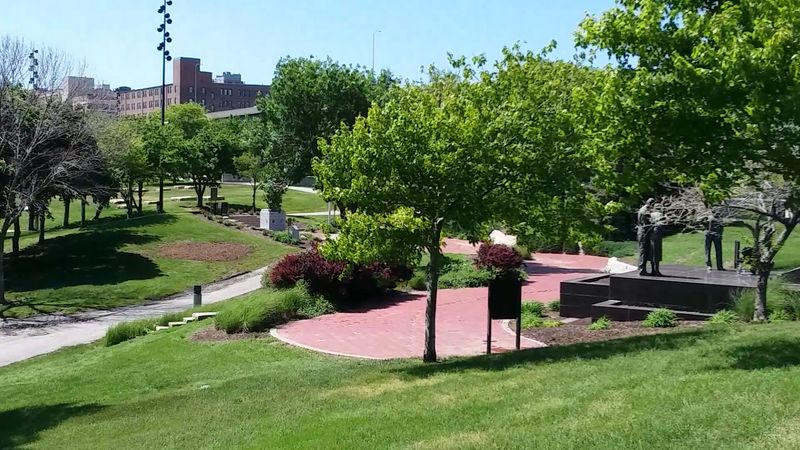
Open green space sounds unremarkable until a visitor steps onto the event lawn at Heartland of America Park and realizes just how much room there actually is.
The lawn spans approximately 100,000 square feet, which is enough to absorb a large crowd without making anyone feel like they are competing for a patch of grass.
Families tend to spread out here in a way that feels natural rather than crowded, with some groups picnicking while others simply sit facing the fountain and let the afternoon move at its own pace.
The lawn handles big events without losing its everyday usability, which is a balance that many urban parks struggle to achieve.
On quieter weekday visits, the lawn becomes one of the most peaceful spots in downtown Omaha.
The fountain sound carries across the space, the skyline sits at just the right distance to feel present without dominating, and the open air gives the whole scene a breathing quality that dense city blocks rarely offer.
Bringing a blanket and staying longer than originally planned is a common outcome for visitors who underestimate how restorative a stretch of well-kept grass can feel in the middle of a busy city.
Connect It To The Rest Of The RiverFront
Understanding Nebraska’s Heartland of America Park as one part of a larger system changes how a visit gets planned.
The RiverFront connects Gene Leahy Mall, Heartland of America Park, and Lewis and Clark Landing into a single 72-acre public district that stretches through downtown Omaha along the Missouri River.
Gene Leahy Mall reopened in 2022, while Heartland of America Park and Lewis and Clark Landing completed their renovations and opened on August 18, 2023.
That means the entire district is now fully operational, and a single afternoon could reasonably cover all three spaces without requiring a car.
The Old Market neighborhood sits at one end of the corridor, making it easy to combine a park visit with nearby dining or shopping.
Walking the full RiverFront route gives visitors a more complete picture of what Omaha’s downtown has become since the revitalization project launched.
The transition between parks feels intentional rather than abrupt, with paths and design language that carry through the whole system.
For anyone visiting Omaha from out of town, treating the RiverFront as a single connected experience rather than three separate stops makes the trip feel more coherent and significantly more rewarding.
Keep It Easy With Restrooms, Wi-Fi, And Long Hours
Practical amenities rarely get celebrated, but they are the reason some parks feel genuinely welcoming while others feel like afterthoughts.
Heartland of America Park is open daily from 5 a.m. to 11 p.m., which gives early morning walkers and evening visitors both a comfortable window without feeling rushed toward a closing time.
Permanent restrooms are available across all three RiverFront parks, with restrooms specifically located at the Skate Kiosk near 8th Street in Heartland of America Park.
Free Wi-Fi is accessible throughout the park via The RiverFront Network, which makes it easier to look up event schedules, share photos, or simply stay connected during a longer visit.
Those details matter more than they might seem on paper.
The park also sits in a central location between the historic Old Market and north downtown Omaha, with nearby hotels, metered parking stalls, garages, transit access, and rideshare drop-off points all within reach.
Visitors arriving from out of town do not need to figure out complicated logistics to make a visit work.
The infrastructure supports the experience quietly, so the fountain, the pier, the skating, and the open lawn can stay in the foreground where they belong.