This roadside crab shack in Punta Gorda serves blue crab straight off the dock
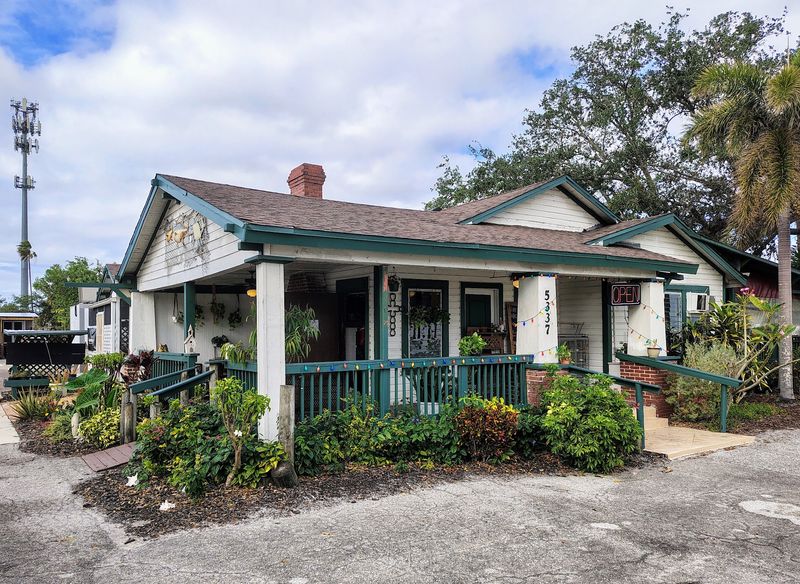
Some of the best meals in Florida happen in buildings you would drive right past without a second glance. Picture a weathered wooden house set back from a country road, oak trees hanging low, picnic tables scattered under a covered deck, and the smell of steamed crab drifting toward the parking lot.
Inside, fishermen unload the day’s catch and it lands on your plate hours later, with a wooden mallet beside it. If you have ever wondered where locals go when they want crab without the tablecloth treatment, this is that kind of place.
A Wooden House on Duncan Road
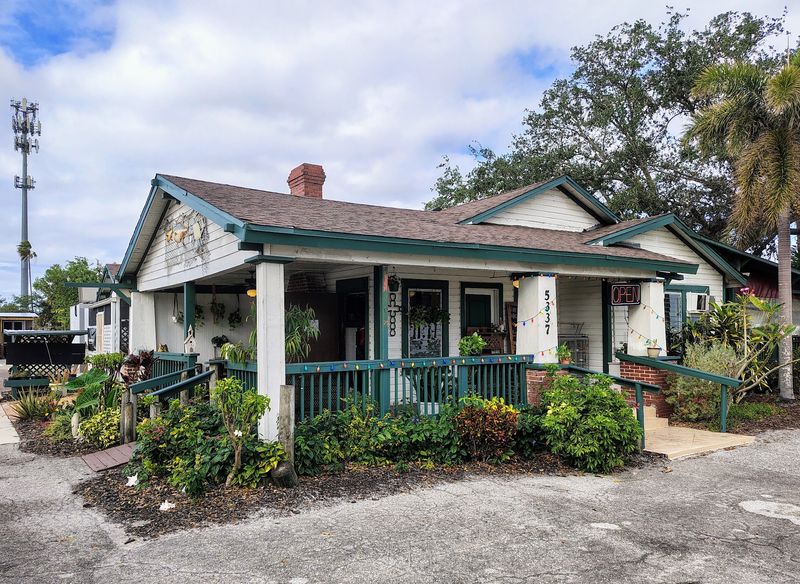
Drive north out of downtown Punta Gorda along Duncan Road and the scenery flattens into cattle pasture, palmettos, and the occasional mailbox. Somewhere in that stretch, at 5337 Duncan Rd, sits a small wooden house with hand-lettered signs and a gravel lot that fills up faster than you would expect.
Peace River Seafood works as two things at once: a working seafood market and a sit-down restaurant. The building itself dates to the mid-1920s, which means the floors creak and the walls have stories in them.
Google lists it simply as a no-frills eatery and market known for crab, and that description is honest. There is no valet, no host stand with a reservation tablet, no attempt at polish.
Regular visitors describe it as a piece of old Florida that somehow survived the condo boom. One traveler put it plainly: you could drive right past the little shack on Duncan Road and never know what you missed.
The address is technically Punta Gorda, but the feel is pure rural Charlotte County, closer to a fish camp than a coastal tourist strip.
Boats to Dock to Plate
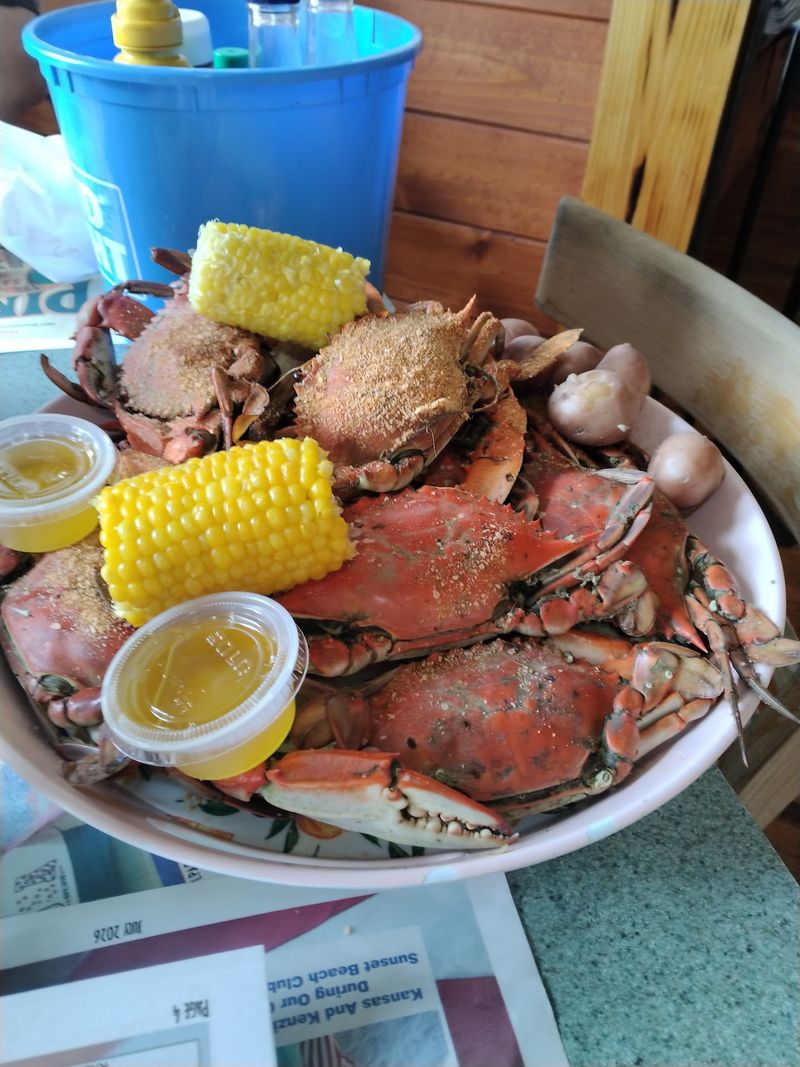
Freshness gets thrown around so casually on menus that it barely registers anymore. Here it has a literal meaning tied to a delivery schedule.
Local fishermen bring the day’s catch directly to the operation, and much of the seafood is cooked within hours of coming out of the water. The shop functions as a wholesale market too, which is why the supply chain is so short: there is no distributor, no warehouse, no three-day layover in a refrigerated truck.
Customers pick up on the difference. Several mention that the only fresher option would be catching it yourself and cooking it on the boat, which is roughly the point.
Blue crabs sit at the center of it all, though shrimp, clams, oysters, and fish rotate through depending on what came in. Because supply follows the water rather than a corporate order sheet, availability shifts.
Sometimes crawdads show up unannounced. Sometimes large crabs run out and mediums are what remain.
That unpredictability is the tradeoff for eating something that was swimming yesterday morning.
Steamed Blue Crabs and the Mallet Ritual
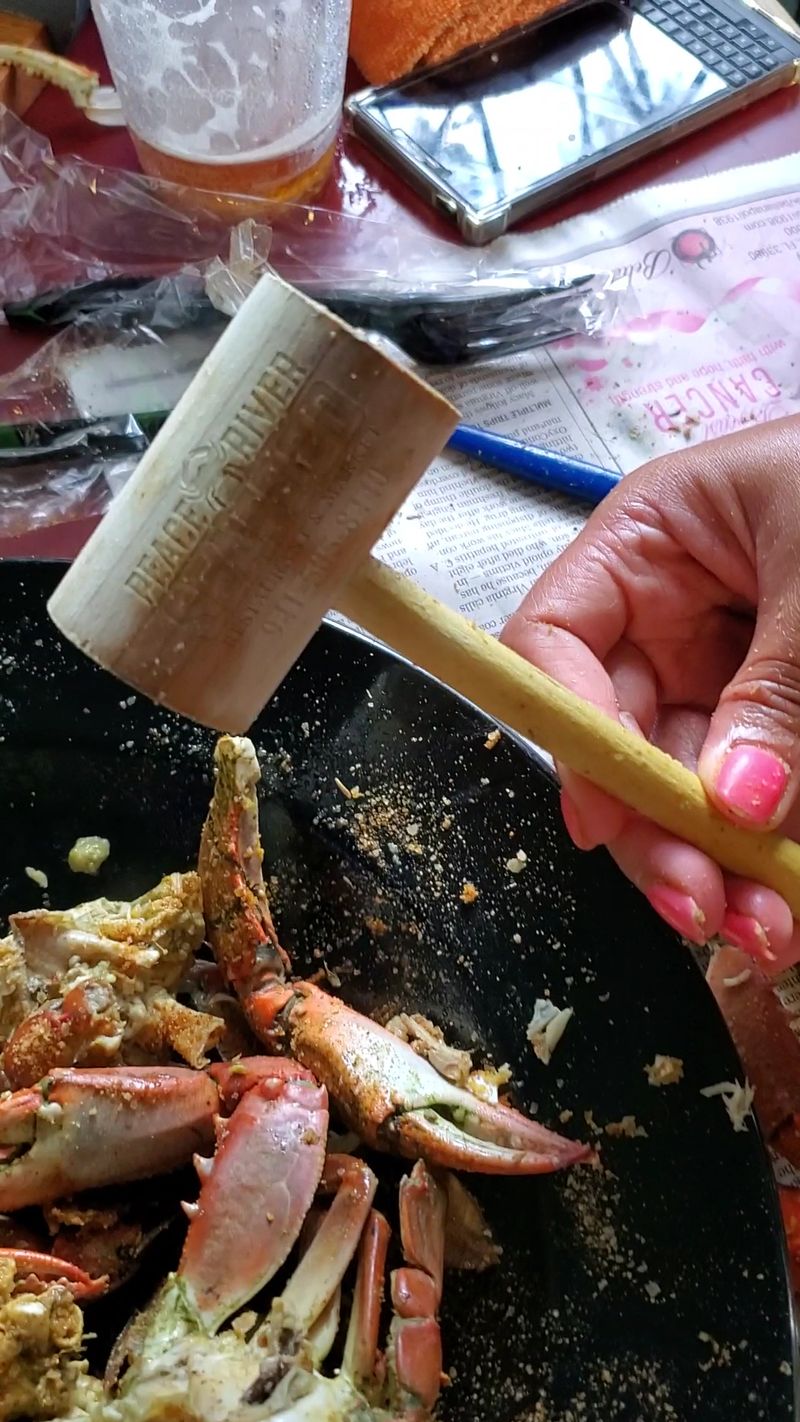
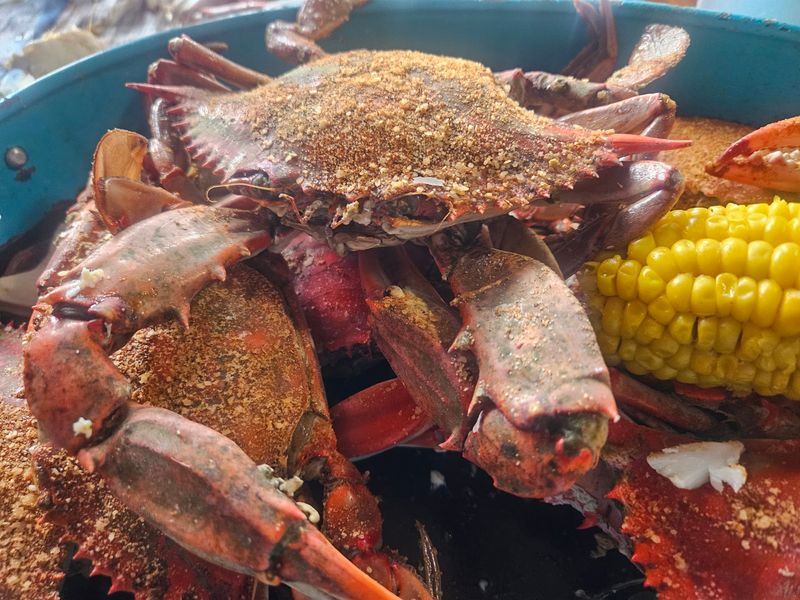
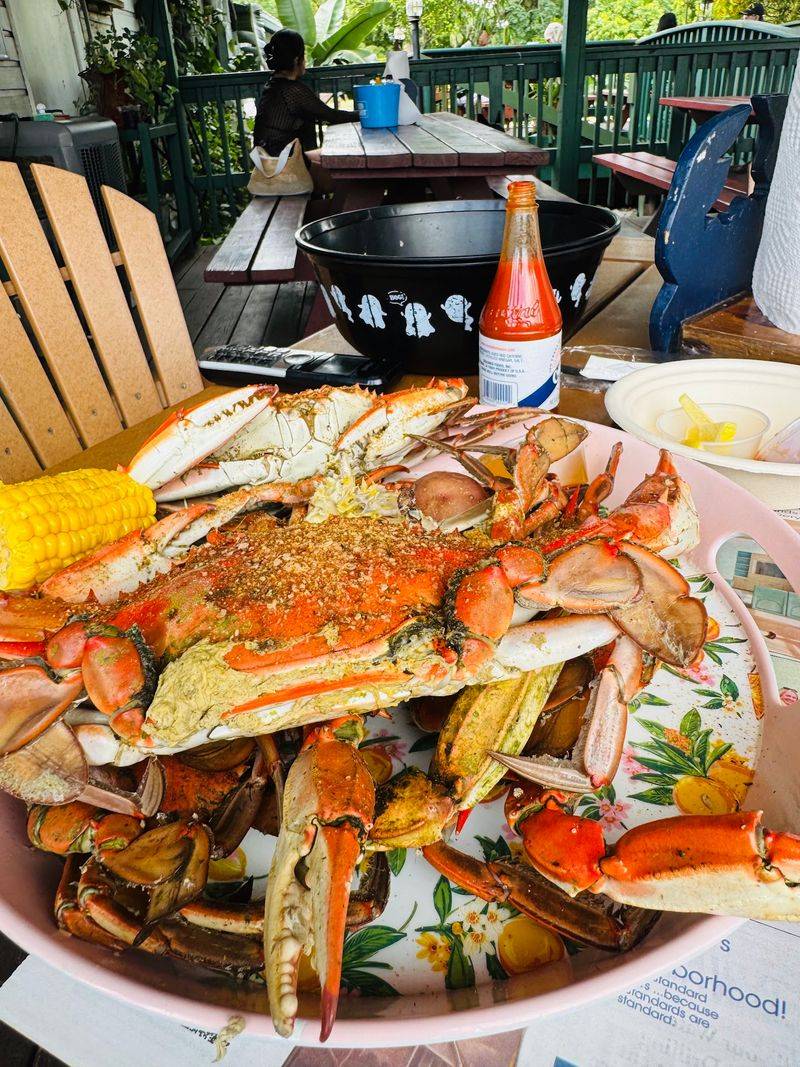
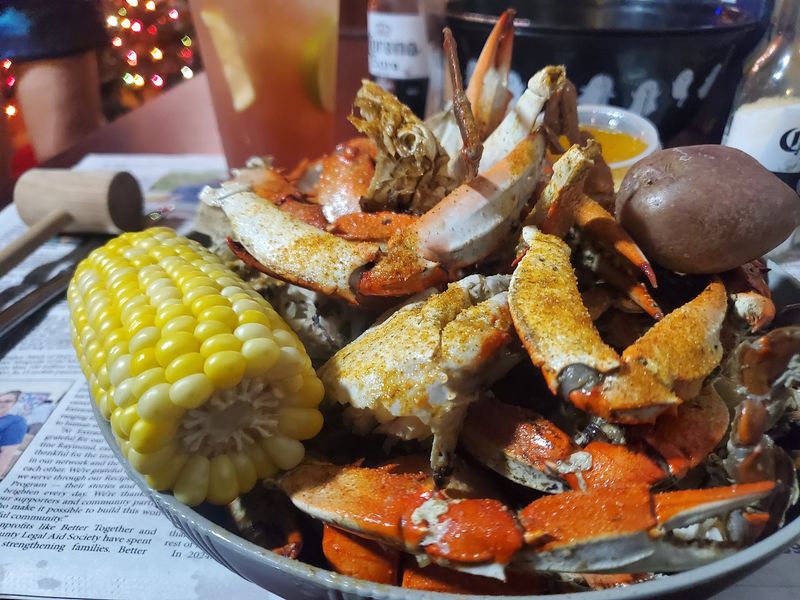
Wooden mallets arrive with the crabs, and there is no polite way around using them. Cracking blue crab is a contact sport involving flying shell fragments, sticky fingers, and a bowl that fills up fast.
Blue crabs dominate the conversation among diners, mentioned far more than any other item on the menu, and portions tend to run generous. Crabs are steamed first, then sauced, with a garlic version that has a devoted following.
One visiting family recommended the garlic crab clusters paired with shrimp for dipping into the leftover garlic butter, which sounds like sound strategy.
Not every plate lands the same way. A few guests have noted that sizing can vary and that a batch occasionally comes lighter than hoped, which happens when crabs are wild-caught rather than sorted by a machine somewhere far away.
Staff tend to warn you in advance about which orders will be messy and offer tips on cracking technique. Shell bowls get cleared often, which matters more than you would think once the pile starts growing.
Beyond the Crab: Shrimp, Oysters, and Trigger Fish
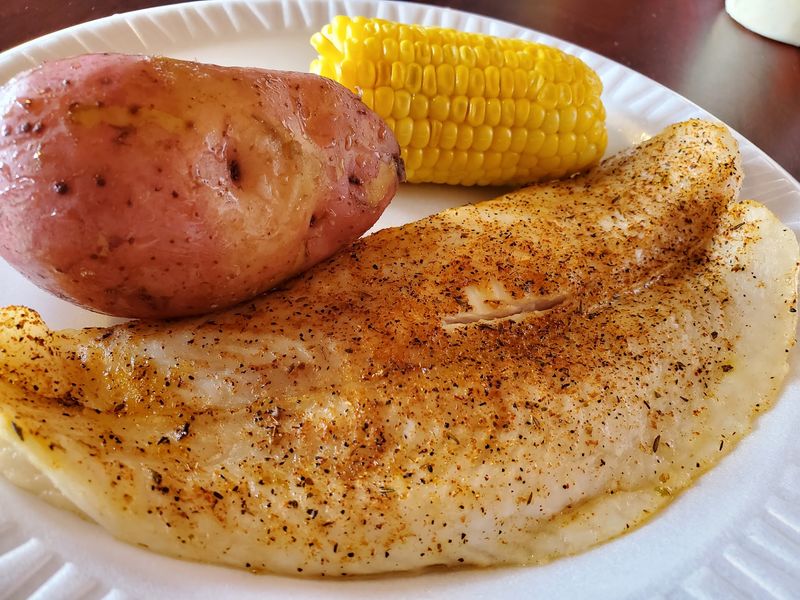
Crab may be the headline, but the supporting cast holds its own. Steamed shrimp, clams, and oysters all appear on the board, along with fresh fish like grouper, mahi, and trigger fish depending on what came in that day.
The kitchen keeps preparation deliberately plain. Grilling, blackening, and steaming are the main methods, the idea being that seafood this fresh does not need a heavy hand.
One diner who ordered clams, shrimp, and grilled trigger fish came away impressed by how clean everything tasted, and noted the potato salad and coleslaw both tasted homemade.
Stone crab shows up in season and draws its own following, mentioned regularly alongside the blue crabs. Lobster bites appear on occasion too.
The steamed seafood platter is the move for anyone who cannot commit to one thing, arriving as a spread of shellfish with corn and potatoes.
Not everyone loves the restraint. A handful of guests have wished for bolder seasoning, which is fair warning if you like your seafood aggressively spiced rather than tasting mostly of itself.
Gator Gumbo, She Crab Soup, and Chowder
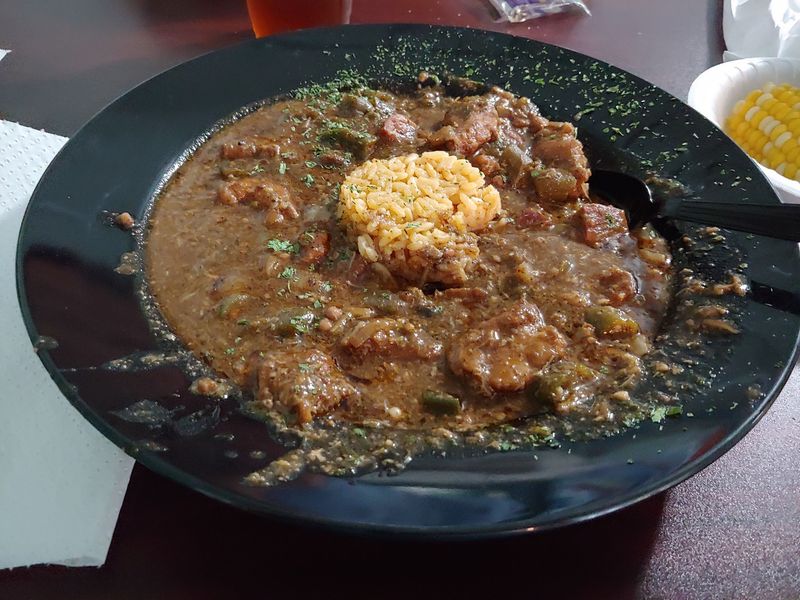
Soup here is not an afterthought stuck at the top of the menu. Three of them have built genuine reputations among regulars.
Gator gumbo comes up constantly in customer conversation, dark and savory with hot sauce available on the table for anyone who wants to push the heat further. It is the kind of dish tourists order out of curiosity and then finish completely.
She crab soup runs on Thursdays and has a following of its own, rich and crab-forward in the way that only makes sense when the crab was landed nearby.
Clam chowder rounds out the trio, mentioned frequently enough to suggest it is doing serious work on cold-ish Florida evenings.
There is usually a soup of the day as well, which is worth asking about before you commit. One traveler passing through built an entire lunch around the daily soup, oysters, and a blue crab platter.
Ordering a cup alongside crab is a smart hedge, giving you something warm to eat while you work through a shell pile with your hands.
Key Lime Pie Made In-House
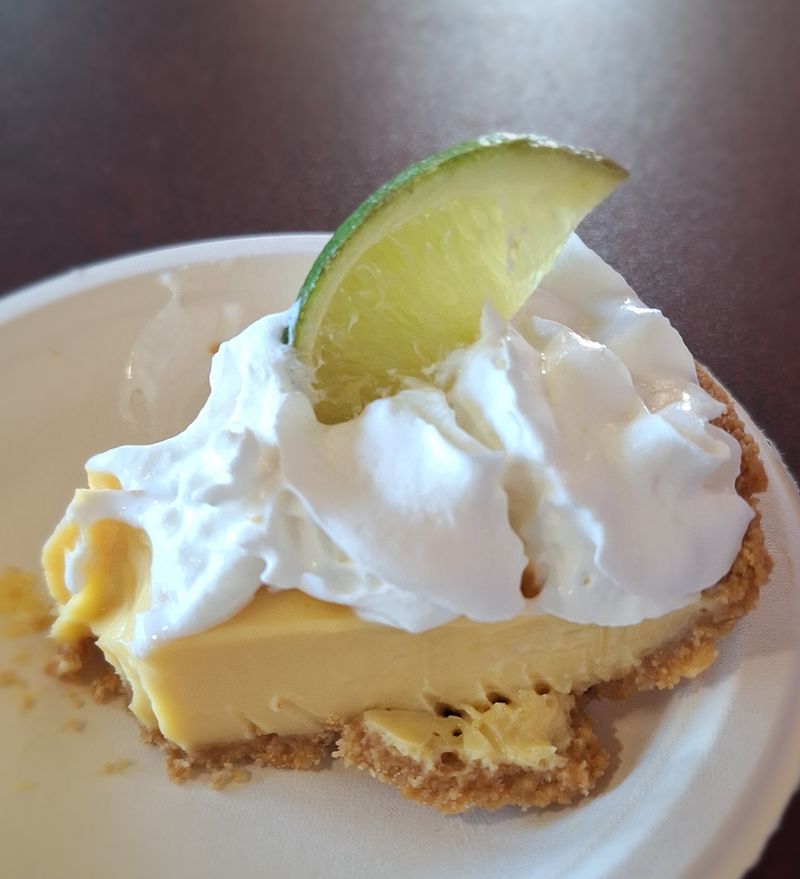
Dessert options are limited to about two choices, which is exactly the confidence level a place should have when one of them is a properly made key lime pie.
It is homemade, not trucked in frozen, and it comes up in customer chatter more than almost anything except the crabs themselves. The filling leans tart rather than sweet, and the crust gets specific praise for holding its texture.
Whipped cream tops it, though at least one diner would have preferred it without, so consider that a matter of personal taste.
Florida has thousands of restaurants serving key lime pie, and a depressing number of them serve the same pale, gelatinous slab from a food service catalog. Finding one actually made on site, in a wooden building on a country road, feels like a small victory for the state’s culinary dignity.
Couples who have finished stone crab and oysters here describe the pie as the thing that properly closed out the meal.
Order it even if you are full. Split it if you must, but order it.
Picnic Tables, Oak Shade, and a Koi Pond
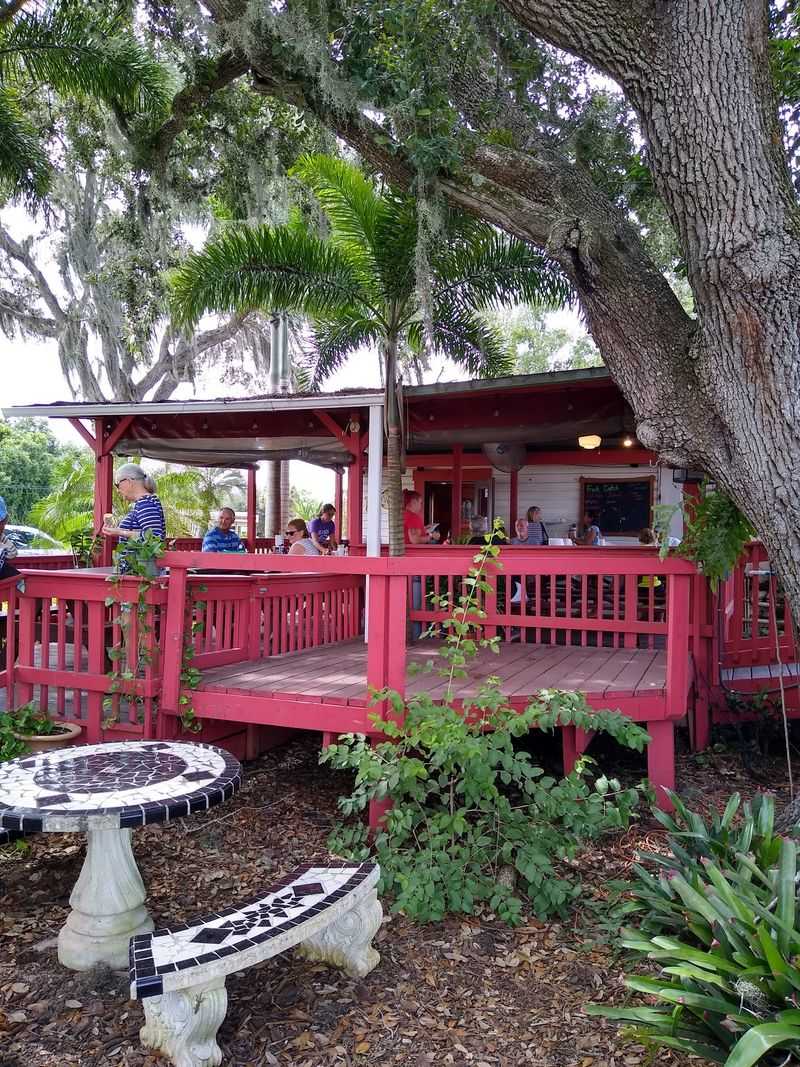
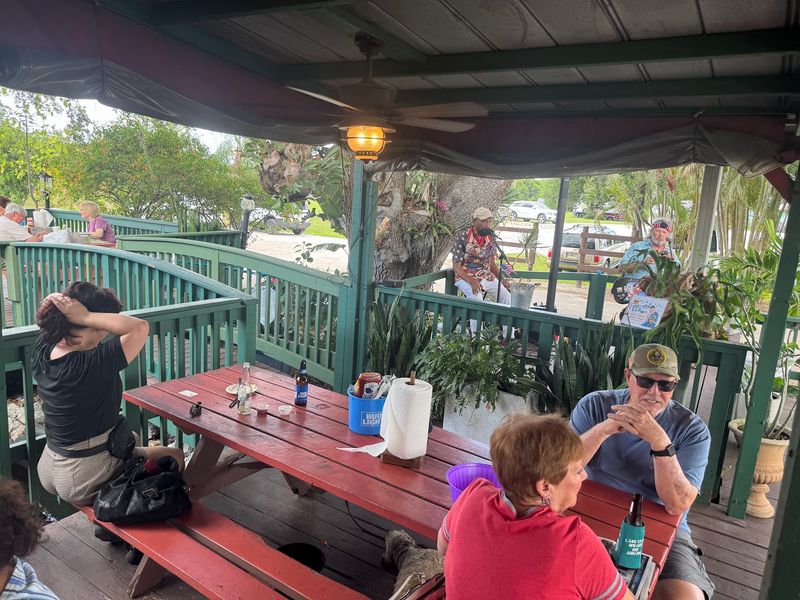
Seating splits between a small informal dining room inside and a covered outdoor deck shaded by oak trees. Indoor space is genuinely limited, so most groups end up outside at picnic tables.
A koi pond sits near the outdoor seating, and one guest offered the practical advice that everyone at a picnic table should stand up at the same time, otherwise the bench physics might send someone toward the water.
The setup suits the food. Crab shells and butter-slicked fingers belong on a paper-covered picnic table, not on linen.
Summer visitors should know that some outdoor spots do not have fans, and a hot July afternoon can feel like one. A breeze helps, but shade and airflow vary by table, so it is reasonable to ask where you will be seated.
Cooler months are the sweet spot, when eating under the oaks with a breeze moving through is close to ideal.
Music turns up sometimes as well, adding to the fish camp atmosphere without overwhelming conversation.
Gaspar the Talking Parrot
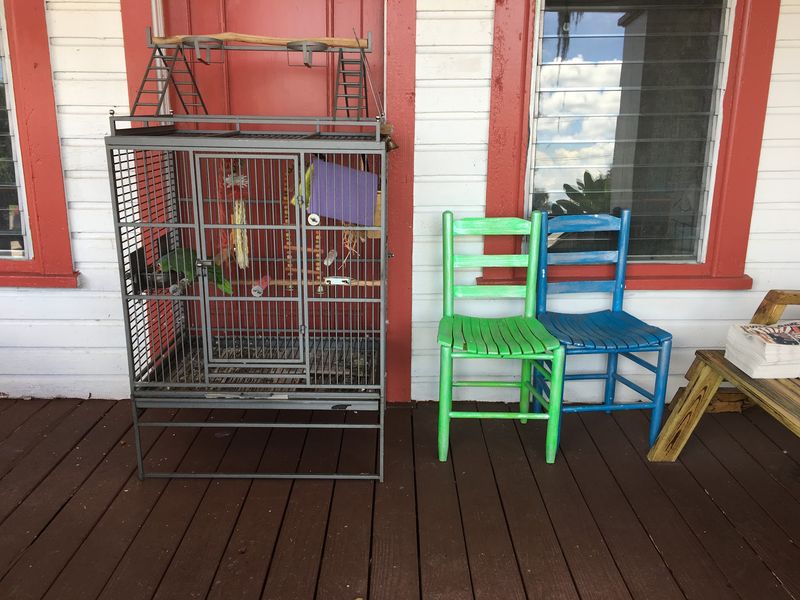
Not many seafood restaurants come with a resident bird, but a talking parrot named Gaspar is part of the experience here.
Kids notice him immediately. Adults pretend not to be as delighted, then spend five minutes trying to get him to say something.
Gaspar fits the general character of the property, which has accumulated personality the way old Florida buildings do, one odd detail at a time. Between the parrot, the koi pond, the market coolers, and the hand-painted signage, there is enough to look at that nobody minds waiting for food.
Families seem to do well here for that reason. One parent mentioned that the crab mallets doubled as entertainment for a one-year-old, which is either resourceful or slightly alarming depending on your parenting philosophy.
There is also a build-your-own smoothie menu, which is a genuinely unexpected thing to find at a crab shack and works nicely for kids or anyone who wants something cold and simple.
Small quirks like these are what separate a place people remember from a place people merely eat at.
The Market Coolers and Taking Crab Home
Half the operation exists for people who never sit down at all. The wholesale and retail market side sells fresh crabs and fish to take home, which is why you will see folks walking out with bags and coolers instead of leftovers.
Buying here means skipping the grocery store seafood counter entirely. What is in the case came off a local boat, often that same day.
Cooks who like doing their own crab boil at home have an obvious reason to make the drive out Duncan Road, and visitors renting a place nearby often stock up rather than eat in.
Availability changes with the season and the weather, so calling ahead at 941-505-8440 is a reasonable move if you have your heart set on a specific quantity or size.
End-of-season pricing sometimes works in your favor. One family was given a substantial discount on crab simply because the season was winding down, which says something about how the place operates.
The market and restaurant share the same building, so browsing while you wait for a table is easy.
Service With a Fish Camp Accent
Servers here tend to talk to you like a neighbor rather than recite a script. Several guests have singled out staff by first name in their notes, describing the kind of familiarity that builds when the same people work the same room for years.
Warnings about which dishes get messy, tips on cracking crab efficiently, frequent shell bowl swaps: those are the small touches that come up repeatedly from happy diners.
The owners are often around, and visitors mention being greeted directly by them.
Fairness requires noting that experiences vary. Some guests have reported slower attention during busy stretches, orders arriving out of sequence, or a server who was harder to flag down than expected.
A small independent kitchen running on daily catch does not always deliver identical timing, especially when the deck fills and the crab orders stack up.
The overall rating sits at 4.3 stars across more than a thousand reviews, which reflects both the strong majority who leave delighted and the smaller group whose visit did not go as planned.
Hours, Prices, and Days to Avoid
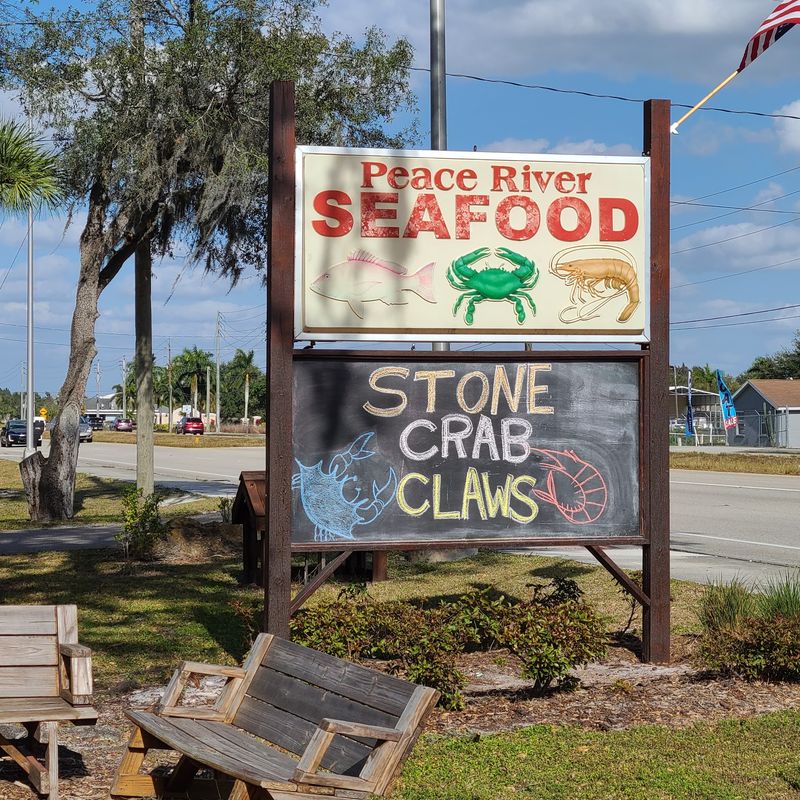
Planning matters here more than at most restaurants, mainly because the doors are locked two days a week.
Sunday and Monday are closed, full stop. Tuesday through Thursday runs 11 AM to 7:30 PM, and Friday and Saturday stretch slightly later, 11 AM to 8 PM.
Expect to spend roughly $20 to $30 per person, though that number climbs quickly if you go deep on crab by the dozen or add stone crab in season.
Arriving right at opening is a solid strategy. Lunchtime tends to be calmer than the dinner stretch, and the limited indoor seating means peak hours push everyone outdoors.
Seating policy is worth knowing in advance: the full party generally needs to be present before being seated, so plan to arrive together rather than trickling in.
Thursday deserves a mention for anyone chasing the she crab soup.
The website at peaceriverseafood.com and the phone number are both useful for checking what came in that day, since the menu genuinely changes with the catch.
Getting There and What to Bring
Duncan Road is also State Road 17, running northeast out of Punta Gorda toward Arcadia, and the drive itself is part of the appeal. Pasture, scrub oak, and very little traffic once you clear the interstate.
From I-75, exit at Punta Gorda and head inland; the trip takes only a few minutes but feels like it covers a lot more ground than that.
Parking is on gravel, so leave the pristine white sneakers at home.
Bring a healthy tolerance for mess. Crab eating is a hands-on activity, and while shell bowls get cleared and napkins are plentiful, you will still leave smelling faintly of garlic butter.
Warm months bring flies to the outdoor deck, as some guests have pointed out, so a summer visit goes better with realistic expectations.
Cash is not required, but the phone signal out that way can be spotty depending on your carrier.
Give yourself extra time. Rushing through a dozen blue crabs defeats the entire purpose of coming out here.
Why the Drive Out Duncan Road Pays Off
Florida keeps losing places like this. Waterfront fish camps get bought, flattened, and replaced with something that has an aquarium in the lobby and frozen shrimp in the freezer.
Peace River Seafood survives by being genuinely useful: a market that supplies crab, a kitchen that cooks it simply, and a wooden house from the 1920s that nobody has tried to modernize.
The tradeoffs are real. Seasoning is restrained, seating is rustic, summer heat is unfiltered, and busy nights can stretch your patience.
What you get in exchange is seafood with a supply chain measured in hours, served by people who mostly know what they are doing and often seem happy you showed up.
If your idea of a good meal involves a mallet, a paper-covered table, and a parrot somewhere in the background, the drive out Duncan Road makes complete sense.
If you want polish and consistency above everything else, Punta Gorda has plenty of alternatives closer to the water.
Come hungry, come early, and come on a day that is not Sunday or Monday.