This Scenic California Hot Spring Is A Springtime Escape Worth The Drive
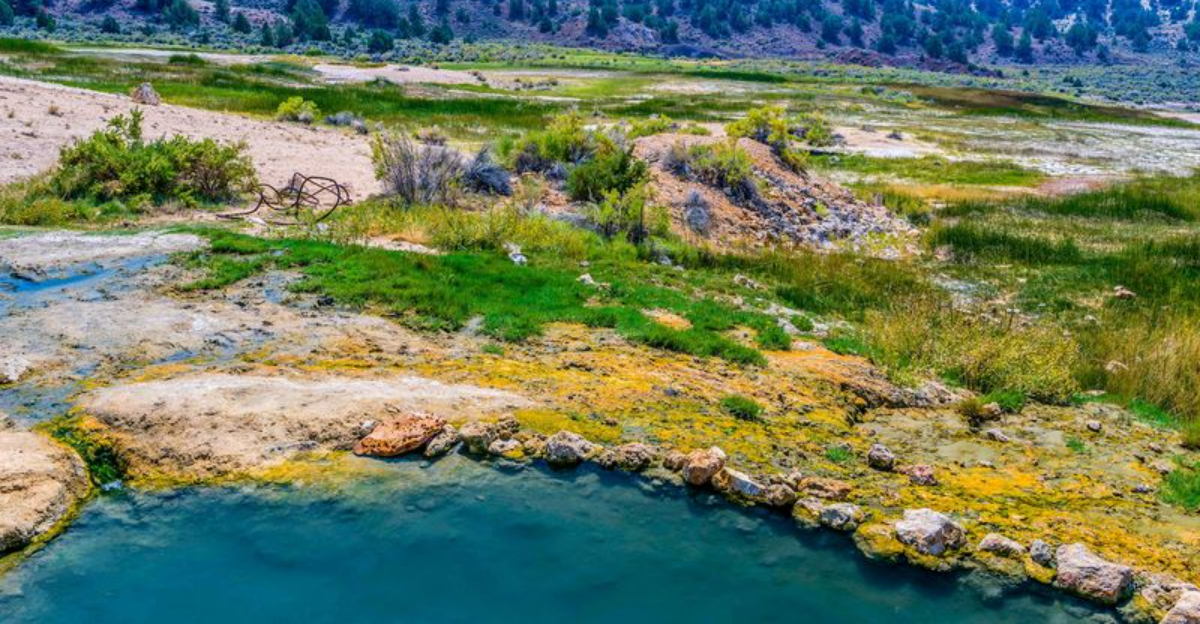
Steam rises from natural pools. The mountains glow in the morning sun. You feel the warm water against your skin and suddenly, the world slows down.
There’s nowhere quite like this in California – a spot where you can soak in hot springs, hear only the wind and birds, and forget every worry for a while.
The road gets quieter as you climb higher into the high desert. Mineral-rich pools bubble invitingly, each one a little different – some hot enough to wake your senses, some mild enough to linger for hours.
Spring is perfect here. The days are longer, the air is gentle, and the sunlight makes the mountains sparkle in ways that feel almost unreal.
By the time you reach Travertine Hot Springs, the reward is simple: no crowds, no gates, no frills – just pure, honest hot spring magic in the middle of California’s Eastern Sierra Nevada.
1. The Geology Behind The Name
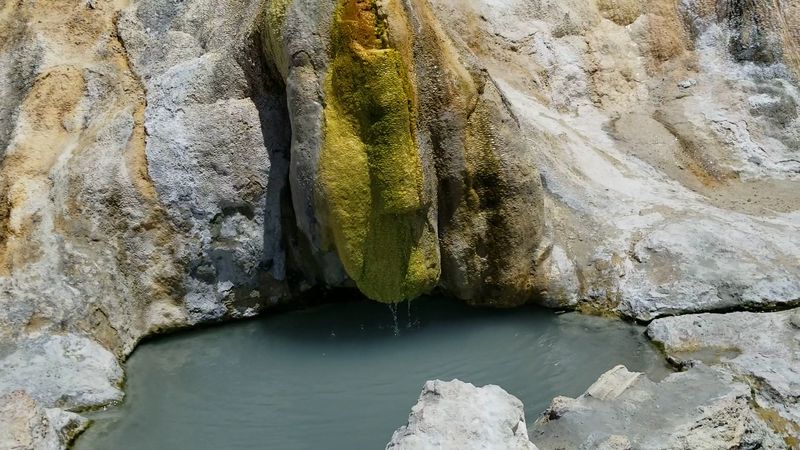
Few natural formations announce themselves as clearly as travertine does.
The white and tan terraced ridges that rise around these springs are made almost entirely of calcium carbonate, a mineral that deposits itself as hot water cools and flows across the surface.
Over time, these layered buildups create the distinctive stepped formations that give Travertine Hot Springs in Bridgeport its name.
The water emerges from underground at temperatures around 180 degrees Fahrenheit and carries dissolved minerals that solidify on contact with cooler air.
Visitors who look closely at the edges of the pools can spot the gradual buildup happening in real time, a slow geological process playing out on a human timescale.
Some ridges have grown to nearly ten feet tall, shaped entirely by mineral deposits over many years.
Staying on designated trails helps protect these formations because travertine is fragile and footsteps can break sections that took decades to form.
The BLM has added informational signs along the path that explain the geology in straightforward terms.
Understanding what created these formations adds a layer of appreciation to the soak that makes the visit feel more grounded and worthwhile.
2. A History Stretching Back Thousands Of Years
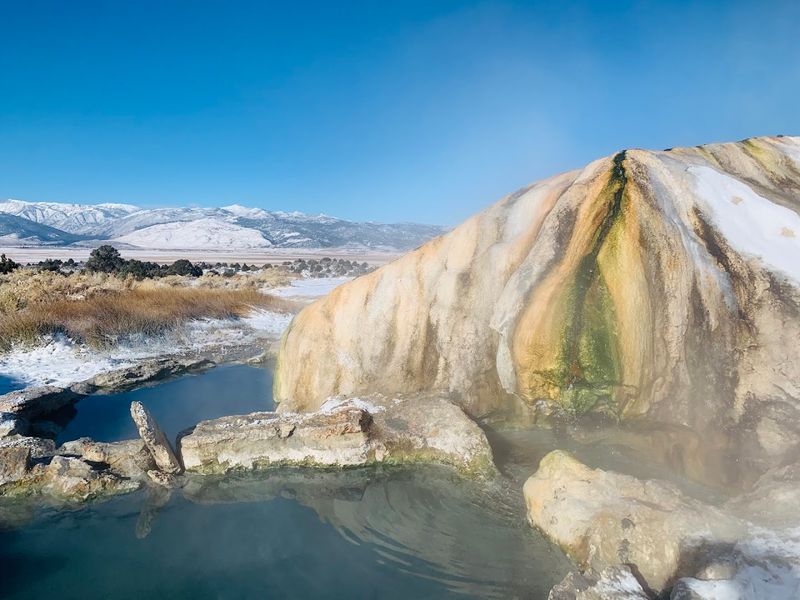
Long before Highway 395 was paved, the Paiute people knew exactly where to find these waters.
Indigenous communities in the Eastern Sierra region used Travertine Hot Springs for thousands of years, valuing the mineral-rich water for its physical and cultural significance.
The springs were not simply a bathing spot but a meaningful place embedded in the daily and ceremonial life of the people who lived nearby.
That history is worth holding in mind when visiting today.
The landscape around the springs has not changed dramatically, and standing near the pools with the Sierra Nevada rising to the west offers a sense of continuity that is easy to feel even if it is difficult to fully articulate.
Approaching the site with respect for that long human connection makes for a more thoughtful visit.
The BLM now manages the land and has worked to preserve both the natural formations and the cultural context of the site.
Informational signage along the trail references the area’s history, giving visitors a chance to learn something before they even reach the water.
Recognizing the springs as a place of genuine historical significance rather than just a scenic stop changes the experience in a quiet but meaningful way.
3. Water Temperatures That Vary Pool To Pool
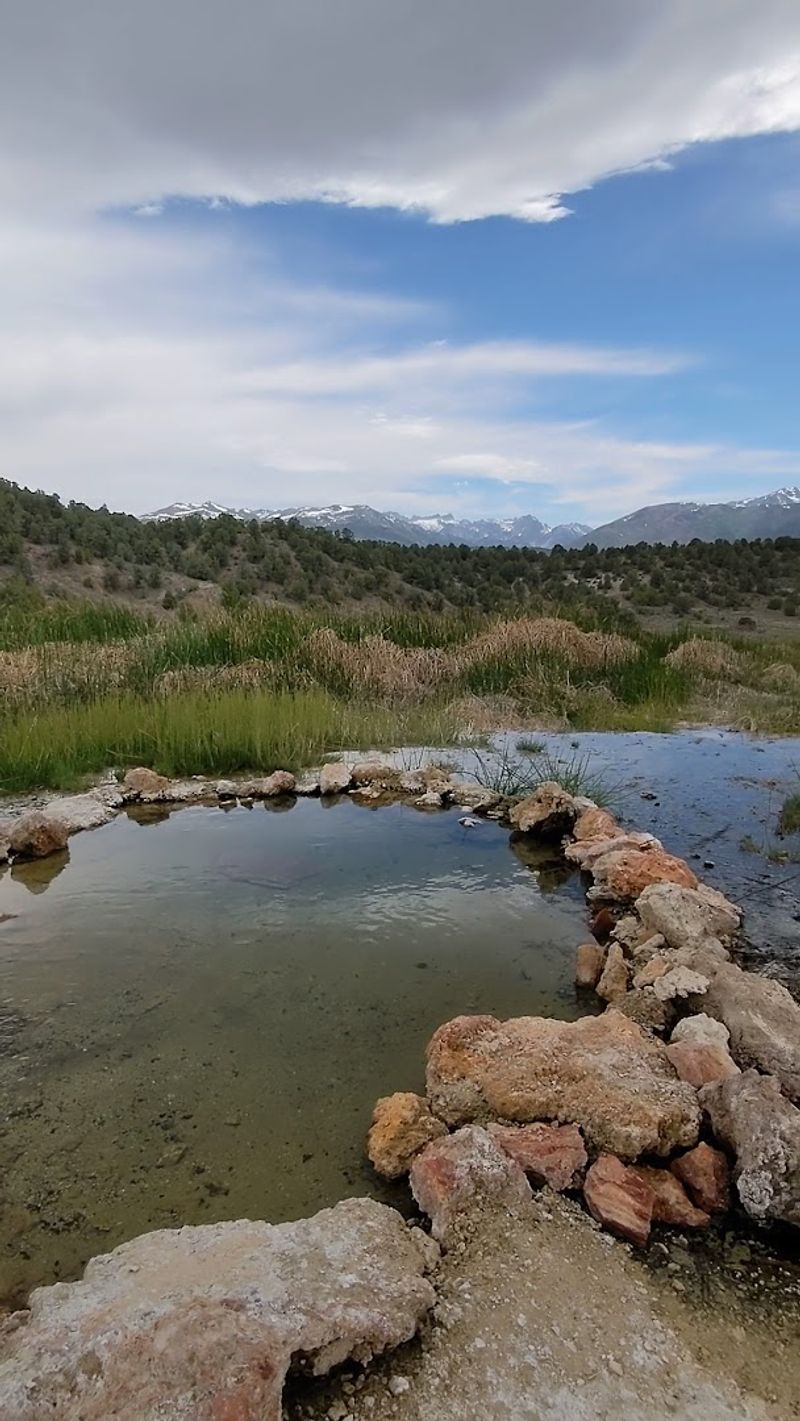
Not every pool at Travertine Hot Springs soaks the same way, and that variety is part of what keeps the experience interesting.
The geothermal water emerges at roughly 180 degrees Fahrenheit at the source, which is far too hot for soaking.
As it travels across the terraces and into the pools, it cools to a range that visitors can actually enjoy, typically somewhere between 90 and 125 degrees Fahrenheit depending on the specific pool and conditions that day.
Some pools run on the warmer end and require a slow, careful entry. Others sit closer to the lower range and feel more like a warm bath than a hot soak.
Visitor reviews consistently mention that the pool nearest the parking area tends to be one of the deeper and warmer options, while some of the further pools along the trail can run cooler or shallower depending on the season.
Checking the temperature before climbing in is always a smart move, especially for first-time visitors. Staying hydrated matters here because the heat draws moisture out of the body quickly.
Spending time in multiple pools across a visit, rather than committing to just one, tends to give a fuller picture of what the site actually offers.
4. Getting There Without Getting Stuck
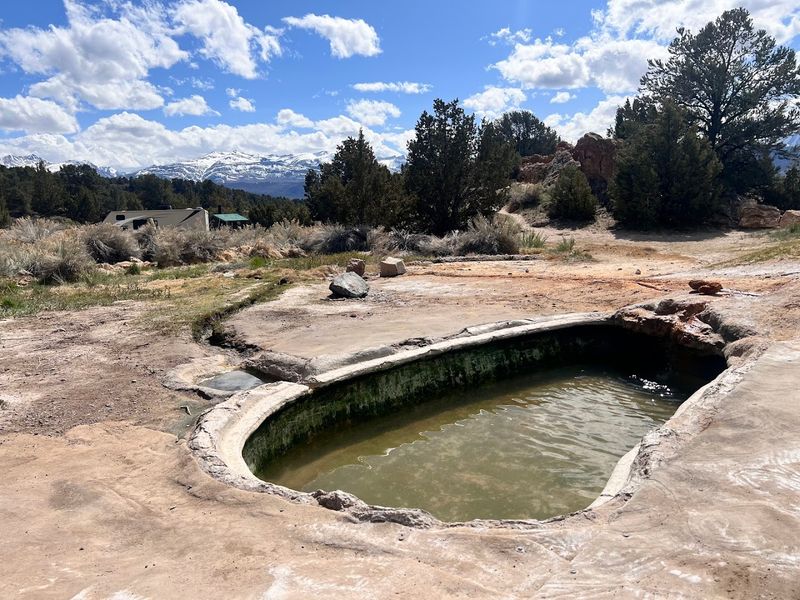
The drive to Travertine Hot Springs from Highway 395 covers roughly two miles on a dirt road southeast of Bridgeport.
Most passenger vehicles can handle the road under dry conditions, though the surface is uneven and rutted in places.
Driving slowly, at speeds under five miles per hour in rougher sections, makes the journey more manageable and reduces the risk of scraping the undercarriage.
Winter and early spring visits require more caution because the road can become icy or muddy depending on recent weather.
Some visitors have navigated the road successfully in standard vehicles even after snowfall, but conditions change quickly at elevation.
Checking weather forecasts for the Bridgeport area before heading out is a practical step that can prevent a frustrating turnaround.
Larger vehicles like RVs can reach the springs but may find the turnaround area at the end of the road tight. Visitors in longer rigs have reported needing to unhook towed vehicles to complete the turn.
The parking area itself is informal, with no marked spaces, so arriving earlier in the day during busy seasons helps secure a spot without the stress of navigating a full lot.
The coordinates for the springs are approximately 38.2459 north and 119.2054 west for navigation purposes.
5. No Facilities Means Pack Everything In
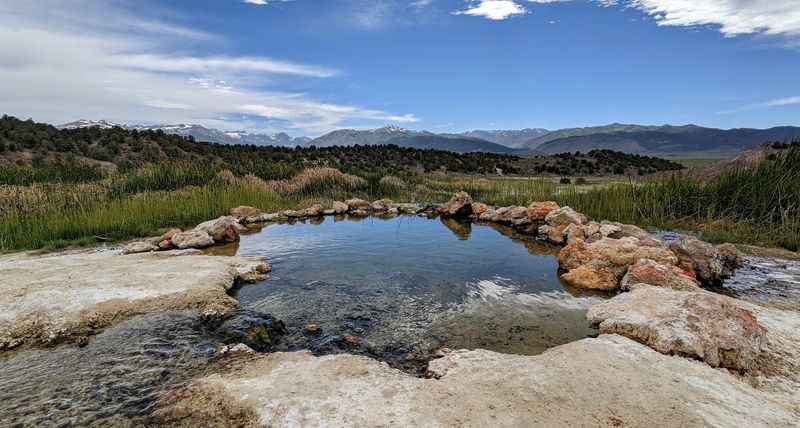
Travertine Hot Springs operates as a primitive site, which means there are no trash cans, no showers, and no changing rooms on the property.
A restroom exists near the parking area but visitor reviews consistently describe it as very basic and not always in ideal condition.
Changing into a swimsuit in the car before arriving tends to be the most practical approach for most visitors.
Packing out all trash is not just encouraged here, it is expected.
The BLM asks visitors to carry out everything they bring in, including food wrappers, empty bottles, and any other waste.
Leaving the site cleaner than it was found is a reasonable standard that keeps the experience good for everyone who visits after.
Soaps, shampoos, and other chemical products should not be used in the pools because they disrupt the natural mineral balance and can damage the travertine formations over time.
Bringing plenty of drinking water is essential since the mineral water in the pools is not safe to drink and the desert setting can cause dehydration faster than expected.
A towel, a change of dry clothes, and a bag for wet items round out the basic packing list for a comfortable visit.
6. Springtime Stands Out As A Particularly Good Season
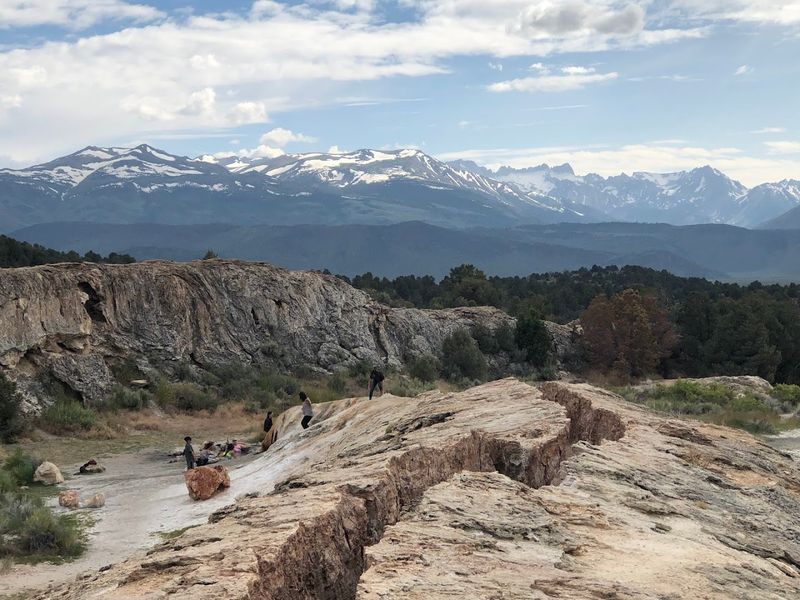
Spring earns its reputation as a prime season at Travertine Hot Springs for a few solid reasons.
Air temperatures in the Bridgeport area during spring tend to sit in a comfortable range that balances the heat of the pools without the intensity of a summer afternoon sun beating down from above.
The surrounding landscape often shows some remaining snow on the Sierra peaks, which creates a striking contrast with the steaming water in the foreground.
Daylight hours stretch longer as spring progresses, giving visitors more flexibility with timing.
Arriving in the late afternoon allows for a soak as the light shifts and the mountains take on a warmer tone.
Weekday visits during spring tend to draw smaller crowds than weekend trips, which can make a meaningful difference in how relaxed the experience feels.
Fall offers similar conditions and is also worth considering for those who cannot make a spring trip.
Summer visits are possible but the combination of direct sun and hot water can feel overwhelming for some people, particularly during the warmest part of the day.
Winter access is achievable with the right vehicle and preparation, though the road and the experience both carry more uncertainty during cold months.
Spring simply offers the most consistent balance of comfort, scenery, and accessibility.
7. Overnight Camping Is Not Permitted At The Springs
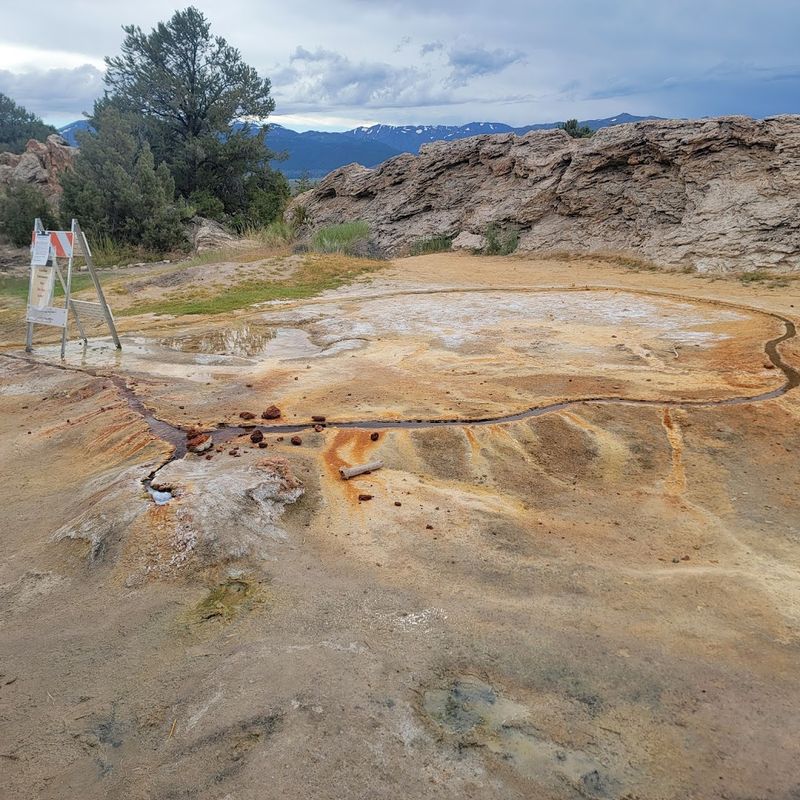
Sleeping overnight directly at Travertine Hot Springs is not allowed under current BLM regulations.
Signs at the site make this clear, and the rule exists partly to protect the fragile travertine formations and partly to manage the impact of extended visitor use on the surrounding land.
Some visitors have reported seeing overnight campers at the site in the past, but the official policy does not permit it.
A dispersed camping area sits just before the entrance to the springs and has been used by visitors who want to stay close without violating the no-camping rule at the pools themselves.
Dispersed camping on BLM land generally follows a set of basic guidelines around fire safety and waste management that are worth reviewing before arrival.
Conditions and availability in dispersed areas can shift, so confirming current rules with the local BLM office before planning an overnight stay is a sensible step.
The Bridgeport area offers additional camping options nearby for those who want a more established setup with amenities.
Planning the overnight portion of the trip separately from the hot springs visit itself keeps expectations clear and avoids any friction at the site.
A well-rested start to the day also tends to make the soak feel more rewarding after a good night of sleep.
8. The View Alone Justifies The Trip
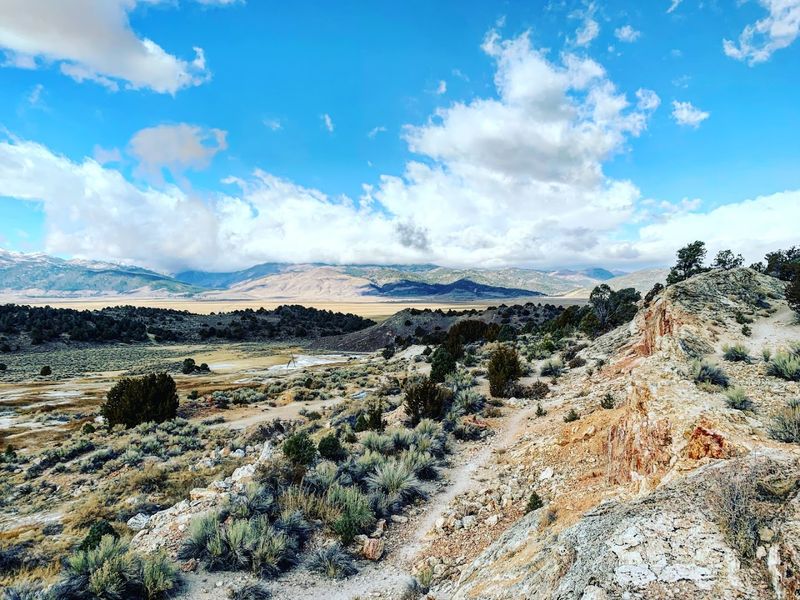
Even visitors who skip the soak entirely tend to agree that the views from Travertine Hot Springs are worth the drive.
The Eastern Sierra Nevada rises dramatically to the west, with peaks that hold snow well into spring and sometimes beyond.
Standing near the pools and looking out across that landscape delivers a sense of scale that photographs capture partially but never completely.
The elevation and open terrain around the springs mean there are few obstructions between the visitor and the mountain horizon.
On clear days the visibility stretches far, and the combination of the mineral terraces in the foreground and the rugged peaks in the background creates a visual contrast that feels genuinely striking without any filters or framing tricks.
Morning light hits the mountains differently than afternoon light, and both are worth experiencing if the schedule allows for a longer visit.
Photographers tend to find the late afternoon particularly productive as the warm light shifts across the travertine and the shadows deepen in the Sierra foothills.
The springs have earned consistent praise in visitor reviews specifically for this scenery, with multiple reviewers noting that the view alone made the trip feel worthwhile even when the pools were crowded or cooler than expected.
9. Protecting The Travertine Formations For Future Visitors
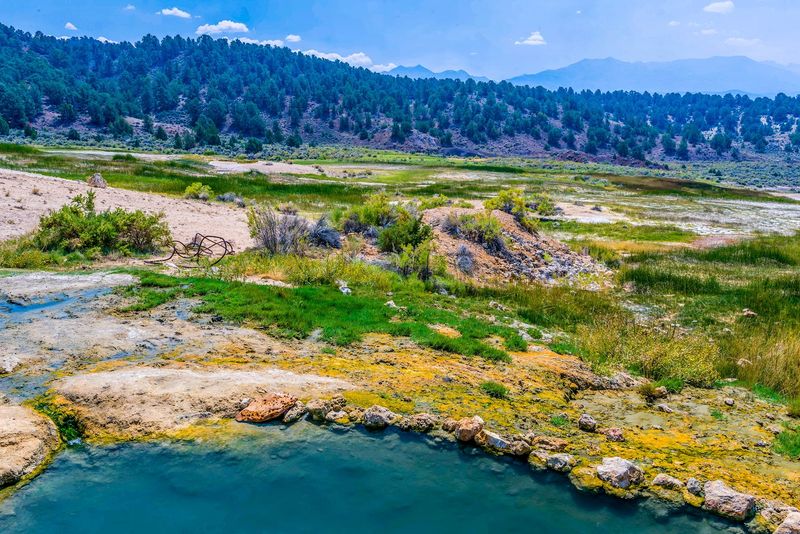
The travertine formations at these springs took many years to develop, and they are more fragile than they look.
Walking on the terraces or across the edges of the formations can crack and break sections that cannot be repaired on any human timescale.
The BLM has marked designated trails through the site specifically to guide foot traffic away from the most sensitive areas.
Red spider mites have been reported at the springs in recent visitor reviews, with some guests noting that the mites blend into the travertine coloring and are easy to miss before entering the water.
Being aware of this before arriving means visitors can take a closer look at the rocks and pool edges before settling in.
The situation appears to have developed in recent years, so conditions at the site may continue to evolve.
Avoiding the use of any soaps or chemical products in or near the pools is one of the simplest and most effective ways to protect both the water quality and the mineral formations themselves.
Sticking to the marked paths, carrying out all waste, and resisting the urge to rearrange rocks or alter the pools in any way all fall under the same basic principle of leaving the site as intact as possible for the next visitor who makes the drive out.