This Small Georgia College Has Been Ranked No. 1 In America For Nearly Two Decades

This small Georgia college has been quietly winning a fight it never announced. For almost twenty years, a tiny liberal arts school in Georgia has topped a list most people assume goes to bigger names.
No press tour. No flashy campaign.
Just the same result, semester after semester, decade after decade. That kind of consistency raises a real question.
What is actually happening inside those walls that keeps producing this outcome, year in and year out? The answer isn’t luck, and it isn’t marketing.
It comes down to choices this school made early on and never abandoned. Small class sizes.
A stubborn focus on undergraduate teaching. Faculty who stay for careers, not semesters.
Put those pieces together and you get a streak that refuses to break. Here’s what actually built it.
A Basement Beginning That Changed Everything

Most great institutions start with a groundbreaking ceremony. This one started in a church basement in 1881.
Two teachers, Sophia B. Packard and Harriet E.
Giles, opened the Atlanta Baptist Female Seminary there. Their classroom was the lower level of Friendship Baptist Church.
Their goal was simple and bold at the same time. They wanted quality education for Black women and girls in the years after the Civil War.
That small beginning grew into something historic. It became America’s oldest private historically Black liberal arts college for women.
The name changed in 1924, nearly a century ago. What did not change was the mission behind the desks and chalkboards.
Think about that timeline for a second. A basement classroom eventually produced scientists, authors, and executives.
The founders never saw the modern campus or the rankings. They simply believed education could rewrite futures, and they were right.
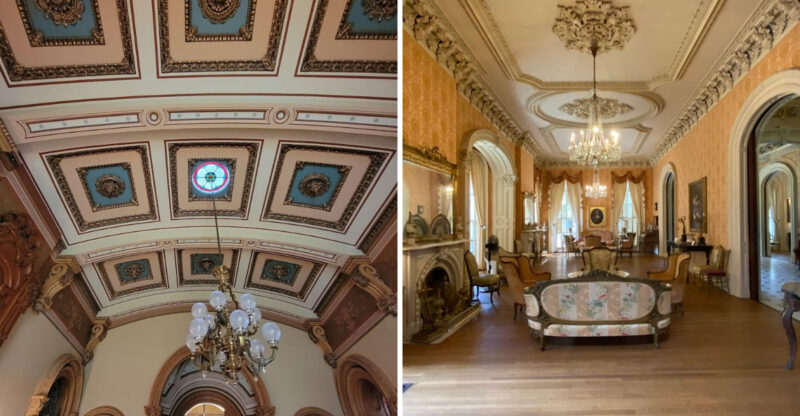
Walking the grounds today, the history feels close rather than distant. Old brick buildings sit beside modern academic spaces.
If you want to see where the story lives now, the address is 350 Spelman Ln SW, Atlanta, Georgia. That is Spelman College.
Nineteen Straight Years At The Very Top

Winning once is luck. Winning nineteen times in a row is a system.
U.S. News and World Report has named this school the No. 1 HBCU in the country for 19 consecutive years.
That streak holds through the 2026 rankings, released in September 2025.
The run did not appear overnight. It was the No. 1 HBCU for the 13th straight year in the 2020 rankings.
Then came the 14th year in the 2021 list. The pattern kept repeating while other schools rotated in and out.
Rankings measure things like graduation rates, faculty resources, and student outcomes. Holding the top spot that long means those numbers stay strong every single year.
Consistency is harder than a single great season. Staff changes, budgets shift, and student needs evolve constantly.
What impresses me is the quiet about it. There are no giant billboards shouting the record across the highway.
The achievement sits in press releases and admissions folders instead. Families who know, know.
For students comparing schools, that streak is useful evidence. It suggests the experience here is reliable, not a one-time highlight.
Rankings That Reach Far Past The HBCU List

Being first in one category is impressive. Competing nationally across several is a different level.
The school also ranks among National Liberal Arts Colleges nationwide. For the 2026 rankings, it landed at No. 37 in that competitive group.
That list includes some of the most selective small colleges in the country. Placing there says something about classroom quality and academic rigor.
Another number stands out even more to me. It ranked No. 2 in Social Mobility for 2026.
Social mobility measures how well a college supports students from lower income backgrounds. It tracks whether those students actually graduate and move forward.
Plenty of schools talk about access. Fewer show proof in the data year after year.
That second place ranking means students arrive with big goals and leave with real credentials. The support system clearly works.
For parents comparing options, these rankings matter more than glossy photos. They reflect outcomes, not marketing budgets.
A small campus quietly outperforming much larger institutions is a fun story. It is also a practical reason to take a closer look.
Classrooms Built To Sharpen Thinkers

Academic energy is hard to fake, and you feel it here immediately. Conversations between classes sound like debates rather than small talk.
The curriculum is liberal arts based and intentionally demanding. Departments cover natural sciences, social sciences, humanities, and interdisciplinary studies.
Popular majors include Biology, Health Science, Psychology, Economics, and Political Science. Students often combine interests in unexpected ways.
One statistic really stopped me. The college is a leading producer of Black women who go on to earn doctorates in STEM fields.
That does not happen by accident. It takes research opportunities, mentorship, and faculty who invest real time.
Class sizes stay small because the student body is small. Professors learn names instead of seat numbers.
Former students consistently describe faculty as deeply committed to teaching. That attention shapes how students handle graduate school later.
Rigor here is not about making things miserable. It is about building confidence through repeated challenge.
If you thrive on discussion, lab work, and long research projects, the setup fits well. Students leave prepared to argue, analyze, and publish.
A Global Vision With Serious Credentials

Many Spelman students take part in study abroad and other global learning opportunities before graduation.
Travel here is treated as part of the education, not a luxury add-on. Students return with new languages, contacts, and perspectives.
The commitment to global learning earned real recognition. The college was named a Fulbright HBCU Institutional Leader.
High achievers also have the Ethel Waddell Githii Honors Program. It pushes strong students into deeper research and advanced coursework.
The stated mission focuses on intellectual, creative, ethical, and leadership development for women of African descent. That language shows up in actual programming, not just the website.
Leadership training runs through student government, service projects, and academic groups. Practice matters more than theory.
I like how those pieces connect. Study abroad builds perspective, honors work builds depth, and leadership roles build nerve.
Graduates enter the workforce already comfortable in unfamiliar rooms. That comfort is a genuine career advantage.
For a campus of this size, the global reach feels remarkable. Small does not mean limited here.
Thirty-Nine Acres Of Community

Picture a gated 39-acre campus with more than 25 buildings. Now picture downtown Atlanta humming just beyond the gates.
The contrast is part of the appeal. Students get a calm, tree-lined campus and a major city within minutes.
More than 80 student organizations operate here. Interests range from academic societies to arts groups and service clubs.
Traditions give the year its rhythm. New students wear white attire during orientation, a custom that marks the start of everything.
The word alumnae use most often is sisterhood. Friendships formed on these lawns tend to last for decades.
Security staff on campus have a reputation for being courteous and genuinely helpful. Visitors notice that quickly.
Campus tours are popular with high school groups and families. Guides share history, course details, and personal stories.
Campus tours are offered on select dates and should be scheduled in advance through Spelman’s official admissions website.
When Donors Write Nine-Figure Checks

In January 2024, the college received $100 million. That was the largest single donation in its history.
The gift came from trustee Ronda Stryker and her husband, William Johnston. Numbers like that rarely land at small colleges.
Other major support arrived earlier. Reed Hastings and Patty Quillin contributed $40 million toward scholarships.
Actors LaTanya Richardson Jackson and Samuel L. Jackson gave $5 million as well.
Their names now sit on the renovated performing arts center.
Gifts like these change daily life for students. Scholarships reduce debt, and updated facilities improve learning conditions.
Donors do not hand over sums like that casually. They study outcomes, leadership, and long-term plans first.
That level of confidence tells its own story. Serious people believe this institution turns funding into results.
The performing arts center renovation stands out to me personally. Arts spaces often get cut, yet here one got a major upgrade.
Money follows mission when the mission is proven. That pattern has repeated here for years now.
Graduates Who Changed Their Industries

You can judge a school by its brochures or by its graduates. The second method works better.
Rosalind Brewer earned her degree here. She became the first African-American CEO of Sam’s Club and later led Walgreens.
Author Alice Walker also studied on this campus. She won the Pulitzer Prize for fiction.
Marian Wright Edelman founded the Children’s Defense Fund. Her advocacy reshaped policy for children nationwide.
Politician Stacey Abrams is another well-known graduate. Her organizing work drew national attention.
Actresses LaTanya Richardson Jackson and Keshia Knight Pulliam round out the entertainment side. The range across fields is striking.
Business, literature, law, advocacy, politics, and film all appear on the list. That variety suggests the education travels well.
Current students benefit from those connections directly. Alumnae return for panels, mentorship, and career advice.
Networks like this take generations to build. Once established, they open doors quietly and consistently.
Seeing those names together made the ranking streak make more sense to me. Results like these are the real scorecard.
Still Climbing, Not Coasting

Nineteen years at the top could easily create complacency. That is not what the trajectory suggests here.
New donations keep funding scholarships and facility upgrades. Rankings in liberal arts and social mobility keep climbing or holding firm.
Talented students continue applying from across the country and abroad. Faculty recruitment stays competitive.
The focus remains on preparing women to lead in demanding fields. STEM doctorates, business leadership, and public service all stay on the radar.
Planning a visit is straightforward. Offices run weekdays from 9 AM to 5 PM, and tours are worth scheduling ahead.
My honest takeaway is simple. Excellence here looks like steady work rather than loud celebration.
That quiet approach may be the reason the streak lasted so long. Consistency rarely trends, but it wins.
If you are near Atlanta, take the time to see it. Small campuses can carry very large legacies.