This Small Georgia Town Once Housed A Secret Nuclear Facility And Almost Nobody Knows It
I almost drove past the sign completely. It looked like every other faded marker on that stretch of road in Georgia.
I only stopped because my GPS lost signal and I needed a second to figure out where I was. That pause changed everything.
A local man at a gas station told me something that made me sit in my car for ten extra minutes just staring at my map. Decades ago, this quiet patch of Georgia held a program so secret that even nearby residents had no real idea what was happening past the tree line.
Engineers worked on technology that sounded more like science fiction than reality. Trucks came and went at odd hours.
Nobody talked about it then. Almost nobody talks about it now.
But the story stuck with me the entire drive home.
A Quiet County Seat With A Loud Secret
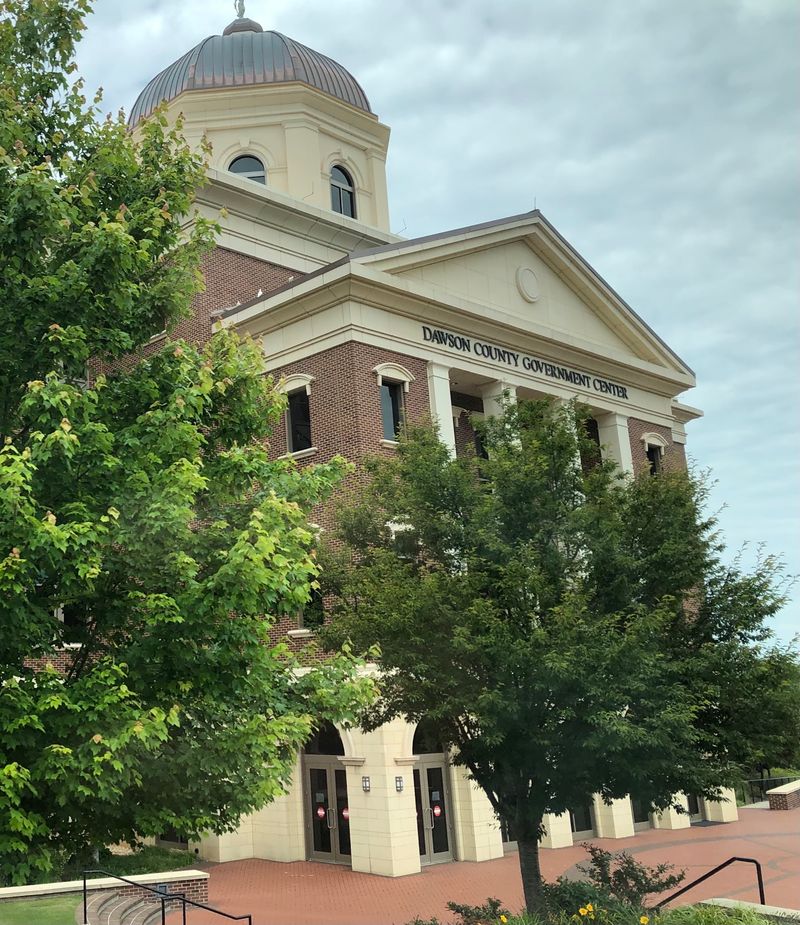
Most county seats brag about football or barbecue. This one quietly sat on a strange scientific story instead.
The town holds about 5,400 residents and plenty of stock car pride. Racing history usually gets all the attention here.
Yet a few miles from the courthouse square, something far stranger happened. Scientists once aimed to make airplanes fly on atomic power.
The county sits inside the Atlanta metro area, which surprises first-time visitors. Big city, mountain roads, and gravel driveways all share one map.
I learned about this while chasing pie, not physics. A roadside sign pointed toward a forest, and my plans changed.
Nothing about the landscape hints at what happened. Pines, red clay, and quiet creeks look completely ordinary.
That ordinariness was the whole point back then. Quiet work needed thick woods and few neighbors.
The forest still holds concrete leftovers from that era. Most drivers pass by without a second thought.
So keep your eyes open in small Southern towns. The biggest surprises rarely come with a billboard, as I found in Dawsonville, Georgia.
The Lab That Aimed To Put Reactors In The Sky
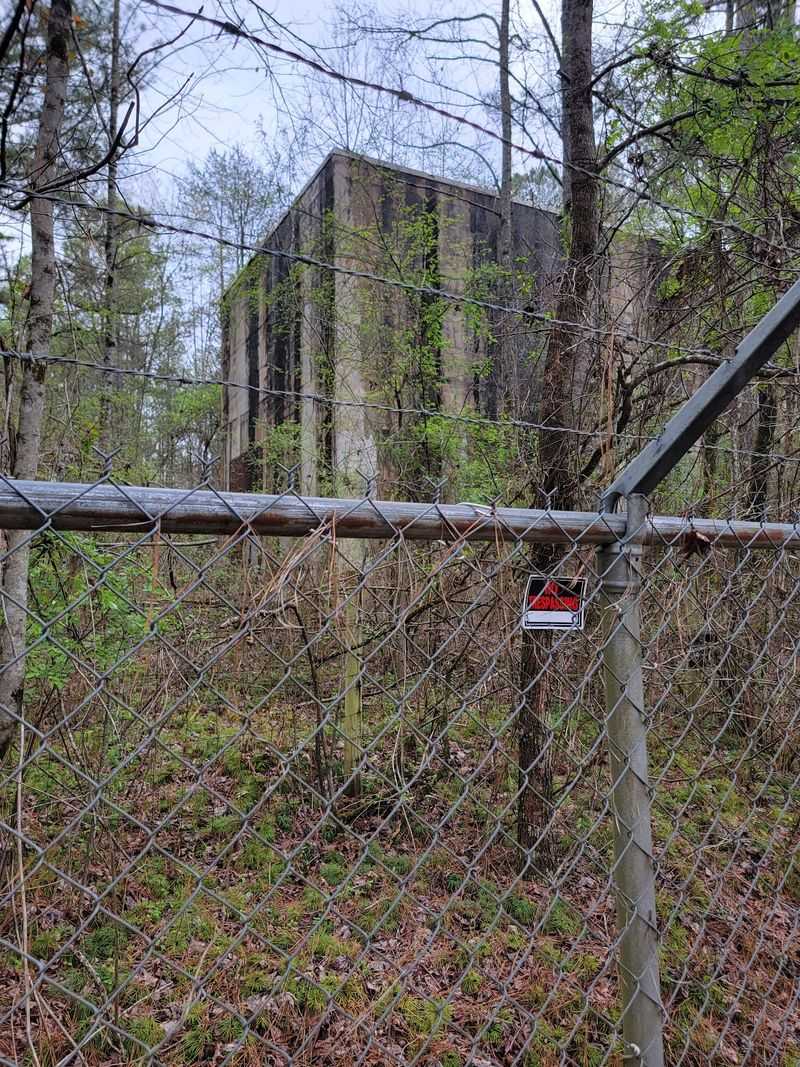
Picture an aircraft that never needs refueling. That was the dream driving this whole project forward.
Engineers wanted proof that atomic flight could actually work. A reactor small enough to fly was the goal.
Radiation stood as the biggest obstacle in the way. Machines, wiring, and materials all had to survive heavy exposure.
The laboratory became one of the country’s most unusual facilities designed for open-air radiation testing. Nowhere else in America ran work quite like it.
Nuclear flight promised aircraft that could circle the globe for days. Fuel stops would have become nearly unnecessary.
Ambition like that carried enormous complexity, and everyone involved knew it. Still, the project pushed forward anyway.
Operations began in the late 1950s, during a pivotal era for aviation research. The work continued for more than a decade.
I keep imagining the paperwork behind such a plan. Approval for flying reactors could not have been simple.
Reading about it feels like flipping through a science fiction script. Except every page of this one really happened.
Eleven Thousand Acres Bought For One Bold Idea
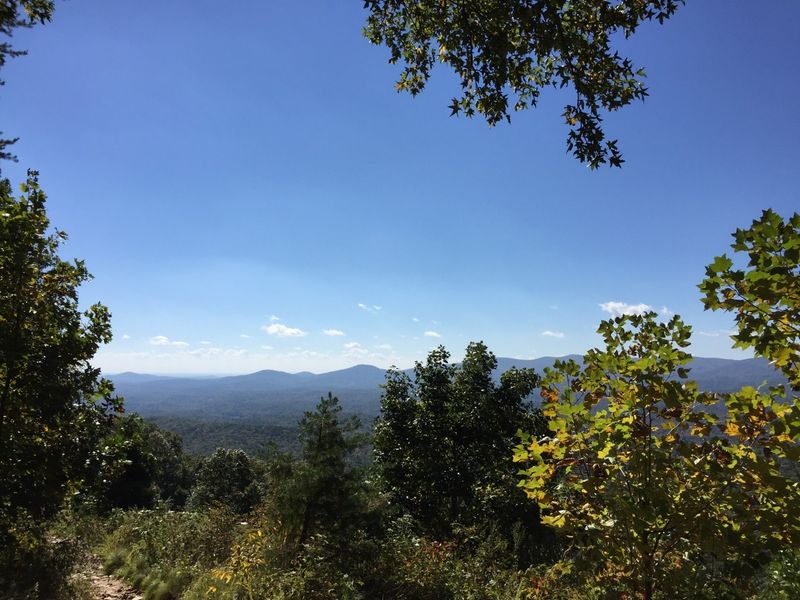
Big secrets need big backyards. This program needed roughly 11,000 acres of them.
The land was purchased from a local landowner for the covert project. Deep woods made a perfect privacy fence.
Distance mattered more than buildings for this kind of research. Open-air testing required plenty of empty space around it.
Scale is the detail most people miss in the story. Eleven thousand acres is larger than many hometowns.
Standing at one edge, you cannot see the other side. Ridges and creeks swallow the horizon quickly.
Security stayed strict from the very beginning. Anyone without clearance could not step onto the property.
Access roads led nowhere useful for the curious. Fences, guards, and silence handled the rest.
That vastness explains why the secret held so long. Nobody stumbles onto something buried inside a forest this size.
Practical tip for visitors today: bring a map and patience. Roads here are mostly gravel and poorly marked.
Plan your route before leaving pavement behind. Cell service in the area can wander off without warning.
Inside The Reactor Shaft Thirty Feet Deep
A ten-megawatt reactor once sat below this ground. It rested inside a concrete shaft about thirty feet deep.
The reactor could be raised from its water-filled shaft so researchers could expose equipment and materials to radiation.
Concrete and depth served as the primary shielding. Workers stayed far away during active tests.
The shaft design allowed quick lowering and raising. Flexibility mattered when experiments ran on tight schedules.
Engineers controlled everything from protected positions. Remote handling was standard practice at the site.
Numbers help put the power in perspective. Ten megawatts is serious output for a research reactor.
Photographs from that era show plain gray structures. Nothing looked futuristic, yet the science absolutely was.
I find that contrast fascinating every single time. Serious engineering often wears boring clothes.
Today the underground entrance sits completely flooded. Water now guards what concrete once protected.
Only about three acres of the original tract remain fenced and restricted. The rest of the forest is open for lawful visits.
Respect those fences if you go exploring. They exist for good reasons, not decoration.
When Radiation Met Trees And Machines
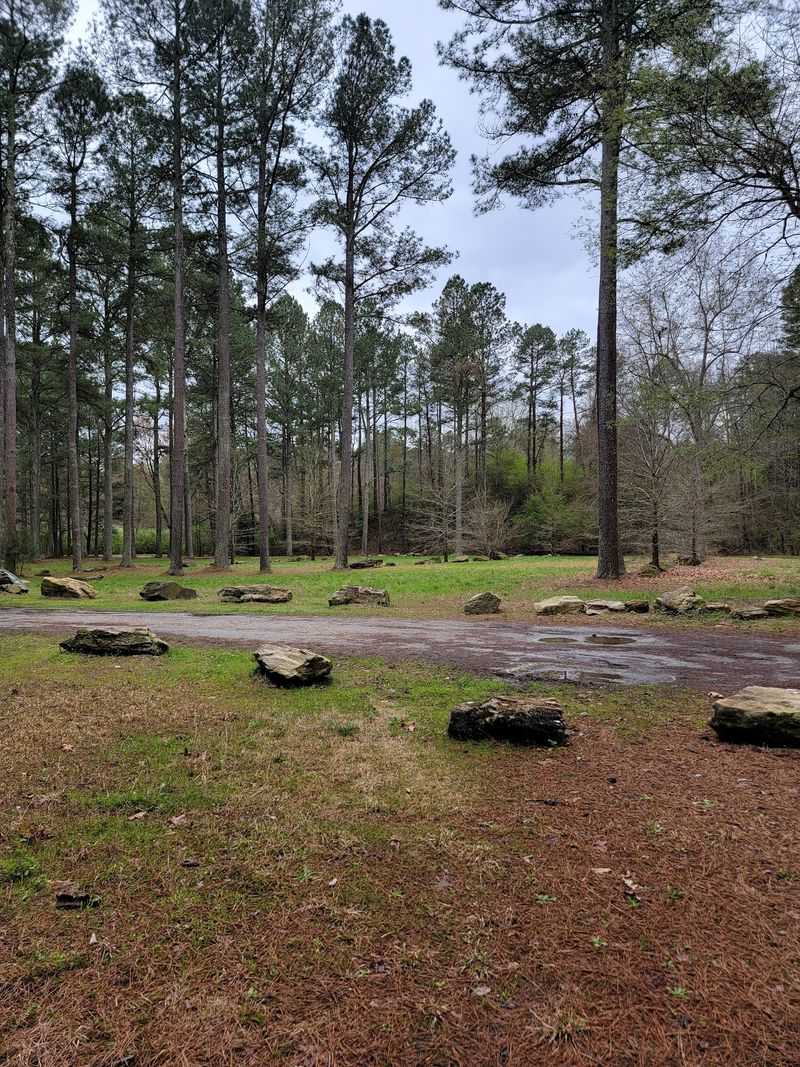
Aircraft parts were only part of the testing list. Living things went under the radiation too.
Researchers exposed trees, crops, and insects to measure results. Larger wildlife was studied as well.
Their goal was understanding how radiation moves through an environment. Data mattered for long-term planning.
Equipment also faced the beam repeatedly. Engineers needed to know which parts failed first.
Studying leaves and studying wiring served the same purpose. Both showed how radiation changes ordinary materials.
Insects were useful because their generations pass quickly. Changes appeared faster in small, short-lived species.
I never expected entomology inside a story like this. Yet there it sits, right in the records.
Careful observation and heavy documentation defined the work. Science here moved by measurement, not guesswork.
Many details about the experiments remain difficult to verify because complete public records are limited.
That gap keeps historians circling back to the subject. Unanswered questions age surprisingly well.
Much of the surrounding forest is now open for recreation, although fenced and restricted areas must be avoided.
Two-Headed Deer And Other Local Legends
Secrecy always grows stories. Around here, the stories got wonderfully strange.
Rumors described two-headed deer roaming the property. Others claimed oak leaves grew as big as elephant ears.
Neither claim was ever documented by researchers. Imagination simply filled the space where information was missing.
Tall tales spread easily when fences block every question. Human curiosity does not wait for permission.
Giant leaves make a great campfire tale. Botanists would raise an eyebrow, though.
I love these legends for what they reveal. People sensed something big without knowing any details.
The truth was already remarkable without exaggeration. A reactor in the woods needs no embellishment.
Modern visitors still repeat the deer story anyway. It has outlived the facility itself by decades.
Part of the mystery persists because documents stay sealed. Classified files keep rumor mills turning.
Folklore can work as a kind of historical record. It preserves how a community felt at the time.
Legends also helped keep the memory alive. Sometimes a rumor is history’s backup drive.
Why The Atomic Bomber Never Took Off
Every bold plan meets a spreadsheet eventually. Atomic flight met one and lost.
The broader nuclear aircraft program faced rising costs, serious technical challenges, and major engineering concerns.
Shielding a flying reactor proved brutally difficult. Weight limits and safety demands fought each other constantly.
Other technologies improved during that same decade. Nuclear aircraft slowly lost their practical edge.
Costs climbed while confidence quietly slipped. Contracts eventually reflected that reality.
By 1971, the facility was officially decommissioned. Its mission ended after roughly a dozen busy years.
Decommissioning took planning, not just demolition. Careful cleanup followed the shutdown decision.
Crews dismantled many buildings and hauled materials away. Concrete husks stayed behind in the trees.
I think about the engineers who worked there. Their careers included one of history’s strangest assignments.
Failure is not the same as pointlessness. The research advanced radiation knowledge used in other fields.
Abandoned science sites carry a specific mood. Quiet, gray, and strangely respectful.
Plenty of ambitious projects ended this way. Ambition arrived first, arithmetic arrived later.
Atlanta’s Airport That Never Was
The land’s second act sounds made up. After closure, the City of Atlanta became the owner.
Plans called for building a second major airport on the property. Thousands of open acres seemed ideal for runways.
Imagine landing a jet where a reactor once cooled. Aviation planners saw potential, not irony.
Those blueprints never became concrete. The airport idea quietly faded away.
Instead, the tract turned into public forest land. Trails, trees, and history replaced terminals.
Cleanup work came first, handled by Lockheed. A 1972 state health department report called the area safe for public use.
Later inspections found that some spots still showed contamination. Monitoring became a long-term commitment.
State agencies conducted long-term radiation monitoring, with published reports finding levels near normal background conditions in publicly accessible areas.
That oversight is why visitors hike comfortably today. Decades of testing back up the reassurance.
Instead of jet noise, the area offers birdsong. Mountain bikers and hikers now share the roads.
Few land parcels have résumés this varied. Farmland, laboratory, airport proposal, then forest.
What Still Stands In Dawson Forest Today
Ruins here are subtle, not cinematic. You have to know what you are looking at.
Concrete foundations sit scattered among the pines. Parts of the specialized hot cell building still stand.
That structure once handled the most sensitive experiments. Traces of Cobalt 60 remain inside it.
Monitoring shows no public concern today. Even so, the fenced sections deserve full respect.
The published address for Dawson Forest Wildlife Management Area is 5872 Hwy. 53 W., Dawsonville, GA 30534. Small parking areas sit near gravel entrances.
Bring sturdy shoes, water, and a downloaded map. Signage thins out once you leave the main road.
Cooler months make exploring easier and much clearer. Summer growth hides most of the concrete.
Photographers will find great texture in these walls. Moss, rust stains, and bold mid-century angles.
Mountain bike trails run nearby for anyone wanting exercise. History and recreation share the same map.
Go with a friend and tell someone your plans. Remote forests reward preparation.
Standing there, I felt awe and quiet reflection. Big history happens in small places more often than we assume.