This Small Nebraska Town Is Home To The Apollo Spacecraft That Helped Pave The Way To The Moon
Moon history feels very different when the spacecraft is sitting a few feet away instead of floating in an old photograph.
Here, the polished metal, compact shape, and unmistakable space-age design make the story feel suddenly physical.
You can circle it, study the details, and imagine what engineers were trying to learn before astronauts ever set foot on the lunar surface.
A small Nebraska town holds a surprisingly important piece of America’s early Apollo story.
Look closely rather than rushing past. The size alone can be surprising.
So can the realization that something sitting quietly inside a museum once belonged to one of the most ambitious engineering efforts in modern history.
A Real Flown Apollo Capsule, Not A Reproduction
Plenty of museums display Apollo mockups, so the capsule in Ashland deserves a closer look.
The command module here is CM-009, and it genuinely flew in space during NASA’s AS-201 mission on February 26, 1966.
It was the first spaceflight of a production Apollo Command and Service Module, a Block I version built for testing the design that later carried crews.
Earlier Apollo hardware had mostly been used for ground work and developmental testing, which makes this flight a real turning point.
Standing beside it, the shape is the first thing that registers. The cone is wider and squatter than photographs suggest, and the surface carries the marks of an actual return through the atmosphere.
No crew rode inside, but every system tested aboard was meant for people who would follow.
Reading the display panel helps, though the object does most of the talking on its own.
Visitors with a general interest in space often spend more time here than expected, simply because the story is easy to follow.
Kids tend to focus on the size of the hatch and the thickness of the shell. Adults usually notice the age.
Hardware from 1966 sitting quietly indoors, still recognizable, still intact, offers a direct link to the years when landing on the Moon was still an open question.
The 37-Minute Flight That Told NASA What It Needed To Know
Short flights can carry enormous weight, and AS-201 proved it. The whole spaceflight lasted only about 37 minutes from launch to splashdown.
In that brief window, NASA gathered information that shaped how Apollo spacecraft were built and flown for years afterward.
The mission followed a suborbital path that climbed to roughly 303 miles above Earth before heading back down.
That altitude is higher than the orbits many crewed missions later used, which surprises people who assume a suborbital hop stays low.
The steep climb was intentional, since engineers wanted a fast, hot reentry to stress the spacecraft. Engineers were checking the spacecraft and rocket combination as a working pair.
Propulsion performance, separation procedures, electrical systems, and reentry behavior were all under review during those minutes.
Some technical problems did appear during the flight, and NASA documented them rather than glossing over them.
Thinking about the timeline while standing in the museum changes the experience. A visitor might spend two or three hours walking the hangars, far longer than the capsule’s entire journey took.
The exhibit rewards a slower pace, so reading the mission details before moving on to the aircraft galleries tends to make the rest of the day feel more connected.
The Heat Shield That Passed Its Toughest Exam
Getting to space was never the hardest part of Apollo, and the capsule in Ashland is proof of the other half. Coming home meant surviving temperatures that could destroy a spacecraft in seconds.
That is why the heat shield mattered so much on this particular flight. NASA reported that the command module’s heat shield performed flawlessly during reentry on AS-201.
Other systems had issues during the mission, but the shield did exactly what it was designed to do.
Every crewed Apollo return that followed depended on the confidence gained from results like these.
Looking at the base of the capsule up close, the ablative surface reads as rough and weathered rather than smooth or polished.
The material was meant to char and slowly wear away, carrying heat off the spacecraft as it burned.
Seeing that texture in person explains the concept better than a diagram ever could. Families visiting with older kids often find this the easiest part of the story to grasp.
The idea of a shield sacrificing itself to protect what is behind it makes intuitive sense.
Lighting near the exhibit is indoor and steady, so photos are manageable without a flash, and there is enough room to step back and take in the full shape.
All-Up Testing and the Rocket Stage That Reached Toward the Moon
Rocket engineers of the early 1960s faced a choice about how to test enormous machines. One option was to check each major system separately before combining anything.
NASA chose a bolder route on AS-201 and flew many major components together. That approach, known as all-up testing, became an important feature of the Apollo program.
Risky as it sounds, the method saved time and produced information about how systems behaved as a whole.
Later flights built directly on the lessons learned from those combined tests.
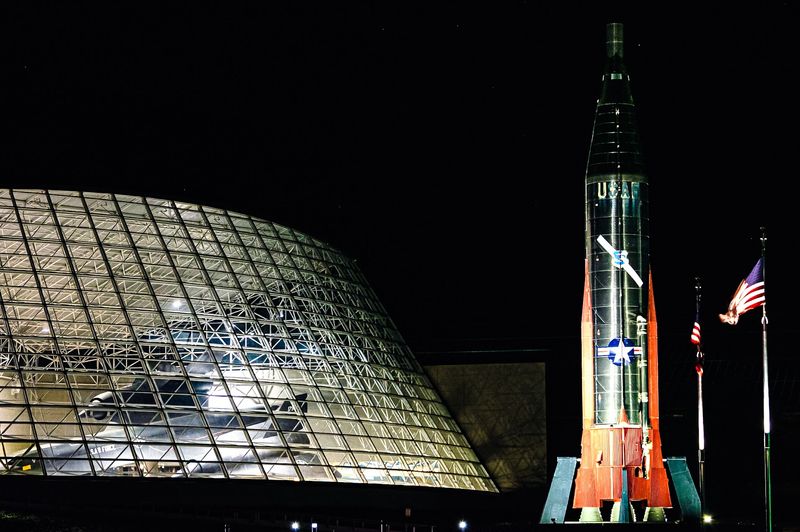
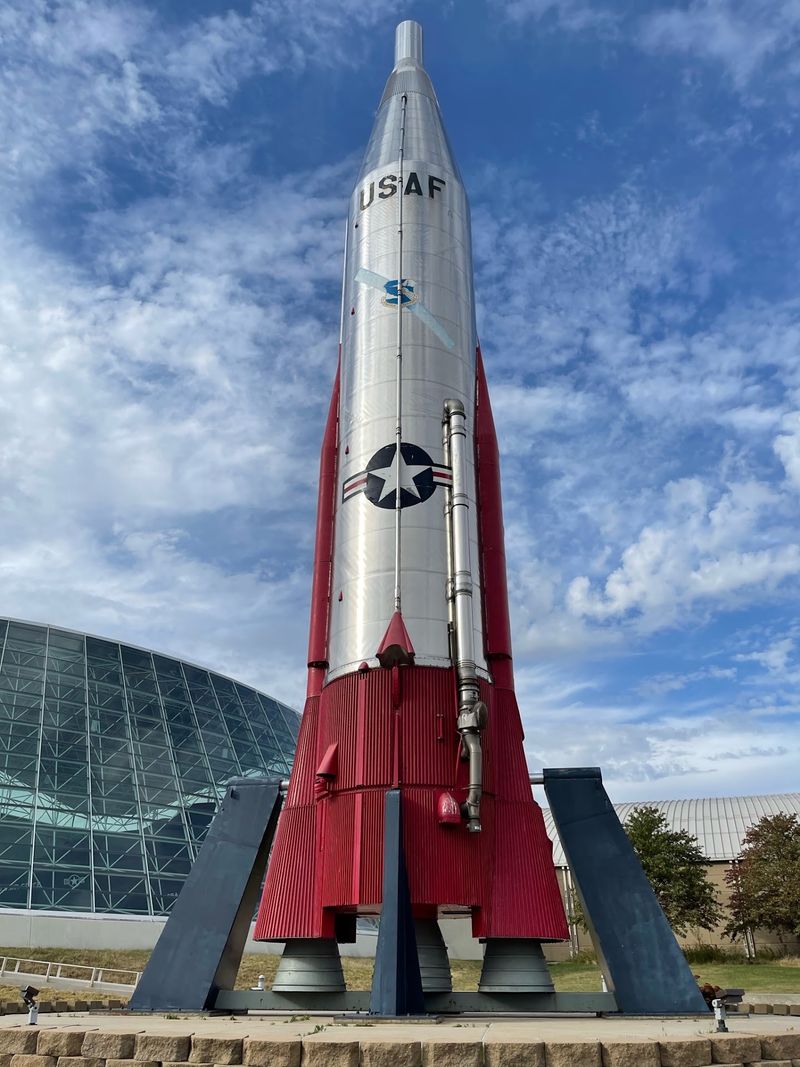
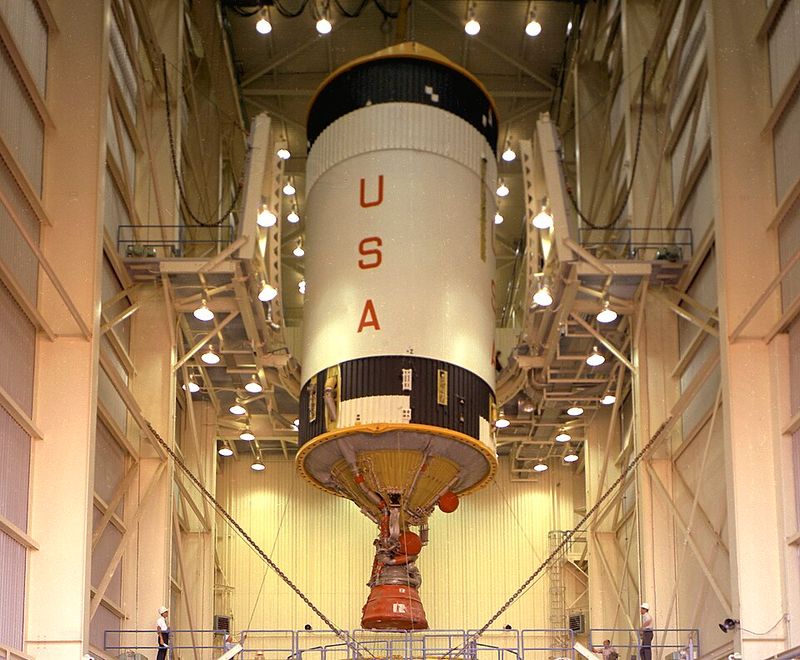
AS-201 also marked the first flight of the Saturn IB rocket. That launch vehicle served as a bridge between earlier Saturn development work and the Apollo hardware that followed.
Its upper stage, called the S-IVB and powered by a J-2 engine, deserves special attention. A version of that same S-IVB stage was later used on the Saturn V.
On those missions, the stage fired to push Apollo spacecraft out of Earth orbit and onto a path toward the Moon.
So the technology tested during a 37-minute flight in 1966 shares a direct family line with the hardware that carried astronauts to lunar orbit.
Keeping that connection in mind while standing near CM-009 makes the small Nebraska display feel considerably larger.
From the South Atlantic To A Second Career In Testing
A splashdown map tells part of this capsule’s story better than any label. CM-009 traveled more than 5,000 miles downrange after launch.
The final splashdown point sat in the South Atlantic, roughly 5,264 miles from where the rocket left the pad. Recovery followed, and the spacecraft came home to engineers who were not finished with it.
In 1968, CM-009 was used for impact testing, giving the capsule a second role in Apollo development. Hardware that had already flown became a tool for learning how structures respond to hard landings.
Nebraska entered the picture in the years that followed. NASA donated CM-009 to the University of Nebraska-Lincoln in 1973, where it stayed for a long stretch of time.
After spending years outdoors, the capsule was eventually restored and is now on loan to the museum in Ashland. Knowing that history adds a layer to the display case.
The object in front of visitors flew in space, was deliberately battered for research, sat outside through Nebraska winters, and was brought back to presentable condition.
Few artifacts have such a working-life résumé, and that survival story is part of what makes the stop worthwhile for anyone curious about how space history actually gets preserved.
Ashland’s Own Astronaut Gets A Homegrown Exhibit
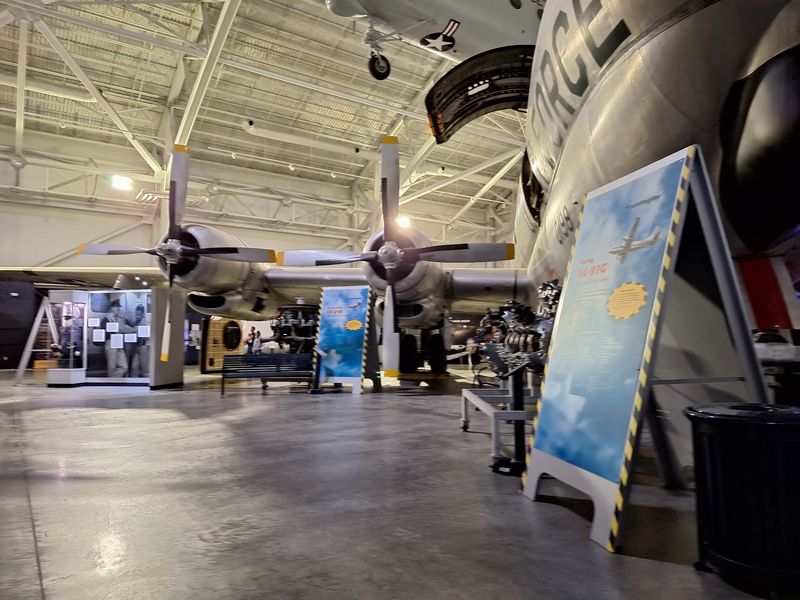
Small towns rarely produce astronauts, which makes the local connection here worth a pause.
The Heartland Astronaut exhibit tells the story of NASA astronaut Clayton Anderson, who grew up in Ashland.
Displays cover his astronaut training, his missions, and the flight suits he wore. Seeing actual flight suits up close gives a sense of scale that photographs flatten.
Stitching, zippers, patches, and layers become visible, and the gear reads as practical equipment rather than costume.
Younger visitors often linger here because the human side of spaceflight is easier to relate to than orbital mechanics.
Placing this exhibit in the same building as a flown Apollo capsule creates a natural pairing.
One tells the story of machines being proven in the mid-1960s, and the other shows what happened once people were flying regularly. Walking between the two takes only minutes and covers decades.
For anyone planning a route through the museum, this section makes a good midpoint stop.
The galleries are indoors with level flooring, and benches are available in various areas for resting.
Reading through the panels at a relaxed pace usually takes ten to fifteen minutes, which fits comfortably into a longer visit without rushing the rest of the collection.
Two Column-Free Hangars and a Building Built for Big Machines
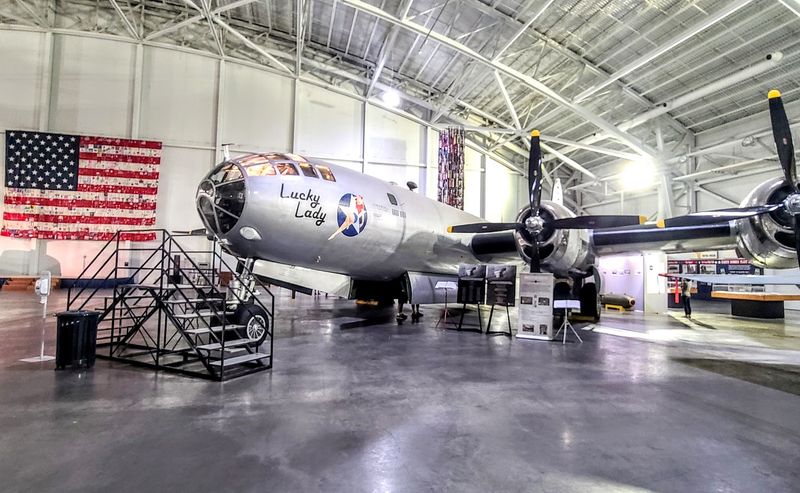
Scale is the first impression most visitors mention after walking in.
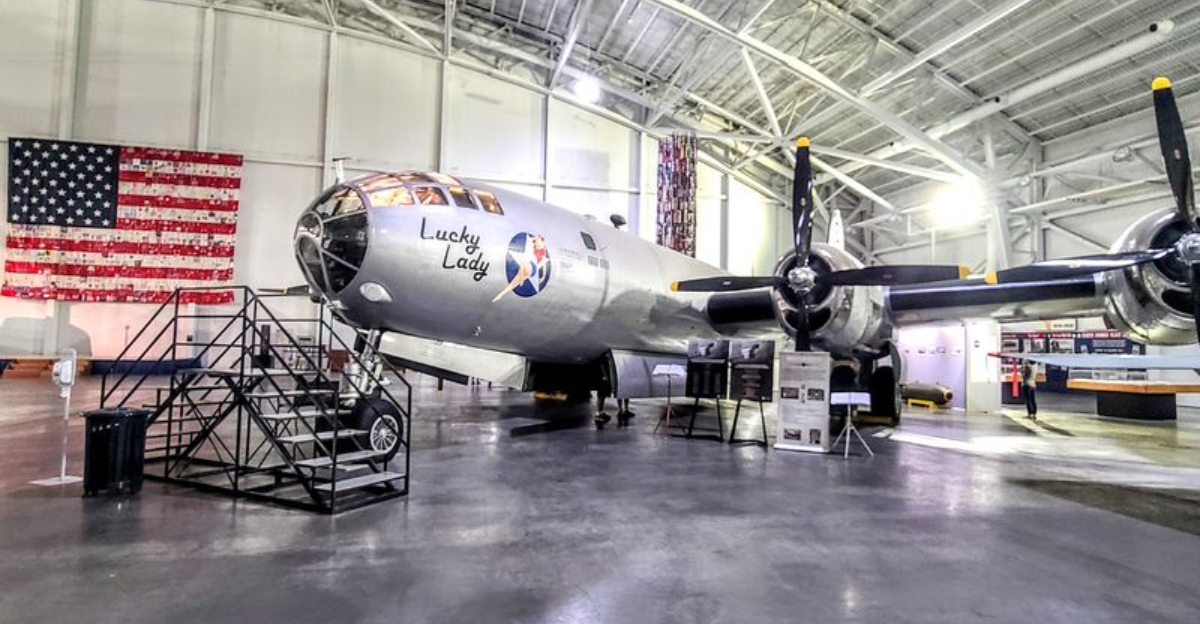
The Strategic Air Command & Aerospace Museum is located at 28210 W Park Hwy, Ashland, NE 68003, an easy stop off Interstate 80 between Omaha and Lincoln.
The current facility was completed in 1998 and covers roughly 275,000 square feet.
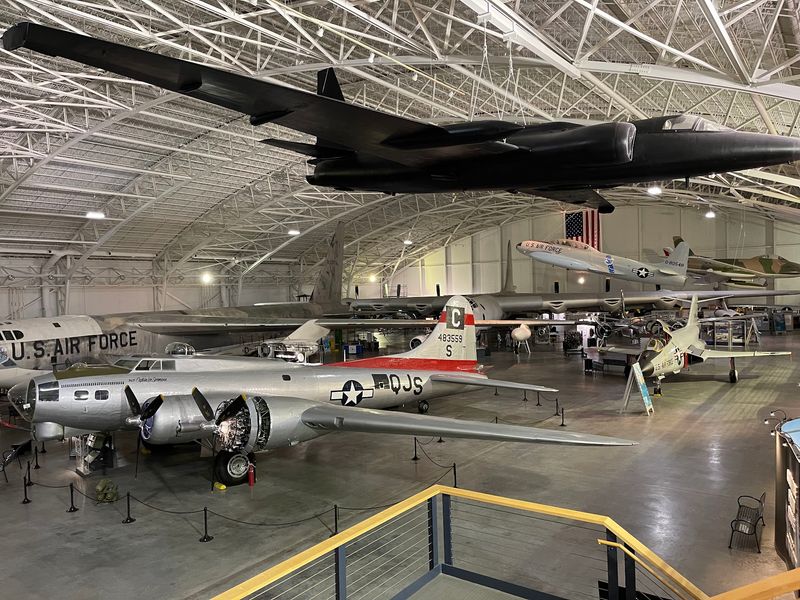
Inside are two large column-free hangars, meaning nothing interrupts the view of the aircraft.
The collection includes 31 aircraft, with well-known examples such as the SR-71 Blackbird drawing steady attention.
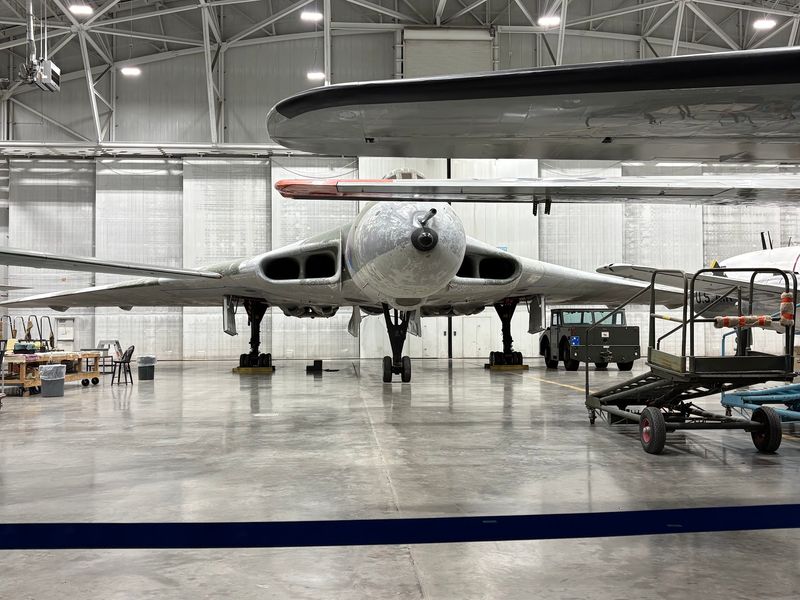
Standing under a wing gives a much better sense of proportion than any screen can provide. Comfort holds up well over a few hours.
Floors are flat and smooth, the space is climate controlled, and the layout allows for a loop rather than a backtracking route. Many visitors report spending two to four hours depending on how much they read.
A gift shop and a small café are on site, and interactive displays are spread through the halls for children.
Lighting near some information panels can be dim, so reading glasses or a phone flashlight may help.
Free on-site parking sits close to the entrance, and the building is described as accessible throughout, which makes pacing easier for mixed-age groups.
Planning A Comfortable Omaha To Lincoln Day Trip
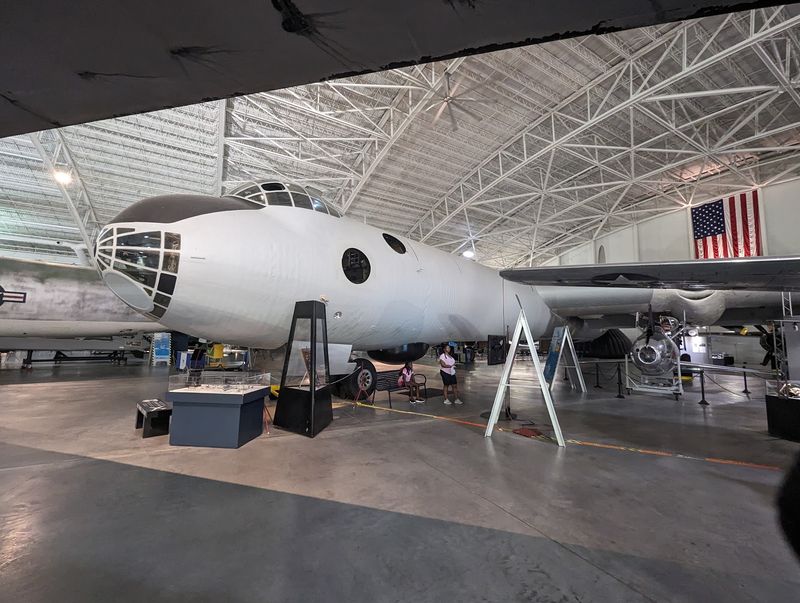
Timing makes a real difference at a museum this size. The location sits between Omaha and Lincoln, and drivers usually reach it from Interstate 80 at Exit 426.
During the 2026 summer season, running from May 25 to September 7, the doors are open daily from 9 a.m. to 5 p.m.
Winter hours shift, with shorter days on Monday, Wednesday, Thursday, and Friday, later Sunday openings, and closure on Tuesdays. Holiday closures include New Year’s Day, Easter, Thanksgiving, and Christmas.
Checking the schedule before driving out saves disappointment, especially in the off-season.
Daily planetarium presentations are available for an additional charge, currently listed at $5.00 for adults and $3.00 for seniors, military, and children ages 4 to 12, with children 3 and under admitted free.
A flight simulator is also available for an extra cost, which older kids tend to enjoy.
Arriving near opening time usually means quieter halls and easier photos of the Apollo capsule. Weekends bring more families, particularly during summer.
The museum is an official 2026 Nebraska Passport stop, with that program running May 1 through September 30, 2026, so travelers collecting stamps can fold the visit into a wider Nebraska route.