This Small North Carolina City Has A Crime Rate Far Above The State Average
Numbers can make a place look simple.
Real life rarely cooperates.
One small North Carolina city has drawn attention because recent public-safety figures sit noticeably above statewide benchmarks.
That sounds dramatic on its own, but the fuller story is more complicated.
Several major categories have also moved in a better direction in the newest available data.
Population size matters. So does the year being measured and exactly what gets counted.
Put everything together, and the picture becomes less about one alarming statistic and more about a community experiencing measurable change.
The city still stands out on paper, but the latest numbers also show progress that deserves to be part of the conversation.
This is one case where reading past the headline makes a big difference.
Recent Public-Safety Data Remains Well Above State Benchmarks
The gap becomes clear when the same reporting year is used for both Lumberton and North Carolina. FBI-based 2024 figures put Lumberton’s overall reported rate at roughly 11,620 incidents per 100,000 residents, while the comparable North Carolina figure was about 2,344 per 100,000.
That makes Lumberton’s rate nearly five times the statewide level for that period. Different websites may display slightly different totals because they use varying population estimates, update schedules, and calculation methods, but the central comparison remains consistent.
Lumberton’s numbers sit considerably above broader North Carolina benchmarks. The most useful way to read those figures is as a citywide statistical measure rather than a description of every street or neighborhood.
Rates combine incidents reported across the entire jurisdiction and divide them by the population used for that dataset. They provide an effective way to compare communities of different sizes, but they cannot show how evenly or unevenly those incidents are distributed within the city.
That distinction matters when interpreting any community through a single numerical rate.
Serious Reported Offenses Remain Elevated
The newest 2025 FBI-derived data continue to place Lumberton well above many comparable communities in the category covering the most serious person-to-person offenses.
The city recorded 236 such reports during the year, producing a rate of about 1,250 per 100,000 residents.
Among North Carolina cities with at least 10,000 residents included in the same comparison, Lumberton ranked 85th of 86, placing it near the highest end of the group. Yet the direction of the numbers deserves equal attention.
The corresponding rate was about 2,018 per 100,000 in 2023 and approximately 1,692 in 2024 before dropping to 1,250 in 2025.
That represents a decline of roughly 26 percent in a single year and about 38 percent across the two-year span.
Robeson County has also stood out in statewide public-safety data, with 2023 figures placing it at the highest end among North Carolina’s counties for serious reported offenses.
The latest city figures remain elevated, but they also show that Lumberton’s recent trajectory is moving downward rather than continuing the earlier climb.
Property-Related Reports Add To The Overall Rate
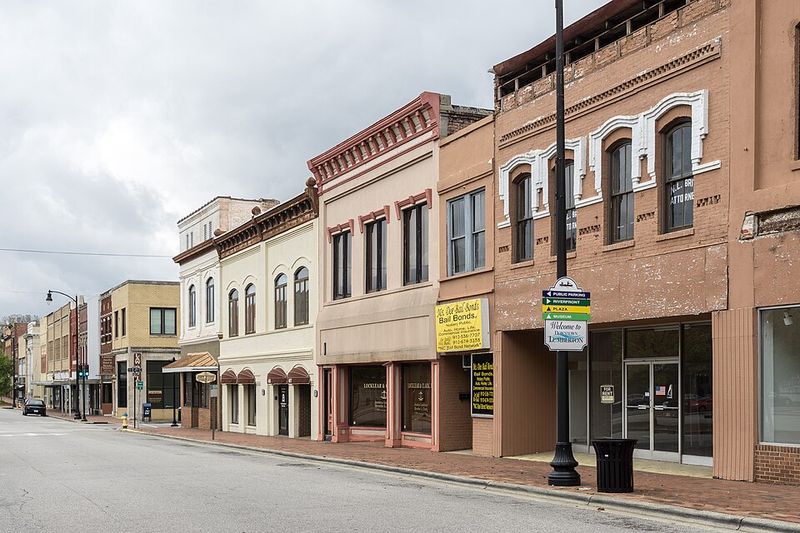
Property-related incidents account for the largest portion of Lumberton’s overall total, but this category has also moved in a more favorable direction.
FBI-derived figures show 1,905 such reports in 2024, equivalent to about 99.8 per 1,000 residents using the population employed in that dataset.
In 2025, the number dropped to 1,588, bringing the rate down to roughly 84.1 per 1,000. The broad category combines several forms of reported losses involving homes, personal belongings, and vehicles, so it represents a much wider range of circumstances than the serious-offense category discussed earlier.
The largest component in 2025 accounted for 1,168 reports, while unlawful-entry incidents totaled 291 and vehicle-related reports numbered 124. Each was lower than the corresponding figure from 2024.
That matters because Lumberton’s elevated overall rate is not being driven by one isolated category. At the same time, the year-to-year movement shows that fewer property-related reports were recorded across all three major groups in the latest dataset.
The level remains high, but the recent direction is clearly downward.
The City’s Small Population Makes Each Incident More Visible In Per-Capita Statistics
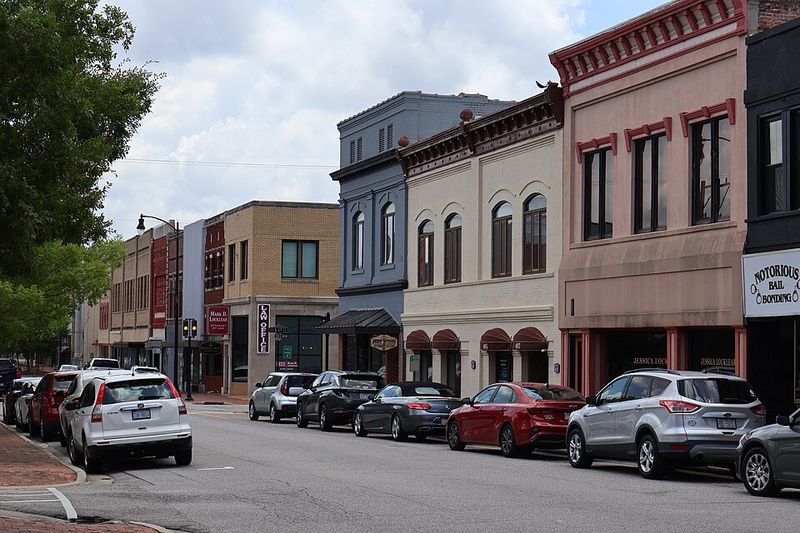
Lumberton’s population gives every reported incident more influence on a per-capita calculation than the same incident would have in a much larger city. The U.S.
Census Bureau counted 19,025 residents in 2020 and estimated 18,955 residents in 2025, keeping the city firmly below the 20,000 mark. Rates are designed to account for differences like this, which is why analysts usually present figures per 1,000 or 100,000 residents rather than comparing raw totals alone.
Still, the denominator matters. When a community has fewer residents, changes of several dozen reports can move the yearly rate more noticeably than they would in a major metropolitan area.
That does not erase Lumberton’s elevated numbers, since its raw totals are also substantial for a city of its size. It simply explains why population should remain part of the discussion.
Lumberton also functions as the Robeson County seat and sits along Interstate 95, giving it a regional role beyond its residential population.
Public datasets generally base municipal rates on the resident population, however, so any influence from people entering the city for work, shopping, services, or travel is not separately measured in the standard calculation.
The Latest Figures Show A Meaningful Downward Trend

Looking across several years produces a more useful picture than focusing on a single annual total. Lumberton’s serious-offense rate moved from roughly 2,263 per 100,000 residents in 2021 to 2,400 in 2022 before declining to 2,018 in 2023, 1,692 in 2024, and about 1,250 in 2025.
Property-related reports followed a different path but have also fallen from their recent high. That category reached about 12,035 per 100,000 residents in 2023, declined to roughly 9,981 in 2024, and dropped again to about 8,410 in 2025.
Those changes do not bring Lumberton close to typical statewide levels, but they prevent the current story from being reduced to a static ranking based on an earlier peak. The latest year contains fewer reports in several major categories than the years immediately before it.
Public-safety statistics cannot identify one simple cause for that change, and assigning the decline to a particular program or policy without supporting research would go beyond what the numbers show.
What the data can establish is clearer: the city’s rates remain elevated, while its recent direction has improved substantially.
Local Law Enforcement Staffing Is Higher Than The North Carolina Average
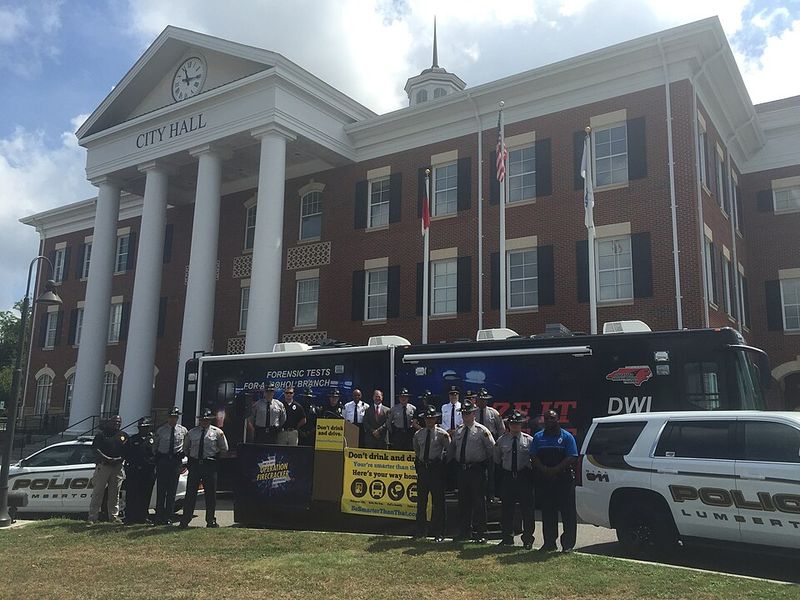
The Lumberton Police Department currently lists 77 sworn employees and 13 non-sworn employees, giving the city a sizable municipal department for a population of fewer than 19,000 people. Using the Census Bureau’s 2025 population estimate, that works out to approximately 41 sworn officers per 10,000 residents.
The department operates from the Ed Glover Public Safety Building and describes its approach as community-oriented problem solving.
Its current organizational structure includes administration, professional standards and internal affairs, investigations and juvenile services, patrol, and training.
Those details provide useful context for the city’s public-safety system without suggesting that staffing levels alone explain Lumberton’s reported rates.
The number of officers and the number of reported incidents measure very different things, and neither should automatically be treated as the cause of the other.
Staffing can also change over time as positions are added, filled, or vacated, so current city figures are more useful than older third-party estimates when describing the department’s size.
For now, Lumberton maintains a substantial sworn workforce relative to its resident population while continuing to emphasize community-oriented service in its stated mission.
Different Data Sources Can Produce Different Totals
A search for Lumberton statistics can produce surprisingly different numbers, even when several sources say they rely on federal reporting. The reason is usually methodology rather than contradiction.
Some databases use the most recent completed FBI year, while others combine older reports with newer population estimates or apply proprietary scoring systems.
A few translate raw reports into grades or rankings, which can make two pages describing the same city look very different at first glance.
NeighborhoodScout, for example, currently displays an overall rate of about 117 per 1,000 residents using 2024 data, while another FBI-derived source has already incorporated agency-level figures for 2025.
North Carolina’s State Bureau of Investigation separately publishes annual statewide summaries based on information submitted by participating agencies and forwarded through the federal reporting system.
For direct comparisons, the reporting year, population denominator, and category definitions matter more than a website’s letter grade or headline ranking.
Using figures from the same year avoids one of the most common problems in public-safety comparisons and makes Lumberton’s position easier to understand without overstating what any individual database can prove.
The Latest Numbers Give The City A Much Tougher Statistical Profile Than Most North Carolina Communities
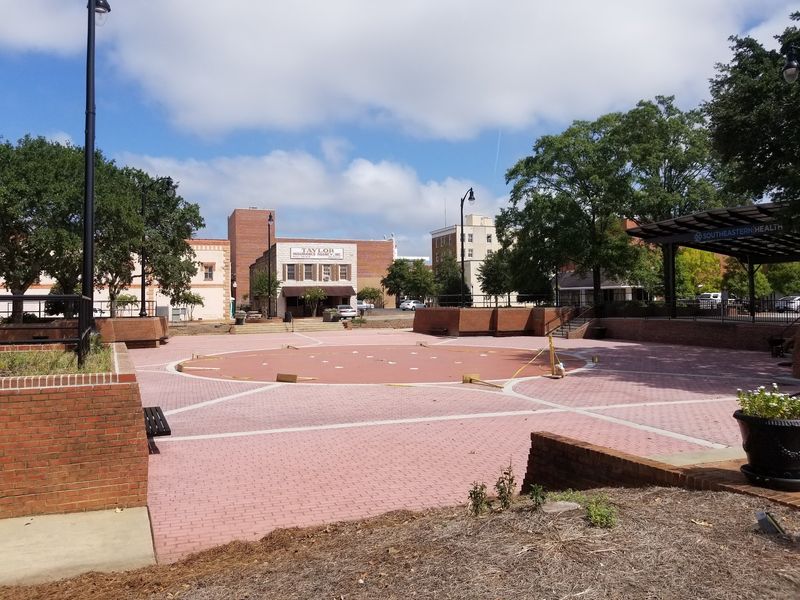
Lumberton remains statistically unusual among North Carolina communities, but the latest figures tell a more complete story than a single ranking.
The city’s 2025 serious-offense rate remained high enough to place it near the upper end of the North Carolina cities included in one FBI-based comparison, while property-related reports also stayed elevated.
At the same time, both major categories declined noticeably from their recent peaks. That combination is important: Lumberton has not suddenly moved close to statewide norms, yet neither is it following the same upward pattern seen earlier in the decade.
Beyond the statistics, this Robeson County seat remains a longstanding community along the Lumber River, a federally recognized Wild and Scenic River that runs through southeastern North Carolina.
Interstate 95 also passes through the area, reinforcing Lumberton’s role as a regional crossroads.
Those features do not cancel out the public-safety numbers, just as the numbers do not describe every part of daily life in the city.
The clearest conclusion is simply that Lumberton continues to report rates well above North Carolina benchmarks while the newest available data show substantial improvement from several earlier years.